How to Avoid Greenwashing in Reusable Shopping Bag Marketing
Last reviewed: September 16, 2026
Reusable shopping bags are easy to market with leaves, recycling arrows and words such as “green,” “responsible” or “planet-friendly.” They are much harder to market accurately. A bag may be designed for repeated use, yet a campaign can still mislead if it exaggerates the material, hides an important limitation, implies certification that does not cover the order, or creates a greener overall impression than the evidence supports.
This guide is about the marketing-release problem: what a buyer, sustainability team and marketing team should check before a claim appears on a bag, product page, hangtag, catalogue, advertisement or social post. For the deeper evidence-building method behind each claim, use our separate guide to defensible sustainability claims for reusable shopping bags. Keeping those two jobs separate prevents both duplicated work and vague accountability.
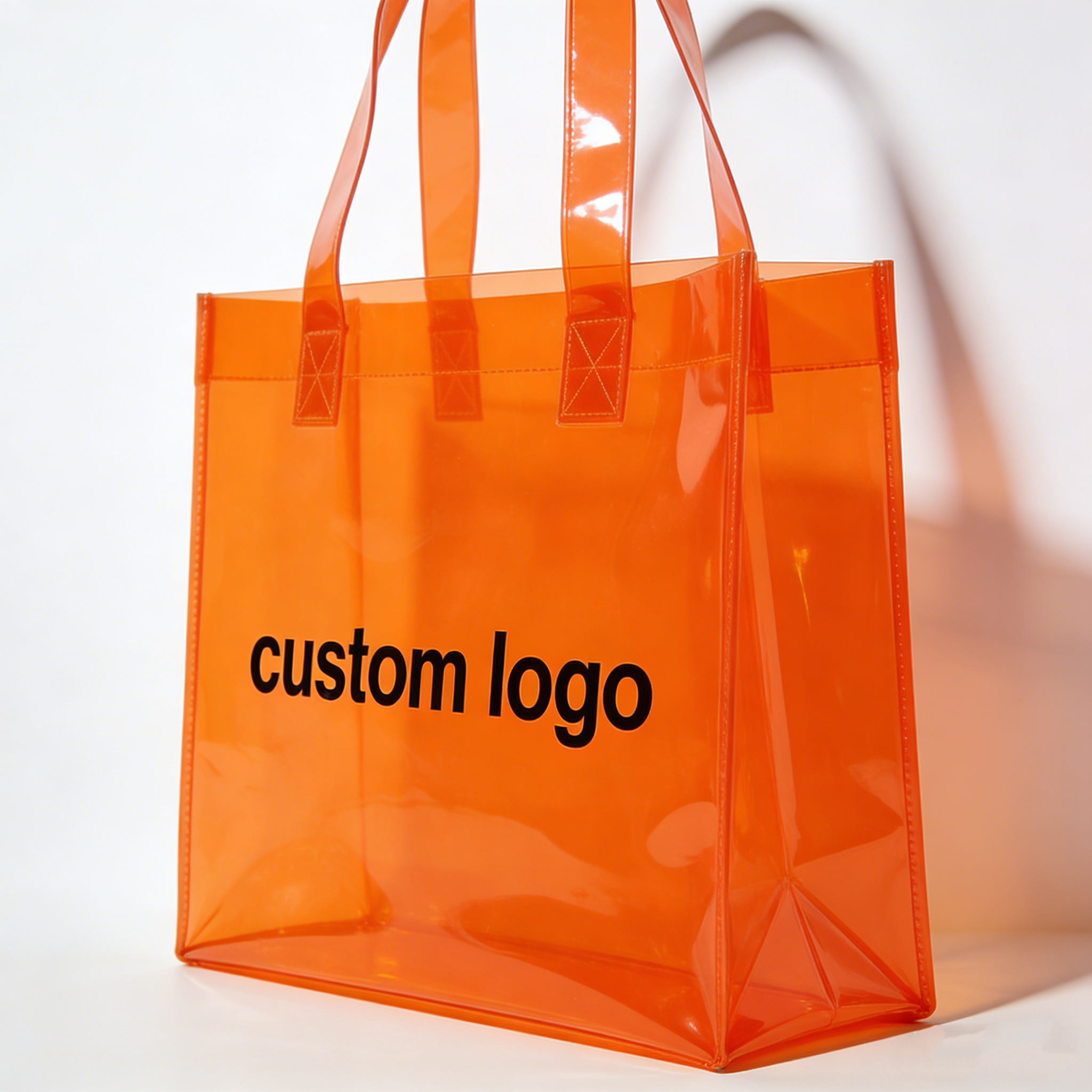
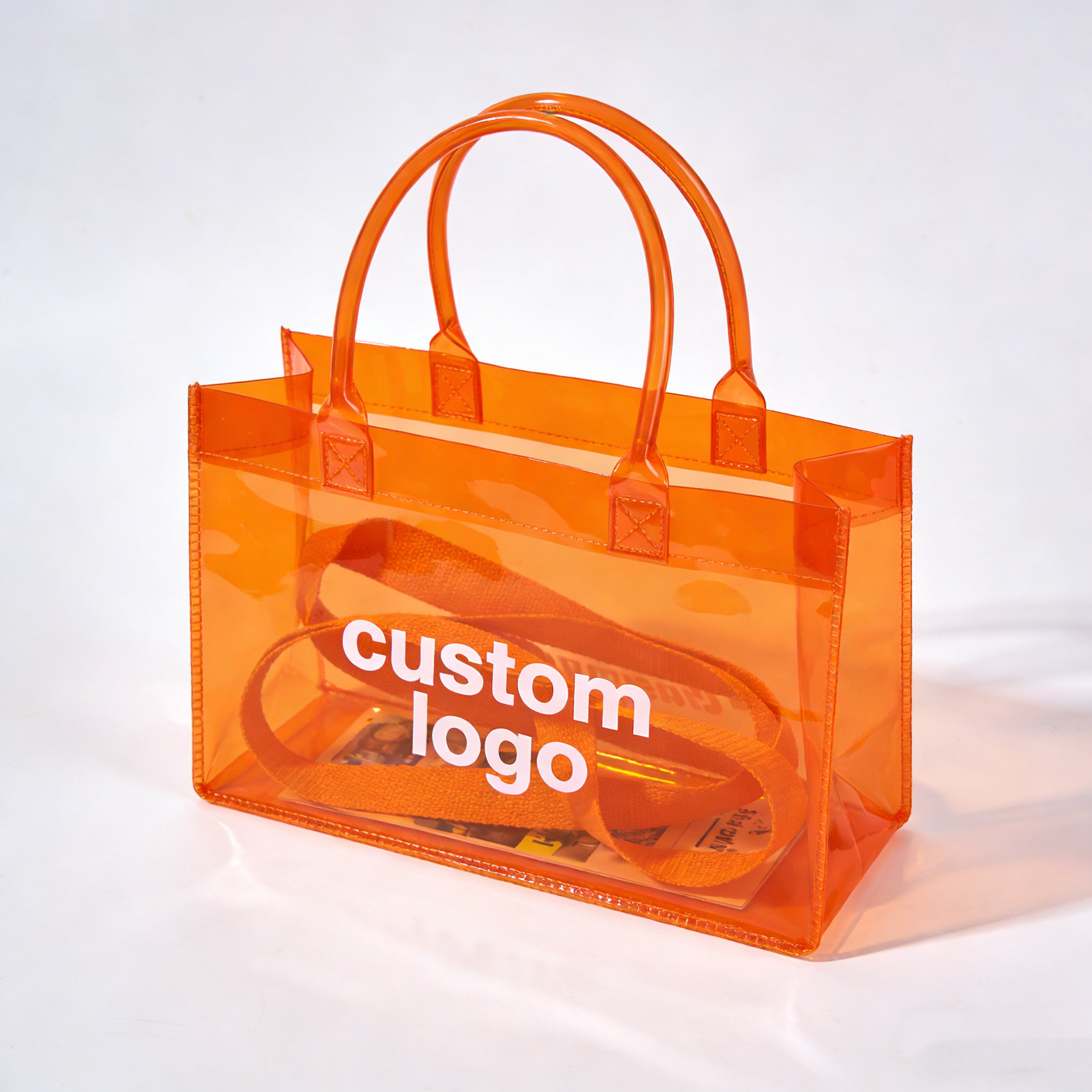
A real product image can show format, colour, handle layout and print position. It does not by itself prove an environmental benefit.
Need to screen environmental wording before sampling or artwork approval? Send the exact proposed claims, markets, channels, bag specification and BOM, component percentages and calculation basis, certificates and order-level records, tests, artwork, quantity and release date. LUCKYSTAR can return missing evidence, product-scope questions and supplier-document checkpoints for your compliance owner or legal reviewer.
The short answer: prevent greenwashing before creative approval
Brands can reduce greenwashing risk by treating every environmental message as a controlled product statement, not decorative copy. Before release, define the exact SKU and market, list every explicit and implied claim, connect each claim to current evidence, put necessary qualifications next to the headline, review the combined impression of words and visuals, and lock the approved version to the production order.
The practical rule is simple:
If a reasonable customer could understand a broader environmental benefit than the evidence establishes, narrow the message before publishing it.
That applies even when every individual sentence is technically true. Layout, icons, colour, imagery, omissions and the relationship between headline and fine print can change the overall impression.
What counts as greenwashing in shopping bag marketing?
Greenwashing is not limited to an invented certificate or a false recycled-content percentage. It can arise whenever environmental messaging is unclear, overly broad, unqualified, out of date or disconnected from the product actually supplied.
Common patterns include:
- calling a whole bag “recycled” when only the main fabric contains verified recycled material;
- using “recyclable” without checking the finished construction and realistic collection route in the target market;
- printing “reusable” without defining expected use, care conditions or durability evidence;
- displaying an ecolabel-like icon that looks independent but is only a brand-designed graphic;
- showing a supplier certificate whose holder, site, material, process, validity or transaction scope does not match the order;
- placing an important limitation only behind a QR code or at the bottom of a long page;
- using forests, oceans, recycling arrows or “zero impact” language to imply a benefit that has not been measured.
The FTC Green Guides emphasise consumer interpretation, substantiation and qualifications. The UK CMA Green Claims Code similarly provides principles and examples for environmental claims. These are useful review references, but market-specific legal advice may still be necessary.
Start with a claim inventory, not a slogan
Before a designer produces artwork, gather every statement that customers may see. This is broader than the wording printed on the bag.
Inventory every customer-facing touchpoint
The same SKU can appear in many channels, each with different space limits and audiences. Build one record covering:
- bag artwork and sewn labels;
- swing tags, belly bands and care cards;
- retail shelf signs and counter displays;
- product detail pages and marketplace listings;
- catalogues, quotation sheets and sales decks;
- paid advertisements, email and social posts;
- influencer or distributor briefs;
- master cartons and inner packaging;
- QR landing pages and downloadable evidence.
| Touchpoint | Typical greenwashing risk | Minimum release control |
|---|---|---|
| Bag artwork | Very short wording becomes broad or absolute | Approved exact phrase, readable qualifier and artwork version |
| Hangtag | Icons resemble certification marks | Identify who made the claim and avoid unapproved marks |
| Product page | Headline outruns detailed evidence lower on the page | Put the material, percentage and scope near the headline |
| Social or paid ad | Character limits remove qualifications | Use a narrower claim or do not run that format |
| Sales deck | Old certificate reused after a specification change | Show validity date, holder, scope and matching SKU |
| QR page | Linked page changes after printing | Archive the approved landing-page version and monitor the URL |
| Carton | Operational symbol is mistaken for a product benefit | Separate shipping instructions from consumer claims |
Identify explicit and implied claims
An explicit claim says “made with 70% recycled polyester.” An implied claim may say nothing measurable but combine a green leaf, a recycling loop and “future-friendly” beneath the product. Review both. A claim inventory should record the exact words, image, icon, placement, target market, intended meaning and possible broader interpretation.
Canada’s Competition Bureau has expressly highlighted that general impression can be created by words, images and layout, and that small print may not cure a misleading principal message. Its 2024 environmental-claims consultation page is archived, so brands should confirm the current Canadian position before launch, but the review lesson remains useful: evaluate the whole execution, not isolated sentences.
Replace broad claims with scoped facts
Vague language is difficult to verify because it does not tell the buyer what changed, compared with what, or under which conditions. A narrower factual statement is usually more useful to a procurement team and easier to keep current.
| Risky wording | Why it is risky | Better drafting direction | Evidence needed before use |
|---|---|---|---|
| “Eco-friendly bag” | Implies a broad net environmental benefit | Name the specific attribute and component | Product specification plus evidence for that attribute |
| “100% recycled bag” | May ignore handles, thread, coating, ink or trims | “Main body fabric contains X% recycled [material] by [defined basis]” | BOM, calculation basis and supply-chain records |
| “Fully recyclable” | Finished construction and local systems may not support it | Identify the material and applicable collection route, or omit | Component map and current destination-market infrastructure |
| “Biodegradable” | Conditions, time and portion are unstated | State the exact component, test method and conditions | Applicable test report, scope and market review |
| “Plastic-free” | Coatings, thread, labels or packaging may contain polymer | Define the product boundary or make a component-level statement | Complete BOM and packaging review |
| “Carbon neutral” | Accounting boundary and offsets may be unclear | State the measured boundary and methodology; obtain specialist review | Current inventory, methodology, reduction record and any permitted residual treatment |
| “Saves 500 bags” | Assumes behaviour and comparison without a model | Explain the use scenario and comparison basis | Documented calculation and assumptions |
| “Certified sustainable” | Certification programme and certified object are unclear | Name the scheme, holder, product/process scope and current status | Verifiable current certificate plus order-level documents |
For recycled-content wording, see how to verify recycled content in custom shopping bags. For ecolabels and chain-of-custody schemes, start with our shopping bag sustainability certifications guide.
Match the claim to the correct product boundary
A reusable bag is a system of components. The main panel may differ from the handles, base insert, lamination, coating, binding, zipper, sewing thread, label and print. Marketing should never convert a true component fact into a false whole-product conclusion.
Map the finished bag before writing copy
Create a simple component map showing material, weight basis, supplier, claimed attribute and supporting record for each part. Then decide whether the public statement applies to:
- the entire finished bag;
- the main body fabric only;
- a specified component;
- the packaging only; or
- the manufacturing site or management system rather than the product.
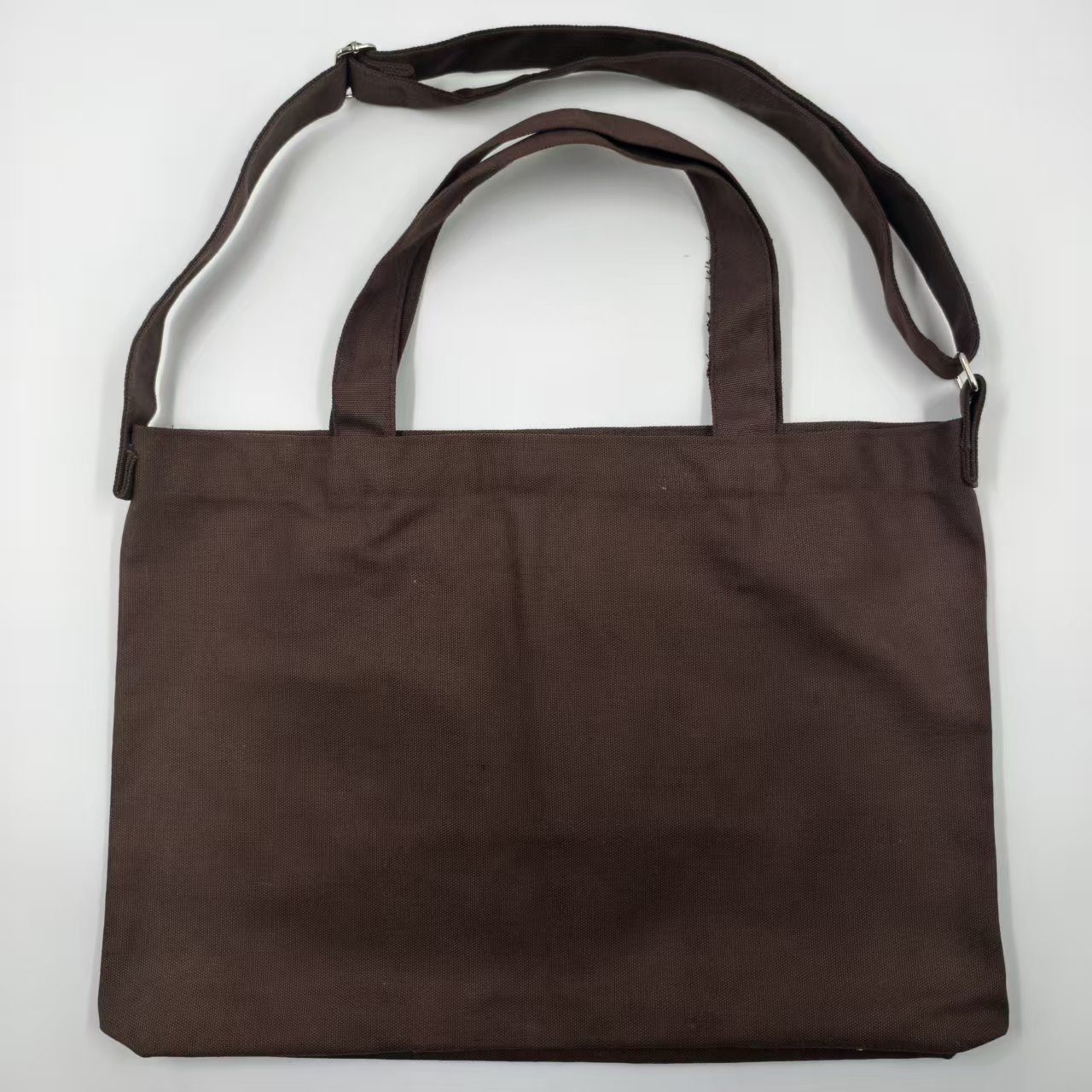
A blank sample helps teams review where claims, qualifications and identifiers will appear before artwork is released.
Do not let a material name become a performance promise
“Cotton,” “RPET,” “paper,” “woven PP” and “non-woven PP” identify material families; they do not automatically prove lower impact, recyclability, certified content or a longer useful life. Performance also depends on finished mass, construction, intended load, wash or care exposure, transport, achieved reuse and end-of-life route.
Use our comparisons of cotton and RPET shopping bags, woven and non-woven PP bags, and recyclable versus reusable shopping bags to structure a specification discussion without turning a material label into an environmental verdict.
Keep qualifications close, clear and readable
An accurate qualifier is useful only if customers can notice and understand it before forming the wrong impression. A footnote several screens away, a tiny asterisk on the bag or a hidden downloadable PDF may be too remote.
Use an evidence-proximity ladder
| Claim type | What should appear on the primary asset | What may sit one click away | What should remain in the internal dossier |
|---|---|---|---|
| Recycled content | Percentage, material, component and calculation basis where material | Certificate validation and chain documents summary | Supplier records, BOM calculations and transaction files |
| Reusable | Intended repeated-use context and necessary care/load limitation | Test summary or use protocol | Raw results, failure photos and sample IDs |
| Recyclable | Exact material/component and geographic condition if needed | Current route or facility guidance | Component review and infrastructure research |
| Certification | Scheme name and exact certified object; approved mark only | Public verification link | Certificate copy, approval and order matching |
| Comparative claim | Compared product, metric and meaningful boundary | Method summary and assumptions | Full calculation, data sources and reviewer approval |
If the primary asset cannot hold the minimum information, shorten the claim rather than moving all limitations into fine print. A QR code can provide depth, but it should not repair an overbroad statement on the bag.
Review visual claims as carefully as text
Marketing teams often scrutinise copy but treat colour, icons and photography as decoration. Regulators and customers may read them together.
Check colour, symbols and nature imagery
Ask a reviewer who did not create the campaign to describe the first environmental message they receive in three seconds. Then compare that impression with the documented fact.
Red flags include:
- an unofficial seal shaped like a certification badge;
- a recycling symbol on a bag whose finished construction has not been assessed;
- “100” inside a circular arrow without stating 100% of what;
- forests, oceans or wildlife next to an unqualified product benefit;
- an isolated close-up that hides mixed components;
- a green headline and tiny grey limitation;
- a certificate screenshot positioned so customers assume it covers the finished bag.
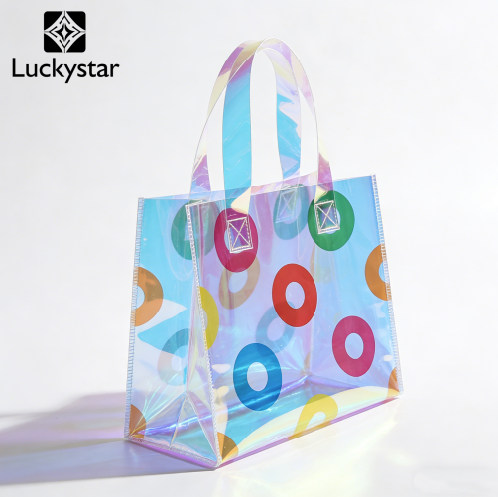
Bright colour, circular graphics and a polished product image can attract attention, but visual style must not be treated as environmental evidence.
Avoid look-alike certification marks
Use a certification logo only when the scheme rules, certificate scope, licence holder, product category, artwork approval and current order permit it. A supplier’s certificate is not automatically LUCKYSTAR’s certificate, and a certified upstream material does not automatically certify the finished bag. Our GRS-certified RPET buyer verification guide and FSC paper bag chain-of-custody guide explain the order-level checks.
Build one source of truth for every channel
Copy drift is a major operational cause of greenwashing. The approved product page may be careful, while a distributor shortens it, an influencer adds “zero waste,” or a regional team reuses last year’s certificate.
Create a claim register with one row per approved message. At minimum, record:
- claim ID and exact approved wording;
- SKU, colourway and component scope;
- sales market and language;
- evidence owner and file location;
- evidence date, expiry or review trigger;
- permitted channels and mandatory qualification;
- artwork or page version;
- approvers and release date;
- withdrawal trigger and replacement wording.
Do not let channel limits change the meaning
For each channel, preserve the minimum disclosure. If a marketplace title, paid-search ad or sewn label is too short, use a neutral product description and put the qualified claim where it can be stated properly. Character limits are not evidence exceptions.
Use a gated claim-release workflow
Environmental copy should pass defined gates before a purchase order, artwork proof or campaign goes live.
| Gate | Owner question | Required output | Stop condition |
|---|---|---|---|
| 1. Scope freeze | Which SKU, components, market and channel are covered? | Claim brief and component boundary | Product or market is undefined |
| 2. Evidence check | Does current evidence match the exact statement? | Evidence map with dates and gaps | Evidence is missing, expired or broader than scope |
| 3. General-impression review | What will a reasonable customer understand from words and visuals? | Red-team review notes | Overall impression exceeds evidence |
| 4. Artwork control | Are claim, qualifier, mark and product ID in the approved layout? | Signed artwork version | Text is too small or mark approval is absent |
| 5. Order match | Does the approved sample and PO preserve the claimed specification? | Sample/PO/claim cross-reference | Material, supplier or construction changed |
| 6.Channel deployment | Did every listing and partner use approved wording? | Channel matrix and screenshots | Unapproved shortening or embellishment appears |
| 7. Monitoring | Is evidence still current and is the delivered product consistent? | Review date and change log | Certificate expires, rule changes or complaint arises |
Separate creative approval from evidence approval
Designers can confirm visual execution; technical or compliance reviewers must confirm product scope and evidence. One person should not approve a claim merely because the wording looks cautious. Likewise, a strong evidence file does not approve an unreadable qualifier or misleading image treatment.
Lock claims to samples, specifications and purchase orders
Marketing risk returns when the production specification changes after campaign approval. A coating substitution, different handle fibre, revised print ink or alternate supplier can affect a public statement even if the bag still looks similar.
Use change triggers, not annual memory
Re-review the claim when any of these changes:
- main material or recycled-content percentage;
- coating, lamination, adhesive, ink or trim;
- supplier, site or chain-of-custody route;
- bag weight, construction or expected use;
- certification holder, scope or validity;
- destination market or language;
- comparison baseline or methodology;
- QR destination or evidence page;
- applicable law, guidance or standard.
For production controls, link the final wording to the shopping bag tech pack, approved sample and custom shopping bag quality-control checklist. All commercial and performance conditions remain subject to the final specification and written confirmation.
Different product angles help confirm construction and artwork placement, but claims must still be tied to the approved specification and order records.
Apply a market-specific review
There is no single sentence that is automatically safe in every market. Use the target country, product category, medium and release date to determine which rules and guidance require review.
| Reference | Practical marketing lesson | Release note |
|---|---|---|
| US FTC Green Guides | Avoid broad unqualified claims; substantiate reasonable interpretations and qualify clearly | Confirm current FTC status before a US campaign |
| UK CMA Green Claims Code | Claims should be truthful, clear, complete, fair and supported across the relevant lifecycle context | The guidance is not a substitute for legal advice |
| EU Directive (EU) 2024/825 | The EU has strengthened consumer protection against misleading environmental claims and certain generic or offset-based messages | Check current national implementation and campaign timing |
| Canada Competition Act guidance | Testing or substantiation and overall impression are central review issues | Check current Competition Bureau guidance; older consultation pages may be archived |
| Australia ACCC environmental-claims guide | Claims should be clear, accurate and trustworthy under the Australian Consumer Law | Confirm current law; the 2023 guide notes later penalty changes are not reflected |
| ISO 14020:2022 and ISO 14021:2026 | Environmental statements need general principles plus disciplined self-declared claim methods and documentation | ISO use does not by itself certify a product |
The EU’s adopted Directive (EU) 2024/825 is an important reference for claims aimed at EU consumers. Australia’s ACCC guide to making environmental claims offers practical examples. The current ISO pages for ISO 14020:2022 and ISO 14021:2026 help teams structure environmental statements and self-declared claims. This article is operational guidance, not legal advice.
Test “reusable” as a performance statement
“Reusable” should describe a design and use proposition, not merely a heavier single-use bag. Define the intended load, trip pattern, failure criteria, care exposure and test cycles. Then report only what the tested sample and approved production specification support.
Use the reusable shopping bag durability and reuse testing guide to build the protocol. For environmental comparisons based on repeated use, our article on how many times a reusable shopping bag must be used explains why there is no universal break-even number.
Treat environmental incident response as part of the plan
If a claim is challenged or found to be overbroad, do not quietly edit only one web page. Pause affected assets, preserve evidence and versions, identify all channels, assess shipped inventory, correct the primary message, notify relevant partners and record preventive action.
| Incident step | Immediate action | Record to preserve |
|---|---|---|
| Contain | Pause ads, listings and new artwork releases | URLs, screenshots, campaign IDs and timestamps |
| Define scope | Identify SKUs, markets, batches and partners | PO, artwork, channel and shipment matrix |
| Verify facts | Recheck specification, supplier documents and delivered samples | BOM, certificate checks, test files and inspection records |
| Correct | Replace wording and explain material limitations where appropriate | Approved correction and publication evidence |
| Prevent recurrence | Add change trigger, training or approval control | CAPA owner, due date and effectiveness review |
Company-claim boundary: the following section is LUCKYSTAR publisher self-description. It does not prove that a specific bag is environmentally superior, reusable for a defined number of cycles, recyclable, biodegradable, plastic-free, carbon neutral, certified or made with a stated recycled/organic content. Claims, materials, component percentages, tests, certificate scope, logo use, MOQ, price, schedule and delivery are subject to current order-level evidence, final specification, buyer compliance review and written confirmation.
Why work with LUCKYSTAR on claim-controlled shopping bags?
LUCKYSTAR supports custom shopping bag projects by connecting visible marketing requirements to order-level specifications and review records. That is more useful than offering a universal “green” label.
For an RFQ, our team can help structure:
- target market, intended use and bag format;
- material and component definitions;
- artwork placement and readable qualification space;
- sample, print and construction review points;
- approved wording that matches the agreed specification;
- change control between sample, production and reorder;
- practical document requests for a specific material or order.
We do not treat a platform title, upstream document or historical audit as automatic proof that every LUCKYSTAR product is certified. Certification, recycled content, performance, MOQ, lead time and other commercial conditions depend on the exact product, order and current written confirmation. This careful approach protects the buyer’s campaign and keeps the claim connected to what is actually ordered.
Explore our custom shopping bags, read the broader custom bag manufacturer guide, and use the custom shopping bag manufacturer selection guide when comparing suppliers.
RFQ checklist for lower-risk environmental marketing
Send these items with the enquiry:
- Destination markets and languages.
- Bag size, load, intended reuse pattern and care conditions.
- Full material/component specification, including coatings and trims.
- Exact proposed environmental wording and every icon or mark.
- Channels where the claim will appear.
- Required evidence, testing or certification scheme.
- Artwork dimensions reserved for qualifications.
- Sample-approval and change-control requirements.
- Evidence retention and revalidation expectations.
- Launch date and the internal approver responsible for final legal review.
Final pre-launch checklist
Before release, confirm that:
- every claim identifies a precise attribute rather than an undefined overall benefit;
- the product and component boundary match the evidence;
- the reasonable overall impression of words, icons, colours and images is supportable;
- important limitations are close, readable and understandable;
- certification marks are authorised for the exact holder, scope and order;
- the approved sample, artwork, specification and PO are aligned;
- regional teams and partners use the same controlled wording;
- evidence has a current owner, date and change trigger;
- the team knows how to pause and correct a claim if circumstances change.
Ready to turn a campaign brief into a controlled shopping bag specification? Share the SKU, target market, intended claim, artwork and evidence requirements with LUCKYSTAR. We can review feasibility and prepare an order-specific quotation, subject to final specifications and written confirmation.

Request an evidence-matched bag quotation
Send the exact claim and finished-product boundary with the RFQ so material records, samples, testing, artwork and order documents can be checked against the same wording.
Review LUCKYSTAR custom shopping bag options, then send your claim-controlled brief through the contact form or Email a project brief. The email link opens a draft for your review before sending.
Environmental wording, symbols, calculations, tests, certificate or logo scope, materials, availability, price, MOQ, packing, schedule and delivery terms are subject to current evidence, market-specific compliance review, final specification and written confirmation.