
Shopping Bag Sustainability Certifications Explained
Last reviewed: September 15, 2026
Page role: This guide compares what major sustainability standards, management systems, social-audit tools and test evidence can—and cannot—support for a shopping bag order. Use the worldwide shopping bag manufacturer guide for supplier-shortlist comparison, the linked RPET/GRS guides for recycled-material transaction evidence, and this page for cross-scheme claim boundaries.
A sustainability logo on a shopping bag is not a universal environmental passport. One scheme may verify recycled input and chain of custody, another may track forest-based fiber, a third may test a textile article for harmful substances, and a fourth may assess an organization's management system. None automatically proves every other claim a brand might want to make.
For a buyer, the practical question is therefore not, “ Which certificate sounds most sustainable?” It is, “ What exactly do we want to say about this specific bag, which evidence system covers that statement, and does the evidence follow the actual order?” That distinction helps procurement teams avoid paying for the wrong route, delaying artwork approval, or publishing a claim that a supplier document does not support.
This guide explains the principal systems that may appear in a custom shopping bag project, the limits of each, the documents to request, and the order-level checks to complete before printing a certification mark or environmental statement. If you are still defining the product itself, begin with LUCKYSTAR's custom shopping bags range, then use this article to turn your intended claim into a verifiable sourcing brief.

A real product photo can confirm visible construction, color and components. It cannot, by itself, prove recycled content, organic status, certified forest origin or a certified supply chain.
Need a certification-aware shopping bag RFQ? Send the destination market, exact product/claim, material and component BOM, required scheme and logo use, legal entities/sites, evidence and transaction-document requirements, quantity, artwork, packing and required date. LUCKYSTAR can return scope questions, missing documents, sample controls and commercial assumptions for written review.
The Short Answer: Match the Evidence to the Claim
GRS and RCS are primarily recycled-material and chain-of-custody systems. GOTS and OCS address organic textile inputs through different scopes. FSC and PEFC apply to forest- and tree-based materials. OEKO-TEX STANDARD 100 is about harmful-substance testing for textile articles, while MADE IN GREEN combines traceability with specified product and production requirements. ISO 14001 addresses an organization's environmental management system. SMETA and amfori BSCI are social due-diligence or monitoring tools, not product sustainability certificates.
That is why a supplier showing one document should never end the review. A current facility audit does not establish recycled percentage. A material certificate does not prove that the finished shipment was sold with the claimed status. A chemical test on one sample does not certify every color, coating or future production lot. A brand needs a claim-specific evidence chain.
Certification, Audit, Test Report and Regulation Are Different Things
Procurement files often group very different documents under the word “ certificate.” That creates avoidable risk. Use the following categories instead:
- Product or material certification evaluates defined product groups, materials, processes or chain-of-custody requirements under a named standard.
- Scope certification shows what an entity and site are approved to handle; it does not necessarily prove that a particular shipment carried a certified claim.
- Transaction or sales evidence connects certified material or product to a commercial movement or order.
- Management-system certification evaluates how an organization manages a subject such as environmental performance; it is not a product attribute.
- Social audit or monitoring evaluates working-condition controls at a named site and time; it is not an environmental product label.
- Test report reports results for the submitted sample, methods and parameters; it does not automatically extend to another material, supplier, color or lot.
- Regulation creates legal obligations. Compliance with law is not the same as voluntary sustainability certification.
This vocabulary matters in requests for quotation. “ Please quote a certified eco bag” is too vague to price or verify. “ Please quote a 100% claimed recycled polyester body, identify whether the finished-bag route can carry the requested claim, and state which order documents and label approvals are available” is actionable.
Shopping Bag Certification Map for Buyers
The table below is a selection guide, not a guarantee that every listed system is available for every LUCKYSTAR project. Availability, claim wording, certificate-holder route, documentation, labeling and cost must be confirmed for the specified order.
| Buyer objective | Relevant system or evidence | What it can support | What it does not automatically prove | Documents to review |
|---|---|---|---|---|
| Claim recycled textile input | GRS or RCS | Recycled material criteria and chain of custody within the certified scope | Finished-bag claim, exact shipment coverage, overall lower impact or recyclability | Current scope certificate, product/process scope, transaction or sales evidence, composition and invoice references |
| Claim organic textile input | GOTS or OCS | Organic material and chain-of-custody requirements; GOTS also includes processing criteria within its standard | Every accessory is organic, a future order is covered, or any logo can be printed without approval | Current scope certificate, product category, processing activities, transaction evidence and label approval |
| Claim responsible forest-based paper | FSC or PEFC chain of custody | Controlled tracking and claims for eligible forest- and tree-based inputs | That any brown kraft paper is certified, or that a supplier's certificate covers the finished bag | Certificate database record, scope/product group, sales-document claim and trademark approval |
| Demonstrate textile harmful-substance testing | OEKO-TEX STANDARD 100 | Conformance of a defined textile article or components with the applicable test criteria | Recycled content, organic farming, carbon footprint, recyclability or labor conditions | Certificate/label number, product class, article scope, validity and verifier result |
| Seek a traceable textile label with production criteria | OEKO-TEX MADE IN GREEN | A traceable label based on specified product testing and certified production facilities | A blanket claim for unrelated SKUs or a substitute for recycled/organic content certification | Product ID or QR, covered article, supply-chain details and current validity |
| Assess environmental management | ISO 14001 certification | A named organization's environmental management system against ISO 14001 | Product-level sustainability, recycled percentage or a life-cycle advantage | Accredited certification-body certificate, entity/site, scope, version and validity |
| Review labor-risk controls | SMETA or amfori BSCI monitoring | Site-level social due-diligence information at a point in time | Product certification, environmental attributes or a universal “ pass” | Site identity, audit date, methodology, findings, corrective-action status and buyer access rights |
| Support legal or restricted-substance compliance | Applicable regulation plus testing/declarations | Evidence tied to a market, material, sample and parameter set | A broad sustainability certification or performance outside the tested scope | Destination-market requirement, test report, sample description, methods, dates and supplier declaration |
GRS and RCS: Recycled Content Is More Than a Fabric Invoice
Textile Exchange presents the Global Recycled Standard and Recycled Claim Standard as independent certification frameworks that track claimed recycled inputs through controlled supply-chain stages. The two standards are related but not interchangeable. GRS has a higher minimum recycled-content threshold and includes additional processing requirements concerning social, environmental and chemical practices; RCS is focused on recycled material and chain of custody.
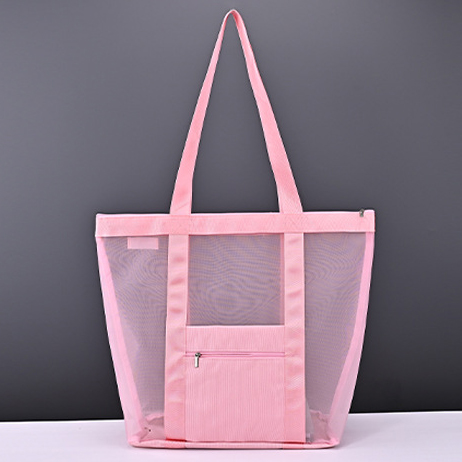
This product photo is a visible reference for the bag body, webbing, zipper and pocket. It does not prove recycled content, the composition of any component or a certified route.
What the buyer should verify
First define the claimed object. Is the statement about the main fabric, the textile components, or the finished bag by mass? A shopping bag may include body fabric, handles, zipper, slider, binding, thread, coating, foam, lining, board, metal fittings, labels and ink. A statement about one textile input cannot silently become a statement about the entire finished item.
Next check the legal entity, physical site, certificate status, approved product categories and processing activities. Then connect the commercial order to the claimed supply route. A current scope certificate shows capability within scope; shipment-level evidence shows whether the relevant sale actually followed that route.
Textile Exchange's standards policy updates also matter for 2026 buying. GRS 5.0 and RCS 3.0 were published and became effective on July 1, 2026, with mandatory implementation scheduled for December 31, 2026. Buyers should record the applicable version rather than copying language from an old template.
For a detailed order review, use the GRS-certified RPET shopping bag buyer verification guide and the broader RPET certification and sourcing checklist. If your immediate problem is evidence calculation rather than scheme selection, follow how to verify recycled content in custom shopping bags.
GOTS and OCS: Organic Fiber Claims Need Chain of Custody
Organic cotton in a material description and a certified finished-product claim are not the same statement. The Organic Content Standard verifies organic materials and chain of custody. GOTS covers textiles made from organic fibers and adds processing requirements within its defined scope.
Scope certificates and transaction certificates serve different purposes
Under GOTS Version 8.0, a scope certificate identifies product categories and activities that the certified entity can offer within scope, while transaction certificates are key traceability instruments for movements in the certified supply chain. Version 8.0 was released in March 2026 and becomes mandatory for audits and assessments on March 1, 2027; before ordering, confirm which version applies to the entity and transaction.
A buyer should also ask whether printing, dyeing, washing, sewing, subcontracting and trading steps relevant to the bag are covered. Accessories may have different eligibility or content treatment. Do not put a GOTS or OCS logo into artwork merely because the base cloth was described as organic. Label use must follow the applicable standard and approval process.
For cotton-specific planning, see organic cotton bag supply-chain traceability and compare practical product trade-offs in cotton vs RPET shopping bags.
FSC and PEFC: Forest-Based Claims for Paper Shopping Bags
FSC and PEFC chain-of-custody systems are relevant when the intended claim concerns paper or another eligible forest- and tree-based material. They do not apply simply because a bag looks natural, brown or recyclable.
Follow the claim through the sales documents
FSC explains that chain of custody tracks forest-based material through the supply chain and enables labeling where requirements are met. For a bag order, verify the certificate holder, product group, claim category, site and validity in the official system. Then check the exact claim on the quotation, order confirmation, invoice and other required sales documents. A certificate number pasted into an email is not enough.
PEFC likewise maintains chain-of-custody requirements and published an updated PEFC GD 2001:2025 guidance document. Choose between FSC and PEFC based on the brand's sourcing policy, target market, customer requirement and a feasible certified route— not because one logo looks more familiar.
If the product includes ribbon handles, lamination, windows, magnets, reinforcement board or other non-paper elements, keep the forest-based claim boundary precise. For an order-level process, use the FSC paper shopping bag certification and chain-of-custody guide.
OEKO-TEX: Product Testing and Traceability, Not Recycled Proof
OEKO-TEX STANDARD 100 is a label for textiles tested for harmful substances. Its 2026 standard defines requirements for the covered textile article and accessories. It can be useful where skin contact, consumer expectations or a buyer's chemical-management policy makes product testing important.
However, STANDARD 100 does not establish recycled content or organic origin. Nor does it, by itself, demonstrate an environmental advantage over another bag. The buyer must check the certificate or label number, article description, product class, components included and validity.
STANDARD 100 and MADE IN GREEN are not synonyms
OEKO-TEX MADE IN GREEN is a traceable product label that combines harmful-substance-tested products with production at STeP-certified facilities under its rules. The product ID or QR code is central to verification. If a supplier says only “ OEKO-TEX available,” ask which scheme, which article, which facility route and which ID.
ISO 14001: Useful Supplier Evidence, Not a Bag Certificate
ISO 14001:2026 specifies requirements for an environmental management system. It can indicate that a named organization has a structured framework for environmental objectives, controls, monitoring and improvement. It does not set a recycled-content level, declare a bag recyclable, or prove that one product has a lower footprint.
ISO also explains that ISO does not perform certification; independent certification bodies do. Buyers should therefore check the issuing certification body, accreditation where relevant, legal entity, site, scope, standard version, issue date and expiry or surveillance status.“ ISO-certified product” is usually the wrong phrase when the evidence is an ISO 14001 management-system certificate.
This distinction is especially important in supplier comparisons. A strong management system can support execution, but it does not replace material specifications, chain-of-custody evidence, test reports or order QC.
SMETA and amfori BSCI: Social Due Diligence, Not Product Certification
SMETA and amfori BSCI often appear beside sustainability documents in a vendor file, but they answer a different question. Sedex states in its official introduction to SMETA that Sedex is not a certification body and SMETA does not use a simple pass/fail model. amfori BSCI monitoring is also site-based and is generally requested within the amfori system by an eligible member or responsible party.
What a social audit can and cannot do
A social audit can inform risk-based supplier due diligence by describing a named site's conditions, findings and corrective actions at a point in time. It cannot certify that a shopping bag contains recycled fiber, that paper came from a certified forest source, or that a product is environmentally preferable.
Review audit ownership, site match, date, methodology, finding severity, corrective-action evidence and access rights. Avoid publishing “ SMETA certified” or “ BSCI-certified bag” claims. For more context, LUCKYSTAR's guide on Sedex, BSCI and ISO in supplier assessment can be used as a due-diligence companion, while the present article keeps those tools separate from product-claim certification.
REACH, RoHS and Test Reports Are Not Sustainability Certifications
Legal and testing files can be important, but their role must be stated accurately. REACH obligations depend on the substance, article, actor and EU market context. RoHS is designed for electrical and electronic equipment, so it is not a generic shopping-bag sustainability label. Other markets may require different chemical, labeling, packaging or consumer-product controls.
A test report is bounded by the submitted sample, material description, color, components, methods, parameters, limits, laboratory and report date. If the production material changes, the report's relevance may change. A passing result on one ink or fabric must not be extended to every future SKU without a documented technical basis.
Four Common Category Errors to Remove from a Sourcing Brief
The fastest way to improve a sustainability specification is to remove statements that merge unrelated evidence types.
| Risky or inaccurate phrase | Why it is a problem | Better sourcing language |
|---|---|---|
| “ The factory is GRS, so every RPET bag is certified.” | Entity scope does not prove that the finished order used a qualifying certified route or carries shipment evidence. | “ Confirm the certificate holder, site, product/process scope, applicable version and order-level transaction or sales evidence.” |
| “ The bag is ISO 14001 certified.” | ISO 14001 applies to an organization's environmental management system, not the product's material content or life-cycle result. | “ The named site holds a current ISO 14001 management-system certificate; product claims require separate evidence.” |
| “ SMETA/BSCI certified sustainable bag.” | These are social due-diligence or monitoring tools, not product environmental certifications. | “ Review the named site's current audit and corrective-action status separately from product-claim evidence.” |
| “ REACH/RoHS certified eco-friendly.” | Regulation or sample testing is not a broad sustainability certification; RoHS may not be relevant to an ordinary bag. | “ Define the destination-market obligation and obtain material/sample-specific compliance evidence.” |
| “ FSC paper” because the bag is kraft brown | Appearance does not prove certified forest origin or chain of custody. | “ Require an eligible FSC claim from an in-scope certificate holder on the relevant sales documents.” |
| “ OEKO-TEX proves recycled content.” | STANDARD 100 focuses on harmful-substance testing, not recycled origin. | “ Use OEKO-TEX for the covered testing claim and GRS/RCS or another appropriate route for recycled content.” |
Start With the Claim Architecture, Not the Logo
Before requesting a quote, write one sentence for every planned public claim. Break each sentence into five fields:
- Claimed object: body fabric, handles, paper component, textile components or finished bag.
- Attribute: recycled percentage, organic content, certified forest input, harmful-substance testing, reuse performance or another defined property.
- Quantity basis: mass, component composition, piece, certified sales claim or another standard-defined basis.
- Evidence route: certification standard, scope, transaction document, test report, calculation, invoice or approved label.
- Public wording: the exact on-bag, packaging, ecommerce and campaign language.
This claim architecture prevents a broad marketing phrase from appearing after production has already started. It also gives the supplier enough information to price the correct material route, document work and artwork approvals.
Map the Claim to Every Bag Component
A shopping bag is a system of components, not a single material name. Even a simple tote can combine fabric, sewing thread, webbing handles, printed ink, labels and packaging. Structured designs may add lining, zipper, slider, hook-and-loop tape, coating, foam or board.
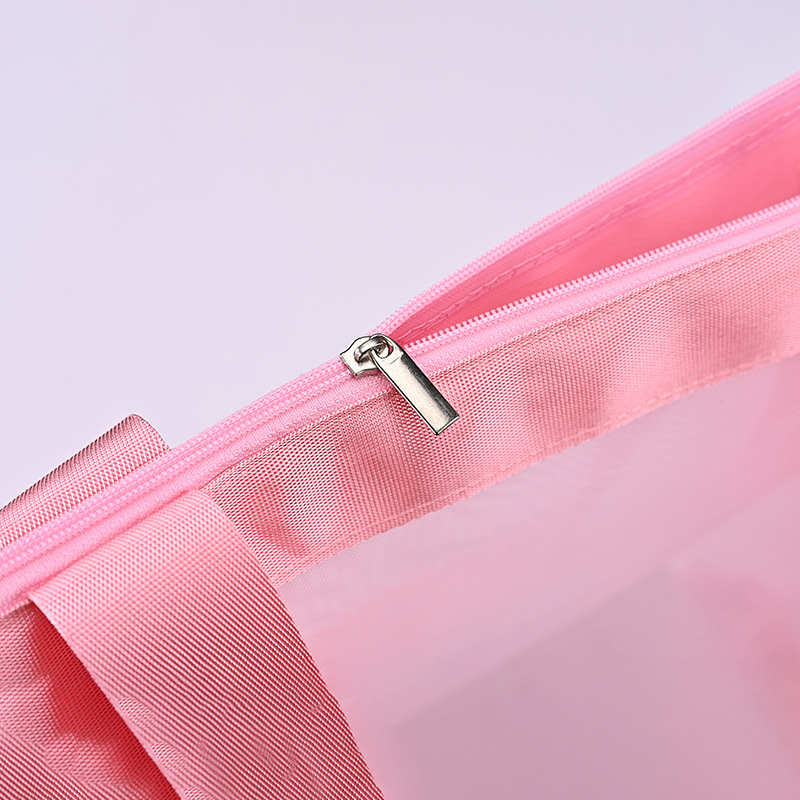
The visible zipper, binding and handle construction illustrate why a finished-bag claim needs a defined component boundary. The photo does not prove any certification or fiber origin.
Build a certification-aware bill of materials
The bill of materials should identify each component, supplier, composition, weight or quantity, color, finish, certification relevance and evidence reference. Separate “ claimed,” “ not claimed,” “ excluded under the standard,” and “ unknown” rather than assuming the body-material statement covers the entire item.
For a recycled-content claim, calculate on the basis required by the applicable system and public wording. For a forest-based claim, identify eligible paper components and the certificate-holder path. For harmful-substance testing, define which parts and product class are covered. For durability or reuse messaging, specify physical tests instead of treating certification as a proxy for performance.
Choose a Route by Shopping Bag Material
The best route depends on the material, claim and selling market. This matrix helps a buyer start the conversation; the final route remains subject to actual suppliers, certificate scopes, standard rules and written confirmation.
| Bag construction | Likely claim question | Evidence route to investigate | Important boundary check | Useful LUCKYSTAR guide |
|---|---|---|---|---|
| RPET or other recycled textile | What recycled input and percentage can be claimed? | GRS/RCS scope plus order evidence; composition and BOM control | Handles, lining, zipper, coating and accessories | RPET sourcing checklist |
| Woven PP or non-woven PP | Is recycled PP claimed, and is reuse performance credible? | Appropriate recycled-content evidence if claimed; order composition; durability testing | Lamination, print film, binding, handles and recovery pathway | Woven PP vs non-woven PP comparison |
| Cotton or canvas | Is organic input, conventional cotton or recycled cotton intended? | GOTS/OCS or applicable recycled route; supply-chain and transaction evidence | Blends, thread, webbing, dyeing, printing and subcontracting | Cotton vs RPET comparison |
| Paper shopping bag | Can a certified forest-based claim appear on product or sales documents? | FSC or PEFC chain of custody and trademark approval | Handles, reinforcement, lamination, windows and mixed materials | FSC paper bag guide |
| Mixed-material insulated or zippered bag | Which component is claimed, and what remains outside the claim? | Component-level certification/evidence plus complete BOM and performance tests | Foam, foil/lining, zipper, coating, adhesive, thread and labels | Reusable bag testing guide |
| Reusable promotional tote | Is the main message content-based, reuse-based or both? | Claim-specific material evidence plus durability/reuse test plan | Do not equate “ reusable” with lower impact without scenario support | Durability and reuse testing |

A close-up can help teams distinguish visible construction and finish during specification review. It does not establish polymer identity, recycled percentage or certification status.
Verify the Entity, Site, Scope, Version and Date
A certificate review should be mechanical, not intuitive. Match all five fields:
Entity
The legal name on the document must match the party whose activity is relevant. Similar trading names, brand names and affiliated companies are not automatically interchangeable.
Site
Confirm the physical facility or facilities within scope. A trading office, printing site, sewing site and material producer may be different entities.
Scope
Read the product categories, materials, processes and trading activities, including exclusions or subcontractors. “ Textiles” is not enough if the order requires a finished shopping bag claim and the relevant process is outside scope.
Version
Standards change. Record the normative version used by the certificate holder and the transaction. This is particularly important in the 2026–2027 transition periods for Textile Exchange and GOTS systems.
Date and status
Check issue, validity, suspension, withdrawal and database status near the order date. A PDF saved last year is not proof of current status. Use the standard owner's official database or verifier where available, and save the result in the project evidence file.
Connect Scope Evidence to the Actual Purchase Order
Many weak reviews stop after finding a valid certificate. The stronger question is whether the actual order moved through the claimed route.
Compare the quotation, approved specification, purchase order, supplier order, material intake records where available, production lot, packing list, invoice and certification transaction/sales records. Product description, composition, quantities, dates, parties, sites and claim category should reconcile. Resolve discrepancies before shipment and before public artwork is released.
Do not let artwork outrun evidence
Certification marks and claim wording usually have trademark and approval rules. Place proposed wording, logo size, color, surrounding text, channel and product identifiers into the preproduction artwork package. Do not treat a logo downloaded from the internet as a design asset.
Public marketing may also require more qualification than a B2B transaction document. The U. S. FTC's Green Guides summary emphasizes substantiation and qualification of environmental claims. Destination-market legal review should be completed where needed. Use the defensible sustainability claims guide for reusable shopping bags to turn retained evidence into appropriately bounded copy.
Buyer Document Checklist Before Sample and Shipment Approval
Use this as a working control sheet. The word “ available” should mean the named document has been reviewed for the actual route— not that someone expects it to exist later.
| Gate | Buyer check | Minimum evidence | Release decision |
|---|---|---|---|
| RFQ | Claim object, percentage/basis, standard, destination market and label intent are defined | Written claim brief and preliminary component map | Do not compare quotations until assumptions are aligned |
| Supplier-route review | Relevant entities, sites, processes and certificate holders are identified | Current official database checks and scope documents | Reject or revise routes with entity/site/scope gaps |
| Specification | Every component and claimed boundary is controlled | Approved BOM, compositions, weights/quantities, colors, finishes and evidence references | Freeze the claim basis before material booking |
| Sample | Sample construction matches the claim-aware specification | Approved sample record, component identification and test plan | Do not infer certification from appearance |
| Artwork | Claim wording and marks are eligible and approved | Standard-owner or certificate-holder approval as applicable, plus final artwork version | No certification mark without documented authorization |
| Production | Purchased inputs and actual processing route match the approved plan | Purchase and lot records, change-control log, in-process checks | Hold changes that affect claim scope or evidence |
| Pre-shipment | Quantities, composition, documents and lot references reconcile | Inspection result, packing list, invoice and transaction/sales evidence | Release only after discrepancies are closed |
| Marketing handoff | Public claim is no broader than the retained evidence | Evidence pack, approved wording, market qualification and renewal owner | Remove or update claims when evidence expires or product changes |
Certification Does Not Replace Performance Testing
A certified input can still be used in a poorly constructed bag. Handle attachment, seam strength, closure cycling, abrasion, dimensional stability, colorfastness, print adhesion and intended load remain product-engineering questions.
Build the test plan around real use. A lightweight giveaway tote, grocery bag, paper retail carrier and insulated zippered bag have different failure modes. See the custom shopping bag quality-control checklist and shopping bag printing quality-control checklist to keep certification evidence and physical release criteria connected but distinct.
Material weight also affects resource input, durability and packed transport, but “ lighter” is not automatically “ better.” Use how material weight affects shopping bag environmental performance for functional-unit planning, and recyclable vs reusable shopping bags for end-of-life and reuse trade-offs.
Company-claim boundary: the following section is LUCKYSTAR publisher self-description. It does not state or prove that LUCKYSTAR, a selected supplier/site, every bag, or a specific order holds GRS, RCS, GOTS, OCS, FSC, PEFC, OEKO-TEX, ISO 14001 or any other certification. Certification, audit, test and regulatory evidence must be matched to the named entity, site, material, process, product, order, destination and claim. Availability, scope, documents, tests, logo approval, MOQ, price, schedule and delivery are subject to current verification, final specification and written confirmation.
Why Choose LUCKYSTAR for Certification-Aware Shopping Bag Projects
LUCKYSTAR's practical value is not a blanket promise that every bag or company entity carries every certification. It is coordinated project execution: translating a buyer's intended claim into a workable specification, identifying the evidence questions early, aligning samples and artwork, and keeping quality controls tied to the approved order.
A specification-first workflow
We can help buyers organize material, dimensions, construction, printing, packing, intended market, evidence expectations and test requirements before quotation is finalized. That makes commercial comparison more meaningful and reduces last-minute changes.
Component and change control
Certification claims fail when an unnoticed substitution changes the evidence boundary. A zipper, coating, handle tape, lining or print process may matter. Our workflow supports component-level clarification, sample approval and change escalation, subject to the project's documented requirements.
Claim-aware artwork and document coordination
We can coordinate requests for certificate scope, transaction or sales documentation, testing, label approvals and shipment reconciliation where the selected supply route supports them. Availability depends on the named standard, certificate holders, material, order, destination market and written confirmation.
Quality remains an independent gate
Certification never excuses weak construction or printing. LUCKYSTAR can align certification-related requirements with sample review, workmanship checkpoints and agreed inspection criteria. For the broader sourcing sequence, read the custom bag manufacturer guide, the shopping bag manufacturer selection guide, and the custom shopping bag sample-development process.
How to Request an Accurate Certification-Aware Quote
Send the following with your inquiry:
- bag style, dimensions, intended load and expected reuse scenario;
- body and component materials, target weights, coatings and finishes;
- desired claim for each component or the finished bag;
- required standard and acceptable alternative, if any;
- destination markets and buyer compliance requirements;
- print artwork, certification-mark intention and approval deadline;
- order quantity, colorways, packaging and delivery plan;
- required scope, transaction, testing, inspection and shipment documents;
- whether the claim must appear on the bag, packaging, invoice, ecommerce page or campaign;
- any retailer-specific evidence portal or audit requirement.
MOQ, pricing, sampling, testing, documentation route and lead time depend on the final specification and written confirmation. If evidence is still uncertain, request two transparent options: a route designed for the intended certified claim and a route without that public claim. This is more useful than disguising uncertainty with broad “ eco-friendly” language.

Frequently Asked Questions
Is GRS always better than RCS for a shopping bag?
Not automatically. They cover different requirements and thresholds. The right choice depends on the intended claim, recycled percentage, processing route, customer policy, availability and cost. Verify the applicable 2026 version and order evidence.
Does a valid supplier scope certificate prove my shipment is certified?
A valid supplier scope certificate is not shipment proof. It shows that the named entity can conduct specified activities within scope; the order must still be connected to the eligible route and required transaction or sales evidence.
Can we print a certification logo if the fabric supplier is certified?
Do not assume so. Finished-product eligibility, chain of custody, certificate-holder roles and trademark approval rules must all be checked before artwork release.
Does OEKO-TEX STANDARD 100 mean the fabric is organic or recycled?
No. STANDARD 100 addresses harmful-substance testing for a covered textile article or components. Organic and recycled claims require their own appropriate evidence routes.
Does ISO 14001 make a bag environmentally friendly?
No. It is an organizational environmental management-system standard. It does not define product recycled content, recyclability, reuse performance or life-cycle superiority.
Are SMETA and amfori BSCI certifications?
They should not be presented as product certifications. They are social due-diligence or monitoring tools associated with named sites, dates, findings and corrective actions.
Is a kraft paper bag automatically FSC or PEFC certified?
No. Color and appearance do not establish forest origin or chain of custody. Confirm an eligible certified route, official status, product scope, sales-document claim and trademark approval.
Can one test report cover all future orders?
Only if there is a justified, documented basis showing the covered specification remains representative and the buyer's requirements allow it. Material, color, coating, ink, supplier, method or regulatory changes may require review or retesting.
Which certification should a mixed-material shopping bag use?
Start with the intended claim and component boundary. Different components may require different evidence, and some may remain outside the claim. Build a BOM and decide whether the public statement concerns a material component or the finished item.
Final Takeaway
The strongest sustainability claim is not the one with the most logos. It is the one whose object, attribute, percentage or category, supply route, documents, label approval and shipment records all agree.
Use certification for the question it was designed to answer. Keep social audits, management systems, test reports and legal compliance in their proper roles. Then connect every claim to the actual shopping bag specification and order. LUCKYSTAR can support that disciplined process across product definition, sampling, documentation coordination and quality control— always subject to the selected material route, certificate scope, destination-market requirements and written confirmation.
Request a claim-and-certification route review
Send the exact intended claim and order specification so the applicable scheme, entities, sites, transaction records and artwork controls can be checked before sampling and quotation release.
Review LUCKYSTAR custom shopping bag options, then send your certification-aware brief through the contact form or Email a project brief. The email link opens a draft for your review before sending.
Materials, certification/audit/test scope, certificate validity, transaction evidence, logo approval, claims, legal applicability, availability, price, MOQ, packing, schedule and delivery terms are subject to current order-specific verification, final specification and written confirmation.