
How to Verify Recycled Content in Custom Shopping Bags
Last reviewed: September 15, 2026
Recycled content in a custom shopping bag cannot be verified by color, texture, a recycling symbol, a product photo, or the word “ eco” on a quotation. The dependable approach is to define the exact claim, identify every component covered by it, calculate the percentage on the correct mass basis, and connect the supporting records to the same legal entities, sites, materials, production lots, purchase order, and shipment.
That sounds document-heavy, but it becomes manageable when the evidence is designed into the order before sampling. This guide gives sourcing, sustainability, and quality teams a practical verification workflow that works across recycled polyester, recycled polypropylene, recycled cotton, recycled paper, and mixed-material bags. It complements our material-specific guide to RPET shopping bag certification and sourcing and our buyer checklist for GRS-certified RPET shopping bags, while focusing on the broader question: how do you prove the claim belongs to the bags you actually ordered?
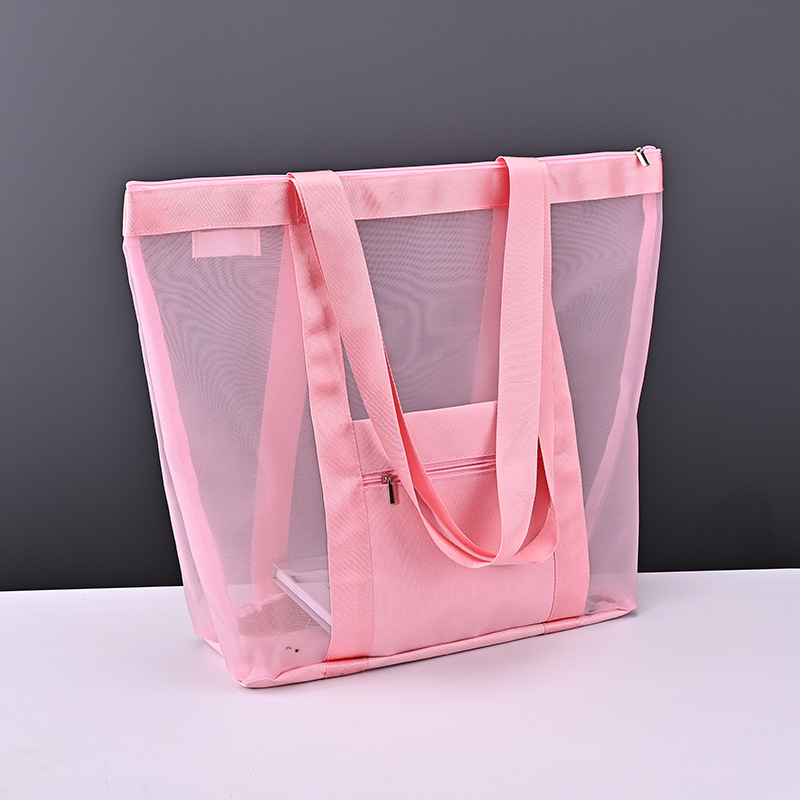
A real product image from LUCKYSTAR’ s public Alibaba storefront.The image helps identify visible bag construction; it does not by itself prove fiber origin, recycled percentage, or certification.
Need an evidence-ready recycled-content bag RFQ? Send the exact claim subject and percentage basis, material route and component BOM, legal entities and sites, certification route, transaction/lot requirements, quantity, artwork, destination market and required date. LUCKYSTAR can return evidence gaps, sample and receiving checkpoints, and order-level document questions for written review.
The Short Answer: Verify a Chain, Not an Appearance
To verify recycled content in custom shopping bags, require five connected layers of evidence:
- A precise claim — the product, component, recycled input, percentage, calculation basis, and applicable market are named.
- A component-level specification — the bill of materials (BOM) distinguishes shell, lining, handles, coating, thread, reinforcement, closures, ink, and packaging where relevant.
- Qualified source evidence — supplier declarations, purchase records, certification records, or another agreed assurance route identify the recycled input and its supplier.
- Lot and process traceability — receiving, storage, issue, conversion, production, and shipment records preserve the link to the order.
- Claim-to-shipment reconciliation — quantities and masses are plausible, dates align, and the released claim matches the evidence retained for that shipment.
No single document automatically completes all five layers. A certificate may establish that an organization and process are within a certification scope, but it is not automatically evidence for every product or shipment. A test report may identify polymer or fiber composition, yet an ordinary composition result should not be treated as proof of recycled origin unless the selected method specifically validates that claim. A declaration may be useful, but its reliability depends on scope, supporting records, accountability, and the rules in the destination market.
Start by Defining Exactly What Is Being Claimed
“ Made from recycled material” is not a complete purchasing specification. Before asking for proof, turn the marketing phrase into a claim statement that an auditor could test.
Name the Claim Subject
Is the claim about the entire finished bag, the main body fabric, the nonwoven layer, the yarn, the paper, or the packaging? A bag can contain a recycled shell but virgin handles, thread, coating, reinforcement, zipper tape, and lining. Saying “ the bag is 100% recycled” when only the shell is covered creates a denominator problem and may mislead buyers or consumers.
Name the Percentage and Its Basis
ISO 14021:2026 describes recycled content as a proportion by mass in, or attributed to, a product, component, or packaging. That means the percentage needs a defined denominator. “80% recycled content in the main polyester fabric by mass” is materially different from “80% recycled content in the finished bag by mass.” If an attribution or mass-balance model is used, that must be understood and communicated according to the applicable program and market rules; attributed content is not automatically a physical-content guarantee for each individual bag.
Name the Recycled Input
Record whether the claimed feedstock is pre-consumer or post-consumer, where the applicable standard or law requires that distinction. Also identify the material family: recycled PET polyester, recycled polypropylene, recycled cotton, recovered paper fiber, or another input. “ Recycled” is not a material specification.
Set the Time and Order Boundary
Evidence should cover the material purchase and production period relevant to the purchase order. A valid-looking document from a different year, facility, supplier, or product line may be authentic but irrelevant to the current bags.
The claim-definition table below can be copied into an RFQ or internal approval form.
| Claim field | Weak wording | Verifiable wording | Buyer check |
|---|---|---|---|
| Claim subject | Recycled shopping bag | Main-body woven fabric of SKU BAG-01 | Does the claim exclude handles, coating, thread, closures, and packaging? |
| Material | Recycled fabric | Recycled PET polyester yarn and fabric | Do purchase and conversion records use the same material identity? |
| Percentage | Eco / high recycled content | 70% post-consumer recycled polyester in the claimed main-body fabric by mass | Is the numerator and denominator defined? |
| Assurance route | Certified material | Evidence route and applicable scheme named; organization, site, process, and dates checked | Does the evidence apply to this order, rather than merely to a company? |
| Order boundary | Current production | PO number, SKU, color, quantity, production window, input lots, and shipment named | Can the finished lot be traced back to the supported input? |
| Public wording | Sustainable bag | Qualified claim limited to the supported component and percentage | Would a customer understand what is and is not included? |
If you are still comparing construction options, begin with the custom shopping bags product page and turn the selected construction into a component-level specification before requesting a sustainability claim.
Map the Finished Bag Component by Component
A useful recycled-content review begins with a claim map, not a certificate folder. Draw or list the bag components, their material descriptions, nominal finished masses, and whether each component is included in the claim.
For a simple tote, the map might include body panels, gusset, handles, thread, reinforcement patches, and print. For an insulated shopping bag, it may also include outer fabric, foam, foil lining, zipper tape, slider, binding, webbing, and bottom board. For a laminated woven bag, separate the woven substrate, film, ink, adhesive, and handles. Material weight affects both the denominator and the bag’ s functional performance; see our guide to how material weight affects shopping bag environmental performance.
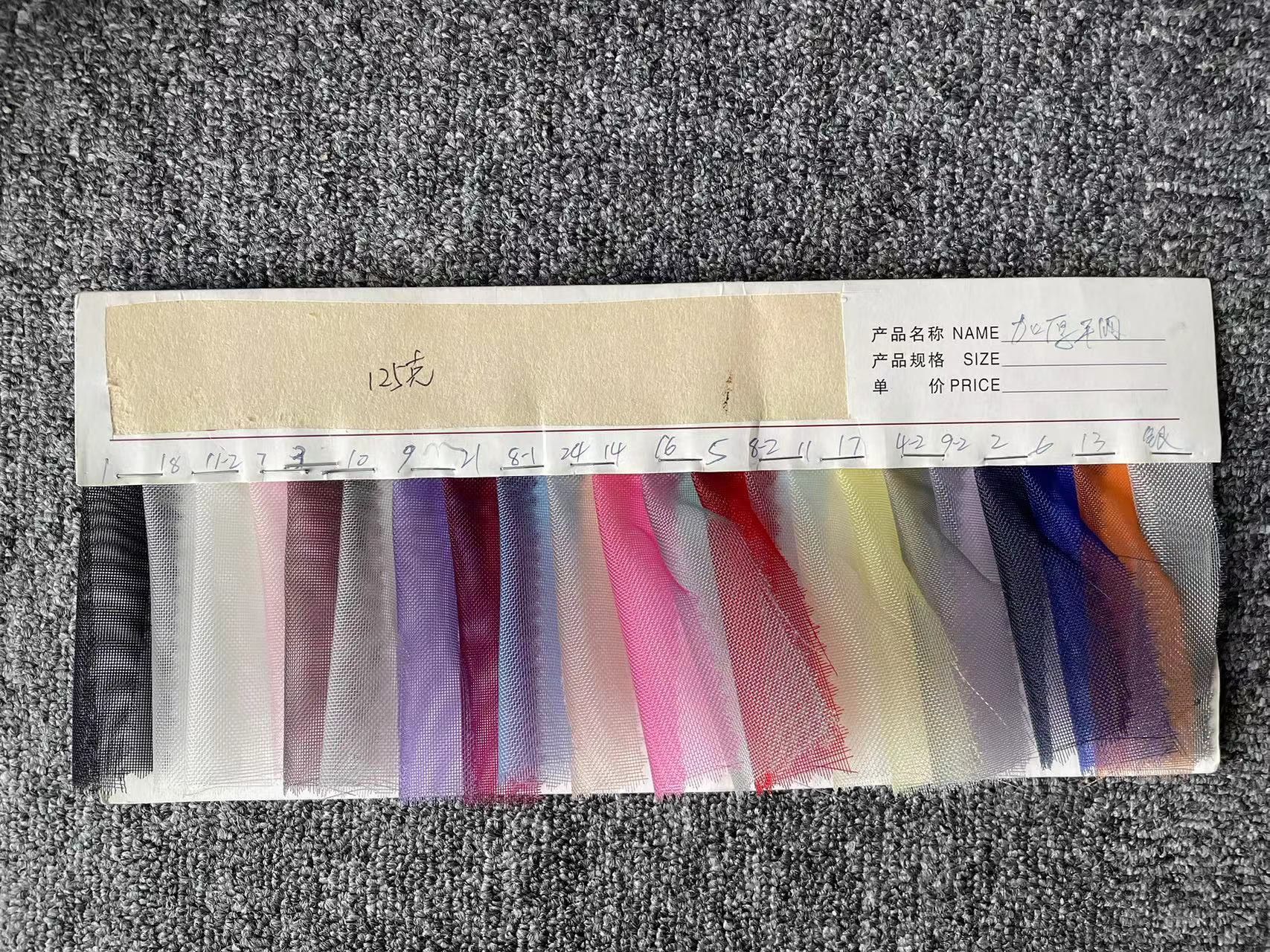
A physical swatch image from LUCKYSTAR’ s public Alibaba storefront. A swatch can support color, hand feel, structure, and visual identification. It cannot, without connected records, prove that production material contains a stated recycled percentage.
Select an Assurance Route Before the Purchase Order
Different claims need different levels of assurance. A buyer may use an order-specific documentary review, an independent certification program, a customer audit, a recognized testing method where relevant, or a combination. The correct route depends on the claim, material, destination market, risk, customer policy, and budget.
Self-Declared Does Not Mean Evidence-Free
If a claim is supported by supplier documentation rather than third-party certification, require a signed declaration that names the legal entity, facility, material, percentage, calculation method, date, and order. Back it with BOMs, purchase documents, lot records, production issue records, and reconciliation. A broad company letter saying “ our products use recycled materials” is too vague.
Certification Does Not Mean Every Item Is Covered
The Global Recycled Standard and Recycled Claim Standard are third-party systems intended to verify recycled material and chain of custody. However, buyers still need to check the current standard and policy, the certified organization and site, the certified process and product scope, document validity, and the order-level records required by the applicable program. Textile Exchange has been transitioning standards under its Materials Matter framework, so buyers should verify current requirements rather than copying a threshold or document rule from an old blog post.
When a supplier presents GRS-related evidence, use our focused GRS buyer verification guide. LUCKYSTAR does not treat a certificate attachment as a blanket company-wide or product-wide claim. Certification statements remain subject to the named entity, facility, product/process scope, validity dates, applicable standard version, and order evidence.
Build an Evidence Ladder, Not a Document Pile
Evidence is most useful when each item answers a specific question. The following ladder shows what common records can and cannot establish.
| Evidence item | What it can support | What it cannot establish alone | Matching fields to check |
|---|---|---|---|
| Product photo or physical sample | Construction, dimensions, color, visible labels, and comparison identity | Recycled origin, percentage, chain of custody, or certification | SKU, sample version, color, dimensions, construction details |
| Material specification or data sheet | Declared composition, grade, nominal weight, and technical requirements | That the documented material was purchased and used in this order | Supplier code, material code, revision, unit, declared percentage |
| Composition or performance report | Results for tested specimen and methods within the report scope | Recycled origin unless the method specifically verifies it; use in every production lot | Report number, specimen identity, method, laboratory, date, result scope |
| Supplier declaration | Accountable statement for a named material/order | Independent verification or uninterrupted custody without supporting records | Legal entity, site, signatory, PO, lot, percentage, calculation basis, date |
| Certification scope record | Certified entity/site/process/product categories during a stated period | Automatic coverage of every SKU, material lot, subcontractor, or shipment | Certificate number, entity, site, scope, version, issue/expiry, certification body |
| Order or transaction record required by a scheme | Documented movement of eligible material/product between named parties | Correct final claim if the product, quantity, dates, or component scope do not match | Seller, buyer, product, input/output, quantity, date, PO, shipment |
| BOM and mass calculation | Component boundaries and mathematical percentage for the defined claim | Accuracy of weights or origin of inputs without measurement and source evidence | Finished mass, scrap basis, component revisions, units, tolerances |
| Receiving-to-shipment trace | Physical/documentary link from input lot to finished goods | Truth of upstream evidence if its source is unqualified | Lot IDs, warehouse location, issue notes, work order, QC lot, carton/shipment IDs |
The strongest file is not necessarily the most decorative one. A buyer should be able to follow the evidence from claim wording to BOM, input source, lot control, manufacturing record, and shipment without guessing at missing identities.
Understand What Testing Can and Cannot Prove
Testing is valuable, but the test question must match the claim question.
Composition Is Not the Same as Origin
A fiber-content or polymer-identification result may help confirm that a sample is polyester, cotton, polypropylene, or a blend. It does not necessarily distinguish recycled material from virgin material because the chemical or physical identity may be equivalent after processing. Do not accept “ the lab found polyester” as proof that the polyester came from recycled bottles.
Performance Tests Answer Performance Questions
Handle pull, seam strength, colorfastness, abrasion, load, wash, and reuse tests can show whether a bag is fit for its intended service within the method and specimen tested. They do not prove recycled origin. Use our reusable shopping bag testing guide and durability and reuse testing guide to build the performance portion of the approval plan separately.
Use Specialized Methods Only Within Their Scope
If a laboratory or scheme offers a method claimed to verify a particular recycled feedstock or attribution model, confirm the method, detection limits, sampling plan, applicable material, interpretation rules, and recognition in the destination market. A report’ s conclusion should never be expanded beyond the named specimen and method.
Check Legal Entity, Site, Process, and Product Scope
Name matching is one of the most important controls in recycled-content verification. Compare the legal entity on the quotation, purchase order, invoice, certification record, declaration, and transaction document. Similar trading names are not sufficient.
Then check the site. Material may pass through a yarn producer, fabric mill, laminator, printer, converter, sewing site, and packing location. Identify which operations are performed at each location and whether any relevant subcontractor sits outside the assurance boundary. ISO 22095 provides a general framework for chain-of-custody terminology and models, but it explicitly does not by itself provide enough information to make or verify a product claim. The claim still needs program- and order-specific evidence.
For broader supplier due diligence, use our custom bag manufacturer guide and shopping bag manufacturer selection guide. They help separate trading coordination, manufacturing operations, and subcontracted steps without assuming that every facility shown in marketing material is owned by the seller.
Connect Upstream Evidence to the Actual Purchase Order
Authentic evidence can still be irrelevant. Create a matching sheet with the following identifiers:
- Buyer PO and line item
- Supplier sales order or production order
- Approved SKU, artwork version, color, size, and construction revision
- Material supplier and material code
- Incoming material lot or batch numbers
- Received quantity or mass and date
- Warehouse location or status
- Material issue note and work-order number
- Finished-goods lot and inspection report
- Carton marks, packing list, invoice, and shipment reference
Dates should tell a coherent story. Input must be purchased and received before it is issued to production; production records must precede final inspection and shipment. Quantities should reconcile after allowing documented process loss, retained samples, rework, and inventory. A document dated after shipment may be a correction, but it requires explanation and authorization rather than silent acceptance.
Calculate Recycled Content from the Approved BOM
The calculation must follow the claim boundary. For a physical-content claim on the finished bag, a simple mass-based calculation is:
Recycled content (%) = verified recycled input mass in the claimed product boundary ÷ total mass of that boundary × 100
If a component is a blend, multiply the component’ s finished mass by its supported recycled fraction. Keep units consistent. Use measured or controlled nominal finished masses and document tolerances. Do not count production scrap twice, and do not automatically include recyclable material as recycled input.
A Hypothetical Worked Example
The numbers below are illustrative only. They are not a LUCKYSTAR product claim, quotation, test result, or customer case.
| Component in one finished bag | Finished mass | Supported recycled fraction | Recycled mass counted | Included in whole-bag denominator? |
|---|---|---|---|---|
| Main-body fabric | 88 g | 80% | 70.4 g | Yes |
| Handles | 22 g | 0% | 0 g | Yes |
| Lining | 24 g | 50% | 12.0 g | Yes |
| Reinforcement, thread, zipper, print | 16 g | 0% | 0 g | Yes |
| Total | 150 g | — | 82.4 g | Yes |
| Illustrative whole-bag recycled content | — | — | — | 82.4 ÷ 150 = 54.9% by mass |
The same construction could support a truthful component claim such as “ the main-body fabric contains 80% recycled material by mass,” while the whole-bag calculation is approximately 54.9% in this example. The wording must make the boundary obvious.Changing handle weight, lining, coating, reinforcement, or accessory construction changes the whole-bag percentage even if the main fabric remains unchanged.
Treat Mass Balance and Attribution Claims Carefully
Some supply systems use controlled mixing, book-and-claim, or mass-balance-style attribution. These are not interchangeable with physical segregation or identity preservation. Determine which chain-of-custody model applies, what the program permits, and how the consumer-facing claim must be qualified.
ISO 14021:2026 notes that where mass balance is used, attributed recycled content may not be physically present in each product in the stated proportion. That distinction matters. Do not convert an attributed claim into an unqualified statement implying that every individual bag physically contains the same percentage. Obtain legal and program review for the destination market before approving label, hangtag, package, website, or campaign wording.
Control Material at Receiving and Storage
Verification fails when supported input loses its identity on the warehouse floor. Receiving inspection should compare delivery documents, material codes, labels, lot numbers, quantities, packaging, and declared status against the approved purchase record. Photograph labels where rights and confidentiality allow, record discrepancies, and quarantine material with missing or inconsistent identification.
Keep supported and unsupported inputs separated or controlled according to the selected chain-of-custody model. A clear warehouse status— approved, on hold, rejected, or released— helps prevent substitution. If labels are replaced internally, maintain the link between original supplier lot and internal lot.
Preserve Identity During Cutting, Printing, Sewing, and Packing
Traceability should continue through conversion, not stop at receiving. The production traveler or work order should name the SKU revision, material lots, planned quantity, and relevant operations. Material issue and return records should show what entered and left the work order.
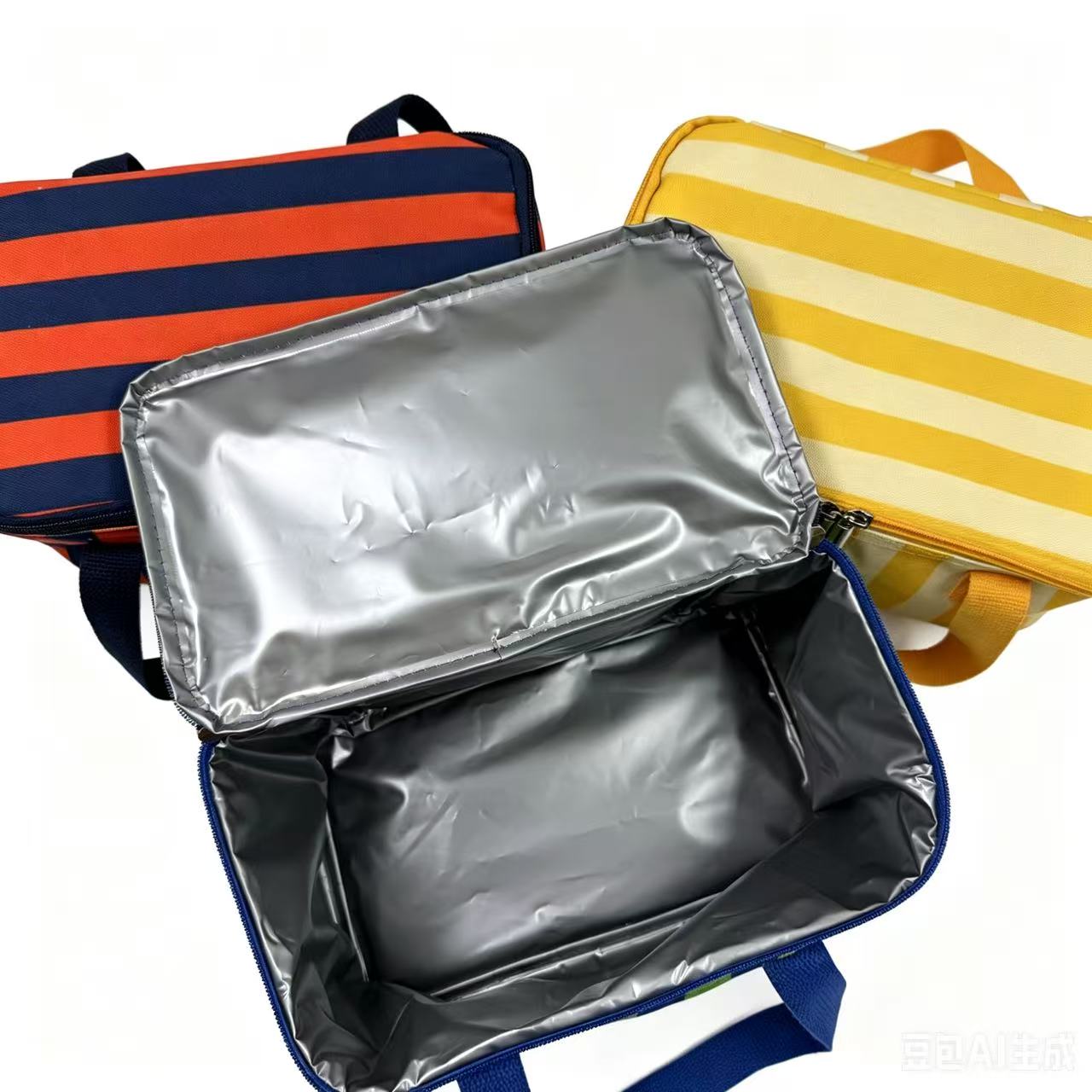
A real multi-component bag image from LUCKYSTAR’ s public Alibaba storefront. Visible shell, lining, handles, and closures illustrate why claim boundaries must be component-specific. The photograph does not establish material origin or recycled content.
Watch Substitution Points
Common risk points include replacing a shortage with visually similar stock, mixing returned rolls, using unapproved handle webbing, changing lining or reinforcement, and packing leftovers from another run. Define who can authorize a substitution and what evidence must be updated before production resumes.
Keep Print and Trim Claims Separate
Recycled-content evidence for body fabric does not automatically cover ink, adhesive, coating, lamination, zipper tape, labels, or thread. Printing also needs its own approved artwork, color, adhesion, cure, and defect controls. See the shopping bag printing quality control checklist, common shopping bag printing defects guide, and material-versus-print-quality guide.
Reconcile Input, Output, Loss, and Inventory
A plausible mass reconciliation is one of the best ways to detect unsupported over-claiming. For the defined period or order, compare:
Opening eligible inventory + eligible receipts − eligible material issued or sold − closing eligible inventory = explained eligible usage and loss
Then compare eligible input used with finished output, component mass, process yield, scrap, retained samples, rework, and inventory returns. The exact accounting rules depend on the assurance program. The objective is not to force zero variance; it is to make every material movement explainable and prevent more claimed output from being released than the supported input permits.
Investigate unit errors, unexplained negative inventory, duplicate document numbers, round percentages with no calculation, output that exceeds feasible yield, and frequent manual corrections near audit or shipment dates.
Assemble a Shipment-Level Evidence Pack
Release the public claim only after the shipment file is complete. A practical pack can contain the approved claim statement, BOM revision, material specifications, source evidence, entity/site review, purchase and receiving records, lot map, production traveler, input-output reconciliation, final inspection, packing list, and approved label or webpage wording.

A real finished-product image from LUCKYSTAR’ s public Alibaba storefront. Finished-goods photos may help compare SKU, construction, and color at shipment release, but they do not replace material and custody records.
Use filenames and revision controls that preserve the audit trail. If a document is corrected, retain the original where policy requires, record the reason, identify the approver, and link the revision to the same PO. Evidence retention periods should follow applicable law, certification rules, customer contracts, and internal policy.
Adjust Verification to the Material Route
The five-layer logic remains the same, but the upstream chain and technical questions differ by material.
| Material route | Define before sourcing | Upstream records to connect | Frequent verification mistake |
|---|---|---|---|
| Recycled PET polyester | Claimed component, recycled fraction, pre-/post-consumer status where relevant, physical or attributed model | Feedstock/yarn/fabric identities, eligible supplier records, conversion and lot documents | Treating “ polyester” test results or an RPET label as recycled-origin proof |
| Recycled polypropylene | Woven or nonwoven construction, lamination/coating boundary, recycled fraction by component | Resin/fiber/fabric records, extrusion or conversion lots, lamination and sewing records | Assuming a recycling code or PP material identity means recycled input was used |
| Recycled cotton or cotton blend | Mechanical or other recycling route, blend fibers, yarn/fabric percentages, claim boundary | Fiber/yarn/fabric specifications, blend calculations, lot and conversion records | Reporting the yarn blend as the percentage of the whole finished bag |
| Recycled paper | Recovered-fiber percentage, paper grade, coating, handles, reinforcement, and applicable forestry/recycled claim system | Paper mill/converter records, paper code, chain documents, print/converting lots | Confusing a forestry chain-of-custody claim with a universal recycled-content percentage |
| Mixed-material bag | Every component and exclusion; denominator for component or whole-bag claim | Component BOM, supplier evidence by material, finished mass, consolidated lot map | Letting strong evidence for one component imply coverage of all others |
For paper-specific custody questions, read our FSC paper shopping bag chain-of-custody guide. For cotton traceability, see the organic cotton bag supply-chain guide. These systems answer different questions; neither should be treated as interchangeable with recycled-content verification.
Put Red Flags Behind Clear Hold and Release Rules
A red flag is not always proof of fraud, but it is a reason to stop the claim until the inconsistency is resolved. Useful hold triggers include:
- The declaration names a trading company, but the relevant certificate or process belongs to an unrelated factory.
- The site address, legal entity, product category, or process does not match the proposed supply chain.
- Document dates do not cover input purchase, production, or shipment.
- The claimed percentage appears only in marketing artwork and not in the approved specification or BOM.
- Recycled and virgin material codes are indistinguishable in receiving or production records.
- Transaction quantity is smaller than the finished claimed output after reasonable yield assumptions.
- A product-specific claim is supported only by a general website page or company certificate.
- An expired, cropped, translated, or edited document cannot be verified against the issuer or original.
- A laboratory composition report is presented as proof of recycled origin without a relevant method.
- Subcontracted printing, lamination, or sewing sits outside the declared chain and no control is shown.
Define actions before an exception occurs: quarantine material, request originals, verify with the issuer or scheme database, recalculate the claim, change the claim wording, obtain independent review, or remove the claim. Never solve an evidence gap by making the public wording broader.
Write Recycled-Content Requirements into the RFQ and PO
The lowest-cost time to fix traceability is before material purchase. Include the following order clauses, adapted by your legal and compliance team:
Claim Specification
State the component, material, minimum or target percentage, mass basis, pre-/post-consumer distinction where applicable, assurance route, destination market, and exact intended wording. Attach the approved BOM and artwork/hangtag version.
Evidence and Verification
List documents required before purchase, before production, and before shipment. Reserve the right to verify the issuing body or database, request originals, review lot and mass records, and use a qualified independent auditor or laboratory where appropriate.
Change Control
Require written approval before changing the material supplier, site, process, construction, component weight, blend, coating, lining, trim, or assurance route. A small component change can alter the whole-bag percentage and invalidate wording.
Nonconformity and Claim Release
Define quarantine, corrective action, replacement, relabeling, claim removal, and shipment-hold rules. Public claim release should remain conditional on complete, matching evidence for the order.
Sampling should also preserve these requirements. Our custom shopping bag sample development process explains how to freeze construction, artwork, and approval records before mass production, while the custom shopping bag quality control checklist covers order-level quality gates.
Make the Public Claim No Broader Than the Evidence
The U. S. Federal Trade Commission’ s Green Guides explain that recycled-content claims concern material recovered or diverted from the waste stream and that partial recycled-content claims should be qualified. Other markets may use different definitions, substantiation requirements, labeling rules, or enforcement approaches. Review the current rules where the claim will appear and where the bag will be sold.
Avoid vague, unqualified claims such as “ green,” “ planet friendly,” or “100% recycled bag” unless evidence and law support the exact meaning. Safer wording is specific: name the component, percentage, material, and basis. Do not combine recyclability, recycled content, reusability, biodegradability, and lower-impact performance as though they were one property. Our guide to defensible sustainability claims for reusable shopping bags explains how to build a claim file, while recyclable versus reusable shopping bags separates end-of-life potential from repeated-use performance.
Company-claim boundary: the following section is LUCKYSTAR publisher self-description. It does not prove that LUCKYSTAR, a selected site, material, product or shipment holds a named certification or contains a stated recycled percentage. Entity/site scope, material origin, chain of custody, transaction documents, BOM calculations, tests, claim wording, MOQ, price, schedule and delivery are subject to the actual order, current authentication, qualified review, final specification and written confirmation.
Why Work with LUCKYSTAR on Recycled-Content Bag Projects?
Recycled-content verification is easier when commercial, product, quality, and documentation decisions are coordinated around the same specification. LUCKYSTAR supports custom shopping-bag projects by helping buyers translate a design brief into material, construction, printing, sample, and order-level checkpoints.
Cross-Material Product Coordination
Different campaigns may require woven or nonwoven constructions, polyester routes, cotton routes, paper bags, or mixed-material designs. LUCKYSTAR can help compare practical construction options against capacity, appearance, print method, durability, and the intended claim. Availability, material status, commercial terms, and evidence remain subject to the selected specification, supplier route, order, and written confirmation.
Specification-First Development
We encourage buyers to state the claim boundary at RFQ stage, then align it with the BOM, sample, material code, artwork, and inspection plan. This prevents a marketing statement from being added after production without the evidence needed to support it.
Order-Level Document Matching
For a requested recycled-content route, our team can help organize the evidence request around legal entities, sites, material descriptions, lots, dates, quantities, and shipment references. We do not present a certificate from one entity, product, or period as a blanket LUCKYSTAR certification. Any certification or test claim must be verified for the named organization, facility, scope, standard, validity, and order.
Quality and Claim Controls in One Workflow
A bag still needs to perform. Construction, handles, seams, printing, dimensions, and packing should be checked alongside traceability so a well-documented material does not become a poor retail bag. This joined-up approach is especially important when material weight or recycled blends change print behavior, stiffness, shade, or sewing response.
If your team is still choosing a supplier and control model, use our manufacturer selection guide to prepare questions before requesting a quotation.
Frequently Asked Questions
Can a Product Photo Prove Recycled Content?
No. A photo can support visible identity, construction, color, and comparison to an approved sample. It cannot establish feedstock origin, recycled percentage, or custody. Pair photos with material, order, lot, production, and shipment records.
Is a Recycling Symbol Proof That the Bag Uses Recycled Material?
No. A material identification or recycling symbol may relate to material type or collection guidance. It does not, on its own, prove that recycled input was used or establish a percentage.
Is a Scope Certificate Enough for My Shipment?
Not by itself. Check the applicable scheme’ s current rules and confirm entity, site, process, product scope, validity, and any order- or transaction-level evidence required. The shipment and SKU still need to match.
Can a Lab Test Distinguish Recycled PET from Virgin PET?
Do not assume that a standard polymer or fiber composition test can do so. Confirm whether a specific, recognized method applies to the material and claim. In most purchasing controls, documentary chain of custody and mass reconciliation remain essential.
Should the Percentage Cover the Fabric or the Whole Bag?
Either can be a defined claim if allowed and properly supported, but the wording must identify the boundary. A fabric percentage must not be presented as a whole-bag percentage. Use the finished BOM and masses to calculate the latter.
How Often Should Evidence Be Rechecked?
At minimum, recheck when the supplier, site, material code, blend, standard version, certificate status, construction, BOM, or production route changes. Also recheck for each order or shipment to the extent required by the selected assurance program, contract, and destination market.
Turn Your Claim into an Auditable Shopping Bag Specification
The most credible recycled-content claim is not the boldest one. It is the one a buyer can reconstruct from a precise statement, component map, source evidence, lot controls, mass calculation, production records, and shipment file. Build that chain before production, and the final label becomes an output of verified facts rather than a marketing guess.
Share your bag size, construction, target component, intended recycled percentage, destination market, artwork, quantity, and evidence requirements with LUCKYSTAR. We can review the project against a specification-first workflow and identify the documents that should be confirmed for the selected order. All material, certification, testing, MOQ, pricing, lead-time, and claim details are subject to the final specification and written confirmation.

You can also explore custom shopping bag options or read the complete custom bag manufacturer guide before submitting your brief.
Primary Reference Frameworks
- Textile Exchange: Recycled Claim Standard and Global Recycled Standard
- Textile Exchange: current Global Recycled Standard documents
- Textile Exchange: standards and policy updates
- ISO 22095: Chain of custody — General terminology and models
- ISO 14021:2026 environmental statements and recycled-content terminology
- U. S. FTC: Environmental Claims— Summary of the Green Guides
Request an order-level recycled-content evidence review
Send the exact claim boundary and evidence route with the bag specification so product, percentage, documents and shipment records can be reviewed as one chain.
Review LUCKYSTAR custom shopping bag options, then send your recycled-content requirement through the contact form or Email a project brief. The email link opens a draft for your review before sending.
Materials, recycled percentage, certification scope, transaction evidence, tests, claim eligibility, legal applicability, availability, price, MOQ, packing, schedule and delivery terms are subject to order-specific authentication and evidence review, final specification and written confirmation.