
Last reviewed: September 24, 2026
Buyer Quick Answer
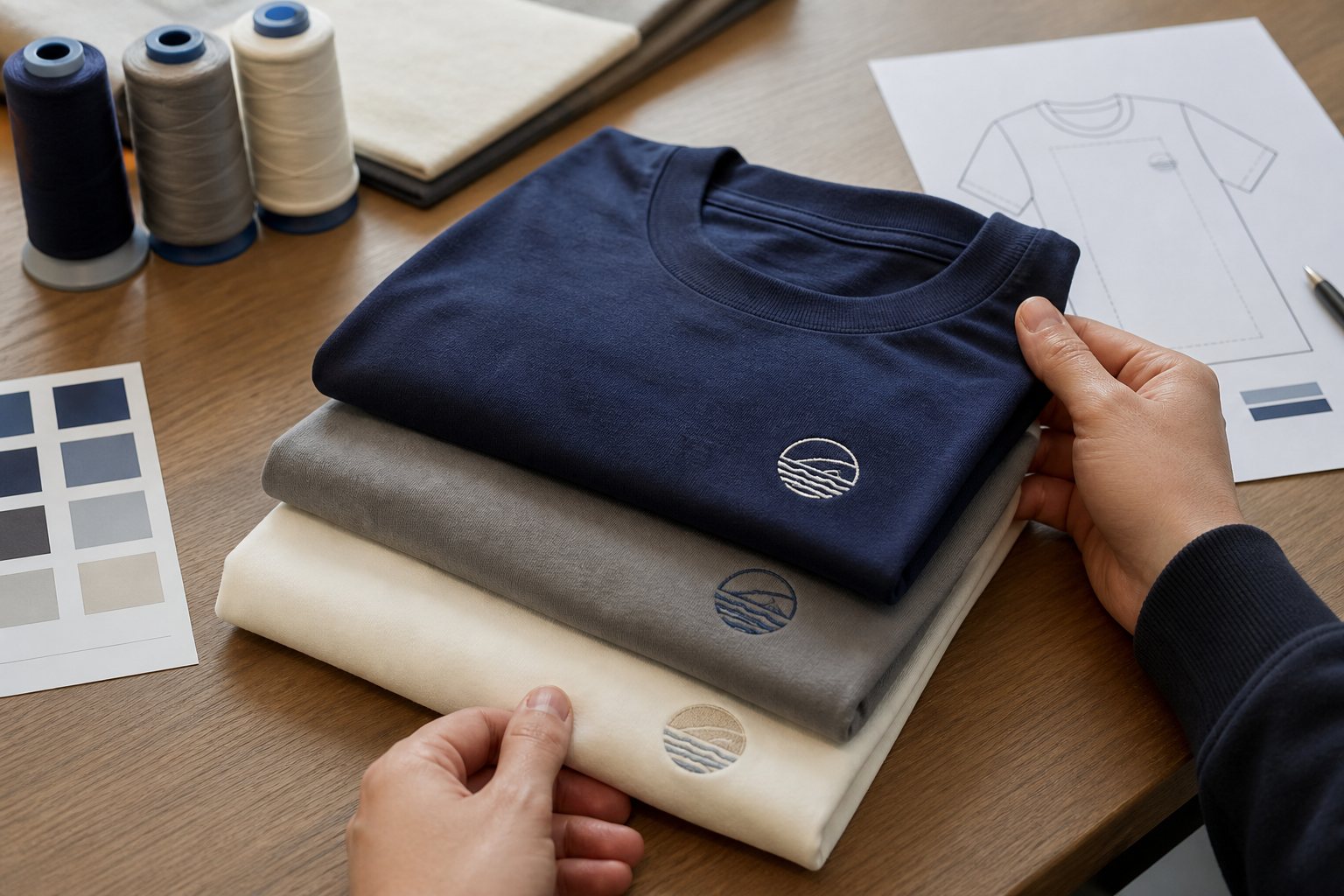
Custom embroidered T-shirts work best when a small, simplified logo needs a premium, durable appearance for staff uniforms, retail merchandise, events or client gifts. Start with the job the shirt must do, then choose the garment, logo size, placement, thread palette and care route. Approve a decorated sample on the actual production garment and keep a physical or documented master for bulk production and reorders.
This page owns the brand-program decision: where embroidered T-shirts fit, how to build a coordinated apparel range and what buyers should include in the RFQ. It does not repeat the digitizing, backing, stitch-density and sew-out controls covered in the dedicated custom embroidery T-shirt production guide. For the broader OEM/ODM sourcing framework across bags and coordinated merchandise, use the Custom Bag Manufacturer Guide.
Send Your Embroidered T-Shirt Specification
Start With the Brand Use Case, Not the Decoration Method
An embroidered logo does not automatically create a successful brand garment. The same left-chest mark can support a professional uniform, a premium retail basic or an event team, but each use case creates different decisions about fabric, fit, color, size ratios, washing, replenishment and packaging. A buyer who begins with "embroider our logo on a T-shirt" leaves the supplier to guess the product.
Define the audience, wearing environment and desired brand signal first. A hospitality team may need frequent washing and easy replacement. A product-launch crew may prioritize immediate recognition across a crowded venue. A retail capsule may need a softer hand, a more fashion-led fit and individual packaging. Those are different programs even when the artwork file is identical.
| Brand use | What the shirt must communicate | Likely branding route | Main buying risk |
|---|---|---|---|
| Customer-facing staff | Competence, consistency and approachability | Small left-chest embroidery; optional role or location detail | Uncomfortable fit or an oversized, stiff logo |
| Trade shows and events | Fast identification from several directions | Embroidered chest mark plus printed back or sleeve information | Brand visibility is too subtle for the venue |
| Retail merchandise | Design value, wearability and brand belonging | Subtle embroidery, tonal thread or a limited placement detail | Corporate-uniform appearance weakens retail appeal |
| Client or employee gifts | Perceived care and useful long-term value | Premium garment, restrained logo and gift-ready folding | Wrong size mix or packaging exceeds the product value |
Embroidery, Print or a Combined Brand System?
Embroidery is strongest when the artwork is compact, the product should feel premium and the brand needs a durable mark. Printing is usually better for large graphics, gradients, fine detail, photographic artwork or high-visibility event messages. A combined program may use an embroidered chest logo for identity and a printed back for campaign communication.
The choice should be made by garment and placement, not by a rule that every item in a range must use the same decoration method. A small icon can translate well to a T-shirt, polo, hoodie and cap, while a large slogan may belong only on the T-shirt back. If caps are included, review the curved-panel and center-seam constraints in the wholesale embroidered cap guide.
| Decision | Embroidery | Print or transfer | Buyer action |
|---|---|---|---|
| Artwork | Best for simplified shapes, readable letters and limited finished size | Better for large, detailed or full-color graphics | Ask for a method-specific artwork review |
| Garment hand | Textured and dimensional; can feel firm on light knits | Can be softer or flatter depending on the process | Wear and wash the actual decorated sample |
| Placement | Chest, sleeve and small identity marks | Full front, back and campaign graphics | Specify finished width and placement reference |
| Cost logic | Affected by stitch count, size, complexity and handling | Affected by colors, coverage, setup and process | Compare the approved result, not only the decoration line price |
Make Logo Placement Part of the Brand Standard
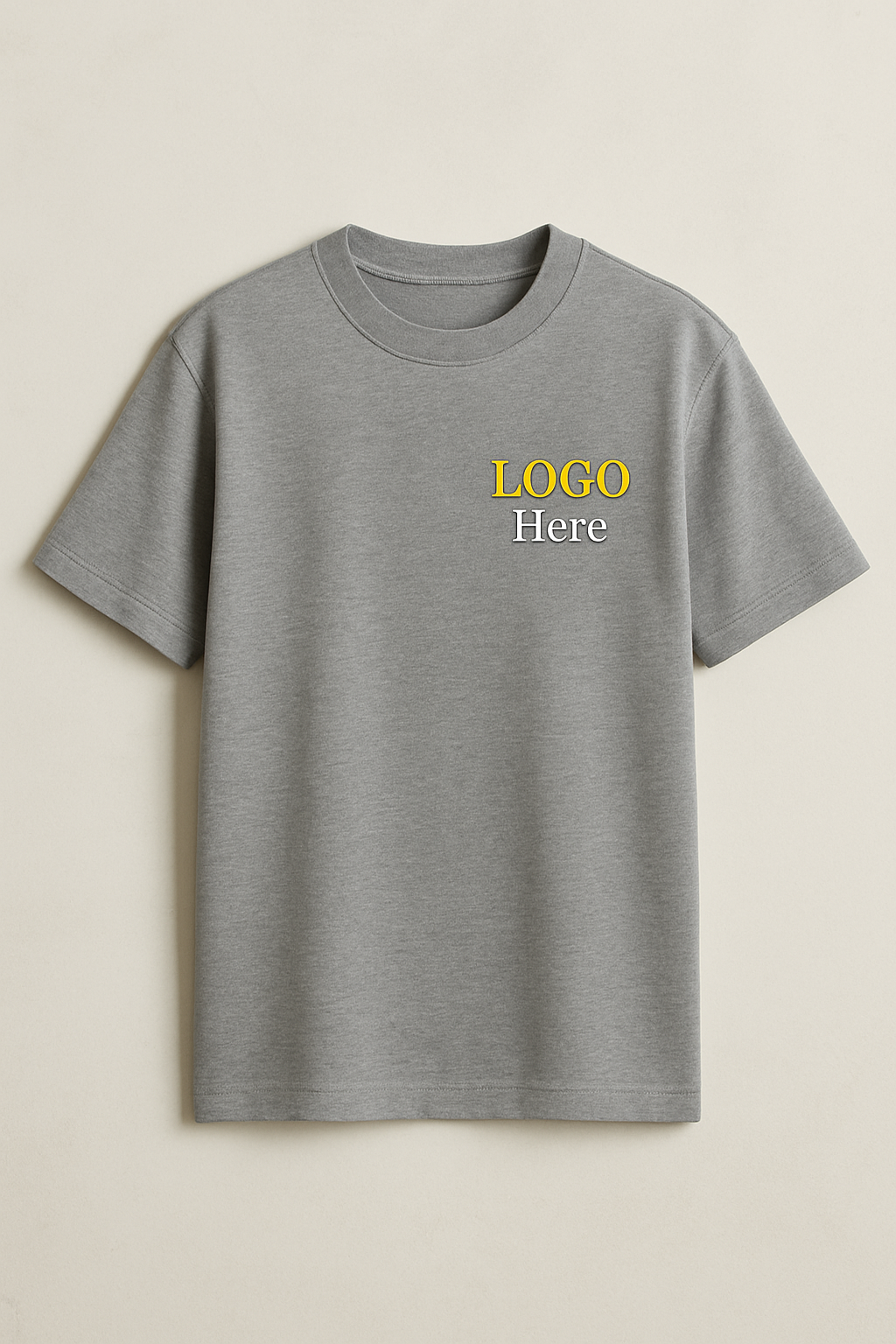
A placement instruction such as "left chest" is not complete enough for repeat production. The RFQ and approval should state the finished design size, the reference point used to locate it and whether the position changes by garment size. Chest width, collar shape and shoulder construction can make one fixed measurement look correct on a medium shirt but too close to the armhole on a larger size.
Test legibility at normal viewing distance. Small registered symbols, thin lettering and tight negative spaces may need a simplified embroidery version. Keep the master brand artwork, but approve a production adaptation rather than forcing unsuitable detail into thread. The supplier should not make hidden artwork changes after approval.
Build One Brand Language Across Apparel Categories
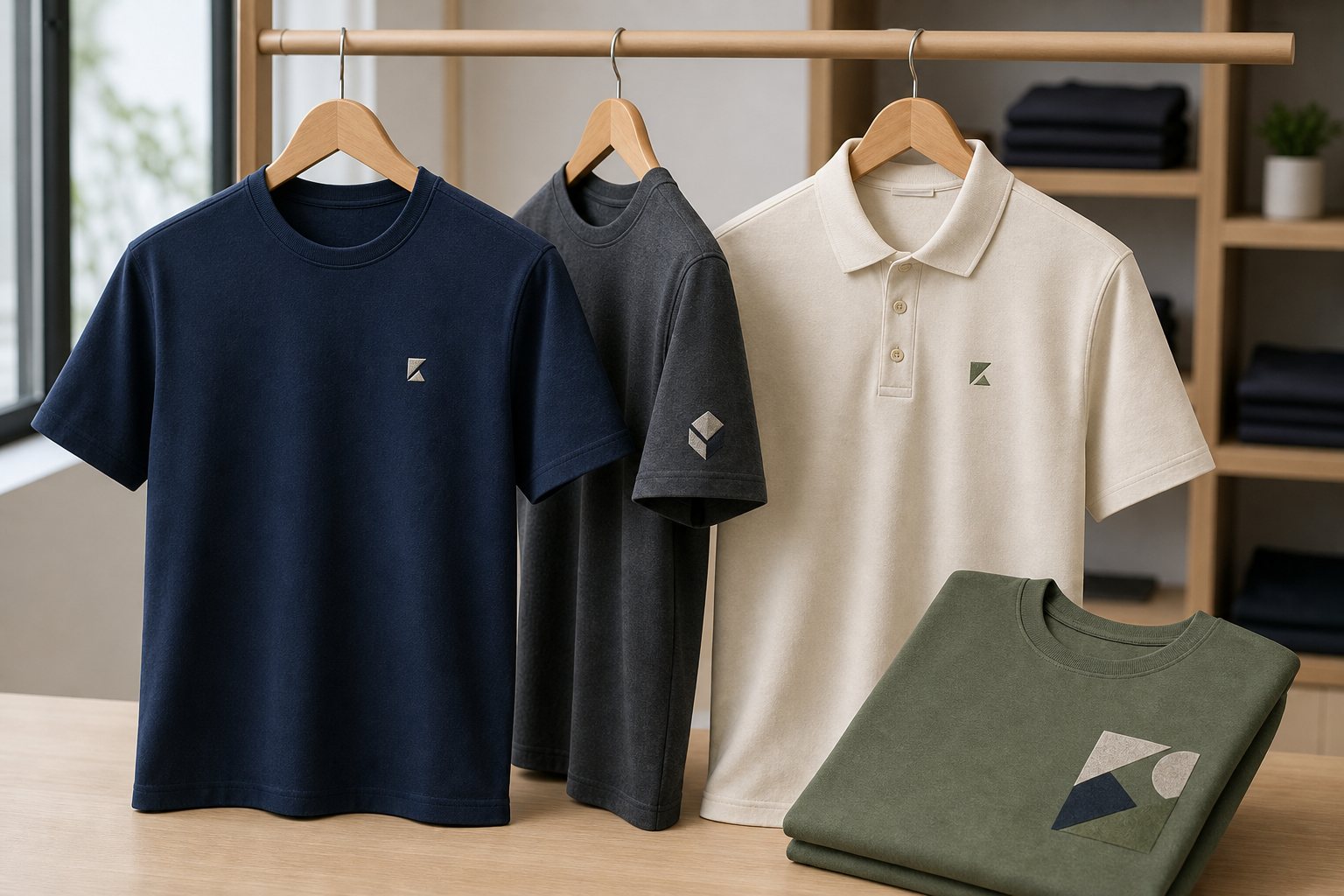
A coordinated range does not mean applying an identical logo at an identical scale to every product. It means preserving recognizable brand choices while adapting them to different surfaces. A light T-shirt, structured polo, fleece hoodie and curved cap require different proportions, backing and placement decisions.
Use a small brand-application matrix: garment, base color, logo version, finished size, thread palette, placement, label set and packing. The custom polo shirt manufacturer guide covers collar, placket and knit controls; the hoodie fabric, fit and finish guide covers fleece and heavier garments. Buyers developing caps and apparel together can also review the global cap and hat brand rollout guide.
Choose the T-Shirt Before Finalizing the Embroidery
The garment carries the brand before anyone inspects the stitching. Fabric composition, knit stability, finished weight, surface, fit, neckline, shrinkage and color consistency all affect wear experience and embroidery behavior. A premium logo on a weak or uncomfortable shirt creates a short-lived brand impression.
Decide whether the program uses a stock blank, a custom-cut garment or a hybrid route. Stock garments may simplify smaller rollouts and replenishment, but available colors and fit are limited to the chosen platform. Custom manufacturing provides more control over fabric, measurements, labels and packaging, yet requires a fuller development and approval process. For supplier continuity, sampling and bulk control, use the reliable custom T-shirt manufacturer guide.
Approve the Program in Stages
Do not approve the entire order from a digital mockup. A practical sequence separates decisions so changes remain traceable:
- Garment reference: approve fabric, color, fit and size measurements before final decoration.
- Artwork review: identify detail that must be simplified and confirm the finished logo dimensions.
- Decorated sample: review placement, thread color, surface appearance, inside feel and garment distortion.
- Wear and care check: wash the sample using the intended care route and inspect both shirt and logo.
- Pre-production approval: freeze the actual garment, decoration file, thread references, labels and packing.
- Bulk first-off: compare the first production pieces with the approved reference before the full run continues.
For technical decisions inside the embroidery file and sew-out, follow the digitizing and embroidery QC guide. This brand-program page keeps those controls connected to the commercial use case.
Request a Brand-Program Review
Send the intended use, garment type, colors, size range, quantities, logo files, placements, labels, packing, destination and target date. LUCKYSTAR can identify which decisions must be approved before a reliable quotation and sample plan can be prepared.
Understand What Changes the Quotation
A useful quotation cannot be reduced to one universal embroidered T-shirt price. The garment platform, fabric, color route, size range, logo complexity, finished decoration size, number of positions, thread requirements, labels, individual packing, inspection scope and delivery plan all affect the program.
Ask suppliers to identify assumptions. Confirm whether the quote uses a stock blank or custom garment, whether digitizing and sampling are included, how additional placements are charged, what happens when size or color ratios change and which packing method is included. A lower unit price can hide a different garment, smaller logo, weaker specification or missing approval stage.
Plan Reorders Before the First Order Ships
Brand consistency becomes harder when teams add new employees, open locations or repeat merchandise after several months. Retain the approved garment reference, measurement chart, fabric and color identification, decoration file version, thread references, placement diagram, label artwork, packing specification and accepted sample.
For a corporate uniform program, define who can request replacements, how size data is collected and whether inventory is held centrally or ordered in planned waves. The corporate uniform supplier guide covers role matrices, rollout and replenishment. If the shirts are intended for promotions rather than continuous wear, the bulk promotional T-shirt guide focuses on campaign allocation and distribution.
Use Brand-Level Quality Criteria
Technical embroidery inspection is necessary, but the brand owner also needs appearance and program criteria. Check that the correct garment, color, size, logo version, thread palette, placement, label and packing are matched for every SKU. A technically neat logo on the wrong shirt color is still a failed order.
- Compare logo size and position with the approved reference across representative garment sizes.
- Confirm the intended logo version and thread palette for every garment color.
- Check puckering, distortion, show-through and uncomfortable backing from the wearer's side.
- Verify labels, size marking, folding, individual packing and carton assortment.
- Record corrections and segregate affected pieces before packing is completed.
RFQ Checklist for Custom Embroidered T-Shirts
| RFQ field | Information to send | Why it matters |
|---|---|---|
| Use and audience | Uniform, event, retail, gift or mixed program; wearer roles and markets | Determines garment, visibility, care and replenishment priorities |
| Garment | Reference style, composition, fabric target, fit, colors and size range | Defines the product under the decoration |
| Quantity matrix | Units by color, size, logo version, destination and delivery wave | Reveals real SKU complexity and packing needs |
| Artwork and placement | Vector files, approved logo variants, finished width and position reference | Prevents hidden artwork and placement assumptions |
| Branding layers | Neck label, size label, care label, hangtag, bag and carton marks | Creates a complete brand and compliance scope |
| Approval and QC | Sample stages, wear/wash expectations, inspection points and retained master | Connects the approved idea to repeatable bulk evidence |
| Delivery | Destination, target in-hand date and split-shipment needs | Allows feasibility and logistics planning before commitment |
Related Apparel and Sourcing Guides
- Custom Bag Manufacturer Guide for the wider OEM/ODM supplier, MOQ, sampling, quality and delivery framework.
- Custom Embroidery T-Shirt: Digitizing and QC Guide for embroidery engineering and bulk controls.
- Reliable Custom T-Shirt Manufacturer Guide for sample-to-scale continuity.
- Corporate Uniform Supplier Guide for role, sizing, rollout and replenishment.
- Promotional T-Shirts in Bulk for campaign quantities and distribution.
- Basic Wear and Custom Accessories for coordinated apparel, bags and caps.
- LUCKYSTAR Custom Apparel Partnership Guide for cross-category project coordination.
Frequently Asked Questions
Are embroidered T-shirts suitable for every logo?
No. Compact, simplified marks generally translate better than photographs, gradients or extremely fine lettering. Keep the master artwork and approve a specific embroidery adaptation at the intended finished size.
Should a business choose embroidery or screen printing?
Use embroidery when a small, durable and premium identity mark is the priority. Use printing or transfer for large, detailed or highly visible graphics. Many business programs combine an embroidered front identity with printed event or campaign information.
Can one embroidery file be used on T-shirts, polos, hoodies and caps?
Do not assume so. The same logo may require different size, underlay, density, backing or placement for different garment surfaces. Approve each product platform separately while keeping the brand palette and visual character consistent.
What should be approved before bulk production?
Approve the garment, color, fit, size specification, logo adaptation, finished dimensions, thread references, placement, decorated sample, labels, packing and inspection criteria. Keep the approved file versions and a retained reference for reorders.
Company and project contact
Ningbo Luckystar Commodities Co., Ltd. reviews embroidered T-shirt programs against the submitted garment, artwork, thread, sample, QC, packing and reorder requirements. Capability and commercial terms are confirmed for the specific order.
Review custom T-shirts, browse product categories, or contact the project team.

GET AN EMBROIDERED T-SHIRT QUOTE
Email a prefilled brand-program brief





