Last reviewed: September 28, 2026
A custom polo can look correct in one flat photograph and still fail after wear or laundering. The buyer therefore needs a product specification that controls the body knit, collar, placket, cuffs, fit, decoration and wash-state appearance as one garment.
Buyer Quick Answer
A capable custom polo shirt manufacturer should convert the intended use into a measurable garment specification. Approve the polo only after checking the fabric construction, collar and cuff compatibility, placket balance, fit and grade rules, artwork placement, finished-garment measurements and appearance after the agreed care cycle. Do not approve the body, collar and decoration as unrelated components.
This guide is about Polo-specific product engineering. It does not repeat the sample-to-scale factory controls in the custom T-shirt manufacturing guide, the program-management scope of a corporate uniform supplier, or the full supplier-selection framework in the Custom Bag Manufacturer Guide.
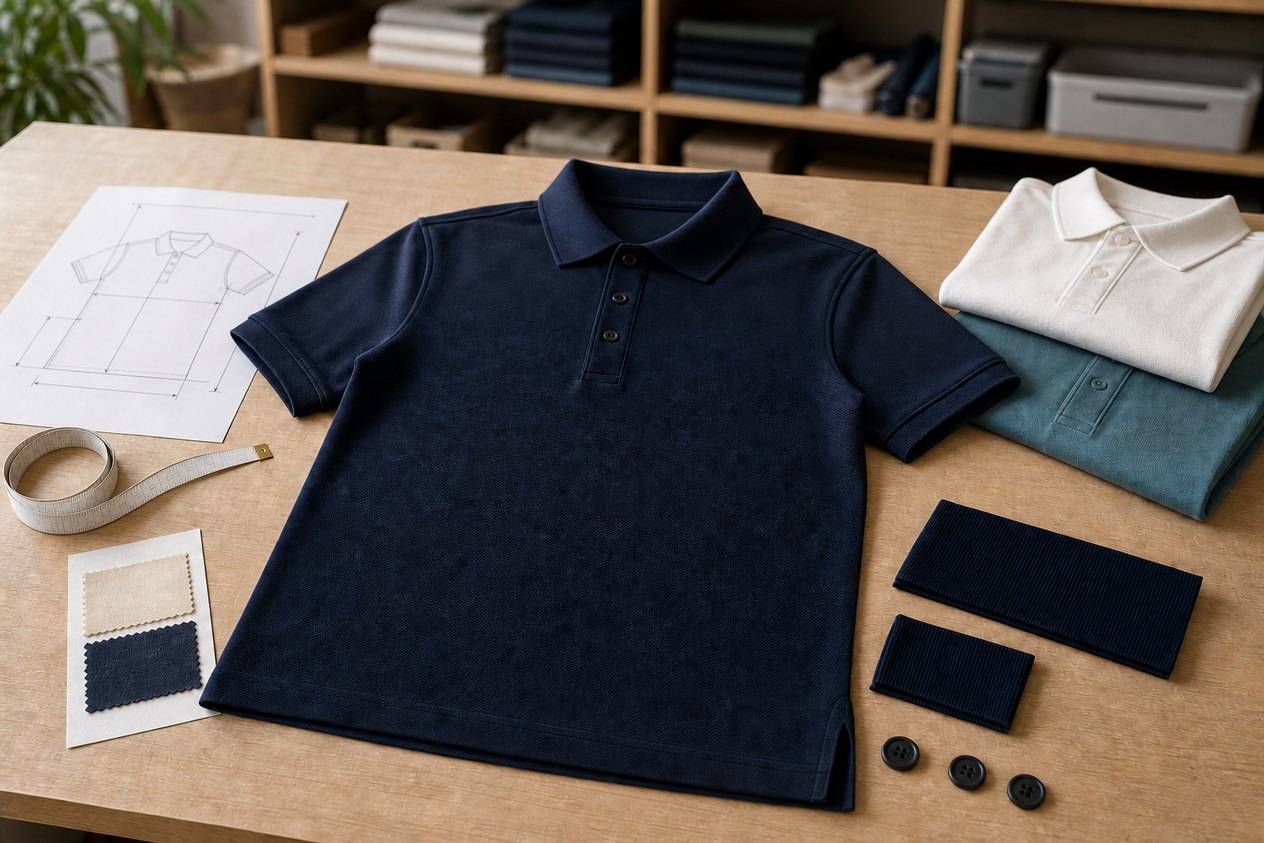
Define the Polo Use Case Before the Product
A retail lifestyle polo, hospitality uniform and golf event shirt may share a collar and buttoned opening, but they do not share the same priorities. Retail may emphasize hand feel and silhouette. Repeated-workwear programs may prioritize wash recovery and replacement consistency. Outdoor use may require different moisture, snag or colorfastness evidence. Record the wearer, environment, care method, expected wear frequency, decoration, destination market and replenishment plan before choosing a fabric.
Keep campaign allocation in the bulk promotional T-shirt campaign guide. This page starts when the buyer must define what the Polo itself should be.
Choose the Development Route Explicitly
Buyers can decorate an existing blank, modify a proven Polo block or develop a fully custom cut-and-sew garment. These routes involve different control, cost and lead-time exposure. A stock body is efficient when its fabric, colors, fit and labeling already satisfy the brief. A modified block can adjust trims or branding without creating a completely new pattern. Full custom development is appropriate when collar architecture, fit, fabric, color or private-label identity must be buyer-owned.
| Route | Buyer controls | Main constraint | Approval evidence |
|---|---|---|---|
| Decorated blank | Artwork, placement and pack details | Existing body, color and size range | Blank style record and decorated sample |
| Modified block | Selected trims, branding and limited fit changes | Changes must remain compatible with the base pattern | Revised specification and pre-production sample |
| Full custom | Fabric, block, grade, collar, placket, trims and identity | More development decisions and material commitments | Approved construction, size set, wash result and sealed sample |
Write the Body Fabric as an Identity
Fiber content and GSM alone do not identify a Polo fabric. Record the knit construction, yarn direction if relevant, finished weight tolerance, usable width, color standard, surface character, stretch or recovery requirement, finishing route and approved swatch. Pique, jersey, interlock and performance knits behave differently at the collar seam, placket opening, embroidery area and after washing.
A fabric name is not a performance promise. If the sales brief includes moisture management, UV protection, recycled content or another claim, define the required evidence and scope separately. Do not infer a claim from fiber type or supplier language.
Engineer the Collar as Part of the Garment
The Polo collar has its own knit structure, dimensions and recovery behavior. Specify whether it is rib-knit, self-fabric or another construction; record finished width, depth, edge shape, tipping layout, stretch and recovery direction, seam attachment and appearance when open and buttoned. A collar can curl, flare, twist or become visibly different from the body after laundering even when both components were acceptable before assembly.
Review collar behavior on the finished garment rather than approving a loose collar swatch alone. Photograph the collar flat, worn, buttoned and after the agreed care cycle.
Measure Collar Geometry and Neckline Balance
Record collar point length, collar depth at center back, neckline seam length, front-neck overlap and the distance between collar points in the intended open state. Compare left and right points from the center front rather than judging symmetry from the shoulder seam. The collar should meet the placket without one side climbing, exposing the neckline seam or forcing the top placket layer off center. Review this geometry on a hanger, flat table and wearer because gravity and neck shape can reveal different defects.
Control Collar and Body Color as Separate Components
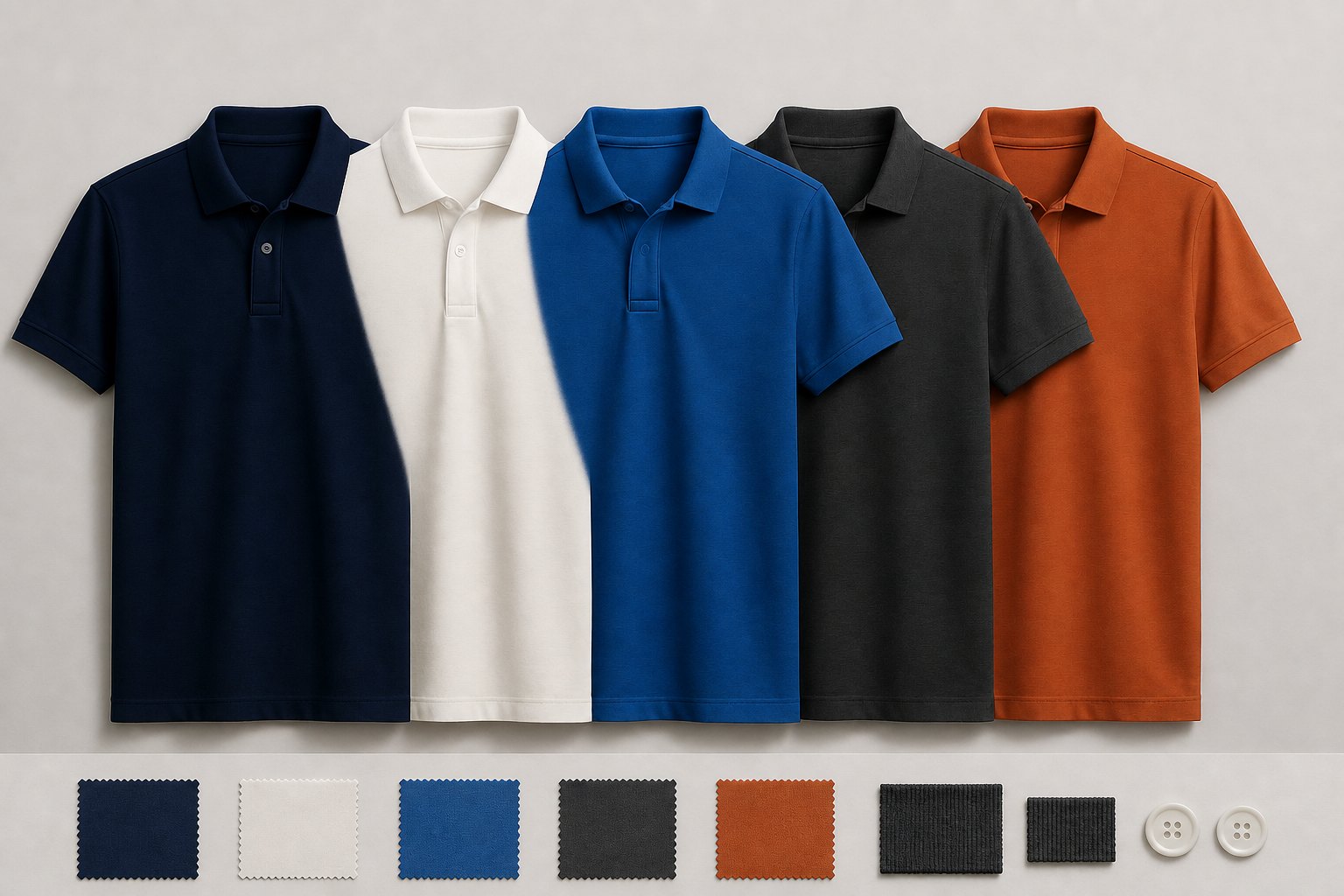
A dyed body and separately knitted rib trim may not respond identically to light, washing or batch variation. Approve them together under the agreed viewing condition. For solid-color programs, define the acceptable relationship rather than assuming an invisible difference. For tipped collars, record stripe count, order, width and start position so that a later reorder does not rely on a photograph.
Specify the Placket From Top to Bottom
The placket should be described by finished length and width, number and spacing of buttons, button size and material, buttonhole direction, reinforcement, top and bottom alignment, visible topstitching and inside finish. Also define whether the left or right layer sits on top for the intended product program.
Inspect whether the placket lies flat without gaping, twisting or pulling the collar points. A dimensionally correct placket can still look poor if the fabric, reinforcement or sewing tension is unsuitable.
Inspect the Placket Bottom as a Stress Zone
The bottom of the opening concentrates several layers and can form a visible lump, point or horizontal drag line. Define the bottom shape, reinforcement and stitch path, then inspect it from the face and inside. Button and unbutton the Polo repeatedly during sample review and look for fabric distortion around the lowest buttonhole. The finished opening should return to its intended position without a permanent ridge or a diagonal pull toward either collar point.
Choose Buttons and Closures for the Use
Record button diameter, thickness, hole count, color, finish and attachment requirement. Include spare-button policy only when the program needs it. A decorative button may look appropriate but create a different risk under repeated industrial care, contact with equipment or high-frequency opening. If a zip or snap replaces buttons, the component identity and holding-performance requirement belong in the specification.
Match Sleeve and Cuff Construction
A self-fabric sleeve hem has a different appearance and recovery from a rib cuff. Specify finished opening, cuff height, stretch, attachment seam, tipping and relaxed appearance. Check whether the sleeve binds, flares or rotates on representative wearers. Collar and cuff rib may share a design, but that does not mean their finished dimensions or recovery should be identical.
Review the Polo in Open, Partly Buttoned and Closed States
A sample can appear balanced with every button closed yet spread unevenly when worn open. Review the normal selling or working state, not only the neatest presentation. Check collar point position, neckline exposure, placket overlap, chest drag and logo relationship with the top button open, the intended number of buttons closed and full closure where relevant. Record the approved worn state in photos so bulk inspectors do not create a different presentation rule.
Define the Hem, Side Vent and Back Length
Record whether the hem is even or uses a longer back, plus vent length, bartack or reinforcement, tape construction and finished alignment. The side vent must open cleanly without twisting the lower side seam. If the Polo will be tucked, untucked or used for active movement, validate the body length and vent on the intended wearer rather than copying a generic measurement chart.
Build the Fit Around Named Points of Measure
Terms such as slim, regular and relaxed are not measurements. Create a point-of-measure diagram that defines chest, shoulder, body length, sleeve length, sleeve opening, bottom opening, collar dimensions, placket dimensions and other program-specific points. State how the garment is laid, where each measurement begins and whether the approved value refers to pre-wash or conditioned post-wash state.
The broader basic wear fit and fabric guide helps define a collection direction; this Polo guide converts that direction into one measurable collared garment.
Grade the Polo, Not Only the Body Rectangle
Review how shoulder, chest, sleeve, opening, body length, collar and placket relationships change across sizes. A logo that is correctly placed on the base size may appear too close to the placket or armhole at an extended size. Approve representative small, base and large sizes when the range or fit risk justifies it, and record the grade rule rather than allowing each size to be adjusted visually.
Place Decoration From Stable Garment References
Define artwork size and coordinates from named references such as high shoulder point, center front, placket edge or armhole seam. Avoid using vague instructions such as standard left chest. The visible relationship between the logo, collar and placket matters more on a Polo than on a plain crew-neck shirt.
Use the custom embroidery guide for stitch-specific production controls and the sublimation apparel guide when the product route uses all-over performance graphics. This page controls their position and effect on the Polo structure.
Test Decoration on the Actual Polo Build
Dense embroidery can distort a light knit, make the chest stiff or pull the placket. Heat processes can change shade or surface. A print may bridge texture differently on pique than on smooth jersey. Approve the real fabric, stabilizer, thread or ink, artwork size and finished placement together. Inspect the decorated area from the face and inside, then repeat the agreed care cycle before final release.
Define Wash-State Approval Before Testing
Write the care procedure, number of cycles, drying method, conditioning state, measurement points and appearance observations before sending a sample to a laboratory or internal wash review. ISO 5077 covers determination of dimensional change after specified washing and drying procedures. AATCC lists TM150 for garment dimensional change, TM143 for appearance after home laundering and TM207 for seam twist. The buyer must choose methods and acceptance criteria appropriate to the destination, care label and product claim.
Inspect the Complete Garment After Care
Do not reduce a wash review to chest shrinkage. Re-measure the approved points and inspect collar curl, collar-body shade relationship, placket bowing, button security, seam twist, cuff recovery, hem shape, vent alignment, decoration puckering and overall hand. Use repeatable photographs and measurement records so that a later bulk lot or reorder can be compared with the same evidence.
Include Surface and Color Risks Deliberately
Pilling, fuzzing, snagging, rubbing transfer, perspiration and laundering exposure may matter differently by end use. ISO provides methods such as ISO 12945-3 for random-tumble pilling resistance and ISO 12945-4 for visual assessment. AATCC publishes relevant colorfastness methods, including crocking and laundering methods. Ask for the actual report, specimen identity, method and result rather than accepting a generic tested statement.
Build a Polo-Specific Approval Matrix
| Area | Record before sample | Review on sample | Review after care |
|---|---|---|---|
| Body knit | Construction, composition, finished weight and color | Hand, opacity, stretch, recovery and shade | Dimensions, twist, surface and color |
| Collar and cuffs | Knit, dimensions, recovery, tipping and shade relation | Shape, attachment, symmetry and comfort | Curl, flare, recovery and shade relation |
| Placket | Length, width, layers, buttons and stitch layout | Flatness, alignment, opening and reinforcement | Bowing, gaping, twist and button security |
| Fit | POM diagram, base values, tolerances and grade | Flat measurements and wearer review | Post-care POMs and appearance |
| Decoration | Artwork, size, coordinates, process and color | Placement, hand, puckering and inside finish | Distortion, adhesion, shade and surrounding fabric |
Use Samples to Answer Different Questions
A development sample can establish construction and direction. A fit sample evaluates the block and measurements. A size set checks grade behavior. A decoration or wash sample tests a specific risk. A pre-production sample should represent the released combination of materials, trims, construction, artwork and packaging. Label each sample by purpose and revision so that approval of one question is not mistaken for approval of the complete garment.
The design-to-delivery process guide explains general approval gates. For T-shirt line transfer and bulk continuity, use the dedicated sample-to-scale guide.
Inspect Bulk Against the Released Polo Record
Bulk inspection should use the approved specification, measurement method, sealed sample, color references and defect rules. Check representative sizes and colors. Include Polo-specific appearance defects such as asymmetric collar points, uneven tipping, placket skew, mismatched button spacing, cuff flare, twisted vents and unstable logo-to-placket placement.
Separate measurable tolerances from visual workmanship decisions. A shirt can fall inside chest tolerance and still have an unacceptable collar or placket. Conversely, a visual difference should not be rejected without a defined reference or severity rule.
Protect Color and Construction Across Reorders
Keep the approved body fabric identity, collar and cuff records, button reference, pattern revision, grade, artwork file, placement coordinates, finished measurement table, care result and packing specification together. When a component or process changes, identify what must be revalidated. A reorder is not automatically equivalent because the style name and color name are unchanged.
Compare Quotes at the Same Specification Level
A quotation for a decorated stock Polo is not comparable with a full custom product that includes new knitting, dyeing, pattern development, private labels and wash testing. Normalize fabric identity, color count, quantity by color, size range, collar and cuff construction, placket, decoration, labels, testing, packing, freight basis and approval stages before comparing price.
Use the custom product cost guide for cost-driver logic and the cost and lead-time reduction guide for decisions that can be simplified without hiding scope.
Keep Related Apparel Programs in Their Own Scope
A Polo specification can support a larger collection, but it should not absorb every apparel topic. Use the hoodie fabric, fit and finish guide for fleece and hood-specific approval, the corporate uniform guide for wearer roles and replenishment systems, and the cross-category supplier guide for coordinating apparel, bags and caps.
What to Send for a Useful Polo Quote
| Input | Minimum useful detail | Why it changes the quote |
|---|---|---|
| Program | Use, destination, care method and in-hand date | Sets evidence, packaging and schedule needs |
| Product | Reference, fabric direction, fit, collar, cuff, placket and hem | Defines materials, pattern and construction |
| Range | Quantity by color, sizes and expected reorders | Affects material minimums and production setup |
| Branding | Vector artwork, size, coordinates, colors and labels | Defines decoration and private-label work |
| Approval | Sample stages, wash review, testing and inspection expectations | Defines development work and release gates |
How LUCKYSTAR Can Support the Review
LUCKYSTAR can review the program brief, product route, fabric and trim direction, collar and placket construction, fit inputs, decoration placement, sample stages, wash evidence and packing needs before quotation. For wider international coordination, see the custom apparel working framework.
The broader core manufacturer guide connects this Polo specification workflow to supplier evaluation, quotation, sample approval, quality planning and delivery controls across custom categories.
Frequently Asked Questions
What information should a custom Polo shirt manufacturer receive first?
Send the end use, destination, quantity by color, size range, target date, reference garment or drawing, fabric direction, fit requirement, collar and placket details, artwork, labels, care method and approval expectations.
Is GSM enough to choose a Polo fabric?
No. GSM does not define knit construction, yarn, finishing, stretch, recovery, surface, shrinkage or compatibility with collar trims and decoration. Approve an identified finished fabric and the complete garment.
Why does a Polo collar curl after washing?
Possible contributors include trim structure, recovery, dimensions, attachment, finishing, care conditions and a different dimensional response from the body. The cause should be evaluated on the actual garment under the agreed care procedure.
Should the Polo be measured before or after washing?
Both states can matter. Define the released pre-wash measurements, the care procedure, conditioning state and allowed post-care change. Do not compare measurements taken with different laying or conditioning methods.
Can embroidery be approved separately from the Polo sample?
A stitch sample can screen artwork settings, but final approval should use the actual Polo fabric, stabilizer, size and placement because decoration can affect hand, puckering and placket balance.
How should a buyer approve extended sizes?
Use documented grade rules and review representative sizes when risk justifies it. Check fit relationships, collar and placket proportion, sleeve opening, body length and artwork position rather than enlarging every measurement by one uniform amount.
Turn the Polo Into a Reproducible Product
Review the current custom T-shirt and Polo range to choose the starting garment route. A successful custom Polo is not defined by a fabric swatch or a single attractive sample. It is defined by a released relationship among body knit, collar, cuffs, placket, buttons, fit, grade, decoration, wash behavior and workmanship. Record that relationship clearly, approve it with relevant evidence and use the same record for bulk inspection and reorders.
Send LUCKYSTAR your Polo reference, intended use, quantity, colors, sizes, artwork, target date and care expectations for a specification review and quotation.
Email a prefilled Polo specification brief