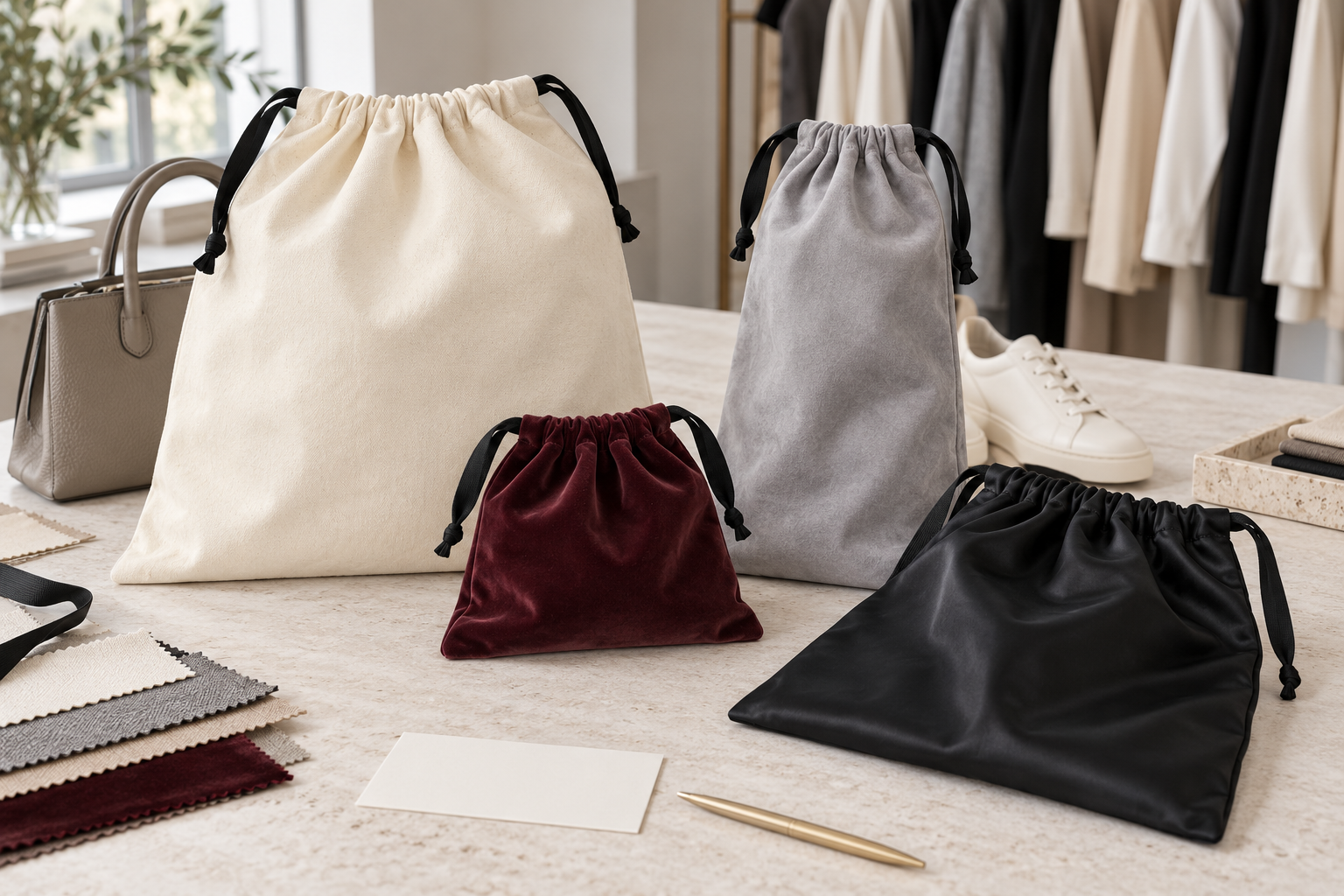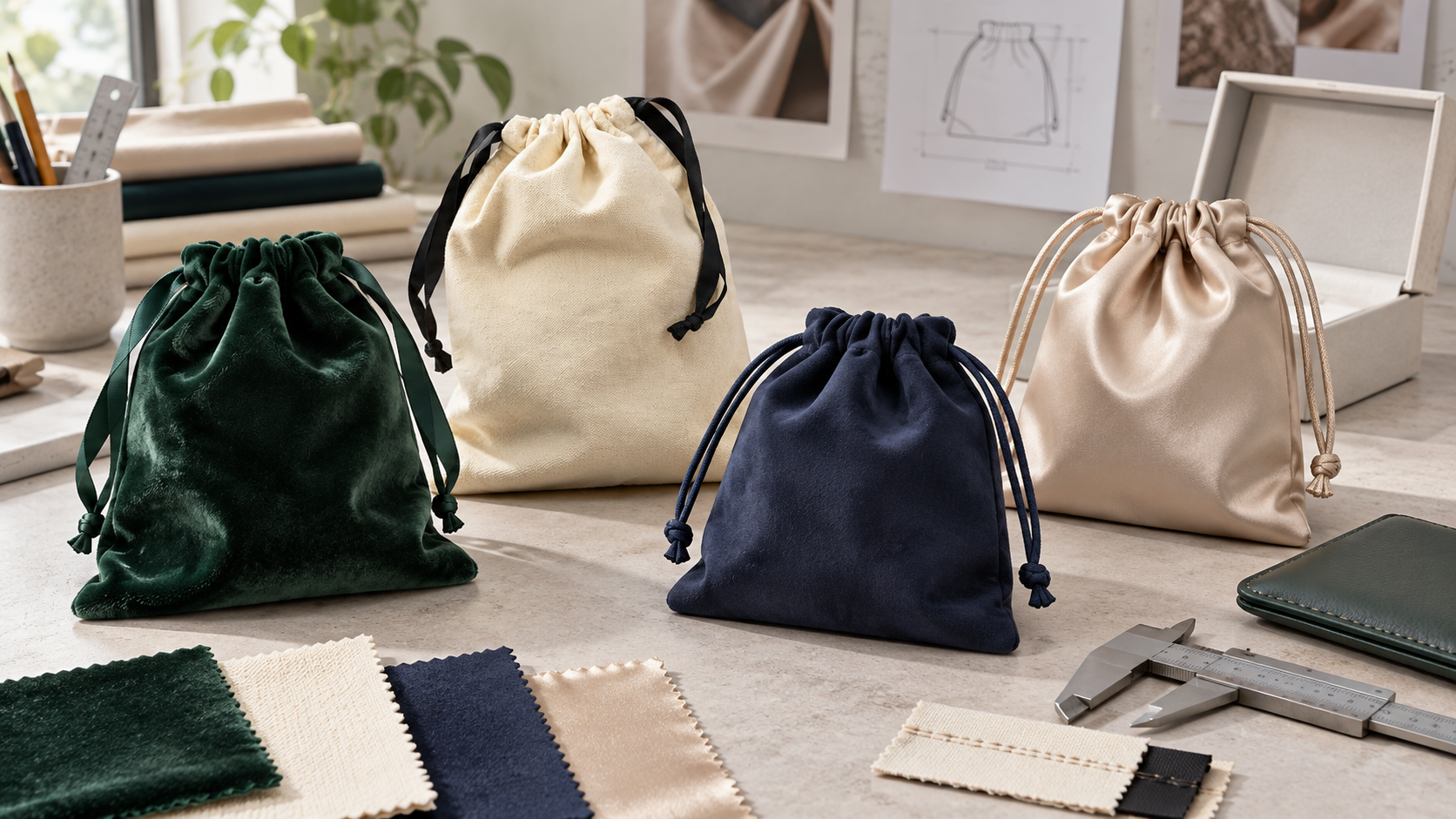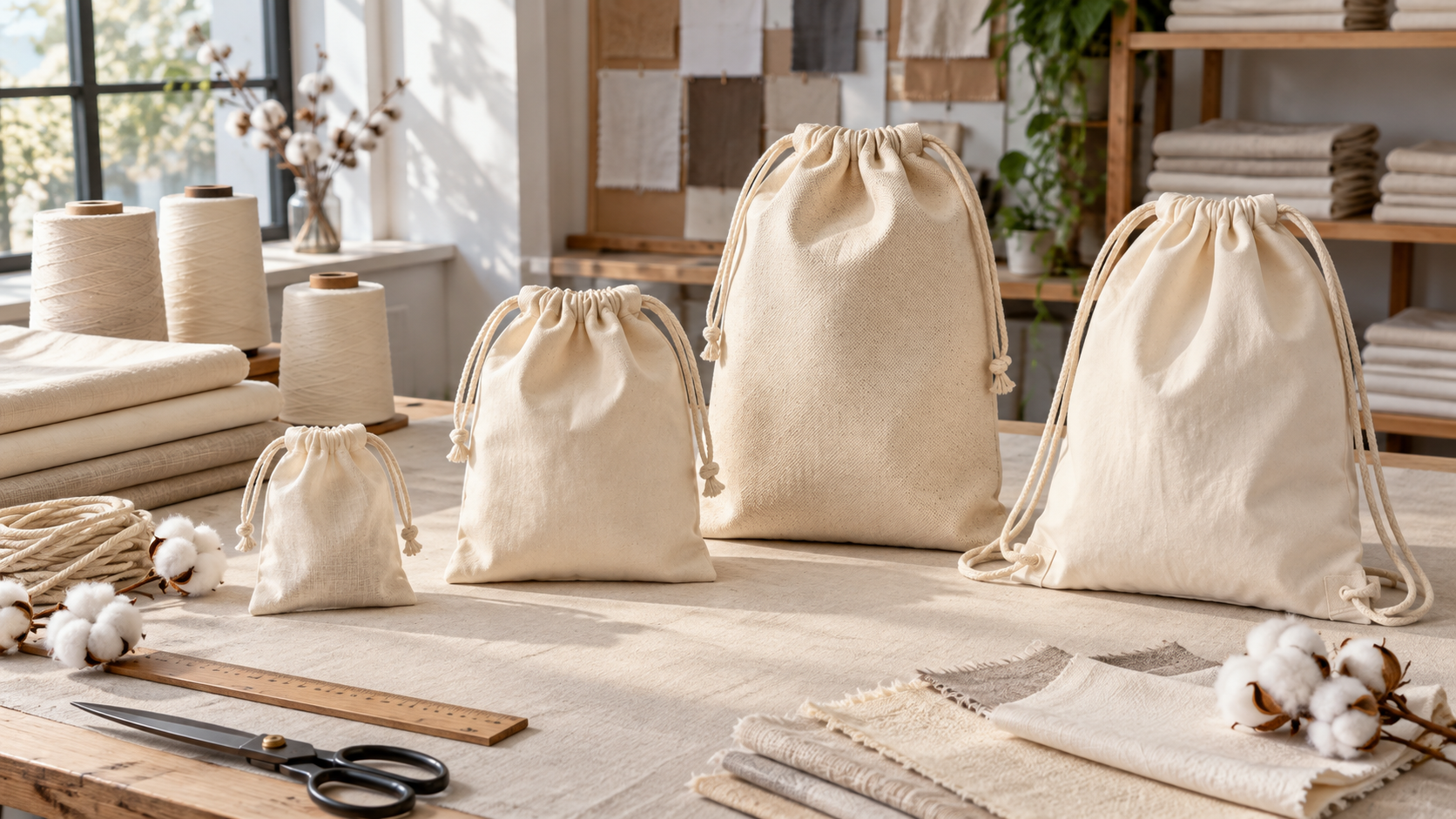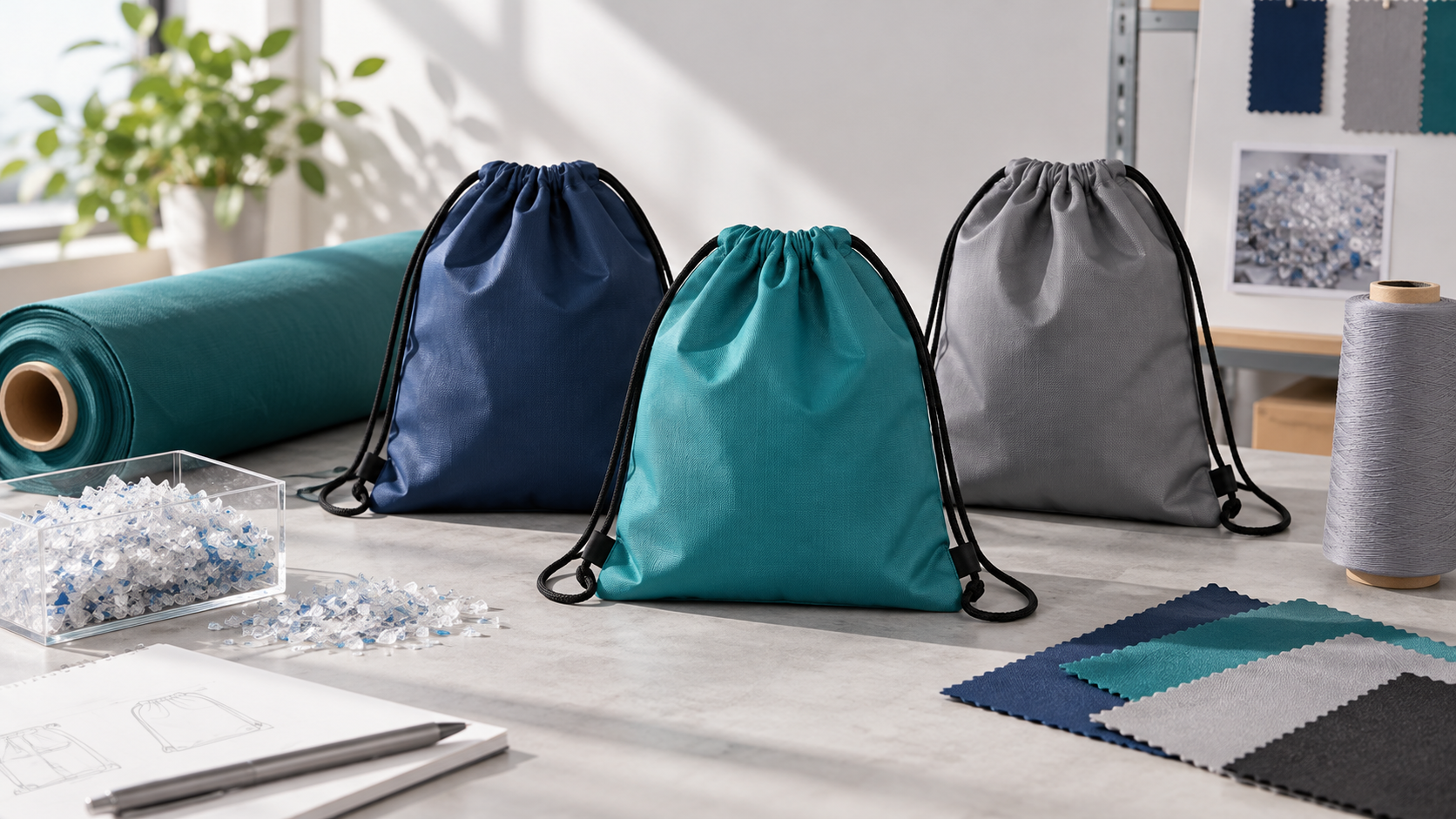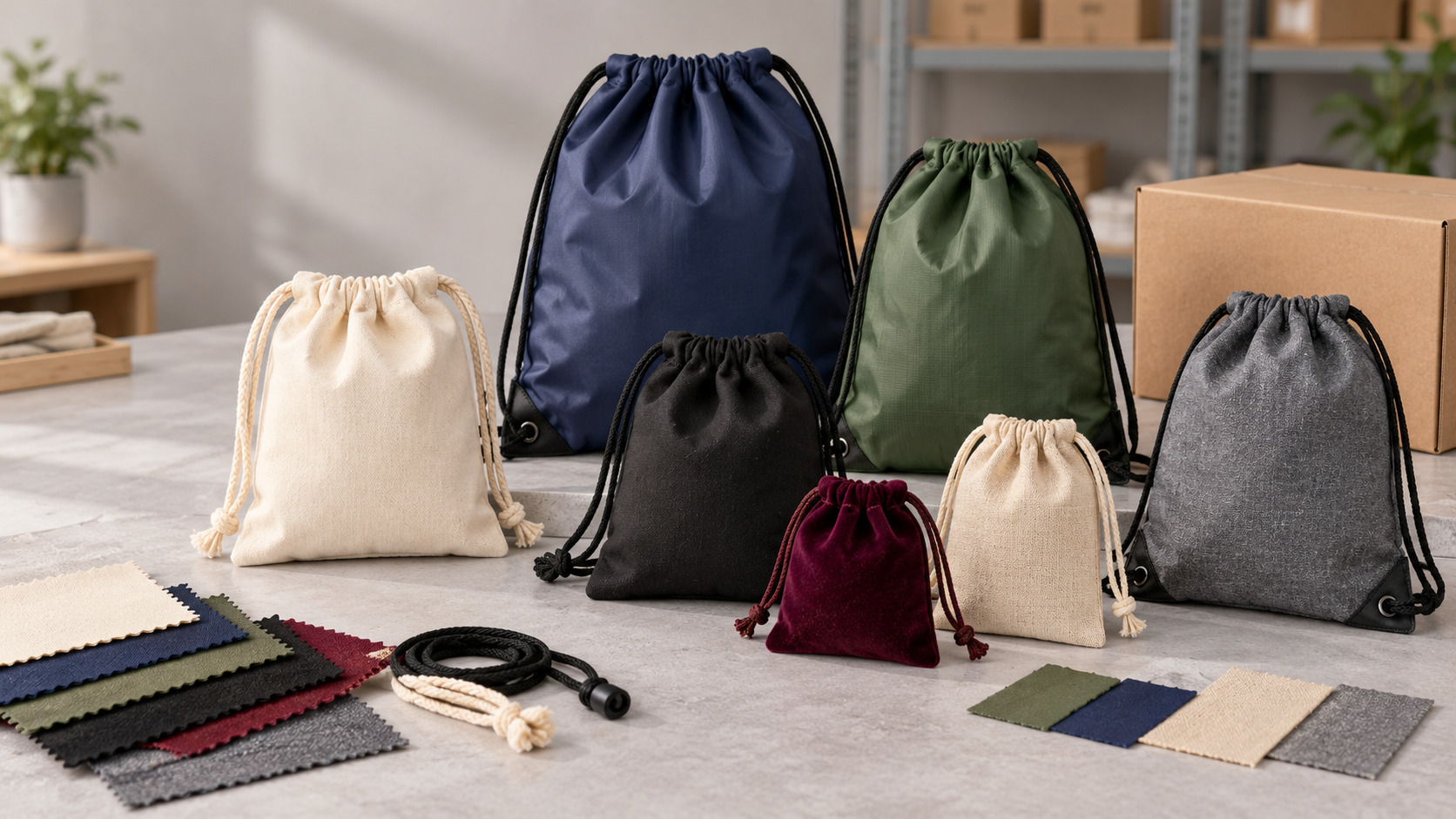
There is no durable universal price for a custom tote bag. A comparable answer requires a released construction, material and colour route, artwork and decoration scope, quantity by SKU, sample and test requirements, packing, Incoterm and named place, destination and quotation date. A flat stock-material tote, an original cut-and-sew canvas tote and a lined retail bag are different products and should not share one headline price. This article therefore explains the cost structure without presenting an unsupported standing price band.
This guide is deliberately narrower than our general custom bag cost guide. It looks only at tote bags and explains how flat construction, gussets, fabric yield, handles, decoration and carton volume change the number. If you are still comparing suppliers and production models, start with the Custom Bag Manufacturer Guide. To see the product category behind the examples, browse LUCKYSTAR's custom tote bag range.
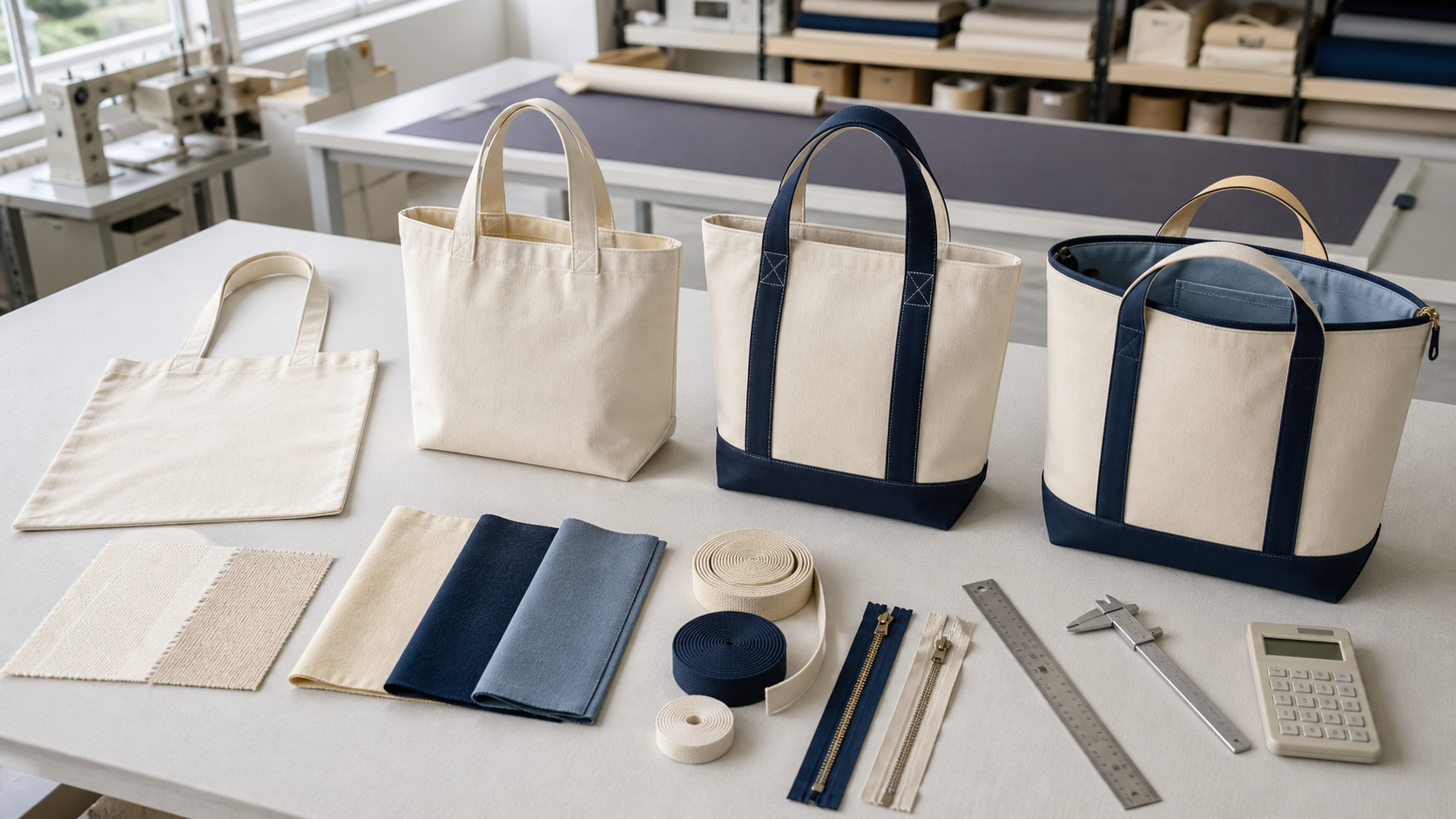
Tote prices rise in steps because each material, panel and operation changes both consumption and production time.
Need a comparable tote quotation? Send the intended use, finished dimensions and construction, material/colour route, handles and trims, artwork by position, quantity by SKU, labels and packing, samples/tests/inspection, Incoterm and named place, destination and required arrival date. LUCKYSTAR can return its own dated commercial proposal with assumptions, exclusions and price-break scope.
Custom tote bag cost: the short answer
Ask for a dated quotation against one controlled specification and commercial basis. The quote should separate product scope, development or tooling, decoration, labels and packing, inspection, freight and destination charges, then state currency, validity, tax treatment, Incoterm and named place. Compare both unit price and total landed cost per accepted usable tote.
| Route | Cost structure to identify | Evidence needed | Main comparison risk |
|---|---|---|---|
| Available tote + decoration | Blank item, setup and decoration by position/colour | Exact blank specification, stock status, sample and print scope | Comparing a standard blank with an original construction |
| Stock-material cut and sew | Usable material yield, operations, components, decoration and packout | Released bill of materials, pattern, sample, quantity matrix and route | Missing gusset, handle, reinforcement, label or packing details |
| Made-to-order material or retail construction | Mill/colour batch, development, added panels, lining, hardware, QC and packing | Material offer, nominated sites, approval gates, tests and written assumptions | Headline unit price excludes development, minimums or route-specific costs |
Why tote bag quotations vary so widely
Totes look simple because they have fewer components than a backpack. That simplicity makes small specification changes more visible in the final price. On a basic flat tote, fabric and sewing form most of the product. Add a bottom gusset and there is more material, a longer seam and another point that must align. Add lining, and the factory effectively builds a second bag inside the first. A zipper introduces components, preparation and alignment. Each decision affects more than one line in the bill of materials.
The fastest way to understand the price is to separate four layers: material consumption, conversion labor, decoration, and project-level costs. Then look at packaging and logistics outside the ex-factory figure. This prevents a cheap-looking unit price from hiding a different specification or a shorter commercial scope.
| Cost layer | Tote-specific examples | What controls it | Evidence to request |
|---|---|---|---|
| Material | Outer fabric, lining, webbing, zipper, pocket, label and reinforcement | Weight, usable width, cutting yield, color and minimum purchase | Labeled swatches and a bill of materials |
| Conversion | Cutting, hemming, gusset seams, handle attachment, lining and finishing | Number of operations, machine changes and manual alignment | Approved construction sample and measurement chart |
| Decoration | Screen print, heat transfer, embroidery, woven label or patch | Setup, colors, area, positions, stitch count and production speed | Strike-off or decorated sample at final size |
| Project costs | Pattern, prototype, screens, digitizing, tests and inspection | Newness, revision count and buyer requirements | Separate one-time and recurring quotation lines |
| Packing and delivery | Folding, individual bag, hangtag, carton, freight and import charges | Packed dimensions, route, Incoterm and destination | Packing specification, carton data and named trade term |
Start with construction, not with the logo
Buyers often send artwork first because the logo is the most obvious custom element. For costing, construction usually deserves the first conversation. A flat tote has front and back panels, handles and hems. A separate bottom or side gusset adds capacity but also material and sewing. A boxed base can require careful corner alignment. A lining hides internal seams and changes the hand, but it adds another cutting set and attachment sequence.
Closures and organization push the tote toward a small handbag construction. A top zipper needs the correct length, tape color and end finish. A magnetic snap requires reinforcement so it does not tear the fabric. An inner pocket can be a simple patch, a zip pocket or a divided organizer, each with a different operation count. A request for “one pocket” is therefore not quote-ready.
| Starting design | Added feature | Why the cost changes | Lower-complexity alternative |
|---|---|---|---|
| Flat tote | Bottom gusset | More fabric, longer seams and base alignment | A folded boxed corner if the shape and load allow it |
| Unlined tote | Full lining | Second material set, extra cutting and complete attachment | Finish visible seams neatly and reinforce only the stress zones |
| Open top | Full zipper closure | Zipper sourcing, preparation, alignment and sewing | Snap, tie or short closure tab where security needs are modest |
| Plain interior | Zip pocket | Pocket panels, zipper and several precise operations | Open patch pocket with a clean top hem |
| Standard handles | Contrast reinforced handles wrapping under the base | More webbing, long alignment and additional stitching | Reinforced top attachment sized to the realistic load |
Fabric weight changes more than material cost
Fabric is quoted by weight, area or length depending on the textile. The finished tote consumes panels, hems and allowances, not only the visible face. A larger bag may create inefficient cutting gaps on a fixed-width roll. Directional patterns and nap can reduce yield because pieces cannot be rotated freely. Pre-washing, coating or custom dyeing introduces extra processing and possible minimums.
Heavier is not automatically better. A promotional handout may need good print opacity and tidy seams, not a rigid 16 oz body. A retail tote carrying books or bottles may benefit from heavier canvas, a reinforced base or wider handles. The practical target is the lightest construction that passes the intended load and appearance requirements. Our guide to the best fabric weight for custom tote bags explains this decision in more detail, while Canvas vs Cotton Tote Bags separates fiber terminology from construction weight.
| Fabric decision | Lower-cost direction | Higher-cost direction | Do not compromise |
|---|---|---|---|
| Weight | Light or medium weight matched to a modest load | Heavy canvas or multiple layers for structure | Opacity, seam stability and realistic carrying load |
| Color | Natural or available stock color | Custom-dyed fabric with color approval | Agreed shade tolerance across the order |
| Finish | Standard untreated surface | Washing, coating, lamination or specialty hand | Compatibility with printing and end use |
| Certification | Conventional material with normal documentation | Program-specific certified or traceable input | Only make claims supported by valid transaction documents |
| Pattern direction | Solid fabric with flexible marker placement | Directional stripe, print or nap requiring matched orientation | Approved direction and panel alignment |
A practical tote cost index
Exact surcharges cannot be universal, because factories buy different materials and use different production routes. A cost index is more useful during design. Treat a natural 8 oz flat tote, standard size, 1,000 pieces in one artwork and one color, with a modest one-color screen print, as index 100. The additions below are directional planning signals, not percentages to add mechanically and not a quotation.
| Specification change | Directional effect from index 100 | Reason | Best costing question |
|---|---|---|---|
| Move to heavier canvas | Moderate to substantial increase | Material cost, cutting resistance and packed weight rise | What lighter option still passes the target load? |
| Add a gusset | Small to moderate increase | Extra consumption and sewing depend on gusset method | Separate panel or boxed corner? |
| Add full lining | Substantial increase | A second fabric shell is cut, sewn and joined | Is lining needed everywhere or only for structure? |
| Add zipper and inner pocket | Moderate to substantial increase | Components plus several precise operations | Can a snap and patch pocket meet the use case? |
| Change one print to dense embroidery | Often substantial increase | Digitizing, stitch count, stabilizer and machine time | Would a woven patch preserve the premium look? |
| Split one color into four colorways | May increase despite unchanged total quantity | Each lot behaves like a smaller material and production batch | What is the minimum per color, not only per order? |
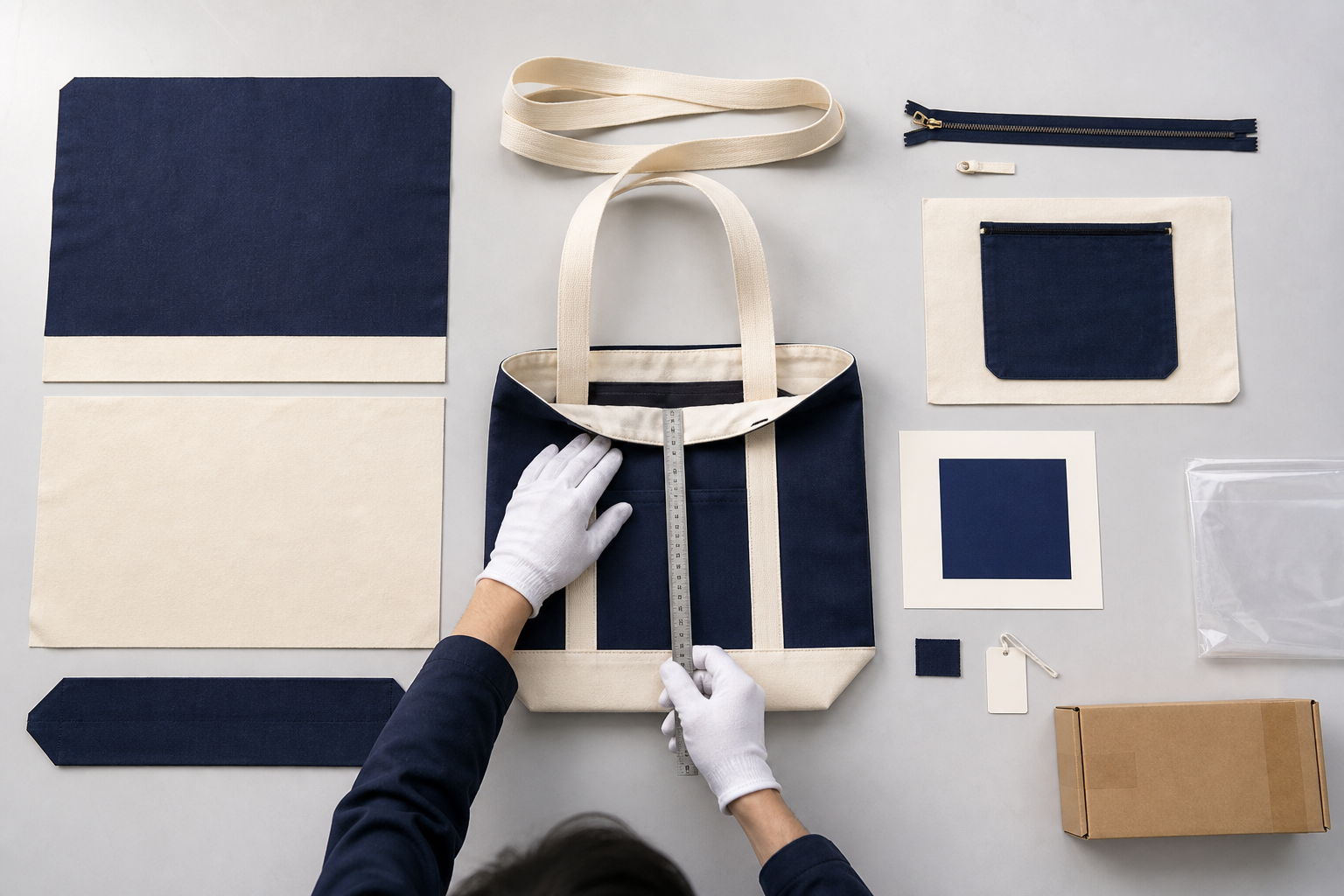
A tote quotation becomes easier to audit when each visible component and operation appears in the specification.
How quantity and SKU splits change the price
“We need 2,000 bags” sounds like a complete quantity. It is not. Two thousand identical natural totes with one logo create one production pattern. Two thousand bags divided among four body colors, two handle colors and two artworks can create several smaller lots. Fabric purchase minimums, color approvals, print setup and changeovers are then spread across fewer pieces.
Ask for a quantity ladder before freezing the order. A factory may find a better level when the order uses a full fabric lot or runs one print setup efficiently. The movement will not be linear: doubling quantity does not guarantee a 50% unit-price reduction because fabric and sewing still occur on every piece. For broader minimum-order logic, see What Is the Typical MOQ for Custom Bags?.
| Order request | How production sees it | Likely price behavior | Useful adjustment |
|---|---|---|---|
| 300 pieces, one natural fabric, one logo | Small but concentrated run | Setup and sample costs weigh heavily per piece | Use available materials and one decoration position |
| 1,000 pieces, one body color, one logo | Workable single-SKU program | Fixed work is distributed more efficiently | Request the next efficient tier as a comparison |
| 2,000 pieces split across four body colors | Four 500-piece material and sewing lots | May cost more than one 2,000-piece color | Launch two colors now and reserve two for a repeat |
| 2,000 pieces, same bag, four small artworks | Stable sewing run with decoration changes | Bag cost may stabilize while print setup varies | Choose a method suited to multiple designs |
| 5,000-piece repeat of an approved tote | Known pattern, sample and production controls | Stronger basis for material planning and negotiation | Freeze the reference sample and document approved changes |
Printing and branding: setup cost versus running cost
Decoration should be quoted with method, finished size, color count, number of positions and substrate. “Logo included” is too vague. A one-color screen print may carry a screen charge but become efficient across a large run. A digitally produced transfer can handle detailed full color and several small designs without separate screens for every color, yet the transfer material and pressing time remain on each bag. Embroidery is affected by stitch count and production time, not just the width of the logo.
For an overview of the available processes, use Custom Tote Bag Printing Methods. If your shortlist is already down to two popular options, the separate Screen Printing vs Heat Transfer for Tote Bags guide explains their artwork, hand-feel and QC differences.
| Branding request | Main cost mechanism | What buyers often miss | Approval evidence |
|---|---|---|---|
| One-color screen print | Screen setup plus print run | Dark fabric may need an underbase and extra pass | Strike-off on the production fabric |
| Multicolor screen print | A screen and registration work for each color | Fine registration on coarse canvas may require artwork adjustment | Color order, registration and cured sample |
| Digital heat transfer | Transfer material, printing, trimming and pressing per bag | Large areas can change hand and edge behavior | Exact transfer system on the exact tote |
| Embroidery | Digitizing, stitch count, backing and machine time | Dense work can pucker light fabric | Stitch file, backing method and finished sew-out |
| Woven label or patch | Separate component MOQ plus attachment | Edge finish and placement affect the premium impression | Physical label and attached sample |
Three tote bag budget scenarios
A planning range becomes useful when it is connected to a commercial job. The examples below are not disguised quotations. They show how a buyer can decide where to spend and where to simplify before asking the factory for numbers.
Scenario A: a high-volume event tote
The job is distribution at a conference. The bag carries brochures and a bottle for one day, but it should still look good enough to be reused. A natural medium-weight cotton body, open top, reinforced handle attachment and one bold screen print protect the function. A custom-dyed body, zipper and retail box would add cost without improving the event experience.
Scenario B: a retail merchandise tote
The bag will be sold rather than given away. The customer expects structure, clean internal finishing and a stronger tactile impression. Medium or heavy canvas, a bottom gusset, well-proportioned handles, an internal patch pocket and controlled branding may be justified. The approval sample should be reviewed as a product, not as promotional packaging.
Scenario C: a premium gift-with-purchase tote
The tote supports a product launch and arrives as part of a gift set. A lining, secure closure, refined label and coordinated packing may improve perceived value. The budget should also include set assembly, barcode or insert work and carton protection. Reducing outer fabric quality to fund elaborate packaging would be the wrong trade if recipients are expected to keep using the bag.
| Scenario | Spend where it matters | Simplify first | Main cost risk |
|---|---|---|---|
| Event distribution | Readable print, dependable handles and tidy seams | Custom color, closure, pockets and premium packing | Over-specifying a short-use job or splitting too many artwork versions |
| Retail merchandise | Fabric hand, structure, proportion and repeatable finishing | Hidden trim customization that customers cannot value | Comparing a lined sample with an unlined quote |
| Gift with purchase | Brand presentation, coordinated details and pack-out accuracy | Complex internal organization not needed for the gift | Underbudgeting assembly, labels and protective cartons |
One-time charges, recurring charges and the first-order effect
A first order often looks expensive because development work is concentrated in the launch. Pattern preparation, a custom sample, print screens or embroidery digitizing may not recur unchanged. Material, sewing, decoration, packing and freight do recur. Ask the supplier to separate these lines. It makes repeat-order budgeting easier and exposes whether a low unit price is being offset by unexplained fees.
A prototype is not an administrative extra. It is the stage where dimensions, handle drop, gusset shape, pocket access, print placement and packing can be tested together. The Custom Bag Sample Development Process shows how to turn that spend into a production reference rather than treating it as a photo approval.
| Charge | Usually one-time or recurring? | What to confirm | Repeat-order question |
|---|---|---|---|
| Pattern and first prototype | Usually first order or major redesign | Revision allowance, courier and approval deliverables | Which changes would require a new sample? |
| Screen or digitizing | Setup-related | Artwork, size and storage or reuse policy | Can the setup be reused for the same artwork? |
| Custom-dyed fabric minimum | Can recur by color lot | Purchased quantity, usable balance and shade control | Will a new dye lot need fresh approval? |
| Unit production and packing | Recurring | Exact included specification | What price validity and volume tier apply? |
| Testing and inspection | Depends on program and shipment | Scope, sample size, standard and responsibility | Which checks repeat for every lot? |
Ex-factory price is not landed tote cost
Totes can be light yet bulky. A structured, unfolded bag may fill cartons with air, while a flat cotton tote compresses efficiently. Carton quantity, fold method, individual packing and moisture protection can therefore change freight even when the product unit price is unchanged. Ask for estimated carton dimensions, gross weight and pieces per carton before committing to the order.
Normalize the commercial term too. EXW, FOB and DDP do not cover the same responsibilities. The International Chamber of Commerce maintains the official Incoterms rules; a quote should state both the rule and the named place. For planning, use:
| Logistics variable | Why it matters for totes | Data needed before order | Cost-control option |
|---|---|---|---|
| Fold method | Changes presentation, labor and packed dimensions | Approved fold diagram or packed sample | Use one practical fold that protects the print |
| Individual packing | Adds material and handling to every unit | Bag type, warning needs and sealing method | Bulk pack where the distribution channel allows it |
| Structure | Board, foam and stiff bases reduce compression | Carton quantity and dimensional weight | Use removable base support or pack flat if acceptable |
| Handle and zipper protection | Poor packing can crease webbing or mark the body | Position inside the fold and abrasion protection | Design the fold during sampling, not after production |
| Carton marking | Multiple colors and artworks require accurate sorting | SKU, quantity, gross/net weight and carton sequence | Use a controlled carton-mark template |
How to reduce tote bag cost without making the product feel cheap
Good value engineering protects the customer's experience and removes complexity that does not support it. Start with the job: load, frequency of use, distribution method and brand position. Then rank each feature as essential, useful or decorative. A wider handle may improve comfort more than a hidden custom zipper pull. A clean one-color print may communicate the brand better than a small, dense embroidery that puckers lightweight cotton.
- Keep the load requirement measurable. Reinforce the handle and base where the load demands it instead of adding weight everywhere.
- Use stock materials strategically. Natural cotton, available canvas colors and proven webbing can avoid dye minimums and shorten development.
- Concentrate the launch assortment. Fewer body colors and artwork versions put more volume behind each production lot.
- Choose decoration after seeing the fabric. Match line detail, print area and hand-feel requirements to the actual substrate.
- Simplify hidden construction. Use one well-proportioned patch pocket instead of an organizer that customers will not notice.
- Design the packing early. A foldable tote can lose its freight advantage if it is placed in an oversized retail box.
- Protect quality gates. Removing the sample or inspection rarely reduces the true cost of defects.
Cost should not be reduced by silently lowering fabric weight, shortening handle reinforcement or changing the approved branding system. Those substitutions change the product. Use the Custom Bag Quality Inspection Checklist to keep value engineering and quality acceptance separate.
Company-claim boundary: the following section is LUCKYSTAR publisher self-description and a commercial service proposal. It is not independent proof of factory ownership, cost advantage, stock or capacity, quotation accuracy, MOQ, sample or bulk quality, freight, duty, tax or delivery. Legal seller, nominated production sites, material and component offers, price, currency, validity, packing, trade terms and schedule depend on the exact order and written confirmation.
How LUCKYSTAR describes its tote costing review
LUCKYSTAR states that it can review one tote brief and prepare an order-specific proposal connecting product decisions to its quoted commercial scope.
- Freeze the comparison basis: identify construction, bill of materials, artwork, quantity/SKU split, sample and quality gates, packing and destination.
- Show cost drivers: separate material yield, operations, decoration setup and running cost, components, labels, packout and development.
- State the route: name the legal seller and proposed mill, production and decoration sites, outsourced steps and substitution controls.
- Make terms visible: record currency, validity, MOQ/price-break scope, Incoterm and named place, payment stages, exclusions and change rules.
- Compare landed economics: keep goods, development, inspection, freight, duty/tax and destination handling visible instead of mixing unlike offers.
Review the custom tote bag range and MOQ guide, then send the released brief for a dated order-specific response.
What to send for an accurate custom tote bag quote
The best first message is short but specific. Do not wait for a perfect tech pack if the design is still flexible. Mark the fixed requirements and invite alternatives only where a change would not damage the customer promise. If a reference photo is used, state which features matter; otherwise the factory may assume that every visible detail is required.
| RFQ field | Minimum useful detail | Example |
|---|---|---|
| Use and load | Distribution channel, contents and expected reuse | Retail merchandise tote carrying up to 6 kg |
| Finished size | Width, height, gusset and handle drop | 38 × 42 × 10 cm; 28 cm handle drop |
| Material | Fiber, approximate weight, color and finish | Natural medium-heavy cotton canvas; stock equivalent acceptable |
| Construction | Opening, lining, pockets, seams and reinforcement | Open top, unlined, one internal patch pocket, reinforced handles |
| Branding | Method, physical size, colors and positions | Two-color front screen print, 24 × 18 cm |
| Quantity split | Pieces by body color, artwork and size | 2,000 total: 1,000 natural and 1,000 navy, same artwork |
| Packing and delivery | Individual or bulk pack, labels, destination and required date | Bulk folded, barcode by color, FOB Ningbo, required arrival month stated |
Frequently asked questions
How much do 500 custom tote bags cost?
Five hundred pieces cannot be priced responsibly from quantity alone. The total changes with the route, finished size, usable material yield, construction, colour and artwork splits, decoration, components, samples, tests, inspection, packing and commercial basis. Request a dated quote that separates goods, development/setup, inspection, packing, freight and destination charges and states all assumptions.
Why does a 1,000-piece order not cost twice as much as 500?
Some work is fixed: pattern preparation, sampling, screens and production setup. Spreading that work across more pieces can reduce the unit price. Material, sewing and packing still occur on every bag, so the total order value rises even when the unit number improves.
Does a heavier canvas tote always cost more?
Usually it increases material and freight cost, but the exact effect depends on fabric price, width, cutting yield and construction. Heavy fabric may also need different needles, reinforcement or finishing. Choose weight for opacity, structure and load rather than treating ounces as a quality score.
Is printing included in a custom tote bag price?
Only when the quotation states the exact method, size, colors and positions included. “One logo” can describe a small one-color screen print or a large full-color transfer, which are not the same cost. Ask for setup and per-unit decoration assumptions to be visible.
Can LUCKYSTAR quote from a reference photo?
A reference photo is a useful starting point, but a reliable quote still needs dimensions, material direction, construction, branding, quantity split, packing and delivery basis. LUCKYSTAR can help turn the visual reference into those quote-ready decisions and identify where an available construction or material may meet the same objective more efficiently.
Convert the tote brief into a dated comparable quote
Issue the same released specification, SKU matrix, approval gates and commercial basis to each candidate. Compare inclusions, route, assumptions, validity and landed cost per accepted usable tote.

Review LUCKYSTAR custom tote bag options, then send the quotation brief through the contact form or Email a project brief. The email link opens a prefilled draft for your review before sending.
Legal seller and facility, material and component availability, MOQ, samples, tests, inspection, currency, price, validity, packing, freight, duty/tax, schedule and delivery terms are subject to current offers, final specification, quotation, contract and written confirmation.