How Material Weight Affects Shopping Bag Environmental Performance
Last reviewed: September 3, 2026
Buyer quick answer: material weight affects a shopping bag's environmental inventory, but a lower GSM does not automatically mean a lower-impact bag. Buyers need to measure the finished bag, account for every component and production loss, model transport by both mass and packed volume, and check whether a weight change alters the bag's useful life. The defensible comparison is based on the same bag function and the same system boundary—not on two isolated fabric-weight numbers.
This guide is about environmental accounting and specification control. It does not recommend one universal fabric weight, calculate a product carbon footprint for an unspecified bag, or claim that a heavier or lighter material is inherently sustainable. If you are selecting a construction, start with LUCKYSTAR's custom shopping bags range and turn the visible concept into a written, order-specific specification.
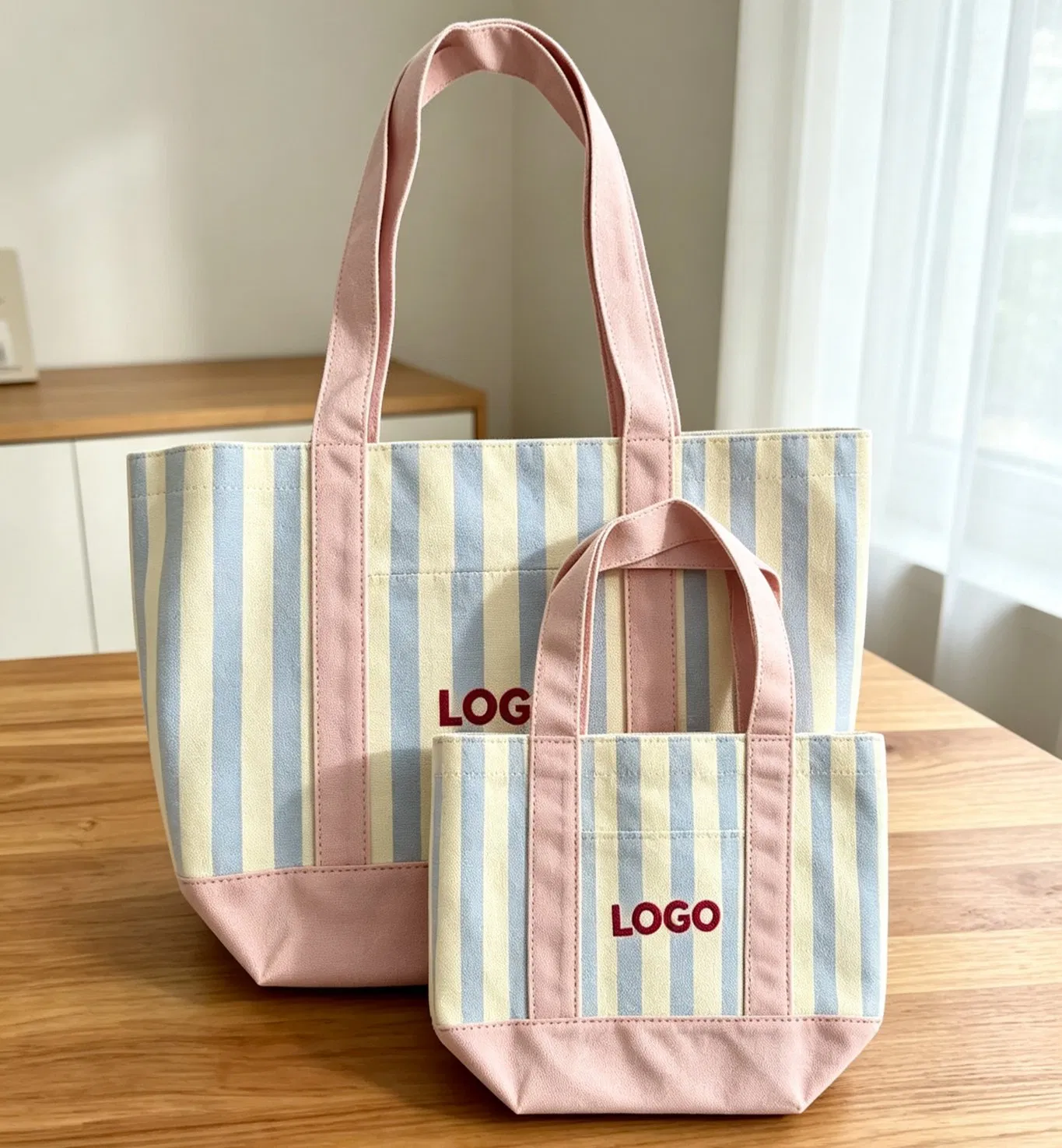
A product presentation from a LUCKYSTAR public international storefront. The visible sizes and construction illustrate why environmental comparison must use a defined bag, not an unsupported assumption about material, weight or performance. Final details are subject to specification and written confirmation.
Need a weight-controlled shopping bag RFQ? Send the bag dimensions and construction, intended contents and uses, material/basis-weight target, complete component and packing mass fields, comparison baseline and boundary, quantity, destination, evidence requirement and required date. LUCKYSTAR can return measurement gaps, sampling assumptions and commercial questions for written review.
The decision rule: compare service, not kilograms in isolation
A bag exists to deliver a service: carrying a defined load, through a defined route, for an intended number of uses, while meeting brand, safety and retail requirements. Material weight is one input to that service. It is not the result.
Suppose Design A is lighter per unit than Design B. That fact may reduce the material inventory per manufactured bag. It does not reveal whether A needs an additional coating, produces more cutting waste, packs less efficiently, fails earlier, or requires replacement. Conversely, a heavier design may survive more uses, but that possibility must be demonstrated for the actual construction. Weight alone cannot prove it.
For a broad supplier-selection process, use the Custom Bag Manufacturer Guide. For evidence and commercial comparison between suppliers, use How to Choose a Custom Shopping Bag Manufacturer. This page has a narrower job: it shows how to make material mass a traceable variable in an environmental model.
Five different weight values buyers should not confuse
Environmental calculations become unreliable when one field called “weight” is used for several different measurements. Keep the following values separate from the first request for quotation through the final shipment record.
| Weight field | What it measures | Evidence to retain | What it can support |
|---|---|---|---|
| Nominal basis weight | Mass per unit area of one sheet, fabric or film, often expressed as g/m² | Supplier material specification, material record and agreed tolerance | Material identification and an early design estimate |
| Finished unit mass | The mass of one complete bag with handles, trims, print and other permanent components | Approved sample measurements and production checks | Per-bag material inventory and net shipment planning |
| Gross material input | Purchased or issued material used to make a defined production quantity | Issue records, cutting record, reconciliation or equivalent production evidence | Allocation of cutting loss, setup consumption and process yield |
| Delivered shipment mass | Product plus individual packing, inner packing, cartons and other shipment packaging | Packing list and verified carton data | Freight and delivered-unit calculations |
| Mass per unit of service | Allocated material mass divided by a defined service, such as successful carrying uses | Finished mass plus a justified service-life or use dataset | Like-for-like scenario comparison |
The numbers are connected, but they are not interchangeable. A 250 g/m² material is not a 250 g bag. A 190 g finished bag does not mean only 190 g of material entered production. A net product weight does not include the cartons used to deliver it. A mass-per-use figure is not valid unless the number of uses is defined and supported.
Why material mass changes an environmental inventory
In a product study, mass can influence several life-cycle stages. The strength of the influence depends on the material, manufacturing route, geography, energy sources, freight mode, care pattern, service life and end-of-life scenario. A buyer should map those dependencies before drawing a conclusion.
Raw material and processing inventory
More material per bag usually means more input to be represented in the inventory model, but the environmental factor per kilogram is not universal. Cotton fabric, woven polypropylene, nonwoven polypropylene, polyester, paper, jute, mesh and composite structures do not share one production pathway. Recycled-content and certified-material claims also require product- and transaction-specific evidence; they cannot be inferred from appearance or weight.
Use supplier-specific or otherwise appropriate datasets with transparent geography, technology, time period and boundary. Do not insert a generic “eco factor” simply because two materials are both measured in kilograms.
Conversion and yield
Cutting layout, edge trim, print setup, rejected panels, lamination, handle cutting and other operations can make gross input exceed the mass of saleable bags. A design that saves five grams in the final unit but creates a less efficient cutting layout may not save five grams of purchased input. The model should show both values.
Packing and transport
Weight affects freight calculations, yet transport can also be limited by volume. A thick but compressible textile bag, a rigid paper bag and a structured laminated bag may use container or carton space differently. Model shipment mass, carton volume, units per carton and transport mode together rather than applying a freight conclusion directly from GSM.
Use, cleaning and replacement
If a reusable bag is washed, the use-phase scenario may include water, energy and detergent. If it is not washed, those flows may be absent. If a lightened construction causes earlier replacement, the material required to deliver the same service can increase. These are scenarios to measure—not attributes visible in a product photograph.
End-of-life
Finished weight helps quantify the amount entering a waste or recovery scenario, but it does not prove that the item will be collected, sorted, recycled or composted in the buyer's market. Coatings, mixed materials, inks, hardware and local infrastructure can affect the route. Keep an end-of-life assumption explicit and geographically relevant.
GSM is an input specification, not the environmental answer
GSM is useful when it identifies the basis weight of a defined material. It is insufficient when the buyer wants the mass or impact of a completed shopping bag.
For an early estimate, the body-material mass can be calculated as:
Estimated body mass (g) = total cut area (m²) × nominal basis weight (g/m²)
That estimate still needs corrections for tolerances, seams, folds, gussets, offcuts and any difference between nominal and measured material. Handles, reinforcements, lining, binding, thread, closure, labels, ink, coating and lamination must be added separately.
An illustrative design might use 0.62 m² of a 250 g/m² body material. The arithmetic gives 155 g before other components and before production loss. If handles and reinforcements add 35 g, the estimated finished mass becomes 190 g. These numbers are a teaching example only; they are not LUCKYSTAR specifications or performance data. The approved physical sample should replace the estimate once it exists.
For a detailed discussion of textile basis weight as a buying specification, see Best Fabric Weight for Custom Tote Bags.That guide addresses fabric selection. The present article addresses how measured mass enters environmental inventory and scenario analysis.
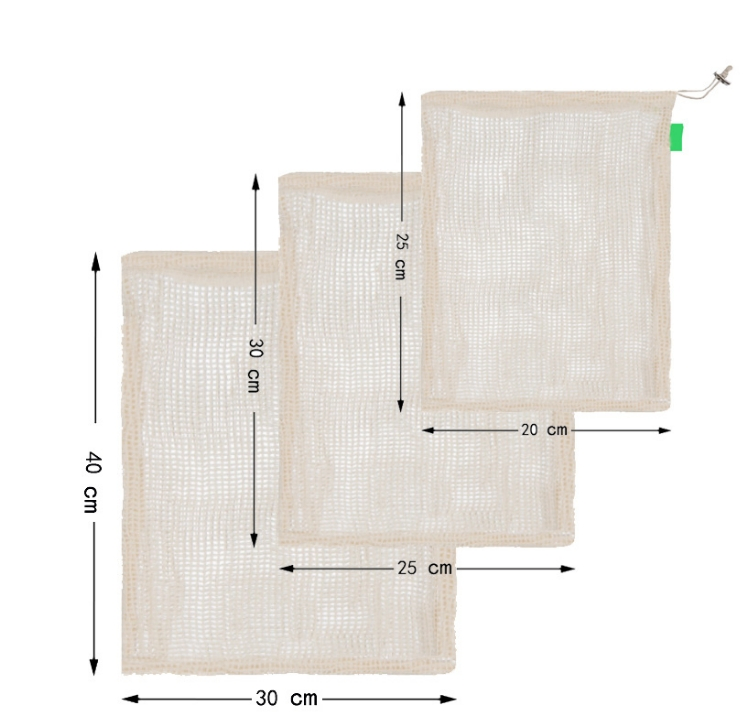
Size options shown on a LUCKYSTAR public international product page. Dimensions, pattern shape and open-mesh structure can all change total material area; the image does not verify fiber composition, basis weight, unit mass or environmental performance.
Build a per-bag bill of mass
A bill of materials says what the bag contains. A bill of mass adds the measured or calculated mass of each item. This turns “make it lighter” into a controlled engineering question and reveals components that GSM-only comparisons omit.
| Component group | What to record | Preferred measurement stage | Frequent omission to prevent |
|---|---|---|---|
| Main body | Material identity, cut area, nominal and measured basis weight, finished contribution | Estimate at design stage; verify on approved sample | Treating finished dimensions as the total cut area |
| Handles and reinforcements | Material, width, length, layers, patches and mass | Approved sample | Assuming handles use the same material or GSM as the body |
| Lining, pockets and binding | Material identity, area or length, mass | Approved sample | Ignoring internal components because they are not visible in a front photo |
| Decoration and surface layers | Print system, ink or transfer, coating, lamination and coverage where data are available | Approved decorated sample and supplier records | Calling the decorated bag “the same weight” as an undecorated blank without checking |
| Closures and hardware | Zipper, snap, buckle, cord, eyelet or other item and mass | Approved sample | Omitting small components that accumulate across a large order |
| Labels and permanent inserts | Woven label, care label, board or other retained item | Approved sample | Mixing permanent product components with removable shipment packing |
| Shipment packaging | Individual pack, insert, inner carton, master carton, tape and pallet allocation where applicable | Approved packing method and shipment record | Using net bag weight as delivered weight |
Keep units consistent. Convert milligrams, grams and kilograms deliberately; distinguish square metres from square centimetres; and state whether a value is measured, calculated or taken from a supplier document. A spreadsheet can produce a precise-looking total even when those fields are mixed.
Measure the finished sample under controlled conditions
Once a decorated sample is available, weigh it. The sample is closer to the actual product than an estimate assembled from nominal data, but the measurement still needs a method.
Record the sample identifier, specification revision, decoration state, packing state, scale identification or resolution, date and number of units measured. For moisture-sensitive materials, record the conditioning or at least the ambient state and whether the samples had just arrived from transit. Weighing several units can show variation that one carefully selected sample hides.
Do not silently replace the BOM with a scale reading. The scale confirms total mass; the bill of mass explains why it changed. Keep both. If the measured total falls outside the estimated range, reconcile the components before using the value in a footprint model or claim.
The Custom Shopping Bag Sample Development Process provides the broader approval sequence. A buyer can add finished mass and bill-of-mass reconciliation to that approval record without turning weight into a substitute for construction checks.
Account for cutting waste, setup loss and rejects
There are at least two legitimate mass questions:
- How much material remains in each saleable bag?
- How much material was required to produce each saleable bag?
The second can exceed the first. A simple allocation is:
Allocated input per accepted bag = total attributable material input ÷ accepted output quantity
The numerator needs a documented boundary. State whether it includes cutting offcuts, print setup sheets or fabric, damaged components, sampling, rework and rejected finished units. State how any recovered or internally reused scrap is handled. A model can use a planned yield during design, but production evidence should replace the assumption when the study concerns an actual order.
This distinction matters in lightweighting. Reducing panel size, basis weight or reinforcement may lower finished mass. Changing the pattern may also change marker efficiency. The environmental model should capture both results rather than assume that the finished-unit reduction equals the purchased-material reduction.
Choose a functional unit before comparing designs
The functional unit is the reference against which inputs and outputs are related. It prevents a comparison between bags that do different jobs. Define it before choosing the “lighter” option.
Possible units include one bag delivered to a named destination, 1,000 bags distributed in a campaign, carrying a defined payload for one trip, or providing a defined number of successful carrying uses. Each answers a different question. The same dataset should not jump between them.
For reusable alternatives, a useful form is:
Material mass per successful use = allocated product mass ÷ verified successful uses
If cleaning or replacement is within scope, add those flows consistently. If the use count is a scenario rather than observed data, label it as a scenario and test more than one value. Do not advertise the most favorable result as a measured fact.
ISO 14040 describes the principles and framework of life-cycle assessment, including goal and scope, inventory analysis, impact assessment and interpretation. ISO 14044 supplies requirements and guidelines for those phases. Buyers commissioning formal studies should work from the current official standards: ISO 14040:2006 and ISO 14044:2006.
Do not turn a carbon result into a total environmental verdict
A product carbon footprint addresses climate change. It is not a complete measure of water, toxicity, land, litter, biodiversity, recyclability or every other environmental topic. ISO 14067:2018 defines requirements and guidelines for quantifying and reporting a product carbon footprint in a manner consistent with ISO 14040 and ISO 14044, while explicitly focusing on climate change.
The GHG Protocol Product Life Cycle Accounting and Reporting Standard is another primary reference for product-level greenhouse-gas inventories and life-cycle hotspots. Whichever method is selected, keep the purpose, boundary, data sources, allocation, exclusions and uncertainty visible.
“This bag uses less material” and “this bag has a lower product carbon footprint” are different statements. The first may be substantiated with comparable mass evidence. The second requires a defined carbon accounting method and suitable activity data and emission factors.
Run a sensitivity test instead of forcing one answer
Environmental performance often depends on uncertain or design-sensitive inputs. A sensitivity table makes those dependencies visible and tells the development team what must be tested next.
| Variable changed | What may improve | What may worsen | Evidence needed before a decision |
|---|---|---|---|
| Lower body basis weight | Net material mass and possibly shipment mass | Tear resistance, opacity, print behavior, shape retention or use life | Decorated samples, relevant construction tests and packing trial |
| Smaller panels or gusset | Material area and packed volume | Carrying capacity or fitness for intended contents | Dimensioned sample and use-case check |
| Narrower or shorter handles | Handle mass and perhaps packing | Comfort, carrying geometry or attachment stress | Intended-load trial and attachment evaluation |
| Reduced reinforcement | Component mass and sewing inputs | Local failure at handles, corners or closure | Construction-specific durability evidence |
| Removed coating or lamination | Component count and mass | Cleanability, moisture response, stiffness, print protection or required appearance | Material/print trial and approved performance criteria |
| Higher packing compression | Carton volume and possibly freight cube | Creasing, deformation, blocking or unpacking labor | Pack-out and receiving trial |
| Longer service life | Lower allocated mass per successful use | May require added material, reinforcement or care | Defined reuse protocol and observed results |
The purpose is not to make the lightest sample pass at any cost. It is to locate a design window in which material use, product function, decoration, packing and expected life remain acceptable. A specification change that improves one column but fails another is not complete.
Model transport with both weight and cube
Shipment modeling should start from the actual packing plan. Record units per individual pack where used, units per carton, carton gross mass, external carton dimensions, palletization if applicable, origin, destination and mode. Keep estimated data separate from verified shipment data.
Two versions can have the same finished bag mass and different delivered transport profiles because one folds flatter. Two versions can occupy the same carton volume and have different gross mass.A reduction in bag GSM may have little freight effect if the shipment remains volume-limited and the carton count does not change. It may matter more if it changes carton gross weight or units per carton.
This is why environmental analysis should connect the tech pack to the packing specification. The How to Prepare a Custom Shopping Bag Tech Pack guide helps buyers define the product; the packing plan extends that definition to the delivered system.
Lightweighting needs formal change control
“Use less material” sounds simple, yet a small change can move through several linked fields. Lower basis weight can alter drape, opacity, sewing response, color appearance and print result. Shorter handles can change carrying comfort. A smaller reinforcement patch can concentrate stress. Removing a coating can change surface behavior. The revised design therefore needs its own specification and approval—not a handwritten note on the old sample.

A LUCKYSTAR-branded product presentation showing visibly different body, side and handle elements. It illustrates the need for component-level records; the image alone does not verify material identity, composition, weight, durability or an environmental claim.
Use a controlled loop:
- Name the environmental and functional objective.
- Identify the exact field to change.
- Update the drawing, BOM, tolerance and artwork/decoration assumptions.
- Produce a new identified sample.
- Measure the new finished mass and reconcile the bill of mass.
- Repeat the relevant quality, print, packing and use checks.
- Recalculate the comparison using the same functional unit and boundary.
- Approve, reject or revise the change in writing.
The Shopping Bag Printing Quality Control Checklist is relevant when weight changes alter the substrate's print response. For construction controls, use the Custom Shopping Bag Quality Control Checklist. For repeated-use evidence, use Reusable Shopping Bag Durability and Reuse Testing.
Material families require different questions
The purpose of this comparison is not to rank materials by an unsupported generic score. It is to show why a kilogram-based model needs material-specific inputs and why a visual product category is only a starting point.
| Shopping bag route | Weight-related fields to clarify | Environmental-data question | Performance evidence to consider |
|---|---|---|---|
| Cotton or canvas | Fiber/fabric specification, measured basis weight, usable area, handles and reinforcement | Does the dataset match fiber route, geography, processing and any supported content claim? | Seam, handle, shrinkage/care and intended-use checks as applicable |
| Nonwoven or woven polypropylene | Polymer/material specification, construction, coating or lamination, handle system | Does the dataset match the polymer and conversion route actually purchased? | Attachment, seam/bond, print and fold/pack behavior |
| Polyester or nylon | Fiber/yarn and fabric specification, coating, lining and hardware | Does the dataset match virgin/recycled status only where transaction evidence supports it? | Construction, abrasion/tear and care scenario relevant to the intended use |
| Jute or mixed natural-fiber construction | Body and trim identities, backing, lining and reinforcement | Are separate materials represented rather than treated as one generic “natural” input? | Fiber shedding, seam, handle and storage/care behavior as applicable |
| Mesh construction | Open area, yarn/filament specification, bindings, cord and closures | Does the model use actual component mass rather than treating the visible area as solid sheet? | Opening stability, seam/binding and intended-content retention |
| Paper shopping bag | Paper grade, basis weight, handles, reinforcement, ink, coating and adhesive | Does the data match the paper/board and converting route, including supported certification scope where claimed? | Handle attachment, crease, rub, wet-condition risk and intended load as applicable |
The How Shopping Bag Materials Affect Print Quality article covers substrate/decoration interaction. For a broader sourcing view across bag formats, see How to Choose the Right Material for Custom Bags. Neither visual texture nor category name should be used as proof of composition.
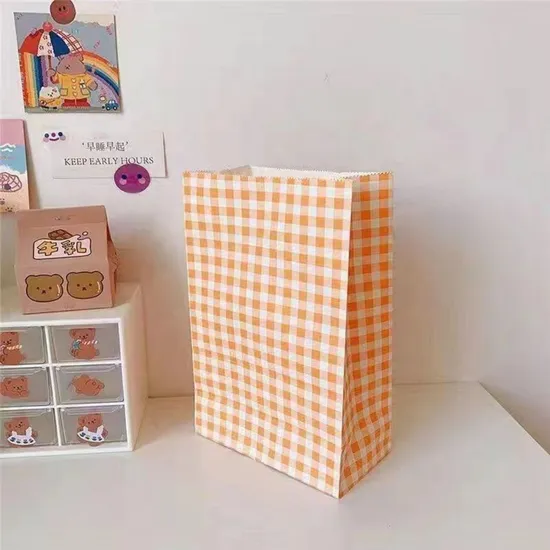
A paper-bag product photograph from a LUCKYSTAR public international storefront. A paper bag has its own handle, adhesive, printing, folding and packing system; the photo does not establish grade, certification, finished mass or environmental superiority.
Connect environmental data to quality evidence
A mass-reduction project should not create an environmental result on paper while the product becomes unsuitable in practice. Add the affected quality checks to the same change record.
For reusable bags, determine which load, cycle, seam, handle, closure, abrasion or cleaning exposures are relevant to the buyer's use case. The Which Tests Should Reusable Shopping Bags Pass? guide helps frame test selection. The Sustainable Bags That Last guide focuses on use-life specification. Do not borrow a pass result from a different material, construction, sample or order.
For a production batch, compare mass measurements with the approved tolerance and sampling plan. A stable average can still hide outliers; an acceptable mass can still hide a missing reinforcement or substituted component. Weight is a useful consistency signal, not a complete inspection.
Make only claims the evidence can carry
A buyer may want to say “uses X% less material,” “reduced packaging weight,” or “lower carbon footprint.” These claims need different substantiation.
For a material-reduction statement, define what was reduced, the percentage calculation, the baseline product, both measurement methods, relevant dates and whether permanent components and packaging are included. The compared products should deliver a comparable function. If the baseline is an earlier version, preserve its approved record.
The U. S. Federal Trade Commission's Green Guides summary advises marketers to qualify source-reduction claims with the amount reduced and the basis of comparison, and cautions against broad, unqualified environmental-benefit claims. The complete current rule text is available in the FTC's 16 CFR Part 260 Green Guides. Other markets may have different requirements; obtain market-specific review where needed.
For a broader evidence workflow, read How to Make Defensible Sustainability Claims for Reusable Shopping Bags.A certificate, test report or supplier statement should be matched to its issuing body, named organization, product/material scope, date, validity and transaction. LUCKYSTAR should not be described as holding a blanket GRS, GOTS, FSC, BSCI, ISO, REACH or RoHS status unless current evidence confirms the exact entity and scope.
Company-claim boundary: the following section is LUCKYSTAR publisher self-description. It does not prove a product footprint, comparative environmental result, material composition, recycled content, certification, universal weight tolerance, durability or current material/capacity availability. Measurements, datasets, system boundary, evidence, testing, claims, MOQ, price, schedule and delivery are subject to the actual order, qualified review, final specification and written confirmation.
Why choose LUCKYSTAR for a weight-controlled shopping bag project
The value of a sourcing partner is not a generic promise that one material is “green.” It is the ability to turn a buyer's objective into controlled product fields, samples, checkpoints and evidence requests. LUCKYSTAR's custom shopping bags route gives buyers a starting point across multiple visible formats and materials; the actual order then needs an approved specification.
LUCKYSTAR can support the discussion by:
- organizing body material, handles, reinforcements, decoration, trims and packing as separate specification fields;
- helping compare design options against the same dimensions, intended contents, decoration and packing brief;
- coordinating sample development so estimated mass can be replaced by measured finished-unit data;
- recording agreed changes before bulk production rather than relying on informal descriptions;
- aligning relevant inspection points with the approved sample and order-specific quality plan;
- requesting material, test or transaction evidence at the level needed for the buyer's proposed claim; and
- preserving the approved references needed for production and later reorders.
These are project-control capabilities, not blanket guarantees of a particular material, weight, minimum order, price, lead time, capacity, test result, certification or environmental outcome. Availability and commercial terms are subject to the final specification and written confirmation. Public listings can be checked individually: LUCKYSTAR on Made-in-China; the NB LUCKYSTAR Alibaba storefront; the Luckystarcreation Alibaba storefront; and the separate ECOGREEN and NB ECOGREEN storefronts. The contracting entity and applicable order terms still need written confirmation.
Buyer worksheet: data to request before quotation
Send a brief that lets the environmental question and product question use the same version:
- Intended contents, carrying conditions and destination market.
- Finished dimensions, gusset and required capacity.
- Body, handle, reinforcement, lining, trim and closure specifications.
- Nominal basis weight and tolerance for each area-based material.
- Artwork, print method, coverage, coating or lamination requirements.
- Quantity by size, color, artwork and destination.
- Individual packing, carton packing and labeling requirements.
- Environmental comparison goal, functional unit and system boundary.
- Required source, transaction, test or certification evidence.
- Sample mass method, production mass checks and relevant durability criteria.
- Baseline product and measurement records for any reduction claim.
- Fields that remain options and the person authorized to approve them.
This information also improves quotation comparability. One supplier may include a lining, reinforced handles and individual packing while another quotes only a plain body. Comparing unit prices or unit weights before aligning scope can produce the wrong commercial and environmental conclusion.
Frequently asked questions
Is a lower-GSM shopping bag always better for the environment?
No. Lower basis weight may reduce the material required for one component, but the result depends on finished mass, production yield, added components, packing, service life and the environmental profile of the actual material route. Compare defined products using the same function and boundary.
Is a heavier reusable bag automatically more sustainable?
No. Extra mass creates additional material inventory. It may be justified if it delivers necessary function or a demonstrably longer useful life, but that relationship must be measured for the specific bag. Weight alone cannot establish durability or sustainability.
Can I calculate finished bag weight from GSM?
You can estimate the contribution of an area-based material by multiplying total cut area by basis weight. You must then add handles, reinforcement, lining, binding, decoration, closures, labels and other permanent parts. Verify the estimate by weighing the approved finished sample.
Should cutting waste be included?
Include it when the study boundary covers production inputs. Define which losses are attributable to the order, how accepted output is counted and how recovered or reused scrap is treated. Keep finished product mass and allocated production input as separate fields.
Does a lighter bag always reduce freight impact?
Not necessarily. Freight can be limited by mass, volume or both. A valid comparison uses the approved packing method, carton gross mass, carton dimensions, units per carton, route and transport mode. A lighter unit may not reduce carton count or occupied volume.
How should reusable bags be compared with single-use bags?
Define the carrying service first, then apply consistent boundaries and scenarios. Use appropriate product data for manufacture, delivery, use/cleaning, replacement and end-of-life. Do not assume a reuse count; measure it or label it as a scenario and show sensitivity.
Can a product image prove material composition or environmental performance?
No. An image can show visible format, color and construction cues. It cannot verify fiber content, recycled percentage, basis weight, finished mass, certification, durability, recyclability or product footprint. Use the approved specification and current evidence.
What should be controlled when material weight changes on a reorder?
Reconfirm the material specification and tolerance, approved sample, finished dimensions, component BOM, artwork, decoration method, relevant performance checks, packing and mass records. For visual repeatability, also use How to Maintain Logo and Color Consistency Across Shopping Bag Reorders.
Request a material-and-weight review
Send LUCKYSTAR your bag dimensions, intended contents, material preference, target weight if any, artwork, quantity by version, destination, packing plan, comparison baseline and required evidence. The team can review which fields are estimates, which require sampling, and which should be confirmed before production.
Final material, composition, weight, dimensions, decoration, performance, testing, MOQ, price, schedule, packing and environmental claims remain subject to the approved specification, applicable evidence and written order confirmation.

Related shopping bag buyer guides
- Custom Shopping Bags
- Custom Bag Manufacturer Guide
- How to Choose a Custom Shopping Bag Manufacturer
- Shopping Bag Sustainability: A Life-Cycle Decision Guide for Brands
- Best Fabric Weight for Custom Tote Bags
- How Shopping Bag Materials Affect Print Quality
- Reusable Shopping Bag Durability and Reuse Testing
- How to Make Defensible Sustainability Claims for Reusable Shopping Bags
Request a material-and-weight review
Send the intended service, complete bag/packing mass fields and comparison boundary together so sourcing, sampling and environmental-accounting questions refer to the same design.
Review LUCKYSTAR custom shopping bag options, then send your bag and measurement brief through the contact form or Email a project brief. The email link opens a draft for your review before sending.
Materials, weights/tolerances, composition, datasets, tests, environmental conclusions/claims, availability, price, MOQ, packing, schedule and delivery terms are subject to evidence review, final specification and written confirmation.