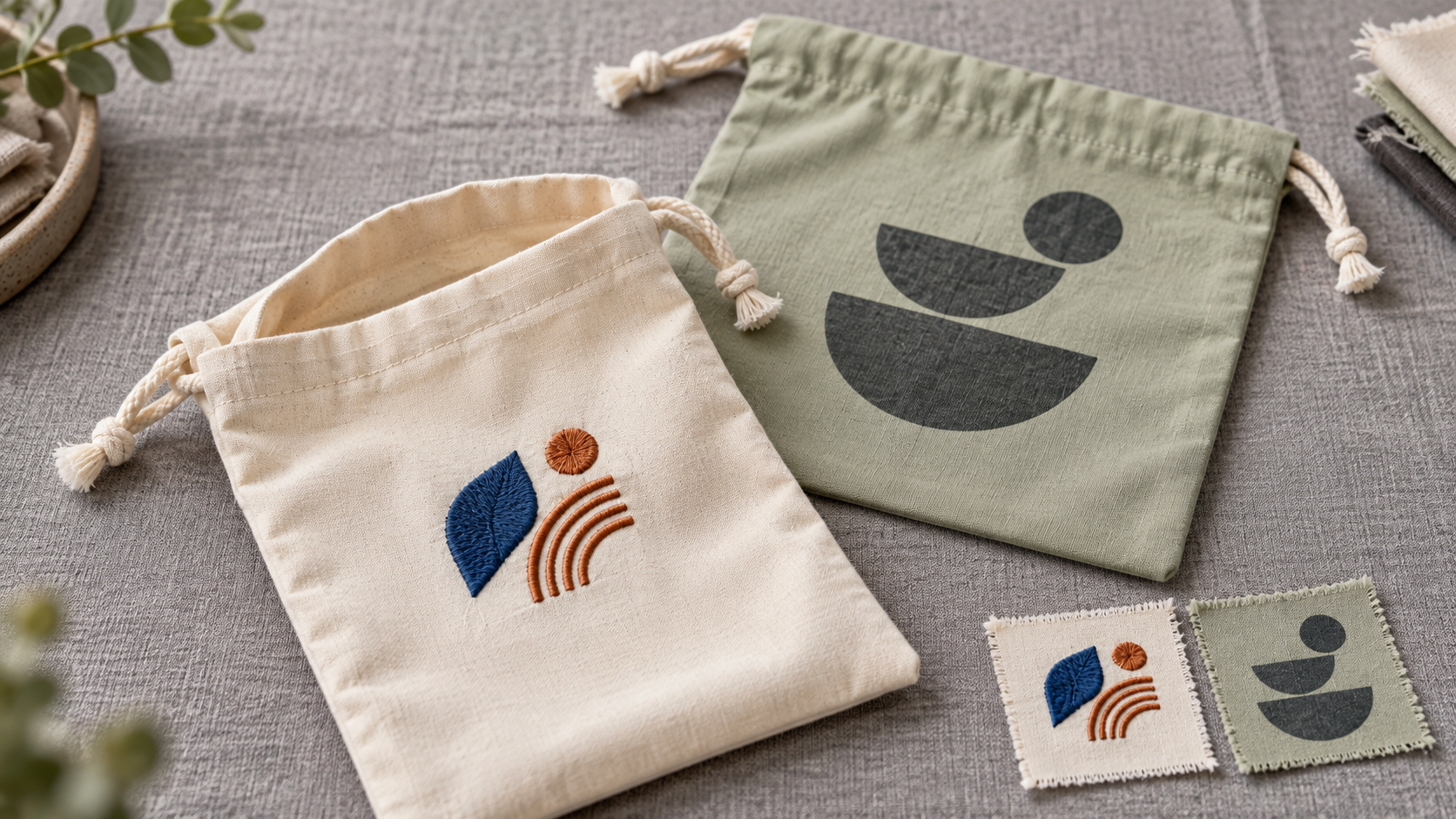
Foil Stamping and Embroidery for Luxury Drawstring Pouches
A small pouch can turn a jewelry piece, fragrance, beauty item or gift into a deliberate unboxing moment. But the decoration that looks luxurious on a screen may fail on the actual textile: foil can break across a velvet pile or gathered fold, while embroidery can pucker a light panel or leave backing visible inside. The right choice depends on the specified fabric, artwork, product inside and how the pouch will be handled—not on whether one technique sounds more premium.
This buyer guide compares foil-effect decoration and embroidery on small drawstring pouches. It explains what to request from a supplier, where each technique tends to succeed or fail, and which evidence to approve before bulk. Browse LUCKYSTAR's custom drawstring bag and pouch range for the starting formats; every finish below is subject to the actual material, sample and written order specification.
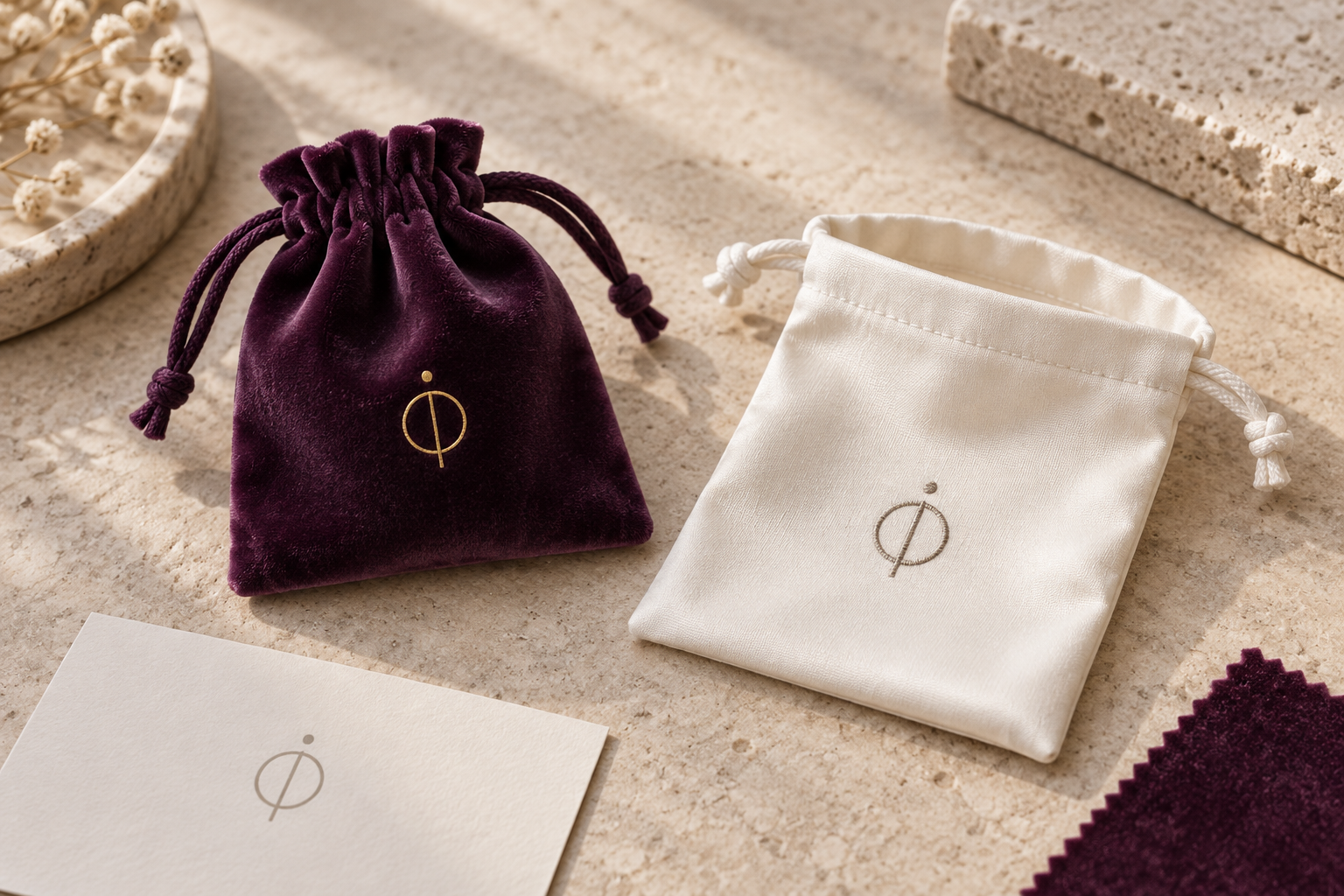
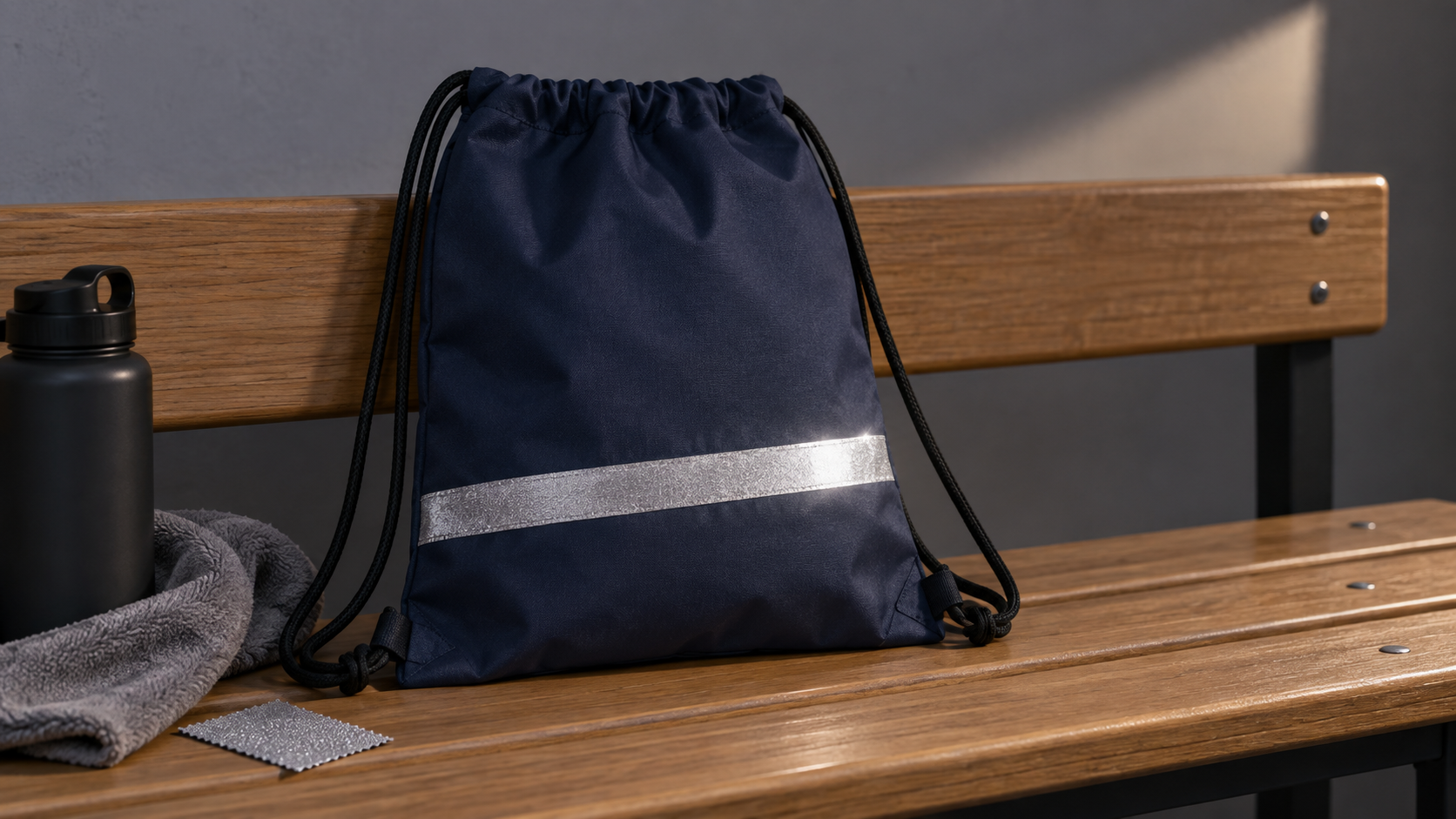
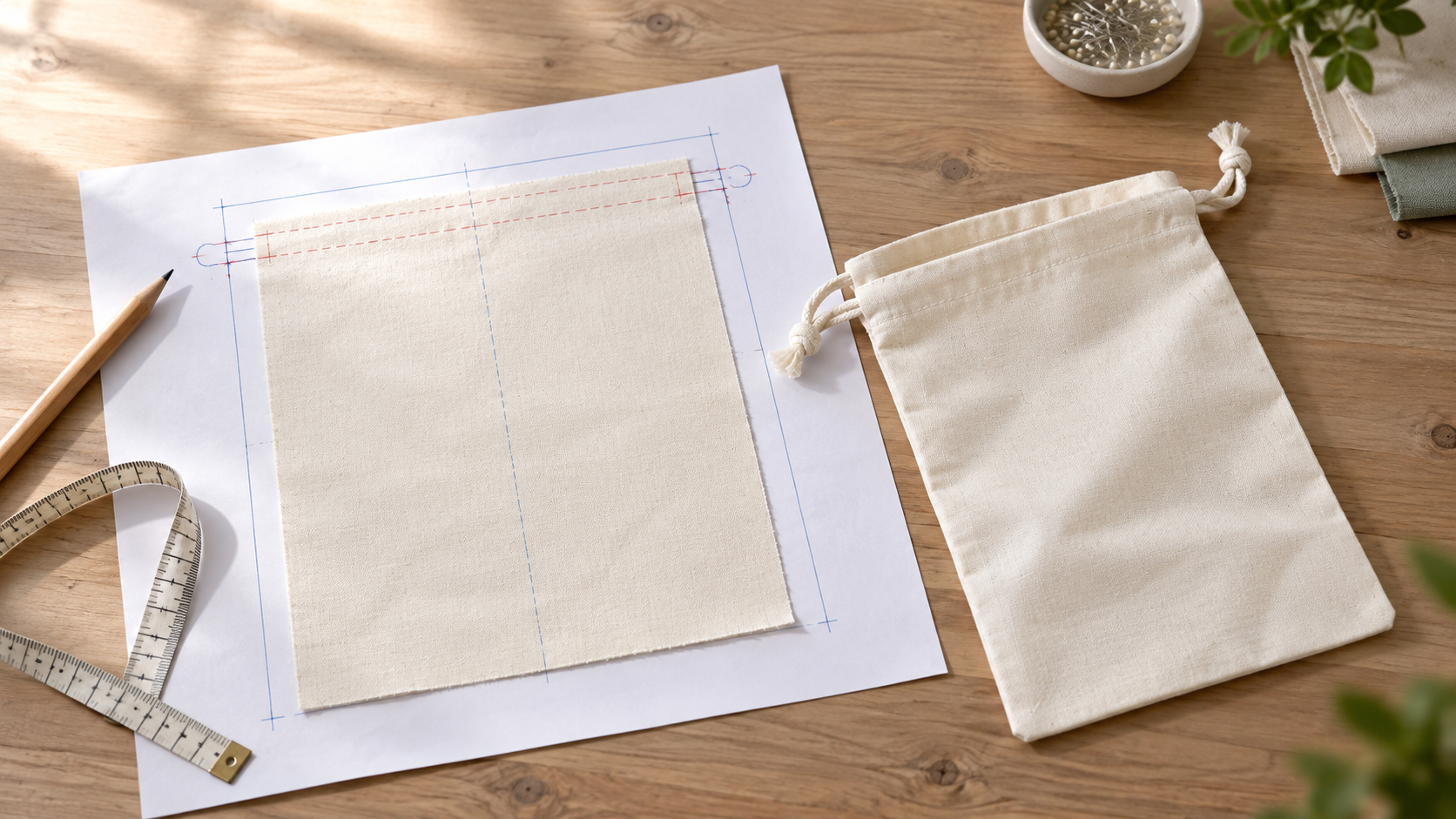
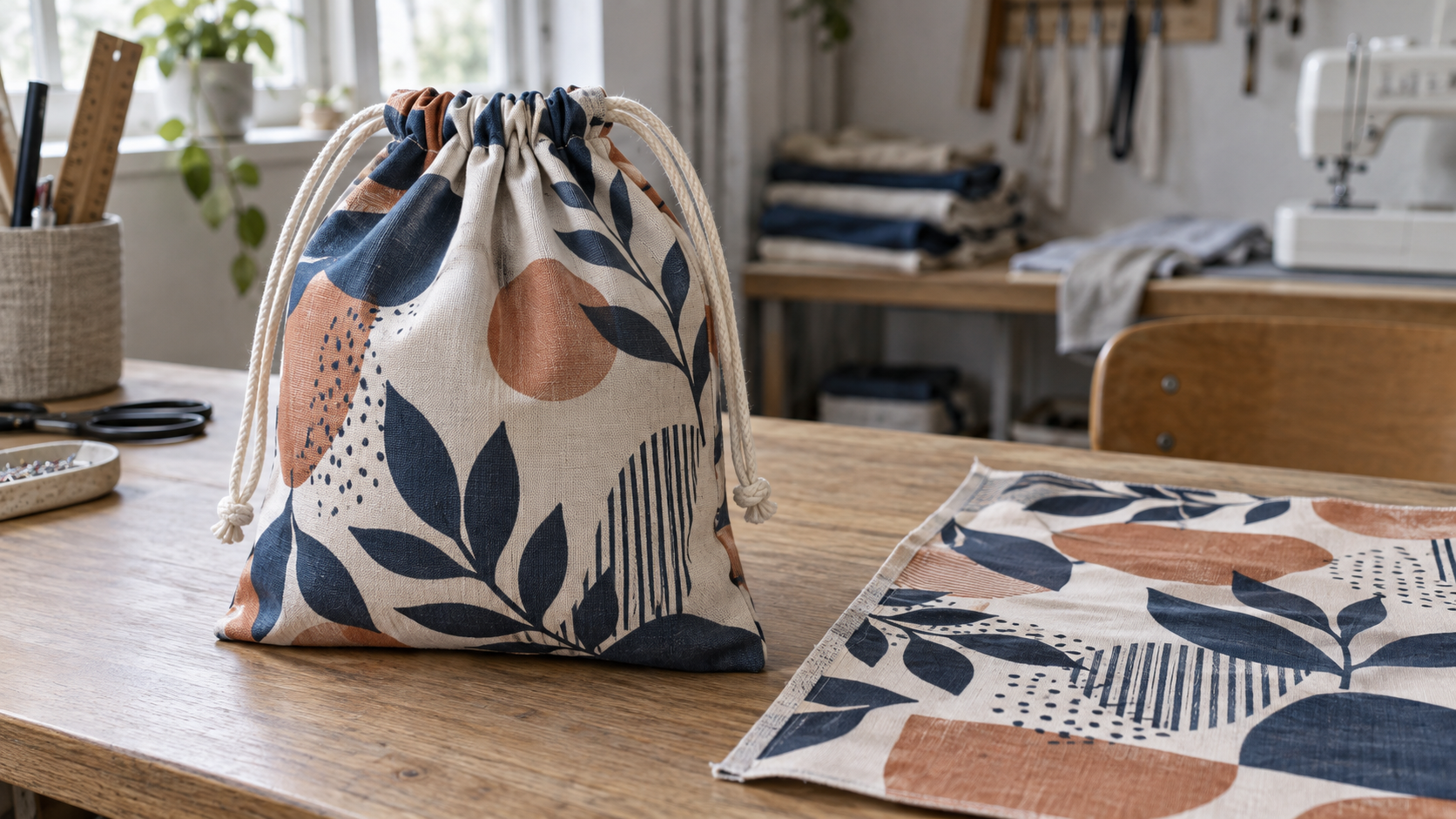
Construction-informed editorial illustration, not a photograph of a LUCKYSTAR production order or a guarantee that either finish suits these exact fabrics. The abstract marks are not customer logos; verify the proposed treatment on physical samples.
Quick answer: when should a brand choose foil or embroidery?
Choose a foil-effect treatment when the brief calls for a controlled metallic flash, a relatively simple mark and a smooth enough application area that has passed a substrate-specific trial. Choose embroidery when tactile thread relief matters more than a mirror-like surface and the pouch fabric can be stabilized without visible puckering or an unacceptable interior. If both effects are needed, separate their roles—for example, one small foil emblem plus a restrained stitched border—rather than stacking processes over the same fine lettering.
| Buying decision | Foil-effect treatment | Embroidery | What decides the result |
|---|---|---|---|
| Visual character | Reflective, thin surface effect | Raised thread texture; metallic thread is possible | Approved sample viewed under intended lighting |
| Best first artwork test | Simple, open-shape emblem or short wordmark | Stitch-friendly emblem or simplified monogram | Physical-size proof and production test |
| Main substrate risk | Adhesion, heat/pressure marks, incomplete transfer | Puckering, pile swallowing stitches, visible backing | Exact fabric, finish and construction |
| Interior impact | Depends on transfer route and pouch assembly | Backing and reverse stitches may need lining or concealment | Intended contents and contact surface |
| Repeat-order control | Foil lot, adhesive/process route, placement and press conditions | Thread lot, digitized file, backing and stitch settings | Retained approved sample and specification |
These are decision prompts, not universal rankings. For a broader comparison of decoration options on the bag category, see custom drawstring bag printing methods. This page deals specifically with the premium pouch finish decision.
Clarify what “foil stamping” means on a textile pouch
Buyers often use foil stamping as a visual shorthand for a metallic logo. Traditional hot-foil stamping uses heat, pressure and a die on a suitable substrate. On a textile pouch, the proposed route might instead be a foil transfer over a compatible adhesive, a decorated woven label, a foil-stamped paper hangtag, or another construction. These are not interchangeable processes. Ask the supplier to name the actual route and which surface receives the foil.
For example, Siser's textile-foil application guide describes an adhesive layer followed by a foil layer; it also shows that even a successful decorative transfer can intentionally have small gaps in coverage. Stahls' foil/adhesive technical sheet calls out pressure control around seams and thick components. Those are supplier-specific instructions, not settings to copy onto every velvet, satin or lined pouch. A pouch project needs its own material test and recorded process route.
If the main bag fabric will not accept the finish cleanly, moving the metallic detail to an applied label, ribbon end, paper sleeve or gift card can preserve the presentation without making an unproven claim about direct foil on the pouch. Ask whether that component is included in the quoted unit and how it will be attached and inspected.
Specify the metallic route, not simply the word “gold”
An RFQ that says only “gold foil logo” can produce quotations for unlike products. Ask for a process description and a decorated swatch from each proposed route. The comparison below is a procurement map, not a claim that every route works on every textile or is currently available for every LUCKYSTAR pouch.
| Route proposed in a quotation | Where the metallic effect sits | Question that changes the decision |
|---|---|---|
| Direct hot-foil or die-based impression | On the pouch material itself, if the material tolerates the process | Can the supplier show a clean, repeatable mark without pile crush or a pressure outline on this exact fabric? |
| Adhesive-mediated textile foil transfer | On an applied adhesive layer over the textile | What foil and adhesive system is specified, and what handling trial will check coverage and edge lift? |
| Metallic ink or transfer film | On a printed or applied surface; not necessarily foil | Does the buyer accept its different sheen, hand feel and edge appearance? |
| Foil on a separate label, sleeve or card | On an attached or accompanying component | Will that component remain visible during unboxing, and is its attachment included in inspection? |
Keep the visual goal separate from the manufacturing term. A glossy gold look can be achieved in more than one way, yet a foil, ink and metallic thread should not be described as the same finish. For a two-colorway program, request one physical proof per fabric color: contrast and reflected color can change the perceived mark even when the decoration material is unchanged. Record the approved swatch and component supplier reference for repeat orders.
What embroidery changes on a small luxury pouch
Embroidery builds the design in stitches. It can offer a quiet monogram, a textured emblem or a metallic-thread accent, but the file is not simply a converted vector logo. Digitizing specifies stitch path, underlay, density and direction for the actual fabric. Backing, hooping and thread choice also affect the face and the reverse.
This matters especially on velvet or velour. Pile can rise through stitches or hide small detail. Brother's embroidery manual identifies velvet among pile fabrics for which a water-soluble topping may keep stitches above the surface; Madeira's topping guidance explains the same mechanism. The right topping, backing and removal method must be demonstrated on the project's actual pouch fabric. For metallic thread, Madeira recommends a production-fabric test because digitizing, needle and tension choices differ by thread and material.
For the narrower cotton-versus-printed-artwork decision, read embroidery vs printing for cotton drawstring bags. The present guide adds the foil route and premium pouch presentation, rather than repeating that general comparison.
Match the finish to the fabric, not just the color card
“Velvet,” “satin” and “microfiber” describe broad surface families, not a complete specification. A pile direction, coating, backing, weave, stretch or fiber blend can change how heat or stitches behave. Request the specified material and finish in the first strike-off, and compare the undecorated and decorated swatches side by side.
| Pouch surface | Foil-effect question | Embroidery question | Practical approval evidence |
|---|---|---|---|
| Low- or high-pile velvet/velour | Will heat or pressure flatten pile, leave a halo or give patchy coverage? | Will stitches sit above the nap without unacceptable reverse-side bulk? | Swatch in both nap directions; close and fill the finished pouch |
| Smooth satin or satin-look woven fabric | Is the finish crisp without scorching, sheen change or adhesive edge? | Does the fabric pucker, snag or show needle marks? | Oblique-light photographs plus hand inspection |
| Cotton or canvas | Does the weave texture interrupt fine foil lines? | Is the fabric stable enough for the selected stitch density? | Actual-size decorated panel and assembled pouch |
| Microfiber or faux suede | Is the specific surface and backing compatible with the proposed transfer? | Does the mark remain legible on the directional texture? | Supplier-named material, approved swatch and rubbing check |
| Lined pouch | Can decoration be completed before lining assembly? | Are backing and stitches hidden or acceptable inside? | Open-mouth inspection and production-sequence record |
Material selection itself is covered in velvet vs microfiber drawstring pouches. This article assumes the buyer has a material shortlist and now needs to prove the decoration on that specific surface.
Run a controlled comparison on the real pouch material
Do not compare a foil swatch on smooth cotton with an embroidered sample on velvet and conclude that the techniques themselves caused the difference. Request two trials on the same specified fabric lot or approved equivalent, in the intended color and finish. Use the same finished logo dimensions and placement envelope. Where the artwork needs process-specific simplification, label those changes clearly so the brand team can decide whether the identity remains acceptable.
First, photograph the undecorated material under diffuse and oblique light. Note pile direction, gloss, stretch, coating and visible weave. Next, inspect the two decorated panels at normal viewing distance and close range. For foil, look for incomplete transfer in open areas, a visible adhesive edge, pressure halo and change to the base fabric's hand. For embroidery, check distortion of the outline, stitch coverage, thread breaks, backing visibility and the reverse surface. Do not compare only the prettiest area of either trial.
Then make the complete pouch and insert the intended product. Close and open it repeatedly in the way a recipient will; rub the decorated face against the proposed gift card, sleeve or outer box only as the real packing sequence would. Examine the mark again after the pouch has rested in its individual packaging. This is a project-specific handling trial, not a standardized durability certification. If the customer requires quantified abrasion, wash or colorfastness performance, name the applicable method, laboratory, specimen and pass criterion separately before any claim is made.
Finally, retain a dated comparison sheet with the material reference, two process descriptions, artwork revisions, photographs in common lighting, observed defects and the buyer's chosen route. A supplier can then quote and reproduce the selected appearance rather than reconstructing a decision from a chat screenshot.
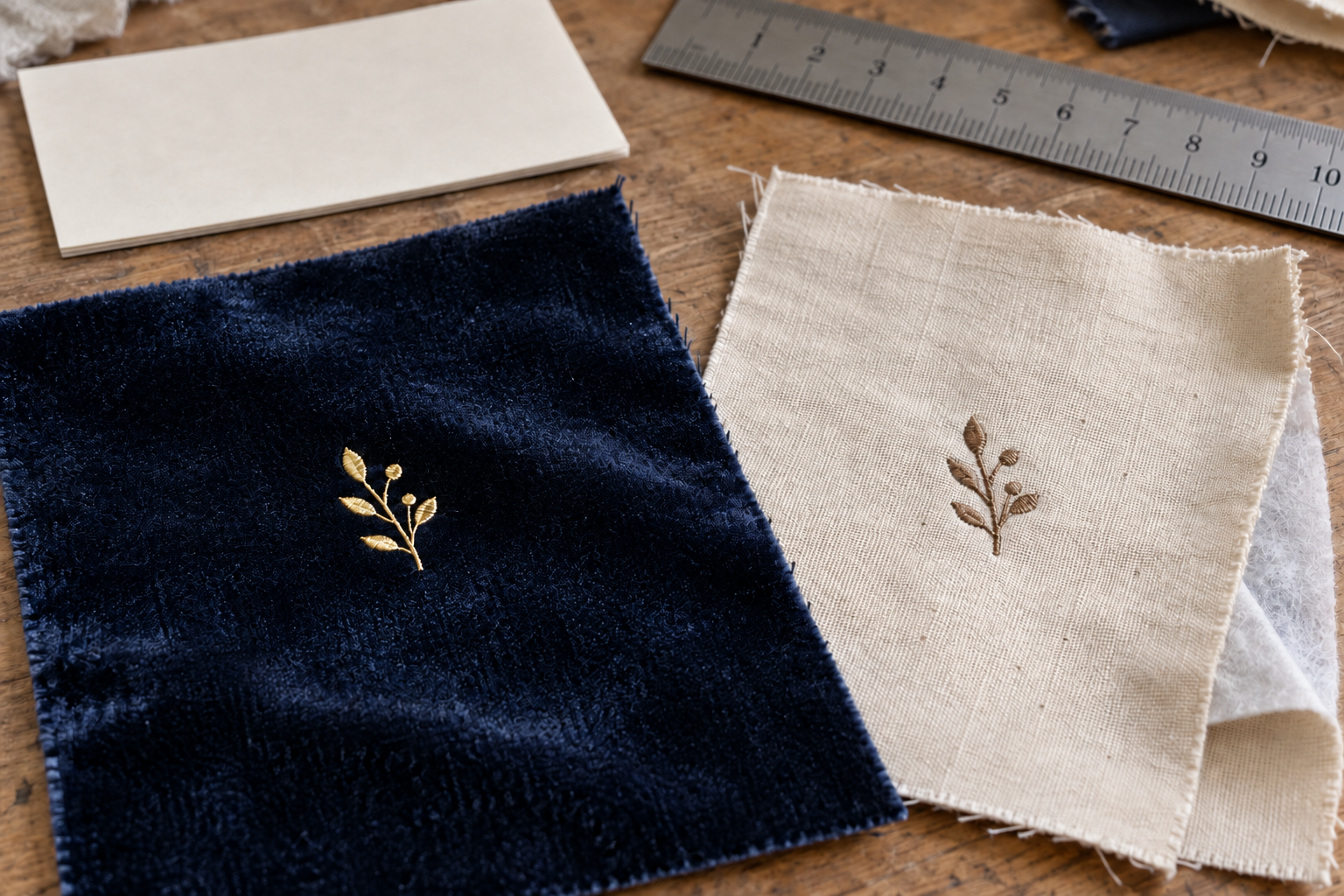
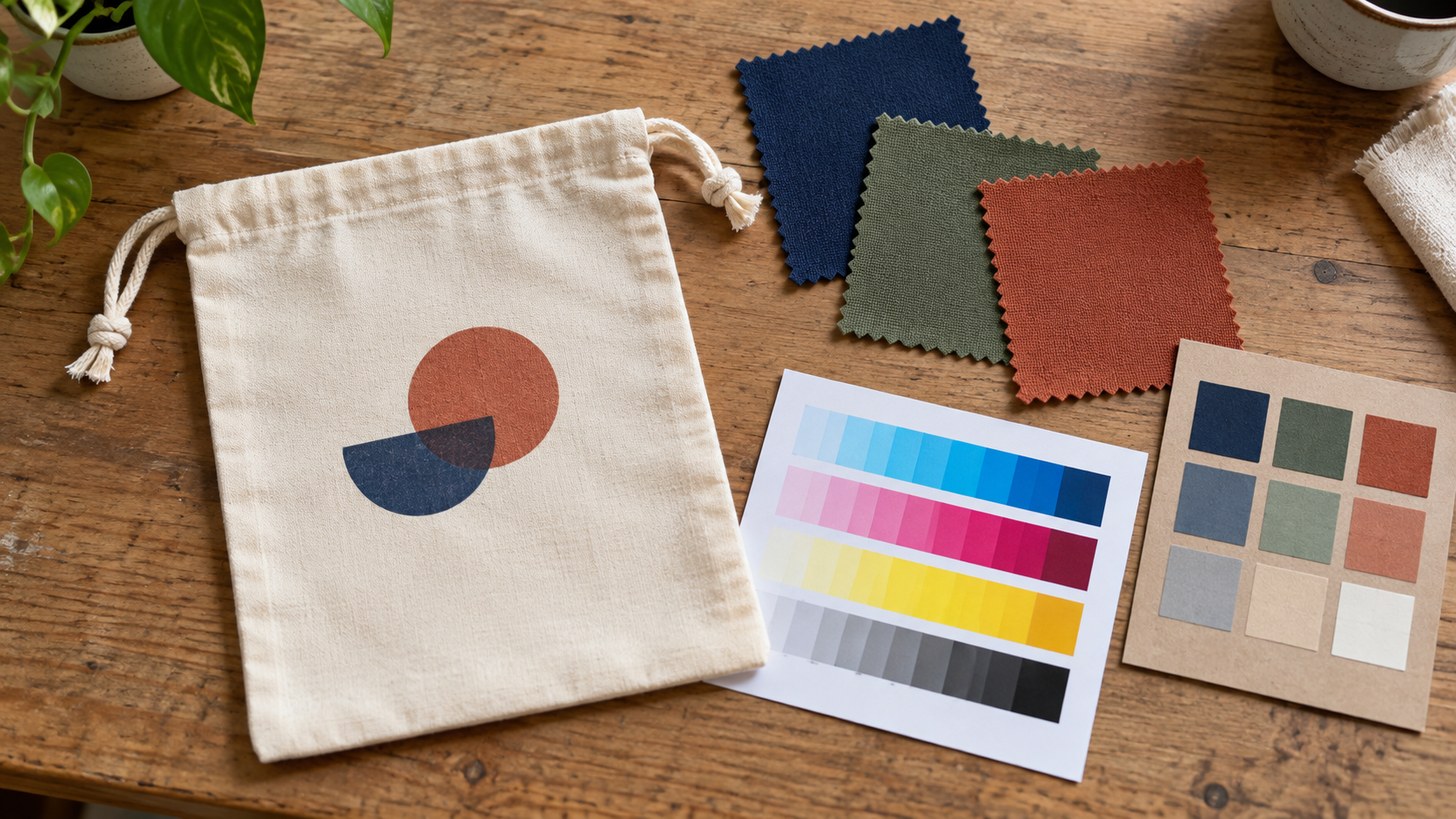
Conceptual sample-review image informed by real small-pouch construction; it is not a test result or evidence of a finished customer product. Approve real foil and stitched strike-offs on the order material.
Keep the mark visible after the cords are pulled
A centered design on a flat panel can move into folds once the pouch is filled and cinched. The foil or embroidery should sit below the actual gathering horizon, not merely below the channel seam. Insert the intended product—or a dimensionally faithful dummy—close the pouch with normal tension and check the mark from the recipient's viewing angle. A rigid jewelry box, curved candle jar and soft accessory can each create a different front face.
Foil is particularly unforgiving of a line that bends over a sharp crease; embroidery can become visually crowded when the surrounding fabric collapses. Use the finished pouch, not the cut-panel width, for the placement datum. The drawstring bag logo placement and print size guide includes a dedicated small-pouch section and a filled-and-cinched approval matrix. Link the artwork position to that specification before decoration tooling is commissioned.
Prepare two production files from one approved brand master
One authorized logo master should govern both proposals, but the output files differ:
- Foil artwork: vector paths at final physical size, declared foil color and finish, minimum open areas agreed in the strike-off, and a clear indication of whether the process is direct textile transfer or a separate label or card.
- Embroidery artwork: a digitized stitch file developed for the selected fabric and thread, plus thread reference, backing/topping instructions, finished size and a photo of the approved sew-out.
- Common placement drawing: finished-pouch dimensions, front/back designation, logo box coordinates, channel and seam keep-out zones, and the primary filled presentation state.
- Rights check: written permission to manufacture the submitted trademark or artwork. A customer's order authorization is not automatically permission to publish that logo as a case study.
Do not assume a very fine serif, hairline, tiny reversed knockout or micro tagline will survive unchanged in either process. Request two physical-size proofs rather than forcing one design to fit both. The artwork and dielines guide explains the wider handoff; this article focuses on the finish-specific files.
Can foil and embroidery be combined on one pouch?
Yes, if a sample proves the particular construction. A useful combination assigns different jobs: foil for a small reflective accent and embroidery for a larger monogram, or embroidery on the pouch with a foil-stamped paper component. Trying to place a heat-applied metallic layer directly over dense stitches may create uneven pressure and poor registration. The reverse sequence may expose thread or backing to a later heat step. Treat both as engineering questions, not a default production recipe.
Before approving a combination, request a process map: panel cutting → each decoration operation → lining or seam assembly → cord insertion → final press or handling → packing. The supplier should identify which stage can alter the earlier finish. Where the mark is on a lined pouch, examine both the exterior and the open-mouth interior. If a second process adds no clear brand value, a single well-executed decoration usually gives a cleaner specification.
Sequence decoration, lining and closure as one construction
The order of operations can decide whether a visually successful swatch becomes a usable pouch. A flat panel normally offers more even access for a press or embroidery hoop; an assembled small pouch introduces seams, channel thickness and a narrow interior. But decorating before sewing also means the position on the cut panel must be translated accurately to the finished, gathered face. A supplier should show that conversion on the approved construction drawing rather than relying on visual centering at the machine.
On a lined jewelry pouch, panel embroidery may allow the lining to conceal backing and reverse stitches. That helps presentation only if the added stitch area does not make the pouch stiff or distort the lining. A foil treatment planned before lining may protect the interior from process marks, but subsequent sewing, turning and pressing must not crease or lift the finished motif. If foil is applied after assembly, ask how pressure will be made even around the channel and side seams and how the contents-facing side will be protected. None of these routes is automatically superior; the sample must show the chosen sequence.
Require one production drawing that identifies the decoration operation, the lining attachment stage, cord installation and any final heat or cleaning step. Reinspect the mark after all later steps, not only when it leaves the decoration station. This prevents a passed foil strike-off or sew-out from being mistaken for approval of the complete gift package.
A four-gate sample plan for premium finishes
Skip the generic “looks good” approval. Use evidence that can be carried into bulk inspection and reorders.
| Gate | Physical item to approve | What to record before release |
|---|---|---|
| 1. Substrate and color | Undecorated swatch from proposed material | Fiber/construction description, color, pile direction or sheen, and material reference |
| 2. Decoration trial | Foil strike-off and/or embroidery sew-out | Finished mark size, process route, foil/thread reference, edge quality, backing/topping and visible defects |
| 3. Complete pouch | Sewn sample with lining, cords and intended contents | Placement after cinching, front/back orientation, interior feel, trim interaction and packing view |
| 4. First bulk article | First production unit made to approved revision | Match to gold sample under agreed light and handling conditions; document deviations before release |
For a complete sample workflow, use the custom drawstring bag sample development process. A foil swatch does not prove the finished pouch, and a studio photo cannot replace the approved physical sample.
Inspect the finish using defect-specific language
Agree on pass/fail examples before production. The limits and sampling plan should be written for the order; no universal defect allowance is implied here.
| Finish | Look for | Likely decision before bulk |
|---|---|---|
| Foil-effect surface | Missing transfer, cracked line, adhesive halo, scorch or flattened pile, color/shine change | Recheck substrate compatibility, artwork openness, process settings and handling |
| Embroidery face | Puckering, gaps, thread breaks, buried detail, distorted monogram, uneven registration | Revise digitizing, stabilization, thread/needle choice or position |
| Embroidery reverse | Scratchy backing, loose ends, protruding stitches, visible stabilizer | Change backing or lining plan and approve interior contact |
| Combined treatment | Relative position drift, heat impact on earlier work, overcrowded composition | Redesign hierarchy or sequence before another sample |
| Packed pouch | Crushed pile, foil abrasion, cords rubbing the mark, bulk color variation | Adjust pack-out, separation, inspection and approved reference |
Ask for a handling check suited to the product's real life: insertion and removal of the contents, repeated cord closure, intended storage and gift presentation. Do not infer wash durability, colorfastness or abrasion performance from the words “foil” or “embroidered.” If a market, brand or order requires a formal method, agree on the applicable test and acceptance criterion before production.
Convert the gold sample into a repeatable inspection rule
“Match the sample” is useful only when inspectors know which characteristics to match. The approval record should contain the physical sample or controlled photographs, the substrate and color reference, the finished mark dimensions and location, the selected process route, and the named observation conditions. Photograph the foil under both diffuse and angled light, because its reflective appearance changes with angle. Photograph embroidery face-on and from the side so thread relief, pile interaction and panel puckering remain visible. Include an image of the open pouch if the reverse or lining matters to the contents.
Separate defects into categories before the first bulk unit. A missing portion of the essential logo, exposed adhesive on a visible face, a misread monogram or a sharp backing edge against jewelry might be a functional or brand-critical issue. Minor appearance variation may be acceptable only within a buyer-approved reference range; do not invent a universal percentage or distance tolerance. The purchase specification should state who can approve a borderline unit, what evidence must be sent, and whether the affected pieces are segregated while the decision is made.
For repeat orders, carry forward the approved version of the foil or thread, material, artwork, placement drawing, sample photographs and packing method. If a new fabric lot, alternative foil, substitute thread or changed lining is proposed, treat it as a controlled change and request a new first-article comparison. A retained old photograph alone cannot prove that a substitute material will behave identically.
What affects cost, MOQ and timing?
Foil routes can add artwork preparation, material trial, adhesive or die/transfer setup, extra press operations and yield risk. Embroidery can add digitizing, stitch time, stabilizer, trimming, metallic-thread handling and lining work. A two-process design can add another registration and approval gate. The impact varies by finished size, stitch count, coverage, number of positions, fabric behavior, quantity and packaging.
That is why a fair quote should show the same pouch specification for both alternatives. Ask for a base pouch price and separately identified finish assumptions, sample scope, tooling or digitizing charges where relevant, and packing requirements. Do not use a platform listing price as a guaranteed quote. MOQ, feasibility and production time are subject to the final specification, sample approval and written confirmation.
Why work with LUCKYSTAR on a luxury pouch project?
LUCKYSTAR's independent site shows custom drawstring formats including velvet and cotton gift pouches, and its public channels describe OEM/ODM customization and sampling support. For a buyer, the practical value is a single discussion about the pouch and the decoration: material and lining, cord construction, finished dimensions, logo placement, sample review, packing and quality checkpoints can be documented together. That is more useful than choosing a metallic look in isolation and discovering later that the actual pouch surface or contents change the result.
LUCKYSTAR can coordinate a comparison of proposed finish routes against the agreed specification and return an order-level sample and quotation path. This is a description of development support, not a claim that every foil method is available on every fabric, that all processes are performed in a company-owned factory, or that any certification covers the full product range. For the wider supplier-evaluation framework, see the custom bag manufacturer guide and how to choose a custom drawstring bag manufacturer.
RFQ checklist: send enough detail to compare finishes fairly
| Information to send | Why it matters |
|---|---|
| Pouch use and contents | Sets fit, contact surface, presentation and handling checks |
| Finished dimensions and base shape | Defines the usable decoration area and packed silhouette |
| Proposed material, color and lining | Determines what must be tested for heat, pressure and stitches |
| Authorized logo master and target size | Allows separate foil and embroidery production files |
| Preferred metallic appearance or thread effect | Distinguishes visual goal from assumed process name |
| Quantity, colorways and positions | Determines setup, production routing and inspection scope |
| Gift-box, card, insert and individual packing | Reveals alternative foil locations and surface-protection needs |
| Target market and any required tests | Prevents unsupported compliance or durability promises |
Three practical finish decisions for different gift programs
For a jewelry pouch that directly contacts a polished item, the unseen interior deserves as much attention as the logo. Compare the reverse of embroidery, backing edge and lining with the intended product; a foil-decorated outer card may be the cleaner metallic route if the chosen pouch fabric cannot take direct heat. Do not claim scratch protection until the complete package has been evaluated for that item.
For a fragrance or beauty gift set, the pouch may be inserted into a rigid box and then removed by its cords. Check the foil or stitches after this sequence, particularly where the box lip or insert touches the mark. Coordinate the pouch's decoration with the outer packaging, but avoid trying to reproduce a complex carton graphic at miniature textile scale.
For a wedding or event favor, many small pouches may be filled and arranged in batches. A simple, repeatable motif can be more reliable than tiny personalized text if artwork variants, position checks and packing are not controlled. Ask how each variant is identified and kept separate; do not let a decorative preference create an unreviewed labeling or fulfillment error.
Frequently asked questions
Is foil stamping directly on velvet drawstring pouches always possible?
No. “Foil stamping” may describe different methods, and velvet pile can change coverage or show heat and pressure marks. Ask for the exact proposed route and a strike-off on the specified velvet before approving a finished pouch.
Is embroidery automatically more durable than foil?
No universal ranking is defensible. Thread, digitizing, backing, substrate, foil/adhesive system and real handling all matter. Agree on the intended use and inspect or test physical samples against it.
Can a gold embroidered logo replace metallic foil?
It can create a metallic impression, but not the same flat reflective surface. Metallic thread may also need different digitizing and machine settings. Approve a sew-out next to a foil trial under the same lighting.
Will embroidery backing touch the jewelry inside?
It may on an unlined pouch. Inspect the reverse of the actual sample with the intended product or a safe surrogate. A lining, alternative backing or different logo route may be appropriate.
How small can the logo be?
There is no reliable universal minimum. The readable size depends on the artwork's open spaces, chosen foil/adhesive or thread, fabric texture and the final pouch's visible face. Request an actual-size trial, not a screen zoom.
Should decoration happen before or after sewing?
That depends on panel access, lining, seam bulk, heat or hoop requirements and placement tolerances. Record the operation sequence and approve the assembled pouch even when decoration is applied to a flat panel.
Request a finish-ready pouch sample and quote
Send LUCKYSTAR your pouch size, intended contents, material direction, authorized logo artwork, finish preference and planned quantity. Ask for the proposed foil route, embroidery alternative or a controlled combination, followed by a sample that can be reviewed filled and cinched. Explore custom drawstring bags and pouches, then contact the team for a project-specific quotation; all methods, samples, MOQ, price and schedule remain subject to written confirmation.

Click the GET QUOTE image to send your specification. The standard CTA image is reused by design; the article's editorial images are unique illustrative assets.