Last reviewed: September 28, 2026
A global cap program succeeds when people in different markets recognize the same brand while receiving headwear that fits their channel, climate, and use. That requires more than placing one logo on several blank hats. The team must control silhouette, fit, fabric, color, decoration, labels, packaging, assortment, and approval records as one repeatable system.
This article uses JOBO as a practical planning example for dealer, rider, employee, event, and retail headwear. It is a framework for developing a global merchandise program, not a claim that every example below describes a previously completed JOBO order.
This page focuses on global headwear range governance. It does not duplicate the supplier selection guide, the wholesale embroidery article, or the general merchandise page. For manufacturing-partner evaluation, read the baseball caps supplier guide. If the same program also includes custom bags, use the core Custom Bag Manufacturer Guide for bag-specific materials, sampling, MOQ, quality, and production decisions.
Define the job of each JOBO headwear channel
One global brand can have several headwear audiences. A dealer employee needs dependable fit and easy reordering. A rider needs comfort, ventilation, and a secure closure. A retail customer expects a considered product rather than a giveaway. An event team may prioritize quick distribution and visible campaign identification.
Write the channel job before selecting a cap. This prevents one style from being stretched across incompatible needs and keeps local requests from turning into uncontrolled SKUs.
| Channel | Primary job | Useful cap direction | Decision to control |
|---|---|---|---|
| Dealer staff | Consistent daily identification across locations | Structured or semi-structured adjustable cap | Fit range, repeat-order color, front mark, and staff packing |
| Rider community | Comfortable off-bike lifestyle wear and community recognition | Five-panel, lightweight cap, or breathable performance direction | Crown depth, sweatband, ventilation, closure security, and packability |
| Retail merchandise | A product customers choose and pay to wear | Distinct silhouette with considered trims and interior branding | Perceived value, size logic, hangtag, barcode, and retail presentation |
| Events and launches | Fast distribution and campaign visibility | Adjustable cap or bucket hat with a controlled seasonal color | Delivery date, simple size coverage, artwork date, and carton allocation |
| Partners and gifts | Premium relationship touchpoint | Refined fabric, subtle embroidery or patch, and better packaging | Recipient profile, presentation, secondary branding, and quantity split |
Use one master platform with controlled variants
A global program becomes easier to approve and reorder when most markets share a master cap platform. Lock the crown construction, fit block, visor shape, sweatband, closure family, eyelet specification, seam quality, and label architecture. Regional variants can then change selected elements without reopening the entire product.
- Global constants: silhouette, core fit, approved construction, primary logo rules, label structure, and quality standard.
- Controlled options: approved fabrics, closures, decoration routes, and a limited color palette.
- Local variables: event date, language, dealer allocation, country color, or secondary side artwork where justified.
- Prohibited changes: unapproved fit, construction, logo proportions, brand color, compliance content, or material substitution.
The custom baseball caps platform provides a category starting point. Buyers who need a full cap-development route can also review the custom baseball cap manufacturer overview.
Choose a silhouette that matches the wearer and the artwork
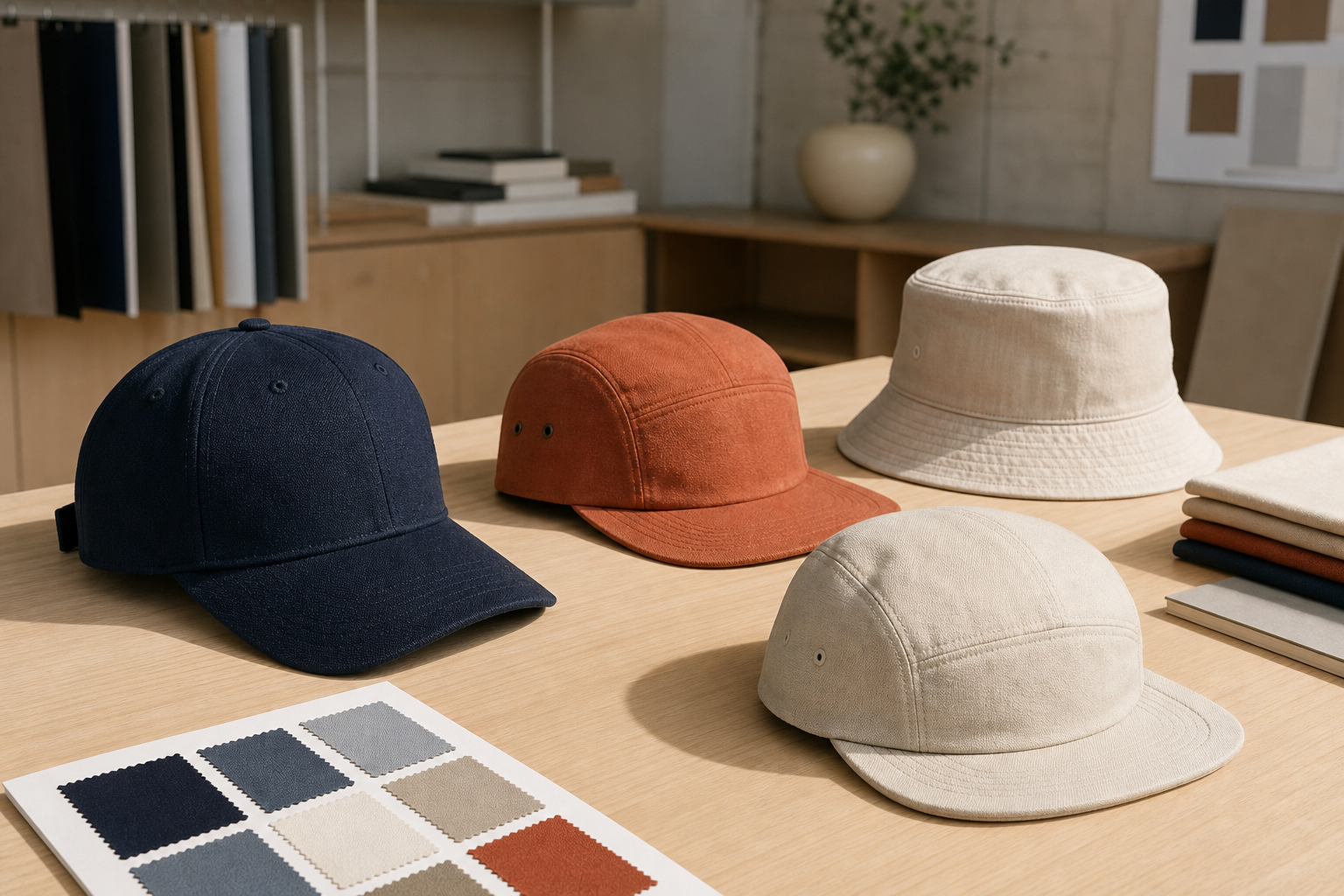
Panel count is not only a style term. It determines where seams run, how the crown holds its shape, and how much uninterrupted space is available for artwork. A structured six-panel cap may support a crisp uniform look, while a five-panel front can help a wide mark avoid a center seam. An unstructured cap offers a relaxed profile but may require lighter, better-balanced embroidery.
| Headwear style | Brand character | Decoration advantage | Fit or construction risk |
|---|---|---|---|
| Structured six-panel | Classic, uniform, retail, and team-oriented | Stable supported front for compact embroidery or a patch | Crown may feel too high or the center seam may interrupt wide artwork |
| Five-panel cap | Cycling, outdoor, modern lifestyle, and compact streetwear | Single front panel can support a wider centered treatment | Panel depth and side shape may not suit every head profile |
| Unstructured dad cap | Relaxed, washed, casual, and approachable | Small flat embroidery or a restrained label can feel intentional | Dense decoration may pucker or collapse the front panel |
| Trucker cap | Outdoor, service, event, and casual community programs | Defined front panel with visible color-block opportunities | Foam, mesh, crown height, and snap quality change comfort and perception |
| Bucket hat | Summer, festival, travel, and youth-oriented programs | Front, side, brim, or all-over applications are possible | Requires actual size planning; brim width and head circumference affect fit |
| Beanie | Cold-weather, outdoor, work, and seasonal lifestyle | Cuff label, patch, or compact embroidery can be consistent | Knit stretch, cuff height, recovery, and decoration weight must be tested |
For category extensions, compare the custom beanie manufacturer guide and the custom logo bucket hat example.
Treat fit as a measurable global standard
Terms such as low profile, mid profile, high crown, and one size fits most are not complete specifications. Record the finished head-circumference range, crown height, front-panel height, visor length and width, visor curve, sweatband width, opening shape, and closure adjustment range. State the measurement method so different teams do not produce different numbers from the same sample.
Fit-test a sample on several intended wearers. Record whether the crown sits cleanly, the visor aligns with the face, the sweatband creates pressure, the closure reaches the needed range, and the rear opening sits correctly. A global program should use the same approved fit record for every reorder unless a regional fit block is deliberately created.
Match fabric and ventilation to use conditions
Cotton twill, washed cotton, polyester, recycled polyester, nylon, canvas, mesh, knit, and blended fabrics create different structure, breathability, drying behavior, color appearance, and decoration results. Material names alone are not enough. Specify weight or construction reference where relevant, finish, hand feel, color standard, backing, mesh type, and any required performance evidence.
- Dealer and employee caps need repeatable color, comfort, and easy care.
- Rider and outdoor programs should review sweatband, ventilation, drying, and sun exposure needs.
- Retail headwear may justify better fabric, interior taping, labels, and hardware detail.
- Bucket hats and beanies require size and fabric-recovery decisions that adjustable caps can avoid.
Approve decoration on the finished headwear construction
Current top-ranking headwear guides consistently separate flat embroidery, 3D puff embroidery, woven or embroidered patches, heat transfer, printing, and specialty appliques. The best route depends on artwork detail, panel support, seam position, fabric texture, care expectation, quantity, and brand character.
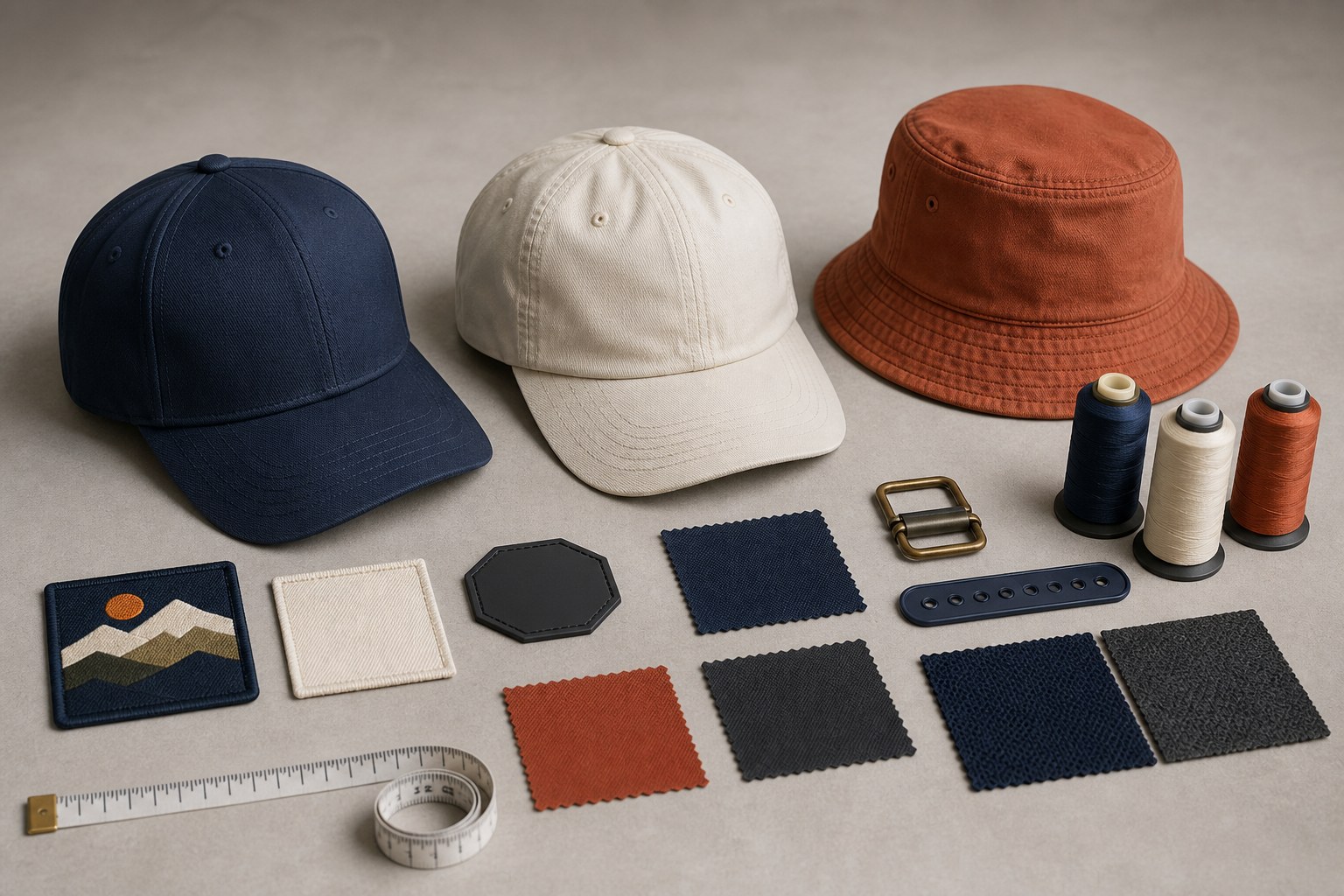
| Decoration method | Useful application | Strength | Sample evidence |
|---|---|---|---|
| Flat embroidery | Compact front, side, or back marks on supported fabric | Tactile, durable, and familiar retail appearance | Digitized file, actual stitch-out, thread colors, backing, edge quality, and puckering check |
| 3D puff embroidery | Bold shapes and larger lettering on a suitable structured front | Raised depth and strong distance recognition | Foam coverage, corners, joins, stitch density, and whether small gaps expose the underlay |
| Woven patch | Detailed artwork or small lettering that direct embroidery cannot hold | Sharper fine detail and controlled badge shape | Border, backing, color, edge, attachment, placement, and weight on the cap panel |
| Embroidered patch | Outdoor, team, dealer, and heritage-inspired programs | Textured badge language with flexible attachment | Detail loss, border consistency, patch distortion, and seam position |
| Silicone or rubber patch | Technical, outdoor, performance, and contemporary merchandise | Clean dimensional surface and distinctive material contrast | Color, flexibility, edge lifting, cracking, attachment, and cap-panel balance |
| Heat transfer or print | Detailed multi-color graphics on a compatible flat area | Color range and artwork flexibility | Press marks, adhesion, hand feel, curvature, heat sensitivity, and durability |
The embroidered caps wholesale guide covers bulk embroidery consistency, while the custom embroidered baseball cap example shows a product direction. For printed artwork, compare the custom printed baseball cap option.
Build a cap-specific artwork and placement map
A logo prepared for a T-shirt or website may not reproduce well on a curved cap. Simplify fine lines and small text when needed, then approve the digitized or production-ready file rather than only the original vector. Mark placement from named seams or panel edges on front, side, back, under-brim, closure, sweatband, and labels.
Check the artwork from normal viewing distance and while the cap is worn. A center seam can split a wide design, a curved crown can distort a patch, and dense embroidery can pull an unsupported panel out of shape. The custom embroidery guide provides broader stitch and bulk-consistency context, but the final cap must still be tested on its own curved construction.
Control global colors and permitted local changes
Define a core JOBO headwear palette with approved body, visor, mesh, thread, label, and hardware references. A color target may look different on cotton, polyester, mesh, embroidery thread, silicone, and metal, so approve the complete set rather than expecting every material to appear identical.
When a region requests a new color, assign a variant code and show which elements remain global. Do not allow local artwork to change the main mark's proportion, exclusion space, or approved reproduction method without review. Confirm whether language, care content, fiber content, country-of-origin marking, barcode, and importer information vary by destination.
Limit SKU growth before it weakens the program
Every combination of cap style, fabric, body color, logo color, closure, market, language, and packaging can become a separate stock item. Start with a small core range and create variants only when they serve a real channel or demand. A clear code could identify platform, color, decoration, market, and revision without relying on informal names such as dark blue rider cap.
- Use one core cap when the same fit and construction can serve several markets.
- Separate dealer, retail, and event versions only when their product or packing requirements differ.
- Keep a variant matrix showing active, trial, seasonal, discontinued, and replacement SKUs.
- Record minimum production quantities and color or artwork splits before approving new options.
- Review slow variants before every reorder rather than automatically reproducing the full range.
Use sample gates instead of one subjective approval
- Direction sample: confirm silhouette, intended wearer, channel, and overall brand character.
- Material and color set: approve fabric, mesh, sweatband, thread, patch, closure, labels, and hardware references.
- Fit sample: measure the cap and test crown, visor, sweatband, rear opening, and adjustment on representative wearers.
- Decoration sample: approve the actual stitch-out, patch, transfer, or print on the intended panel construction.
- Pre-production sample: lock all specifications, labels, packing, and documented corrections for bulk.
- First-output check: compare early production units with the approved reference before the full order is finished.
A physical sample remains necessary even when a digital mockup looks accurate. The six-panel embroidery cap example can help a team discuss structure, but it does not replace the approved project sample.
Inspect the bulk order as headwear, not flat apparel
Check crown symmetry, panel alignment, visor shape, visor stitching, button position, eyelets, seam tape, sweatband, rear opening, closure function, loose threads, stains, shade, labels, decoration position, and packing. Measure the same points and use the same method as the approved sample.
Wear and adjustment checks matter because a cap can look acceptable on a table while feeling unstable or uncomfortable. For sports and team programs, the bulk sports caps guide adds category-specific sourcing context.
Plan market allocation and reorders before packing
Give the production and logistics team quantities by SKU, market, carton, and destination. State whether dealer kits require mixed assortments, whether retail units need individual barcodes or hangtags, and whether event stock must be separated by date or location. The carton mark should help the receiving team identify contents without opening every carton.
Keep an approved reference, specification, artwork, supplier codes, inspection record, and actual bulk sample from the shipment. For the next order, compare requested changes with the last approved revision instead of rebuilding the program from message history.
Coordinate caps with bags, hoodies, and basic apparel
A JOBO merchandise range may combine caps with T-shirts, hoodies, tote bags, and event accessories. The collection can share brand colors, logo hierarchy, labels, packaging tone, and delivery windows, but each product needs its own construction and quality plan.
Use the bags, caps, and hoodies merchandise guide for assortment roles, the basic wear and accessories guide for apparel planning, and the global apparel partnership framework for cross-time-zone approvals. The custom bag branding system explains how the same identity can move into bags. For bag manufacturing decisions, return to the core bag sourcing pillar.
Buyers can compare category starting points for custom T-shirts and custom hoodies without forcing their fabric and fit rules onto headwear.
Send an RFQ that defines the global program
Include the channel and wearer, headwear style, crown and visor direction, finished measurements, fit range, fabric and finish, colors, ventilation, sweatband, closure, artwork files, decoration method or desired result, placement, thread or patch details, labels, packing, quantity by SKU and market, destination, target date, testing needs, and reference images with notes.
Mark global constants, permitted local variables, and open decisions. A supplier can recommend workable construction or decoration only when the team knows which outcomes are fixed.
Common global custom cap program mistakes
- Selecting a fashionable silhouette without testing it on the intended wearer group.
- Approving artwork on a screen without a real stitch-out, patch, or finished decorated cap.
- Treating one size fits most as a complete fit standard.
- Letting regions create colors and artwork without a controlled variant code or approval record.
- Using dense embroidery on an unsupported panel and accepting puckering as unavoidable.
- Adding too many low-volume SKUs before the core range has real demand evidence.
- Reordering from a photograph or email thread rather than the last approved specification.
FAQ about custom caps and hats for a global brand
Should JOBO use one cap style in every market?
Use one master platform where the audience and conditions are similar. Create a controlled regional variant only when fit, climate, channel, language, or a proven market need justifies the change.
Is five-panel or six-panel better for a front logo?
A five-panel cap provides an uninterrupted front area, which can help wide artwork. A six-panel cap offers a classic crown but usually has a center seam. The better choice depends on silhouette, fit, artwork width, and decoration method.
When should a brand choose a patch instead of embroidery?
A woven patch may retain fine details or small lettering better than direct embroidery. Embroidered, silicone, leather-like, or felt patches create different textures. Approve the patch and its attachment on the finished cap because weight and curvature affect the result.
How should a global cap reorder be controlled?
Reference the active SKU, last approved revision, material and component codes, current artwork, approved sample, packing rules, and destination quantities. Record any change before confirming price or production.
What should a buyer send for the first review?
Send the wearer and channel, preferred silhouette, fit direction, materials, colors, artwork, desired decoration result, quantities by market, packing, destination, and target date. Mark what is fixed and where recommendations are needed.
Turn a global headwear idea into a controlled program
Review the current custom baseball cap range to shortlist platform directions before regional variants are approved. Ningbo Luckystar Commodities Co., Ltd. supports custom caps, hats, apparel, bags, and related merchandise development. Explore the Luckystar product range and read About Ningbo Luckystar for company context. A useful first conversation starts with the audiences, markets, cap platform, branding rules, quantity split, destination, and target date.
Prepare a global cap program brief
Send the channel roles, preferred cap styles, fit range, material direction, colors, artwork, decoration result, SKU and market quantities, labels, packing, destinations, and delivery need. Identify global constants and the local changes that require approval.
Email a prefilled global cap program brief

Ningbo Luckystar Commodities Co., Ltd.
Tel / WeChat / WhatsApp: +86 15957446693
Email: sales@luckystarcreation.com
Address: Room 2202, Meijin Building, No. 125 Mingyuan Lane, Ningbo, Zhejiang, China 315104