
Last reviewed: September 24, 2026
Buyer Quick Answer
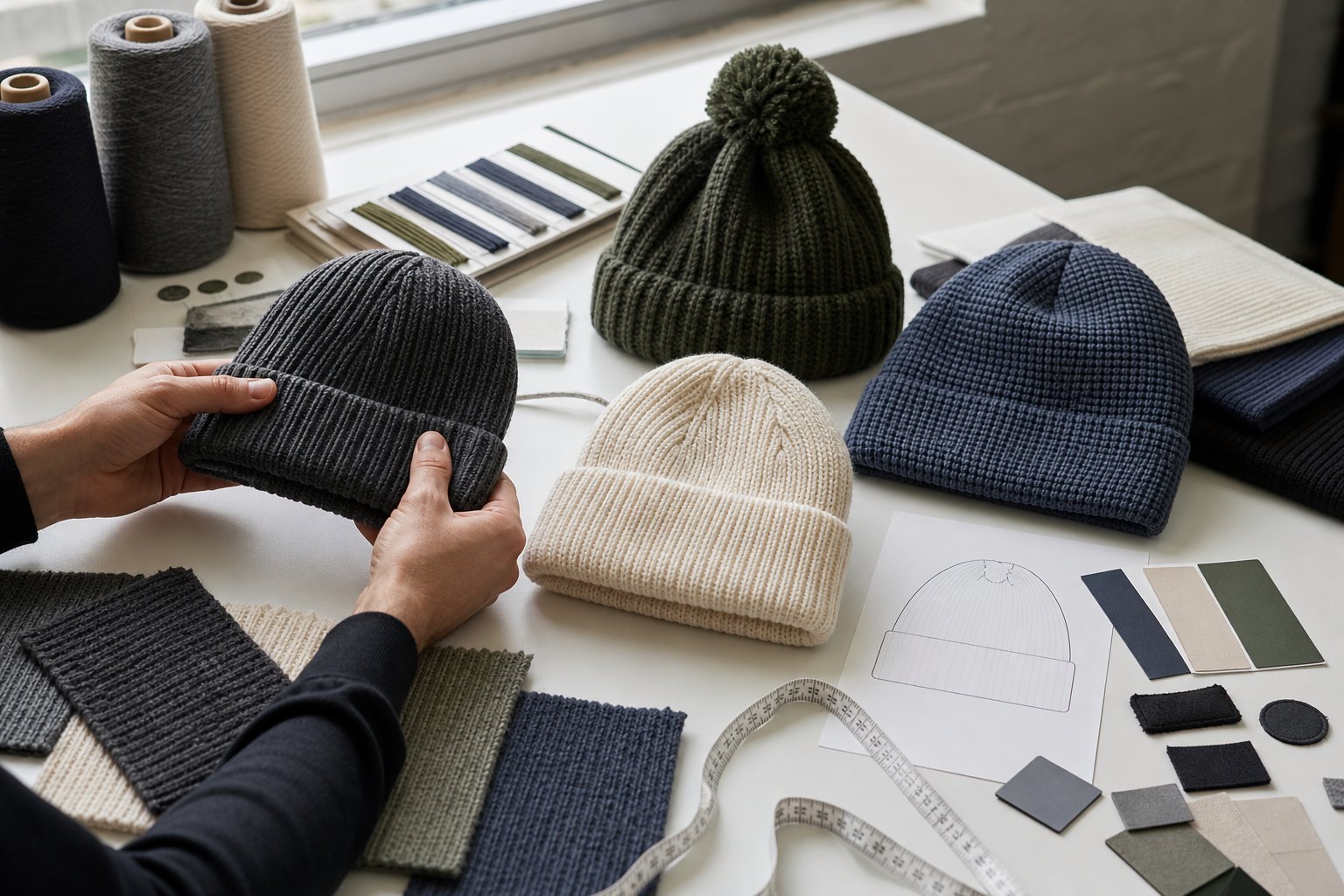
A custom beanie manufacturer should control the beanie as a knitted product, not only as a logo carrier. Buyers should approve the yarn and color, knit structure and gauge, flat dimensions, worn fit, stretch and recovery, cuff and crown construction, decoration trial, labels, packing and bulk reference.
This page owns beanie-specific product development and production control. It does not repeat the cap embroidery artwork-to-stitch guide, the global headwear rollout framework or the baseball caps supplier guide. For broader manufacturer evaluation across categories, use the core custom manufacturer sourcing guide.
Send Your Custom Beanie Specification
Email a prefilled beanie brief
Choose the Beanie Route Before Requesting a Quote
“Custom beanie” can mean decorating an existing blank, adapting a factory base style or developing a knitted product from the yarn upward. These routes carry different decisions, minimums and sample requirements. State the route in the RFQ so every supplier prices the same work.
| Manufacturing route | Buyer can control | Suitable for | Constraint to confirm |
|---|---|---|---|
| Stock blank + decoration | Available style and color, logo method, label and packing | Events, staff kits or a fast pilot | Yarn, knit and dimensions may be fixed by the blank |
| Modified factory platform | Selected yarns, colors, cuff depth, crown, pom-pom, branding and labels | Private-label seasonal collections | Identify which machine, gauge and base construction remain fixed |
| Fully custom knitted beanie | Yarn, stitch structure, gauge, dimensions, pattern, crown, fit and full presentation | A proprietary retail product and planned reorders | Yarn color, machine setup and custom components can create separate minimums |
Define the Wearing Job and Beanie Silhouette
A close-fitting work beanie, a short fisherman style, a slouch fashion shape and a lined winter pom beanie do not share the same product brief. Define the wearer, climate, duration of wear, retail or promotional position, desired warmth, target appearance and whether the beanie must fit under a hood or helmet. These decisions guide yarn, thickness, cuff pressure, crown volume and decoration weight.
Create a style code for every construction rather than describing all products as “one-size beanies.” Record the intended unisex or size-specific fit, age group, cuffed or uncuffed state, crown direction, lining, pom-pom and every colorway. If the headwear will join caps, hoodies or bags in one program, use the cross-category merchandise guide to define each product’s commercial role.
| Beanie direction | Fit intention | Construction decisions | Sample question |
|---|---|---|---|
| Cuffed rib beanie | Secure, adjustable depth | Rib structure, total length, cuff height and crown closure | Does the folded cuff stay in place without excessive pressure? |
| Fisherman beanie | Short, close silhouette | Reduced crown depth, firm cuff and recovery | Does it remain stable on the intended head range? |
| Slouch beanie | Extra crown volume and relaxed drape | Length, yarn hand, seam or crown shaping and weight | Does the crown drape rather than collapse unevenly? |
| Pom-pom winter beanie | Warmth with a visible seasonal feature | Pom size, attachment, crown reinforcement and optional lining | Is the pom secure without distorting the crown? |
Specify Yarn by Performance and Product Position
A fiber name alone does not define the result. Record composition, yarn count or thickness, ply, twist where relevant, color route, surface character and any finish that affects hand or appearance. Ask whether bulk yarn will be the same source and lot route as the sample. A change in yarn can alter dimensions, stretch, recovery, weight and how a logo sits on the knit.
Acrylic can support durable color and practical seasonal programs; wool and wool blends may offer different warmth, moisture behavior and hand; cotton-rich routes create another feel and seasonal use. These are design directions, not universal quality rankings. Approve a physical yarn card and knitted swatch, then test the complete beanie under its intended care conditions.
Color should be approved on the actual yarn and knit structure. A digital color value cannot predict the effect of heather mixing, marl yarn, fuzzy fiber or dense rib shadow. Keep the approved yarn reference with the sample and identify acceptable lot-to-lot variation before reorders.
Control Knit Structure, Gauge and Cuff Construction Together
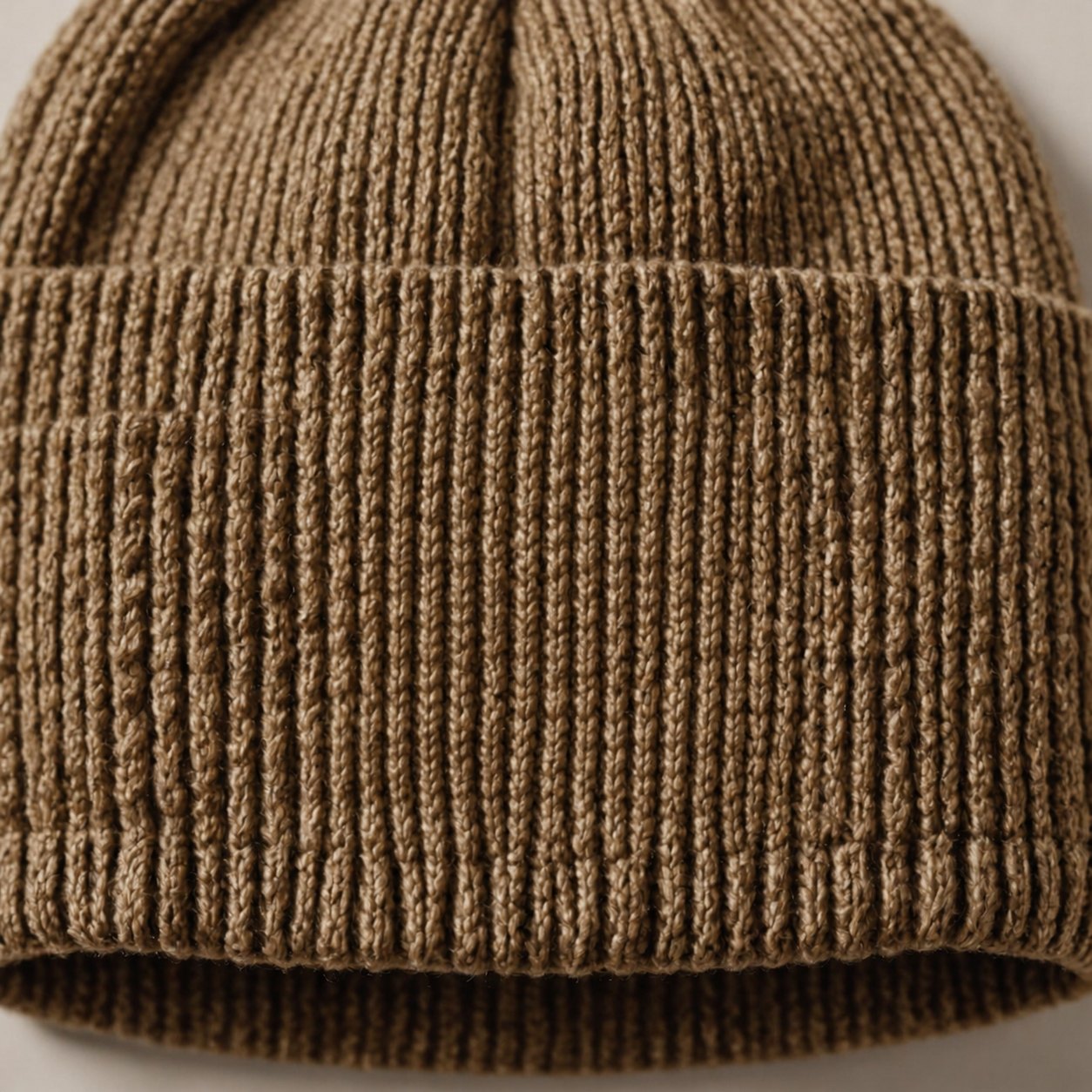
Gauge and knit structure interact with yarn and machine setup. A rib, waffle texture or jacquard pattern can change thickness, elasticity, visual scale and decoration behavior even when the fiber description is unchanged. Record the machine or gauge reference, stitch structure and approved swatch instead of relying on “fine knit” or “chunky knit” as the production instruction.
Inspect the cuff in both folded and unfolded states. Define cuff depth, fold position, attachment or integral construction, edge stability and how decoration crosses or sits on the folded area. A cuff that looks correct on a flat table may creep upward, flare outward or create uncomfortable pressure when worn.
Need a Yarn and Construction Review?
Send the reference style, intended wearer, yarn direction, colors, flat dimensions, logo artwork, quantity by color and required date. Mark any open decisions so the manufacturer can recommend a route without guessing.
Measure Fit, Stretch and Recovery as Separate Questions
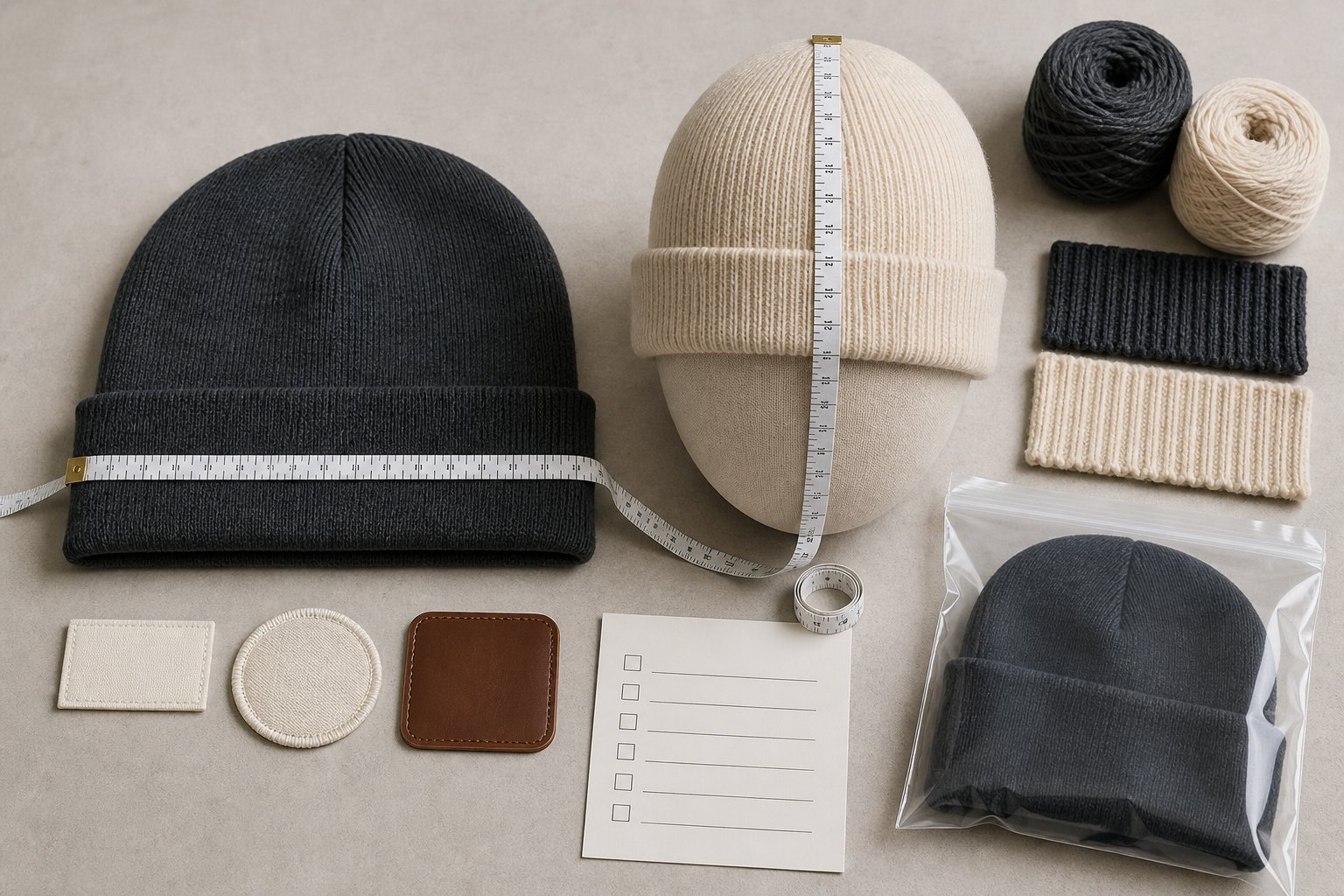
Flat width and total height are necessary, but they do not prove comfort. Define how the sample is laid, whether the cuff is folded, where width is measured, the conditioning state and whether the beanie is relaxed after wear. Record crown depth, cuff height, opening width and any shaped crown or seam position.
Then evaluate the intended head-size range. The sample should stretch without concentrated pressure, recover without permanent growth and retain the chosen silhouette. A “one size” label is not evidence of fit. Test on representative head forms or wearers and document the range the approved sample is intended to serve.
Match Decoration to a Moving Knit Surface
The beanie expands when worn, so a logo approved on an unstretched sample can change shape or feel. Test the exact decoration at finished size on the production-intended knit. Place it relative to the cuff edge, center line and fold rather than using a vague “front center” note.
| Branding method | Useful when | Approval evidence | Beanie-specific risk |
|---|---|---|---|
| Direct embroidery | Compact marks and a stitched finish | Finished sew-out on the exact cuff construction | Density or backing can restrict stretch and create pressure |
| Woven or embroidered patch | Fine artwork or a separate brand badge | Patch edge, attachment, location and worn appearance | A rigid patch can lift or distort on stretch |
| Leatherette or similar patch | A structured tactile accent | Material, mark method, edge, attachment and care trial | Flex, edge comfort and care compatibility need confirmation |
| Jacquard knit artwork | Patterns or graphics integrated into the knit | Knitted development swatch and full sample | Artwork resolution, floats, color count and stretch behavior |
| Woven side or cuff label | Subtle private-label identity | Fold, sewing method, position and skin-contact review | Hard edges or poor placement can irritate the wearer |
The embroidered caps wholesale guide covers cap-specific digitizing, thread and bulk placement in greater depth. A beanie still needs its own sew-out because stretch knit behaves differently from a structured cap panel. For a coordinated logo system across clothing, use the embroidered apparel brand-program guide.
Use Sample Gates That Protect Bulk Production
Sampling should close decisions in sequence. A yarn or knit swatch can confirm color and structure but cannot prove worn fit. A logo trial can show appearance but not the complete crown and cuff. The pre-production sample should combine all released components and packaging.
| Approval gate | Decision to close | Evidence to retain | Do not approve when |
|---|---|---|---|
| Yarn and knit trial | Composition route, color, texture, gauge and structure | Coded yarn card and knitted swatch | Bulk yarn source or machine route is still provisional |
| Fit sample | Flat dimensions, cuff, crown, comfort, stretch and recovery | Measured sample and fit comments | Only appearance on a table has been reviewed |
| Decoration trial | Logo size, placement, attachment and worn behavior | Approved sew-out, patch or knit swatch | The trial uses a different knit or cuff state |
| Pre-production sample | Complete beanie, labels, care information and packing | Sealed sample, BOM and released file set | Any yarn, color, logo, fit or packaging comment remains open |
| First-off bulk | Actual production setup matches the reference | First-off measurements, photos and defect record | The production yarn, tension or decoration differs |
Inspect Bulk as a Knitted Headwear Product
Final inspection should combine identity, quantity, shade, dimensions, shape, stretch and recovery, crown closure, cuff behavior, pom attachment, lining, decoration, labels and packing. Look for dropped stitches, holes, yarn contamination, uneven tension, spiraling, inconsistent crown shaping, loose ends, shade mixing and distorted logos.
Measure samples in a defined relaxed condition and compare them with the released chart. Check representative colorways because yarn, dye route and decoration can change behavior. Wear or head-form checks should supplement flat inspection when comfort and pressure are critical.
For a global assortment, the custom caps and hats rollout framework covers market variants, allocations and reorder governance. For team or athletic channels, use the bulk sports caps guide. This page remains the beanie construction and fit authority.
Request a Beanie Sample and QC Plan
Understand What Changes MOQ, Cost and Lead Time
There is no responsible universal MOQ, unit price or production time for every beanie. The manufacturing route, yarn availability, custom dyeing, color count, knit structure, gauge, jacquard artwork, pom-pom, lining, labels, patches, packaging, sample rounds and current capacity can each create a minimum or schedule gate.
Ask for minimums by style, yarn, color and decoration—not only one headline number. Separate development and tooling charges from the finished product price. Confirm which approval starts yarn purchasing and which change would require a new sample or reset the production clock. The core manufacturer guide provides the broader quotation-comparison framework without replacing this beanie specification.
Freeze a Reorder Package
Before the first shipment, save the released beanie drawing, dimensions and method, yarn and color code, knit and gauge reference, cuff and crown construction, artwork, decoration settings, labels, packing, approved sample identity, inspection result and accepted deviations. Record the actual component suppliers or require an approved-equivalent process.
For the next order, require the manufacturer to disclose changes in yarn, machine, gauge, tension, color lot, decoration or packing before production. “Same as last order” is not a complete specification. Recheck a new yarn lot against the retained sample and swatch.
Custom Beanie RFQ Checklist
- Use and wearer: retail, promotional, outdoor, work or team program; target age and head-size range.
- Style: cuffed, fisherman, slouch, pom-pom, lined or another reference; desired silhouette.
- Yarn and knit: composition or performance direction, hand feel, colors, structure and gauge reference.
- Measurements: relaxed width, total height, cuff depth, crown shape and measuring method.
- Branding: artwork file, finished size, position, preferred result and approved method.
- Labels and packaging: main/care label, hangtag, sticker, retail or e-commerce pack-out.
- Quantity: total plus breakdown by style, color and destination.
- Approval and timing: sample stages, test questions, destination and required in-hand date.
Related Headwear and Sourcing Guides
- Baseball Caps Supplier Guide — evaluate scalable structured-cap suppliers.
- Custom Baseball Cap Manufacturer — baseball-cap design and production overview.
- Embroidered Caps Wholesale — cap artwork, digitizing and placement control.
- Custom Caps and Hats Global Rollout — govern regional variants and reorders.
- Bulk Sports Caps Supplier — team and performance-headwear context.
- Corporate Uniform Supplier — staff allocation, size data and replenishment.
- Global Custom Apparel Partnerships — coordinate bags, apparel and headwear.
- Custom Bags, Apparel and Accessories — browse LUCKYSTAR product capabilities.
Frequently Asked Questions
What information should a custom beanie manufacturer receive first?
Send the style reference, wearer and use, yarn or hand-feel direction, colors, flat dimensions, decoration artwork, quantities, labels, packing, destination and target date. Mark open decisions clearly.
Why is knit gauge important?
Gauge interacts with yarn and stitch structure to influence texture, density, dimensions, elasticity and artwork scale. Buyers should approve the actual knitted swatch and machine route rather than rely on a gauge number alone.
Can one-size beanies fit everyone?
No label guarantees universal fit. Define the intended head-size range, flat measurements, stretch and recovery expectations, then test representative wearers or head forms.
Is embroidery always the best logo method?
No. Direct embroidery, patches, woven labels and jacquard knitting solve different artwork and product-positioning needs. Approve the chosen method on the exact knit in its worn state.
What should be checked before bulk production?
Release the yarn and color, knit and gauge, dimensions, fit, cuff, crown, pom or lining, decoration, labels, care information, packaging, quantity matrix and complete pre-production sample.
How should beanie reorders be controlled?
Use the frozen specification, yarn and knit reference, decoration settings and approved sample. Require declared changes and compare new yarn or color lots before bulk knitting.
Company and project contact
Ningbo Luckystar Commodities Co., Ltd. reviews beanie projects against the submitted yarn, knit, fit, decoration, sample, inspection and packing requirements. Capability and commercial terms are confirmed for the specific order.
Review the product range, use the core manufacturer guide, or contact the project team.






