
Last reviewed: September 24, 2026
Buyer Quick Answer
Choose a custom print hoodie factory by asking it to prove that the hoodie, artwork and print process work as one production system. A useful approval trail should identify the exact fleece, printable surface, artwork version, print method, placement coordinates, color reference, curing route, wash-test conditions and bulk inspection standard.
This guide owns print production control. For fabric weight, fit and construction, use our hoodie fabric, fit and finish guide. For woven labels, private packaging and brand ownership, see the private label hoodie factory guide. For player names, mixed sizes and team pack-out, use the sports team hoodie order guide.
Send Your Hoodie Print Specification
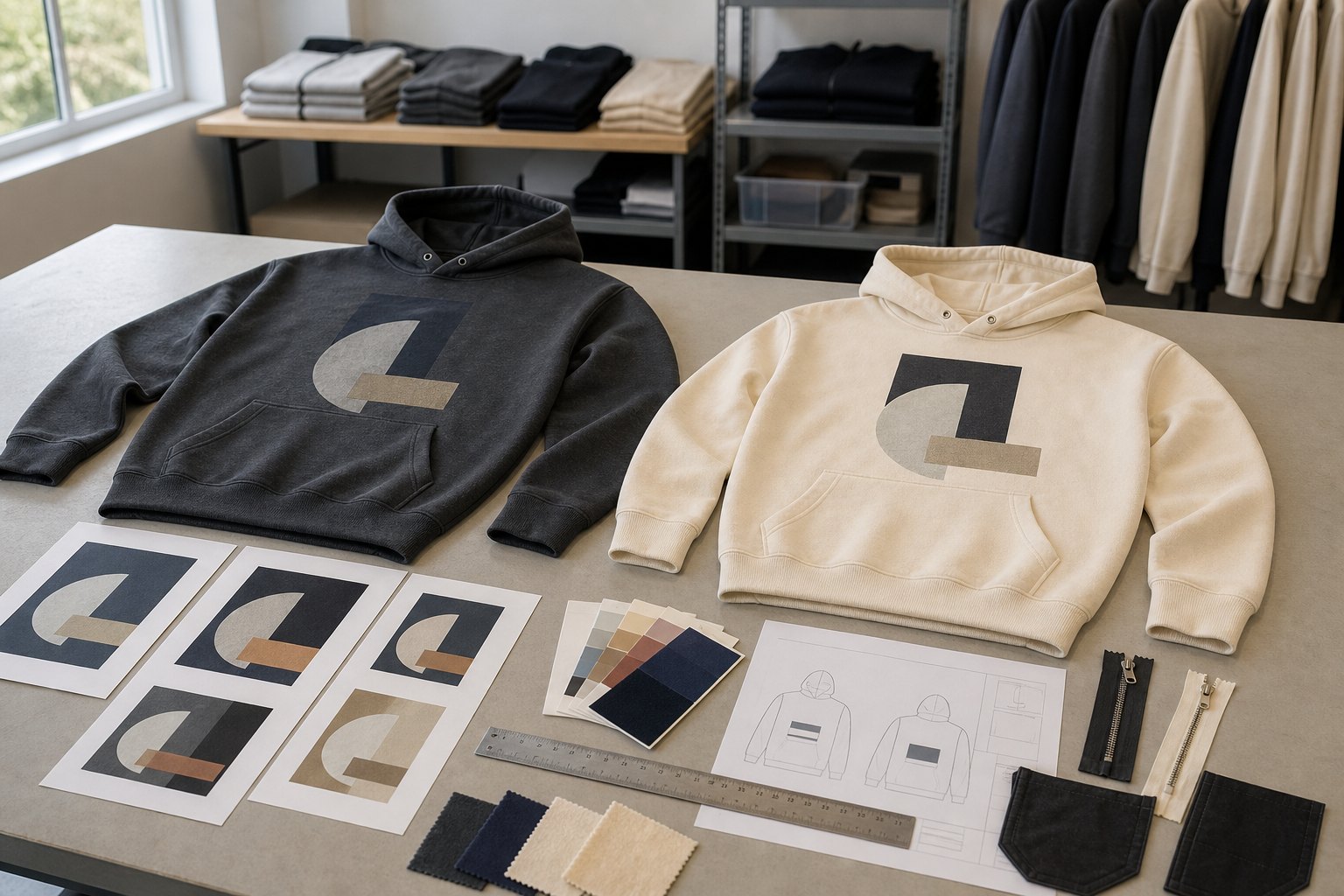
Start With the Hoodie, Not the Printing Machine
A print method cannot be selected from the artwork alone. The garment surface changes the result. Cotton-face fleece, polyester-rich fleece, pigment-dyed fabric, heavy brushed fleece and coated performance fabric accept pretreatment, ink and heat differently. Even a good print can fail when the pile is too open, dye migrates into a light ink, a zipper prevents even pressure, or a kangaroo pocket lifts the print area.
Freeze the approved hoodie body before finalizing the print specification. Record fabric composition, face yarn, weight, color, finish, pocket and zipper construction, rib color, garment measurements and care route. Buyers developing the underlying garment should first read our crewneck sweatshirt fabric and construction guide.
Define the Print Job Before Requesting a Quote
A factory cannot quote responsibly from a logo file and quantity alone. State the garment style and color, total quantity by size, every print location, finished print dimensions, color count, artwork variations, target hand feel, special effects, packing route and required delivery date. Identify whether the order is one repeated graphic or many individual names and numbers.
| Decision | This guide controls | Use the related guide for |
|---|---|---|
| Base hoodie | Printability of the approved surface | Fabric, fit and construction |
| Brand system | Visible print artwork and placement | Labels, trims and private packaging |
| Team order | Repeatable print application | Roster data, size runs and pack-out |
| Decoration family | Screen print, DTG, transfer and specialty print | Embroidery digitizing and stitch control |
Match the Print Method to Artwork, Fabric and Quantity
There is no universal best method. Screen printing is strong for repeatable spot colors and specialty inks, but each color and location adds setup. DTG can reproduce tonal artwork, yet the garment surface, pretreatment and curing route are decisive. Brother's official guidance notes that hoodies with high cotton content generally give better DTG results and that raised pockets must be flattened and clearance checked before printing. See the Brother hoodie-printing guidance.
| Method | Useful when | Buyer must approve | Common risk |
|---|---|---|---|
| Screen print | Repeated spot-color graphics and specialty ink effects | Separations, underbase, ink system, cured strike-off | Dye migration, poor registration or heavy hand |
| DTG | Detailed or tonal artwork on a compatible face | Pretreatment, white base, color and cured sample | Pretreat marks, muted color or poor wash result |
| DTF / heat transfer | Full-color art, smaller variants or individual data | Film, adhesive, press settings, edge and hand feel | Visible film, lifting, cracking or scorch marks |
| Puff / high-density print | Raised tactile branding | Height, edge shape, texture and wash behavior | Uneven expansion or collapsed detail |
Build a Production-Ready Artwork Pack
Keep the visual master separate from the production placement sheet. The master defines the artwork; the placement sheet defines where and how it is applied to one approved garment size. Provide vector art where the selected process requires separations. Name each front, back, sleeve and hood file consistently. Mark spot colors, transparency, gradients and special layers clearly.
Use Finished-Garment Coordinates
Do not write only "center front." State the reference point and finished dimension: for example, distance below the neck seam and alignment to the body center line. Define how placement scales or stays fixed across sizes. A small hoodie cannot always carry the same print width as an extended size.
Map No-Print and Conditional Zones
Kangaroo-pocket seams, zipper teeth, drawcords, plackets, thick seam allowances and rib transitions can disturb pressure or registration. A print that crosses these areas needs a physical trial, not just a digital mockup. Sleeve prints also need a clear orientation reference.
Control Color on the Actual Hoodie
A screen color is not a physical approval. Hoodie color, surface texture, underbase, ink opacity and curing can all alter the result. Approve color on the production fabric and record the reference under agreed lighting. For dark hoodies, assess both opacity and hand feel. If the design uses multiple garment colors, test each substrate group that could change the print result.
For all-over polyester graphics rather than localized hoodie printing, route the project to our sublimation artwork and color-control guide.
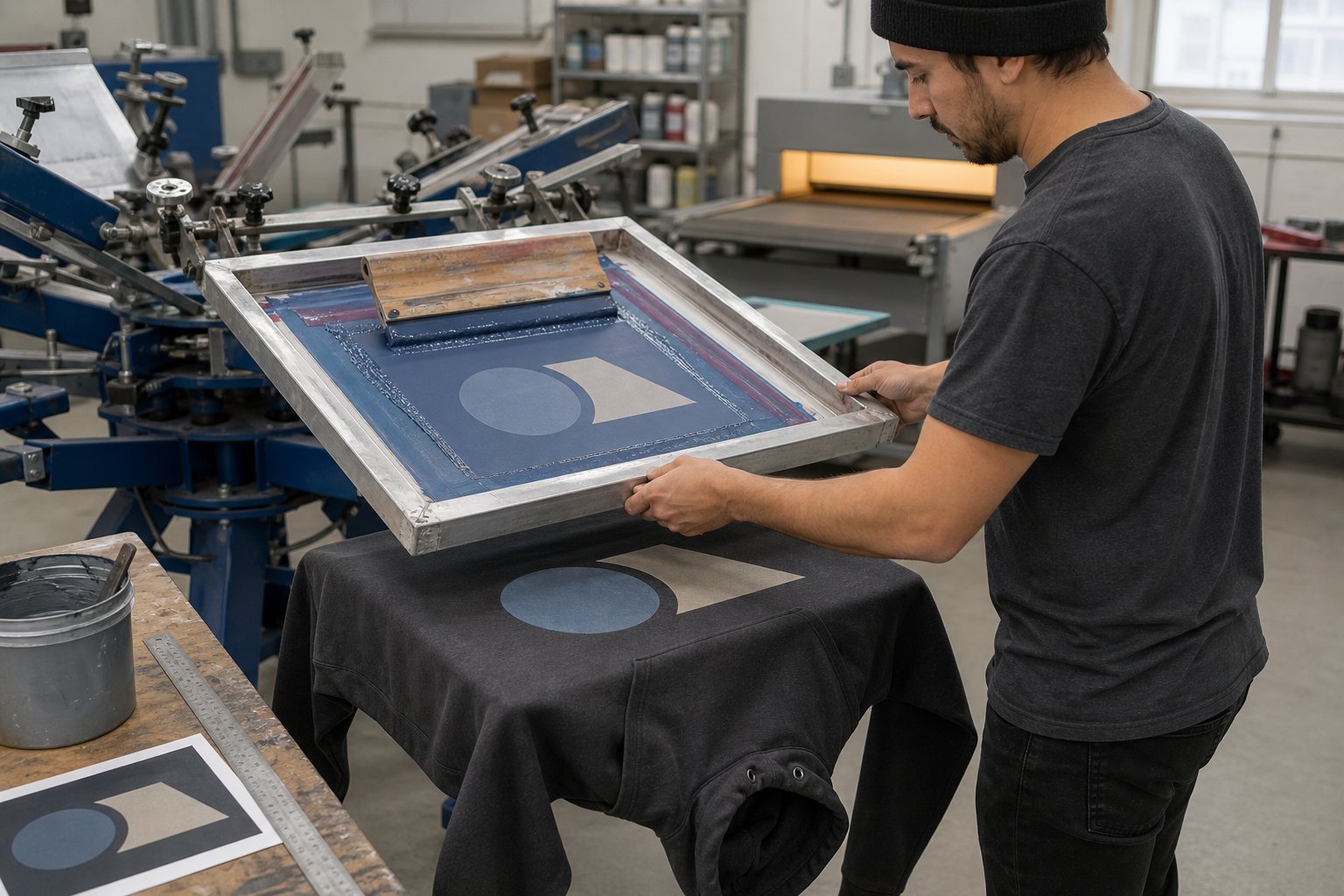
Use Physical Approval Gates
One digital mockup cannot approve every risk. Separate the approval chain so each sample answers a specific question. Do not release bulk production while garment construction or artwork is still changing.
| Gate | What it proves | Release evidence |
|---|---|---|
| Blank hoodie | Fabric, color, fit, pockets, seams and care route | Approved garment reference and measurement record |
| Print strike-off | Color, detail, opacity, texture and cure on production fabric | Signed or photographed physical standard |
| Printed size sample | Placement, scale and interaction with garment features | Measured approved sample |
| First production piece | Bulk line uses the same garment, ink, screen/file and process | First-off inspection before the run continues |
Send Artwork for Sample Review
Make Curing and Pretreatment Traceable
For processes that depend on pretreatment, heat or dwell time, ask the supplier to record the working parameters used for the approved sample and the production run. The aim is not to copy a machine manual into the purchase order; it is to prevent an unrecorded change in pretreatment, press pressure, cure route or production fabric.
Official Brother DTG guidance explains that pretreatment and ink must be cured and warns that inadequate or excessive curing can affect the finished result. Buyers can use this principle without prescribing unverified settings: approve the factory's tested process on the actual hoodie and require a repeatable record. See Brother's curing guidance.
Test the Print Against the Intended Care Route
A generic statement such as "washable" is not enough. Define the wash method, temperature, detergent, drying method, number of cycles and evaluation criteria before testing. Inspect color change, cracking, lifting, edge breakdown, dye migration, staining, distortion and change in hand feel. The care label and the print test must describe the same consumer route.
Test results only represent the conditions used. ASTM's official textile standards catalog lists separate methods for fabric weight, strength, abrasion, pilling and other properties; buyers should specify the method relevant to the product rather than claim that one test proves total durability. See the ASTM textile standards overview.
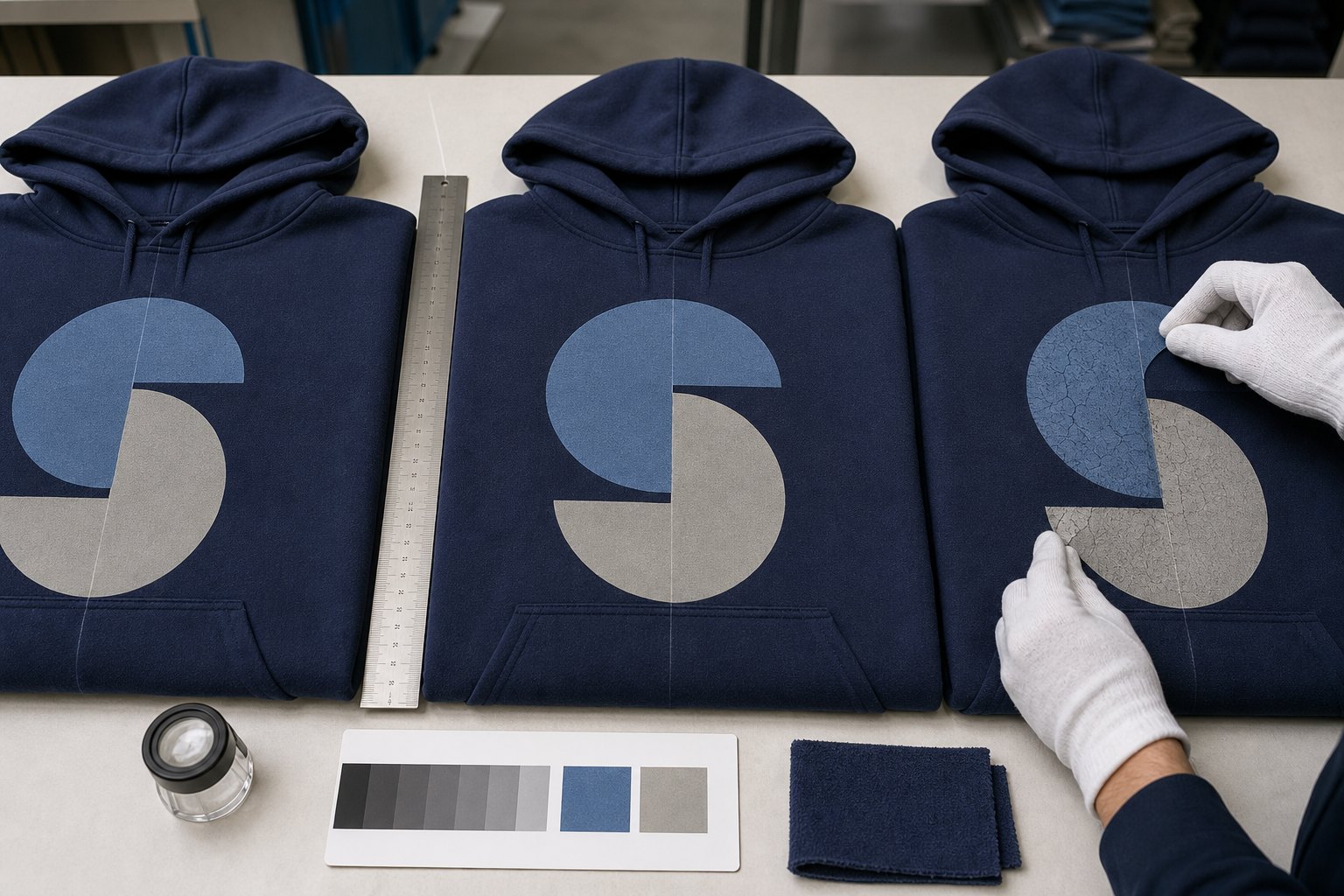
Inspect Bulk Printing by Failure Mode
A generic garment checklist can miss print-specific defects. The inspection plan should identify appearance, placement, process and durability risks separately. Sample across sizes, garment colors, artwork variants, print stations and production time, not only from the top of one carton.
| Control point | Check | Typical finding | Buyer action |
|---|---|---|---|
| Appearance | Color, opacity, detail and surface | Pinholes, mottling, contamination | Compare with physical standard |
| Placement | Position, orientation and scale | Skew, wrong side or size drift | Measure from defined references |
| Process | Registration, edge, transfer and heat effect | Misregistration, halo, scorch or press mark | Hold affected process lot |
| Function | Stretch, adhesion and care behavior | Crack, lift, migration or staining | Investigate cure, chemistry and substrate |
Understand What Changes MOQ, Cost and Lead Time
LUCKYSTAR does not present one fixed hoodie price or production promise without reviewing the specification. Commercial terms change with the base garment, color and size mix, number of artwork versions, print locations, color count, screen or file setup, pretreatment, specialty ink, personalized data, sample rounds, testing, labels, packaging and required delivery plan.
Ask for a quote that separates the garment, decoration setup, decoration application, sample/testing and packing assumptions. This makes revisions easier to control and prevents a cheap unit price from hiding a different print route.
Compare Factory Evidence, Not an Equipment List
A machine list does not show whether a supplier can reproduce your approved hoodie. Ask for anonymized examples that match the intended combination of fleece color, print area, artwork complexity and process. Review how the factory records strike-offs, first-off approval, cure settings, placement checks, wash results and corrective actions. The evidence should connect one approved reference to the bulk inspection standard.
Also confirm who owns each handoff. The garment maker, print workshop and packing team may be in one facility or managed through qualified partners. Either model can work when responsibilities, approvals and lot traceability are clear. Use the broader custom manufacturer qualification framework to compare communication, sampling, quality control and order governance beyond the hoodie print process.
Watch for Print-Sourcing Red Flags
- The quote names a print method but not the actual hoodie fabric, color or print locations.
- A digital mockup is presented as final approval with no physical strike-off.
- The supplier promises identical color across different garment colors without testing an underbase.
- No one can explain how placement is measured across the size range.
- Wash durability is claimed without a defined care route or evaluation record.
- Bulk inspection checks garment sewing but ignores registration, cure, adhesion and heat marks.
If supplier identity, approval responsibility or quality evidence remains unclear, pause the order and apply the due-diligence steps in our manufacturer sourcing pillar guide before releasing a deposit or bulk production.
Custom Printed Hoodie RFQ Checklist
- Hoodie style: pullover or zip, fabric composition, weight, face yarn, color and size range.
- Quantity by size, garment color and artwork variation.
- Vector or high-resolution artwork plus every print location and finished dimension.
- Preferred method or required visual result: opacity, hand feel, texture and special effect.
- Physical color reference and approval process.
- Care route and required wash or performance checks.
- Labels, folding, individual packaging, carton marks and distribution requirements.
- Sample deadline, bulk delivery target and destination.
Send Your Complete Hoodie RFQ
Email a prefilled hoodie-print brief
Related Apparel and Sourcing Guides
- Custom manufacturer sourcing guide - broader supplier qualification, sampling and order control.
- Custom T-shirt manufacturer guide - garment development and bulk control.
- Custom embroidery production guide and brand embroidery planning.
- Workwear uniform product engineering - role, pocket, movement and wash requirements.
- Global custom apparel partnership framework.
- Hoodies, caps and bags as branded merchandise.
Frequently Asked Questions
Which print method is best for custom hoodies?
The best route depends on the actual fleece, garment color, artwork detail, number of colors, quantity, hand-feel target and wash expectation. Approve the result on production fabric rather than selecting from a method name alone.
Is a digital mockup enough for bulk approval?
No. It can confirm general content and layout, but it cannot prove ink color, opacity, texture, cure, placement on the sewn hoodie or wash behavior. Use physical approval gates.
Can a design print over a kangaroo pocket or zipper?
Sometimes, but these areas disrupt pressure and surface height. The factory should run a physical trial and define the acceptable visual result before bulk production.
How should buyers approve print placement?
Measure from defined garment reference points on an approved finished size. State whether the print remains the same size or scales across the range, then confirm the result on small and large sizes where necessary.
What should bulk print inspection include?
Check appearance, color, opacity, registration, orientation, placement, heat marks, adhesion and representative tested pieces. Sample across sizes, colors, variants and production stages.
Company and project contact
Ningbo Luckystar Commodities Co., Ltd. reviews printed hoodie projects against the submitted garment, artwork, sample, test, inspection and packing requirements. Capability, commercial terms and evidence are confirmed for the specific order.
Review About Us, browse product capabilities, explore custom hoodies, or contact the project team.






