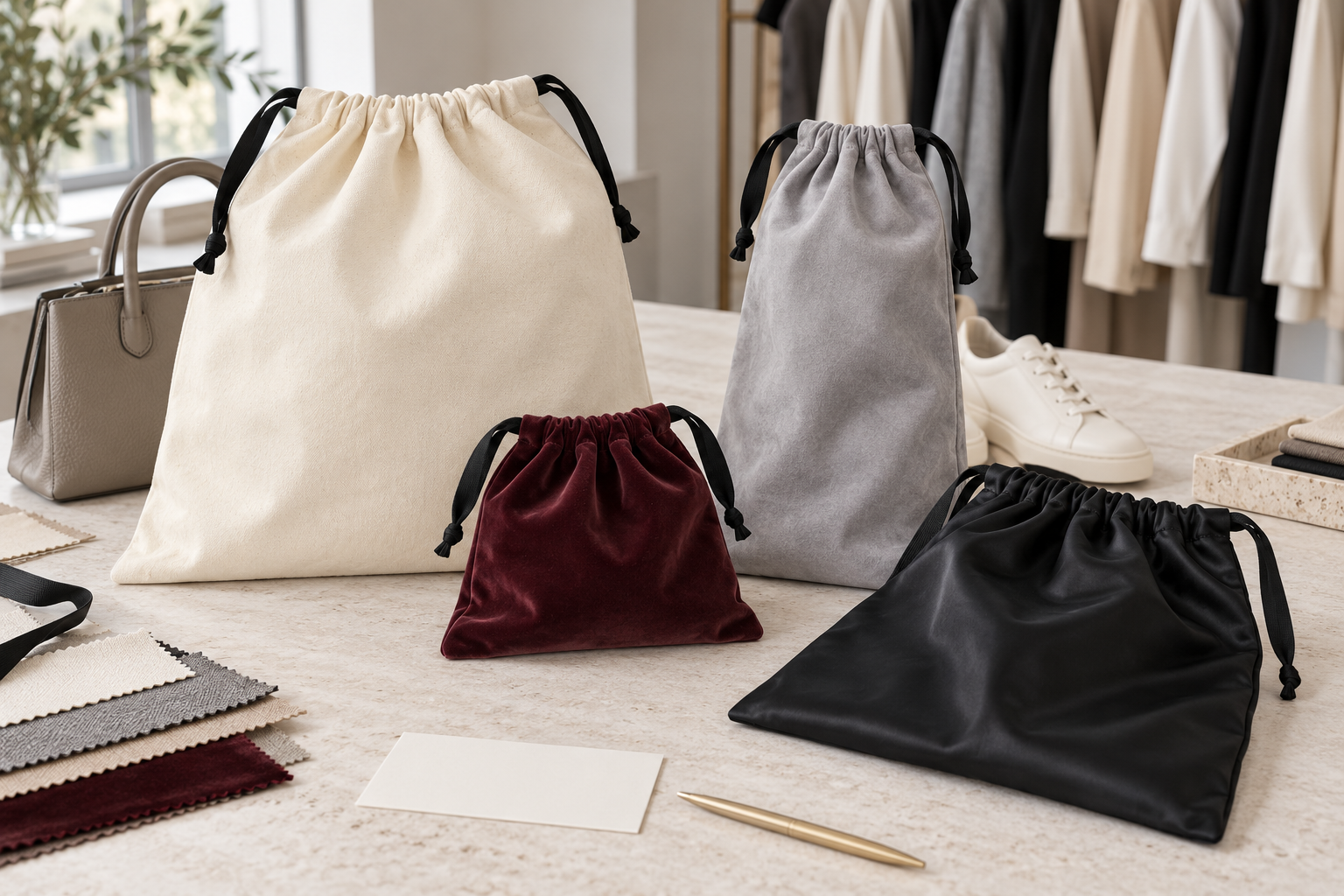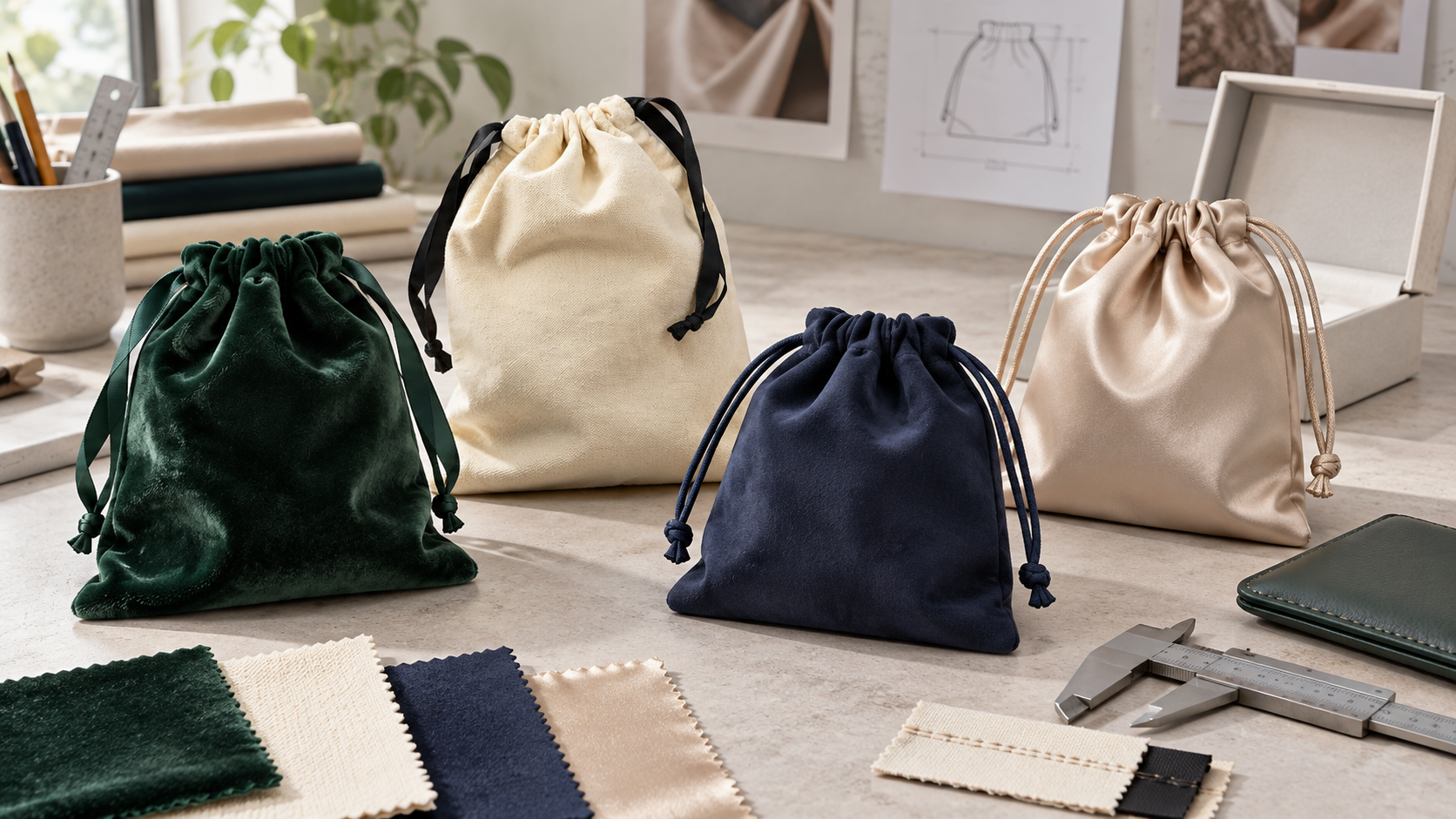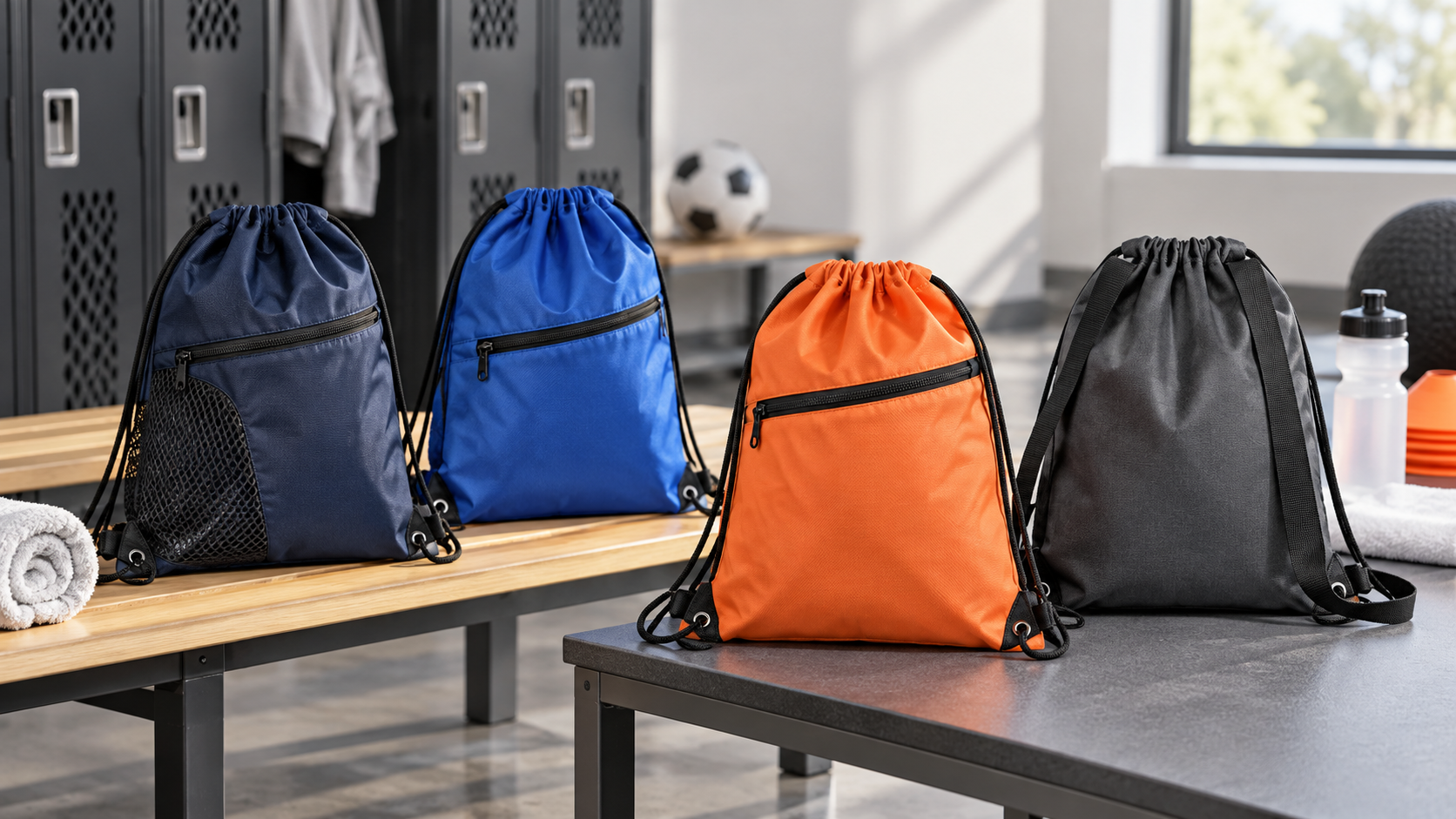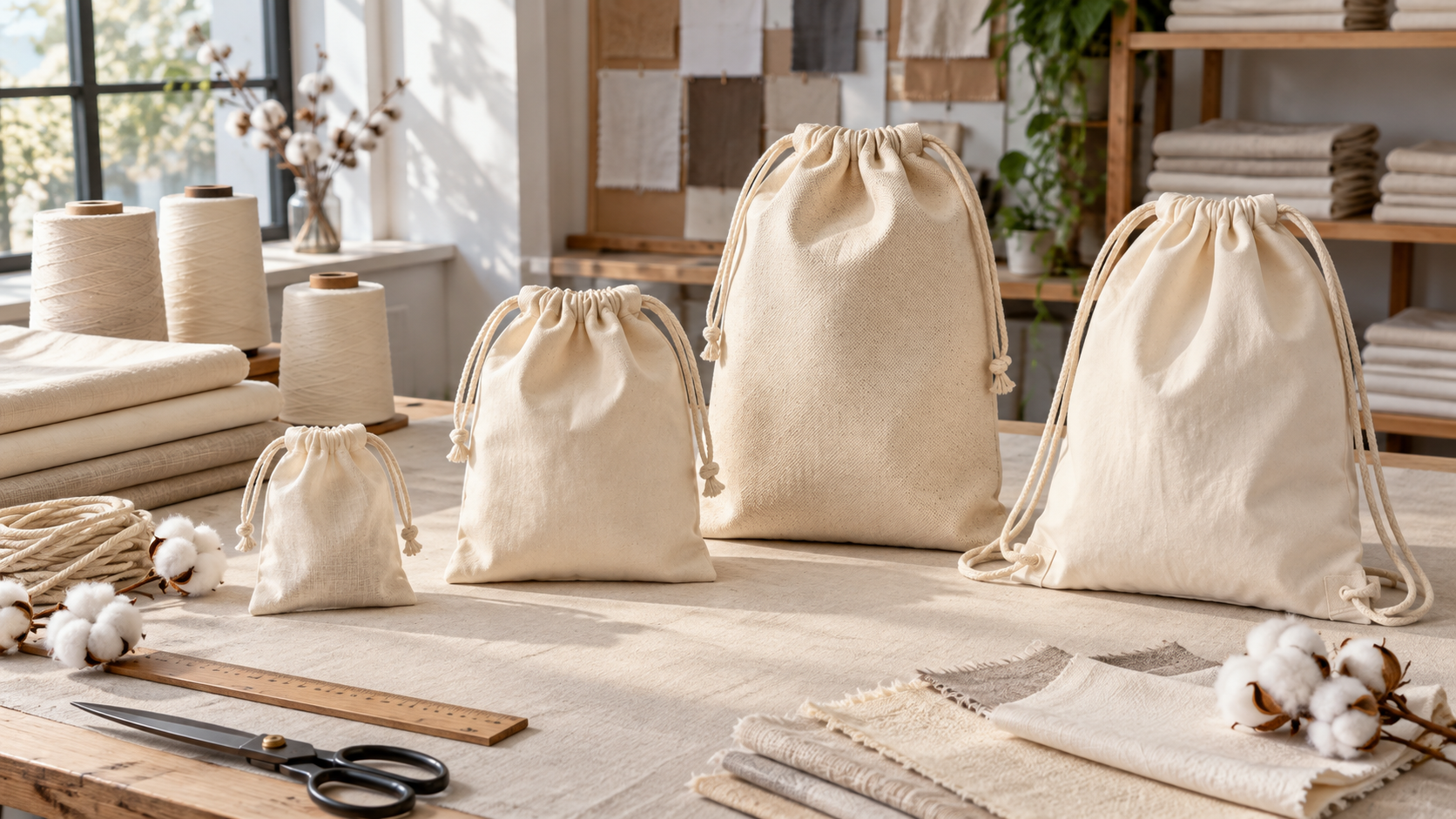
Woven polypropylene and non-woven polypropylene shopping bags may begin with the same polymer family, yet they are not interchangeable fabrics. One is built from oriented tapes crossing in warp and weft; the other is an engineered web of filaments given integrity by bonding. That architecture changes the surface, conversion equipment, seams, artwork route, pack-out and failure modes of the finished carrier.
This guide compares Woven PP vs Non-Woven PP for retail and promotional buyers. It does not declare a universal winner. Instead, it connects the material structure to the shopping basket, order scale, brand treatment, reuse expectation, cleaning instruction, claim evidence and quality plan—so a buyer can request two genuinely comparable proposals.
Explore both routes on LUCKYSTAR’s custom shopping bags product page. For supplier qualification, combine How to Choose a Custom Shopping Bag Manufacturer with the broader Custom Bag Manufacturer Guide.
Planning an order? Send one comparison brief for both PP routes. Include bag size, intended basket/load, hand or shoulder use, body/handle construction, surface and artwork, quantity by size/color/artwork, care and claim wording, test/inspection scope, pack-out, destination and required date.
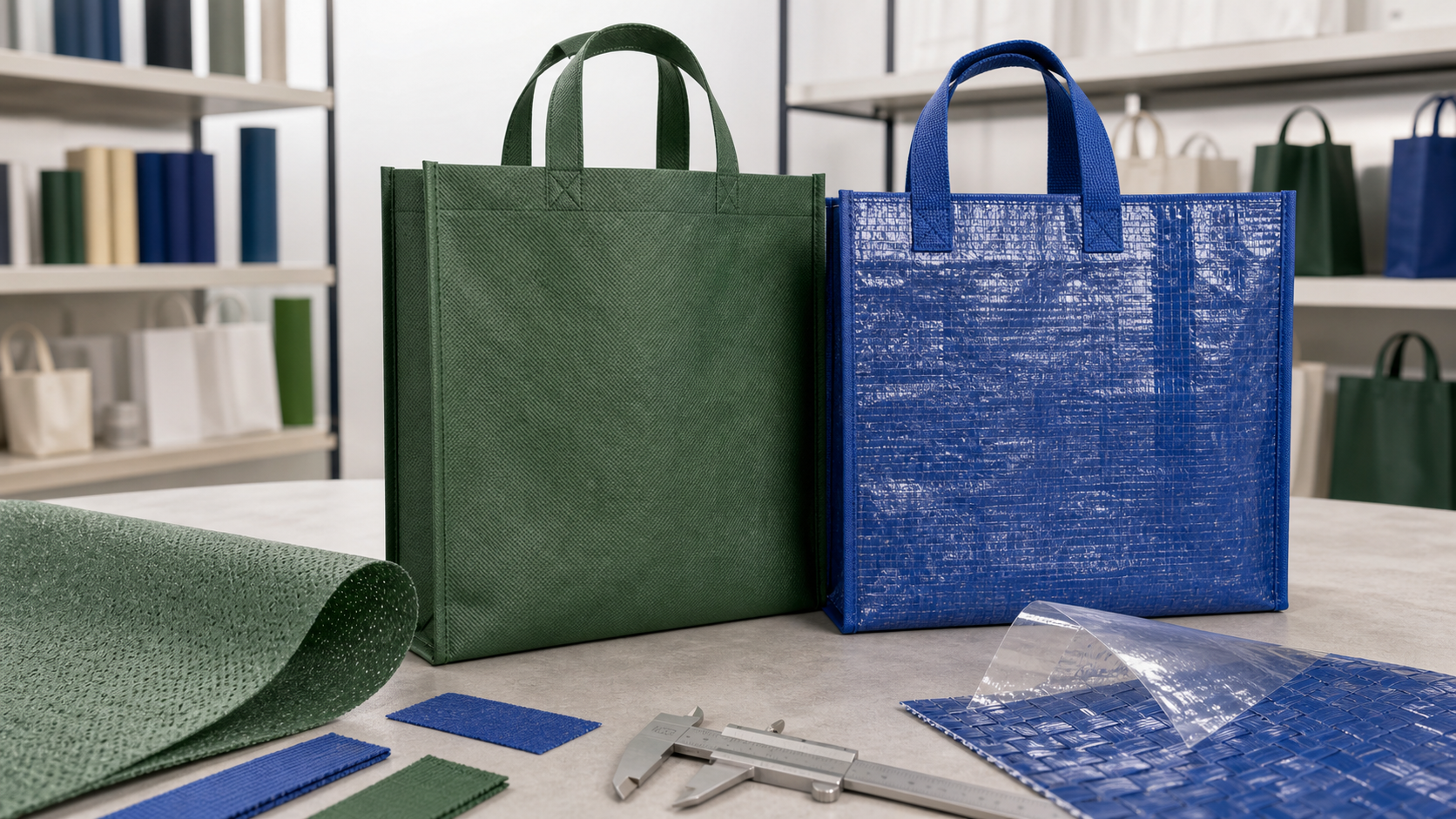
The polymer may be PP in both cases; the load-bearing architecture and conversion route are different.
1. Same polymer family, different material architecture
“PP” identifies polypropylene, not the way the bag body carries force. In common shopping-bag non-woven material, molten polymer is formed into filaments, laid into a web and bonded—often thermally in a visible point pattern. The resulting sheet has no interlaced warp and weft. It can be printed, laminated, cut, ultrasonically bonded, heat bonded or sewn, depending on the product and equipment.
ISO 9092:2026 defines nonwovens and provides terminology that distinguishes them from other materials. The key concept is an engineered fibrous assembly given structural integrity without weaving, knitting or papermaking. This is why “non-woven” should not be interpreted as a loose or lower-grade weave.
Woven PP starts with polypropylene film converted into narrow tapes, typically stretched/oriented and then interlaced in two directions. For shopping bags, the woven substrate may remain uncoated, receive an extrusion coating, or be laminated with printed film. Panels are commonly cut, sewn or bound and combined with webbing handles and reinforcements. The laminate changes surface, artwork, flex and recycling considerations; it is not simply a transparent protective afterthought.
| Attribute | Non-woven PP | Woven PP | Why the buyer should care |
|---|---|---|---|
| Load-bearing structure | Bonded filament web; formation and bond pattern contribute to integrity | Interlaced oriented tapes in warp/weft directions | Coupon results, tear behavior and useful test methods are not interchangeable |
| Typical visual surface | Matte/soft textile-like sheet with bond-point texture; can also be laminated | Visible tape weave when unlaminated; smoother/glossier when coated or film-laminated | Changes brand look, print choice, scuff visibility and hand feel |
| Common conversion | Roll-fed or panel cut; ultrasonic/thermal bond or sewing depending on design | Film/coating as specified, panel cutting, sewing/binding and webbing attachment | The factory needs different equipment, controls and failure expertise |
| Shape | Often light and collapsible; structure can be added by gusset, lamination or sewing | Often more structured in laminated grocery-style construction | Affects opening, loading, shelf footprint and carton density |
| Decoration logic | Direct screen/flexo and selected transfer or laminated-film routes | Direct printing on suitable surfaces or high-coverage printed-film lamination | Artwork complexity and order scale may decide the route before body cost |
| Joining focus | Bond width/continuity, heat damage, sewn seam and handle patch where used | Sewn/bound edges, needle interfaces, webbing attachment and laminate behavior | The weakest interface can dominate finished-bag performance |
2. Compare the complete manufacturing routes
A quotation should state more than “80 gsm PP” or “woven shopping bag.” Each route has upstream and conversion variables that influence appearance and consistency. Non-woven buyers should know the web type, mass per area, color, surface treatment, direction, lamination if any and joining route. Woven buyers should know substrate construction, coating/laminate build, film side, print system, binding, webbing and seam details.
The process map also explains different approval risks. A direct-printed non-woven bag can require a body-lot print and bond first-off. A laminated woven bag may require film artwork/print approval, laminate-bond confirmation and a converted sample showing where graphics meet at gussets and bindings.
| Stage | Non-woven PP route | Woven PP route | Approval gate |
|---|---|---|---|
| Body material | Polymer/additive/color input → filament formation → web laydown → bonding → roll | Polymer/additive/color input → film/tape formation → orientation → warp/weft weaving → roll | Identity, color, mass/construction and representative roll condition |
| Surface preparation | Surface treatment and/or laminate when specified | Coating or film lamination when specified; unlaminated route remains possible | Actual side, treatment, hand/gloss and adhesion or bond basis |
| Artwork | Direct print or selected printed-film/transfer route depending on surface and run | Direct print for suitable designs or printed-film route before lamination | Production substrate proof plus converted registration |
| Cut/form | Automatic roll-fed cut/bond or cut panels, gussets and patches | Laminated/unlaminated roll cut into panels, gussets, base and reinforcements | Finished dimensions, grain/direction, artwork datum and fold geometry |
| Join | Ultrasonic/thermal bond or sewing; die-cut/loop handle and patch as designed | Sewing and binding, with webbing/handle attachment and intersections | First-off bond/seam, attachment position and failure mode |
| Pack | Fold/nest without bond distortion, print transfer or handle tangle | Fold/nest without laminate blocking, whitening, crease damage or edge deformation | Physical carton trial and condition after packed hold |
The full Custom Shopping Bag Manufacturing Process places these route-specific steps inside the wider design, sampling, production, inspection and delivery sequence.
3. Do not compare gsm as if it predicts finished-bag strength
Mass per unit area helps identify a material, but the same gsm does not make woven and non-woven PP equivalent. Web formation, bond area, tape orientation, weave, coating/laminate, notches, cut edges and conversion all influence how a specimen behaves. The finished carrier then adds gussets, seams or bonds, reinforcement and handles.
Strength is also not one number. A material can have a high tensile result yet tear rapidly from a cut corner; a strong woven body can fail where webbing is stitched; a good non-woven web can be damaged by too much ultrasonic energy. Specify the retail failure you need to prevent, then select component and finished-bag evidence that reproduces it.
| Performance question | Non-woven PP sensitivity | Woven PP sensitivity | Finished-bag evidence |
|---|---|---|---|
| Will the body extend or rupture? | Web direction, formation, bond pattern, mass and local heat history | Tape direction/orientation, weave, coating/laminate and cut orientation | Representative basket plus static/cyclic load path; record where failure begins |
| Will a notch propagate? | Die-cut corner, bond end, handle opening and thin/poorly formed zone | Cut tape ends, needle holes, binding miss and rigid product corner | Localized product-corner trial and route-appropriate tear/penetration method |
| Will the join open? | Bond width/continuity, energy/pressure/speed, thinning/burn or stitch/seam where sewn | Seam allowance, stitch pattern, thread, needle effect, binding and intersections | Join/interface test plus complete loaded carrier |
| Will the handle stay attached? | Loop/die-cut design, patch size, bond/sewn attachment and local web distortion | Webbing/handle material, box/cross stitch, patch, edge and load distribution | Symmetric/asymmetric pull, progressive movement and cyclic carry |
| Will the surface remain acceptable? | Pilling/fuzz, abrasion, print rub, lamination if used and compression marks | Laminate scuff/flex, delamination, exposed tape abrasion and print protection | Rub/abrasion/flex/packed-hold sequence matched to route and claim |
| Will the bag keep its retail shape? | Light body collapse, gusset memory, bond curl and handle lay | Panel stiffness, fold whitening, binding symmetry and base/gusset registration | Opening, loaded balance, set-down and recovery after packed storage |
Use the Reusable Shopping Bag Testing guide to turn intended use into a protocol. Do not copy a pass value from another bag without matching load, geometry, conditions, method and risk.
4. Construction often matters more than the substrate label
A buyer choosing between PP routes should compare two finished systems, not two swatches. Define bag dimensions, gusset, closure, handle type/drop, attachment, reinforcement, edge finish, unit packing and load profile. Keep those retail outputs constant while suppliers propose route-appropriate engineering.
Non-woven PP can be made as a simple flat bonded bag, a box-gusset bonded construction, or a cut-and-sewn carrier with loop handles. These are not one quality level. Woven PP can be an unlaminated utility bag, a laminated grocery shopper with binding, or a more complex structured carrier. Lamination and sewing add functions and risks rather than automatically creating quality.
| Design decision | Non-woven PP options | Woven PP options | Comparison rule |
|---|---|---|---|
| Side/bottom structure | Flat, side gusset, box/bottom gusset; bonded or sewn route | Panel/gusset/base construction with sewn and often bound interfaces | Load the same basket; compare usable—not theoretical—volume and set-down stability |
| Handle | Die-cut, same-material loop, PP webbing or other specified strap; patch as needed | PP webbing or specified handle attached through a defined reinforced pattern | Match hand/shoulder mode, clearance, comfort and attachment load distribution |
| Top edge | Cut, bonded turn, sewn hem or binding depending on route | Cut/heat-managed edge, fold or binding as specified | Check fray/tape exposure, stiffness, scratch risk and repeated opening |
| Reinforcement | Additional non-woven patch, webbing or multi-layer attachment zone | Woven/film patch, webbing continuation, base board or panel reinforcement | Reinforce the load path rather than raising body gsm without diagnosis |
| Closure/insert | Snap, hook-and-loop, tie, zipper or simple open top where suitable | Similar choices plus structured inserts depending on construction | Add only when product retention or retail use defines the need |
| Foldability | Often flat/light; separate pouch or snap may be added | Structured laminate may fold less compactly and show crease memory | Measure packed size, recovery, opening time and appearance—not “foldable” as a label |
A production-intent sample should reproduce the actual joining and surface route. The Shopping Bag Sample Development Process explains why a hand-sewn prototype cannot approve an automated ultrasonic bag, and why a plain woven dummy cannot approve printed-film registration after lamination.
5. Branding: matte direct print or high-coverage laminate?
Non-woven PP is often selected for a soft matte promotional look with direct screen or flexographic decoration, but artwork method still depends on surface treatment, color, detail, coverage and order scale. A print that appears opaque on a proof may sink into texture, rub, bridge bond points or change shade on a dark body. Approve the body lot and print together.
Laminated Woven PP Shopping Bags can deliver bold, photographic or near-full-coverage graphics because artwork may be printed on film and protected/combined through lamination. That route requires correct film orientation, color control, laminate bond and a conversion map. Graphics can meet or distort at gussets, bindings and bottom folds; approving a flat film alone is insufficient.
| Brand requirement | Non-woven PP route to consider | Woven PP route to consider | Approval evidence |
|---|---|---|---|
| Simple one/two-color mark | Direct screen/flexo on treated compatible surface | Direct print where surface and detail allow, or simplified film artwork | Production-size first-off: opacity, edges, rub and position |
| Photographic/full coverage | Laminated-film version may be required; cost/minimum changes | Printed film + lamination is a common scalable fit | Film proof, laminate sample and fully converted bag |
| Gusset artwork | Panel/direct placement or laminate map depends on construction | Continuous film map linked to cut and fold datums | Front/side/bottom converted views and tolerance at meets |
| Matte/textile-like feel | Unlaminated spunbond surface is often a natural fit | Unlaminated or selected matte finish, with weave still influencing look | Physical hand/gloss reference and abrasion/rub review |
| Gloss/easy-wipe surface | Specified laminate/coating; confirm it changes bag route | Film-laminated construction is a common option | Surface cleanability, flex, scratch and laminate bond |
| Many artwork SKUs | Direct setups may suit some shorter/simple variants | Printed-film setup and minimum can penalize fragmented artwork runs | Quantity by exact artwork/body/construction—not total PO only |
The right choice is the route that reproduces the brand treatment at the required scale and finished-bag yield. Compare it through the Shopping Bag Cost Optimization guide, not through printing price alone.
6. Neither material is automatically waterproof or washable
Polypropylene itself has low water absorption compared with many natural fibers, but a finished bag is a network of interfaces. An unlaminated non-woven web can permit liquid movement through pores, cut edges or seams/bonds. A laminated woven panel may resist surface wetting while water still enters at needle holes, binding, top edge or an imperfect laminate. “Water-resistant,” “wipe-clean” and “waterproof” are different claims and need defined exposure and pass criteria.
Do not publish machine-wash instructions merely because the body is PP. Temperature, agitation and drying can distort non-woven bonds, crease or delaminate surfaces, affect ink and damage inserts or trims. If the intended care is wipe-clean, specify the cleaner, wetness, repetitions and drying, then inspect color transfer, surface, odor, shape, joints and loaded function.
Food-contact suitability also does not follow from “PP.” If a bag will directly contact unpackaged food, the complete applicable materials, inks, coatings, additives and manufacturing conditions require destination-specific review. A grocery-carrying claim for packaged goods is not the same use.
7. Select route-specific tests, then test the finished carrier
Published component methods can support material comparison, but their scopes differ. ISO 9073-3:2023 covers strip tensile strength/elongation for nonwovens, and ISO 9073-4:2021 addresses trapezoid tear resistance of nonwovens. They do not automatically describe a laminated woven tape fabric.
For coated structures, ISO 1421:2016 covers tensile methods for rubber- or plastics-coated fabrics, while ISO 4674-1:2016 covers specified coated-fabric tear methods. These are method candidates, not universal purchase requirements. The buyer and competent laboratory must confirm scope, specimen, conditioning, direction and relevance to the actual woven PP composite.
| Evidence layer | Non-woven PP focus | Woven/laminated PP focus | Decision it supports |
|---|---|---|---|
| Material identity | Composition, mass/area, thickness where useful, formation, shade and treatment | Composition, substrate/coating/film mass or build, weave/tape orientation and shade/finish | Confirm production input matches approved route |
| Coupon mechanics | Direction-aware tensile/elongation, tear or penetration method within scope | Direction-aware tensile/tear/flex/adhesion method suitable for the composite | Compare material options and diagnose mechanism |
| Join/interface | Bond/seam and handle patch; width, continuity, heat damage and failure mode | Seam/binding, webbing attachment, needle interface and laminate at folds/edges | Prove the converted connection—not the body roll alone |
| Complete-bag load | Static plus cyclic basket with lift/swing/set-down where relevant | Same service sequence with structure-appropriate observations | Verify usable carrying system and progressive damage |
| Surface/brand | Print rub/transfer, abrasion, fuzz, color and laminate if present | Print/film, scuff, flex whitening, delamination and edge wear | Protect retail appearance and communicated care |
| Pack/distribution | Compression recovery, handle tangle, print blocking and moisture/odor | Crease/film blocking, binding deformation, carton abrasion and recovery | Confirm bags arrive store-ready after the actual route |
8. Inspect different defects at different process gates
Final inspection cannot recover a weak roll, wrong film side or drifting bond process. Put material, print, joining and packing checks where they can prevent repeat defects. Record roll/film/line identity so a failure can be contained without sorting the entire order blindly.
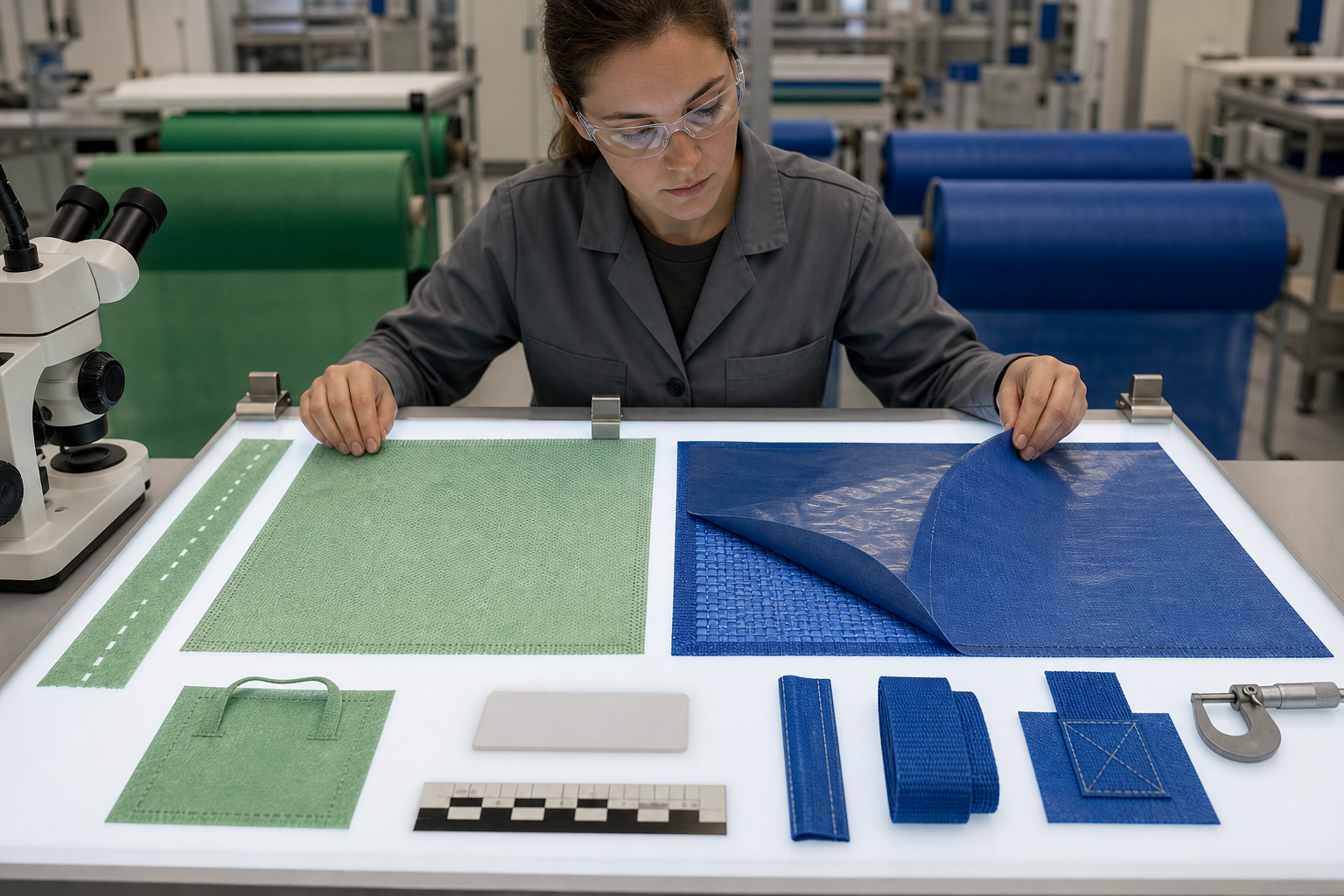
Material approval should identify the web or weave, surface build and converted interfaces—not only color and gsm.
| Gate | Non-woven PP defect signals | Woven PP defect signals | Traceability to retain |
|---|---|---|---|
| Incoming body roll | Uneven formation, thin zones, holes, shade drift, contamination, poor treatment | Tape gaps/damage, weave distortion, coating variation, contamination, roll misalignment | Supplier/roll/lot, direction, readings, swatch and disposition |
| Print/laminate first-off | Patchy ink, poor opacity, rub, pinholes, distortion or laminate issue where used | Color/registration, trapped contamination, weak laminate bond, wrong film side | Ink/film/material lot, machine/settings, time and signed reference |
| Cut/form | Direction error, size/gusset drift, ragged die-cut corner, patch position | Artwork datum drift, skewed weave, damaged tape edge, panel/gusset mismatch | Cut stack/roll, template/die and first-piece measurements |
| Join/handle | Narrow/interrupted bond, burn/thinning, skipped stitch, off-center patch or loop | Binding miss, seam/needle damage, uneven stitch, webbing pull-out, bulky intersection | Line/machine/operator/shift, process checks and failure sample |
| Finished bag | Shape/asymmetry, weak base, bond curl, print damage, handle twist | Panel distortion, delamination, gusset graphics mismatch, binding/handle asymmetry | SKU/order/lot, sample plan, measurements, defects and photos |
| Pack-out | Count/SKU mix, tangled handles, compressed bond, ink transfer, odor/moisture | Count/SKU mix, laminate blocking/scuff, crease whitening, edge deformation | Carton/bundle allocation, dimensions/weight and pack reference |
The Custom Shopping Bag Quality Control Checklist provides defect classification, sampling and release guidance. Use it with a route-specific defect library; do not give the same acceptance photo to a bonded non-woven side seam and a sewn laminated woven binding.
9. MOQ, unit cost and lead time follow the route and SKU split
Simple direct-printed Non-Woven PP Shopping Bags may support a different commercial minimum from laminated woven bags because stock body colors, print setup, automatic bonding and sewing routes have different constraints. Laminated woven programs can add printed-film setup, lamination run, conditioning, binding and sewing. Actual MOQ and time depend on size, artwork, film, color, factory load and quantity per runnable SKU.
Do not compare one non-woven total-order quantity with a woven quote divided across many film artworks. Ask for the minimum per body color × size × artwork × construction. Separate sample/tool/setup charges from unit price, state the quote boundary and calculate carton cube. The Shopping Bag MOQ and Production Time guide explains the critical path; the 2026 Shopping Bag Pricing Guide explains total price drivers.
10. Recycled content and recyclability require precise claims
Both bag bodies can be made from PP inputs, but “made of PP” does not make the finished bag automatically recyclable in every market. Collection and sorting systems vary. Film, coating, ink, adhesive, sewing thread, webbing, reinforcement, fasteners, labels and inserts can affect the material combination. Ask a recycling/claim specialist about the destination system and exact design.
Likewise, recycled content is not proven by color or a supplier statement alone. Textile Exchange’s current GRS 5.0 and transition information describes third-party certification requirements for recycled content and chain of custody. Verify the applicable version, certificate holder, validity and product scope, then obtain shipment-level transaction evidence where applicable and approve the exact claim/label for the planned production date. That evidence does not by itself prove recyclability, useful life or lower environmental impact.
A mono-material strategy may reduce complexity, but it must not weaken handles, joints or service performance. A bag that fails early can undermine the intended reuse outcome. Keep environmental statements separate: recycled content, recyclability, reuse performance and lower impact are not synonyms.
11. Which PP bag should you choose?
Choose non-woven PP when:
- A lightweight promotional or retail carrier fits the intended basket and use frequency.
- A matte textile-like surface and simple direct logo treatment suit the brand.
- Stock body colors or a relatively straightforward artwork split support the program.
- Bonded or sewn construction can meet the handle, seam and base requirements with evidence.
- Compact flat storage and quick distribution matter more than a highly structured laminated form.
Choose woven PP when:
- A structured, high-capacity grocery or retail carrier suits the shopping basket.
- The order scale and artwork justify printed-film lamination or another woven-compatible route.
- Bound/sewn construction and webbing handles match the intended repeated carrying system.
- A wipeable surface is desired and the finished interface/cleaning claim can be validated.
- Pack-out can protect the laminate, folds, binding and store-ready shape.
If neither description fits, compare paper, canvas, jute, mesh, recycled polyester or another construction instead of forcing PP into the brief. The existing Jute vs Non-Woven vs Paper comparison provides a wider material decision context.
Company-claim boundary: LUCKYSTAR statements in this section are publisher self-description, not third-party verification, a test result, certification, recycled-content proof or assurance that one PP construction is stronger, waterproof, washable, compliant, recyclable, lower cost or lower impact. Confirm the contracting entity, assigned production site and subcontracting; final SKU/BOM and production sample; material/claim evidence; current test methods and limits; destination review; price/MOQ; packing; and release terms for each order.
12. How LUCKYSTAR describes its PP route-comparison review
LUCKYSTAR states that its project team can compare woven PP and non-woven PP from one retail brief, subject to specification and written confirmation. The review starts with the intended products and load, bag geometry, carrying mode, artwork, quantity per runnable SKU, destination, care/claim wording and store pack-out before either route is quoted.
- Architecture: distinguish bonded filament web from interlaced oriented tape fabric and record any coating or film laminate.
- Conversion: map surface treatment, print/film, cut/form, seams/bonds, binding, handle and reinforcement.
- Comparable sample: approve production-representative material, converted artwork, complete handle/load path and packed condition.
- Route-specific evidence: choose methods within scope, then test the complete carrier against buyer-defined use and limits.
- Claims: separate recycled content, recyclability, reuse, care, water and food-contact statements and verify each basis.
- Commercial comparison: keep size, SKU split, artwork, quality scope, pack-out, destination and delivery boundary aligned.
Review the public custom PP shopping bag options. Teams still qualifying suppliers can use the shopping bag manufacturer selection guide and complete manufacturer guide. Then send one brief for two clearly separated proposals.
Frequently Asked Questions
Is woven PP stronger than non-woven PP?
It often supports a more robust structured bag route, but “stronger” is incomplete. Material construction, weight/build, coating, seams/bonds, gussets, reinforcement and handles determine the finished carrier. Compare both bags using the same basket and buyer-defined failure criteria.
Is non-woven PP actually woven fabric?
No. A nonwoven is an engineered fibrous assembly given structural integrity without weaving or knitting. Common spunbond PP forms filaments into a web and bonds them. Woven PP interlaces tapes in two directions.
Which option is better for full-color printing?
Laminated woven PP is commonly well suited to high-coverage printed-film graphics at appropriate scale. Non-woven can also be laminated, while direct printing suits many simpler designs. Choose after reviewing setup, quantity per artwork, surface, feel and converted registration.
Are woven and non-woven PP bags waterproof?
Not automatically. Lamination may improve panel resistance, but seams, needle holes, bonds, binding and openings remain. Define the exposure and test the finished bag before using a water-resistance or waterproof claim.
Can both bags be washed?
Only if the complete construction is validated for the stated care method. Heat, agitation and drying can affect bonds, laminate, ink, seams, inserts and shape. Many programs specify controlled wiping rather than machine washing.
Which PP route has a lower MOQ?
Simple direct-printed non-woven routes may sometimes support lower starting quantities than printed-film laminated woven routes, but this is not a rule. Body color, size, artwork, print process, lamination and the factory’s run minimum determine the real number.
Which is more sustainable?
That cannot be answered from “woven” or “non-woven” alone. Consider mass, recycled-content evidence, useful service, failure/replacement, manufacturing, transport, end-of-life design and local collection. Substantiate each claim separately.
What should I send for a comparable quotation?
Send the same finished dimensions, basket/load, handle mode, artwork, quantity by size/color/artwork, required surface, claim/certification need, test/inspection scope, packing, destination and delivery boundary. Ask each route to identify material build, joining and assumptions.
Compare systems, not material names
The useful question is not whether woven or non-woven PP is universally better. It is which architecture, converted construction and control plan deliver the required basket, brand presentation, service and store condition at the right scale. Keep the retail brief constant, then compare material, artwork, joins, evidence and total delivered workflow.
Send LUCKYSTAR the destination, bag dimensions, intended basket/load, artwork, quantity by SKU, surface preference and required date through the custom shopping bags page. We can return clearly separated woven and non-woven PP options instead of hiding structural differences inside one price.

Request comparable woven and non-woven PP bag proposals
Keep the intended basket, dimensions, artwork, SKU split, claims, evidence, pack-out and delivery boundary consistent so the two routes can be compared fairly.
Review LUCKYSTAR custom shopping bag options, then send your project details through the contact form or Email a project brief. The email link opens a draft for your review before sending.
Factory assignment, materials, performance, water/care/food-contact or environmental claims, certification, samples, testing, inspection, price, MOQ, packing, schedule and release terms are subject to due diligence, specification and written confirmation.