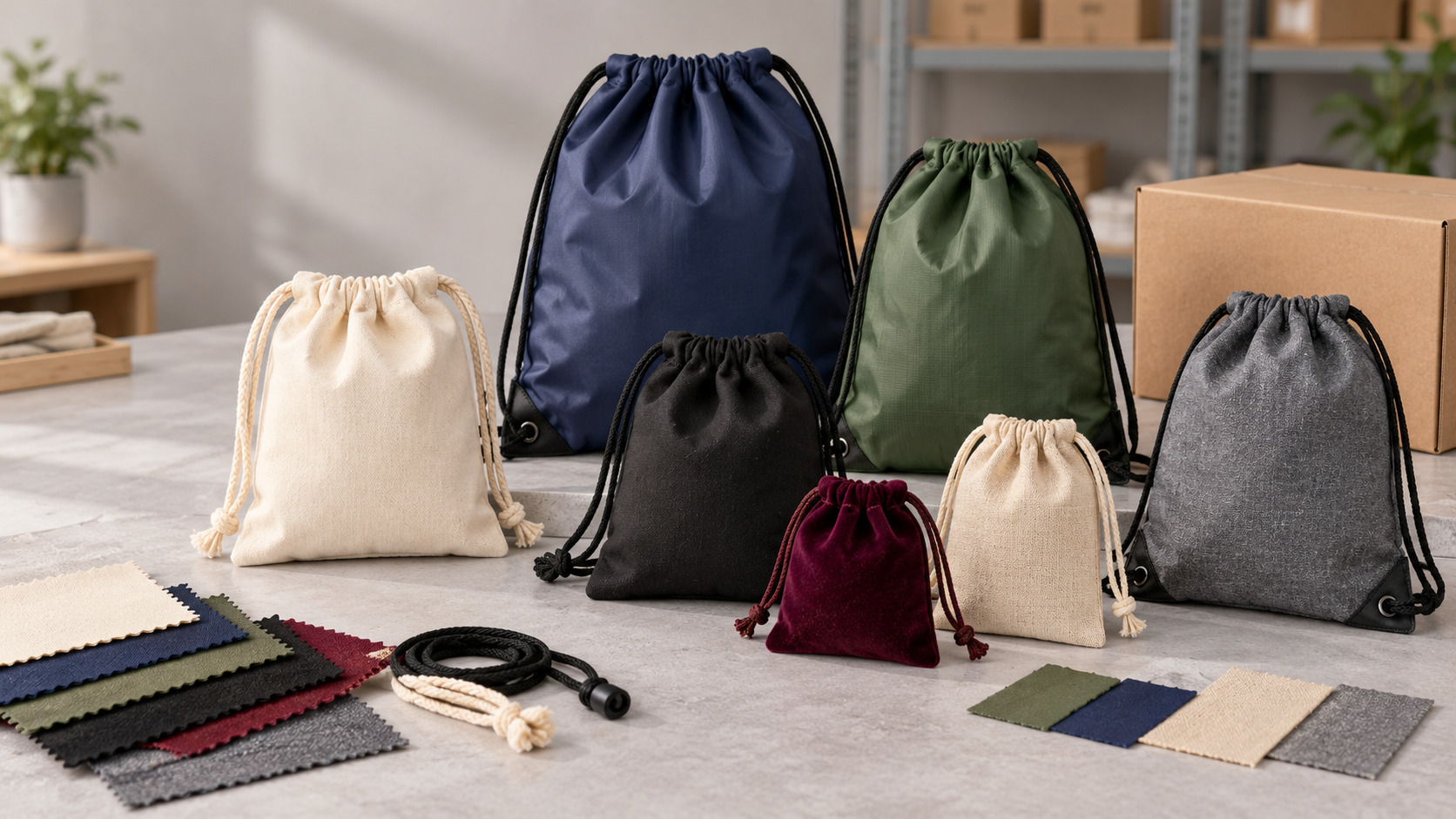
How to Maintain Logo and Color Consistency Across Shopping Bag Reorders
Planning a reorder? Send the previous and current release pack. Include prior PO/SKU and accepted deviations, current quantity by SKU/destination, last specification/BOM/golden bag/packing record, released artwork and checksum/revision, colour master and viewing record, tooling IDs and condition, exact changes, complaints/corrective actions, current tests/labels/market requirements and required date.

A real product image from LUCKYSTAR’s current shopping bag page. The production material, print route and order specifications must still be confirmed for each project.
Buyer quick answer: Never release a shopping bag reorder with only the instruction “same as last time.” Rebuild the order from a controlled reference package containing the SKU and revision, approved specification and bill of materials, exact artwork files, physical color and print masters, tooling references, converted golden bag, inspection records, packing instructions and a change log. Then screen every current material, process and artwork condition for change. Approve only the items that need to be reopened, sign a bulk first-off, and retain samples from the new lot.
That system cannot make two production runs physically identical. Materials age, lots vary, inks and coatings are remixed, equipment is reset, and stored references can change. What it can do is replace memory with traceable decisions—and make any necessary difference visible before a full reorder becomes finished inventory.
This guide is for brand managers, retail buyers, promotional-product distributors and packaging teams placing repeat orders for paper, non-woven, woven PP, cotton/canvas, jute, mesh or transparent shopping bags. It focuses on repeat-order change control, not on choosing a printing method or developing the first sample. For those upstream decisions, use LUCKYSTAR’s shopping bag color approval guide, shopping bag artwork and dieline guide, and sample development process.
Page role: This technical guide owns shopping bag reorder controls for artwork versions, color references, tooling, materials, approval gates and change records. Use the worldwide shopping bag manufacturer guide for a supplier shortlist, and the custom shopping bag collection for specification and quotation planning.
Why a Reorder Can Drift Even When Nobody Intended a Change
A previous purchase order describes a commercial transaction; it does not always describe the physical product precisely enough to reproduce it. “Blue non-woven bag, one-color logo” leaves open the material grade and body-color lot, surface treatment, ink system, white underbase, print deposit, tooling revision, logo coordinates, handle shade, seam route, packing pressure and approval method.
The next order may also be separated from the first by months. During that interval:
- a fabric, paper, film, webbing or handle source may change;
- the available lot may have a different natural shade, texture, gloss or surface treatment;
- a plate, screen, cylinder, embroidery file or cutting tool may have been repaired or remade;
- a printer may route the job to different equipment or use a revised separation;
- the brand team may have updated the logo, legal copy, color library or market label;
- an old approved sample or color guide may have faded, yellowed or become contaminated;
- the first order may contain an accepted deviation that was never added to the master specification.
The control question is therefore not “Can you copy the previous bag?” It is: Which evidence from the previous order is still valid, what has changed, and which approval gates must reopen?
1. Build One Reorder Master Pack
Before asking for a price or production date, recover the last released product record. Give the reorder one style code, SKU, market and revision. If several files say “final,” none of them is safely final.
| Controlled item | Retain from the last accepted order | Reconfirm before the reorder | Reapproval trigger |
|---|---|---|---|
| Product identity | Style/SKU, size, market, language and last PO reference | Quantity by SKU, destination and required arrival date | New market, language, size, colorway or pack-out |
| Construction | Dimensioned specification, measurement method, tolerances and converted golden bag | Bag route, gussets, handles, reinforcement, seams/bonds and closure | Pattern, dieline, machine route or structural component changes |
| Bill of materials | Body material, handles, trims, thread, ink/film, coating, board and packing references | Current supplier, grade, lot, color, finish and availability | Any source, grade, finish, composition or component substitution |
| Artwork | Editable source, released production PDF, fonts/links, checksum or exact file identity | Logo version, copy, barcode/QR, colors, sides and SKU mapping | Any artwork, size, language, separation or dieline change |
| Color and finish | Current physical master, approved strike-off/drawdown, converted print sample and viewing record | Reference condition, substrate/process route and acceptance method | Faded/damaged master, new substrate lot, ink route, coating or laminate |
| Tooling and prepress | Plate/screen/cylinder/die/embroidery ID, revision and last-use record | Tool condition, storage identity and compatibility with the current job | Tool remake, repair, wear, distortion or unverified identity |
| Quality release | First-off, in-line/final inspection, accepted deviations and corrective actions | Known risks, inspection points, defect rules and retain plan | Previous complaint, recurring defect or changed test/inspection need |
| Packing | Folding method, individual protection, labels, count, carton and marks | Current packaging files, destination labels and transport route | New carton, fold, insert, label, quantity or distribution channel |
Do not treat the golden bag as a stand-alone standard. A physical sample shows an accepted result, but it may not identify its material lot, artwork revision, ink formula, tooling or packing file. Link the bag to the written specification and change history. LUCKYSTAR’s custom shopping bag tech pack guide explains how to keep these records under one controlled revision.
2. Use a Green–Yellow–Red Reorder Gate
Not every reorder needs a full development cycle. It does need a documented screening decision.
| Reorder status | Typical condition | Minimum action before bulk |
|---|---|---|
| Green: verified repeat | The same released files, route, approved material references and tooling are available; prior records are complete; no unresolved complaint exists | Confirm the master pack, inspect stored tooling/references, approve a current bulk first-off and compare the new lot with retains |
| Yellow: controlled change | One or more variables changed, but the effect can be isolated—for example a new material lot, remade screen, updated packing label or substitute handle source | Reapprove the affected component or process, then inspect a converted first-off to ensure the change did not alter adjacent features |
| Red: re-development | The old record is incomplete, the golden sample is missing or damaged, the construction/print route changed, critical material is unavailable, or the logo/color standard was replaced | Reopen feasibility and sampling; issue a new revision rather than calling the result an unchanged reorder |
This gate keeps a small label edit from triggering unnecessary full sampling, while preventing a major material or process change from slipping through as routine replenishment.
3. Lock Logo Identity Before Checking Appearance
Logo consistency starts with identity: the correct mark, file and version must reach prepress and production. Visual comparison cannot rescue the wrong artwork.
Confirm the following for every SKU:
- Released source and production file. Record the exact filename, revision, release status and, where practical, checksum or file size and timestamp.
- Geometry. Preserve the logo’s aspect ratio, minimum details, clear space and any approved production simplification.
- Finished size and coordinates. Define the artwork box and its position from stable bag datums—not from the edge of a photograph.
- Color separations. Name every spot/process channel, opaque white layer, varnish or effect mask. Do not let “one-color logo” hide an additional functional white layer.
- Production route. Tie the file to the intended screen, plate, cylinder, digital condition, transfer, embroidery program, patch or label construction.
- SKU mapping. Show which artwork version belongs to each bag size, body color, language and market.
If the bag dimensions, gusset, seam, handle patch or printing route changed, reopen placement approval. A mathematically centered logo can still shift visually when the stable front panel changes. Use the shopping bag logo placement and print size guide to define a measurable artwork box and exclusion zones.
For stored tooling, verify identity and condition before production. A tool carrying the correct old code may still have been repaired, damaged or replaced. When a new tool is made, compare a production-process proof with the prior signed master instead of approving only the new digital layout.
4. Control Color as a Physical Production Result
A Pantone number is a useful language, but it is not a finished-bag sample. Pantone explains that coated and uncoated references differ because the paper surface and ink absorption change appearance. The company also recommends replacing graphics guides periodically because handling, UV exposure and paper aging can shift the reference itself. See Pantone’s official notes on coated versus uncoated references and guide replacement.
For a reorder, identify the decisive physical approval object:
- body-material swatch or lab submission for a dyed/custom-colored substrate;
- ink drawdown or print strike-off on the intended production surface;
- printed and laminated hand sheet where a film/white/adhesive/backing stack changes appearance;
- converted golden bag showing the final folds, seams, gloss, opacity and viewing direction;
- signed boundary samples when a realistic acceptable range is more useful than one ideal sample.
Record how that object was viewed and, when measurement is required, the instrument and method. ISO 3664:2025 specifies viewing conditions for critical and practical appraisal of reflective and transmissive prints. Referring to the standard does not by itself prove that a particular light booth or inspection process complies; the actual setup still needs to be defined and maintained.
Do not apply one numeric tolerance copied from another product to every shopping bag. Texture, gloss, transparency, metallic effects, weave and the measurement backing can change what a reading means. Define the visual and instrumental method for the specific substrate and print route, then use that same method for the first-off and retained bulk samples.
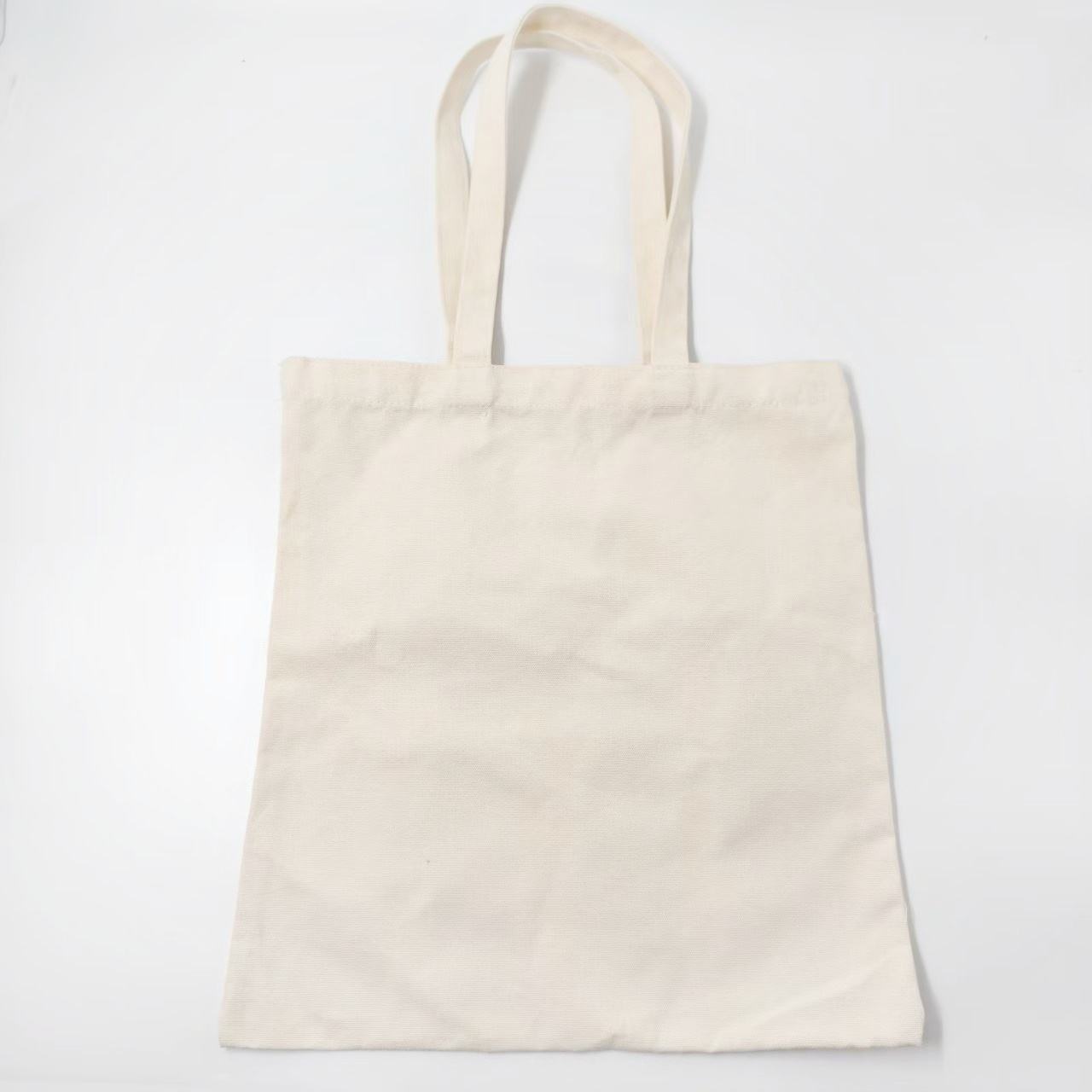
A real LUCKYSTAR product-page image showing why the base-material shade, weave and finish should be locked before print approval and repeat production.
5. Expect Different Reorder Risks by Bag Construction
The same brand artwork behaves differently when the production surface changes. Give each substrate/process combination a child standard linked to the brand master.
| Shopping bag route | Likely reorder drift | What to compare before release |
|---|---|---|
| Cotton or canvas cut-and-sew | Natural/dyed fabric shade, weave/finish, ink absorption, panel orientation and sewn placement | Current fabric lot, production print on that lot, converted bag, artwork coordinates and retained bulk sample |
| Jute or coarse natural fabric | Fiber shade and irregularity, print edge/opacity, panel orientation and fraying | Real bulk-intent material range, simplified artwork if required, finished panel/bag and agreed natural-variation boundary |
| Unlaminated non-woven PP | Body-color lot, surface treatment/texture, ink deposit, weld/seam route and placement | Current web lot, treatment/print trial, converted first-off and roll/bundle-linked retains |
| Laminated woven PP | Film/reverse-print version, white layer, adhesive/backing, gloss and conversion register | Printed film, representative laminate, finished first-off and tool/roll identity |
| Paper carrier | Paper grade/side, brightness or kraft shade, absorption, coating/film, crease and handle-hole relation | Exact paper stock, finished print/finish stack, converted bag and current dieline/tooling |
| Transparent film bag | Sheet tint/clarity, white layer, front/back show-through, joining route and viewing backing | Exact current sheet, light/dark backing review, finished seam/welded bag and representative contents |

A real product image from LUCKYSTAR’s shopping bag page. Body color, texture and logo application are separate approval objects; a visual family does not mean every component can share one tolerance.
6. Approve a Current First-Off—Even for a Verified Repeat
The most important reorder comparison happens before the full run becomes inventory. A first-off is made with the current bulk-intent material, artwork, tooling, equipment and setup. It should be a converted bag whenever folds, seams, handles, lamination or joining affect the final appearance.
Compare the current first-off with both the written master and retained physical references:
- logo content, proportion, size, position, orientation and legibility;
- body color, print color, white/opacity, gloss or finish under the agreed condition;
- material identity, surface, texture and lot-linked variation;
- print registration, coverage, adhesion and relevant rub/fold behavior;
- bag dimensions, gussets, handles, reinforcements, seams/bonds and symmetry;
- folding, labels, individual protection, quantity and carton presentation.
Identify the approved unit by time, machine or line where relevant, material lot, ink/film batch, tool revision, artwork version and approver. If an adjustment is made, hold output produced before the correction and issue a new first-off. Do not mix a pre-adjustment lot with a corrected lot without a documented disposition.
The LUCKYSTAR shopping bag quality control checklist provides the wider inspection framework. This reorder article adds the comparison question: does the current lot match the currently valid master, and are all differences authorized?
7. Monitor Change Events, Not Only the First and Last Bag
A good first-off does not prove the complete run stayed stable. Build checks around events that can create a new condition:
- material, film, paper, handle or trim lot change;
- ink replenishment, formula adjustment or white-layer change;
- restart after cleaning, stoppage or shift change;
- plate, screen, cylinder, file, program or machine change;
- lamination, coating, curing or treatment adjustment;
- lane/position change on multi-lane production;
- new bundle, roll, pallet or packing configuration.
Link samples and inspection results to the relevant time, roll, bundle, lane or carton range. This traceability lets the team contain a local variation instead of accepting or rejecting an entire order without evidence.
After final inspection, add the new first-off, selected bulk retains, approved deviations, corrective actions and packing record to the master pack. The second reorder should begin with a better record than the first.
Company-claim boundary: LUCKYSTAR statements in this section are publisher self-description, not third-party verification, Pantone/ISO certification, custody proof for a prior sample, tooling-condition report, laboratory result or guarantee that separate production lots will be identical. Material availability, MOQ, price, samples, timing, tests, certification, packing and delivery are subject to the current specification and written confirmation.
8. How LUCKYSTAR describes its reorder-control review
LUCKYSTAR states that its project team can compare a current shopping-bag reorder with the last released product record and isolate change events before bulk release, subject to specification and written confirmation.
- Recover the master pack: prior PO/SKU, released specification and BOM, artwork identity/checksum, physical colour/finish references, converted golden bag, tool IDs, inspection results, accepted deviations, complaints and packing record.
- Classify the reorder: treat a fully verified repeat as green, an isolated controlled change as yellow and missing records or structural/process changes as red; record the evidence behind the classification.
- Lock logo identity: compare vector geometry, aspect ratio, clear space, minimum detail, separations, size, coordinates, dieline and version mapping before judging visual colour.
- Lock colour evidence: identify current material lot/body shade, ink/thread/film route, white/backing, finish, physical target, viewing/measurement condition and any aged or damaged references.
- Review change events: supplier/grade/lot/tool remake or wear, new machine/line, substitutions, artwork or label edits, maintenance, downtime, packing changes and prior corrective actions.
- Release the current lot: approve a converted first-off using actual materials/tools/line, then monitor by roll/lane/time/bundle/SKU against written appearance, measurement and defect rules.
Review the public custom shopping bag range, the colour approval guide and the shopping bag tech-pack guide. Then send the prior master pack and a marked list of current changes for a reorder review.
Shopping Bag Reorder RFQ Checklist
Send enough information for the current order to be compared with the correct prior standard:
- previous LUCKYSTAR quotation, PO, style/SKU or sample reference, if available;
- current quantity by size, colorway, artwork, language and destination;
- required arrival date and delivery location;
- the last approved specification, BOM, golden sample and packing instruction;
- exact current vector artwork and released PDF, with revision identity;
- color master, Pantone system/code/suffix where applicable, and any physical sample ownership details;
- a clear list of what must stay the same and what you want to change;
- known complaints, accepted deviations or improvements from the previous order;
- current testing, labeling, packaging, carton and market requirements.
LUCKYSTAR can then review whether the project is a verified repeat, a controlled-change reorder or a re-development case, and confirm the necessary sample, quotation and production plan in writing.

GET A QUOTE — send LUCKYSTAR your shopping bag specification, artwork and reorder reference.
Frequently Asked Questions
Can a manufacturer guarantee that two shopping bag orders will be exactly identical?
No responsible supplier should promise perfect physical identity across every unit and every production date. Materials and processes have variation. The practical objective is to define an acceptable standard, control known variables, detect unauthorized changes and retain evidence that makes the result reproducible within the agreed limits.
Is “same as last time” enough for a reorder purchase order?
No. Reference the prior style/SKU and purchase order, but also attach or identify the current approved specification, BOM, artwork revision, physical color/print master, golden bag, packing file and change log. State explicitly what remains unchanged and what has been revised.
Does every repeat order need a new full sample?
Not necessarily. A verified repeat may move to current-material verification and a converted bulk first-off. A changed material, artwork, tool, route or incomplete master record may require a component sample, production-process proof or full pre-production sample. Decide through a documented change screen.
Can a Pantone code replace the previous approved shopping bag?
No. It communicates color intent but cannot reproduce the effect of the actual substrate, texture, white layer, coating, laminate, gloss or transparency. Keep a current physical reference and approve the color on the intended production construction.
What happens if the previous material is no longer available?
Treat the alternative as a controlled change. Compare composition/grade, color, surface, weight or thickness, construction behavior, print compatibility and relevant performance. Approve the affected component and a converted bag before calling it the new standard.
How should logo placement be checked on a reorder?
Use dimensions and coordinates from stable bag datums, plus the approved artwork box and converted golden bag. Check a current first-off flat, opened and—when retail appearance matters—filled. Do not rely only on a photograph or a visual statement that the logo is “centered.”
What should I send LUCKYSTAR for a reorder quotation?
Send the target quantity, dimensions, material, color, current logo artwork, packing requirements, destination, required arrival date and any previous LUCKYSTAR order or sample reference. Mark every requested change. The team will review feasibility and confirm the quotation, sampling and production assumptions for the current order.
Make the Next Reorder Easier Than the Last
Shopping bag consistency is not preserved by memory. It is preserved by a controlled chain: one product identity, one released specification, one artwork version, current physical color and print references, verified tooling, defined reapproval triggers, a signed first-off and lot-linked inspection records.
If you are preparing a first repeat order—or trying to recover a program that has drifted—start with LUCKYSTAR’s custom shopping bag options and send the team your current brief and previous reference. Include quantity, dimensions, material, color, logo artwork, packing requirements and destination so the differences can be identified before quotation and production planning.
Request a controlled shopping bag reorder review
Use the previous release pack plus a marked list of current changes so the team can classify the repeat and return the required reapproval gates.
Review LUCKYSTAR custom shopping bag options, then send your reorder details through the contact form or Email a project brief. The email link opens a draft for your review before sending.
Entity/site assignment, material and component availability, tooling identity/condition, colour, samples, tests, inspection, price, MOQ, packing, schedule and release terms are subject to due diligence, current specification and written confirmation.