GRS-Certified RPET Shopping Bags: What Buyers Should Verify
When a supplier offers “GRS-certified RPET shopping bags,” do not approve the claim from one certificate PDF. Verify who is certified, which site and processes are covered, whether the exact bag or material appears within scope, and whether order-specific transaction evidence connects the certified input to the goods you are buying. Then confirm that the proposed percentage, product label and logo use follow the applicable Textile Exchange rules.
This distinction matters because an RPET fabric, a certified organization and a certified finished order are three different things. A valid Scope Certificate can show that an organization is certified for listed activities; it does not prove that every product it sells is certified. A Transaction Certificate or approved electronic transaction supports specific certified goods, but it does not automatically give a buyer permission to place a GRS logo on a bag or webpage.
This buyer-focused guide explains how to review GRS evidence for custom shopping bags without repeating the broader material, manufacturing and testing workflow in our RPET Shopping Bags Certification and Sourcing Checklist. It is practical procurement guidance, not legal advice or certification approval. Requirements should be confirmed for the actual order with the relevant certification body and the buyer’s qualified compliance team.
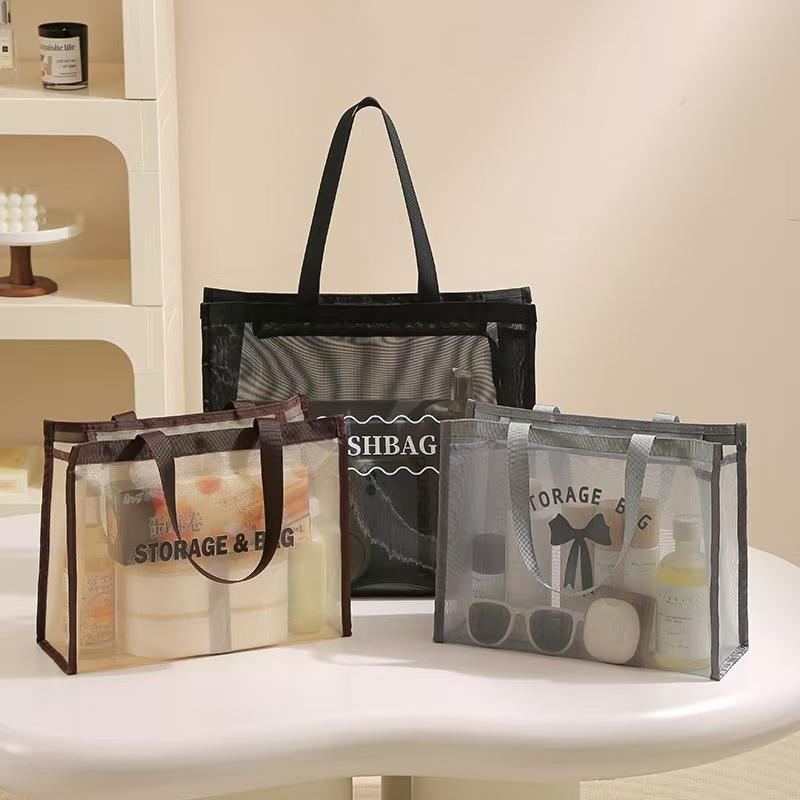
Real shopping-bag formats from a LUCKYSTAR public product channel. The photograph shows construction and color options only; it does not prove recycled content, polyester composition or GRS certification.
Need an evidence-ready RPET bag RFQ? Send the legal seller and buyer, actual converter and sites, bag/SKU/BOM, component-level recycled-content claim, proposed wording and logo use, current Scope Certificate details, required Transaction Certificate or eTransaction evidence, quantity, destination market and required date. LUCKYSTAR can return development assumptions and evidence gaps for buyer and certification-body review.
Page role: This GRS-specific verification guide owns certificate holder, legal entity, physical site, process scope, Scope Certificate, Transaction Certificate, component boundaries and claim eligibility. For the broader RCS/GRS sourcing workflow and order-level evidence plan, use the RPET shopping bag certification and sourcing checklist. Use the worldwide shopping bag manufacturer guide for a supplier shortlist, and the custom shopping bag collection for specification and quotation planning.
The short answer: verify a chain, not a badge
A buyer should be able to trace the proposed claim through this sequence:
Marketing wording → approved product/component claim → finished-bag specification and BOM → seller and production site → valid Scope Certificate → order-specific certified transaction → incoming material and production lot → shipment documents.
If one link is missing, narrow or pause the claim. For example, “main body fabric made with 60% GRS-certified post-consumer recycled polyester” is not the same as “60% GRS-certified bag.” The first statement may exclude handles, binding, thread, coating, print and accessories. The second can reasonably be read as a whole-product statement.
What “GRS-certified” can—and cannot—tell a buyer
Textile Exchange describes the Global Recycled Standard as a third-party standard for recycled content and chain of custody, with additional social, environmental and chemical-processing requirements. It is not a universal product-safety certificate, a durability test, a recyclability assessment or proof that the finished bag has lower total environmental impact than every alternative.
| Statement seen in a quotation | What it might mean | Evidence needed before relying on it | Do not assume |
|---|---|---|---|
| “RPET fabric” | The supplier describes a textile as recycled PET/polyester | Component specification, recycled-content basis, supplier/lot identity and supporting records | Bottle origin, percentage, certification or whole-bag coverage |
| “GRS supplier” | An organization may hold a current GRS Scope Certificate | Official certificate authentication, exact legal entity, site, product and process scope | Every SKU, subcontractor or shipment is certified |
| “GRS material” | A certified input may be available within an eligible supply route | Valid supplier scope plus transaction evidence for the actual input | The converter or trader is covered, or the finished bag is certified |
| “GRS-certified shopping bag” | The finished article is intended to move through a certified chain | Complete chain map, covered conversion processes and order-specific transaction evidence | Logo permission, destination compliance, load performance or recyclability |
| “100% recycled” | A percentage claim is being made about a defined object | Component weights, standard-compliant calculation and final certified transaction | All visible and hidden components are recycled |
The buyer’s first job is therefore to rewrite each shorthand statement as a precise claim object: which component, what recycled-content percentage, which recycled category, which standard/version, which seller, which production route and which order.
Identify the certified legal entity and physical site
Certificates follow legal organizations and covered sites—not brand nicknames, email domains or supplier groups. Compare the certificate’s legal name and address with the quotation, purchase order, invoice, receiving party and actual converter. If a trader sells the bags while another company weaves, dyes, prints or sews them, map every relevant handler.
Related-company status is not enough. A certificate held by a fabric mill does not become the trader’s certificate. A certificate held by one subsidiary does not automatically cover another subsidiary. A valid certificate at one factory does not cover an undisclosed site.
Use Textile Exchange’s Find a Certified Company database to authenticate current scope-certificate data. Record the date checked and the certificate information used. If the PDF, database and supplier explanation do not agree, ask the issuing certification body to resolve the discrepancy before award.

A product photo cannot identify the certified legal entity or site. Buyers should match the contracted seller and actual production route to authenticated certificate records.
Distinguish Scope Certificates from Transaction Certificates
The two documents answer different questions. Confusing them is one of the most common GRS sourcing errors.
| Record | Question it answers | Buyer checks | What it does not prove by itself |
|---|---|---|---|
| Scope Certificate (SC) | Is this organization/site certified for listed products and processes during the stated period? | Certificate number, legal entity, site, certification body, standard/version, status, validity, product details, process categories and listed facilities/subcontractors | That the fabric or bags in a particular PO are certified |
| Transaction Certificate (TC) or approved eTransaction | Does a specific certified transaction support the goods transferred between named parties? | Seller/buyer, product description, claim category, input/output details, quantities and certified weight, dates, invoice/shipment references and authentication status | Permission to use a logo or make any wording the buyer chooses |
| PO, BOM and material ledger | Do commercial and physical records describe the same product and certified input? | SKU, component boundary, composition, supplier codes, roll/lot, consumption, waste, output quantity and substitutions | Independent certification unless connected to valid SC/TC evidence |
| Claim or label approval | May the exact wording and artwork be used in the intended channel? | Claim type, component identification, percentage, certification-body/brand approval, logo license and artwork version | Product quality, legal compliance in every market or ongoing certificate validity |
Textile Exchange’s certificate authentication guidance provides the official routes for checking scope and transaction certificates. Its guidance directs users to the certified-company records for SCs and the transaction-authentication system for TCs issued after October 1, 2022; older TCs should be checked with the relevant certification body.
Read the Scope Certificate line by line
A recognizable logo is not the decisive part of a Scope Certificate. Read the data fields and annexes. At minimum, compare the following against the actual order:
| SC field | Verification question | Shopping-bag example of a mismatch | Buyer response |
|---|---|---|---|
| Legal name | Is this exactly the contracted or processing entity? | Quotation is from Company A; the SC belongs to Company B | Obtain a documented chain and confirm each entity’s required coverage |
| Certified site | Is the physical handler listed or permitted? | The listed site is in one city, while sewing occurs at another unlisted address | Stop the GRS claim until the production route is validated |
| Validity and status | Is the SC current for the relevant transaction period? | SC expired before the certified sale or is suspended | Request current official status and certification-body guidance |
| Product category/detail | Does the scope include the input or finished article being sold? | Scope shows yarn or fabric, while the supplier claims certified finished bags | Verify downstream conversion certification and transaction evidence |
| Process category | Are dyeing, printing, coating, trading and making-up covered as required? | Certified fabric passes through an unverified printer or bag converter | Map the physical route and correct the certification chain |
| Facility/subcontractor annex | Are additional handlers disclosed and eligible? | A subcontract sewing line is absent from the supporting scope | Escalate before production; do not rely on a verbal assurance |
| Standard/version | Which rules support the certificate and upcoming order? | RFQ names an old version while the audit or production crosses a transition date | Confirm the applicable version and transition plan in writing |
Scope language can be technical. Ask the supplier to highlight the exact product and process entries relied on, but still verify them against the official record. A screenshot or cropped certificate image is not a durable evidence file.
Match the Transaction Certificate to the actual order
Order-specific verification begins when the purchased material or finished goods are identified. Compare the TC or eTransaction with the PO, invoice, packing list and shipment. The seller and buyer names, article description, dates, quantity and certified weight should form a coherent story.
Review the transaction at component level when the bag is mixed-material. If only the body fabric is certified, do not let a generic finished-goods description imply that handles, coating or accessories carry the same status. Confirm whether the transaction identifies pre-consumer or post-consumer content and whether that matches the planned claim.
Red flags include round-number weights that cannot be reconciled to unit weight and shipped quantity; article descriptions too generic to match an SKU; dates outside the commercial flow; a buyer or seller name that differs from the contract; and a certificate application that begins only after the marketing team has printed the logo.
Define the certified component boundary
An RPET shopping bag may contain a woven or mesh body, webbing handles, binding, sewing thread, a coating or laminate, zipper, snap, label, print carrier, base insert and packaging. These parts may have different compositions and evidence routes.
Create a component-weight ledger from a production-intent sample. For every component, record material, unit weight, supplier, recycled category/percentage, certification status, lot reference and whether it sits inside the proposed claim. Do not remove a component from the calculation simply because it is inconvenient to weigh; apply the current standard and claims rules, with certification-body guidance where required.
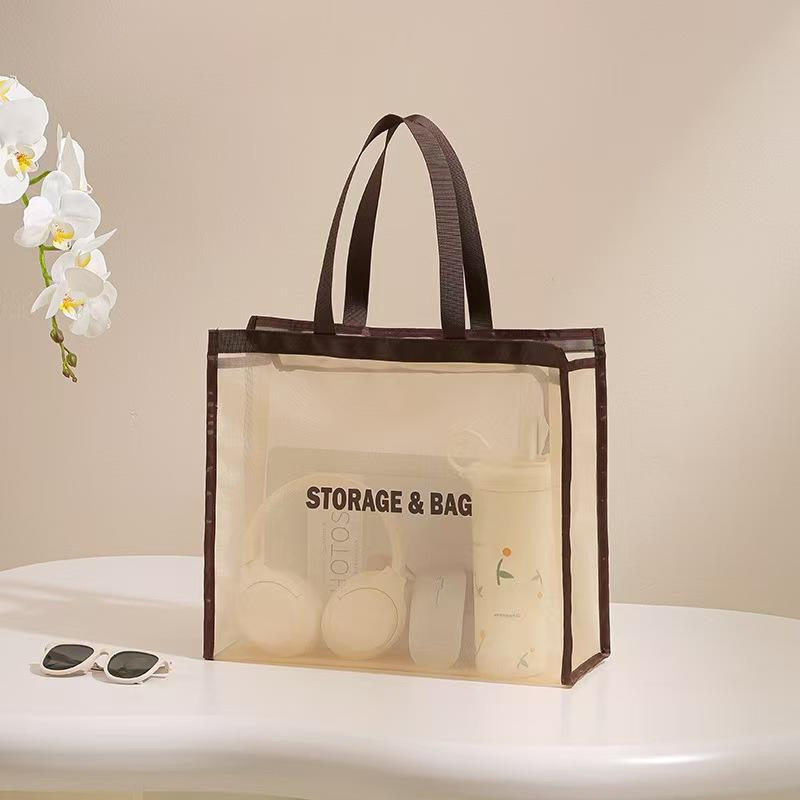
The body panel, top band, handles, side seams, print and contents are separate claim objects. The image is a construction reference, not evidence that any component is RPET or GRS certified.
A clear internal statement might read: “Claim applies to the main body mesh only; handle webbing, binding, thread, print and packaging are outside the claimed component.” Marketing may later shorten the wording, but the consumer-facing version must not create a broader impression than the evidence supports.
Check recycled-content thresholds and label eligibility
GRS certification and consumer-facing labeling are not identical. Textile Exchange’s current standard-specific assurance details distinguish GRS claim categories and content thresholds. Under the published framework, products with at least 50% certified recycled content may fall within the GRS labeling category, while products with at least 20% but below 50% may be handled as GRS “no label,” subject to the applicable material and policy conditions.
Do not apply those percentages casually to the main fabric when the intended statement refers to the complete bag. Confirm the calculation boundary, certified material category, component treatment and current claims policy. Where a virtual-record or other special policy applies, obtain written guidance rather than copying a threshold from another product.
Finally, distinguish a factual composition statement from use of the GRS trademark. Product labeling and business-to-business claims can require approvals and trademark controls. Follow the applicable Textile Exchange Standards Claims Policy, current logo specifications and certification-body instructions for the exact artwork and channel.
Plan for the 2026 standards transition
The version, transaction date and audit stage belong in the RFQ. Textile Exchange published GRS-101 V5.0 on 1 July 2026; its standards policy update page lists the same effective date and a mandatory date of 31 December 2026. Confirm the current implementation manual, assurance policy, claims policy and certification-body instructions for the order.
This GRS update sits alongside the broader Materials Matter Standard transition. Textile Exchange states that Materials Matter becomes effective on 31 December 2026, becomes mandatory for Tier 4 audits from 31 December 2027, and requires all claims and labels to transition by 30 June 2029. These dates serve different purposes; do not treat one as a substitute for the other.
For each PO, record the selected standard and version, relevant SC/TC or eTransaction route, audit timing, intended claim and label, approval owner and evidence cut-off date. Recheck the official source and obtain certification-body guidance before artwork or shipment release because applicable policies and transition instructions can change.
Request a compact GRS evidence pack before production
Ask suppliers for organized records, not a folder of unrelated certificates. A useful pre-award and release pack includes:
| Stage | Minimum buyer request | Acceptance test | Stop condition |
|---|---|---|---|
| Pre-award | Exact claim proposal, chain map, current SCs and certification-body details | Legal entities, sites, product and process scope match the quoted route | Certificate belongs to another company or covers only a different stage |
| Specification | Finished BOM, component weights, recycled-content basis and exclusions | Calculation object matches the wording and production-intent sample | Whole-bag claim is calculated from body fabric alone |
| Material nomination | Supplier article, certified-input reference, color/finish, MOQ and availability | Nominated bulk route is the route reviewed for certification | “Equivalent” replacement lacks the same evidence |
| Sample approval | Production-intent material, artwork, claim text, label/logo approval route | Physical sample and evidence pack use the same components | Sample is conventional while bulk is promised as certified later |
| Bulk control | Receiving lot, roll identity, segregation, issue/cutting/output ledger and change log | Certified lots remain identifiable through production | Certified and conventional material are mixed or substitutions are undocumented |
| Shipment release | Final BOM, quantity/weight reconciliation, TC/eTransaction status, invoice, packing list and carton mapping | Goods, certified transaction and commercial documents agree | Certified weight, seller/buyer, article or dates cannot be reconciled |
For the wider material-selection and production workflow, use the existing RPET shopping-bag sourcing guide. For construction control, build the same fields into the shopping bag tech pack, approved sample and shopping bag QC checklist.
Ten red flags buyers should not ignore
- The supplier sends only a certificate image and discourages official authentication.
- The legal name or site on the SC differs from the entity selling or converting the bags.
- The scope covers yarn or fabric, but the quotation calls the finished shopping bag certified without a downstream chain.
- Printing, coating, dyeing, trading or sewing occurs at a handler that is absent from the declared route.
- The SC is current, but no order-specific TC/eTransaction plan is included in the quotation or PO.
- “100% RPET” is calculated from one textile layer while handles, binding, coating or accessories are ignored.
- The planned wording changes from “body fabric” to “bag” after compliance review.
- The supplier treats the GRS logo as a decorative recycling symbol and cannot show an approval route.
- A material substitution is made for color, MOQ or timing without rerunning the claim and evidence review.
- Certification is presented as proof of load strength, washability, recyclability, chemical safety or environmental superiority.
Use the Reusable Shopping Bag Testing guide for performance evidence. Certification and quality testing are connected control streams, but one cannot replace the other.
Company-claim boundary: statements in this section are LUCKYSTAR publisher self-description. They are not evidence of current company-wide GRS certification, certificate ownership, product/process scope, a certified production route, transaction documents, logo permission, recycled composition, test results or material availability. All project details are subject to current documents, order-level verification, buyer and certification-body review, final specification and written confirmation.
How LUCKYSTAR describes its RPET project-document review
LUCKYSTAR states that its project team can help organize a custom bag specification, sampling record, production route and evidence request so the buyer can evaluate the proposed claim. For a proposed GRS route, the working file can identify the legal seller and buyer, actual converter and sites, component BOM and weights, claim boundary, nominated material and lots, current SC details, required TC or eTransaction route, artwork/label approval, no-substitution controls and shipment reconciliation.
This coordination does not make LUCKYSTAR the certifier or legal approver. The buyer should authenticate certificates through Textile Exchange's official certificate routes, apply the current assurance-system details, and obtain certification-body approval for the exact transaction and claim.
Review the public custom shopping bag range, the RPET shopping-bag sourcing guide and the shopping bag tech-pack guide. Then send the evidence fields and commercial brief for an RFQ readiness review. MOQ, sample route, price, lead time, certification, testing, packing and delivery remain subject to final scope and written confirmation.
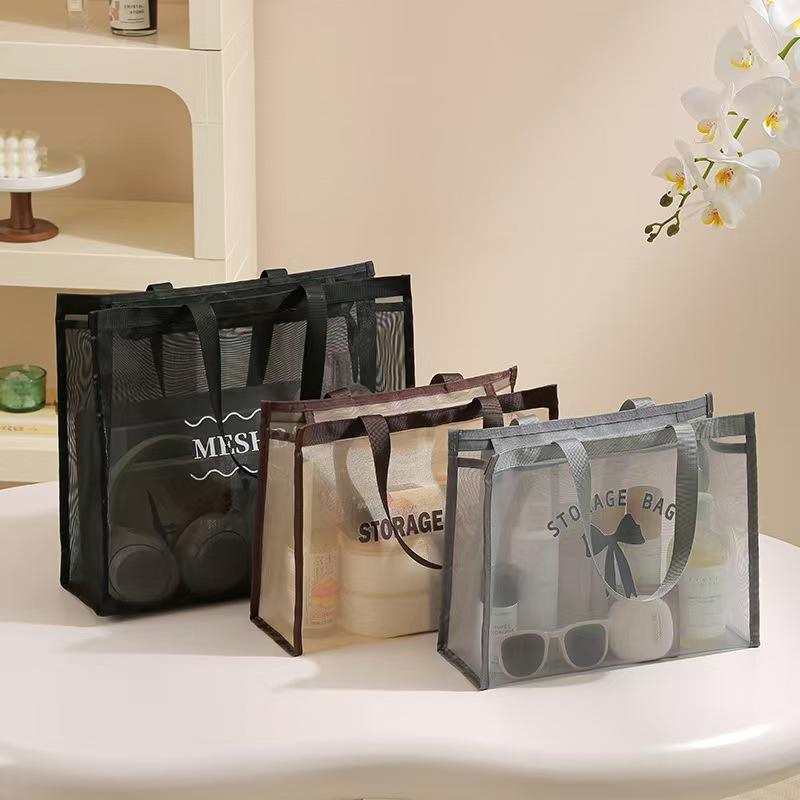
Multiple colorways or sizes can create separate SKUs and material lots. Each order record should identify which configuration is connected to which evidence; the photograph itself makes no certification claim.
Frequently asked questions
Does a valid GRS Scope Certificate prove my shopping bags are certified?
No. It shows that the named organization and site are certified for listed products and processes during the stated period. Verify an order-specific certified transaction and the complete route used for your bags.
Can a fabric mill’s GRS certificate cover the finished bag?
Not automatically. The chain must account for the entities and physical processes that handle the certified material. Confirm the converter, trader and any dyeing, printing, coating or subcontracting route under the applicable rules.
Is RPET always made from recycled bottles?
No. RPET identifies recycled PET/polyester, not the exact feedstock source. A bottle-origin claim needs its own eligible-feedstock and chain evidence.
Can we call the whole bag “100% recycled” if the body is recycled polyester?
Only if the claim boundary and calculation legitimately cover the complete product under the applicable rules. Handles, binding, thread, coating, labels, print carriers, closures and inserts may change the percentage and wording.
Does a Transaction Certificate allow us to use the GRS logo?
No. Transaction evidence and logo/claim permission are separate checks. Follow the current claims policy, trademark requirements and approval process for the exact artwork and channel.
Does GRS certification prove the bag is recyclable?
No. Recyclability depends on the full material combination, separability and real collection, sorting and reprocessing systems in the destination market.
What should buyers put in the RFQ?
State the intended claim, market/channel, component boundary, recycled-content target, standard/version, bag construction, quantity by SKU, required SC/TC evidence, claim approval responsibility, no-substitution rule, testing, inspection, packing and delivery requirements.
Verify the evidence before approving the words
A credible GRS claim is not created by adding a logo at the end of product development. It starts with a defined claim, an authenticated organization and site, matching product/process scope, a component-level specification and an order-specific certified transaction. Those records must stay aligned when materials, colors, quantities or suppliers change.
Send LUCKYSTAR your bag style, dimensions, artwork, intended load, component or whole-product claim, recycled-content target, destination market, quantity by SKU and required evidence. We can help structure the development and documentation questions before the order is placed.

GET A QUOTE FOR YOUR CUSTOM SHOPPING BAG PROJECT
Source and policy review date: September 15, 2026. Recheck Textile Exchange standards, claims policies, certificate status and destination-market rules at the time of each order.
Request an evidence-ready RPET shopping bag RFQ review
Send the bag specification, proposed claim and certificate/transaction fields together so sourcing, certification and claim-approval questions can be reviewed against the same order.
Review LUCKYSTAR custom shopping bag options, then send your project and evidence brief through the contact form or Email a project brief. The email link opens a draft for your review before sending.
Entity/site assignment, certified route, composition, certificate and transaction evidence, logo/claim approval, testing, material/capacity availability, price, MOQ, packing, schedule and delivery terms are subject to due diligence, current documents, final specification and written confirmation.