How to Design Shopping Bags for Longer Service Life
Last reviewed: September 16, 2026
A shopping bag lasts longer when its material, handles, attachment zones, seams, base, closures and decoration are designed as one load-carrying system. Simply increasing fabric weight is not enough. A heavy body can still fail early if a narrow handle hurts the user, a seam slips, a gusset corner concentrates stress, a pocket interrupts the load path, or the care method damages the print.
For brands sourcing custom shopping bags, the practical goal is not “ maximum strength everywhere.” It is a bag that remains useful, comfortable and presentable for the intended contents, carrying pattern, environment and care routine. That requires a written service brief, failure-mode review, controlled samples and an order-specific validation plan.
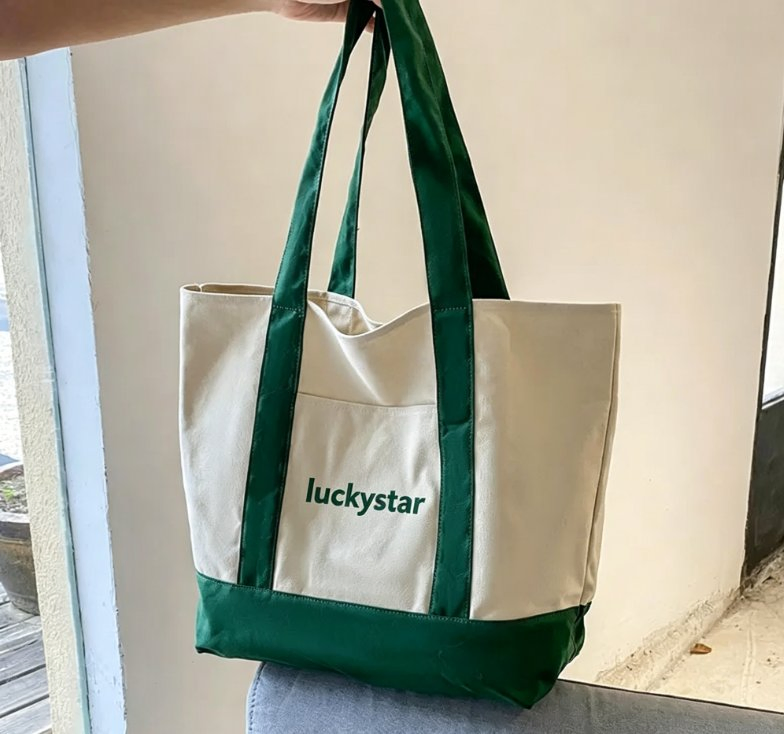
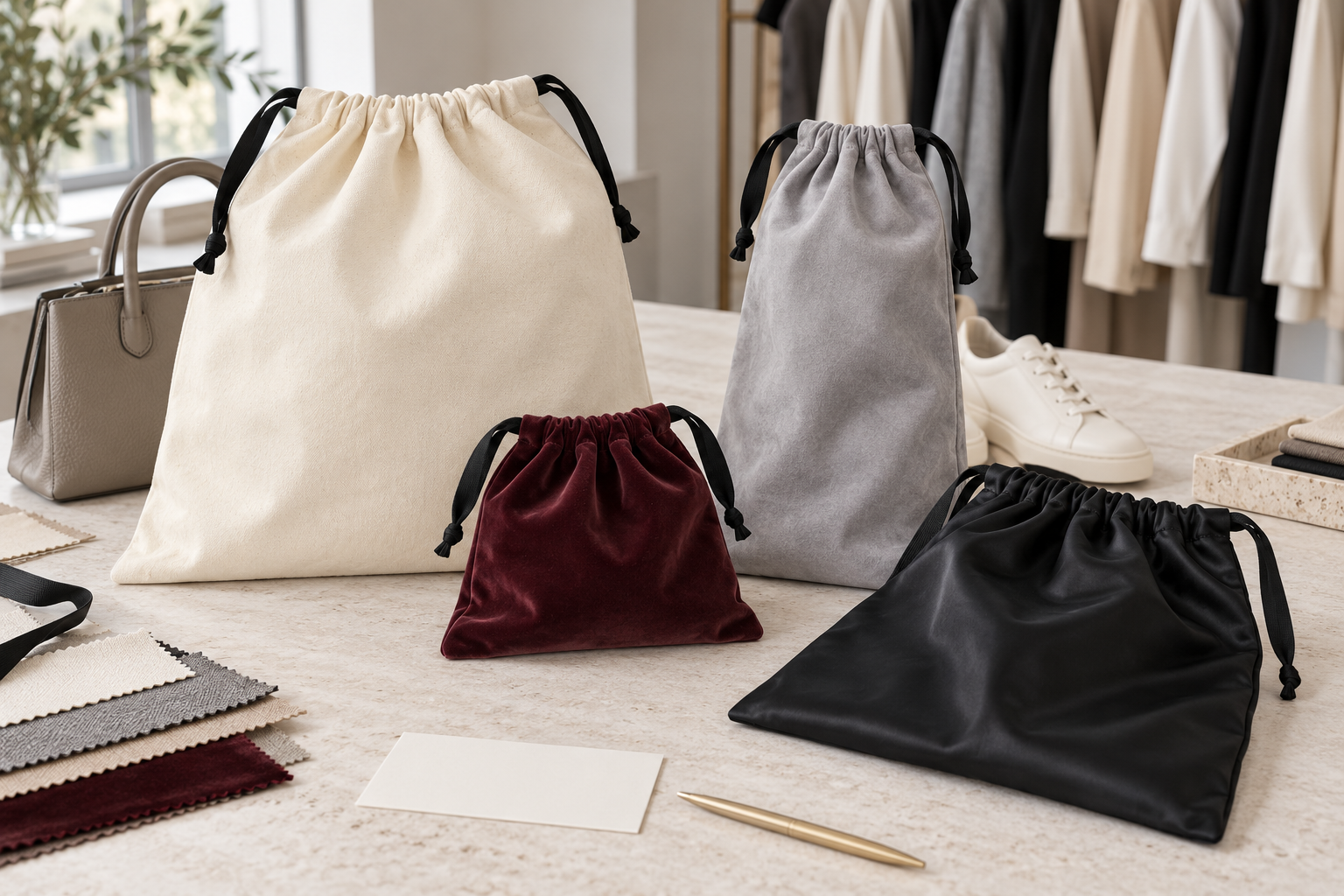
A real LUCKYSTAR-branded sample photographed for the company's public Made-in-China product listing. The photo supports visible construction only; it does not establish a universal material, load rating or service-life claim.
Need a longer-life shopping bag development brief? Send the intended contents, payload and carry pattern, dimensions, handle/attachment concept, seams, base and gussets, closures, print and care route, target failure boundary, quantity, destination, test requirements and required date. LUCKYSTAR can return design-risk questions, staged sample checkpoints and commercial assumptions for written review.
The Short Answer: Design the Weakest Interface Out
Long service life usually depends on the first component or interface that becomes unacceptable. That may be physical failure— such as a torn handle attachment— or functional failure, such as a closure that jams. It may also be appearance failure: a logo cracks, the color rubs off, or the bag loses its shape so badly that users stop carrying it.
Design therefore begins by asking five questions:
- What will the bag carry, including the heaviest realistic combination rather than an average item?
- How will users lift, carry, set down, fold, store and clean it?
- Where does the load travel from the user's hand to the base?
- Which failure would make the bag unsafe, inconvenient or undesirable?
- What sample evidence will show that the proposed construction is fit for that defined use?
This article owns the upstream design decisions that can improve useful life. It does not repeat the cyclic test protocol in Reusable Shopping Bag Durability and Reuse Testing or the broader test-selection guide in Which Tests Should Reusable Shopping Bags Pass?. Use those articles after the construction has been defined.
Define “ Longer Service Life” Before Selecting Material
“ Durable” is not a complete design requirement. A grocery tote, a fashion retail bag, a bookshop bag and a promotional event bag can all be reusable, yet their loads and failure risks are different. A design team should turn the intended use into measurable or observable conditions before choosing fabric weight, seam type or reinforcement.
Describe the service, not only the product name
Start with representative contents: dimensions, total mass, sharp corners, moisture, temperature and how freely the items can move. A six-bottle load behaves differently from the same mass of folded apparel. Bottles create concentrated contact points and dynamic forces; soft goods distribute the load more evenly.
Include the user's behavior
Service life is also influenced by handle drop, carry position, walking distance, folding frequency, storage and cleaning. A shoulder-carried bag needs sufficient clearance and a comfortable strap contact area. A hand-carried retail bag may need a shorter handle to reduce swing. If the bag is awkward, users may abandon it before its fabric fails.
Freeze the acceptance boundary
Agree what “ still usable” means. The boundary can include no detached handles, no opening seam, no closure failure, no hole that releases contents, acceptable dimensional change and acceptable print appearance. The values and inspection method must be set for the project; they are not universal LUCKYSTAR specifications.
| Service-brief input | Questions to answer | Likely design consequence | Evidence to approve |
|---|---|---|---|
| Contents and total load | What is the heaviest realistic load? Are items rigid or sharp? | Base shape, local reinforcement, seam selection and internal protection | Loaded prototype with representative contents |
| Carry mode and duration | Hand, shoulder or both? How far is it carried? | Handle drop, width, edge feel and attachment geometry | Fit review with intended users or a defined surrogate panel |
| Environment | Dry retail, wet grocery, beach, cold chain, vehicle storage? | Material, coating, hardware and corrosion or moisture controls | Conditioned sample review and relevant material tests |
| Cleaning | Wipe, hand wash, machine wash or no washing claim? | Color, print, interfacing, label and shrinkage choices | Care trial on finished samples |
| Storage | Folded, rolled, hung or kept open? | Crease-sensitive print zones, closure protection and shape recovery | Repeated fold/store/open trial |
| End-of-life and mass target | Is low mass, mono-material design or component separation important? | Reinforcement only where needed; fewer incompatible layers where feasible | Finished mass and bill-of-materials review |
Map the Load Path Through the Whole Bag
Imagine the force moving through the product: contents press on the base; the base transfers force into side panels and gussets; the top structure transfers it into handle attachments; the handles transfer it to the user. A weak or abrupt transition anywhere along that route can shorten service life.
A useful load-path sketch belongs in the custom shopping bag tech pack. Mark the base corners, side-seam intersections, top hem, handle ends, pocket edges, closure ends and any cut-outs. These are common stress-transition zones, although the actual critical point depends on the construction.
Avoid reinforcement islands
A strong patch can merely move failure to the edge of the patch. Reinforcement works best when it spreads force gradually into the surrounding panel. Review the size, orientation, stiffness and edge of the reinforcement— not just whether one exists.
Review dynamic loading
Walking, lifting a bag from the floor, setting it down and allowing contents to shift can create more severe local stress than a quiet static hold. The service brief should therefore define representative motions for prototype review. This does not mean inventing one universal “ drop test”; it means reproducing the actual handling risk in a controlled way.
Engineer Handles for Comfort and Load Transfer
Handles are both structural and ergonomic. Their material must resist the intended force, but their width, edge construction, drop and stiffness determine whether people want to keep using the bag.
Match handle geometry to carry mode
Long shoulder handles should clear the intended clothing while keeping the bag stable. Short hand handles should allow a natural grip without forcing the user to bend the wrist. If one bag needs both modes, test both rather than assuming a compromise length will work.
Make the attachment zone part of the panel design
Specify handle spacing, insertion or overlap length, stitch pattern, reinforcement layer and position relative to the top hem. A visually neat box or cross pattern is not proof of strength by itself; thread, stitch length, needle, fabric construction and load direction also matter.
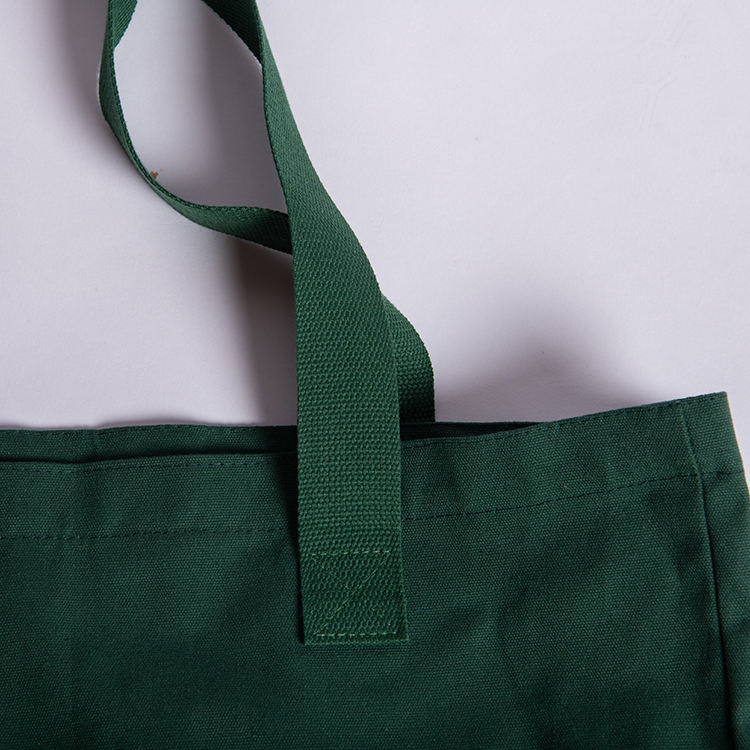
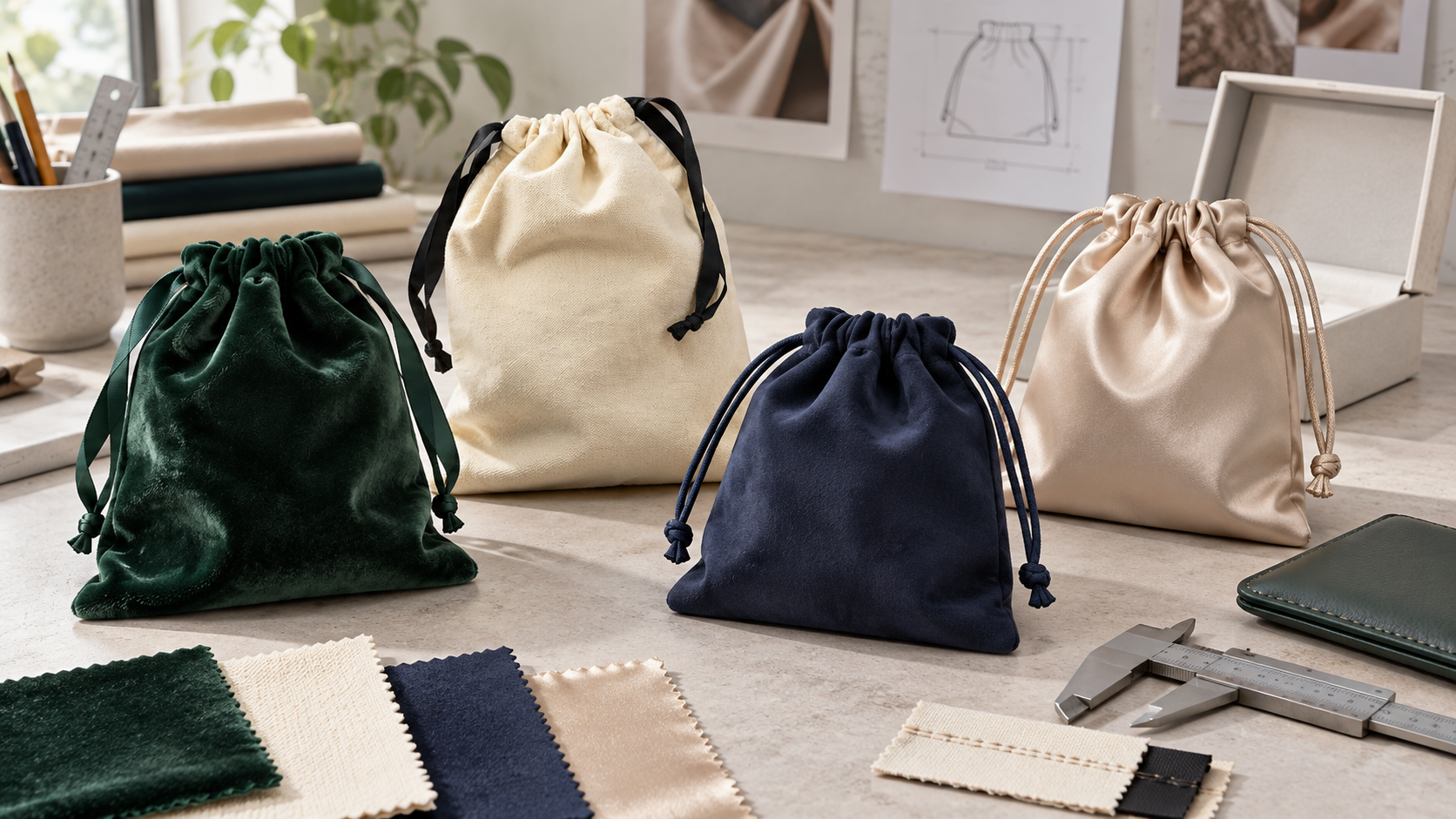
A real construction close-up from a LUCKYSTAR Made-in-China product page. It shows a visible handle/hem arrangement, not a verified load rating or a recommendation for every bag.
Control edge comfort
Thin tape, hard folded edges or twisted handles can create pressure points. A wider or softer contact area can improve repeated use, but it may add material or change appearance. Carry comfort should be approved on the finished sample, not inferred from a flat drawing.
Treat Seams as Product Architecture
Fabric strength alone cannot predict bag life. Seam allowance, seam type, stitch formation, stitch density, thread, needle and edge finishing interact with the substrate. Too few stitches may reduce seam security; too many or an unsuitable needle may perforate or damage some materials. The correct combination is material- and construction-specific.
Specify the seam, not “ good stitching”
A production file should state the seam location and construction, target seam allowance, stitch type, thread specification, permitted appearance, start/stop security and inspection method. Where binding is used, define coverage and turn consistency. Where heat sealing or welding replaces sewing, define the relevant process parameters and sample acceptance separately.
Protect high-risk intersections
Side seams meeting a base seam, gusset corners, handle ends and closure ends deserve special review. Bulky stacked layers can cause skipped stitches or incomplete penetration. Conversely, trimming layers too aggressively may remove the structure needed to distribute force.
Design the Base and Gussets Around Real Contents
The base controls stability, capacity and how concentrated loads enter the body. A flat bag may be suitable for documents or apparel, while a boxed base can support bulky goods. The correct choice follows the use case, not a style trend.
Reduce corner stress
Sharp internal corners, abrupt width changes and narrow gusset folds can focus stress. Consider corner radius, fold allowance, seam orientation and whether a base insert is genuinely required. Inserts can improve shape and distribute load, but they also add mass and may complicate cleaning or material separation.
Keep the bag stable enough to be used
A bag that tips over, spills or collapses during loading may have a short practical life even if its seams remain intact. Prototype the bag with representative objects and observe filling, lifting, walking and setting down.
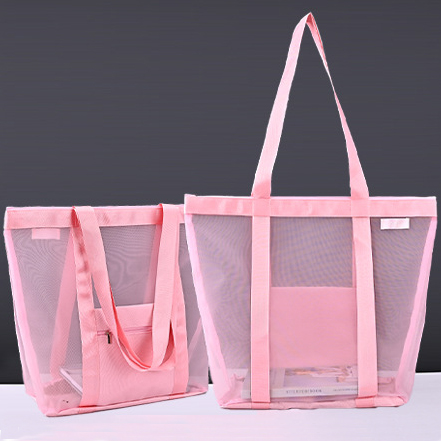
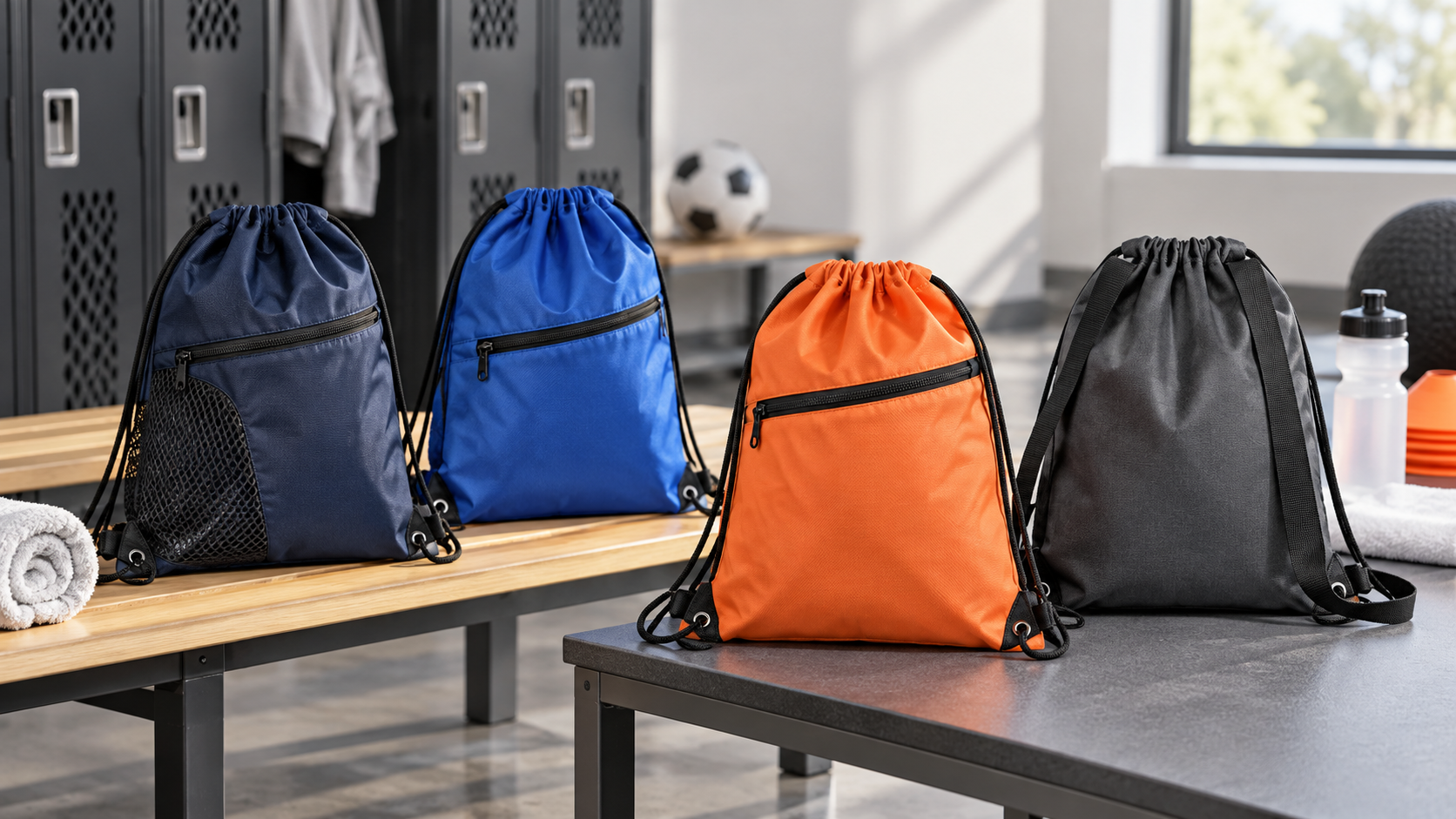
A real product-listing image from LUCKYSTAR's public Alibaba channel.It is used to discuss visible layout differences only; the photo does not prove fiber content, performance or certification.
Add Pockets and Closures Without Creating New Weak Points
Features can extend functional usefulness, but each extra seam, zipper end, rivet, snap or cut-out can introduce a stress concentration.
Place pockets outside the primary load path where possible
Pocket edges can become tear starters if they end at highly loaded zones. Specify corner reinforcement, pocket opening shape and stitch termination. Load the pocket during prototype evaluation; an empty-pocket inspection misses the forces created by keys, bottles or devices.
Protect closure ends
For zippers, review tape attachment, end stops, slider access and how the opening behaves when the bag is full. For snaps, check the surrounding reinforcement and the force needed to open them. A closure should not demand so much pulling force that users strain the panel.
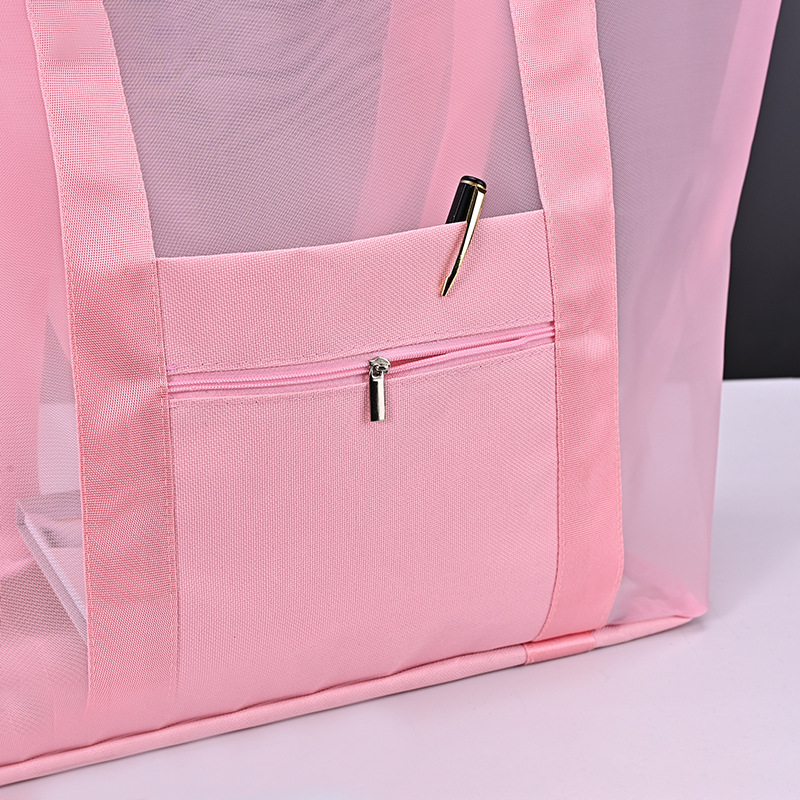
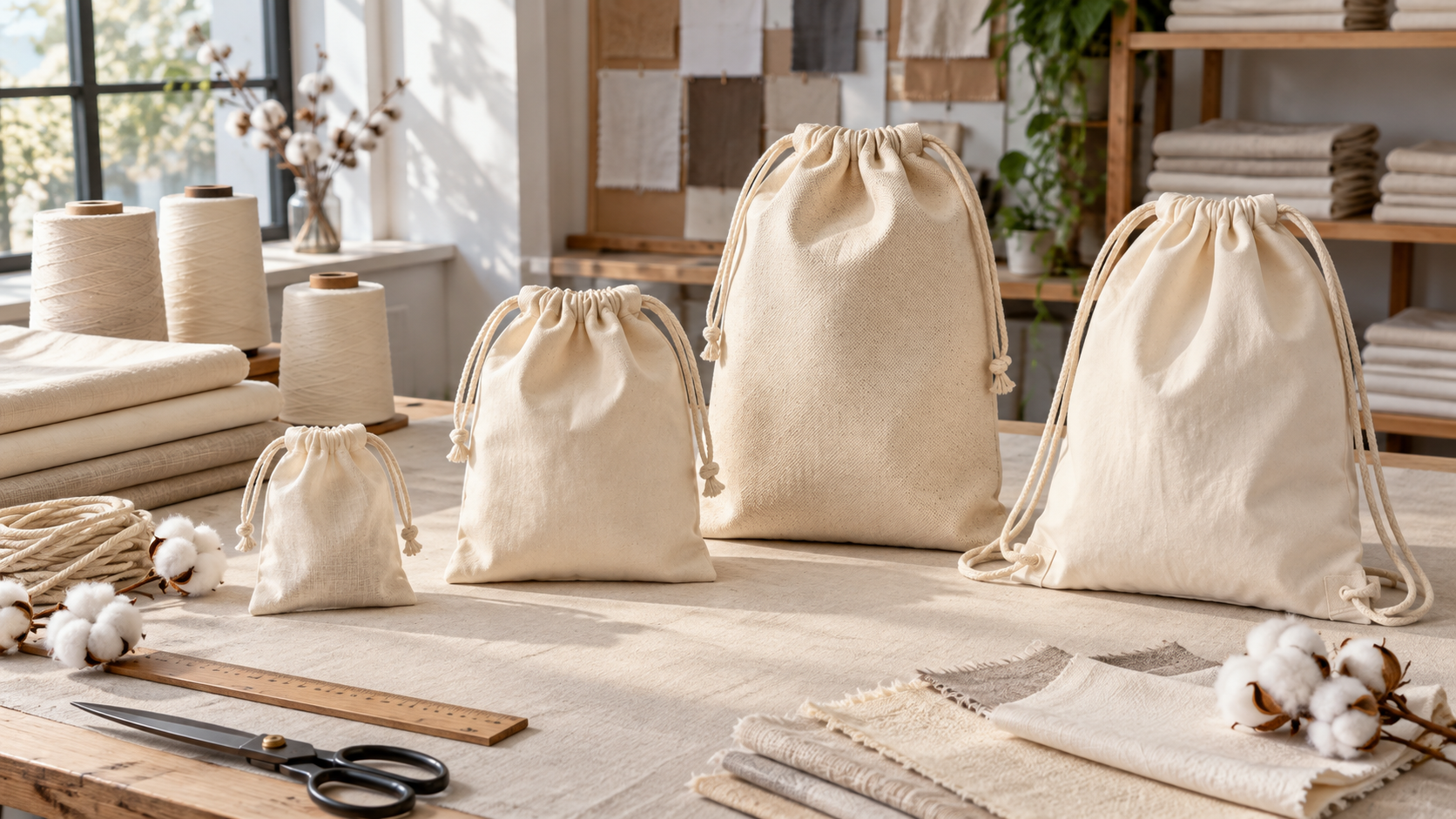
An actual sample-detail photo from LUCKYSTAR's public Alibaba channel. It demonstrates the type of junction that should be specified and inspected; it is not evidence of a universal construction or service-life result.
Use fewer features when they add little value
Unused pockets and decorative hardware add cost, mass and failure opportunities. Keep features that improve the intended service and remove those that do not. Simpler architecture can be easier to inspect, clean and reproduce.
Select Material and Weight by Failure Mode
Heavier is not automatically longer-lasting. A heavier body paired with the same narrow handle, weak seam or poorly matched coating can leave the actual failure point unchanged. It also increases material use and shipping mass. The design task is to use enough performance where the load path needs it.
For a deeper environmental framing, see How Material Weight Affects Shopping Bag Environmental Performance. For print behavior, use How Shopping Bag Materials Affect Print Quality.
| Material or construction family | Service-life opportunity | Failure modes to consider | Design response to evaluate |
|---|---|---|---|
| Cotton or canvas | Sewable, repairable in some constructions, comfortable hand | Abrasion, shrinkage, seam slippage, staining, print wear | Suitable weave/weight, seam allowance, prewash decision, care instruction and sample wash review |
| Polyester or nylon textile | Good strength-to-mass options and foldability | Heat sensitivity, coating or print damage, seam perforation, edge fray | Compatible needle/thread, edge finish, decoration process and abrasion review |
| Woven PP | Structured load distribution and potentially high reuse capability | Tape damage, lamination cracking, edge wear, seam or heat-seal failure | Controlled cut/edge method, handle attachment, laminate choice and flex review |
| Non-woven PP | Lightweight promotional and retail constructions | Local tearing, perforation growth, seam/ultrasonic joint failure | Reinforcement geometry, joining method and realistic load limit |
| Mesh panels | Visibility, ventilation and reduced panel mass | Snagging, edge tear, binding failure, pocket-junction stress | Bound edges, mesh opening selection, protected intersections and snag review |
| Coated or laminated constructions | Cleanability, shape or moisture resistance depending on system | Delamination, flex cracking, coating abrasion and difficult repair | Flex zones, compatible joining, coating-specific abrasion test and care limits |
These categories describe design considerations, not guaranteed properties. Material composition, weight, coating, test method and finished construction must be confirmed for each order.
Design Printing and Decoration to Age With the Bag
A bag can remain structurally sound yet leave service because the branding looks unacceptable. Decoration should therefore be treated as a wear surface.
Keep graphics away from high-flex folds, seam ridges and hardware where feasible. Match the print or decoration method to the substrate, expected bending, cleaning and abrasion. Large solid areas may reveal cracking or color change differently from fine line art. Embroidery adds needle penetrations and local stiffness, so its backing, placement and edge feel require finished-sample review.
Use the Shopping Bag Printing Quality Control Checklist to freeze color, artwork, placement and acceptance. If a program will reorder, also control the approved physical reference described in How to Maintain Logo and Color Consistency Across Shopping Bag Reorders.
Design for Cleaning, Drying and Storage
Care is part of the product architecture. If users are likely to wash a bag, confirm how the body, reinforcement, label, closure, print and hardware behave together. Do not apply a washable claim based only on the base fabric.
Choose a realistic care method
Some bags may be wipe-clean only; others may support a defined hand- or machine-wash procedure. ISO 6330:2021 describes domestic washing and drying procedures for textile testing, but it does not create one universal care cycle for every bag. The chosen procedure and pass criteria should match the finished product and market instructions.
Enable complete drying
Deep pockets, multilayer bases and closed-cell inserts can retain water. Consider drainage, removable inserts where appropriate, accessible seams and clear drying instructions. Odor or prolonged dampness can end practical use even without mechanical failure.
Protect fold zones
If the product is marketed as foldable, define the fold sequence and keep vulnerable graphics, rigid inserts and hardware away from the tightest fold where possible. Evaluate repeated folding on the finished sample.
Build Repairability in Only Where It Is Practical
Repairability can extend service life, but it must be realistic for the product value and user. Replaceable inserts, accessible seams or simple patch areas may help in some programs. Complex detachable systems can add more hardware, mass and failure points than they save.
Brands should identify which failures are repairable, who would repair them and whether replacement parts will exist. If no credible repair path exists, focus on preventing the likely failure and making care straightforward.
Prevent Overengineering
Overengineering can reduce actual reuse. Excessive stiffness may make a bag uncomfortable to fold or carry. Extra layers can increase mass, drying time, cost and material complexity. Oversized capacity can encourage loads that exceed handle or user comfort.
The right question is: Which design change reduces a documented failure risk without creating a larger usability, cost or environmental burden?
| Observed or anticipated failure | Root-cause questions | Targeted design options | Validation focus |
|---|---|---|---|
| Handle pulls away | Is the overlap too short, panel too weak, or stitch pattern poorly oriented? | Longer load transfer, local backing, changed attachment geometry | Handle zone after representative dynamic loading |
| Seam opens or slips | Is seam allowance, stitch type, fabric stability or thread/needle pairing unsuitable? | Revise seam construction and material/process combination | Seam appearance and force after conditioning |
| Base corner tears | Is a rigid item concentrating force? Is the corner too sharp? | Radius, patch, base panel or altered gusset geometry | Loaded carry and set-down cycles with real contents |
| Pocket corner tears | Does a loaded pocket end in a stressed panel zone? | Relocate, round opening, reinforce or reduce pocket size | Pocket loaded independently and with main compartment |
| Zipper jams or detaches | Is the opening distorted when full? Are end zones under tension? | Longer opening, protected ends, different tape/support | Operation under realistic fill and after flexing |
| Print cracks or rubs | Is the artwork on a fold or high-contact zone? Is the method compatible? | Move artwork, adjust ink/process or reduce solid coverage | Flex, rub and care sequence on finished bag |
| Bag is abandoned despite no break | Is it uncomfortable, unstable, hard to clean or inconvenient to store? | Adjust handle, capacity, base, care or fold system | User task observation, not strength data alone |
| Bag is unnecessarily heavy | Was reinforcement added without a failure hypothesis? | Remove low-value layers and reinforce only the load path | Equal-service comparison of mass, comfort and performance |
Prototype in Stages Before Bulk Production
A single attractive sample is not enough. Use staged samples to answer different questions.
1. Architecture sample
Confirm finished dimensions, capacity, gusset/base form, handle drop, pocket and closure layout. Use representative contents to find interference and instability early.
2. Construction sample
Confirm the actual material, seam, handle attachment, reinforcement, binding, closure and print combination. This sample should expose whether the components behave as one system.
3. Pre-production or golden sample
Freeze the approved design, artwork, color references, workmanship, labels and packing. Link it to a controlled specification revision. The Custom Shopping Bag Sample Development Process explains how to manage these approval gates.
4. Change-control sample
If material, hardware, thread, print process, reinforcement or construction changes, assess the effect before bulk continuation. A “ similar” component can move the failure point.
Validate the Finished Construction With a Risk-Based Matrix
Tests should answer the service brief and known failure modes. A method that characterizes fabric does not automatically validate the finished bag. Likewise, a single static hold does not represent months of carrying, cleaning, folding and abrasion.
| Design question | Possible primary method or framework | What it can inform | Important scope limit |
|---|---|---|---|
| Is a woven textile body strong enough in relevant directions? | ISO 13934-1:2013 strip method | Maximum force and elongation of applicable fabrics | Mainly for woven textiles; not normally used for several coated, non-woven or polyolefin-tape constructions |
| Is a straight sewn seam appropriately matched to a woven fabric? | ISO 13935-2:2026 grab method | Maximum force to seam rupture for applicable sewn seams | Does not represent every seam geometry, substrate or finished-bag load path |
| How resistant is an applicable textile to tear propagation? | ISO 13937-2:2000 trouser method | Single-tear force in a defined fabric specimen | Method suitability and direction must be confirmed; it is not a bag-life number |
| How does an uncoated textile surface resist abrasion? | ISO 12947-2:2016 Martindale specimen breakdown | Comparative abrasion behavior for applicable textiles, including some non-wovens | Not intended for coated or laminated fabrics |
| How does a coated surface resist abrasion? | ISO 5470-2:2021 | Martindale abrasion for rubber- or plastics-coated fabrics | Test conditions and end point must match the project |
| Will color transfer under rubbing? | ISO 105-X12:2016 | Color fastness to dry or wet rubbing | Does not cover every print failure or cleaning condition |
| How does a textile product respond to domestic washing/drying? | ISO 6330:2021 | Defined domestic wash/dry procedures for textile testing | A procedure must be selected and paired with product-specific acceptance criteria |
The standard editions and suitability should be reconfirmed when the test plan is issued. For finished bags, add project-specific loaded carry, lift, set-down, closure operation, pocket loading, folding and care sequences as appropriate. Pass/fail limits remain subject to the approved specification and written confirmation.
Convert the Design Into Production Controls
Longer life depends on repeatability. Translate each critical feature into something that can be checked at incoming, first-off, in-process and final stages.
- Incoming: approved material identity, construction, color and order-specific evidence.
- First-off: dimensions, handle position, seam architecture, reinforcement, closure function, artwork and color.
- In-process: seam allowance, binding coverage, stitch continuity, handle attachment, gusset symmetry and closure ends.
- Final: appearance, cleanliness, odor where relevant, dimensions, function, packing and agreed performance sampling.
- Shipment record: approved sample reference, inspection result, deviations, corrective action and packing evidence.
The Custom Shopping Bag Quality Control Checklist gives buyers a release framework. Printing defects should be handled through the separate guide to common shopping bag printing defects and prevention.
Company-claim boundary: the following section is LUCKYSTAR publisher self-description. It does not prove a universal service life, load capacity, durability, washability, repairability, test result, material composition, environmental benefit or current material/capacity availability for a specific bag. Design choices, samples, tests, acceptance criteria, claims, MOQ, price, schedule and delivery are subject to the actual use case, final specification and written confirmation.
Why Choose LUCKYSTAR for Longer-Life Shopping Bag Development?
LUCKYSTAR supports custom shopping bag projects across material selection, structure, decoration, sampling, production coordination, quality review and packing. The useful advantage for service-life design is not a generic “ durable” label; it is the ability to keep the brief, sample and inspection criteria connected.
One brief across material, structure and branding
LUCKYSTAR's public range includes cotton/canvas, jute, mesh, non-woven, polyester/nylon, PVC, cooler and paper bag constructions. That range can support comparison of alternatives, but the final material, weight, coating, construction and claims are always order-specific.
Sample approval gates before bulk release
The team can coordinate requirement capture, artwork and color review, construction samples, pre-production approval and change control. This helps buyers find weak interfaces before a large order is committed.
Quality checkpoints tied to the approved design
Incoming, first-off, in-process and final checks can be aligned with the agreed critical-to-quality points: dimensions, seams, handle attachment, closures, print, packing and project-specific tests. Scope, sample size and acceptance criteria should be confirmed in writing.
Practical sourcing support without blanket claims
LUCKYSTAR does not need to promise one universal load, reuse count, MOQ, lead time or certification to create a credible program. Instead, buyers can request evidence for the named material, product, site and order. Commercial terms, testing, certification, capacity and delivery remain subject to specification and written confirmation.
For wider supplier governance, read the Custom Bag Manufacturer Guide and How to Choose a Custom Shopping Bag Manufacturer.
RFQ Checklist for a Longer-Life Shopping Bag
Send the following with your request:
- Bag type, finished dimensions and target capacity.
- Representative contents, total load and any sharp, wet or rigid items.
- Carry mode, distance, environment and expected storage/folding.
- Material preferences plus any finished-mass target.
- Handle width, drop and comfort requirement.
- Gusset/base, pocket, closure and reinforcement concept.
- Artwork files, color references, print location and wear expectations.
- Cleaning/care expectation and labeling market.
- Target service-life statement, if any, with the evidence you intend to collect.
- Required sample stages, tests, inspection level, packing and delivery destination.
If you also need to communicate how many uses are required for an environmental comparison, read How Many Times Must a Reusable Shopping Bag Be Used?. Physical durability creates the opportunity for reuse; it does not prove that users will achieve the target or that one bag has a lower impact in every context.
Frequently Asked Questions
Does a heavier shopping bag always last longer?
No. Higher weight may improve some properties, but the first failure may still occur at a handle attachment, seam, base corner, closure or print. Compare finished constructions under equal service conditions.
What is the most important reinforcement area?
There is no universal location. Handle attachments, base corners, side/base intersections, pockets and closure ends are common candidates. The correct priority follows the bag's load path and representative contents.
Should shopping bag handles run all the way under the base?
That can distribute load in some designs, but it also adds material and seams. It is one architecture option, not an automatic requirement. Evaluate it against a targeted attachment design for the defined load and usability goals.
Can a static load test prove long service life?
No. It may reveal immediate weakness, but it does not represent dynamic lifting, walking, set-down, abrasion, closure operation, folding, cleaning or user comfort. Use a risk-based sequence on finished samples.
How should a brand specify a service-life claim?
Define the exact product, load, cycle, environment, care method, failure criteria and evidence. Avoid turning an internal sample result into a blanket claim for all bags. The guide to defensible sustainability claims for reusable shopping bags explains the evidence boundary.
Is a reusable bag automatically more sustainable?
No. Material production, finished mass, achieved reuse, cleaning, transport and end-of-life all matter. The UNEP Life Cycle Initiative's review of bag LCAs also emphasizes that results depend on assumptions and actual reuse. See Recyclable vs Reusable Shopping Bags for the sourcing decision.
When should the design be frozen?
Freeze it after the representative construction sample, artwork/color approval and required performance evidence meet the agreed criteria. Any later change to a critical material or construction should trigger documented review.
Sources and Further Reading
- UNEP Life Cycle Initiative: Single-use plastic bags and their alternatives— recommendations from life-cycle assessments
- ISO 13934-1:2013— maximum force and elongation by strip method
- ISO 13935-2:2026— maximum force to seam rupture using the grab method
- ISO 13937-2:2000— tear force of trouser-shaped test specimens
- ISO 12947-2:2016— Martindale abrasion specimen breakdown
- ISO 5470-2:2021— abrasion resistance of coated fabrics
- ISO 105-X12:2016— color fastness to rubbing
- ISO 6330:2021— domestic washing and drying procedures for textile testing
Develop a Shopping Bag Around Its Real Service Conditions
Share your representative contents, target load, dimensions, carry mode, material preferences, print artwork, care expectation and intended market. LUCKYSTAR can help turn those inputs into an order-specific sample and quality plan for your custom shopping bag project.

Click the standard GET QUOTE image to send your project details. Specifications, testing, commercial terms, certification scope and delivery are subject to written confirmation.
Request a service-life design review
Send the actual contents, carry pattern and failure boundary with the proposed construction so design, staged samples, tests and inspection criteria refer to the same service target.
Review LUCKYSTAR custom shopping bag options, then send your longer-life bag brief through the contact form or Email a project brief. The email link opens a draft for your review before sending.
Materials, construction, service-life targets, load/test performance, care response, claims, availability, price, MOQ, packing, schedule and delivery terms are subject to order-specific development, final specification and written confirmation.