A custom tote bag MOQ is the smallest currently workable production plan in which material booking, colour, artwork, components, sewing, quality control and packing can be coordinated for the released specification. There is no universal tote MOQ. A stock-decoration route, cut-and-sew route and custom-dyed or special-component route have different controlling inputs. Any numeric bands and allocation examples below are editorial planning scenarios, not market statistics, supplier commitments or standing LUCKYSTAR quotations. Obtain a dated written quote for the exact style and SKU split.
This guide focuses only on tote bags and on a question that a broad MOQ article cannot answer in enough detail: how should one tote purchase order be divided among body colors, handle colors, artwork versions and packaging variants? For a comparison across backpacks, cosmetic bags, coolers and other categories, read What Is the Typical MOQ for Custom Bags?. For the wider supplier-selection framework, return to the Custom Bag Manufacturer Guide. Buyers who already know they need totes can review our custom tote bag product options alongside the planning method below.
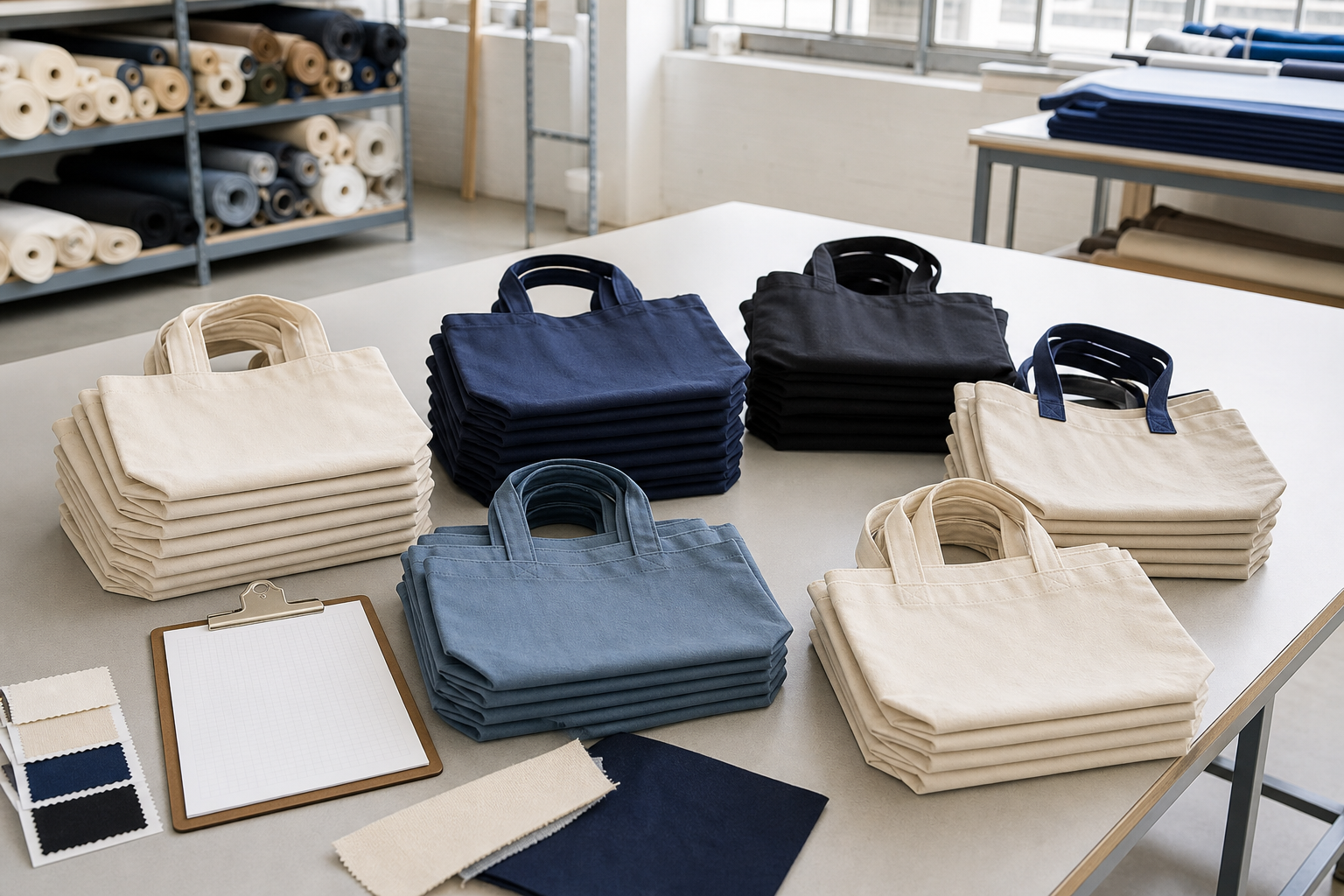
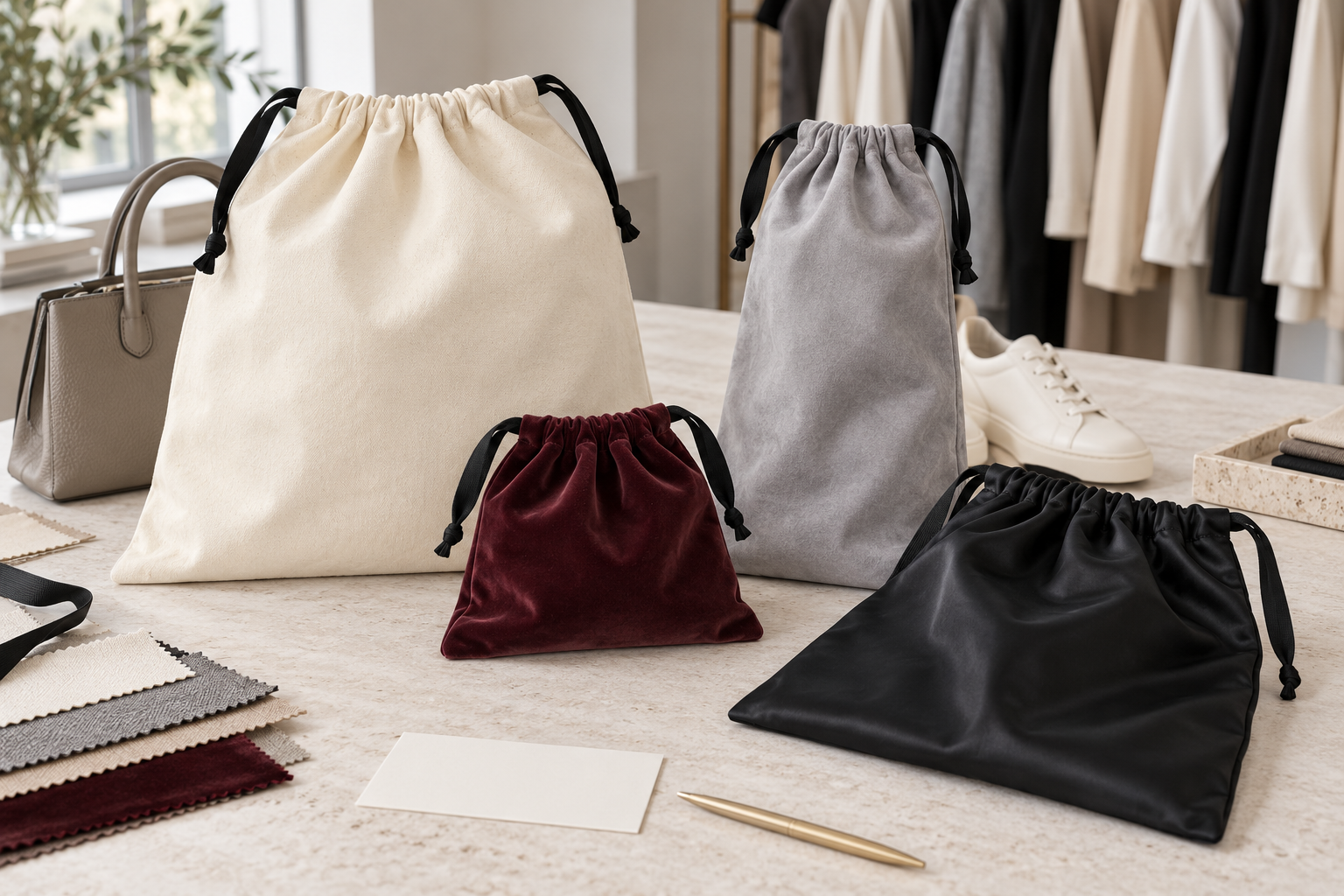
One total quantity can become several smaller production lots once colors, artworks and components are separated.
Need the controlling MOQ identified for your tote? Send the finished construction, fabric/colour route, handles and trims, artwork by position, quantity by colour/artwork/market, labels and packing, sample requirements, destination and required arrival date. LUCKYSTAR can return its own dated quote with minimum scope, allowed splits, assumptions and one lower-commitment alternative where feasible.
Custom tote bag MOQ: the short answer
Begin with the route that matches the product. Applying a logo to an available tote is different from cutting a new size from stock canvas, and both are different from commissioning a custom-dyed, lined retail bag. The more upstream decisions the order controls, the more separate minimums have to align.
| Tote program | Indicative planning range | What normally stays standard | Best fit |
|---|---|---|---|
| Available tote + one simple logo | About 100-300 pieces | Size, fabric, construction and body color | Events, short campaigns and early market tests |
| Cut-and-sew tote using stock fabric | About 500-1,000 per style/color | Fabric color, webbing and common components | Private-label programs that need their own dimensions and details |
| Custom-dyed cotton or canvas tote | Often 1,000+ per color | Only inputs that can be matched from stock | Brand programs where a precise color matters |
| Lined or structured retail tote | About 500-1,000+ per style/color | Common zipper, lining, webbing and hardware where possible | Retail collections needing pockets, closure and a refined interior |
MOQ is a stack of minimums, not one number
A tote factory can sew a short run, but it cannot always buy half a roll of a special fabric or ask a trim supplier to color-match twenty zipper lengths. The quoted bag MOQ is therefore usually the highest workable floor among several linked inputs. Finding that controlling input is more useful than repeatedly asking for a lower headline number.
| MOQ layer | What it applies to | Why totes are affected | Question for the supplier |
|---|---|---|---|
| Style MOQ | One pattern and construction | A flat tote and a zip-top tote require different patterns and sewing routes | Which changes create a new style rather than a shared option? |
| Fabric MOQ | Roll, finish or supplier booking | Canvas width and usable yield determine how many tote panels a roll supports | Is this fabric in stock, mill-stocked or made to order? |
| Color MOQ | Each body, lining or handle color | Custom dyeing and shade control happen by batch | Can stock colors share the order total? |
| Artwork MOQ | Each logo version, print layout or embroidery file | Every version creates setup, registration and inspection work | What is the minimum per artwork and print position? |
| Component MOQ | Webbing, zipper, label, snap or packaging | A simple bag can be held up by one custom-color trim | Which stock component is closest to the design? |
| Packing MOQ | Hangtag, insert, carton marking or retail sleeve | Printers may have their own efficient batch sizes | Can the pilot use a standard label or shared packing format? |
Why “1,000 pieces total” can still be too fragmented
Suppose a buyer wants 1,000 totes. If all pieces share one construction, one stock fabric and one artwork, the order may form a stable run. If the same total is split into four body colors and two campaign logos, it becomes eight variants of 125 pieces. Fabric booking, print setup, color sorting and packing now behave like several short runs, even though the purchase order still says 1,000.
| Allocation of 1,000 totes | Operational result | Likely feasibility | Better adjustment |
|---|---|---|---|
| 1 style x 1 stock color x 1 artwork | One coherent material and decoration run | Usually the easiest plan | Keep one approved specification and consistent packing |
| 1 style x 2 stock colors x 1 artwork | Two 500-piece body-color lots | Often workable when both fabrics and handles are available | Use the same logo size, ink system and packing |
| 1 style x 4 custom colors x 1 artwork | Four dye lots of 250 pieces | Frequently conflicts with dyeing minimums | Reduce colors or move the first run to stock shades |
| 2 styles x 2 colors x 2 artworks | Eight lots of 125 pieces with two sewing routes | Complex and relatively expensive | Launch one hero construction, then add variants after demand is proven |
The tote construction changes the workable minimum
A lightweight conference tote may use two body panels, hems and handles. A lined retail tote can add a base panel, zipper gusset, lining, pocket, reinforcement, label and structured insert. More operations do not automatically mean an enormous MOQ, but they increase pattern preparation, component coordination and line changeover. A very short complex run can finish before the sewing team reaches a stable rhythm.
| Construction | Main MOQ pressure | First-order simplification | Do not remove |
|---|---|---|---|
| Flat promotional tote | Fabric color and print setup | Stock natural cotton with one artwork | Handle reinforcement appropriate to the planned load |
| Gusseted shopping tote | Panel yield, seam alignment and stronger handles | One size and one gusset construction | Base and side seam strength |
| Heavy canvas tote | Fabric roll size, cutting effort and machine suitability | Mill-stocked canvas and stock webbing | Needle, stitch and reinforcement choices validated in sampling |
| Lined zip-top tote | Outer/lining coordination, zipper color and extra operations | Stock zipper tape and a simple open pocket | Closure function, lining attachment and stress-point control |
If construction is still open, compare the practical differences in Canvas vs Cotton Tote Bags and then select a measurable specification. For heavier programs, our fabric weight guide for custom totes helps separate useful durability from unnecessary material.
Fabric roll, dye-lot and shade decisions
Fabric often sets the real floor. A stock natural cotton may be available by the roll, while a precise Pantone-style body color may need a new dye batch. The mill's minimum can exceed the number of bags the buyer wants. Even when the factory agrees to sew fewer pieces, the quote may still include a full material booking, or the buyer may need to approve surplus fabric for a repeat order.
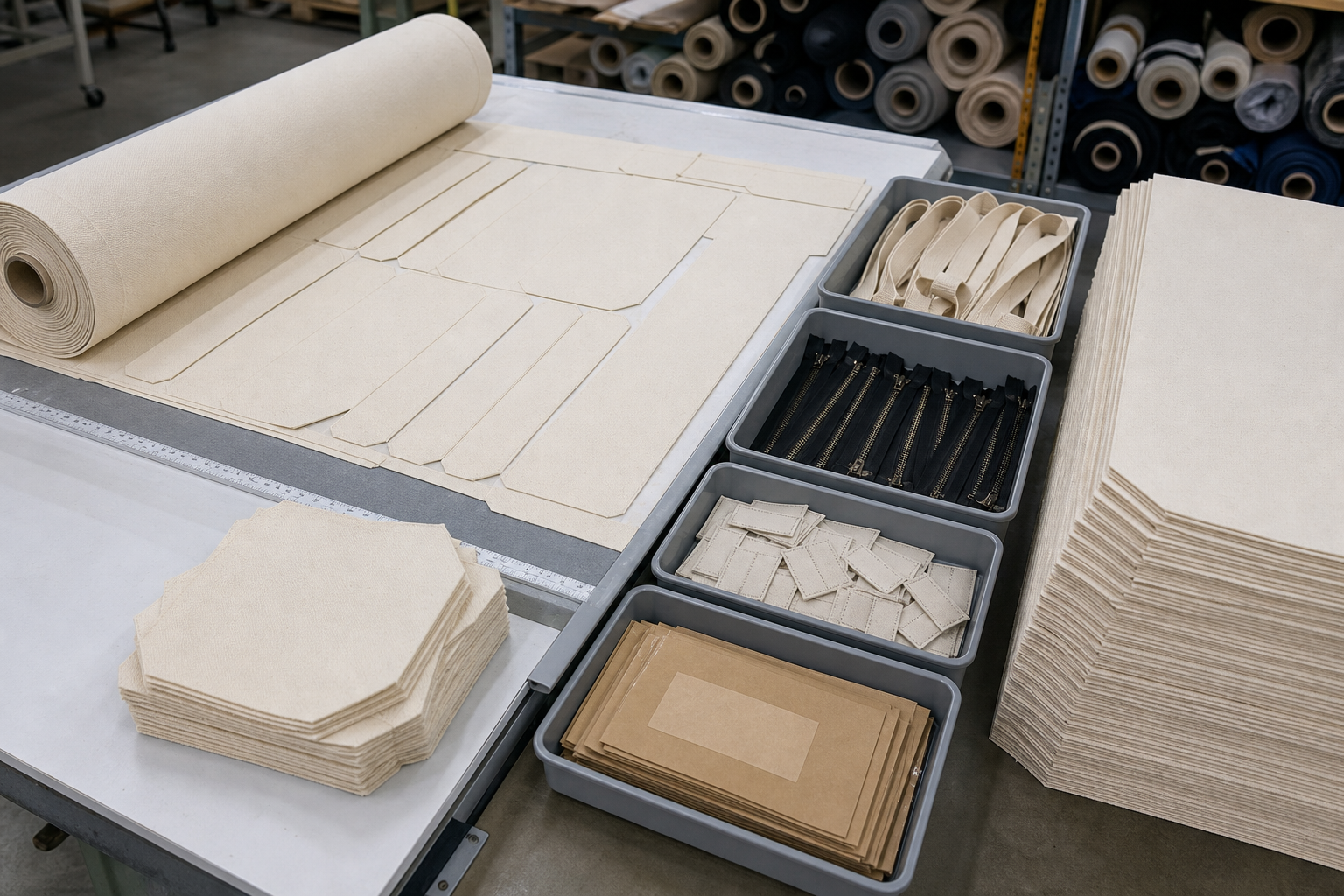
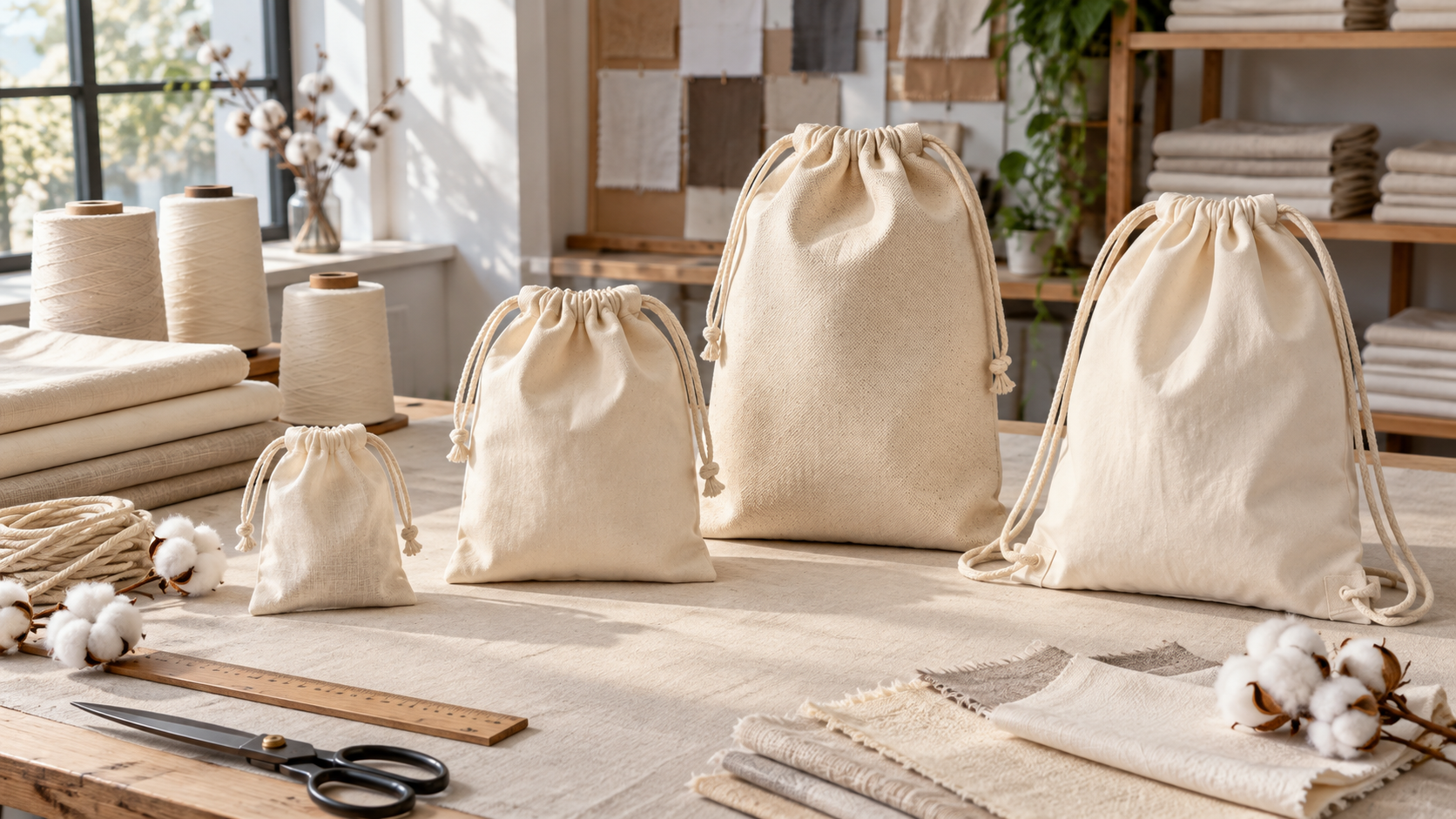
The bag factory's sewing minimum is only one part of the plan; fabric, webbing, zipper, label and packing suppliers can each create a separate floor.
| Material route | MOQ effect | Color control | Commercial trade-off |
|---|---|---|---|
| Natural greige cotton or canvas | Often supports the lowest cut-and-sew floor | Natural shade can vary slightly by lot | Simple and flexible, but not a precise dyed brand color |
| Supplier stock-dyed fabric | Can support a moderate order if the roll is available | Choose from an existing shade card | Faster and lower risk, with a limited palette |
| Custom-dyed fabric | Normally raises the per-color floor | Lab dip and bulk shade approval required | Better brand match, with more lead time and material commitment |
| Special coating or certified fabric | Depends on the mill, finish and documentation lot | Finish and shade must be approved together | Performance or claim value must justify the added constraint |
Artwork and printing can create a second MOQ
A buyer may keep one tote body but change the graphic for several stores, countries or events. That reduces pattern changes, but it does not make every decoration version free to split. Screen printing has screens and registration; heat transfer has artwork preparation and transfer production; embroidery has digitizing, thread changes and machine time. The appropriate method depends on fabric, artwork, durability and quantity, not only the smallest advertised minimum.
| Decoration choice | What usually creates the floor | MOQ-friendly approach | Approval evidence |
|---|---|---|---|
| Screen print | Screens, ink preparation, registration and cleanup per artwork | One or two colors, one position, shared artwork | Print strike-off on the production fabric |
| Heat transfer | Transfer sheet production and pressing setup | Use for suitable detailed or multicolor art after adhesion testing | Appearance, wash/abrasion and peel checks as relevant |
| Embroidery | Digitizing, stitch count, hooping and machine time | Control the embroidered area and stitch density | Sew-out on the actual panel with backing |
| Woven label or patch | Separate label supplier's production batch | Use one standard label across several tote colors | Approved label sample and attachment location |
For method-specific planning, see Custom Tote Bag Printing Methods and Screen Printing vs Heat Transfer for Tote Bags. Those guides address print behavior; this article keeps the decision tied to the order split.
How to lower MOQ without weakening the tote
A responsible low-MOQ plan standardizes inputs that customers do not need to notice while protecting the features they will notice in use. It may use a stock body color, shared webbing and standard packing, then invest in the correct size, handle drop, logo and reinforcement. Lowering stitch density, reducing seam allowance or removing stress-point reinforcement simply moves cost into failures and complaints.
| Change | Why it may lower the workable MOQ | What the buyer gives up | Risk control |
|---|---|---|---|
| Choose a stock body color | Avoids a separate dye lot | Exact custom shade | Approve a physical swatch under agreed lighting |
| Use one construction across colors | Keeps pattern and sewing setup common | Style variation | Differentiate with controlled artwork or packing |
| Share one handle and lining color | Consolidates webbing and lining purchasing | Fully tonal combinations | Approve the contrast as part of the design |
| Use standard zipper and hardware | Avoids custom component batches or molds | Exclusive trim finish | Confirm function, pull strength and corrosion needs |
| Simplify retail packing | Avoids a printer-driven minimum | Elaborate unboxing | Keep legal, barcode and protection requirements intact |
Pilot order, sample and bulk MOQ are different
A development sample proves dimensions, proportion, material hand, construction and branding. It is usually made individually and priced as development work; it does not prove that a 100-piece bulk run can use the same purchasing conditions as 1,000 pieces. A pilot order is commercial stock made under an intentionally limited specification, often using available materials. Bulk MOQ is the floor for the repeatable, approved production plan.
| Stage | Purpose | Typical quantity logic | What it does not prove |
|---|---|---|---|
| Development sample | Resolve design and construction | One or a few individually made pieces | Bulk material availability or line efficiency |
| Pre-production sample | Approve production-intent materials and workmanship | Small approval set before the run | That every variant can ignore its own material floor |
| Pilot order | Test market demand with controlled customization | Short commercial run using standard inputs where possible | The economics of a fully custom future range |
| Bulk order | Repeat the approved specification at scale | Quantity supports material booking and a stable production route | Future availability unless repeat-order conditions are documented |
See our Custom Bag Sample Development Process before treating a prototype as the final production reference.
MOQ, unit cost and inventory risk
A lower order protects cash and limits unsold stock, but fixed setup is spread over fewer pieces and short-run material buying can be inefficient. A larger order may improve unit economics without improving total economics if demand is uncertain. Ask for price tiers at quantities that correspond to a real sales plan, then compare landed cost, storage, markdown exposure and the cost of a stockout.
| Quantity position | Likely unit-cost pattern | Inventory effect | Best decision basis |
|---|---|---|---|
| Below normal production MOQ | Highest; setup or short-run surcharge may apply | Lowest commitment | Use only if learning value justifies the premium and inputs remain safe |
| At the workable MOQ | Balanced first commercial level | Moderate commitment | Demand forecast, margin and realistic sell-through period |
| Next efficient tier | May improve when a full roll or longer run is used | More cash and storage required | Total saving must exceed carrying and markdown risk |
| Repeat program | Can support better planning and negotiated tiers | Requires version and replenishment control | Proven sales data and written repeat-material strategy |
For the price side of the same decision, use How Much Do Custom Tote Bags Cost?. It explains why an apparently cheaper tier may still carry a larger commercial risk.
What to send for a reliable tote MOQ quote
“Canvas tote, 500 pieces, logo attached” leaves too many variables open. A factory may answer quickly, but the minimum and price can change as soon as color, weight, gusset, handle, logo size or packing is clarified. A compact RFQ lets the supplier identify the controlling MOQ and propose one lower-commitment alternative without guessing.
| RFQ item | Information to provide | Why it changes MOQ | Useful evidence |
|---|---|---|---|
| Finished tote | Width, height, gusset, handle drop, intended load and use | Defines pattern, fabric yield and reinforcement | Dimensioned sketch or tech pack |
| Material | Fiber, weight, color, finish and performance need | Defines roll, dye-lot and supplier minimum | Reference swatch plus acceptable stock alternatives |
| Construction | Lining, pockets, closure, base and handle attachment | Defines components and sewing route | Annotated reference photos and measurable details |
| Branding | Artwork, size, colors, positions and preferred process | Defines setup per version | Vector artwork and decoration brief |
| Quantity split | Pieces by style, body color, handle color, artwork and market | Reveals the true production lots | SKU allocation table |
| Packing and destination | Individual/bulk packing, labels, country, postcode or port and Incoterm | Packing suppliers and delivery plan can set separate floors | Packing specification and required delivery window |
Company-claim boundary: the following section is LUCKYSTAR publisher self-description and a commercial service proposal. It is not independent proof of factory ownership, stock, mill access, component availability, MOQ, price, capacity, sample or bulk quality, storage, lead time or delivery. Legal seller, nominated production sites, material and supplier terms, allocation, samples, packing and schedule depend on the exact order and written confirmation.
How LUCKYSTAR describes its tote MOQ review
LUCKYSTAR states that it can review an RFQ and prepare an order-specific proposal showing which current input controls its quoted minimum.
- Separate the route: identify available-tote decoration, stock-material cut-and-sew or made-to-order material and component sourcing.
- Build the allocation: divide quantity by construction, body/lining/handle colour, artwork, print position, label, pack and destination.
- Name the controlling input: connect the quoted minimum to usable material yield, dye or finishing batch, trim, packaging, decoration setup or production changeover.
- Compare alternatives: keep one released product brief while testing stock colours, shared components, fewer artwork versions or phased launches.
- Write the commercial scope: record valid date, minimum basis, allowed splits, surplus ownership, substitutions, sample gates, price tiers and repeat-order assumptions.
Review the custom tote bag range and cost guide, then send the SKU matrix for a dated order-specific response.
Questions to ask before accepting a low MOQ
| Question | What a useful answer should reveal | Warning sign |
|---|---|---|
| Does the MOQ apply per order, style, color or artwork? | A written allocation with permitted splits | “Flexible” without a variant breakdown |
| Which input creates the minimum? | Fabric, dyeing, print, trim, sewing or packing identified clearly | No explanation of how a very small run will be produced |
| Are the bulk materials the same as the sample? | Material codes, weight, color approval and substitution control | Unapproved “similar” material allowed after order |
| What surcharge or limitation comes with the low quantity? | Separate setup, material, sampling and packing assumptions | A low unit price with missing scope |
| How is quality checked on a short run? | Defined measurements, workmanship, branding and packing checks | Quality inspection dismissed because the order is small |
Use the Custom Bag Quality Inspection Checklist to keep the acceptance standard independent of quantity. For timing, How Long Does Custom Bag Production Take? shows why material and approval stages should be settled before a delivery promise is accepted.
Frequently asked questions
Can I order 100 custom tote bags?
Possibly, but 100 pieces is a request rather than a standing offer. It is more feasible when a current available tote or proven construction, stock material and trim, one body colour, simple branding and standard packing match the brief. A new cut-and-sew size, custom dye, several colour or artwork variants, special components or retail packout creates separate minimums. Require a dated quote that names the route, exact allocation, substitutions, surcharge if any and repeat-order conditions.
Is tote bag MOQ per color?
It may be. Stock colors can sometimes share an order total, but custom-dyed body fabric normally has a minimum per shade. Handle, lining and zipper colors may introduce their own supplier minimums. Ask for the allowed split in writing.
Can different logos share the same MOQ?
The bag construction may share one sewing run, but each artwork version can create its own decoration setup and per-version floor. Provide an artwork allocation table so the factory can quote the actual split.
Does a heavier canvas always mean a higher MOQ?
Not always. If the heavier fabric is a regularly stocked item, it may be available at a workable quantity. A lighter but custom-dyed or specialty-finished fabric can have a higher material minimum. Availability matters alongside weight.
Can surplus custom fabric be stored for a repeat order?
Sometimes, subject to written ownership, storage period, identification, shade-lot risk and future usability. Do not assume indefinite free storage. Confirm how much surplus is expected, who owns it and what happens if the next order changes.
Is the lowest MOQ the best supplier offer?
No. A low number has value only when the material, construction, branding, quality controls, packing and delivery terms are clear. Compare the full specification, landed economics and repeatability, not the headline minimum alone.
Find the controlling minimum behind the tote program
Use one released product brief and SKU matrix to expose the actual lots. Compare available, stock-material and made-to-order routes on minimum scope, allowed splits, total landed cost, evidence, approval gates and repeatability.

Review LUCKYSTAR custom tote bag options, then send the specification and SKU split through the contact form or Email a project brief. The email link opens a prefilled draft for your review before sending.
Legal seller and facility, material and component availability, MOQ, allowed splits, samples, tests, inspection, price, surplus handling, packing, schedule and delivery terms are subject to current supplier terms, final specification, quotation, contract and written confirmation.