
Last reviewed: September 24, 2026
Buyer Quick Answer
Choose a bulk sports caps supplier by asking for evidence that the cap architecture fits the activity and can be repeated in production. Freeze the crown profile, panel geometry, visor shape, fabric, ventilation, sweatband, closure, fit range, decoration surface, tolerances, packing method and approved physical sample before bulk release.
This page owns sports-cap product engineering and bulk consistency. For embroidery digitizing and stitch execution, use our embroidered caps wholesale guide. For multi-market brand rollout, see the global custom headwear framework. For general supplier selection, use the baseball caps supplier guide.
Send Your Sports Cap Specification
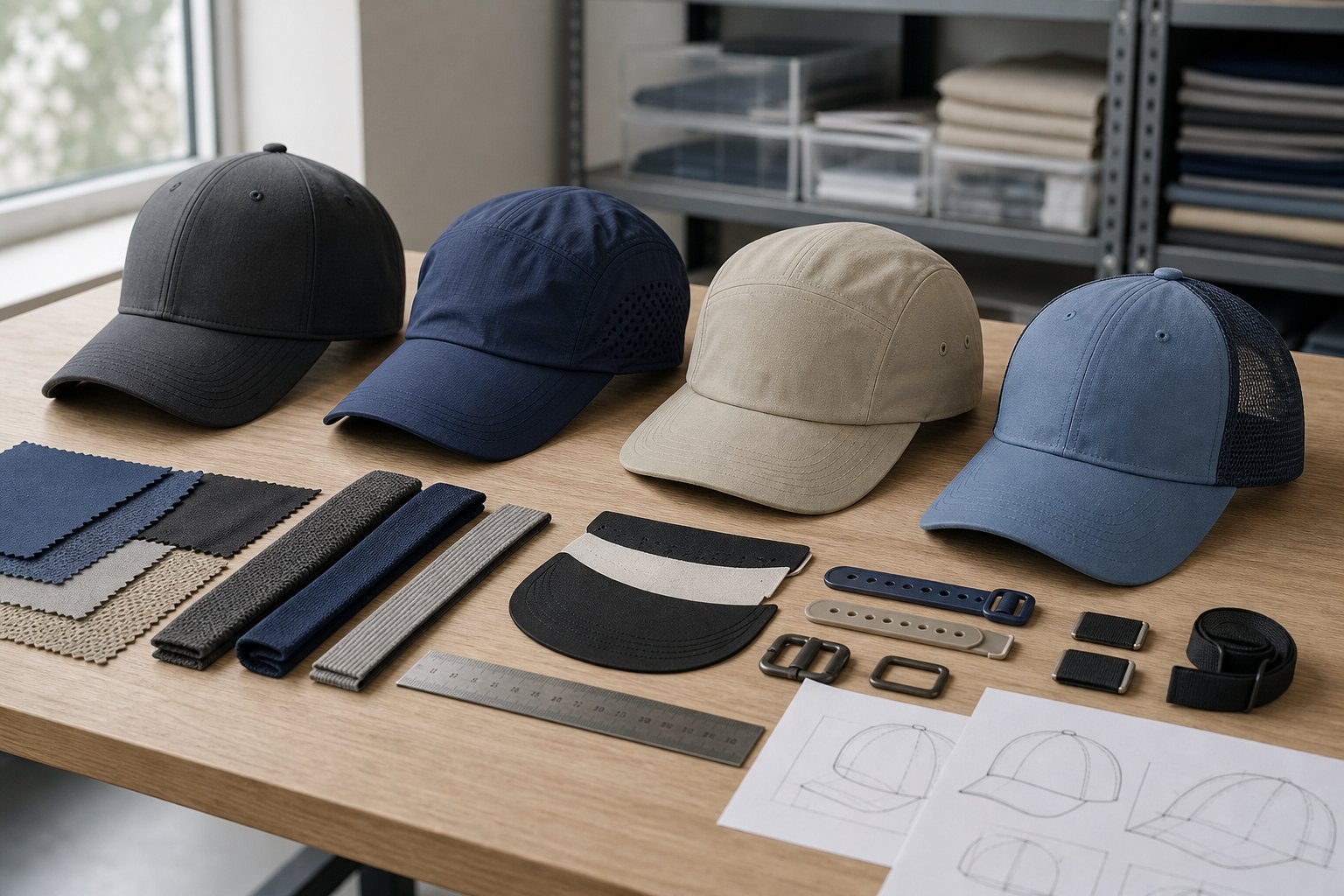
Define the Sporting Use Before Choosing a Cap
A team sideline cap, running cap, golf cap, supporter cap and retail lifestyle cap do different jobs. State who will wear it, the activity level, climate, expected wear duration, care route, whether it must fit under other equipment, and whether it is an on-field item or merchandise. A standard baseball silhouette may suit a supporter program but feel too heavy for high-output running.
Do not make unverified claims about sun protection, cooling or safety. If the program requires regulated performance, define the destination-market standard and test method before using the claim. A sports cap is not automatically personal protective equipment.
Keep Related Headwear Programs Distinct
| Buyer decision | This guide controls | Related page |
|---|---|---|
| Sports-cap body | Use conditions, crown, visor, closure, sweatband, fit and bulk QC | This page |
| Embroidery | Cap surface compatibility only | Artwork-to-stitch control |
| Global program | One approved product specification | Market variants and rollout governance |
| Knit headwear | Not covered by a woven sports-cap pattern | Beanie yarn, gauge and fit guide |
Choose the Crown Architecture Before the Logo
The crown determines silhouette, fit and available decoration surface. Panel count alone is not enough: front-panel width, seam position, crown height, depth, buckram or other reinforcement, top-button construction and panel curvature all change how the cap sits.
| Architecture | Useful when | Approve physically | Typical risk |
|---|---|---|---|
| Structured six-panel | Defined front shape and traditional team look | Front seam, support, profile and crown depth | Too rigid, too tall or center-seam artwork conflict |
| Unstructured six-panel | Soft casual fit and packability | Collapse behavior, front shape and seam balance | Weak logo support or inconsistent silhouette |
| Five-panel | Wide uninterrupted front area and lower profile | Panel angle, side depth and visor balance | Shallow fit or excessive side pressure |
| Performance / running cap | Low weight, soft visor and ventilation priorities | Panel stretch, drying route and pack recovery | Distortion, heat sensitivity or weak closure hold |
Review Fit Range and Closure Options
Request a Cap Architecture Review
Specify the Visor as a Measurable Component
Record finished visor length, width, thickness, insert type, stitch rows, curvature and under-visor fabric. A phrase such as "pre-curved" does not define a repeatable shape. Use an approved physical curve, side-view photograph and simple curve template. Check that the visor aligns with the center of the crown and that left and right edges are symmetrical.
For soft performance caps, confirm how the visor recovers after folding or packing. For firm inserts, confirm whether shipping pressure can create a permanent bend.
Choose Fabric and Ventilation by Evidence
Cotton twill, polyester microfiber, nylon, stretch woven fabric and mesh create different weight, hand feel, airflow, recovery and decoration behavior. Record composition, construction, weight, finish and approved color. Perforation, eyelets and mesh panels must be positioned without weakening seam margins or interfering with decoration.
For active-use claims, specify the property and test rather than using general language. AATCC's official standards list includes methods for liquid moisture management, vertical and horizontal wicking, drying time and water repellency. Select only the method relevant to the intended cap and test the actual fabric construction. See the AATCC textile test-method directory.
Engineer the Sweatband With the Crown
The sweatband affects comfort, internal circumference, stability and care. Specify width, composition, stretch, thickness, seam position and color. A thicker or less elastic replacement can make an otherwise identical cap feel smaller. If moisture management is required, test the proposed sweatband and shell together; a wicking band cannot compensate for a non-breathable crown by itself.
Build a Fit System, Not One Sample Size
Adjustable does not mean universal. Define the target head-circumference range, crown depth, pressure preference and remaining closure engagement at the range limits. Fit the cap on several relevant wearers or head forms and review front, side, rear and top views.
| Closure system | Buyer advantage | Sample check | Bulk risk |
|---|---|---|---|
| Plastic snap | Clear adjustment positions | Engagement, edge comfort and crack resistance | Brittle tabs or inconsistent hole spacing |
| Fabric strap and buckle | Fine adjustment and clean appearance | Slip resistance, corrosion risk and tuck-in path | Strap creep or buckle variation |
| Hook-and-loop | Fast adjustment | Edge softness and holding area | Lint pickup or reduced hold |
| Stretch-fit / fitted | Closed-back appearance | Small, middle and large fit points | Size gaps or poor elastic recovery |
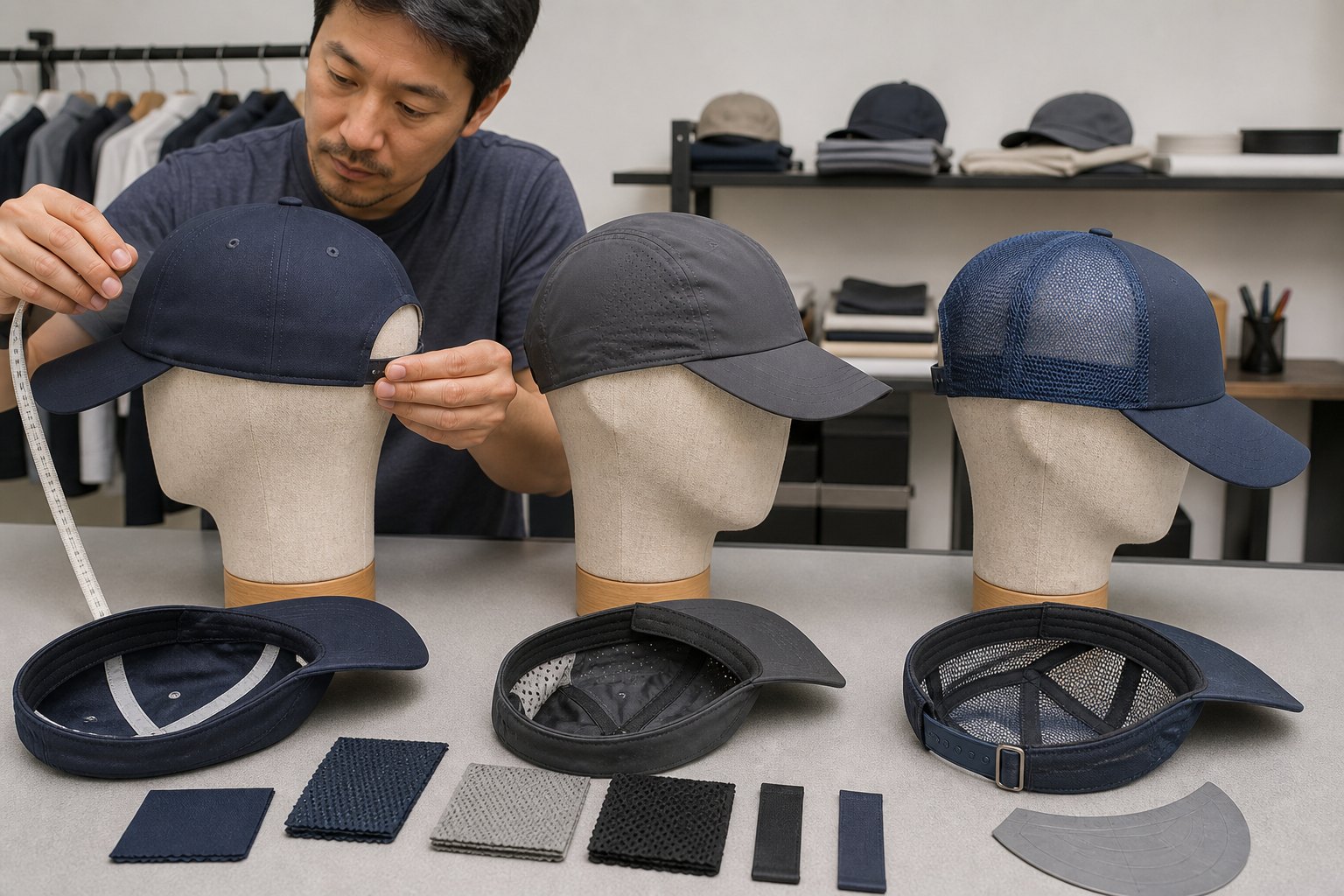
Match Decoration to the Finished Cap Surface
Choose embroidery, patch, print or transfer only after the cap body is approved. Front seams, crown curvature, perforations and soft fabrics affect placement and support. Define the finished decoration size, location, color reference and relationship to panel seams. Approve side and back branding as separate locations.
For digitizing, underlay, density, hooping and sewout approval, use our dedicated cap embroidery production guide. Do not reuse a flat-apparel embroidery file without testing it on the named cap.
Use Sample Gates That Close Different Risks
A render can communicate direction but cannot approve fit, visor recovery, closure comfort, sweatband pressure or bulk pack-out. Use separate gates and identify the final physical sample by version and date.
| Gate | What it proves | Release evidence |
|---|---|---|
| Construction sample | Crown, visor, sweatband, closure and fit direction | Measured views and fit notes |
| Decorated sample | Logo method, placement and interaction with seams | Approved physical cap and decoration file |
| Size-range trial | Small, middle and large fit coverage | Range limits and wearer/head-form record |
| First production piece | Bulk line matches approved body and decoration | First-off inspection before continuation |
Request a Sports Cap Sample Plan
Inspect the Cap in Three Dimensions
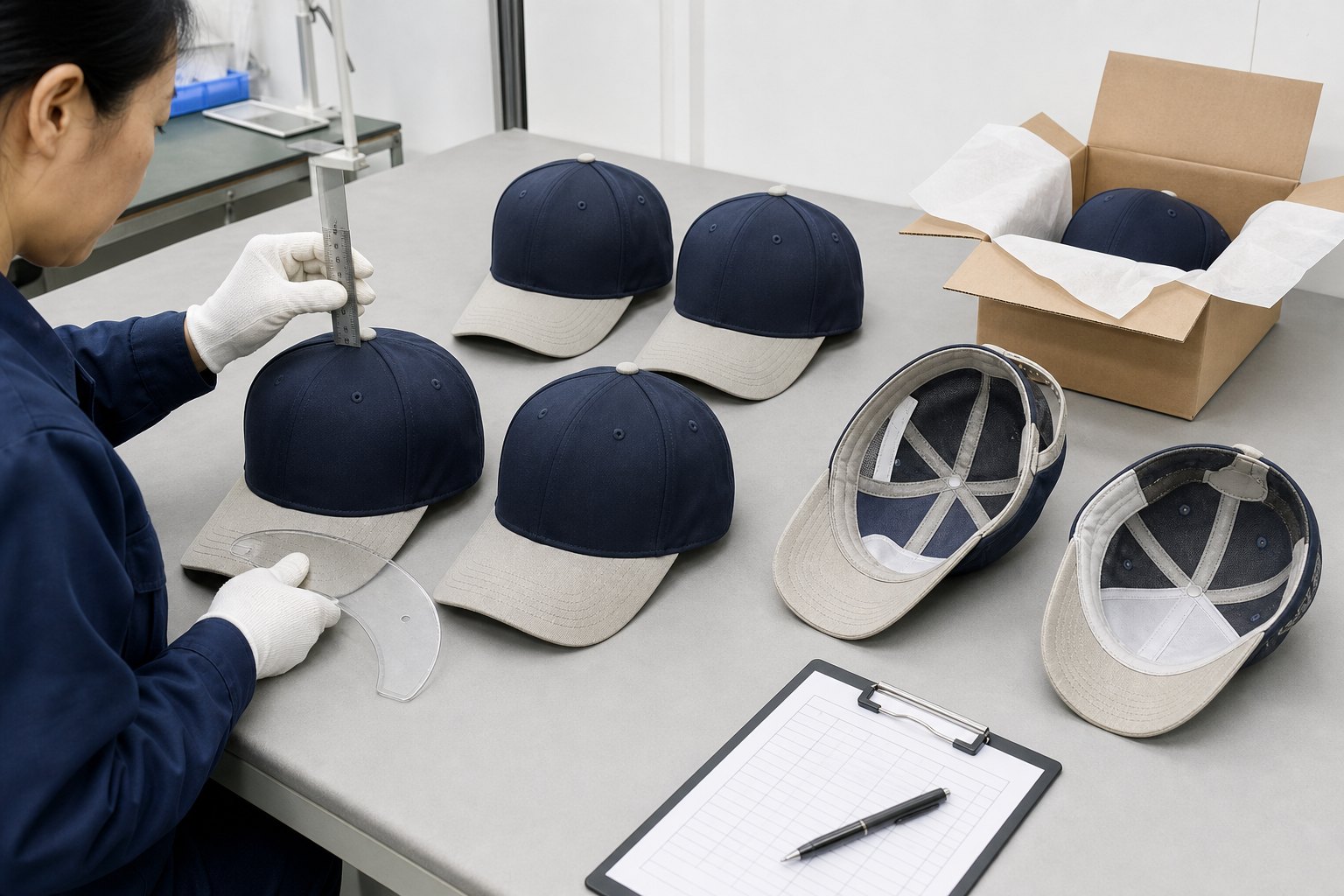
Do not flatten the cap to make every measurement easier. Inspect crown symmetry, panel tension, seam direction, visor centering, visor curve, eyelet/perforation position, sweatband join, closure attachment and internal cleanliness in the cap's natural shape. Compare the side profile as carefully as the front.
Sample across fabric lots, colors, decoration variants, production time and cartons. Repeated leaning crowns or skewed visors usually point to a pattern, pressing, sewing or packing process that needs correction, not isolated cosmetic defects.
Write Tolerances Around the Measurement Method
A tolerance is useful only when the factory and buyer measure the same way. State whether crown height is taken along a panel seam, whether internal circumference is relaxed or under a defined tension, where visor width is measured, and whether curve is inspected on a form or template. Photograph the approved method and include it in the production file.
Separate measurable variation from visual appearance. Two caps can share a crown-height measurement while one leans because of unequal panel tension. Combine dimensions with front, side, rear, top and inside views. Classify critical fit or function issues separately from cosmetic sewing findings so the inspection decision reflects the cap's intended use.
Protect Shape During Packing and Transport
A good cap can arrive deformed when crowns are crushed, visors are forced into the wrong curve or closures scratch neighboring caps. Approve nesting direction, tissue or support, pieces per inner pack, carton dimensions, compression limit and moisture protection. If retail distribution needs barcodes or team allocation, freeze those details before packing begins.
Preserve the Reorder Identity
Retain the approved pattern version, fabric and color reference, sweatband, visor insert, closure source, decoration file, placement coordinates, labels, packaging and dated physical sample. A reorder that uses only an old purchase-order description can drift even when the supplier is unchanged.
When a component is discontinued, treat the substitute as a controlled change. Compare its appearance, fit and performance against the retained standard, then approve a replacement sample before production. For team or merchandise programs, decide how many spare caps to keep and whether future orders must match the first run or may use a clearly identified updated version.
Understand MOQ, Cost and Lead-Time Drivers
LUCKYSTAR does not publish one fixed sports-cap price or production promise without reviewing the specification. Commercial terms change with crown architecture, custom pattern work, fabric and color minimums, visor insert, closure, sweatband, size system, decoration locations, artwork variants, testing, labels, packaging and delivery plan.
Ask the supplier to separate product development, decoration setup, unit application, testing and packaging assumptions. The broader custom manufacturer sourcing guide explains how to compare supplier evidence, samples, quality control and order governance at equal scope.
Compare Supplier Evidence, Not General Claims
Ask for anonymized examples close to the proposed sports-cap architecture and use case. A useful supplier can show how it records pattern version, materials, visor reference, closure range, decoration file, approved sample, first-off check, bulk findings and corrective action. Equipment lists and catalog photos do not prove repeatability.
Also confirm ownership of each handoff if sewing, decoration or testing is performed by qualified partners. The model can work when responsibilities and lot traceability remain clear. Apply the due-diligence questions in the manufacturer qualification pillar before bulk release.
Sports Cap RFQ Checklist
- Use case, wearer group, climate and expected care route.
- Cap architecture: panel count, structured/unstructured profile, crown height and depth.
- Fabric composition, construction, weight, color and finish.
- Visor dimensions, insert, curvature, stitch rows and under-visor fabric.
- Sweatband, ventilation/mesh, closure system and target fit range.
- Quantity by color, size/fit group and artwork variant.
- Decoration method, artwork files, locations and finished dimensions.
- Labels, packing, destination and required delivery date.
Send Your Complete Sports Cap RFQ
Email a prefilled sports-cap brief
Related Headwear and Merchandise Guides
- Complete custom manufacturer sourcing guide.
- Custom baseball cap manufacturer development guide.
- Sports team hoodie roster and pack-out guide.
- Caps, hoodies and bags as merchandise.
- Corporate uniform program operations.
- Global custom apparel partnership framework.
Frequently Asked Questions
Is a six-panel cap always best for sports teams?
No. It provides a familiar structured shape, but the best architecture depends on activity, crown preference, logo surface, weight and ventilation requirements.
Does an adjustable closure fit everyone?
No. Define the target circumference range and verify crown depth and pressure at the range limits. The closure can adjust circumference but cannot correct unsuitable crown geometry.
Should embroidery be approved before the cap body?
No. Approve the crown, fabric and fit first, then build and test the embroidery for that exact surface.
How should visor curvature be controlled?
Use an approved physical cap, side-view reference and curve template. Confirm the same curve after sewing, decoration and final packing.
What should bulk cap inspection include?
Inspect natural three-dimensional shape, panel symmetry, visor position and curve, seams, ventilation, sweatband, closure, decoration, labels, cleanliness and shape-protective packing.
Company and project contact
Ningbo Luckystar Commodities Co., Ltd. reviews sports cap projects against the submitted construction, fit, decoration, inspection and packing requirements. Capability, commercial terms and evidence are confirmed for the specific order.
Review About Us, browse product capabilities, explore custom baseball caps, or contact the project team.






