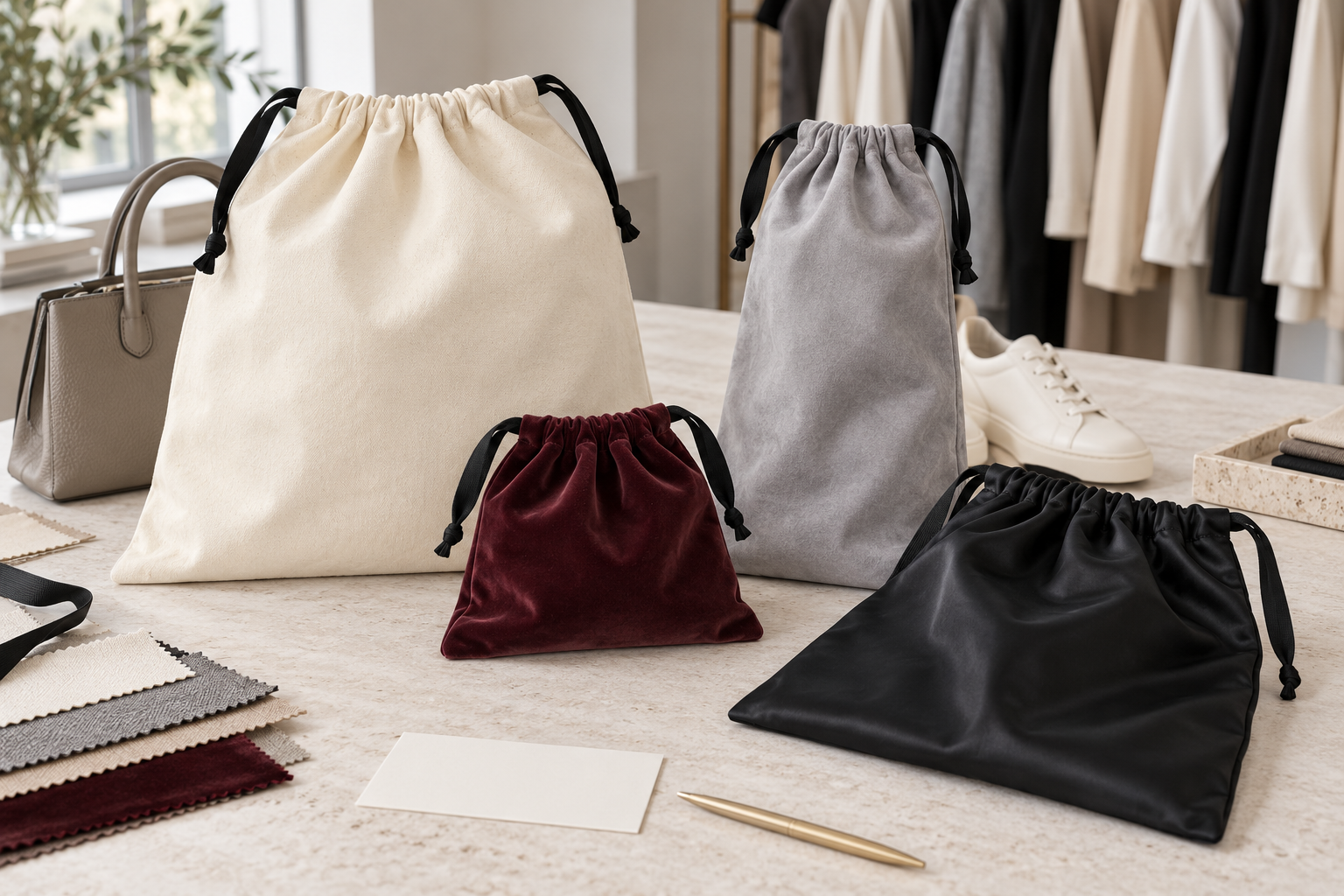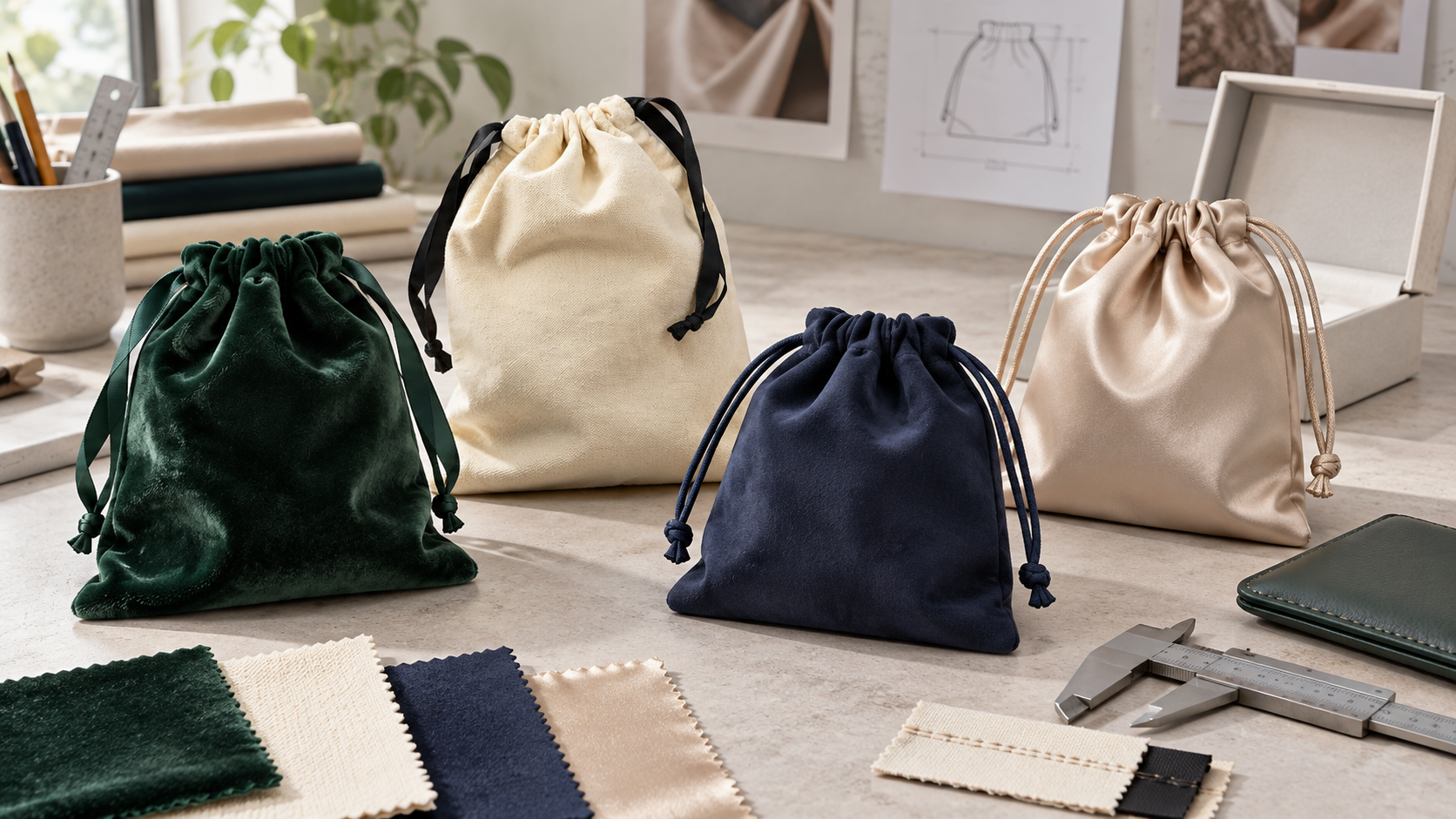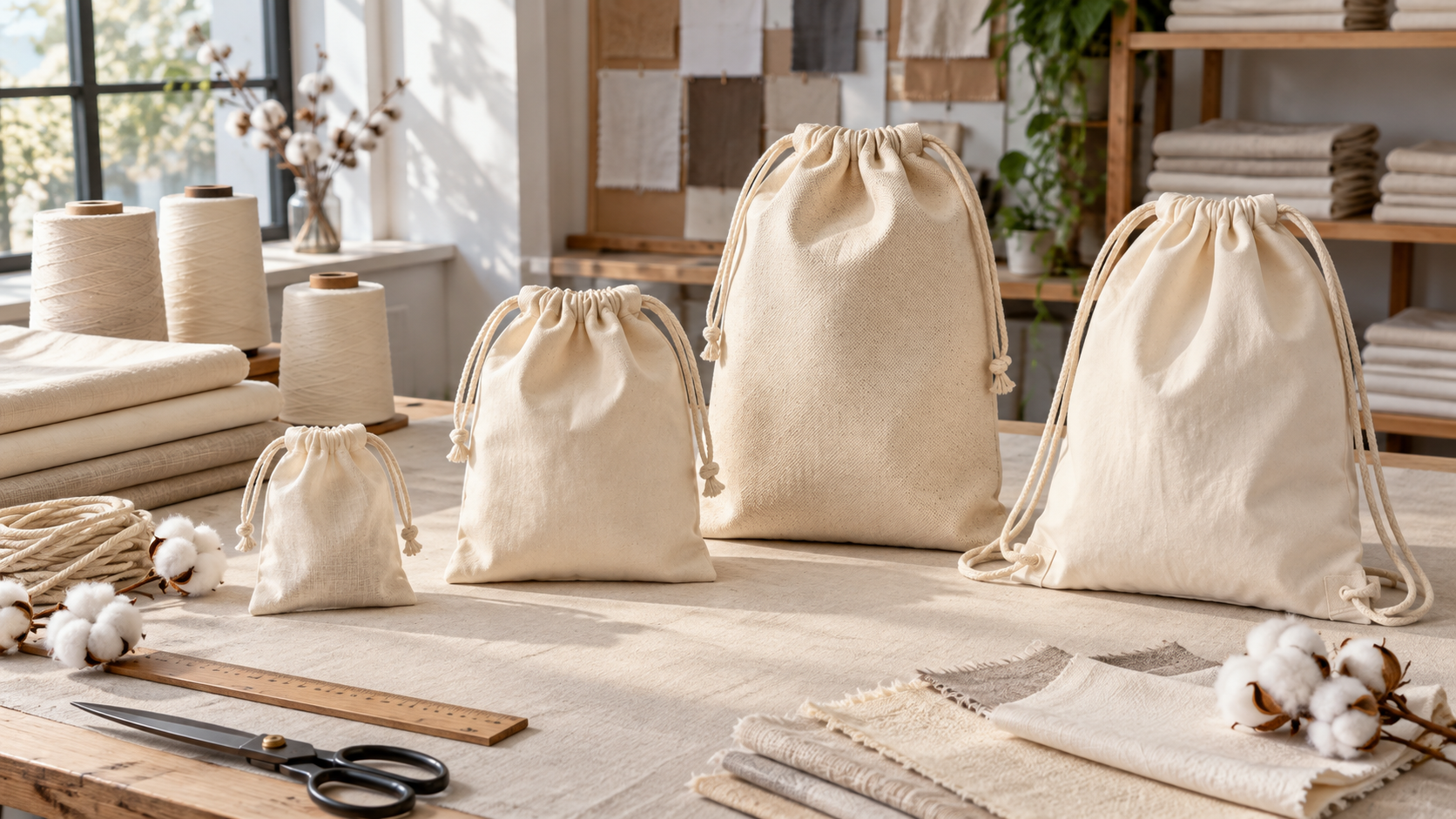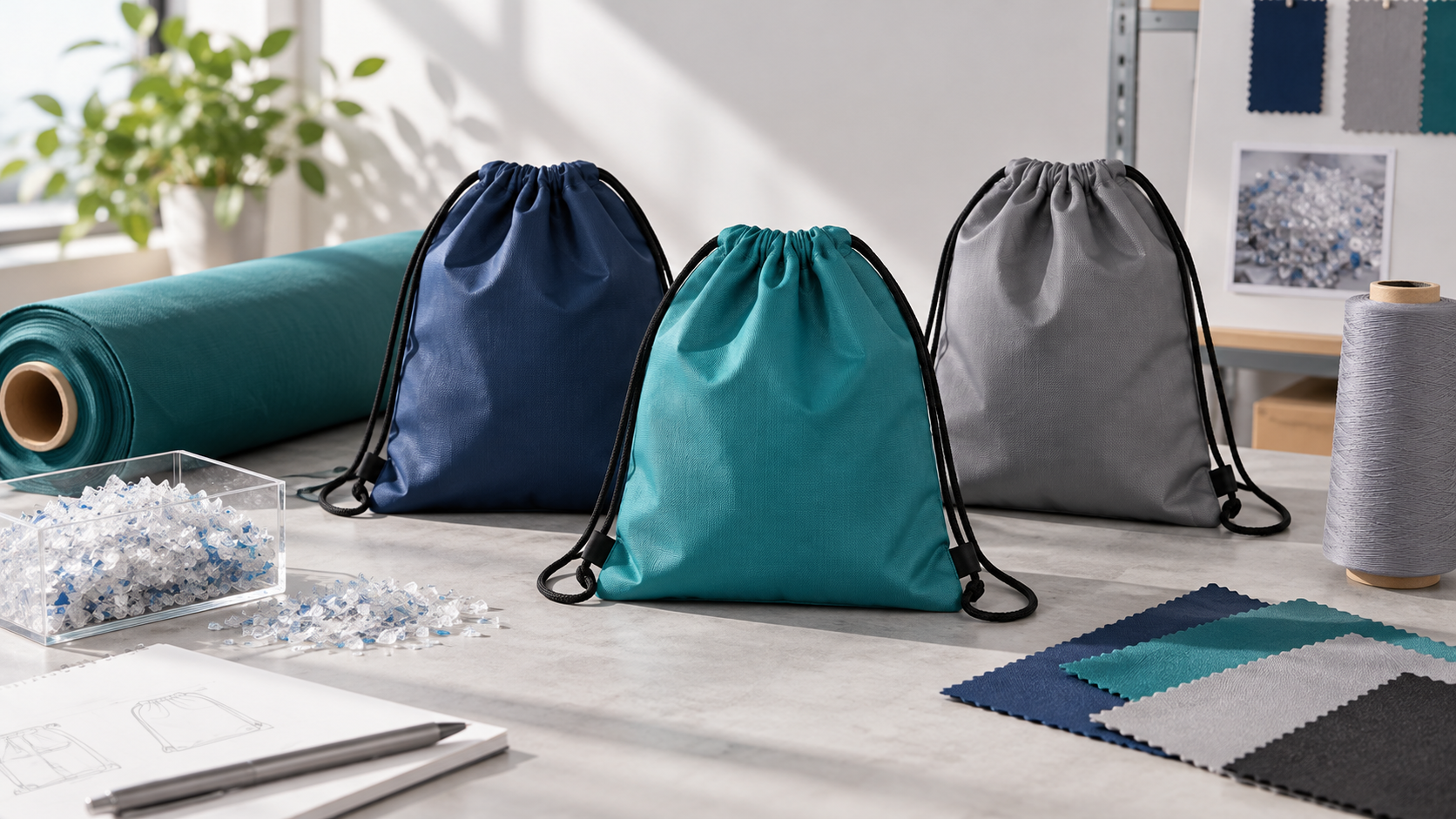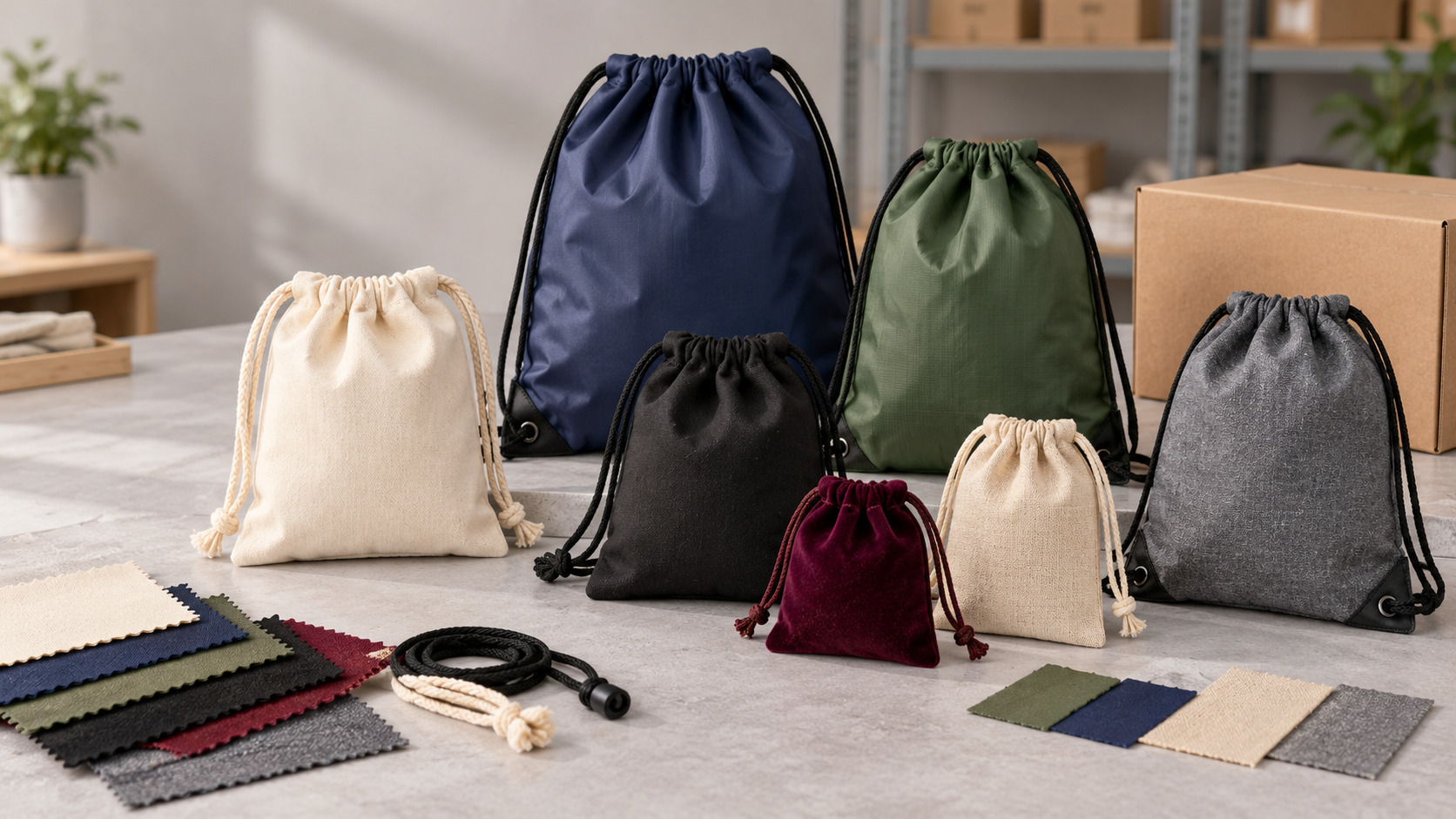
The best material for a custom cosmetic bag is rarely a single fabric. It is a working system: the outside surface, any coating or backing, the layer that gives the bag shape, the lining that faces spills, and the binding, zipper and thread that hold everything together. A supplier can use an attractive outer material and still create the wrong product if the rest of that system does not suit the contents or the sales channel.
Planning an order? Discuss materials for your cosmetic bag. Start with the details you know; undecided specifications can be discussed.
This guide is for buyers who have moved beyond a basic list of fabric names. Our shorter cosmetic bag material overview introduces common options; this page goes further by showing how to build and approve a material specification. If you are comparing suppliers across more than one bag category, begin with the Custom Bag Manufacturer Guide.
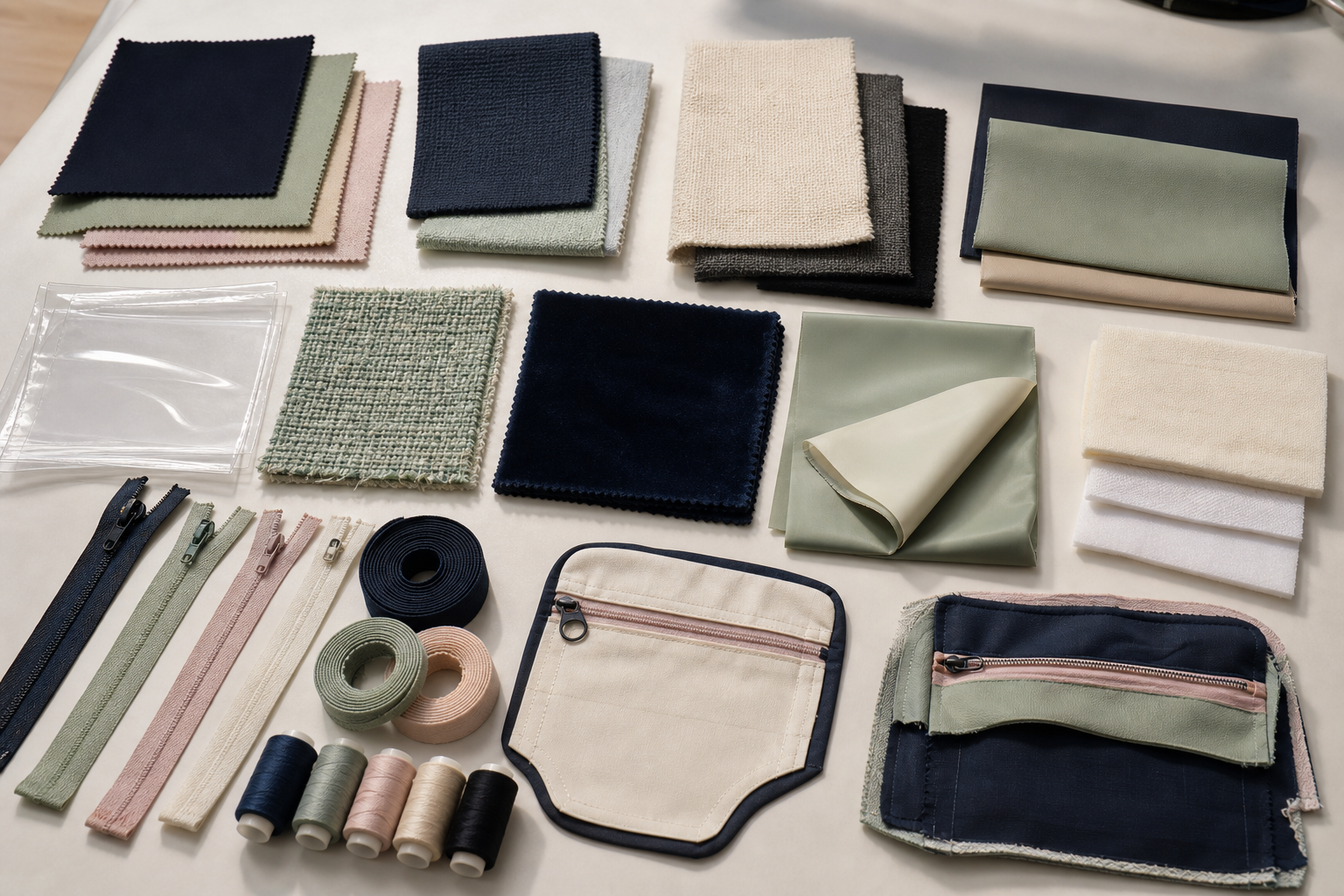
Quick answer: choose a material system, not a swatch
For a light promotional pouch, a stable woven polyester outer with a simple lining may give the best balance of color choice, decoration and production consistency. A natural retail collection may be better served by cotton canvas with a controlled weight, weave and shrinkage expectation.A structured travel case often needs an outer textile or PU surface combined with foam, board or interlining and a smooth lining. Clear organizers need an exact transparent film grade and a seam method that works with it.
There is no universal winner. The best choice is the lowest-complexity material system that meets the product’s real requirements and can be repeated in bulk. Approve the complete stack, not a loose fabric cutting.
| Program | Practical starting system | Main decision to prove |
|---|---|---|
| Gift-with-purchase pouch | Woven polyester outer, light backing if needed, simple lining, stock zipper | Logo quality and pack-out speed at the campaign quantity |
| Natural lifestyle pouch | Cotton canvas or blend, soft lining, cotton or matching webbing details | Shade, shrinkage, texture and the effect of decoration on the fabric |
| Premium beauty gift | Selected PU or tactile textile, interlining, clean lining, coordinated metal trim | Surface durability, odor,edge finish and presentation after packing |
| Travel organizer | Polyester or nylon outer, protective structure, wipe-clean lining, reinforced binding | Loaded shape, access, cleaning and zipper travel around corners |
| Clear beauty kit | Specified TPU, PVC or EVA-style film with compatible binding or joining method | Clarity, flexibility, odor, scratching and destination-market suitability |
| Soft seasonal collection | Velvet, quilted textile or specialty weave with controlled pile and support layers | Shade direction, seam bulk, lint and recovery after transport |
1. Start with the five material jobs
A specification becomes easier when each layer has a job. The outer face creates the first impression and takes most of the rubbing. A coating or backing changes hand feel, stability and moisture behavior. Foam, board or interlining controls shape. The lining meets powders, oils, brushes and leaking containers.Binding and thread must close a multi-layer edge without creating an uncomfortable ridge.
These layers interact. A heavy outer fabric plus thick foam may create corners that are too bulky for the planned binding. A soft clear film may look excellent flat but wave beside a stiff zipper tape. A wipe-clean lining can improve daily care, yet needle holes and an ordinary zipper still prevent a claim that the finished bag is waterproof.
| Layer | What it controls | What to write in the brief |
|---|---|---|
| Outer material | Appearance, touch, abrasion, logo surface and initial structure | Composition, weight or thickness, construction, color, finish and approved reference |
| Coating or backing | Stability, fraying, hand feel and surface moisture response | Coating type or backing description, target performance and restrictions on substitution |
| Structure layer | Padding, shape recovery and protection | Material, thickness, density or board grade,placement and finished feel |
| Lining | Interior cleanliness, color transfer, cleaning and pocket function | Composition, weight, finish, color, attachment and cleaning expectation |
| Edge and joining materials | Seam strength, corner quality, bulk and long-term appearance | Thread, binding, seam allowance, weld or stitch method and visible finish standard |
2. Compare outer materials through measurable choices
Polyester: broad capability, but not one specification
Polyester can be woven tightly for a clean promotional pouch, textured for a lifestyle surface, laminated for print or backed for added stability. The word “polyester” does not reveal yarn size, weave density, weight, coating, finish or hand. Ask for those points and retain a physical reference. A denier value by itself describes yarn-related information, not the performance of the finished cloth.
Polyester is often a practical starting point when color availability, repeat production and decoration flexibility matter. The approval sample should still check abrasion, color transfer, fraying at cut edges, coating adhesion and the way the fabric behaves beside the zipper.
Nylon: useful when touch and flexible strength matter
Nylon fabrics can create a refined, light travel product, especially when a softer hand and flexible construction are wanted. They vary substantially in weave, luster and coating. A glossy lightweight nylon and a dense matte nylon may share a fiber name while serving different price points and sewing routes. Confirm the actual lot, because color, sheen and hand can change the perceived quality more than the fiber label suggests.
Cotton and canvas: natural character with natural variation
Cotton canvas offers visible weave and a tactile, less technical character. It can be effective for wellness, lifestyle and reusable gift programs, but buyers must decide how much variation is acceptable. Fiber content, fabric weight, weave, natural specks, dye method, shrinkage and color tolerance all deserve attention. “12 oz canvas” from one source should not automatically be treated as identical to another supplier’s version; compare the measured specification and approved cutting.
Canvas also absorbs and releases moisture differently from coated synthetics, and a large ink area can change its hand. Test the chosen decoration on production-representative fabric rather than approving artwork on paper.
PU synthetic leather: specify the surface and the base
PU synthetic leather is a composite material. Surface chemistry, base fabric, thickness, grain, softness and finish all influence cutting, folding and wear. A premium appearance in a showroom sample does not guarantee stable performance after heat, humidity, repeated flexing or storage.Ask the supplier to identify the selected construction, intended use and appropriate validation rather than accepting “high-grade PU” as a purchasing description.
Pay particular attention to edge finishing, fold areas, odor, surface color transfer and interaction with metallic or printed decoration. Avoid turning terms such as “water-based” or “vegan” into broad environmental claims unless the exact material and claim basis have been reviewed for the destination market.
Transparent TPU, PVC and EVA-style films: similar appearance, different behavior
Clear films are chosen for visibility and easy wiping, but the exact polymer family and grade affect clarity, flexibility, low-temperature behavior, surface marking, odor and joining method. Thickness must be evaluated in the finished size: a film that bends pleasantly as a small swatch may feel stiff when wrapped around a compact case, while a very soft film may buckle near a zipper.
State whether panels will be stitched, bound or joined by another process. Confirm applicable chemical and labeling requirements with qualified parties for the country of sale. A transparent surface can be wipe-clean without making the completed bag leakproof.
Velvet, quilted textiles, mesh and recycled-content fabrics
Specialty surfaces solve specific design problems. Velvet adds tactile depth but introduces pile direction, lint and pressure-mark concerns. Quilting combines face fabric, fill and stitching, so pattern scale and loft must be controlled. Mesh improves visibility and ventilation inside an organizer, but opening size, snag resistance, binding and privacy affect suitability.
Recycled-content fabric can support a documented material strategy when the claim is tied to the exact order. Ask which component contains recycled material, the claimed percentage, the evidence available and whether that evidence covers the relevant supply chain and shipment. Recycled content does not by itself answer questions about durability, repair, packaging or overall environmental impact.
| Outer direction | Strong reason to choose it | Common approval risk | Key specification |
|---|---|---|---|
| Woven polyester | Versatile color, finish and decoration routes | Generic descriptions hide weight, density and coating differences | Construction, weight, coating/backing, finish and color standard |
| Nylon | Light, flexible and refined travel feel | Sheen, hand and lot color do not match expectations | Yarn/fabric construction, weight, luster,coating and hand reference |
| Cotton canvas | Natural texture and strong textile identity | Shrinkage, shade variation and print absorption | Fiber content, weight, weave, finish, shrinkage and shade tolerance |
| PU synthetic leather | Smooth fashion surface and structured presentation | Peeling, flex marks, odor or weak edge finishing | Base, thickness, grain, surface system, color and validation plan |
| Clear film | Product visibility and easy surface wiping | Scratching, haze, stiffness, odor or incompatible seam method | Material family/grade, thickness, tint, clarity,joining method and destination |
| Velvet or quilted textile | Tactile gift presentation | Pressure marks, pile direction, loft variation and seam bulk | Face material, pile/quilting direction, backing, fill and packing method |
| Recycled-content textile | Supports a substantiated material-content story | Evidence or claim scope does not match the order | Component, percentage, evidence chain, lot identity and claim wording |
3. The lining often matters more in use than the outer fabric
Cosmetic bags meet foundation, oils, powders, damp brushes and containers with residue around their caps. Buyers frequently spend time perfecting the exterior and then accept whichever lining is readily available. That shortcut can create staining, loose pockets, zipper interference or a wrinkled interior.
A lining should be selected for attachment, cleanability, color stability and the product’s desired hand. Smooth woven polyester or nylon can work for many bags.A coated or laminated lining may improve wiping, but seams and needle holes remain. A light lining helps users see small contents yet can reveal dirt quickly; a dark lining conceals some marks but makes black items harder to find. Neither is automatically better.
| Lining question | Sample method | Decision to record |
|---|---|---|
| Can the user wipe the surface? | Apply agreed representative products to a spare cutting, wait for a defined period and use the proposed cleaning method | Acceptable residue, color change and surface damage |
| Does the lining stay in place? | Load and unload the intended bottle and tool set repeatedly | Attachment points, ease allowance and pocket behavior |
| Can color transfer occur? | Check dry and, where relevant,damp contact against representative light and dark components | Test condition and acceptance standard |
| Does it obstruct the zipper? | Operate the loaded bag at normal and corner positions | Lining control seam, clearance and zipper guard if required |
| Is the cleaning claim accurate? | Review the whole construction, including openings and seams | Use precise language such as wipe-clean or splash-resistant only when supported |
4. Structure changes what the customer thinks the material is
A consumer handles the completed bag, not the outer fabric in isolation. Thin foam can turn a flat textile into a softly protective case. Firm interlining can make a PU panel feel more substantial. Board can create a stable wall but may reduce foldability and increase carton volume. Quilting changes both touch and labor. The structure layer therefore affects perceived value, sewing difficulty, shipping and recovery after compression.
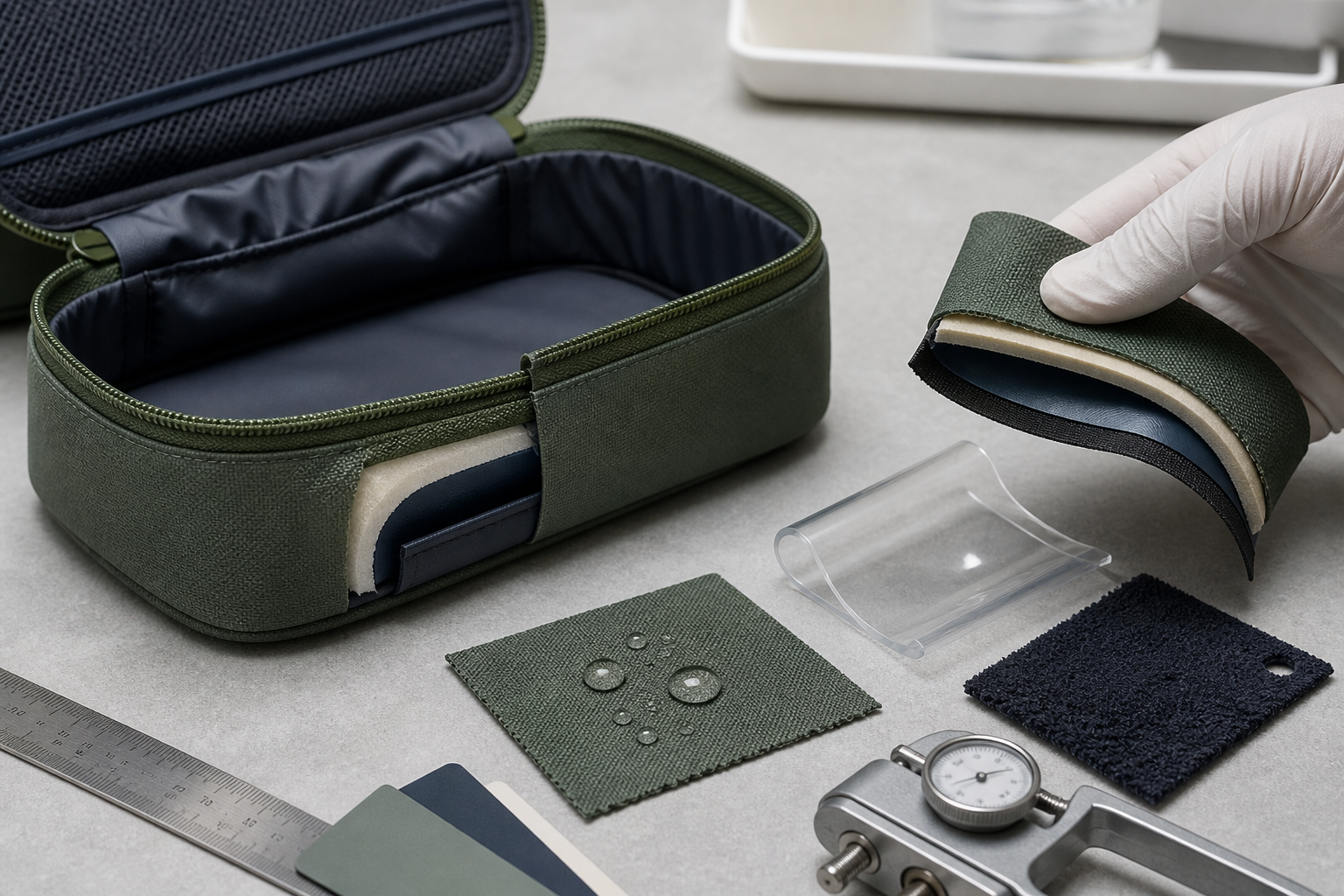
Ask to see a stitched corner and zipper section early, not only a flat bonded panel. These areas reveal whether the total stack is compatible with the needle, seam allowance, binding width and planned machinery. Material decisions should be made with the production route visible.
5. Match branding to the finished surface
A logo method can change the material it decorates. Embroidery adds thread and local stiffness. Screen printing places ink on a textured surface. Heat-applied decoration introduces temperature and pressure. Embossing compresses a selected PU construction. A metal plate adds holes, hardware and reinforcement. Approve the decoration on the exact outer stack, in the final position, and after the relevant handling checks.
| Decoration route | Often suitable for | Material interaction to check |
|---|---|---|
| Screen printing | Canvas and selected woven synthetics | Coverage over texture, curing, cracking, migration and hand change |
| Heat transfer | Compatible polyester and smooth fabric surfaces | Adhesion, edge lift, heat marking, color shift and coating response |
| Embroidery | Canvas, stable textiles and reinforced panels | Puckering, backing, thread tension,reverse-side finish and seam placement |
| Embossing or debossing | Approved PU synthetic leather constructions | Definition, recovery, heat response, tooling and surface damage |
| Woven label or patch | Most sewable outer materials | Edge comfort, attachment, color match and added seam bulk |
| Metal badge or custom puller | Structured retail and gift cases | Weight, plating, backing reinforcement, scratching and pull balance |
6. Build a material specification that two suppliers can quote
A material name is not enough for a meaningful price comparison. One supplier may quote unlined lightweight polyester while another assumes backing, foam and a printed lining. The cheaper number may simply describe a different product. Give every supplier the same layer schedule and ask each to mark alternatives clearly.
| Specification field | Example of useful control | Weak wording to replace |
|---|---|---|
| Material identity | Fiber/polymer family, construction and supplier reference | Premium fabric |
| Mass or thickness | Target and tolerance using an agreed measurement method | Heavy duty |
| Color and appearance | Physical standard,lighting/assessment method and accepted variation | Same as screen image |
| Finish and hand | Approved cutting plus measurable finish where available | Soft touch |
| Layer schedule | Outer, backing, foam/interlining, lining and placement drawing | Add padding |
| Performance | Named test condition and acceptance requirement related to real use | Waterproof and durable |
| Substitution | No change without a submitted cutting, reason and written approval | Equivalent material allowed |
A material schedule should sit beside the pattern, dimensions, zipper, pockets, logo and packing details.For the wider sourcing and RFQ process, see our China Cosmetic Bag Manufacturers buyer guide.
7. Test the risk, not every property in a catalogue
Testing should follow the intended claim and failure risk. A soft gift pouch and a travel case do not need the same evidence. Begin with actual-use checks during development, then agree any laboratory work required by the product, customer, retailer or destination market. The test method, sample conditioning and acceptance level should be defined by qualified parties rather than invented after a failure.
| Risk | Development check | What a failure may change |
|---|---|---|
| Surface wear | Rub representative panels and inspect color, coating and texture | Material grade, finish, decoration or use claim |
| Flexing and folds | Open, close, fold and compress the constructed sample repeatedly | PU system, film thickness, backing or pattern |
| Spills and cleaning | Use buyer-approved representative products and the proposed care method | Lining, color,coating or care wording |
| Seam compatibility | Inspect holes, slippage, fraying and puckering at stress points | Needle/thread, seam, backing, reinforcement or material |
| Color transfer | Check contact with representative contents, labels and packaging | Dye/finish, lining color or packing separation |
| Clear-panel appearance | Inspect after folding, wiping, cold/heat exposure if relevant and normal packing | Film grade, thickness, protective packing or construction |
| Odor | Review raw materials and finished packed samples under agreed conditions | Material source, adhesive, airing time or rejection |
Connect all approvals to a numbered prototype and comment sheet.Our Custom Bag Sample Development Process explains how to turn sample rounds into a controlled production reference, while the Custom Bag Quality Inspection Checklist helps carry material identity and workmanship checks into bulk production.
8. Balance cost and MOQ without quietly changing the product
Material cost is not only the price per meter. Usable width, cutting yield, defect rate, backing, quilting, edge treatment, sewing speed and packing volume can reverse an apparently cheap comparison. Custom dyeing, printed lining, uncommon zipper tape or a special film grade may create its own minimum. Ask which component drives the MOQ by color and SKU.
A practical value-engineering exercise keeps the product requirement fixed and changes one variable at a time. Compare a standard-color fabric against custom dyeing, stock trim against custom plating, or interlining against foam. Never accept an undefined “similar material” merely to hit a target. Our guide to custom bag cost drivers provides a broader framework for normalizing quotations.
Why choose LUCKYSTAR for material development?
LUCKYSTAR helps buyers turn a visual direction into a controlled material system.That matters because cosmetic bag performance usually depends on the combination of outer material, structure, lining, zipper, binding, decoration and packing—not on one impressive swatch.
- Use-led material review: we begin with the intended contents, cleaning expectation, sales channel, quantity, target date and price position.
- Layered development: outer surfaces, backing, foam or interlining, lining and edge construction can be reviewed together on a real prototype.
- Controlled alternatives: when cost, MOQ or lead time requires another route, the changed layer can be identified and reapproved instead of substituted silently.
- Decoration coordination: the logo method is sampled on the selected production material and evaluated with the constructed panel.
- Bulk handover: approved cuttings, component references, sample comments and quality checkpoints support production follow-through.
- Multi-category sourcing: beauty accessories can be coordinated with selected items from the required Product Range when a campaign includes more than one product.
Explore LUCKYSTAR’s custom cosmetic bag range for silhouettes and construction starting points. We can review whether a standard development route fits your brief or whether a new material stack should be sampled.
A simple approval workflow
- Define the bag’s contents, user, sales channel, cleaning expectation, quantity, destination and fixed date.
- Select one or two material systems—not a large pile of unrelated swatches.
- Request a layer schedule and physical cuttings with traceable references.
- Apply the real decoration to the selected outer stack.
- Build a prototype and test capacity, zipper travel, surface wear, cleaning, lining control and packing.
- Record the accepted materials, tolerances, sample number and any required evidence.
- Approve bulk material against the retained references before or during cutting.
- Verify material identity and construction at incoming, in-process and final inspection stages.
Frequently asked questions
Is polyester or nylon better for a travel cosmetic bag?
Either can work. Compare the actual fabric construction, coating, hand, abrasion behavior, color, price and availability rather than relying on the fiber name. The lining, reinforcement and zipper route may influence travel performance more than the polyester-versus-nylon label.
Is PU leather suitable for cosmetic bags?
It can be suitable for fashion-led or structured cases when the selected PU system, backing, thickness, edge construction and expected storage conditions are appropriate. Test the actual material for flexing, surface wear, color transfer, odor and any project-specific requirements.
Which lining is easiest to clean?
A smooth coated or laminated lining may wipe more easily than an absorbent textile, but the exact surface, seams, pockets and chosen cleaning method determine the result. Test representative cosmetics and state a precise care claim. Easy-wipe lining does not make the complete bag waterproof.
Can recycled polyester be used for custom cosmetic bags?
Yes, where a suitable fabric and evidence route are available. Define which component contains recycled material, the claimed percentage, the documents required and how the order will be linked to them. Performance and construction still need separate approval.
How many material options should be sampled?
Usually one main system and one purposeful alternative are more useful than many disconnected swatches. Each option should answer a decision—for example lower MOQ, softer hand or easier cleaning—and should be built into a representative panel or prototype before approval.
Choose the combination that survives real use
The best materials for custom cosmetic bags are the ones that work together after cutting, branding, sewing, filling, cleaning, packing and transport. Begin with the product’s job, specify every layer, test the relevant risk and keep an approved reference for bulk production. For broader manufacturer responsibilities and project planning, return to the Custom Bag Manufacturer Guide.
View the LUCKYSTAR custom cosmetic bag collection or send a brief with your target contents, material direction, quantity and destination. We can help identify a realistic sampling route.

Discuss materials for your cosmetic bag
You do not need a complete specification to start a conversation. Include these details in your message:
- Intended contents and sales channel.
- Preferred material feel, appearance and cleaning requirements.
- Approximate quantity, destination and any reference style.
Discuss materials for your cosmetic bag using the contact form, or Email a project brief with this article already referenced. The email link opens a draft in your email app; you can add artwork or a specification before sending.
MOQ, pricing, sample arrangements and delivery terms are subject to specification and written confirmation.