Top 10 Paper Shopping Bag Manufacturers in 2026
Which paper shopping bag manufacturer should a retail brand shortlist in 2026? Start with the production route, not the company name. A high-volume twisted-handle carrier, a rigid rope-handle boutique bag and a direct-food-contact sack may all be made from paper, but they require different converting equipment, print controls, adhesives, testing and order evidence.
Our ten manufacturers to investigate are Novolex/Duro, ProAmpac, Papier-Mettler, Fiorini International, RIEDLE, Gather Packaging, Kagazkaar, Zheng-Da Paper Industry, Full Land Industrial and Ecobag Network. Each company’s official website describes paper carrier manufacturing or a relevant paper shopping-bag range. The profiles below explain a credible use case and, more importantly, what a buyer should verify before awarding an order.
Editorial method: LUCKYSTAR reviewed first-party manufacturer pages on September 7, 2026. The numbers organize the guide; they are not a laboratory-tested quality ranking. We have not audited every facility, placed comparison orders or independently verified every website claim. Manufacturing location, capacity, certification scope, material composition, food-contact suitability and commercial terms should be confirmed for the exact product, legal entity, facility and order.

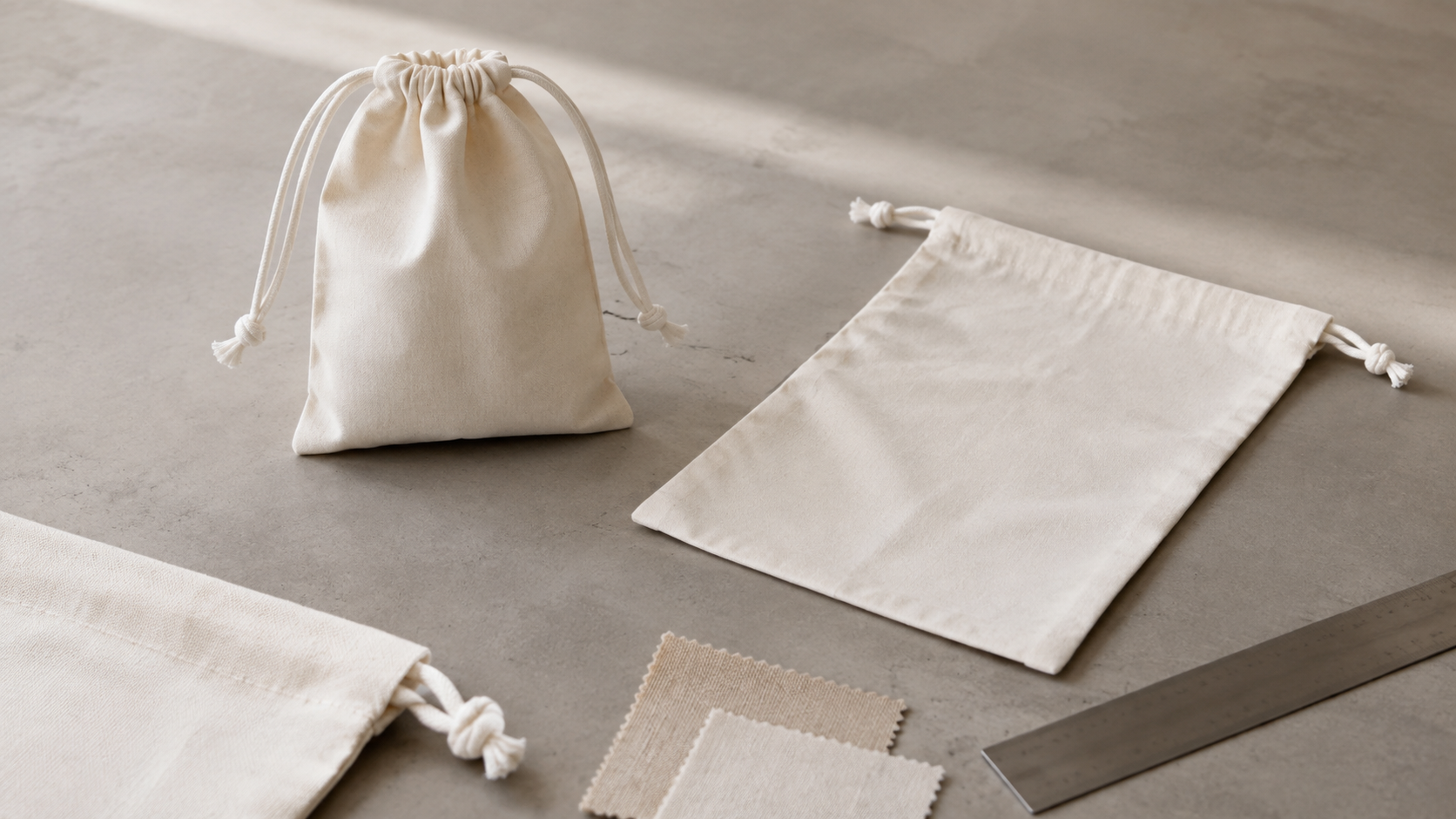
AI-assisted removal of historical sample logos and catalog text from a real LUCKYSTAR company-catalog photograph. The edit preserves the photographed bag construction and setting, but it is illustrative—not proof of a particular paper grade, finish or certification.
The ten manufacturers at a glance
This shortlist deliberately mixes large multi-plant groups, premium paper-carrier specialists and regional manufacturers. That makes it useful for initial market mapping, but it does not make their quotations directly comparable. Ask every supplier to quote the same drawing, performance targets, artwork, pack method, delivery basis and evidence list.
| Manufacturer | Manufacturing footprint described by the company | Paper-bag strength to investigate | Best-fit starting question |
|---|---|---|---|
| Novolex / Duro | United States / North American group operations | Broad shopping-bag formats, handle and print options | Which Duro plant and bag platform fit the size and annual volume? |
| ProAmpac | US facilities stated on its paper shopping-bag page | Retail paper carriers with multiple handle, print and coating options | Which facility, coating and print route are included in this quotation? |
| Papier-Mettler | Morbach, Germany, plus a wider production and trading network | Coordinated paper and plastic carrier programmes | Is this SKU produced internally,and at which named site? |
| Fiorini International | Manufacturing companies in Italy and the Czech Republic | Machine-made and handmade luxury paper carriers | Which construction route fits the finish, quantity and budget? |
| RIEDLE | Production described in Germany and the EU | Premium custom paper carrier bags | Which operations and country of manufacture apply to the proposed bag? |
| Gather Packaging | Toronto, Canada | J-cut turn-top and serrated-top paper carriers; flexographic printing | What is the validated load for the exact handle/top construction? |
| Kagazkaar | Plants identified in Kolkata and Daman, India | Machine-finished twist-handle bags and Euro tote formats | Which plant and process will make the order? |
| Zheng-Da Paper Industry | Factories identified in Taoyuan and Tainan,Taiwan | Automated and semi-automated paper shopping bags | Which handle and line can maintain the required tolerance? |
| Full Land Industrial | Taiwan-based manufacturing described on its site | Automated paper carrier conversion and water-based flexographic printing | What paper/ink specification and evidence support the proposed claim? |
| Ecobag Network | Paper-bag production facility identified in Poland | Handled, handleless and premium printed paper bags | Which line, print process and facility are assigned to the SKU? |
If you are still comparing paper with textile, nonwoven or laminated options, begin with our broader Custom Bag Manufacturer guide. For supplier due diligence beyond the product list, use How to Choose a Custom Shopping Bag Manufacturer.
1. Novolex / Duro: a broad North American paper carrier platform
Novolex presents Duro as part of its paper shopping-bag portfolio. The company’s Duro Shopping Bags guide shows a wide selection of bag styles, paper colors, handles, print configurations and enhancements. That breadth makes the group relevant to multi-format retail programmes and buyers who want established carrier formats rather than a one-off handcrafted construction.
The main purchasing advantage to investigate is platform fit. A standard size, handle and print route may offer a more predictable development path than a construction that requires several nonstandard operations. However, a catalogue option is not the same as a finished specification. Paper basis weight, recycled-content basis, ink system, handle attachment, top treatment and case pack still need written confirmation.
Ask which Duro or Novolex facility would make the quoted item and whether the print, bag conversion and handle application occur at the same site. If artwork uses fine reverses, large solids or critical brand colors, approve the correct proof type and a production-representative sample—not only a PDF mock-up.
2. ProAmpac: configurable retail paper shopping bags
ProAmpac’s official paper shopping bags page presents retail carriers in multiple sizes, weights and colors, with several handle choices, multi-color printing and finishing options. It also states that these paper shopping bags are manufactured at facilities in the United States.
This makes ProAmpac worth evaluating for a North American retail programme that needs a defined family of paper carriers. Buyers should separate available options from the configuration actually quoted.For example, a coating can change rub resistance and appearance while also changing recyclability assumptions and the documentation needed for an environmental claim.
Request a specification sheet tied to the quote and identify the making site. Ask whether print approval is based on a contract proof, press drawdown or production sample; define viewing conditions for important colors. If the marketing team wants to use a certification or recyclability statement, request the evidence and restrictions for that exact bag rather than copying a general webpage phrase.
3. Papier-Mettler: integrated packaging capability from Germany
Papier-Mettler describes an owner-run packaging manufacturer headquartered in Morbach, Germany. Its paper packaging manufacturing overview discusses artwork preparation, printing plates, ink preparation, printing and converting. The company’s broader corporate overview explains that its own production is complemented by a trading network.
That combination may suit retailers looking for a coordinated programme across several carrier formats or markets. It also makes order attribution important: a company group can sell products made at different plants or by trading partners. “Supplied by” should never be silently rewritten as “made in Morbach.”
On the RFQ, require the country and facility of manufacture for each SKU. Ask which process owner controls ink formulation, print approval, bag conversion and final release.If more than one site could replenish the programme, establish a shared color target, reference sample and change-control procedure before the first reorder.
4. Fiorini International: machine-made and luxury handmade routes
Fiorini International identifies manufacturing companies in Italy and the Czech Republic and presents both automated paper shopping-bag production and handmade luxury carriers. The distinction is commercially meaningful. A high-volume machine-made twisted-handle bag and a hand-finished rope- or ribbon-handle bag have different cost drivers, minimum-efficient quantities and quality risks.
Fiorini is therefore a useful candidate for fashion, cosmetics, jewellery and gift packaging where the bag is part of the presentation. Before requesting a price, freeze the top fold, bottom board, handle type, reinforcement, printing, surface treatment and any ribbon closure. A visual reference alone will not tell a converter whether a feature is printed, laminated, hot-stamped, glued or mechanically attached.
Ask which manufacturing company and production route will be used. For metallic, coated or dark flood-color designs, examine cracking at folds, scuffing, foil registration, glue visibility and color shift under store lighting. Our luxury retail shopping-bag finishing guide explains why finishes need physical approval rather than selection by screen image.
5. RIEDLE: premium paper carrier specialization
RIEDLE’s official paper bag manufacturer page describes custom paper carrier production in Germany and the EU, with an emphasis on individualized premium bags. The range is relevant when handle presentation, paper feel, finish and detailed execution matter as much as unit cost.
For premium work, buyers should confirm where each operation occurs. Printing, lamination, foil, embossing, top folding, reinforcement and handle insertion may follow different routes. The selling company’s address does not prove that every operation is performed in the same country.
Specify measurable tolerances for dimensions, handle position and artwork placement. Define an acceptable standard for minor visual variation, because paper texture, uncoated stock and hand finishing do not behave like injection-moulded parts. Approve one signed reference sample and state whether it governs both first production and reorders.
6. Gather Packaging: Canadian paper shopping-bag manufacturing
Gather Packaging describes paper shopping-bag manufacturing in Toronto, Canada. Its website identifies J-cut turn-top and serrated-top constructions, flexographic printing, proofing and inspection stages. These are useful process clues for retailers sourcing practical branded carriers in Canada.
Top construction affects both presentation and strength. A turn-top can create a clean upper edge and reinforce the handle area; a serrated top may support a different cost and speed target.Neither should be chosen in isolation from the expected load, paper grade, bag geometry and handle design.
Ask Gather to identify the line, print limits and validated load for the exact proposed configuration. Require the test method, sample conditioning and pass/fail rule rather than an unsupported weight number. If the bag will be used in rain, freezer aisles or with chilled goods, describe those conditions because dry-room testing may not predict field performance.
7. Kagazkaar: Indian paper carrier formats from two plants
Kagazkaar presents itself as an Indian paper-carrier manufacturer and identifies plants in Kolkata and Daman. Its range includes machine-finished twist-handle bags and Euro tote-style paper carriers, creating a possible bridge between routine retail bags and more presentation-led formats.
The two named plants are a reason to ask—not assume—which facility will make the order. Equipment, paper sources, available widths, print capability and subcontracting may differ by site. If a programme could transfer between plants, require written change notification and a common approved standard.
For twist-handle bags, check handle pull, patch adhesion, top-edge consistency, bottom formation and carton compression. For Euro totes, add board placement, cord or ribbon attachment, surface rub and finish registration. Always normalize freight terms and carton dimensions when comparing an India export quote with a domestic or regional offer.
8. Zheng-Da Paper Industry: automated and semi-automated conversion in Taiwan
Zheng-Da Paper Industry’s company page identifies factories in Taoyuan and Tainan, Taiwan, and describes automated and semi-automated paper-bag production. Its website also shows several handle and paper-carrier styles.
This manufacturer is relevant when a buyer needs to compare a repeatable automated format with a construction requiring additional finishing. The correct route depends on bag dimensions, paper, handle, artwork, order quantity and the tolerance expected at retail.
Ask which factory and production line fit the approved drawing. For a multi-size family, confirm whether each size runs on the same platform; apparent similarity does not guarantee identical fold geometry or print position. Request pre-production and production inspection records that reference the same revision number as the purchase order.
9. Full Land Industrial: automated paper-bag production and flexographic printing
Full Land Industrial describes Taiwan-based high-speed automated paper-bag production and water-based flexographic printing. This combination is worth investigating for repeating retail carrier runs where line compatibility and artwork engineered for flexography can improve production consistency.
Water-based ink is a process description, not a complete environmental claim. The paper, ink, adhesive, coating, handle, reinforcement and local collection/recycling pathway all matter. Likewise, a certification badge on a company page should not be treated as evidence for every material, plant or order.
Ask for the exact paper specification, ink declaration where relevant, print tolerance and applicable certificate or transaction evidence. If the job was designed for offset printing, confirm how screens, fine type and color builds will be adapted. Our flexographic vs offset printing guide for paper shopping bags provides a practical artwork comparison.
10. Ecobag Network: paper bags from Poland with several production routes
Ecobag Network presents handled, handleless and premium printed paper bags. A company announcement identifies a paper-bag production facility in Przyprostynia, Poland. The range is relevant to buyers comparing standard retail carriers with more decorative paper packaging within Europe.
The central question is route selection. A price for a simple machine-made kraft carrier should not be benchmarked against a premium laminated or hand-finished bag without separating the construction and service level. Confirm the facility, line, print technology and any outsourced finishing for the quoted SKU.
Ask for the critical-to-quality control plan: incoming paper, print checks, glue application, handle attachment, finished dimensions, load testing and packing. A site-level certification, if required, must be current and applicable to the named site and activity; it does not automatically certify every bag or marketing statement.
Machine-made or hand-finished: choose the production route first
The most consequential sourcing decision is often not the supplier but the converting route. A machine-made bag can be highly repeatable when its size, paper and handle fit the line. A hand-finished construction can unlock premium features but adds more touchpoints that require visual standards and inspection.
| Route | Typical construction | Commercial fit | Approval priorities | Common mismatch |
|---|---|---|---|---|
| Automated twisted-handle carrier | Kraft or colored paper, glued twisted handles, folded bottom | Repeating retail programmes and efficient larger runs | Paper, size, print repeat, handle pull, bottom glue, case pack | Designing outside the line’s size or print limits |
| Automated flat-handle carrier | Paper carrier with flat paper handles | Grocery, takeaway and routine carryout | Handle position, opening, load, carton efficiency | Comparing only bag dimensions and ignoring usable opening |
| Handleless SOS / block-bottom bag | Open-mouth paper sack with self-standing base | Food-to-go, pharmacy, lightweight retail | Opening, bottom integrity,food-contact status if applicable | Treating food-sector experience as universal food-contact approval |
| Semi-automatic or hybrid carrier | Converted bag with added reinforcement or special handle | Mid-volume customized retail | Alignment, added-part adhesion, visual variation | Failing to define which steps are manual |
| Handmade luxury paper bag | Folded top, board reinforcement, rope/ribbon handles, optional lamination/foil | Fashion, beauty, gifting and premium campaigns | Finish sample, fold cracking, scuffing, board position, handle symmetry | Quoting from a photograph without a construction drawing |
For handle selection, see our Shopping Bag Handle Guide. It helps translate “premium handle” into construction details a supplier can actually quote.
What a complete paper shopping-bag RFQ should contain
A useful RFQ removes guesswork. If suppliers fill the gaps differently, the lowest quotation may simply represent the least complete bag.
1. Finished geometry and drawing
State width, gusset and height in one unit system, with a dimensioned drawing. Include top fold, bottom fold, board or patch positions and handle drop.Identify the tolerance that matters at point of use. A retail team may care more about bottle clearance or box fit than a nominal millimetre difference.
2. Paper and surface construction
Specify paper type, target basis weight, color, texture and coating/lamination. If recycled content is requested, state whether the percentage is by mass and whether it applies to the paper only or the complete bag. Never let “kraft,” “recycled,” “FSC” or “eco” substitute for a documented material specification.
3. Printing and artwork controls
Provide print process, number of colors, coverage, spot-color references, trapping expectations and acceptable registration. Include the final artwork revision and barcode/QR requirements. The correct approval may be a digital proof for layout, an ink drawdown for color, and a physical production sample for appearance and construction.
4. Handles, reinforcement and adhesives
Define handle material, diameter or width, color, drop, attachment method and reinforcement. Add adhesive restrictions if the destination or product requires them. Handle strength depends on the whole system: paper, patch, top construction, glue, bag geometry and conditioning.
5. Use, load and environment
Describe what the bag carries, target mass, sharp corners, carrying time and likely humidity or temperature. A “10 kg bag” claim is incomplete without a method and configuration. Agree on conditioning, load, duration, number of cycles and failure criteria.
6. Packaging and delivery
State inner pack, carton quantity, carton limits, pallet pattern, labels, shipping marks, destination and Incoterm.Paper bags can cube out a shipment before they reach a weight limit. Our shopping-bag carton optimization guide explains why bag geometry and case packing should be developed together.
Use the Custom Shopping Bag Tech Pack guide to turn these inputs into a controlled document.
Normalize quotations before comparing unit prices
The best comparison sheet forces every supplier to answer the same commercial and technical questions. It also separates assumptions from confirmed inclusions.
| Quote field | What to record | Why it changes the comparison |
|---|---|---|
| Legal seller and producing site | Contracting entity, plant name, country, outsourced steps | Clarifies accountability, origin and audit scope |
| Specification revision | Drawing/date, paper, handle, print and finish | Prevents comparison of physically different bags |
| Quantity basis | Units per SKU/color and annual forecast | Different routes have different efficient quantities |
| Price basis | Unit price, tooling/plates, sampling, setup and inspection | A low unit rate may omit essential one-time costs |
| Delivery basis | Incoterm, named place, validity and currency | Separates factory price from landed commercial reality |
| Packaging | Pieces/carton, carton size/weight and palletization | Drives freight,storage and store handling |
| Sample route | Blank dummy, printed proof, pre-production or production sample | Each answers a different approval question |
| Lead-time definition | Start event, production window and exclusions | “Lead time” is meaningless until its clock is defined |
| Testing | Method, sample count, condition and acceptance rule | Converts a generic strength claim into evidence |
| Claims evidence | Certificate, scope, material declaration and order documents | Prevents a company-level badge becoming a product claim |
For cost drivers and quote interpretation, use our 2026 custom shopping-bag pricing guide. All prices, MOQs, sampling charges and timing remain subject to the final specification and written confirmation.
Verify paper, forestry and recycling claims at order level
Paper sounds familiar, but its marketing claims are easy to overstate. “Recyclable,” “recycled,” “responsibly sourced,” “biodegradable” and “compostable” are different claims with different evidence and local context.
| Proposed statement | Evidence to request | What not to assume |
|---|---|---|
| “Contains X% recycled paper” | Supplier declaration tied to the paper code; calculation boundary and, where required, chain-of-custody/transaction evidence | That brown color proves recycled content |
| “FSC-certified” or an FSC on-product label | Valid certificate/license information, label approval and order-specific chain-of-custody documents | That a supplier certificate makes every SKU FSC-certified |
| “Recyclable” | Complete construction review plus destination-specific collection and acceptance information | That every paper bag with coating, foil, handles or adhesive is accepted everywhere |
| “Compostable” | Applicable standard,laboratory evidence for the complete claimed item and required disposal conditions | That paper alone proves the finished bag is compostable |
| “Food-contact suitable” | Declaration/test documents for the exact material system and intended conditions | That supplying food businesses proves all bags are suitable for direct contact |
| “Water resistant” | Defined exposure and pass criteria on the specified bag | That a coating has no effect on repulpability or recyclability messaging |
The Forest Stewardship Council provides an official chain-of-custody explanation and a public certificate search. Verification should cover status, holder, scope and the transaction—not just a logo image. Our FSC paper shopping-bag guide gives buyers a step-by-step document check; the separate recycled-content verification guide explains percentage boundaries and transaction evidence.
A practical quality-control plan for paper carriers
Paper-bag quality should be controlled from material approval through packed shipment.Final inspection alone cannot fully correct an unsuitable paper/ink combination or a handle system that was never validated.
Before production
Approve a signed specification, artwork revision, paper/color reference and physical construction sample. Confirm which characteristics are critical: dimensions, handle drop, print position, color, glue, load and case pack. Record any agreed visual limits for paper texture or hand finishing.
During printing and converting
Check paper identity, color against the agreed reference, registration, smearing, fold alignment, bottom formation, glue placement and handle attachment. Sampling frequency should reflect line speed and the cost of discovering a drift late.
Before shipment
Inspect a defined random sample against the purchase-order revision. Include appearance, measurements, function, pack count, carton marks and any agreed performance test. Retain approved and production samples for reorder comparison. Our Custom Shopping Bag Quality Control Checklist provides a fuller release framework.
For repeat programmes, read How to Maintain Logo and Color Consistency Across Shopping Bag Reorders. Stable master standards and documented change control are more reliable than asking a factory to “match last time” from memory.
Why brands choose LUCKYSTAR for custom paper shopping bags
LUCKYSTAR offers a China-based custom sourcing route for buyers who need a specification-led paper carrier rather than an off-the-shelf catalogue choice. On this website, the operating entity is Ningbo Luckystar Commodities Co., Ltd. We coordinate custom bag development and supply; the manufacturing route and responsible production partner depend on the approved project. We therefore do not present every order as production in a single self-owned paper-bag factory.
A product brief that begins with use
We start with the merchandise, load, dimensions, retail environment, print target, handle, finish and packing plan. That helps determine whether a machine-made kraft carrier, a reinforced paper bag or a hand-finished luxury construction is the sensible route. Explore the available direction on our custom shopping bags product page.
Coordination across material, print and construction
Paper, ink, coating, adhesive, reinforcement and handle form one system. LUCKYSTAR can help turn a marketing concept into an RFQ, sampling sequence and inspection checklist that references the same controlled specification. This is especially useful when a campaign includes multiple sizes or needs matching packaging components.
Evidence-first sustainability communication
We do not treat GRS, GOTS, BSCI, ISO, REACH, RoHS or FSC as blanket company-wide proof for every paper bag.If a project requires a forestry, recycled-content, chemical, food-contact or performance claim, it should be defined and supported at the appropriate material, facility, supplier, batch or order level. Availability remains subject to specification and written confirmation.
Reorder and export practicality
We can align approved samples, artwork revisions, packing information and pre-shipment checks so that purchasing, quality and logistics teams work from the same order definition. For the complete import workflow, see How to Import Custom Shopping Bags from China.
LUCKYSTAR is not automatically the correct route for every programme. A domestic paper-bag manufacturer may be preferable when local conversion, very short replenishment or a regional standard format is the primary requirement. We are a strong option to evaluate when customization, multi-component coordination, export handling and documented sample approval matter.
Questions to ask every paper shopping-bag manufacturer
Send these questions with the same drawing to each shortlisted supplier:
- What legal entity will sell the goods, and which named facility will print and convert this SKU?
- Which operations are internal, and which are subcontracted?
- Does our size, paper, handle and print coverage fit an established line?
- What paper code, basis weight, recycled-content basis and color reference are quoted?
- What proof and sample stages are included, and which one becomes the signed master?
- How will color, dimensions, glue and handle attachment be checked during production?
- What load or durability test is proposed, under what conditioning and acceptance rule?
- What evidence supports each environmental, forestry or food-contact statement?
- What are the pieces per carton, carton dimensions, gross weight and pallet assumptions?
- What triggers lead time, and which dates or approvals can reset it?
- How are material, facility or process changes communicated before a reorder?
- Which quotation items are provisional and subject to final written confirmation?
Frequently asked questions
Who is the best paper shopping bag manufacturer in 2026?
There is no universal best manufacturer. The best fit is the supplier whose line, paper, print, handle, finishing, evidence and delivery model match your exact brief. A premium handmade specialist may be wrong for a grocery programme; a high-speed carrier line may be wrong for a rigid ribbon-handle presentation bag.
What is the difference between a paper bag supplier and manufacturer?
A manufacturer performs one or more production steps; a supplier may coordinate goods from partner factories. Large groups may combine owned production with trading. Ask who performs printing, conversion, handle application and finishing for the quoted SKU, then name the responsible entities in the order documents.
Are paper shopping bags automatically sustainable?
No. Environmental performance depends on paper sourcing, material weight, recycled content, energy and waste, print/finish choices, reuse, transport and the destination’s recovery system. Use specific, evidenced claims instead of calling a bag simply “eco-friendly.”
What paper weight should a shopping bag use?
There is no single correct basis weight. The suitable paper depends on dimensions, gusset, load, handle system, reinforcement, fiber properties, moisture conditions and converting route. Ask the manufacturer to validate the complete construction, then test the production-representative bag.
Is flexographic or offset printing better for paper carrier bags?
Neither is always better. Flexography can suit efficient repeating carrier production; offset can suit certain high-detail sheet-fed and luxury constructions. Artwork, coverage, paper and finishing determine the result. Compare process-appropriate proofs and physical samples.
Can I put an FSC label on any paper bag from an FSC-certified supplier?
No. A supplier certificate alone is insufficient. The product, material input, chain-of-custody transaction and label use must meet the applicable FSC requirements.Verify the current certificate and obtain the order documentation and label approval.
How should I test paper shopping-bag strength?
Agree a test that represents actual use: conditioned samples, defined load, lift or carry cycles, duration and clear failure criteria. Examine handles, patches, top edge, side seams, bottom and paper tearing. Record the tested sample specification so the result is not generalized to another construction.
What information is needed for an accurate quote?
Provide bag dimensions, paper, basis weight, print artwork, color references, handle, reinforcement, finish, intended load/use, quantity by SKU, packaging, destination, Incoterm, testing and evidence requirements. A photo is useful context but not a sufficient specification.
Build a comparable paper shopping-bag quotation
Shortlist manufacturers by the production route that fits your bag, then compare complete specifications rather than headline unit prices. LUCKYSTAR can help convert your retail brief into a controlled custom paper-bag RFQ covering construction, artwork, samples, testing, packaging and required claim evidence.

Click the GET QUOTE image to send your dimensions, artwork, quantity, destination and required evidence. MOQ, price, sampling, lead time, capacity and test availability are subject to the final specification and written confirmation.