Last reviewed: September 24, 2026
Hemp Tote Bag Printing: Artwork, Ink and Quality Guide
Buyer Quick Answer
For reliable hemp tote bag printing, approve the exact fabric construction before choosing a decoration method. Hemp yarn variation and an open or slubby surface can change edge definition, opacity and color from one fabric lot to another. Ask the supplier to print a same-fabric strike-off, then approve a finished tote for placement, hand feel, cure, rubbing and appearance under agreed light. The approved sample, artwork file and test record should travel together into bulk production.
Scope: this guide owns the hemp-specific print approval and quality-control decision. For factory selection, project planning, materials, MOQ and shipment, use the complete custom bag manufacturer guide.
Scope: What This Guide Owns
This page answers one narrow buying question: how can a brand make artwork repeatable on a hemp tote when the fabric surface is less uniform than a digital mockup? It does not repeat the site's general custom tote bag printing methods guide, the screen printing versus heat transfer comparison, or the broader printed tote artwork approval guide. Those pages explain method mechanics and general artwork control. Here, every decision is tied to hemp texture, the actual blank and the evidence needed to release production.
Start With the Actual Hemp Substrate
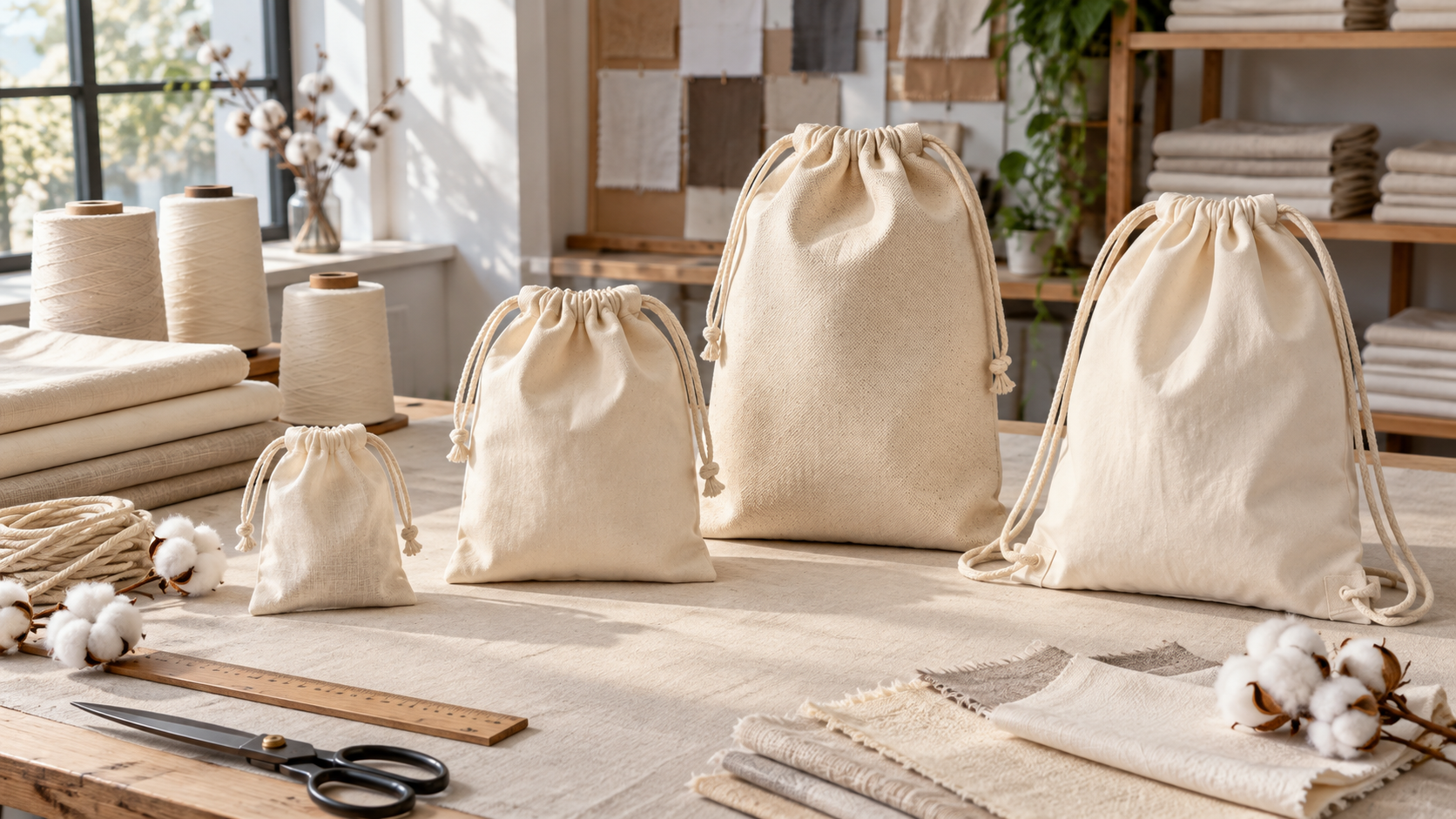
"Hemp tote" is not a complete print specification. Two bags sold under that label may use different fiber percentages, yarn sizes, weaves, weights, colors, washes or surface treatments. A dense hemp blend can present a flatter print face than a loose, visibly slubby fabric. A natural beige base can also shift the perceived print color. Do not choose ink or approve detail from a material name alone. Obtain a fabric cutting from the intended production lot and record which side will face outward.
Confirm Fiber Content and Blend
Ask for the declared percentages of hemp and every blended fiber. A hemp-cotton blend, for example, may print differently from a fabric with a higher hemp share, even at the same nominal weight. The point is not to assume that one composition is universally better. The point is to make the composition auditable and to test the real construction. If the bag is marketed in the United States, the FTC explains that textile labels generally identify fiber content, country of origin and the responsible company; review the current FTC textile labeling guidance for the exact case.
Questions the Supplier Should Answer
- Is the stated composition based on a supplier declaration, test report or both?
- Will bulk fabric come from one lot, and how will replacement fabric be controlled?
- Has the fabric been dyed, washed, coated, softened or otherwise finished?
- Is the sample printed on the identical face and construction planned for bulk?
Record Fabric Construction and Finish
Record usable width, finished weight, weave or knit structure, color, finishing route and any dimensional tolerance important to print placement. GSM is useful but incomplete; the tote fabric weight guide explains why weight does not identify fiber, weave or strength. For print control, add a close photograph or retained cutting that shows yarn slubs and surface openness. If a wash or softener changes the surface, the trial must happen after that finish, not on unfinished yardage.
Map the Surface Before Choosing a Method
View the fabric at normal distance and through a magnifier. Note high yarns, pits, loose fibers and color flecks. These are not automatically defects; they are part of many natural-looking constructions. They become a production risk when artwork relies on hairline detail, large perfectly flat solids or tiny reversed text. Define which natural variations are acceptable and which create an unreadable or incomplete mark. A physical print map is more useful than a claim that hemp is simply "easy to print."
Define the Branding Job
State what the mark must do. A bold one-color event logo, a retail illustration, a small private-label emblem and a tactile premium badge are different jobs. Define viewing distance, expected use, care instructions, color importance, target hand feel and whether the bag is a promotional item or a retail product. If the project is campaign-led, route message hierarchy and visual design choices to the promotional tote design guide.
Build a Hemp-Specific Print Brief
A useful brief includes the finished bag dimensions, fabric composition and construction, outward face, artwork version, placement coordinates, print window, color references, method, hand feel, sample quantity, inspection level and required tests. Identify every colorway as a separate approval combination because the same ink can look different on natural, bleached, dyed or dark fabric.
Compare Decoration Methods on Hemp
| Method | Useful starting point | Hemp-specific risk to trial | Approval evidence |
|---|---|---|---|
| Screen print | Bold spot colors and repeat runs | Incomplete coverage over high yarns; rough edges | Same-fabric strike-off plus finished bag |
| Heat transfer or DTF | Multicolor detail and smaller programs | Surface film, edge lift and texture showing through | Press settings, flex test and edge inspection |
| DTG | Detailed art where the exact fabric is proven suitable | Pretreatment, absorption and uneven detail | Pretreatment record and finished print test |
| Embroidery or patch | Tactile marks and small premium branding | Puckering, stiffness, backing show-through and needle damage | Finished tote with backing and stitch settings |
Screen Print Is Usually the First Trial
For bold, limited-color artwork, screen printing is often the first route worth sampling because its variables can be documented and repeated. That is a starting hypothesis, not a guarantee. Mesh, stencil, squeegee, ink system, number of passes, flash or cure conditions and fabric surface all interact. Ask the printer to propose settings, then judge the physical result instead of prescribing a universal recipe from another substrate.
Transfers Solve a Different Artwork Problem
Transfers can preserve multicolor detail that would require many screens, but they introduce a bonded surface. On coarse hemp, buyers should inspect whether the film bridges high and low yarns, whether edges remain flat after flexing, and whether the hand feel suits the brand. A method is not successful merely because the image looks sharp on day one.
Screen Printing on Hemp
Use a print trial to balance coverage and fabric character. More deposit may improve opacity, yet too much can create a heavy hand, fill small negative spaces or crack when the bag flexes. Natural yarn variation can leave pinpoints in a solid area. Define whether those points are an acceptable material effect or a defect. Record the approved ink reference and cure parameters with the strike-off, but treat the printer's validated process window as the controlling production record.
Heat Transfers and DTF
Trial the exact transfer film, adhesive, press temperature, pressure and dwell on the production fabric. Inspect immediately and after conditioning. Look for edge lift, gloss variation, adhesive halo, fabric flattening, color shift and stiffness. Very large transfer areas can change drape more than a small emblem. A supplier should not approve a transfer only on a smooth cotton blank and assume the same result on hemp.
Direct-to-Garment Printing
DTG can be considered for detailed art only after the machine, pretreatment and hemp construction are proven compatible. An uneven surface can reduce edge clarity, and pretreatment may change shade or hand. Ask for the printed bag rather than a digital render, and assess the result at the intended viewing distance. If a supplier cannot explain how pretreatment, print settings and curing are controlled, keep the method in development rather than releasing bulk.
Embroidery and Patches
Embroidery avoids ink coverage questions but creates mechanical ones. Check stitch density, backing, needle selection, puckering, distortion and the reverse side. A dense design on a light tote can stiffen the panel or pull the fabric. Patches move detail onto a separate base but add attachment and edge-quality requirements. Approve the decoration on a completed bag so handles, lining and internal finishing are represented.
Choose a Printable Zone on the Finished Tote
Measure the flat, supported area available to the printer after seam allowances, gussets, hems and handles are constructed. The bag's nominal width is not the print width. Mark the centerline and the top reference from the finished tote, not from an unsewn panel, unless the artwork will deliberately be printed before sewing. The approval sheet should state whether placement is measured from the artwork edge, artwork center or a defined registration point.
Keep Artwork Away From Seams and Gussets
Seams and folded gussets create height changes that can interrupt screen contact or press pressure. Handles can also prevent a platen from sitting flat. Define exclusion zones and allow tolerance around structural features. If art intentionally crosses a seam, approve that exact construction and accept that visual continuity may vary. Do not let a clean flat-panel mockup hide a three-dimensional production constraint.
Set Minimum Detail by Physical Evidence
Vector artwork helps production, but vector status does not guarantee printable detail. Ask the printer to identify minimum positive lines, negative gaps, type size and isolated elements for the exact substrate and method. Include a small detail ladder in the strike-off if the design is near the limit. The finest retained feature on the approved fabric becomes evidence for this job, not a permanent rule for every hemp tote.
Control Color on a Natural Base
A natural beige or gray base visually mixes with translucent ink and can make a standard color reference appear warmer or duller. Decide whether the brand needs an opaque approximation, a softer material-integrated look or a measured tolerance. View the sample under an agreed light source and keep the approved physical standard. A screen display and a paper swatch cannot predict the final result on textured hemp.
Decide Whether Opacity or Hand Feel Leads
Higher opacity can require an underbase, a different ink system or more deposit, all of which may change hand feel and cost. Write the priority explicitly. A luxury retail tote may value a soft integrated print, while a campaign mark may prioritize contrast at distance. The supplier should show the trade-off on samples rather than silently maximizing one property.
Use the Approved Bag as the Print Reference
Freeze bag size, panel shape, handle position, lining and finish before final print placement. If construction changes after artwork approval, the print window and visual center may change. This is why the custom sample bag guide separates development evidence from a display sample. Mark the approved tote with a sample ID and link it to the artwork revision.
Approve a Same-Fabric Strike-Off
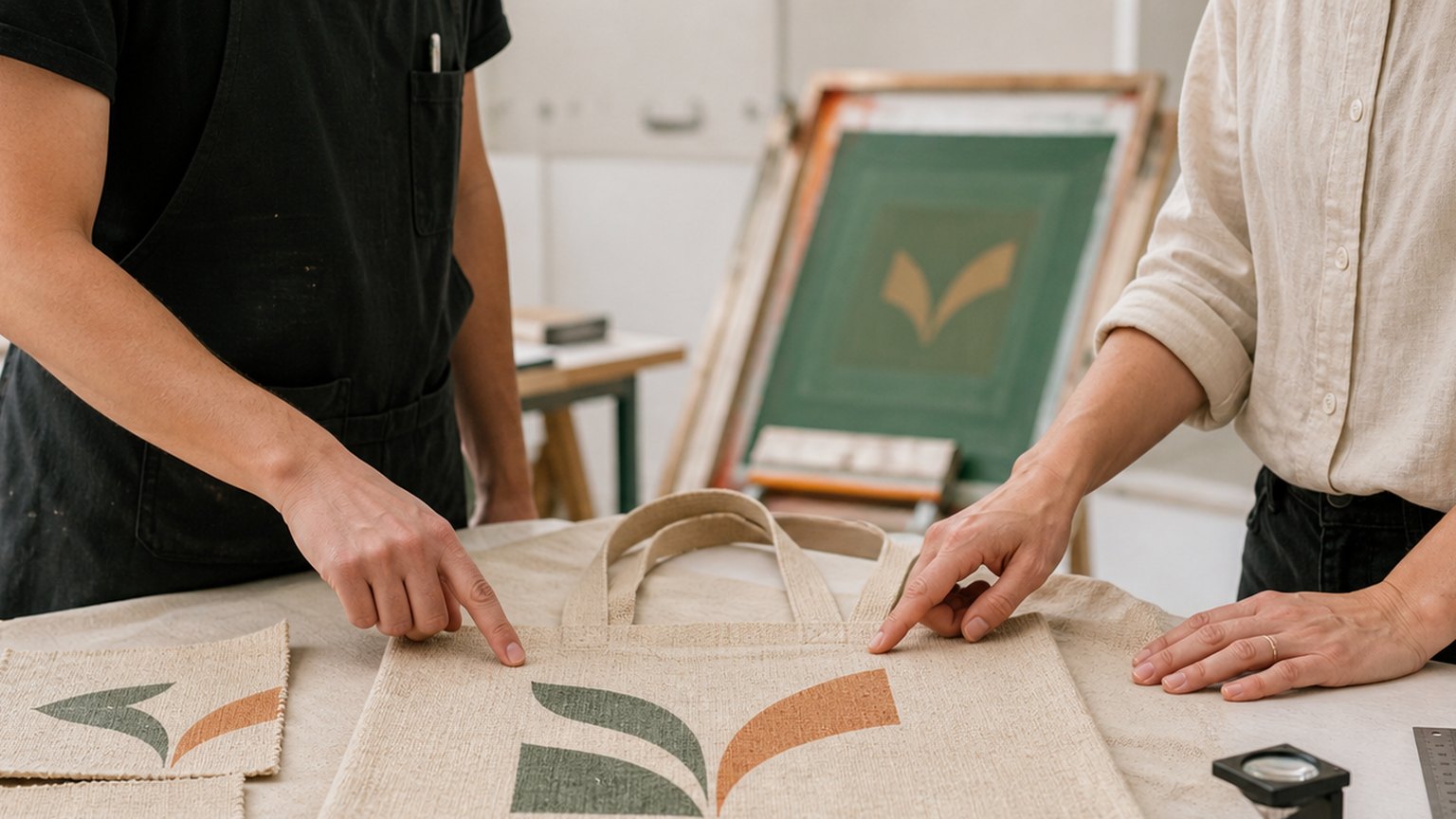
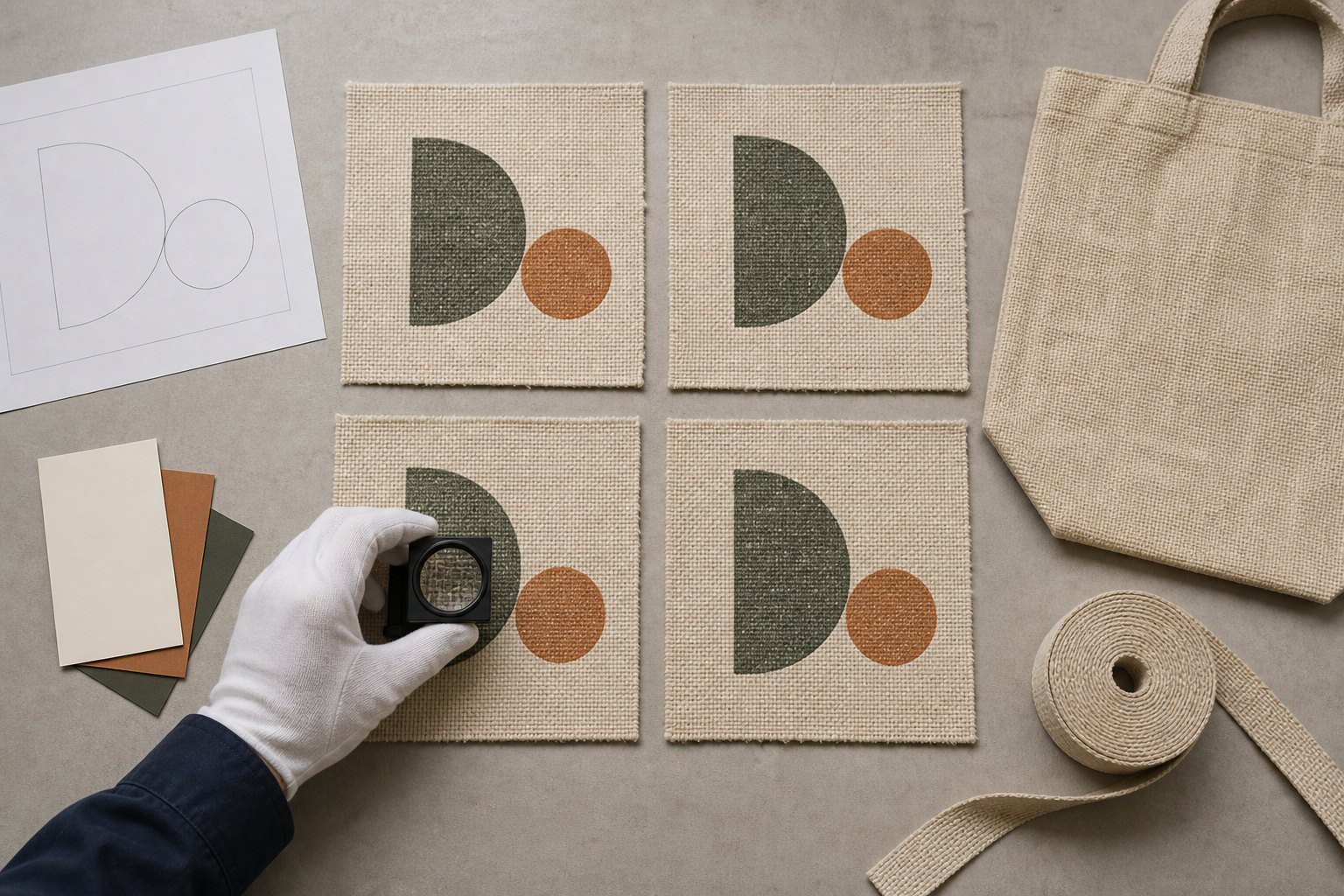
A strike-off is a controlled print trial on the intended fabric. It should answer whether the motif can be repeated before the factory spends time printing finished bags. Use enough area to show fine detail, broad solids, edges and the expected number of colors. When the material has obvious variation, print several pieces from different positions rather than approving the single cleanest square.
What the Strike-Off Should Record
- Fabric lot, face, finish and conditioning state.
- Artwork filename, revision and intended print dimensions.
- Decoration method, color references and agreed process settings.
- Approval date, approver, comments and the retained physical standard.
Approve a Full-Size Finished Sample
The strike-off proves the print surface; the finished sample proves placement and interaction with construction. Check orientation, visual center, distance from the top hem, relationship to handles, front versus back and any show-through. Flex the bag as it will be packed and carried. The approved finished sample should be the golden reference for bulk inspection, with deliberate tolerances written beside it.
Test Adhesion, Cure and Flexing
Ask the printer which verification suits the selected ink or transfer system and end use. A practical approval can include controlled flexing, gentle edge probing and observation after the supplier's specified conditioning period. Cure should be verified using the ink supplier's process guidance and equipment records, not by touch alone. If results change after one day, do not release production from an immediate post-print appearance.
Test Dry and Wet Rubbing
Rubbing matters because a tote contacts clothing and other surfaces. Define an agreed method, test direction and rating or visual limit. ISO states that ISO 105-X12:2016 covers resistance to rubbing off and staining and allows dry and wet rubbing tests for dyed or printed textiles. A buyer may reference the standard when appropriate, but the purchase order still needs the required acceptance level and tested color combination.
Define Wash or Care Tests by Use
Not every promotional tote is marketed as machine washable. Test against the care instruction and expected use instead of inventing an irrelevant cycle. If the bag will be washed, define the method, temperature, detergent, drying route and number of cycles, then inspect print change, shrinkage and distortion. If it is spot-clean only, the label, marketing copy and validation should agree.
Inspect Odor and Surface Feel
Strong residual odor, tackiness, powdering or unexpected gloss can indicate that the print or transfer process needs investigation. Assess after the sample has cooled and conditioned, not while it is fresh from production. Define a simple comparison against the approved sample in neutral packaging. Do not mask an odor with fragrance or pack the tote before the supplier has identified the cause.
Manage Natural Lot Variation
Hemp-containing fabrics can show shade and surface differences between lots. Set a plan for retained standards, lot identification and approval of replacements. If the artwork uses a large flat color, print a sample from the actual bulk lot before the full run. The goal is not to erase every natural variation; it is to stop material variation from crossing an agreed appearance boundary.
Lock Production Inputs After Approval
Freeze fabric source and lot, finish, bag construction, artwork revision, size, placement, method, ink or transfer reference, process settings and packaging. A change to any of these can reopen approval. Use controlled change authorization rather than informal chat messages. The custom bag manufacturing process guide shows where this handoff sits between design approval and shipment.
Monitor Printing During the Run
Set first-off approval, periodic checks and a final inspection. During screen printing, watch registration, coverage, ink condition and screen cleanliness. During transfer production, monitor press settings and edge behavior. Record the first approved unit and compare pieces from later in the run. A beautiful pre-production sample does not control bulk unless production checks reference it.
Classify Print Defects Before Inspection
Write defect categories before inspectors start. Distinguish natural substrate variation from printing failure and decide which defects are critical, major or minor for the use case. The site's bag quality CTQ plan explains how measurable requirements become acceptance criteria, while the custom bag inspection checklist covers the wider finished product.
Surface Defects
Examples include missing coverage beyond the agreed natural-texture limit, pinholes that break legibility, smears, ghosting, screen marks, transfer wrinkles, lift, cracking, contamination and color outside tolerance. Use photographs of the approved boundary, because words such as "slight" or "good" are hard to reproduce.
Placement and Orientation Defects
Examples include upside-down art, wrong side, incorrect colorway, skew beyond tolerance, incorrect size and placement outside the approved coordinate window. Measure from the reference points stated on the approval sheet. Do not center by eye when the bag construction itself has tolerances.
Build a Buyer QC Checklist
| Checkpoint | Evidence | Typical decision |
|---|---|---|
| Material identity | Composition, construction, lot and retained cutting | Match or investigate before printing |
| Artwork and placement | Approved file, dimensions and coordinate sheet | Release only the approved revision |
| Appearance | Strike-off and finished golden sample | Compare under agreed viewing conditions |
| Performance | Rubbing, flex, care and adhesion records as applicable | Pass stated limit or hold the lot |
| Bulk consistency | First-off, in-line and final inspection records | Accept, rework, sort or reject by plan |
Keep an Approval Evidence Pack
Store the material declaration, fabric cutting, artwork master, placement sheet, strike-off, finished sample photographs, process reference, test reports, change approvals and inspection result under one project ID. Evidence must refer to the ordered material and decoration, not merely to a supplier's general capability.
Write the Purchase Order to Prevent Drift
The purchase order should reference specifications and samples by ID, quantity by colorway, print side and location, artwork revision, tolerances, tests, inspection, packaging and change control. If a requirement affects acceptance, do not leave it only in an email thread.
Treat Environmental Claims as Claims
Hemp content does not automatically prove that a finished printed tote is "eco-friendly," low-impact, biodegradable or safer. Finishing, ink, transfer film, accessories, durability and evidence all matter. The FTC's Green Guides advise marketers to make environmental claims truthful, substantiated and properly qualified; broad unqualified environmental benefit claims are especially risky. The eco-friendly bag claim evidence audit provides a procurement workflow for evaluating such statements.
Verify Fiber Labels for the Destination Market
Ask which labels, disclosures and language rules apply where the bags will be sold, and have qualified local counsel or compliance specialists confirm uncertain cases. Do not copy a label from another product. Fiber percentages should correspond to the product, and country-of-origin and responsible-company information should be controlled with the packaging and private-label files.
Ask for Chemical Evidence Precisely
A vague request for "certified eco ink" often produces unrelated certificates. Name the market, restricted-substance requirement, product scope and evidence date. OEKO-TEX describes ECO PASSPORT as a certification for chemicals, colorants and auxiliaries used in textile and related industries; when a supplier references it, verify the exact chemical product and current scope. Certification of a chemical does not automatically certify the complete tote.
Understand MOQ, Cost and Lead-Time Drivers
Cost can include artwork cleanup, screens, color separations, pretreatment, transfer setup, strike-offs, finished samples, test work, sorting and additional inspections. MOQ can be constrained by fabric, dye lot, bag construction, print setup or SKU splits. Use the custom tote bag MOQ guide and custom tote bag cost guide for the full commercial model. This page's key rule is to price the approved evidence path, not only the ink on one unit.
Compare Sample Gates and Release Decisions
| Gate | What it proves | What it does not prove | Release decision |
|---|---|---|---|
| Digital layout | Content, orientation and intended scale | Color, hand feel or coverage on hemp | Release artwork preparation only |
| Same-fabric strike-off | Detail, coverage, color direction and surface behavior | Finished-bag placement | Release finished sample |
| Finished pre-production sample | Construction, placement and decoration interaction | Bulk consistency | Release bulk with controls |
| First-off production | Line setup matches the approved standard | Later-run stability | Continue with in-line checks |
Recognize Supplier Red Flags
Pause when a supplier chooses a method without seeing the fabric, offers only digital mockups, prints the sample on a substitute cotton blank, refuses to identify the artwork revision, cannot explain cure or press controls, uses a generic certificate as proof for every ink, or treats natural variation as permission for unlimited defects. A strong supplier states uncertainties early and proposes a trial that resolves them. For broader evaluation criteria, use the tote bag manufacturer selection guide.
Route Broader Questions to the Right Guide
For repeatable supply-program design, see the custom tote bag supplier guide. For labels, packaging and retail launch responsibilities, use the private label bag supplier guide. For traceability and claim evidence on a different natural-fiber route, compare the organic cotton bag supply-chain guide. These pages answer adjacent sourcing questions without duplicating this hemp print-control workflow.
Send a Production-Ready RFQ
Send the supplier the finished dimensions, intended load and use, hemp composition or target blend, construction and finish, base color, quantity by SKU, artwork files, desired print size and location, color expectations, candidate method, hand-feel priority, test needs, market, packaging and delivery date. Ask for a proposed sample sequence, evidence list and change-control rule. If the material is not yet fixed, say so and request comparable options rather than pretending the print result is already known.
LUCKYSTAR can review the bag construction, hemp surface and artwork as one production system. Review the current custom tote bag range, use the custom bag manufacturer sourcing framework, then send your hemp tote RFQ for a sample and print review.
Email a prefilled hemp tote print brief