Ningbo Luckystar Commodities Co., Ltd.
+8615957446693

可重复使用的手提袋制造过程

  • 产品介绍
Posted by Ningbo Luckystar Commodities Co., Ltd. On Aug 12 2026

只有在工厂解决了数十个相关细节之后,可重复使用的手提袋才显得简单。面料必须表现一致,裁剪部件必须保持在其阴影范围内,艺术品必须以正确的顺序进入缝纫线,手柄需要加固,并且包装的散装订单必须仍然与批准的样品相符。

本指南遵循工厂级别的可重复使用手提袋制造流程。它重点关注使重复运输变得现实的控制:材料调节、切割规则、应力点构造、过程中检查、功能测试和可追溯包装。比较形状和规格的买家可以从 LUCKYSTAR 的定制手提袋系列开始。有关更广泛的供应商和采购框架,请参阅定制包制造商指南

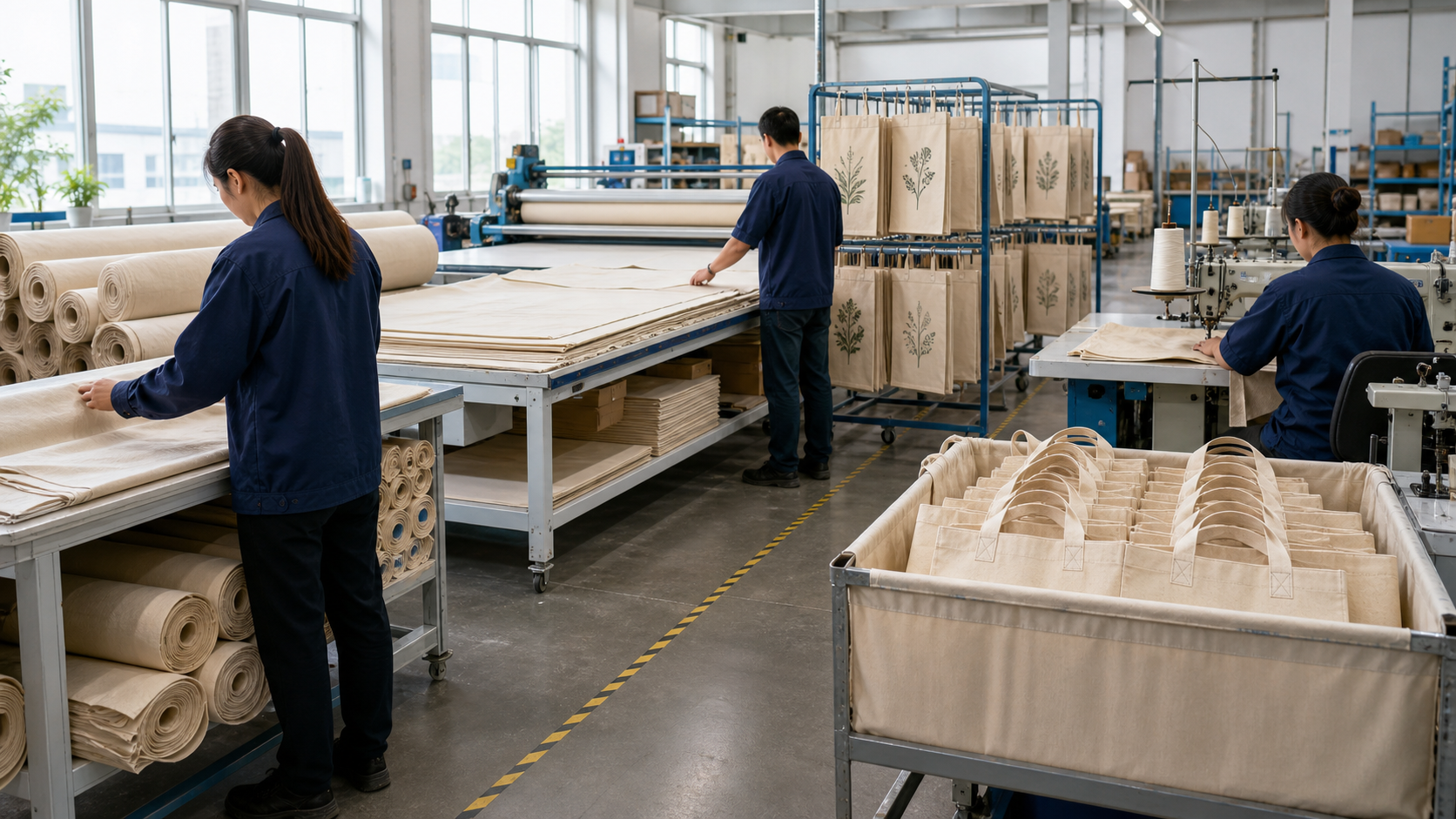
可重复使用的手提袋制造车间,配有织物检查、切割、缝纫和成品袋

一条受控的生产线将材料检验、精确切割、装饰、缝纫和最终审核联系起来,而不是将它们视为孤立的操作。

可重复使用是性能简介,而不是织物标签

棉质、帆布、无纺材料或回收材料不会自动使手提袋适合重复使用。重复使用取决于整个产品:预期负载、手柄舒适度、接缝强度、打印性能、尺寸稳定性和护理期望。轻型活动包和杂货手提袋都可以称为可重复使用,但它们的构建目标不应相同。

在生产开始之前,买方和制造商应将预期用途转变为可衡量的决策。有用的简介说明了包将携带什么、如何佩戴、所需的服务环境以及任何特定于市场的测试或标签要求。然后,工厂可以围绕真正的职责而不是抽象的形容词构建样本。

<标题> <正文>
工厂就绪声明:“手提包应携带盒装产品、瓶子和个人物品,适合步行 20 分钟,肩部保持舒适,并在步行后保持其基本形状。卸货。”添加实际尺寸和目标负载。这为开发和质量控制提供了具体的验证内容。

生产流程及其控制门

好的生产线不会等到最后一次检查才发现错误。每个阶段都会为下一个阶段产生证据。材料批准保护切割;切割部分控制保护装饰和缝纫;签名样品可保护批量组装;如果稍后出现问题,打包记录有助于隔离问题。

用例 可能的加载模式 构造重点 示例试用
零售结帐 混合产品,短携带,频繁折叠 开口宽度、底座支撑和易于包装 加载实际纸盒或产品模型
杂货和市场 密集、不均匀、有时呈圆形的内容 处理锚点、侧缝和底部几何形状 承载真实的混合负载,而不是单一的平面重量
通勤 长肩带可搭配个人物品 手柄垂落、接缝、闭合和口袋通道 穿着普通衣服行走时填充的样本
事件分布 逐步收集的小册子、瓶子和样品 空重低,握感舒适,品牌清晰可见 在操控试验期间使用完整的事件套件
零售商品 日常重复使用,对外观有更高的期望 材质手感,顶部边缘整齐,形状和细节均衡 查看加载、折叠和恢复后的外观
<标题> <正文>

第1步:锁定批准的样品和规格

批量生产不应从一系列电子邮件开始。工厂需要一份现行规格和一份经批准的参考样品。他们应该就成品尺寸、材料和颜色、手柄结构、接缝、角撑板、口袋、封口、标签、艺术品、公差优先级和包装达成一致。如果样品批准后尺寸发生变化,相关项目(例如艺术品位置、手柄掉落和纸箱数量)也可能需要审核。

除非经过鉴定和保存,批准的样品没有用处。标记其修订和批准日期,拍摄重要细节并记下任何故意接受的变化。 定制包样品开发流程中涵盖了将图纸转变为生产参考的更广泛逻辑。

第 2 步:检查和调节来料

织物检查在卷到达切割台之前开始。工厂确认交付的材料与订单相符,并且看起来与预期产品足够一致。检查可能包括成分文件、可用宽度、重量或厚度、编织、颜色、表面缺陷、气味、光洁度和收缩行为,具体取决于规格。

卷和批次应保持可识别性。如果明显不同的色调混合在一个手提袋中,即使每个单独的面板都属于广泛的认可范围,差异也可能很明显。将阴影组保持在一起可以使最终的外观更加连贯,并使以后的调查成为可能。

舞台 关键工厂操作 释放门 有用记录
规格 解决使用、尺寸、材料、艺术品和包装 一项经批准的产品规格 修订控制技术包
传入材料 检查身份、宽度、外观、阴影和行为 已接受的批次与保留分开 批次和检验日志
剪切 使用捆绑控件放置、标记和剪切面板 关键部分与模式匹配 捆绑工单并剪切审核
装饰 将图稿放置到面板或袋子上 颜色、位置和固化匹配批准 删除线和首件检查
缝纫 按照定义的操作顺序组装 第一个完成的单元通过施工审核 在线检查表
整理 修剪、清理、整形并准备审核 没有未解决的外观或功能问题 结束行计数和修复日志
最终检查 评估定义的样品和验收计划 记录发货处置 检查报告
包装 按变体折叠、标签、计数和纸箱 纸箱矩阵和标记正确 装箱单和纸箱跟踪代码
<标题> <正文>

面料重量只是决定的一部分。有关盎司、GSM、编织和结构的专门讨论,请使用定制手提袋的最佳面料重量指南。

第 3 步:规划标记、铺设并切割捆束

标记决定样片如何适应材料。高效使用很重要,但刀具还必须考虑纹理方向、单向表面效果、印刷或编织方向、折叠位置和缺陷。改变手柄或主体面板的方向以节省织物可以改变拉伸、悬垂或视觉一致性。

各层在没有过度张力的情况下展开,并在切割前对齐。关键凹口和钻孔或放置参考必须保持可用,且不会削弱可见区域。然后将切割好的零件按尺寸、颜色、批次和订单进行捆绑。当多个相似的艺术品或市场变体共享一条生产线时,捆绑标识尤其有价值。

材质控制 为什么重要 剪切前要决定什么
可用宽度 更改标记效率和可用面板大小 如何处理狭窄部分或损坏的边缘
重量和手感 影响结构、打印响应和缝纫设置 批准的样本范围和测量方法
阴影分组 防止主体、角撑板或手柄明显不匹配 组件是否必须保持在一批内
收缩与恢复 可以在处理或护理后更改尺寸 图案余量和预期护理说明
表面状况 结、粗节或污染会影响外观和打印 哪些自然特征是可以接受的,哪些是缺陷
饰面或涂层 可能会改变针的穿透力、粘附力和手感 生产材料上的装饰和缝纫试验
<标题> <正文>

第 4 步:在序列中的正确位置进行装饰

许多手提袋图形在缝纫前都贴在平板上,因为表面更容易定位和支撑。在部分或完整组装后,可以添加其他标记、标签或小细节。正确的顺序取决于艺术品尺寸、接缝、口袋、衬里、热敏感性和设备访问。

在全面运行之前,应将第一块装饰面板与批准的艺术品和物理目标进行比较。检查内容包括方向、距成品边缘的距离、颜色、覆盖范围、细节、手感以及对织物的任何影响。请记住,在缝份和折边消耗后,从原始切割边缘测量的位置必须正确转换。

降低风险 它会导致什么 实用控制
织物在张力下放置 切割后面板松弛变小或扭曲 允许材料沉降并控制铺设张力
纹理或绒毛方向错误 扭曲、颜色变化或手部不一致 在图案和捆绑票上标记方向
混合阴影批次 主体、底座和手柄看起来不相关 分离布局并识别每个捆绑包
磨损或移位的图案 尺寸在批次中漂移 审核选定的顶部、中间和底部剪切片段
凹口控制不佳 把手、口袋或角撑板组装在偏离位置 使用一致的、无损的对齐参考
<标题> <正文>

本文不再重复完整的方法比较。有关工艺适用性、颜色计数和艺术品行为,请阅读自定义手提袋印刷方法

第 5 步:以稳定的缝纫顺序组装手提袋

确切的顺序因设计而异,但工厂通常在关闭主体之前准备子组件。口袋、标签、封口、手柄部件和加固件可以首先完成或定位。然后连接车身面板和角撑板,完成边缘处理,构建顶部折边或饰面,固定手柄并安装其余功能。线头和松散纤维在整个过程中得到控制,而不仅仅是在包装台上。

定义的序列提高了可重复性。它还可以让检查员在仍可见的情况下检查困难区域。例如,隐藏在顶部折边内的加固件在折边闭合之前比手提包完成之后更容易确认。

装饰时机 优点 要保护的控件
在平板上缝纫之前 开放工作区域和可重复定位 成品边缘计算、面板方向和干净捆绑
安装口袋之前 艺术品可以位于口袋设计后面或与口袋设计对齐 口袋位置和缝纫余量
部分组装后 图形可以引用已建立的接缝或特征 多层设备访问和扭曲
在完成的手提包上 位置与最终的形状直接相关 支撑、热暴露、皱纹和进入内部
<标题> <正文>

设计预期负载的应力点

手柄之所以引人注目,是因为它们的锚固力集中,但它们并不是唯一的风险。上部开口、底角、角撑板连接处、口袋末端和闭合附件也可能失效或变形。加固应与材料和用途相匹配,而不是装饰性添加。

更多的缝合不会自动变得更强。针孔放置得太近会削弱某些材料的强度,大的加固会产生僵硬的过渡,而连接到薄弱顶部边缘的坚固手柄只会移动故障点。样本应作为一个系统进行评估。

操作组 典型作品 第一个问题
小部分 准备口袋、标签、标签、封口和手柄末端 折叠、方向和组件标识是否正确?
面板准备 附加口袋、标签和内部加固 位置与完成的参考点匹配吗?
主体组件 连接侧面、底部、角撑板或盒角接缝 包是否方形、对称且尺寸合适?
顶部结构 形成下摆、饰面或开口加固 开口是否干净、均匀、稳定?
手柄附件 设置间距、下降和加固针迹图案 两个手柄是否对齐并锚定到正确的深度?
完成 安装最终的闭合、修剪、旋转和形状 每个功能在运行时是否不会对相邻接缝造成压力?
<标题> <正文>

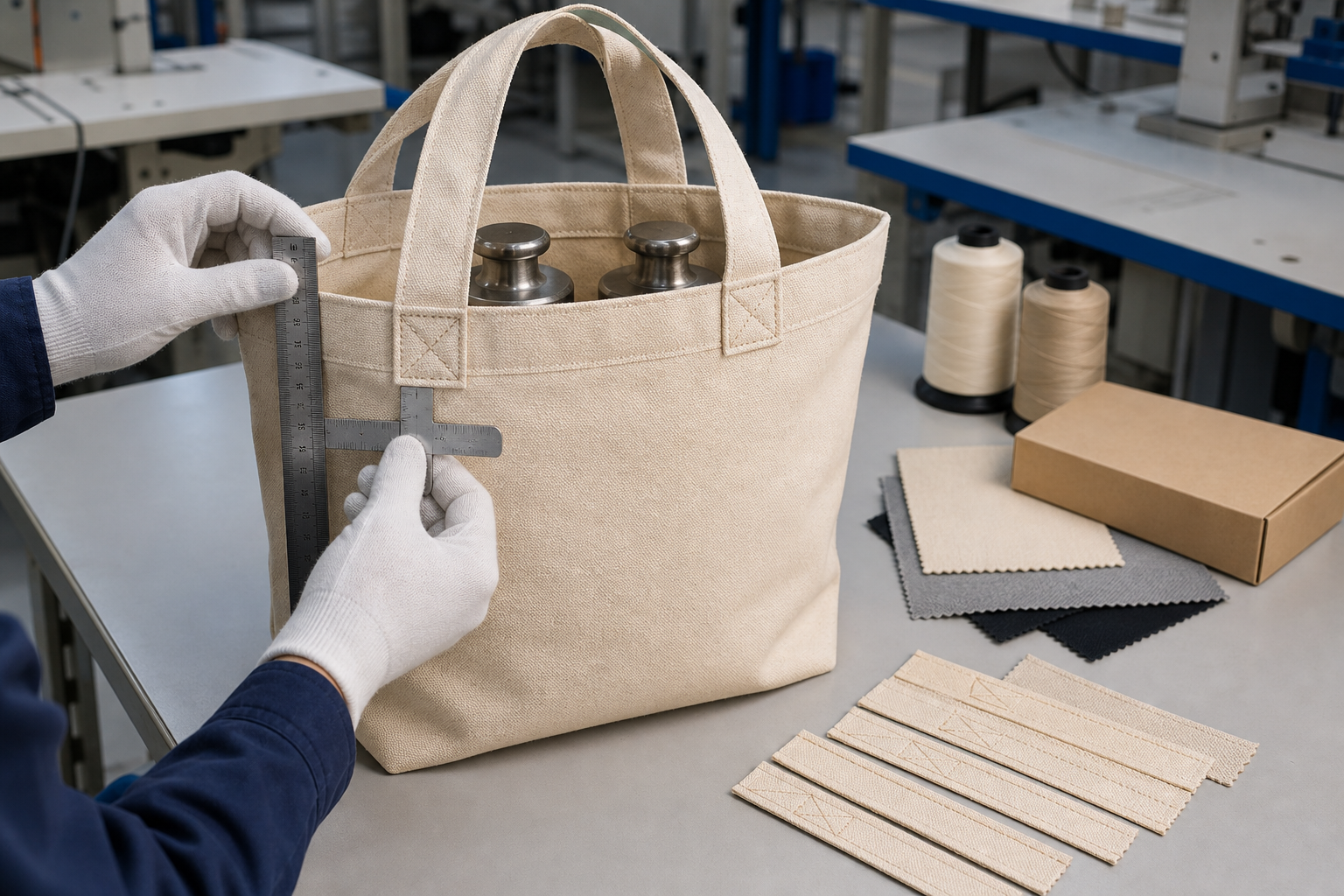
可重复使用的帆布手提包手柄加固和装载接缝质量检查

手柄附件、打开稳定性和负载尺寸应一起检查,因为一个强大的组件无法弥补较弱的连接。

第 6 步:使用过程中检查来停止重复

缝制 5,000 个袋子后发现的缺陷的分类和修复成本很高。过程中检查会在受影响的操作仍在运行时检查第一件和选定的单元。目的不仅仅是去除不良单位;它是为了找出结果漂移的原因并纠正过程。

应力区域 可能的构造响应 检查应该看到什么
手柄锚 Box-X、套结针迹、扩展附件或隐藏加固 完整图案、安全倒缝加固且无裁剪面料
顶部开口 具有合适深度的车削下摆、饰面或胶带 宽度均匀,无扭曲,兼容手柄插入
底部和角 接缝选择、装订、双排或局部加固 无跳针、褶皱或裸露毛边
口袋末端 倒缝、套结针迹或加固角 重复打开时口袋保持对齐
对齐或闭合 背衬层和足够的边缘距离 硬件安全,不会撕裂或扭曲
<标题> <正文>

Step 7: finish without changing the approved product

Finished totes may be turned, shaped, lightly pressed where appropriate, cleaned and trimmed. The finishing method must suit the fabric, decoration and accessories. Excessive heat or pressure can flatten texture, mark a coated surface, change a transfer or create a hard fold. The team should agree on the final presentation during sampling, including whether a relaxed natural appearance is intentional.

Loose threads, oil marks, chalk, dust and fibers are easier to address before individual packing. Repairs should be controlled; repeatedly sewing through one small area can damage the material even if the result looks tidy from a distance.

Step 8: validate function, dimensions and appearance

Final approval combines visual inspection with the functional checks named in the purchase specification. A bag can look acceptable while its opening is too small for the intended product, its handles twist under load or its print shows damage after a defined care simulation. Test methods, sample quantities and pass criteria should be agreed for the relevant market and use. Avoid vague instructions such as “must be strong.”

控制台 检查示例 立即响应漂移
剪切后 面板尺寸、凹口、阴影和捆绑标识 握住受影响的布局并验证标记或展开
装饰后 方向、位置、覆盖范围、颜色和固化 在更多面板进入缝纫之前停止运行并调整设置
第一个缝制的手提包 成品尺寸、顺序、接缝类型、手柄和功能 更正工作站指令并再次确认
中线 隐藏加固、缝份、跳针和对齐 Segregate work since the last accepted check
End-line Complete appearance, cleanliness, operation and count Record repair, reinspection or rejection by defect type
<标题> <正文>

For a detailed buyer-side inspection structure, link these product-specific tests to the Custom Bag Quality Inspection Checklist.

Final inspection uses an agreed acceptance plan

Final inspection should occur when enough goods are complete and packed to represent the shipment. The inspector checks identity, quantity, workmanship, dimensions, function, artwork, labels and packing against the current documents and approved sample. If the order uses an AQL-based sampling plan, the inspection level, defect categories and acceptance values should be agreed rather than assumed.

Evaluation What it examines Buyer decision needed
Finished dimensions Body, gusset, opening, handle width and drop Reference points, measurement condition and tolerances
Static or cyclic load Interaction of handles, seams, base and material Load, duration or cycles and acceptable change
Seam examination Opening, slippage, skipped stitches and edge security Critical locations and required test method
Decoration durability Adhesion, cracking, rubbing or color transfer Relevant conditioning or care simulation
Closure and pocket use Access, repeated operation and surrounding distortion Expected contents and operating cycles
Appearance recovery Creasing, shape and presentation after folding or loading What is acceptable for the material and price position
Packing trial Fold marks, moisture risk, carton fit and unpacking Individual pack, fold method and carton limits
<标题> <正文>

Classification depends on the agreed specification and end market. The examples above are discussion points, not a universal legal or inspection standard.

Step 9: pack by variant and preserve traceability

Packing is part of manufacturing because it can alter the bag and determine whether the correct version reaches the correct customer. The fold should avoid damaging artwork or creating an unacceptable hard crease. Individual protection, labels, carton liners and desiccant decisions should reflect material, route, season and buyer requirements rather than habit.

Carton marks and internal records can identify order, style, color, artwork version, quantity and packing date. Where practical, a carton or production reference can connect finished goods back to material and line records. Traceability does not prevent every defect, but it reduces the scope of a later investigation.

Defect category Reusable tote example Why classification must be agreed
Critical A safety or compliance issue as defined for the product and market Consequences extend beyond appearance or minor repair
Major Open seam, insecure handle, wrong artwork or unusable closure The intended use, saleability or brand identity is materially affected
Minor Small workmanship variation outside the approved standard The item remains usable, but accumulated variation lowers presentation
<标题> <正文>

How process choices affect cost, MOQ and lead time

A factory quote reflects operations, material commitments and production risk. Custom-dyed fabric, several artwork versions, complex gussets, interior features, special reinforcement or retail packing can create more setups and inspections than a flat single-color tote. A lower total quantity divided across many combinations may also behave like several small orders.

For a deeper cost breakdown, read How Much Do Custom Tote Bags Cost?. For quantity allocation, see the Custom Tote Bag MOQ Guide. Production time should be planned around material, sample and approval dependencies; the custom bag production lead-time guide explains those gates.

Common manufacturing failures and where to prevent them

Packing control Question to resolve Risk if ignored
Folding Where can the bag fold without marking print or hardware? Permanent-looking crease or decoration damage
Individual protection Is it needed for cleanliness, retail handling or variant control? Unnecessary packaging or insufficient protection
Carton quantity What count and weight suit handling and destination limits? Crushed goods, counting disputes or handling difficulty
Variant separation Can color, artwork and market version be identified quickly? Mixed cartons and incorrect distribution
Carton code Which order and production information must remain traceable? A small issue requires a much wider hold or recall
<标题> <正文>

Why choose LUCKYSTAR for reusable tote production

LUCKYSTAR approaches a reusable tote as a controlled product, not only a printable surface. Buyers can coordinate intended use, material, construction, decoration, sample approval, order allocation, inspection and packing in one development conversation. That is particularly useful when a program includes several colors, artwork versions or delivery groups.

  • Use-led specification: the team can review the contents, carry method and expected presentation before the structure is fixed.
  • Material and construction choices: buyers can compare fabric, handle, gusset, pocket, closure, label and reinforcement options.
  • Decoration coordination: artwork placement can be planned around raw panels, finished edges, seams and assembly order.
  • Physical sample control: color, dimensions, load behavior and packed presentation can be reviewed on a real tote.
  • Bulk-order organization: variant matrices, in-process checks and packing references help keep a repeated program consistent.
  • Buyer-visible decisions: quotations can be evaluated against the specification instead of an unexplained unit price.

If a program extends beyond totes, explore the full LUCKYSTAR Product Range. Send the intended use, target size, material direction, artwork, quantity by variant, packing preference and destination for a more useful production discussion.

What to send the manufacturer before quotation

Observed problem Likely process origin Best prevention point
Tote twists when loaded Grain, cutting, seam feeding or asymmetrical assembly Cut audit and first completed-unit load review
Handles differ in length or position Inconsistent folding, guide or attachment reference Handle preparation fixture and first-piece measurement
Artwork looks low after sewing Placement referenced from raw rather than finished edge Pre-production panel calculation and finished sample
Shade changes between panels Mixed rolls or components from different lots Incoming grouping, separated lays and bundle control
Seam opens near a handle Load path, material damage, tension or inadequate reinforcement Construction trial, in-line inspection and defined load test
Print is marked after unpacking Incomplete process control, fold position, pressure or packing interaction Packed-sample trial before bulk packing
Cartons contain mixed versions Weak bundle identity or packing matrix Variant codes at cutting, sewing, audit and carton stages
<标题> <正文>

常见问题

What are the main steps in reusable tote bag manufacturing?

The usual flow is specification and sample approval, incoming material inspection, spreading and cutting, decoration, subassembly, main sewing, finishing, in-process and final inspection, functional validation, packing and shipment release. The exact order changes with pockets, lining, closures and the chosen decoration method.

Is canvas always better than lighter cotton for a reusable tote?

没有。 Canvas can provide body and durability, but a lighter fabric may be appropriate for folding, event distribution or lower loads. Performance depends on weave, construction, reinforcement and intended use as well as nominal weight or material name.

Should tote bags be printed before or after sewing?

Large panel artwork is often applied before sewing because a flat surface is easier to position. Some marks are better after partial or full assembly. The factory should choose the stage after reviewing seams, pockets, heat sensitivity, support and finished placement.

How are reusable tote handles reinforced?

Options include box-X stitching, bar tacks, longer attachment areas and hidden backing layers. The correct choice depends on the handle, shell and target load. Reinforcement should be tested with the complete top edge and body, not judged by appearance alone.

What should a buyer approve before bulk production?

Approve the current specification, material and color, artwork or strike-off, finished sample, key dimensions, construction, functional targets, variant matrix and packing presentation. Keep one clearly identified control sample for production and inspection.

How is bulk tote quality checked?

Factories can inspect incoming material, cut parts, decorated panels, first sewn units, work in progress, end-line goods and packed cartons. Final inspection then follows the agreed sampling and acceptance plan, including the critical dimensions and functions named by the buyer.

How can a buyer reduce production delays?

Provide complete files, identify the final decision-maker, approve by milestones and limit late variant changes. Confirm material, artwork, sample, quantity matrix, tests and packing before bulk production. A faster answer is useful only when it is tied to the current revision.

Build repeat use into the process

Reusable tote quality is created before the final inspection. It begins when the use case becomes a measurable brief, continues through lot-controlled material and accurate cutting, and depends on the relationship between decoration, seam sequence and stress-point construction. In-process checks keep one error from becoming a full batch; realistic validation and traceable packing protect the approved result through delivery.

Review LUCKYSTAR's custom reusable tote bag options and connect this product-level workflow with the core Custom Bag Manufacturer pillar page. To discuss a new program, send LUCKYSTAR your specification and request a quote.

Get a quote for custom reusable tote bag manufacturing

特色博客

Tag:

  • 博客
分享到
特色博客
Service time:8:00-18:00
sales@luckystarcreation.com
+86 15957446693
+86 15957446693
Information Good input Why it changes the process
Use and contents Typical load, carry duration and user context Guides material, handle and reinforcement decisions
Finished construction Dimensions, gusset, handle drop, pockets and closure Defines patterns, operations and measurement points
Material direction Composition, color, target hand, weight or reference sample Affects sourcing, cutting, decoration and sewing
图稿 Vector files, colors, actual size, sides and placement Determines method, setup and production sequence
Quantity matrix Units by shell color, artwork, market and delivery Reveals real lot sizes and variant complexity
Quality needs Key tests, tolerances, inspection plan and market requirements Defines evidence, sample work and release criteria
Packing and timing Fold, individual pack, labels, carton limits, destination and date Changes materials, labor, volume and scheduling