化妆包技术包应该能够解答制版师、面料采购员、样品室、logo供应商、缝纫线、质检员和包装团队提出的问题。情绪板可以传达风格,但它无法定义清晰的拉链开口、弧形转角后的衬里余量,或者包包组装完成后弹性刷槽的位置。
计划下单? 申请审核您的化妆包需求。请从您已知的细节开始;尚未确定的规格可以进行讨论。
这种区别很重要,因为化妆包虽然外观小巧,但内部结构却非常坚固。
外层材料、背衬、泡沫、里料、包边、口袋、拉链和五金件都在狭窄的缝份内完美契合。任何一个不清晰的标注都可能改变包型、可用容量或成本。因此,化妆包技术包的目的并非制作一份精美的PDF文件,而是为每个团队提供一个可控、可衡量的产品定义。本指南重点介绍如何构建工厂可以使用的定制化妆包规格。同一份文档也可以称为化妆包技术包。有关跨类别的框架,请参阅如何准备定制包袋技术包。
为了在共享文件前比较沟通和开发能力,请使用如何选择化妆包制造商。您还可以查看LUCKYSTAR的定制化妆包以及更广泛的定制化妆包。 href="https://www.luckystarcreation.com/blog/best-materials-custom-cosmetic-bags">定制包袋制造商指南。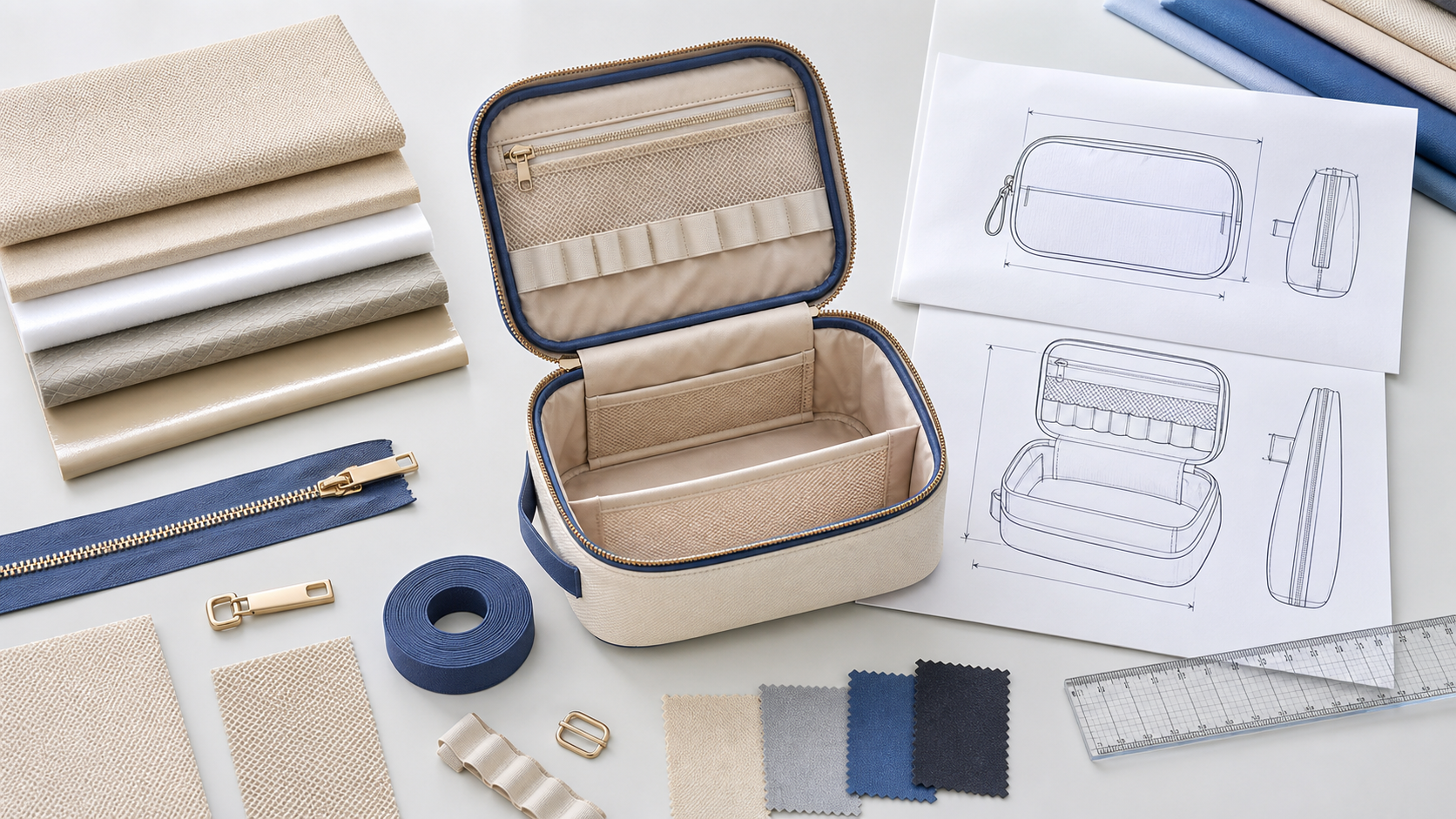
快速解答:化妆包技术包包含哪些内容?
一份完整的工厂可用技术包通常包含封面和修订记录、技术平面图、测量点、材料清单、层表、结构标注、拉链和五金件规格、内部结构、设计稿、颜色、标签、包装、质量标准和认证参考资料。
它还应说明哪些细节是固定的,哪些是目标,哪些仍待制造商提出建议。| 技术包部分 | 最基本的实用信息 | 它避免的问题 |
|---|---|---|
| 文档控制 | 样式代码、版本、日期、所有者和变更日志 | 哪个文件是当前版本? |
| 技术视图 | 正面、背面、侧面、底部、顶部、内部开放视图和关键部分视图 | 外观背后隐藏着什么? |
| 尺寸 | POM 代码、图表、目标、单位、方法和公差 | 包袋应该在哪里以及如何测量? |
| 物料清单和层数 | 每种材料、组件、规格、颜色和位置 | 假定使用了哪种泡沫、衬里或拉链? |
| 结构 | 接缝、包边、加固、缝线和组装细节 | 各部件应如何连接? |
| 品牌和颜色 | 图稿文件、尺寸、位置、方法和 SKU 矩阵 | 哪个标志对应哪个配色? |
| 包装和质量 | 标签、包装、测试、视觉限制和参考 | 合格交付的单元是什么样的? |
1.首先要进行文档控制,而不是图纸
在发送包装前,请分配一个唯一的样式代码。将代码、产品名称、季节或项目、版本号、发布日期和文档所有者放在封面上。仅凭日期无法进行可靠的版本控制:两个部门可能在同一天导出不同的文件。使用清晰的版本顺序,例如 V0.1 表示工作草稿,V1.0 表示第一个样品版本,V2.0 表示已发布的生产规范。
在包装首页附近维护一个变更日志。每一行都应标识受影响的页面或功能、先前的状态、请求的状态、批准人以及生效的样品版本。不要在未更改包装版本的情况下分发单独的替换页面。供应商应能够在订购材料或更改图案之前确认确切的文件。
| 控制字段 | 良好输入 | 风险输入 |
|---|---|---|
| 风格标识 | CB-2608-01,结构化旅行化妆箱 | 蓝色化妆包 |
| 版本 | V1.3 已发布,用于第二个原型 | 最新 |
| 更改条目 | POM D 开口增大;口袋 P2 从侧缝向外移动了 12 毫米 | 尺寸已更新 |
| 已批准 | 已批准的外层颜色;拉链拉片已完成,等待划线 | 大部分已批准 |
| 文件所有权 | 由一位指定的品牌联系人发布修订 | 评论由多个团队分别提交 |
2.明确产品用途及其实际内容
在绘制形状之前,请说明该包袋是零售 SKU、赠品袋、旅行收纳包、订阅盒组件、专业化妆箱还是美妆套装包装。请注明销售市场、预期用户、目标价格定位、预期使用条件以及重要日期。这些信息有助于制造商了解哪些决策会影响价值,哪些决策可以简化。
列出此包预计容纳的实际产品。包括最大瓶子的直径和高度、罐子的宽度、画笔的长度、调色板的厚度以及总重量。如果专有产品无法共享,请提供带有尺寸标注的模型。包的形状应由内容物决定,而不是仅仅根据效果图来选择形状。
| 使用输入 | 记录内容 | 技术包后果 |
|---|---|---|
| 最大刚性物体 | 整体尺寸、方向和移除方向 | 清晰的开口和拐角几何形状 |
| 长工具 | 画笔或铅笔的长度、笔头宽度和数量 | 弹性槽间距、口袋高度和盖子间隙 |
| 装载重量 | 预期典型重量和最大重量 | 提手,接缝和加固要求 |
| 液体或粉末 | 可能接触、清洁方法和泄漏问题 | 衬里、接缝、涂层和测试选择 |
| 零售展示 | 填充、空置、折叠、装箱或悬挂 | 结构、logo方向和包装尺寸 |
3. 绘制工厂生产包袋所需的所有视图
技术平面图是正投影图,而非生活场景图。应包含正面、背面、非对称款式的两侧、顶部、底部和完全打开的内部视图。如果平面图无法清晰显示衬里、泡沫或隔板,请使用爆炸图。添加填充壁、包边、滚边、拉链轨道和加固连接件的横截面图。
保持各部件编号一致。图纸中的口袋 P1 应与物料清单、尺寸表和注释中的口袋 P1 一致。
标明拉链的打开方向、拉链闭合时拉片的位置,以及是否需要双向拉链。标明对称性,而不是指望制版师自行推断。| 视图 | 它应该揭示什么 | 常见的遗漏 |
|---|---|---|
| 正面/背面 | 轮廓、拼接处、logo、提手和可见缝线 | 不同的背面结构显示为相同 |
| 侧面/底部 | 裆部、锥形、底片、滚边和缝线位置 | 仅给出深度,未说明测量位置 |
| 顶部/闭合 | 拉链路径、拉动方向、把手和末端处理 | 拉链长度与开口混淆 |
| 开放式内部 | 衬里、口袋正面、隔层、松紧带和连接点 | 内部仅以文字描述 |
| 剖面图/分解图 | 图层顺序、缝份、包边、泡沫止挡和加固 | 材料清单(未显示位置) |
4. 制作化妆包专用测量点图表
没有测量方法,测量值是不完整的。在简单的图表上画出POM字母,并在表格中重复这些字母。说明包包是空的、略微装满的还是压平的;拉链是打开的还是关闭的;以及是否包括滚边、提手或拉环。
在整个主文件中使用统一的单位,并将公差与目标值分开显示。对于软包,测量值可能会因搬运而有所变化。请定义一个可重复的测量设置:拉上拉链,将包平放在平面上,不要拉伸,仅抚平主要的褶皱,并在指定的接缝交叉点之间进行测量。仅在功能或包装需要时才使用更严格的公差。
不必要的严格限制会增加检验纠纷,而不会改善客户体验。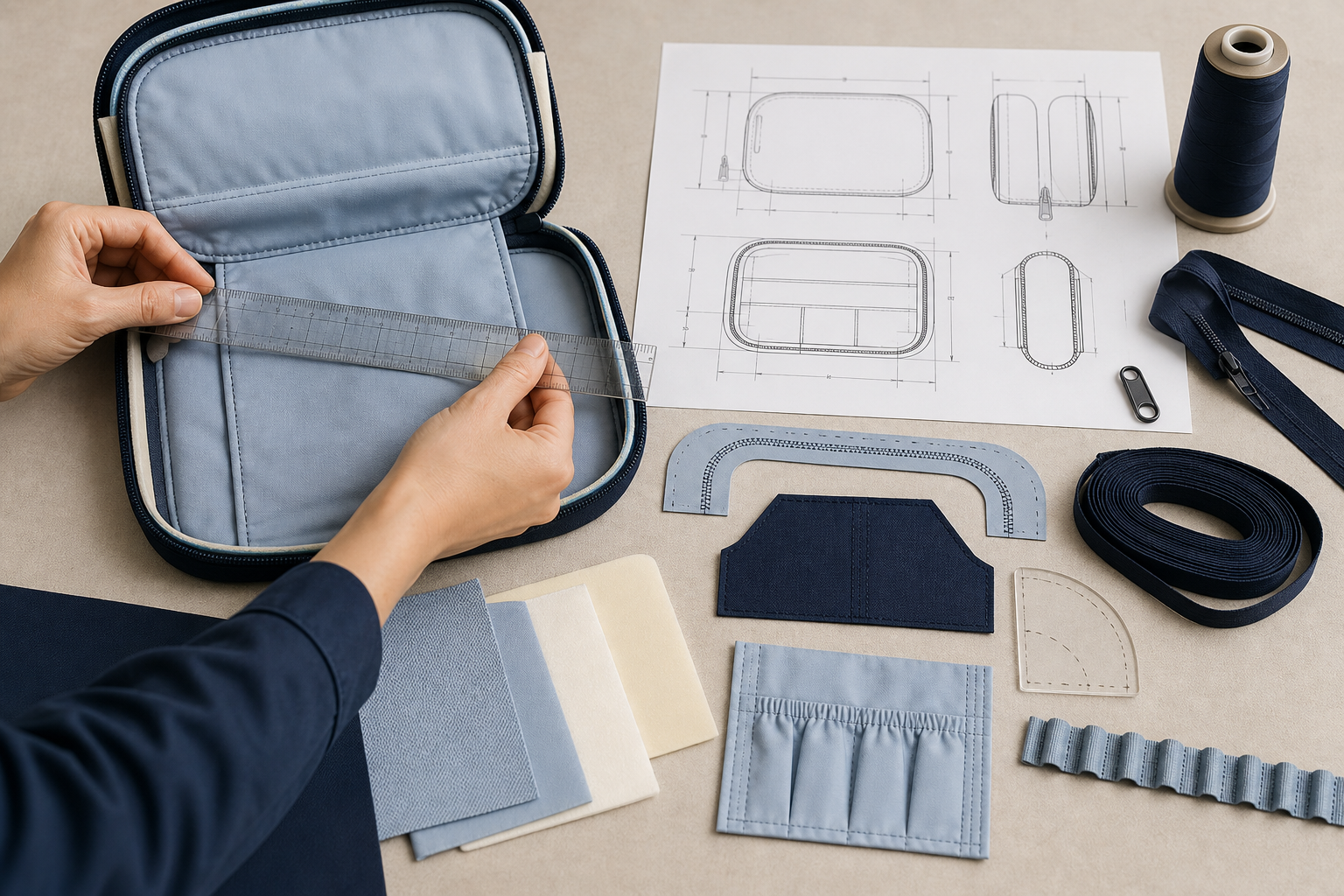
| POM 示例 | 测量方法 | 为什么这很重要 |
|---|---|---|
| A.成品宽度 | 指定水平线上的侧缝到侧缝 | 整体比例和零售包装合身度 |
| B.完成高度 | 底部参考顶部边缘,不包括把手 | 内容高度和轮廓 |
| C.完成深度 | 底部或侧边在指定点处的深度 | 容量和站立性能 |
| D.畅通无阻 | 拉链完全打开时,各停靠点之间的可用通道 | 硬质产品是否可以进入 |
| E.口袋开口 | 组装后内边缘到内边缘 | 取用和产品固定 |
| F.提手下垂 | 提手顶部边缘到凸起提手底部中心 | 提手舒适度和纸箱轮廓 |
| G.标志位置 | 从成品缝线参考点到图案边界 | 缝纫后外观一致 |
5. 指定可用空间,而不仅仅是外部尺寸
带衬垫的化妆包外部尺寸可能正确,但由于泡沫、包边、圆角和内部隔板,实际容量会损失很大一部分。为可用内部空间创建一个单独的容量页面。显示预期的产品摆放方式以及拉链或盖子所需的任何“保持畅通”区域。对于翻盖式化妆包,请确认盖子中放置的刷子在关闭时是否会碰到底部的瓶子。
透明开口需要单独列出产品规格说明 (POM)。
这并非指购买的拉链链长度,因为拉链链的长度包含隐藏在缝线内的末端。如果最大的罐子宽度为 72 毫米,请说明它必须通过的最小开口尺寸以及测试中使用的方向。如果条件允许,请附上实际产品的照片或完成插入测试的尺寸模型照片。| 容量控制 | 指定 | 样品评价 |
|---|---|---|
| 内部信封 | 所有图层后的可用宽度、高度和深度 | 与实物尺寸或产品布局进行比较 |
| 开口间隙 | 最小净空距离和最大物品尺寸 | 无需用力拉动链条即可轻松插入和取出 |
| 闭合间隙 | 拉链或盖子下方的禁区 | 装满物品时请缓慢关闭 |
| 口袋容量 | 产品数量,尺寸和方向 | 检查保留率、易取性和变形情况 |
| 包装轮廓 | 允许的折叠或填充尺寸 | 测试完整的零售包装和纸箱包装 |
6.将物料清单 (BOM) 编写成可追溯的配方
物料清单应列出所有实物投入,包括客户看不到的部件。应分别列出外壳、里料、泡沫、背衬、加固板、拉链链、拉链头、拉片、滚边绳、包边、网布、松紧带、缝线、标签和包装。“外层 PU,内层涤纶”这样的描述过于笼统,容易导致厚度、背衬、表面处理和手感等方面的差异。
为每个组件赋予代码、位置、成分或材料系列、结构规格、重量或厚度(如适用)、颜色参考、表面处理、供应商参考(如有指定)以及审批状态。如果允许使用替代品,则应描述性能目标,并在替换前获得批准。有关材料选择原则,请参阅定制化妆包的最佳材料。
| 物料清单行 | 有用的规格字段 | 批准证明 |
|---|---|---|
| 外壳 | 成分、结构、重量/厚度、背衬、表面和颜色 | 带标签的生产质量样品 |
| 里料 | 纤维、织法、涂层、颜色、印花和清洁方向 | 色卡及成品包评测 |
| 结构 | 泡沫/衬里类型、厚度、密度或恢复和位置 | 图层样本和已批准的轮廓 |
| 拉链系统 | 链条类型/尺寸、带子、滑块、拉头、表面处理、方向和数量 | 组件集和组装操作 |
| 内部装饰 | 网布、松紧带、包边和加固尺寸 | 保持力试验和结构样品 |
| 品牌/包装项目 | 标签、吊牌、插页、单元保护、零售包装和纸箱 | 图稿及完整包装试用 |
7. 为每个面板添加层表
物料清单 (BOM) 列出了现有材料;层表则说明了每种材料的位置和顺序。对于每个主要面板,请从外到内展示堆叠方式。标明泡沫在接缝处的位置、背衬是熔合还是浮动、哪一层印有标志以及加固是局部加固还是全面板加固。
衬里图案需要特别注意。过小的宽松度会导致外壳向内收缩,减少容量。过大的宽松度则可能导致包身鼓起、卡住拉链或藏匿小物件。请说明内衬是松散的、嵌入式的、与外壳缝合的还是通过开口翻折的,并标记其固定位置。
| 面板 | 示例:由外而内堆叠 | 关键标注 |
|---|---|---|
| 主体 | 外层/背衬/泡沫/衬里 | 泡沫止挡和接缝加厚处理 |
| 底座 | 外层/加固/泡沫/易清洁衬里 | 站立要求和允许刚度 |
| 盖子 | 外层/背衬/泡沫/口袋组件/衬里 | 装载刷子间隙和铰链弯曲 |
| 口袋 | 口袋正面/松紧带或拉链/必要时的衬里 | 开口完成,方便穿脱和连接顺序 |
| 提手 | 外层包裹/织带或板材加固/主体层 | 加固区域和缝线方框 |
8. 详细说明拉链、五金件和开口路径
“金色拉链”是一种外观方向,而非组件规格。请定义拉链的类型和尺寸、拉链带的材质和颜色、拉链头类型、拉片设计、表面处理、数量、开口方向、止挡和末端处理。如果拉片是定制的,请附上尺寸图,并说明标志是模压、雕刻、压印还是印刷的。
在样板和成品包上展示拉链路径。较小的半径会增加操作阻力,尤其是在衬垫和包边挤压拉链时。说明拉链在装载预期物品的情况下是否能够顺畅运行。如果考虑防水声明,请区分防水拉链外观和经过测试的包袋结构;使用防水化妆包制造,以便更仔细地定义需求。
| 拉链/五金细节 | 需要说明的内容 | 样品检查 |
|---|---|---|
| 链条和胶带 | 类型、标称尺寸、胶带宽度/材质、颜色和长度依据 | 外观、接缝间隙和曲线特性 |
| 滑块和拉杆 | 兼容的类型、数量、形状、尺寸、表面处理和标志 | 抓握力、噪音、旋转、刮擦和拉力 |
| 开启路径 | 起始/停止位置、方向、半径和净开口 | 空载和预期负载操作 |
| 金属配件 | 尺寸、基材、表面处理、数量和连接方式 | 对齐方式、移动方式和周围加固 |
| 表面处理参考 | 经批准的芯片或组件实物,而非仅屏幕图像 | 在约定的光照条件下显示颜色,并确保各部件之间的兼容性 |
9. 设计口袋、隔板和刷架
每个内部结构都需要提供最终尺寸、基于稳定缝线参考的位置、材料、边缘处理、弹性或延展性以及固定方式。口袋高度若缺少开口宽度则不完整。刷条若缺少弹性宽度、最终环距和目标工具直径,则样品制作者只能靠猜测。
展示包内物品装满时内部组件的运行情况。中央隔板可以改善收纳,但会挡住大罐子。网状隔板可以显示内容物,但可能会勾住瓶盖。
弹性材料的保持力会随着反复拉伸而改变。确定分隔条是固定式、可拆卸式还是可调节式,以及钩环、按扣或拉片的安装方向。| 内部特征 | 必填标注 | 功能审查 |
|---|---|---|
| 插袋 | 成品尺寸、开口、开合方式、边缘和位置 | 取用方式、物品固定方式以及对衬里的影响 |
| 拉链口袋 | 包身深度、拉链长度、拉链方向和背衬 | 内容不会与外部链条碰撞 |
| 网格面板 | 网格类型、拉伸方向、绑定和接缝 | 无钩挂、过度拉伸或毛边 |
| 笔刷循环 | 弹性宽度,环距、数量和目标刀具直径 | 牢固握持,不损坏手柄 |
| 分隔线 | 厚度、表面处理、位置和可拆卸附件 | 负载下稳定且易于重新配置 |
10.将结构图转化为清晰明确的标注
结构图将图纸与装配路线连接起来。标明缝合类型、缝份、可见缝线、关键部位的缝线密度、线色、包边宽度、滚边直径、加固材料以及任何边缘处理方式。标记明线缝合的起点和终点。如果外观取决于特定的装配结果而非强制性方法,请描述该结果并邀请制造商提出最稳定的装配路线。
在拐角、拉链末端、提手袢和内部交叉点处使用放大的细节气泡图。这些区域包含多层材料,并且经常出现堆积、扭曲或裸露毛边的情况。如果提供了参考样品,请标注哪些特征需要复制,哪些特征需要更改。
切勿在未将实物样品与代码和日期关联的情况下写“与样品相同”。| 施工区域 | 标注 | 审批焦点 |
|---|---|---|
| 包边 | 成品宽度、材质、重叠/连接处和可见侧 | 均匀宽度、包边毛边和整齐的弧度 |
| 滚边 | 绳子直径、包覆材料、接缝位置和连接处 | 一致的轮廓和光滑的边角 |
| 提手连接 | 拉片尺寸、加固和缝线图案 | 预期负载下的对齐和性能 |
| 拉链末端 | 停止,车库/标签、折叠和衬里交叉处 | 无外露齿、堆积物或拉拔器障碍 |
| 转弯/闭合点 | 衬里或接缝处的位置和闭合方式 | 干净利落的表面,无可见的薄弱点 |
11.控制图案、配色方案和 SKU 矩阵
附加矢量图稿,并在包内指定文件名。注明成品 logo 的宽度和高度、应用方法、颜色、方向、安全区域以及与成品缝线的距离。缝制前放置在平面上的 logo 在添加衬垫和包边后可能会发生视觉位移,因此 logo 的位置应参考成品包。
创建一个配色方案表,每行对应一个 SKU。将外层、里料、拉链带、拉链头、包边、线、logo 和标签与该 SKU 关联起来。这样可以防止“海军蓝包”继承其他版本使用的拉链或里料。如果该系列包含相关款式,请使用 如何设计化妆包系列,以决定哪些组件应该共享。
| SKU 矩阵字段 | 示例决策 | 参考类型 |
|---|---|---|
| 外层和里料 | 暖象牙色外壳 / 柔和蓝色里料 | 已批准的实物色卡和供应商代码 |
| 拉链和包边 | 同色系织带 / 海军蓝包边 | 组件集 |
| 硬件 | 拉丝暖金属饰面 | 经批准的饰面样品或实际零件 |
| Logo | 单色印刷,成品尺寸如上所示 | 矢量文件和刮痕 |
| 标签/包装 | SKU标签、插页和零售封套,颜色与包装相匹配 | 已批准的图稿和包装示例 |
12. 包含包装、标签和纸箱数据
产品只有在交付状态明确后才能完整说明。说明包装袋内是否填充了纸巾或填充物,是否已拉上拉链、折叠、放置了保护装置、装箱或套袋。通过图稿文件名和位置识别每个标签、插页、条形码、警告和纸箱标记。记录每个内箱和外箱的包装数量、纸箱方向以及五金件或标识表面所需的任何保护措施。
在成品样品上试装。如果加固材料在小纸箱中受到挤压,即使是技术上正确的包装袋也可能出现折痕。金属拉环在运输过程中可能会划伤涂层材料。有关美妆品牌展示清单,请阅读美妆品牌定制化妆品包装袋。
| 包装级别 | 规格 | 验证 |
|---|---|---|
| 包袋准备 | 形状/折叠、拉链位置、肩带、填充物和表面保护 | 已批准的序列照片 |
| 单件包装 | 材质、尺寸/厚度、封口、透气性和标签 | 完整包装样品 |
| 零售展示 | 插页、封套、包装盒、吊牌、条形码和方向 | 设计稿、扫描和货架陈列审核 |
| 外箱 | 数量、排列方式、纸箱尺寸、标记和保护 | 包装试验和发货数据 |
| 混合 SKU | 是否允许、品种比例和标识 | 纸箱标签与实际内容相符 |
13.定义质量标准和认证参考
技术包应说明如何评判重要特性,但它不能取代检验计划。列出关键尺寸和公差、外观工艺要求、功能检查、适用的测试以及已批准的实物参考。将强制性产品要求与偏好要求区分开来。
如果存在性能或法规要求,请在报价阶段明确目标市场、产品背景和测试方法。不要使用“高质量”、“环保”或“防水”等模糊词语来代替可衡量的证据。
化妆品包装袋质量控制清单
为进货检验、在线检验和最终检验提供了一个独立的框架。| 特征 | 参考文献 | 可能的验证 |
|---|---|---|
| 尺寸 | 物料清单 (POM) 图表、设置和公差 | 根据约定的样品测量的单位 |
| 材料/颜色 | 物料清单 (BOM) 以及已批准的实物色卡/组件 | 来料标识、批次和外观审核 |
| Logo | 图案、位置图和已批准的打样 | 首件与生产对比 |
| 功能 | 定义负载,拉链,保留或清洁程序 | 样品和/或生产单元的记录测试 |
| 工艺 | 详细图纸、视觉极限样品和缺陷规则 | 在线和最终视觉检查 |
| 包装 | 包装说明和已批准的包装参考 | SKU、标签、数量和纸箱检查 |
14. 管理样品和修订,确保决策不丢失
发出第一个包装时,附上待处理问题清单。样品到达后,对照同一版本检查尺寸、容量、开口、衬里、结构、材料、品牌和包装情况。标记照片,为每条评论分配一个 ID,并将反馈整合到一个版本中。避免发送多封邮件,以免最终无法纳入主规范。
更改获得批准后,更新所有受影响的页面。
增加泡沫厚度可能会改变成品尺寸、拉链缝纫、边角体积、可用空间、纸箱尺寸和价格。仅仅更改一个物料清单 (BOM) 单元是不够的。完整的物理检查流程在 定制化妆包样品开发流程。| 修订步骤 | 品牌行动 | 制造商确认 |
|---|---|---|
| 问题 | 发布一个带有日期/版本信息的文件并列出待决事项 | 确认文件标识和可行性问题 |
| 样品审查 | 测量、装载、操作、拍照并记录意见 | 回复每个编号的评论 |
| 修订 | 同时更新图纸、POM、BOM、图稿和日志 | 状态为已完成 | 待定和拟议的替代方案
| 审批 | 确定已批准的确切样品、打样和文件 | 保留匹配的工厂参考信息 |
| 批量交接 | 冻结生产包及后续通过书面控制进行更改 | 将采购、生产线设置、质量控制和包装与该版本关联 |
化妆包技术包常见错误
- 仅显示闭合的外部。 添加打开的内部、底部、拉链末端和分层部分。
- 混淆外部尺寸和容量。 定义内部信封、清晰的开口和实际的装载布局。
- 材料命名过于宽泛。 记录结构、重量/厚度、衬里、表面处理、颜色和位置。
- 忽略衬里的特性。 指定分层顺序、松紧度、连接方式及其与口袋和拉链的关系。
- 从……批准颜色监控。 当外观至关重要时,请使用纺织品和五金饰面的实物参考。
- 通过多种渠道发送评论。 在主版本中汇总、编号并关闭这些评论。
- 包装审批后再进行。 成品包在发布前,应先在单件包装和纸箱包装中进行试用。
- 设定不切实际的公差。 控制限值应与功能、过程能力和实际测量方法相匹配。
为什么选择 LUCKYSTAR 来准备您的技术包?
一个优秀的制造合作伙伴不仅仅是接收文件。开发团队应该能够识别缺失的尺寸,揭示相互冲突的需求,并展示材料或结构的选择如何影响样品结果、成本和生产可行性。LUCKYSTAR 可以审核完整的技术包、简要说明或参考样品,并将待定事项整理成更清晰的开发路线。
对于化妆包而言,审核可以将预期内容物与开口、层数安排、衬里、口袋、拉链、logo 设计方式和包装方式联系起来。它还有助于区分设计偏好和可衡量的生产要求。
探索我们更丰富的产品系列,或使用如何选择化妆包制造商作为供应商筛选框架。正确的路径取决于原创性和准备情况。品牌可以沿用现有结构,开发新的OEM模式,或从ODM方向入手。LUCKYSTAR的作用是明确所选路径,解决未解决的细节问题,并将最终方案与生产文档关联起来。
请阅读定制包袋制造商指南,了解更广泛的采购流程;并阅读定制包袋制造流程:从设计到交付,了解生产顺序。工厂交付清单
| 询价前 | 打样前 | 批量发货前 |
|---|---|---|
| 用途、市场和预期内容已定义 | 已发布技术视图和产品物料清单 (POM) 图表 | 已确定最终样品和包装版本 |
| 已说明数量/颜色细分和目标时间 | 物料清单 (BOM)、层计划和组件可追溯 | 已批准的材料、颜色、标志和装饰 |
| 固定要求与可选方案分开 | 设计稿, | 内部和施工细节已完成评论已关闭,POM 结果已接受 |
| 包装和目的地信息已共享 | 测试和审核程序已达成一致 | 包装试验、质量控制参考和变更控制已冻结 |
询价时,请提供当前包装、目标数量、颜色明细、预期内容、目的地和所需交货时间。
如果某些字段仍未填写,请标注出来,而不是随意猜测。请查看定制化妆包的成本是多少?中的成本驱动因素,以及化妆包的最小起订量和生产时间中的规划假设。常见问题解答
联系制造商之前,我需要完整的技术包吗?
不需要。一份清晰的简要说明、带有尺寸的草图或参考样品即可开始可行性讨论。将缺失的细节标记为“未填写”,并寻求建议。
但是,在批量生产之前,已批准的产品应整合到受控规格和实物参考标准中。我可以使用其他化妆包的照片吗?
照片可以说明方向,但无法定义隐藏的层次、精确的尺寸、设计细节的所有权或结构。请说明您喜欢什么、需要更改什么以及哪些方面尚不清楚。制定一份原创的、可衡量的规格说明,而不是让工厂根据图片推断整个产品。
化妆包技术包应该有多少页?
没有理想的页数。一个简单的扁平小袋可能只需要简洁的资料包,而带有隔板、定制五金件和零售包装的结构化化妆包则需要更详细的说明。包含报价、样品制作、生产和检验特定款式所需的所有决策;删除没有提供任何有用信息的页面。
所有尺寸的公差都应该相同吗?
不。公差应反映功能、材料特性、测量重复性和工艺能力。开口或包装尺寸可能需要比非关键的软面板尺寸更严格的控制。
发布前请与制造商讨论拟定的限制。已批准的样品是否足以用于批量生产?
样品是重要的视觉和功能参考,但它应该与最终的技术包、已批准的材料、设计稿、包装说明和质量标准相匹配。由于单个样品无法代表所有生产单元,因此批量检验仍然是必要的。
我应该向 LUCKYSTAR 发送哪些内容进行初步审核?
请发送最新文件或草图、预期内容、各颜色数量、所需材料、品牌文件、包装方向、目标市场、目的地和所需时间。
参考包或清晰的照片在标注差异时非常有用。将规格转化为可生产的化妆包
完善的技术包并不能消除所有开发问题;它能让这些问题清晰可见、可追溯,并更容易解决。当尺寸、层数、组件、内部功能和审批都指向同一产品时,抽样就更有意义,生产团队也拥有了可靠的参考依据。
浏览 LUCKYSTAR 的定制化妆包生产选项或联系我们团队,获取化妆包技术包审核和报价。

请求审核您的化妆包需求
您无需提供完整的规格说明即可开始沟通。
请在您的信息中包含以下详细信息:- 如有,请提供当前图纸或规格版本。
- 按颜色分类的预期内容和数量。
- 未定的材料、结构或包装方案。