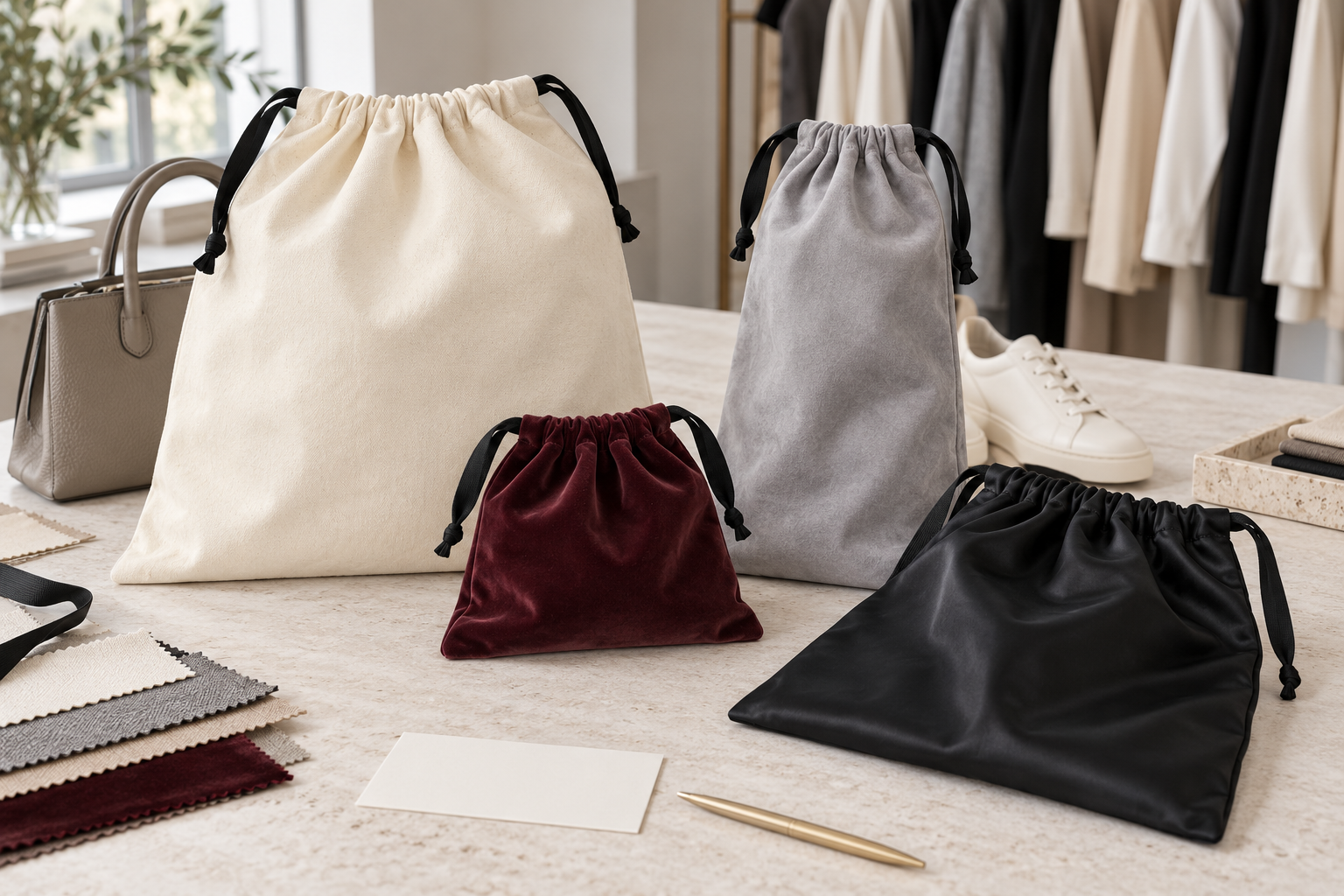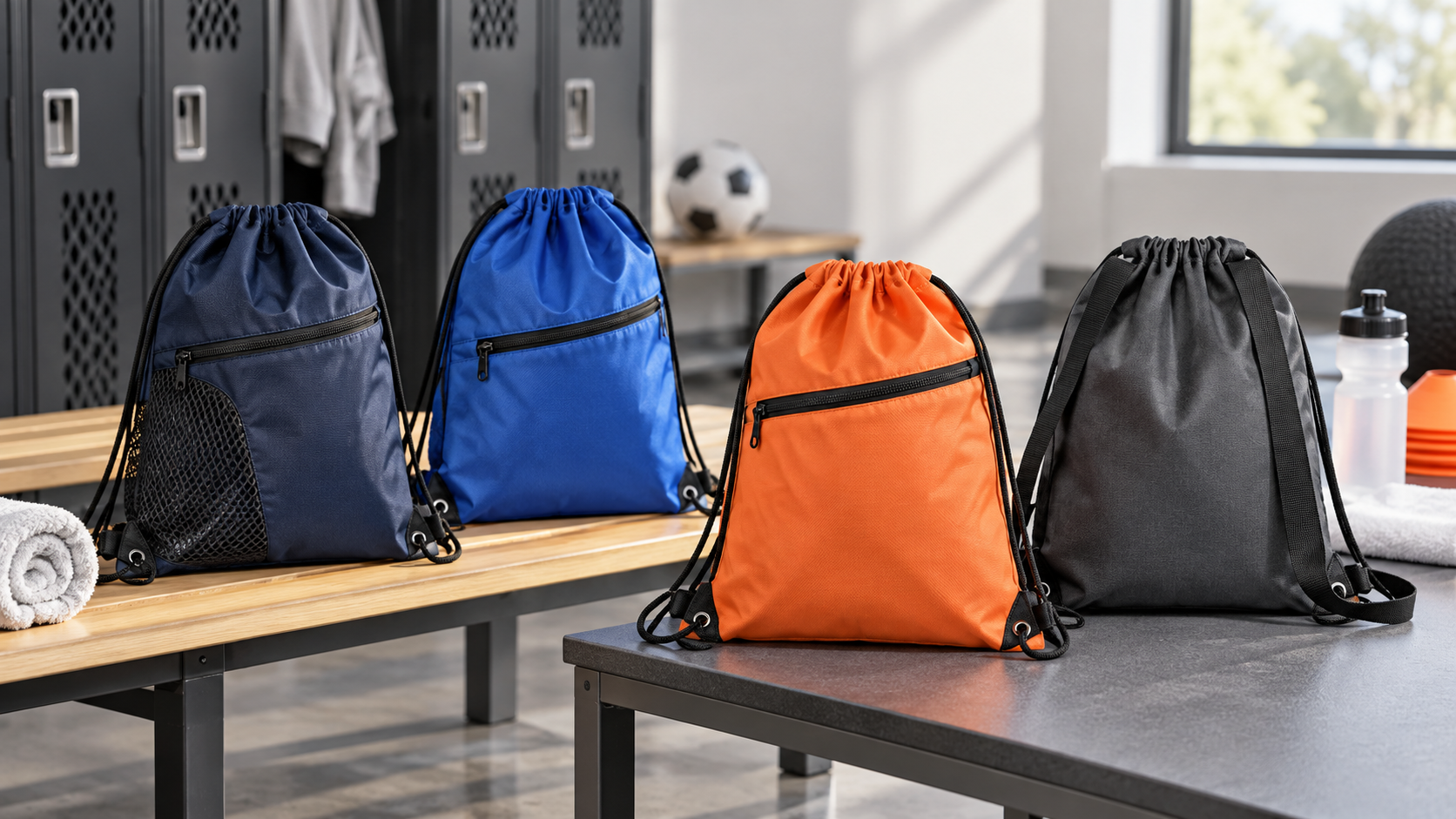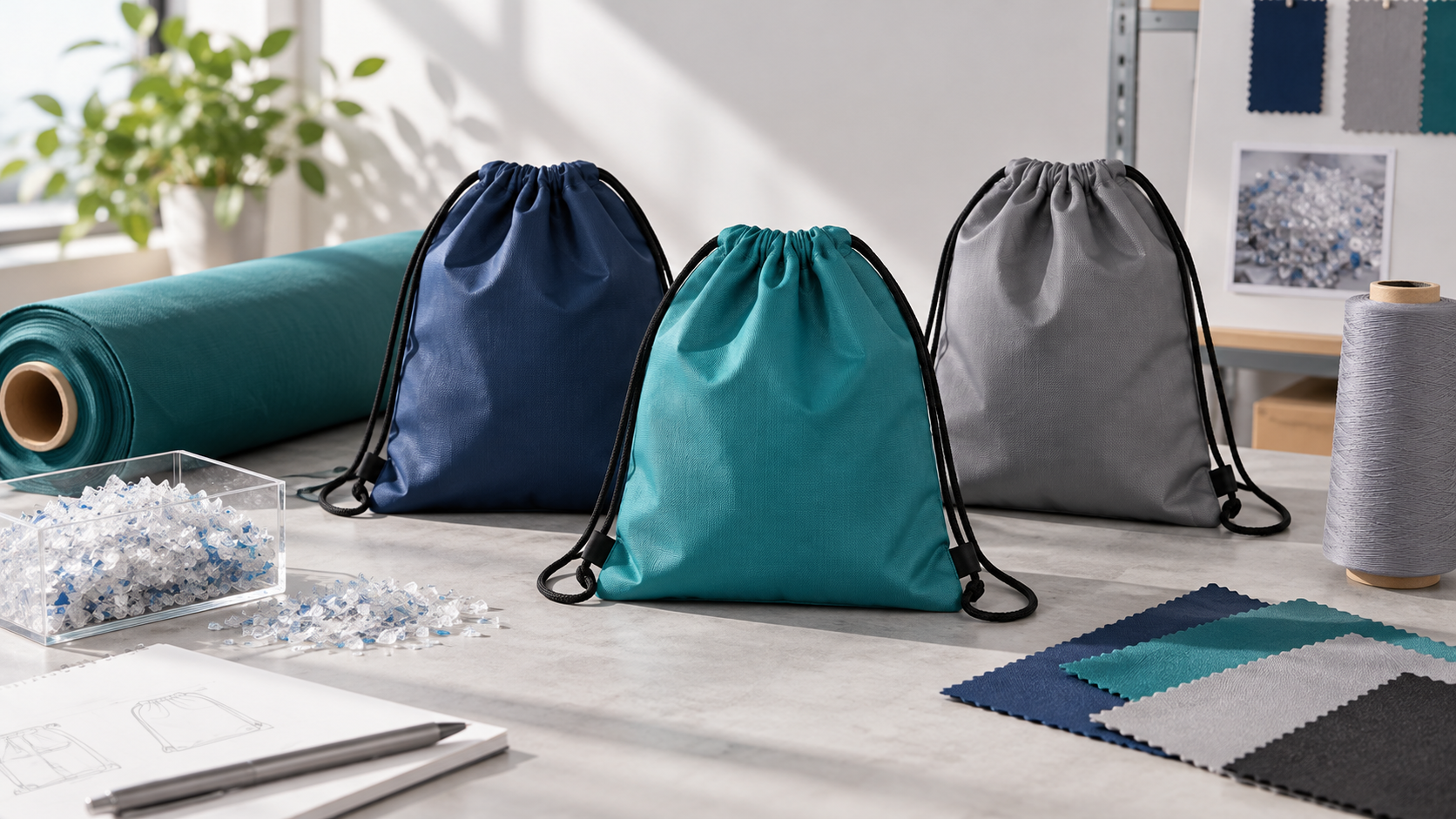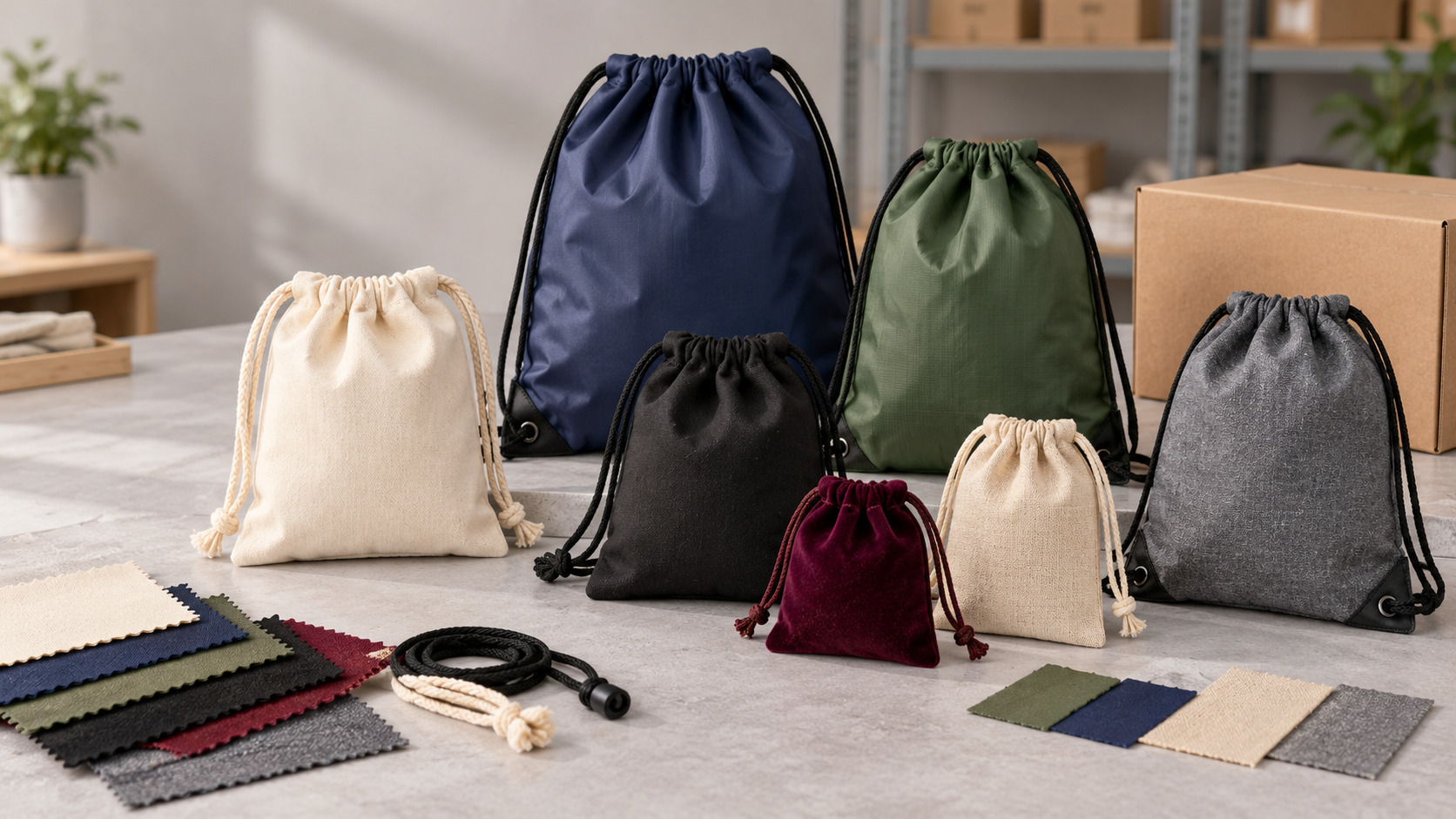
A tote does not become sustainable because it is beige, reusable or printed with a leaf. Cotton can carry high agricultural impacts; recycled blends can lose strength; a durable bag can still fail if the handle is poorly attached. The strongest sustainable tote bag manufacturers connect material evidence, responsible processing, construction life and honest marketing language.
This ranking is organized around substantiation rather than one preferred fiber. It should be read alongside the Reusable Tote Bag Manufacturing Process and the global manufacturer ranking.
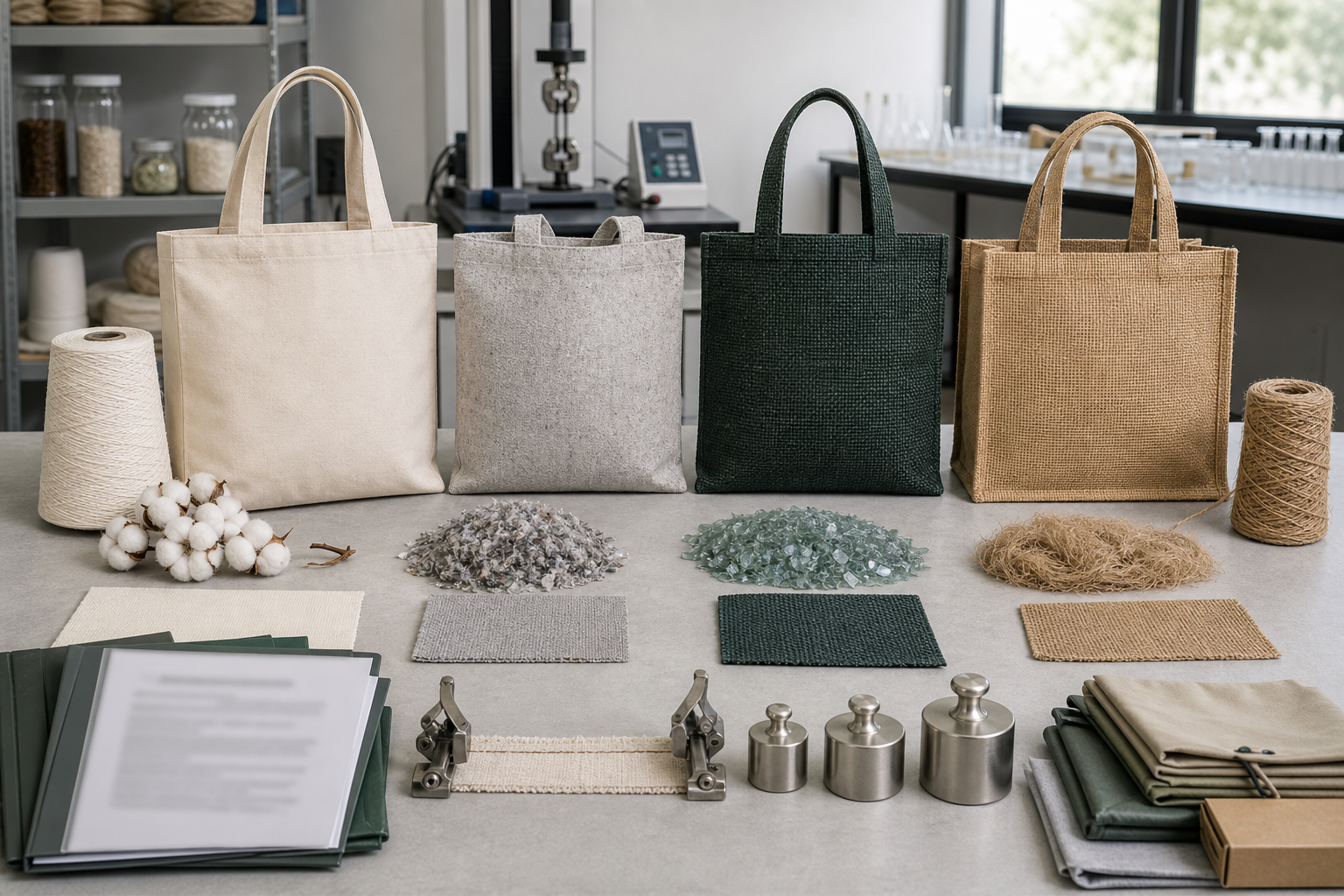
A lower-impact tote is a documented system: material inputs, durable construction, responsible processing, realistic reuse and end-of-life instructions.
Need evidence-ready tote proposals? Send the destination market, intended environmental claim, fiber composition and percentage, certification or transaction-document requirement, construction, finished weight, logo method, quantity, packing, test plan, Incoterm and required arrival date. LUCKYSTAR can return an order-specific RFQ and its own commercial option; use the same released brief and evidence gates with every candidate.
Quick comparison: the 2026 shortlist
A ranking is useful only when its operating models remain visible. The table therefore states the apparent route, strongest use case and the question that can change the purchasing decision.
| Rank and company | Operating model | Best apparent fit | Buyer must verify |
|---|---|---|---|
| 1. LUCKYSTAR | OEM/ODM partner coordinating project-specific material and factory routes | Custom programs needing several material scenarios and coordinated products | Name the factory and material supplier; verify scope documents, recycled or organic percentage, test plan, packing and permitted marketing claim. |
| 2. Supreme Creations / Bags of Ethics | Integrated India production with London headquarters | Large reusable-bag and merchandise programs with developed responsibility systems | Request scope and transaction documents, material specification, print chemistry, facility audit, durability test and approved wording. |
| 3. Gallant International | Private-label organic and Fair Trade cotton partner | Values-led U. S. brands developing certified cotton merchandise | Confirm certificate holder, transaction scope, fiber and dye route, country of origin, sample, minimum and durability standard. |
| 4. Enviro-Tote | Made-in-USA cutting, sewing and printing with cotton and recycled options | Domestic reusable totes and relatively small custom programs | Check material origin, certificate or recycled-content evidence, fabric weight, print chemistry, load performance and shipping distance. |
| 5. BIDBI | Sheffield ethical print factory for cotton canvas products | UK-branded totes with strong print guidance and ethical-material positioning | Confirm sewing origin, certificate scope, ink system, GSM, proof/sample, packaging and dispatch route. |
| 6. Cotton Bag Co | UK printing plus India and China bespoke routes | Certified-material choices combined with fast or custom production paths | Tie origin, certificate, material, print site, minimum and freight method to one quoted SKU. |
| 7. ECOBAGS | Reusable-bag brand offering established products and custom printing | Wholesale and co-branded programs built on long-running reusable formats | Confirm origin, composition, certificate claims, printing, minimum, load expectation and availability for repeats. |
| 8. noissue | Global custom-packaging platform | Brands coordinating totes with lower-impact packaging choices | Ask for factory country, material evidence, manufacturing method, minimum, packing efficiency, freight route and claim wording. |
| 9. Sunday | European branded-merch and tote development platform | Premium company totes designed for retention rather than disposable handouts | Confirm country of manufacture, material documents, minimum by route, test method, fulfillment plan and sample approval. |
| 10. GoJute | Natural-fiber bag specialist | Jute and juco programs with a structured reusable-bag aesthetic | Check fiber and blend, origin, lamination chemistry, odor/moisture control, print, seam performance and certification evidence. |
How we ranked the companies
Method limit: the weights below organize LUCKYSTAR’s desk research. No common questionnaire, lifecycle assessment, blind sample test, factory audit, certificate verification or identical landed-cost RFQ was completed across all ten entries. A rank therefore indicates publisher-assessed fit with this evidence-led sourcing scenario, not measured environmental benefit, quality, service performance or supplier superiority.
We reviewed first-page comparison themes and then used official company information to identify what the buyer can verify. Marketing language did not earn points by itself. A named route, relevant customization, clear limitations and useful order evidence mattered more.
| Criterion | Weight | What we looked for |
|---|---|---|
| Claim evidence | 25% | Certificate scope, chain of custody, transaction documents or clear limitations |
| Durability and reuse design | 20% | Fabric, seams, handles and testing appropriate to repeated use |
| Supply-chain visibility | 20% | Named factory or clearly explained partner route |
| Material options | 15% | Organic, recycled, deadstock, jute, rPET or conventional choices with context |
| Custom development | 10% | Ability to improve utility without creating unnecessary complexity |
| Communication quality | 10% | Avoidance of unsupported “green” or “planet-friendly” absolutes |
Rank conflict: LUCKYSTAR selected the criteria, applied the weights, wrote the profiles and assigned itself first place. Treat this position only as a publisher self-assessment and evaluate it with the same legal-entity, facility, material, certificate, transaction-document, sample, test, cost, quality and delivery checks applied to every other candidate.
1. LUCKYSTAR
Operating model: OEM/ODM partner coordinating project-specific material and factory routes.
The publisher placed LUCKYSTAR first based on its own view of sourcing flexibility, not on evidence that every offered route is sustainable. This is a commercial self-assessment, not independently measured environmental performance. Buyers should compare proposals by exact fiber composition, percentage claims, nominated facility, chain-of-custody and transaction evidence where applicable, construction, testing, packing and destination-specific claim wording.
- Best fit: Custom programs needing several material scenarios and coordinated products.
- Verify before ordering: Name the factory and material supplier; verify scope documents, recycled or organic percentage, test plan, packing and permitted marketing claim.
2. Supreme Creations / Bags of Ethics
Operating model: Integrated India production with London headquarters.
Supreme Creations publishes unusually detailed information about its owned factory, workforce, materials and reuse-focused programs. Its integrated model can make traceability and corrective action more direct than a fragmented route. It remains necessary to connect each certificate and claim to the exact order.
- Best fit: Large reusable-bag and merchandise programs with developed responsibility systems.
- Verify before ordering: Request scope and transaction documents, material specification, print chemistry, facility audit, durability test and approved wording.
3. Gallant International
Operating model: Private-label organic and Fair Trade cotton partner.
Gallant is a focused candidate for brands whose product story depends on organic or Fair Trade cotton. Its private-label orientation supports labels and retail presentation rather than only event printing. Good sustainability procurement still requires document control and realistic performance requirements.
- Best fit: Values-led U. S. brands developing certified cotton merchandise.
- Verify before ordering: Confirm certificate holder, transaction scope, fiber and dye route, country of origin, sample, minimum and durability standard.
4. Enviro-Tote
Operating model: Made-in-USA cutting, sewing and printing with cotton and recycled options.
Enviro-Tote combines an identified domestic facility with reusable-bag specialization and material choices that include organic cotton and recycled PET. Shorter route visibility can help U. S. buyers, although local production alone is not a complete environmental assessment.
- Best fit: Domestic reusable totes and relatively small custom programs.
- Verify before ordering: Check material origin, certificate or recycled-content evidence, fabric weight, print chemistry, load performance and shipping distance.
5. BIDBI
Operating model: Sheffield ethical print factory for cotton canvas products.
BIDBI focuses on ethically sourced cotton canvas and responsible UK printing. Its method guidance helps prevent an environmental brief from producing a low-durability graphic. It is particularly relevant for organizations that want traceable stock styles rather than an entirely new bag pattern.
- Best fit: UK-branded totes with strong print guidance and ethical-material positioning.
- Verify before ordering: Confirm sewing origin, certificate scope, ink system, GSM, proof/sample, packaging and dispatch route.
6. Cotton Bag Co
Operating model: UK printing plus India and China bespoke routes.
Cotton Bag Co provides a useful choice between UK-decorated stock and bespoke manufacturing. Its public information discusses ethical sourcing and certified options. Buyers should resist combining route-level claims: a certificate or lead time from one path may not apply to another.
- Best fit: Certified-material choices combined with fast or custom production paths.
- Verify before ordering: Tie origin, certificate, material, print site, minimum and freight method to one quoted SKU.
7. ECOBAGS
Operating model: Reusable-bag brand offering established products and custom printing.
ECOBAGS is strongest when the buyer wants a proven reusable format with less development risk. Reuse value depends on whether recipients actually keep the item, so select a useful size and strong construction rather than the lowest-cost giveaway. Product origin remains SKU-specific.
- Best fit: Wholesale and co-branded programs built on long-running reusable formats.
- Verify before ordering: Confirm origin, composition, certificate claims, printing, minimum, load expectation and availability for repeats.
8. noissue
Operating model: Global custom-packaging platform.
noissue can consolidate a tote with other branded packaging, reducing administrative fragmentation. Its platform offers a convenient buyer experience, but the exact production and documentation route must be confirmed for the tote itself. Consolidation is not automatically an environmental benefit.
- Best fit: Brands coordinating totes with lower-impact packaging choices.
- Verify before ordering: Ask for factory country, material evidence, manufacturing method, minimum, packing efficiency, freight route and claim wording.
9. Sunday
Operating model: European branded-merch and tote development platform.
Sunday’s positioning emphasizes better-built company merchandise and distinguishes decorated ready-made products from fully custom work. That is useful because a bag people keep may create more value than repeated low-cost giveaways. The buyer should still validate the exact production route and claims.
- Best fit: Premium company totes designed for retention rather than disposable handouts.
- Verify before ordering: Confirm country of manufacture, material documents, minimum by route, test method, fulfillment plan and sample approval.
10. GoJute
Operating model: Natural-fiber bag specialist.
GoJute broadens the list beyond cotton and synthetics. A specialist can help manage jute’s coarse surface, handle construction and printing constraints. Natural appearance should not be treated as proof of lower impact; processing, lamination, longevity and route still matter.
- Best fit: Jute and juco programs with a structured reusable-bag aesthetic.
- Verify before ordering: Check fiber and blend, origin, lamination chemistry, odor/moisture control, print, seam performance and certification evidence.
Choose the supplier model before requesting prices
Shortlisting by project type prevents false comparisons. The same company can be excellent for one route and inefficient for another.
| Project route | Best use | Questions that belong in the RFQ |
|---|---|---|
| Certified organic cotton | Natural-fiber brand programs | Scope certificate, transaction certificate, dyeing and print chemistry |
| Recycled cotton blend | Waste-input story and textured appearance | Recycled content, blend fiber, tensile strength and shade range |
| rPET woven/non-woven | Lightweight promotions and water-resistant utility | GRS/RCS scope, recycled percentage, coating and microfiber considerations |
| Jute or juco | Structured natural-fiber retail and gifting | Farm/processing route, lamination, odor, durability and blend disclosure |
| Long-life conventional canvas | Durability-first programs without premium fiber claims | Load testing, repair/reuse plan, care instructions and realistic use target |
Send a controlled RFQ
The safest shortlist uses one written product definition. If a supplier changes material, decoration or packing to reach a target price, the change should appear as an alternate quotation rather than silently replacing the base specification. Use the Custom Bag Tech Pack guide and the Custom Bag Quality Inspection Checklist to keep sample and bulk expectations aligned.
| RFQ block | Minimum information | Why it matters |
|---|---|---|
| Product identity | Finished dimensions, gusset, handle drop, pocket, closure, lining and intended load | Prevents suppliers from pricing different bags under one name |
| Material | Fiber composition, weave, finished GSM or oz, color route and applicable certification scope | Makes fabric and sustainability claims measurable |
| Decoration | Artwork file, print size, colors, method, placement tolerance and wash/rub expectation | Separates a quick logo print from an engineered retail graphic |
| Commercial basis | Quantity by SKU, sample fees, tooling, Incoterm, packing and requested ship date | Allows landed-cost and timing comparisons |
| Quality evidence | Golden sample, inspection level, defect definitions, test plan and corrective-action owner | Turns approval into repeatable bulk standards |
LUCKYSTAR claim boundary: the following section is publisher self-description and a commercial sourcing option. It does not independently prove factory ownership, in-house control of every operation, organic or recycled content, certification or transaction scope, lower impact, sample or bulk quality, capacity, stock, MOQ, price, timing, delivery or superiority. Any environmental statement depends on the exact legal seller, nominated facility and material, component percentages, applicable current documents, construction and test results, destination rules, contract, released specification and written confirmation.
Why compare LUCKYSTAR?
LUCKYSTAR offers to review order-specific proposals across organic-cotton, recycled-content and durable conventional routes, subject to actual supplier availability and evidence. Buyers can also ask whether the same controlled brief can cover related items in the Product Range. This is a sourcing proposal rather than proof of any environmental benefit; every public claim must follow the nominated legal seller, facility, material composition, applicable certificate and transaction documents, test results and destination rules. The custom tote bag page is only a starting point.
For the full supplier-selection sequence across bag categories, use the Custom Bag Manufacturer Guide. For this Top 10 series, return to the global tote bag manufacturer core page before deciding which country and operating model best fit the order.
Frequently asked questions
What is the most sustainable tote material?
There is no universal winner. Impact depends on source, processing, construction, transport, actual reuse and end of life. Choose the route you can document and design it to be kept.
Is recycled content enough for a sustainability claim?
No. State the percentage and standard, verify chain of custody, test durability and avoid implying the entire product has attributes that apply only to one component.
How can a buyer reduce greenwashing risk?
Use precise language approved against current documents. Avoid absolute terms such as “zero impact,” and retain the evidence behind every public claim.
Does a supplier certificate prove the finished tote claim?
Not by itself. Match the certificate holder, scope, material, processes, product route, validity dates and order records to the finished bag and the exact wording the buyer plans to use.
Why does durability matter in a sustainable tote program?
A reuse claim is weak if seams, handles or decoration fail early. Define the intended use, construction, load or wear checks and acceptance criteria before comparing material narratives.
What sustainability evidence should be included in the RFQ?
State the proposed claim, material composition, applicable scheme or test, chain-of-custody documents, label wording, responsible entity and release evidence required for the actual order.
Search snippet, buyer FAQs and conversion attribution updated September 23, 2026. Supplier claims and commercial terms remain subject to current order-level verification.
Release the evidence plan with the tote specification
Compare candidates on one controlled product definition and one claim matrix. Put the legal seller, nominated production and material route, component percentages, certificate and transaction evidence, sample and test gates, packing, landed-cost basis, change control and destination-specific claim wording in writing.

Review LUCKYSTAR custom tote bag options, then send your evidence and product brief through the contact form or Email a project brief. The email link opens a prefilled draft for your review before sending. LUCKYSTAR is the commercially interested publisher and first-ranked entry; compare its response using the same evidence gates applied to every candidate.
Supplier and facility identity, subcontractors, composition, environmental claims, certification and transaction evidence, samples, tests, inspection, capacity, stock, MOQ, price, packing, schedule and delivery terms are subject to current source checks, destination requirements, contract, released specification and written order confirmation.
Research basis: linked supplier pages were rechecked on September 16, 2026 where accessible. Public descriptions remain supplier-stated information and may change without notice.