
A low minimum is valuable only when it buys the right kind of learning. Ten print-on-demand bags can test artwork and audience response; they do not prove that a custom-dyed, lined tote can later be produced at the same specification. One hundred factory-made bags can test a product, but the unit cost may carry sampling, setup and small-lot fabric waste.
This ranking of low MOQ custom tote bag manufacturers shows what the minimum actually buys. It complements the Custom Tote Bag MOQ Guide and links to the worldwide manufacturer core page.
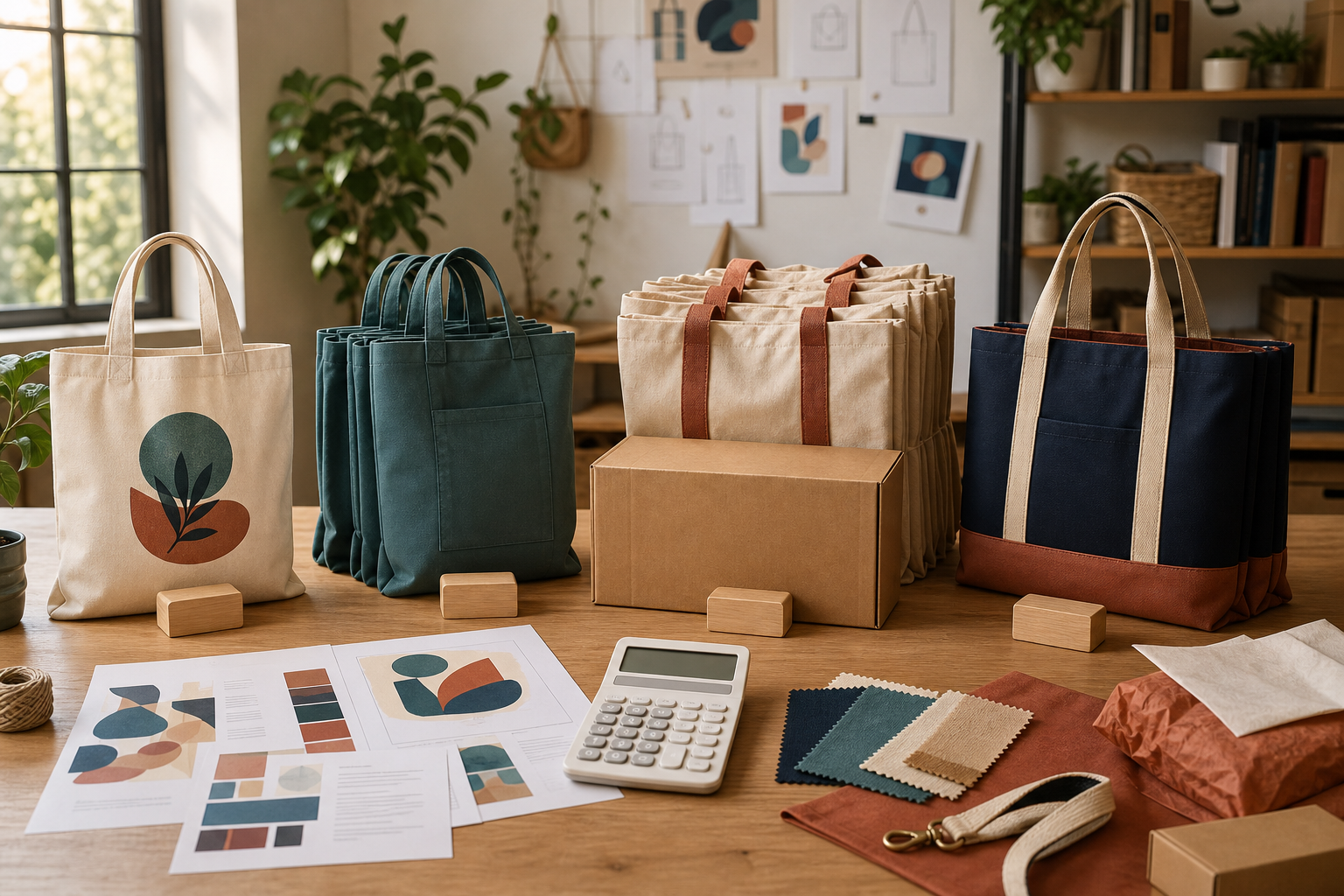
Low MOQ can mean one printed blank, 50 decorated stock bags or 100 factory-made totes. Those offers are not equivalent in product ownership or unit economics.
Need to compare low-MOQ routes on one scope? Send the tote dimensions, gusset and handle drop, intended load, material and finished weight, colour route, logo method and size, labels and packing, quantity by SKU, sample and proof needs, quality/test plan, destination, Incoterm and required arrival date. LUCKYSTAR can return a project-specific RFQ and its own commercial option for comparison; use the same RFQ with every shortlisted supplier.
Quick comparison: the 2026 shortlist
A ranking is useful only when its operating models remain visible. The table therefore states the apparent route, strongest use case and the question that can change the purchasing decision.
| Rank and company | Operating model | Best apparent fit | Buyer must verify |
|---|---|---|---|
| 1. Enviro-Tote | U. S. cut, sew and print manufacturer with a published general minimum | Small made-in-USA cotton or recycled-fabric programs | Confirm the current minimum for the chosen construction, fabric and print; ask for seasonal lead time, material origin and sample/proof scope. |
| 2. Sunday | European merch platform separating decorated ready-made and fully custom routes | Premium small company-merch pilots with a path to custom production | Confirm current minimum by route, production country, blank specification, sample, fulfillment, unit price at repeat quantity and customization limits. |
| 3. Kyuri | China OEM tote supplier whose current page states a standard MOQ from 300 pieces, with selected lower-volume projects conditional on product and customization | Startup canvas, jute or denim totes using controlled stock options | Request business and factory records, live production evidence, certificate files, material cutting, paid sample, inspection terms and protected payment milestones. |
| 4. Kunify Bag Factory | Guangzhou OEM factory advertising 100–200 piece startup routes | Small cut-and-sew tests using stock canvas or cotton materials | Confirm factory identity, exact minimum for the selected design, stock material lot, sample, print test, AQL and shipping cost. |
| 5. Bulijojo | Low-minimum custom textile supplier with 50–200 piece tote programs | Small brands testing flat or gusseted canvas constructions | Check legal entity, production location, included setup, sample, fabric weight, print method, freight, duties and repeat-lot consistency. |
| 6. Printful | Print-on-demand production and fulfillment platform | One-piece artwork tests, creator merch and demand validation | Order samples; confirm fulfillment location, blank brand/origin, print process, color expectation, packaging, return handling and SKU continuity. |
| 7. Printify | Networked print-on-demand marketplace | Comparing no-minimum print providers and testing online demand | Select one provider, order samples, record the exact SKU, origin, print area, color result, fulfillment time, packaging and substitution policy. |
| 8. ToteBagFactory | U. S. wholesale blank and decoration supplier | Low-quantity stock totes and quick branded pilots | Confirm the exact blank, origin, stock quantity, print minimum, setup, proof, delivery date and future availability. |
| 9. Cotton Bag Co | UK stock printing with a low-minimum express route and bespoke alternatives | UK small brands needing quick printed cotton bags | Confirm minimum, blank specification, sewing origin, UK print method, proof, delivery and what changes when moving to bespoke production. |
| 10. LUCKYSTAR | Project-specific OEM/ODM pilot using simplified construction or stock materials | Validated small brands preparing to scale beyond decorated blanks | Ask for pilot and repeat-quantity quotes, permitted custom changes, material allocation, sample stages, inspection, freight and repeat-order continuity. |
How we ranked the companies
Method limit: the weights below organize the publisher’s desk research. No common questionnaire, blind sample test, factory audit, certificate verification or identical landed-cost RFQ was completed across all ten entries. A rank therefore indicates editorial fit with this article’s low-MOQ scenario, not measured supplier quality or superiority.
We reviewed first-page comparison themes and then used official company information to identify what the buyer can verify. Marketing language did not earn points by itself. A named route, relevant customization, clear limitations and useful order evidence mattered more.
| Criterion | Weight | What we looked for |
|---|---|---|
| Minimum transparency | 25% | Clear distinction between no-minimum POD, decorated stock and cut-and-sew MOQ |
| Customization at that minimum | 20% | What can actually change at the published quantity |
| Sample and proof route | 20% | Physical sample, digital proof and revision expectations |
| Scale-up path | 15% | Ability to move from test order to repeat production without redesign |
| Small-brand economics | 10% | Setup, freight, packaging and cash-flow implications |
| Information clarity | 10% | Current, specific and internally consistent offer |
1. Enviro-Tote
Operating model: U. S. cut, sew and print manufacturer with a published general minimum.
Enviro-Tote ranks first because its public ordering guidance gives small buyers a concrete starting point and direct factory route. A general minimum around 50 pieces is unusually accessible for domestic manufacturing, although custom sizes or special work may require approval and a different quantity.
- Best fit: Small made-in-USA cotton or recycled-fabric programs.
- Verify before ordering: Confirm the current minimum for the chosen construction, fabric and print; ask for seasonal lead time, material origin and sample/proof scope.
2. Sunday
Operating model: European merch platform separating decorated ready-made and fully custom routes.
Sunday clearly distinguishes a lower-quantity decorated ready-made route from a fully custom program. That is exactly the decision a small brand needs to understand. It can test a higher-quality merch concept without pretending that logo decoration is the same as pattern development.
- Best fit: Premium small company-merch pilots with a path to custom production.
- Verify before ordering: Confirm current minimum by route, production country, blank specification, sample, fulfillment, unit price at repeat quantity and customization limits.
3. Kyuri
Operating model: China OEM tote supplier whose current page states a standard MOQ from 300 pieces, with selected lower-volume projects conditional on product and customization.
Kyuri’s current official page states that its standard MOQ starts from 300 pieces and that selected lower-volume projects may be available depending on product and customization. Treat the lower-volume route as conditional until a dated quotation identifies the exact material, design, SKU split and evidence. Supplier-stated identity, facility, history, capacity, timing and certification claims still require order-level verification.
- Best fit: Startup canvas, jute or denim totes using controlled stock options.
- Verify before ordering: Request business and factory records, live production evidence, certificate files, material cutting, paid sample, inspection terms and protected payment milestones.
4. Kunify Bag Factory
Operating model: Guangzhou OEM factory advertising 100–200 piece startup routes.
Kunify presents a practical low-MOQ model: stock materials and simpler decoration support a smaller production run, while specialized fabrics or trims push the minimum up. That logic is credible, but all published history, capacity and certification claims should be independently checked.
- Best fit: Small cut-and-sew tests using stock canvas or cotton materials.
- Verify before ordering: Confirm factory identity, exact minimum for the selected design, stock material lot, sample, print test, AQL and shipping cost.
5. Bulijojo
Operating model: Low-minimum custom textile supplier with 50–200 piece tote programs.
Bulijojo’s public product listings make quantity and construction differences visible, including lower starting quantities for simple flat forms. It is useful for early budgeting because a founder can see how all-over print, gussets or colors change the entry point. The operating factory route still needs verification.
- Best fit: Small brands testing flat or gusseted canvas constructions.
- Verify before ordering: Check legal entity, production location, included setup, sample, fabric weight, print method, freight, duties and repeat-lot consistency.
6. Printful
Operating model: Print-on-demand production and fulfillment platform.
Printful is not a cut-and-sew factory partner for most tote programs, but no-minimum print-on-demand can be the right first experiment. It avoids inventory and integrates fulfillment. The trade-off is a fixed blank, higher unit cost and limited control over construction, labels and material sourcing.
- Best fit: One-piece artwork tests, creator merch and demand validation.
- Verify before ordering: Order samples; confirm fulfillment location, blank brand/origin, print process, color expectation, packaging, return handling and SKU continuity.
7. Printify
Operating model: Networked print-on-demand marketplace.
Printify gives a small brand access to several print providers and tote blanks without committing to inventory. That flexibility is useful but creates another variable: provider choice can affect print, blank and delivery. Lock the provider and product before treating test results as repeatable.
- Best fit: Comparing no-minimum print providers and testing online demand.
- Verify before ordering: Select one provider, order samples, record the exact SKU, origin, print area, color result, fulfillment time, packaging and substitution policy.
8. ToteBagFactory
Operating model: U. S. wholesale blank and decoration supplier.
ToteBagFactory offers broad stock choices and accessible quantities, making it practical for events, boutiques and artwork tests. It sits between POD and factory manufacturing: the bag is usually an established blank, while decoration is customized. This can validate demand but not an original construction.
- Best fit: Low-quantity stock totes and quick branded pilots.
- Verify before ordering: Confirm the exact blank, origin, stock quantity, print minimum, setup, proof, delivery date and future availability.
9. Cotton Bag Co
Operating model: UK stock printing with a low-minimum express route and bespoke alternatives.
Cotton Bag Co is a useful UK option because it separates express stock printing from bespoke overseas manufacture. Small brands can start with a proven blank and later discuss a custom route. The changeover should be treated as a new product development, not an automatic scale-up.
- Best fit: UK small brands needing quick printed cotton bags.
- Verify before ordering: Confirm minimum, blank specification, sewing origin, UK print method, proof, delivery and what changes when moving to bespoke production.
10. LUCKYSTAR
Operating model: Project-specific OEM/ODM pilot using simplified construction or stock materials.
LUCKYSTAR closes the list because it does not promise one universal low MOQ. A pilot may be possible when stock fabric, common webbing, existing components and a concentrated SKU plan fit the factory route. It is most valuable after demand validation, when the brand needs control of construction and a repeatable scale-up specification.
- Best fit: Validated small brands preparing to scale beyond decorated blanks.
- Verify before ordering: Ask for pilot and repeat-quantity quotes, permitted custom changes, material allocation, sample stages, inspection, freight and repeat-order continuity.
Choose the supplier model before requesting prices
Shortlisting by project type prevents false comparisons. The same company can be excellent for one route and inefficient for another.
| Project route | Best use | Questions that belong in the RFQ |
|---|---|---|
| 1–20 pieces | Print-on-demand or local decorator | Useful for artwork validation; usually a fixed blank with high unit cost |
| 25–75 pieces | Low-quantity stock decoration or domestic workshop | More consistent event/retail pilot but limited construction changes |
| 100–250 pieces | Startup-oriented factory using stock materials | Real cut-and-sew learning with constraints on colors, trims and SKU split |
| 250–500 pieces | Broader factory customization | Better unit economics and component choice, but greater inventory exposure |
| Scale-up plan | Approved core specification plus controlled alternates | Prevents the successful pilot from becoming a different bulk product |
Send a controlled RFQ
The safest shortlist uses one written product definition. If a supplier changes material, decoration or packing to reach a target price, the change should appear as an alternate quotation rather than silently replacing the base specification. Use the Custom Bag Tech Pack guide and the Custom Bag Quality Inspection Checklist to keep sample and bulk expectations aligned.
| RFQ block | Minimum information | Why it matters |
|---|---|---|
| Product identity | Finished dimensions, gusset, handle drop, pocket, closure, lining and intended load | Prevents suppliers from pricing different bags under one name |
| Material | Fiber composition, weave, finished GSM or oz, color route and applicable certification scope | Makes fabric and sustainability claims measurable |
| Decoration | Artwork file, print size, colors, method, placement tolerance and wash/rub expectation | Separates a quick logo print from an engineered retail graphic |
| Commercial basis | Quantity by SKU, sample fees, tooling, Incoterm, packing and requested ship date | Allows landed-cost and timing comparisons |
| Quality evidence | Golden sample, inspection level, defect definitions, test plan and corrective-action owner | Turns approval into repeatable bulk standards |
LUCKYSTAR claim boundary: the following section is publisher self-description and a commercial sourcing option. It does not independently prove factory ownership, in-house control of every operation, material or certification status, quality, capacity, stock, a low MOQ, price, lead time, delivery or superiority. The legal seller, assigned sites and subcontractors, material and decoration route, MOQ by SKU, sample, tests, QC, packing, price and schedule depend on the exact order, destination, released specification and written confirmation.
Why compare LUCKYSTAR?
LUCKYSTAR is not the best route for one-off or ten-piece orders. It becomes more useful when a small brand has validated demand and wants a factory-built tote that can scale. Stock materials, simplified construction and consolidated colors may lower the project-specific minimum. Review our custom tote bags and exact Product Range link, then ask for two quotations: the smallest viable pilot and the more economical repeat quantity.
For the full supplier-selection sequence across bag categories, use the Custom Bag Manufacturer Guide. For this Top 10 series, return to the global tote bag manufacturer core page before deciding which country and operating model best fit the order.
Frequently asked questions
Why does custom color raise MOQ?
A mill or dye house must process an economical batch, and color setup cannot be spread over many units. Stock fabric avoids that batch requirement.
Is print-on-demand a manufacturer?
It is usually a printing and fulfillment route using established blanks. It is excellent for demand testing but offers less construction ownership than cut-and-sew manufacturing.
How can a small brand lower MOQ without lowering quality?
Use one size, one or two colors, stock fabric and webbing, standard hardware, simple packaging and one decoration method. Keep construction standards measurable.
Does a low MOQ always mean the lowest total cost?
No. Compare sample and setup fees, material or color minimums, freight, packing, defect risk and the repeat-order quantity—not only the first-order unit price.
Can one MOQ be split across colors or artworks?
Only if the supplier confirms the split in writing. Ask for the total order MOQ and the separate minimum for each SKU, color, size, artwork, material and shipment.
What should be frozen after a successful pilot order?
Freeze the approved sample version, BOM, measurements, fabric and color reference, construction, artwork, labels, packing, inspection criteria and written change-control process.
Search snippet, buyer FAQs and conversion attribution updated September 23, 2026. Supplier offers remain subject to current SKU-level and written order verification.
Compare routes with one controlled RFQ
A low number is useful only when it describes the same bag. Separate POD, stock-decoration and cut-and-sew routes, then compare the approved sample, material and claim evidence, included scope, landed cost, payment protection and milestone dates.

Review LUCKYSTAR custom tote bag options, then send your controlled tote RFQ through the contact form or Email a project brief. The email link opens a prefilled draft for your review before sending. LUCKYSTAR is one commercial option in this publisher-created comparison; evaluate it with the same checks used for every other candidate.
Supplier identity, facility and subcontractors, material and certification status, MOQ, customization, sample, test and inspection evidence, capacity, stock, price, packing, schedule and delivery terms are subject to current source checks, destination requirements, released specification and written order confirmation.
Research basis: linked official supplier pages were rechecked on September 16, 2026. Public descriptions remain supplier-stated information and may change without notice.





