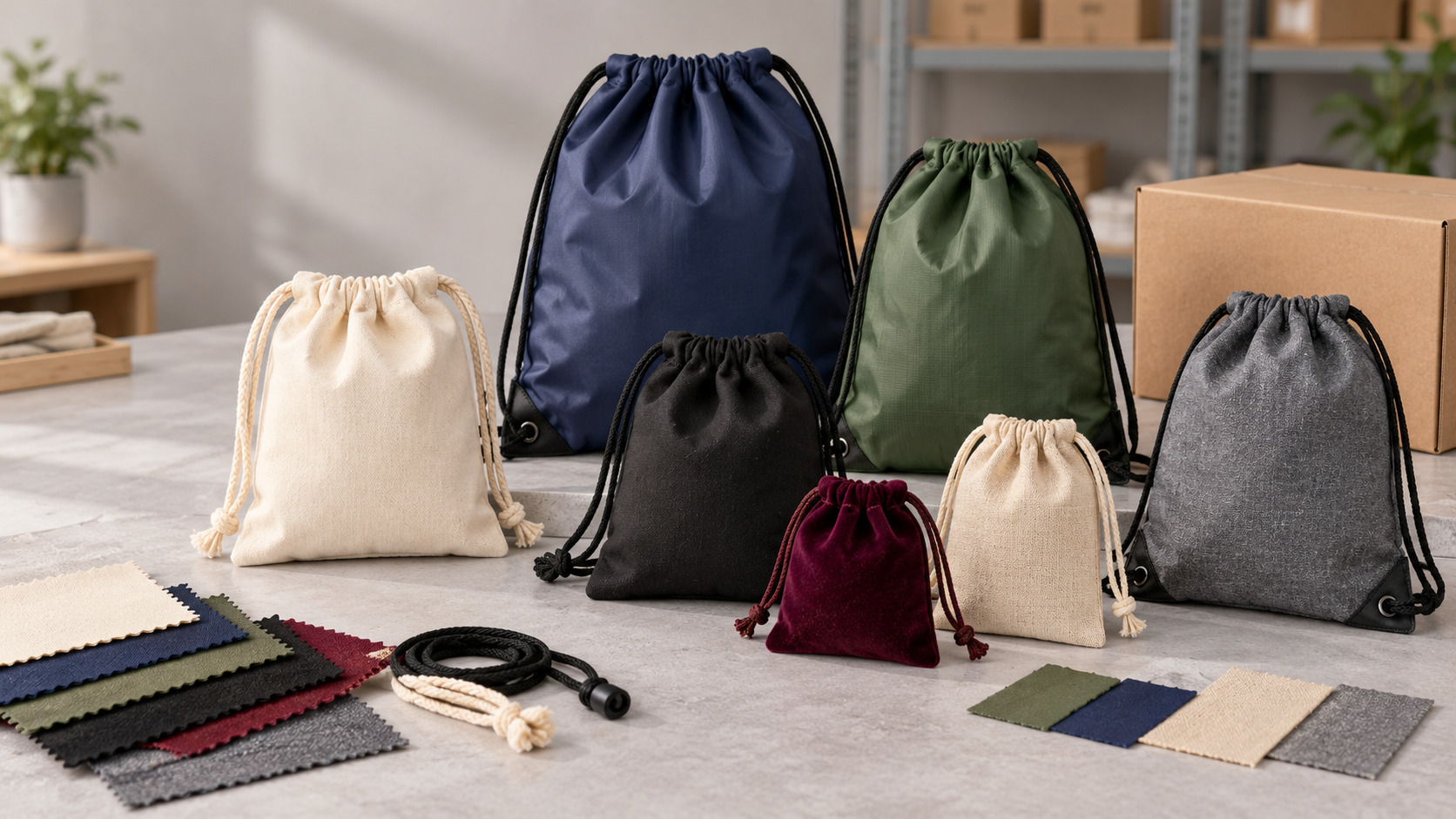
Shopping Bag Printing Quality Control Checklist
Printing can look correct on a monitor and still fail on a finished shopping bag. A logo may shift when the bag is sewn, an ink may dry differently on a new substrate lot, or a solid color may look acceptable under one light but uneven on the retail floor. That is why print quality should be controlled as a release process—not treated as a final visual check.
This shopping bag printing quality control checklist is for the printed image itself: artwork, color targets, placement, registration, adhesion, cure, rub resistance, process drift and print records. For seams, handles, dimensions, loading and pack-out, use our broader custom shopping bag quality control checklist.
Need a print-QC plan before quotation? Send the bag material/construction, quantity by SKU, destination, vector artwork/revision, print size/location/sides/colours, physical colour target, intended print route, proof or retained sample, required tests, defect definitions, sampling rules, packing and required date. The team can return the open assumptions and approval gates for written confirmation.
The Short Answer: What Should Be Approved Before Bulk Printing?
Do not release bulk printing from a PDF alone. The buyer and supplier should agree on a controlled reference package, approve a first-off result on the actual substrate, define measurable or visual acceptance criteria, and retain production records that identify what was printed.
A practical release sequence is:
- Freeze the artwork version and print dimensions.
- Confirm the material, surface treatment and color reference.
- Approve the print route, ink system and any finishing sequence.
- Review a first-off print on production-representative material.
- Inspect at defined intervals during the run.
- Separate, record and disposition nonconforming pieces.
- Release the printed lot only after the agreed checks pass.
The details vary by substrate and printing method. Screen printing on cotton, flexographic printing on non-woven material, gravure printing on woven PP and digital printing on paper do not share one universal test plan. If the method has not been selected yet, compare the options in our custom shopping bag printing methods guide.
1. Build a Controlled Print Reference Package
The most useful QC document is not a generic inspection form. It is a compact reference package tied to one order. Every inspector, operator and approver should be looking at the same revision.
| Controlled item | What to record | Why it matters |
|---|---|---|
| Artwork master | File name, revision, date and approver | Prevents an obsolete logo or message from returning to production |
| Print geometry | Finished size, orientation, location and allowable shift | Converts “centered” into an inspectable requirement |
| Color target | Pantone reference, approved drawdown, signed sample or agreed CMYK data | Establishes what “correct color” means for this order |
| Substrate | Material, color, weight or construction, coating and supplier/lot where relevant | The same ink can appear different on another surface |
| Print route | Method, screen/plate/cylinder or digital file, ink system and finish | Connects the appearance to a repeatable process |
| Approval evidence | Dated first-off sample, photos and written approval | Creates the production release point |
| Test criteria | Test method, conditioning, frequency and pass/fail rule | Avoids inventing acceptance rules after a problem appears |
For repeat orders, do not replace the physical or digital master with a message such as “same as last time.” Use a versioned control package. Our guide to maintaining logo and color consistency across shopping bag reorders explains how to maintain that master across production cycles.
2. Complete Artwork Preflight Before Making Screens, Plates or Cylinders
Preflight is the least expensive place to catch an error. Once a screen, plate or cylinder has been made—or a long run has started—an artwork issue becomes a production issue.
Check the following before tooling release:
- The file matches the approved brand artwork and contains no unintended substitutions.
- Vector elements, embedded images and linked assets open without errors.
- Fonts are outlined or supplied according to the agreed workflow.
- Spot colors are named consistently and separated correctly.
- White ink, underbase, varnish and knockouts are shown as separate layers when required.
- Fine lines, small type, reverses and halftones are suitable for the selected method and substrate.
- Bleed, safe area, seams, folds, gussets, handle zones and cut lines are visible on the production dieline.
- The logo width, height, orientation and distance from reference edges are dimensioned.
- Barcodes or QR codes, when present, have an order-specific verification plan.
- The exported proof and the production file carry the same revision identifier.
Use our shopping bag artwork and dieline preparation guide before submitting files. For placement decisions, see the shopping bag logo placement and print size guide.
3. Confirm the Actual Printing Surface
A print specification is incomplete without the substrate. Ink behavior can change with fiber texture, weave, surface energy, coating, lamination, base color and moisture condition. Approving a color on coated paper does not approve that color on natural cotton, non-woven PP or laminated woven PP.
Before first-off printing, confirm:
- The material description matches the order specification.
- The production substrate is representative of the approved sample.
- The surface is clean, dry and free from oil, dust or loose fibers.
- Pretreatment, corona treatment, primer or underbase requirements are documented when applicable.
- The bag color is evaluated because it may influence transparent or semi-opaque inks.
- Coated or laminated surfaces are tested for the selected ink and cure system.
- Material changes are placed on hold until print compatibility is reapproved.
Do not assume one adhesion or rubbing result applies to every fabric or film. The acceptance criteria should be linked to the ordered material, print route and intended use.
4. Approve a First-Off Print on Production-Representative Material
The first-off sample is the bridge between artwork approval and bulk production. It should be made with the intended file or tooling, ink system, substrate and process settings wherever practical.

Use a defined viewing condition and compare the sample with the approved reference. ISO publishes ISO 3664:2025 for graphic-arts viewing conditions, while ISO 13655:2017 covers spectral measurement and colorimetric computation for graphic-arts images. These standards can support a measurement workflow, but the order still needs its own target and tolerance.
First-off approval checklist
| Check | Inspect | Release question |
|---|---|---|
| Content | Text, symbols, language, orientation and missing elements | Is this the approved artwork revision? |
| Position | Distance from bag edges, seams, fold lines and handles | Is the print inside the agreed location window? |
| Size | Overall logo/image width and height | Does it match the dimensioned proof? |
| Color | Visual match and instrument data when specified | Is the result within the agreed order target? |
| Registration | Alignment between colors, white underbase and overprint | Are misregistration and halos within the approved limit? |
| Coverage | Pinholes, voids, streaks, mottling and show-through | Is ink laydown uniform enough for the approved appearance? |
| Edges/detail | Fine lines, small type, corners and reverses | Are critical details open, legible and not filled in? |
| Surface performance | Adhesion, cure, rub and fold behavior as applicable | Does the print survive the agreed test? |
| Conversion risk | Expected seams, folds, heat exposure or lamination sequence | Will later operations damage or distort the print? |
Photograph the first-off result, identify it, and retain a signed sample when practical. A photograph alone is not a complete color master because lighting, camera processing and screens can alter appearance.
When the construction, material or print route is still being developed, place this checkpoint inside a documented custom shopping bag sample development process before releasing the bulk order.
5. Monitor Process Drift During the Print Run
A first-off approval confirms one point in time. Bulk consistency depends on detecting drift before it affects a large quantity.
Inspection frequency should reflect the method, run length, defect history and risk. Check at startup, after stops or adjustments, after ink additions, after screen/plate cleaning, when substrate lots change, and at the agreed interval during production.
Track these signals:
- Color movement or density change across the run.
- Ink viscosity, mix ratio, temperature or pot life when relevant to the system.
- Screen blockage, stencil wear, squeegee condition or print pressure for screen printing.
- Plate/cylinder contamination, impression setting, web tension and register for roll processes.
- Banding, nozzle condition, profile or curing status for digital processes.
- Progressive smearing, offsetting or blocking during stacking.
- Position movement caused by feeding, bag stretch or inconsistent registration references.
- Changes in substrate surface, shade or texture.
Keep inspection samples in sequence. A start–middle–end set helps identify when drift began and limits the affected quantity more accurately than a single end-of-run sample.
6. Use a Print-Specific Defect Library
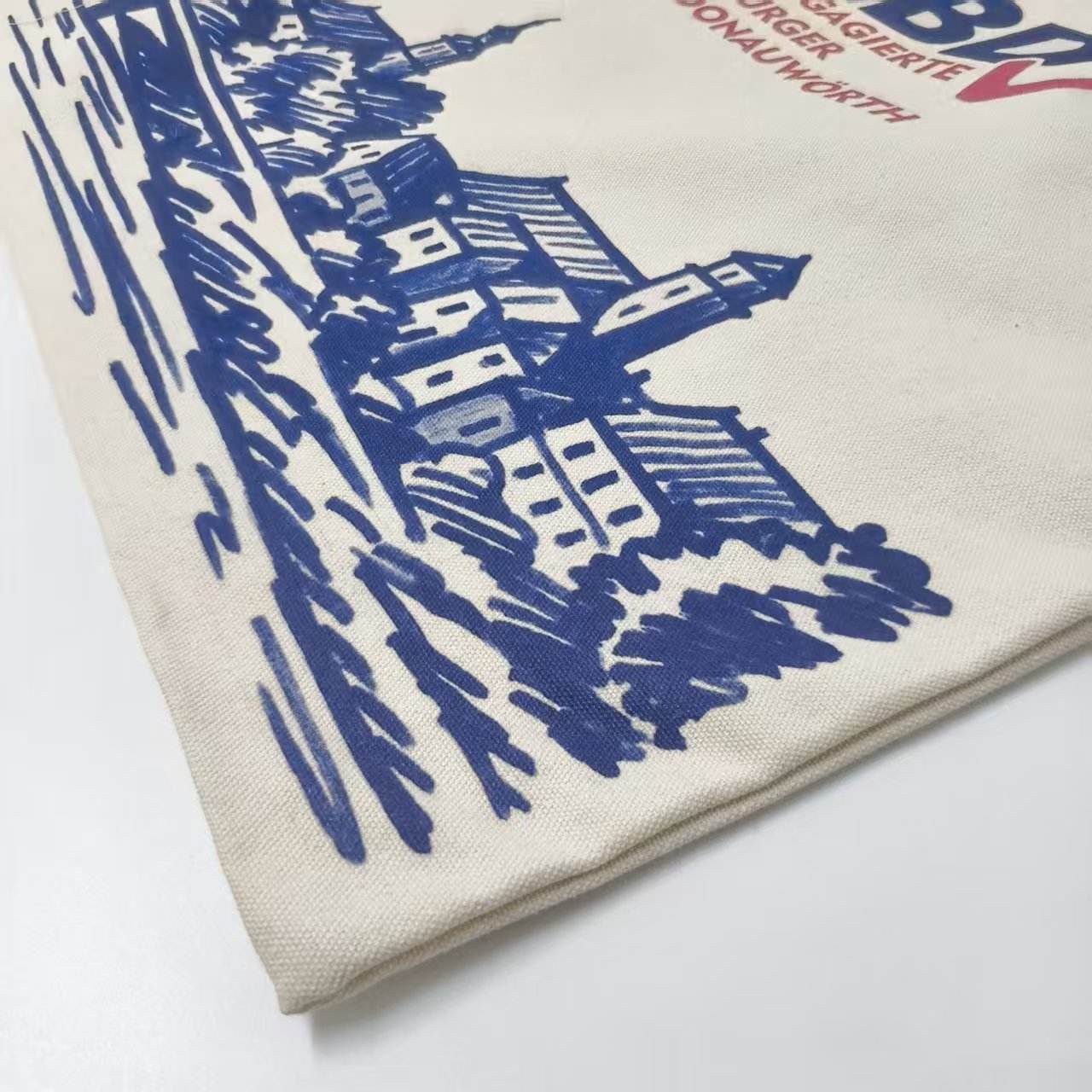
Words such as “poor print” are too vague for consistent decisions. A defect library should name the defect, show an approved photo or boundary sample, identify its location and classify its severity for the order.
| Defect | What it looks like | Likely control point | Typical disposition logic* |
|---|---|---|---|
| Wrong artwork | Obsolete logo, incorrect text or missing element | File revision and tooling release | Hold affected lot; wrong brand content is normally not a cosmetic issue |
| Color mismatch | Hue, lightness or chroma differs from the approved target | Ink mix, substrate, viewing and process setting | Compare using the agreed visual/measurement rule |
| Misregistration | Color edges do not align; underbase creates a halo | Setup, register marks, tension or feeding | Judge against the order-specific register tolerance |
| Placement shift | Image moves toward a seam, fold or handle | Feeding and position reference | Measure against the dimensioned location window |
| Pinholes/voids | Base material shows through printed areas | Surface cleanliness, ink transfer or screen/plate condition | Classify by size, count and visibility zone |
| Smudge/offset | Ink transfers or drags onto another area | Cure, stacking, pressure or handling | Test cure and isolate the affected sequence |
| Poor adhesion | Print lifts, flakes or peels | Pretreatment, ink compatibility and cure | Hold until the agreed adhesion check passes |
| Rub-off/crocking | Color transfers during dry or wet rubbing | Ink selection, cure and surface finish | Use the specified test and order acceptance level |
| Banding/streaks | Repeating lines or uneven density | Nozzles, screen/plate/cylinder or ink flow | Stop and correct when the approved appearance is exceeded |
| Filled or broken detail | Small gaps close, fine lines disappear or characters break | Artwork limits, mesh/plate resolution and ink laydown | Compare critical elements to the approved sample |
*Disposition must follow the agreed order specification. The table does not establish a universal acceptance limit.
Define “critical,” “major” and “minor” defects for the product and market. For example, an incorrect trademark file may be critical to brand use even when the physical bag remains functional. A small cosmetic dot may be minor in one design but major if it sits inside a high-contrast logo face.
7. Match the Test to the Material and Failure Mode
The most useful test is the one that represents a plausible failure. Do not add tests only because they appear on a generic checklist.
Common print-performance checks
- Adhesion: For flexible packaging, ASTM F2252/F2252M-25 describes a tape-based method for evaluating ink or coating adhesion. The standard does not create the buyer's pass/fail criteria; buyer and producer should agree on them.
- Dry/wet rubbing on textiles:ISO 105-X12:2016 specifies a method for resistance to rubbing off and staining. Applicability and acceptance grade should be confirmed for the specific textile print.
- Cure/dryness: Use an ink-system-appropriate check after the defined cure time. A surface that feels dry immediately may not have reached final performance.
- Scratch or scuff: Where retail handling could mark a large solid area, agree on a representative contact method and visual limit.
- Fold or crease: If the print crosses a fold or gusset, condition and flex the sample in the intended location, then inspect for cracking or delamination.
- Water/contact exposure: Only specify this when the bag use and ink/substrate system require it. Define the liquid, contact time, conditioning and appearance/performance rule.
Avoid general claims such as “waterproof ink” or “wash-proof print” without a defined material, method and test. Performance should be confirmed at the order level.
8. Apply Route-Specific Controls
The same visual defect can have a different cause under another print process. The control plan should name method-specific parameters rather than use one generic sheet for every shopping bag.
| Print route | Key controls before release | Drift signals to watch |
|---|---|---|
| Screen printing | Mesh/stencil, ink system, squeegee, underbase, flash/final cure and substrate compatibility | Blocked image areas, pinholes, edge change, opacity variation and cure issues |
| Flexographic printing | Plate version, anilox/ink condition, viscosity, impression, web tension and treatment | Register movement, dirty print, bounce, density drift and plate wear |
| Gravure printing | Cylinder identification, ink/solvent balance, doctor blade, impression and web control | Streaks, missing cells, shade drift, haze and register change |
| Digital printing | File/RIP version, profile, nozzle check, head height, pretreatment and curing | Banding, nozzle loss, profile mismatch, mottling and incomplete cure |
| Offset printing on paper | Plate/file version, ink-water balance, paper lot, drying and finishing sequence | Set-off, scumming, density change, register and finishing damage |
If you are deciding between color systems, our Pantone vs CMYK guide for custom shopping bags explains what each can—and cannot—control. For a deeper approval workflow, read shopping bag color matching: Pantone, ink drawdowns and bulk approval.
9. Record, Hold and Release the Printed Lot
Traceability makes a correction faster. A print batch record does not need to be complicated, but it should allow the team to identify which version, material and process produced the inspected pieces.
| Record field | Minimum useful detail |
|---|---|
| Order and item | PO/order reference, SKU and bag description |
| Artwork/tooling | File revision plus screen, plate or cylinder identifier |
| Material | Substrate description and production lot where used |
| Ink/process | Ink batch/mix reference and key settings appropriate to the method |
| Approval | First-off approver, date/time and retained sample reference |
| In-process checks | Check time, result, sample position and inspector |
| Adjustments | What changed, when it changed and the first acceptable piece after correction |
| Nonconformance | Quantity/sequence held, defect, evidence and disposition authority |
| Release | Final quantity released and authorized sign-off |
When a defect appears, stop or contain the relevant process, identify the last known good check, segregate the suspect sequence, correct the cause, approve a new first-off when needed, and document the disposition. Do not mix reworked or suspect pieces back into the lot without reinspection.
10. Use Sampling Without Treating AQL as a Quality Target
ISO 2859-1:2026 provides acceptance-sampling procedures for inspection by attributes. A sampling plan can support lot disposition, but it does not replace process control or define what a defect is.
Before inspection, the parties should agree on:
- Lot definition and inspection level.
- Sampling plan and switching rules where applicable.
- Critical, major and minor print defect definitions.
- Acceptance quality limits or other acceptance criteria.
- Measurement method and rounding rule for placement or size.
- Viewing condition and color comparison method.
- Treatment of mixed lots, rework and resubmission.
LUCKYSTAR does not present one universal AQL, color tolerance or dimensional tolerance as suitable for every custom shopping bag. These points should be confirmed against the specification, material, print process and commercial risk of the order.
Company-claim boundary: LUCKYSTAR statements in this section are publisher self-description, not third-party verification, ISO/ASTM certification, laboratory accreditation, production-lot test evidence or a guarantee of colour, adhesion, register or defect-free output. Material availability, print route, samples, tests, MOQ, price, timing, packing and delivery are subject to the current specification and written confirmation.
How LUCKYSTAR describes its print-quality review
LUCKYSTAR states that its project team can connect artwork review, sampling, production coordination and inspection information for a custom shopping-bag order, subject to the confirmed project scope.
- Freeze the input: identify SKU, finished construction, substrate/finish, vector artwork revision, colours, print dimensions, sides, coordinates and protected zones.
- Choose the evidence: identify the approved drawdown, signed sample, digital target, measurement/viewing condition and ownership/location of each physical reference.
- Define the approval gate: record the production-representative material, actual print route, first-off approver, date, pass/fail rules and what requires reapproval.
- Control the run: define checks by roll, lane, time, bundle, SKU or carton and trace each result to material, ink/process, tooling/file and inspector records.
- Contain exceptions: identify the last known good check, segregate the suspect sequence, record corrections and authorize disposition in writing.
- Release and retain: link the released quantity, retained sample, inspection evidence, approved deviations and packing record for future reorder review.
Review the public custom shopping bag range, the printing-method selection guide and the sample-development guide. Then send the current artwork, material, quantity and required acceptance evidence for review.
What to Send for a Print-Quality Quote
To receive a more useful quotation and production recommendation, send:
- Bag material or intended use.
- Finished size and construction.
- Order quantity and destination market.
- Vector logo/artwork and color references.
- Print size, position, number of colors and sides.
- Required print-performance tests or buyer protocol.
- Target timing, subject to specification and written confirmation.
- Photos or approved samples from earlier orders when consistency is required.

GET A QUOTE for your custom printed shopping bag project. LUCKYSTAR can review your artwork, material, size, quantity and required controls before the commercial and production details are confirmed in writing.
Frequently Asked Questions
What is the most important shopping bag print QC checkpoint?
The first-off approval is the central release point, but it only works when the artwork revision, substrate, color target, placement and test criteria have already been defined. In-process checks are still needed because the process can drift after approval.
Can a digital proof approve final print color?
Usually not by itself. Displays, profiles and lighting vary, and the bag substrate changes color appearance. Use an agreed physical reference, drawdown or production-representative sample when color is important. Instrument data can supplement—but should not silently replace—the agreed approval method.
How much print-position variation is acceptable?
There is no responsible universal number for all bags. The allowable location window depends on bag construction, print method, artwork, seams, folds and visual sensitivity. Put the agreed tolerance on the dimensioned proof or order specification.
Should every order use the same AQL?
No. Sampling level, defect definitions and acceptance criteria should reflect the order and buyer requirements. AQL is a lot-disposition tool, not a promise that the process should intentionally produce that defect level.
How do we prevent a reorder from using the wrong logo version?
Use a controlled artwork master with a revision identifier, archive obsolete files, identify print tooling, and require written release against the current reference package. Do not rely only on “same as last order.”
Can LUCKYSTAR guarantee an exact match between different materials?
Different substrates and print routes can produce visible differences. LUCKYSTAR can support an order-specific matching and approval process, but targets, tolerances and reference samples should be agreed before bulk production. Commercial terms and performance requirements remain subject to specification and written confirmation.
Request a shopping bag print-QC review
Use one brief to connect artwork, material, colour evidence, first-off approval, in-process checks and release records before commercial and production details are fixed.
Review LUCKYSTAR custom shopping bag options, then send your print-quality requirements through the contact form or Email a project brief. The email link opens a draft for your review before sending.
Entity/site assignment, material and ink compatibility, tooling, colour, samples, tests, inspection, certification, price, MOQ, packing, schedule and release terms are subject to due diligence, current specification and written confirmation.