Recyclable vs Reusable Shopping Bags: What Brands Should Know
Last reviewed: September 15, 2026
Buyer quick answer: “recyclable” and “reusable” answer different questions. Recyclable asks whether the finished bag can enter an available collection, sorting and material-reprocessing route in the market where it becomes waste. Reusable asks whether the bag is designed, specified and used for repeated trips or rotations while continuing to perform its intended function. A shopping bag may be both, either one, or neither. The right brief therefore starts with the intended system—not an environmental adjective.
For a new program, define the carrying job, target markets, likely user behavior, recovery or return route, construction and proof before choosing a claim. LUCKYSTAR can then help translate that decision into an order-specific custom shopping bag specification, decorated sample, production checkpoints and quality records. Materials, commercial terms, performance and claim support remain subject to the confirmed product, order and destination market.
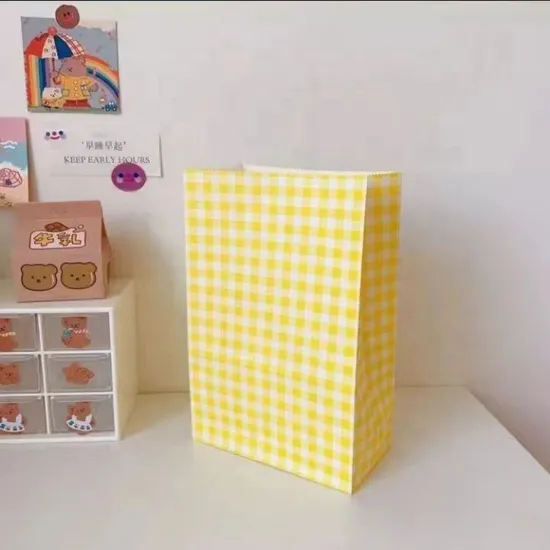
A paper shopping bag photograph from a LUCKYSTAR public international sales channel. The visible paper format provides product context; the image alone does not prove paper grade, coating, recycled content, certification, local recyclability or environmental performance.
Need a recyclable-or-reusable shopping bag RFQ review? Send the destination market, bag role and intended contents, dimensions and quantity, component-level construction, artwork and packing, proposed recycling route or reuse model, required tests or claim evidence, and required date. LUCKYSTAR can return specification gaps, sample checkpoints and commercial questions for written review.
Recyclable and reusable are not competing material labels
The familiar “recyclable versus reusable” headline can encourage a false either-or decision. In practice, these terms describe different stages of a product system:
| Decision lens | Recyclable | Reusable | What a buyer must not assume |
|---|---|---|---|
| Primary question | Can the discarded finished item be collected, sorted and reprocessed into material through an appropriate route? | Can the item deliver its intended carrying function repeatedly under a defined use or reuse model? | That one property automatically proves the other |
| Design focus | Material compatibility, component separation, decoration, residues and recovery-system fit | Strength, carrying comfort, dimensional stability, cleanability, repairability where relevant and repeat-use behavior | That a material name alone answers the design question |
| System dependency | Local collection access, acceptance rules, sorting capability and end market | Customer habits or an organized return, inspection, cleaning and redistribution system | That laboratory capability equals real-world access or participation |
| Typical evidence | Component map, material records, recovery-route assessment and market-specific disposal instructions | Approved construction, relevant test results, field or program data and care/return instructions | That a photograph, resin symbol or “durable” description is enough |
| Appropriate claim style | Name the item or component and the relevant local limitation when needed | Name the intended repeated use and any conditions needed to achieve it | Broad “green,” “eco-friendly” or impact claims without separate substantiation |
This article deals with the choice architecture behind those two terms. For a broader comparison of environmental systems and functional units, read Shopping Bag Sustainability: A Life-Cycle Decision Guide for Brands. Start the supplier-governance review with the Custom Bag Manufacturer Guide. Then assess shopping-bag-specific evidence with How to Choose a Custom Shopping Bag Manufacturer.
What “recyclable” needs to mean in a buying brief
Recyclability is not simply a property printed on a material data sheet. The finished bag has to be assessed in the form in which a user will discard it. That means the body, handles, reinforcement, lining, lamination, coating, ink, adhesive, labels, closures and other permanent elements all matter.
The current ISO 14021:2026 framework for self-declared environmental claims connects recyclability with diversion from the waste stream through available processes and programs, followed by collection, processing and return to use. For packaging specifically, ISO 18604:2013, confirmed in 2024, sets assessment requirements for packaging classified as recoverable by material recycling. These references make the system boundary impossible to ignore.
Product architecture comes first
Start with a component-level construction map. A paper body with a film window, textile handle, metal eyelet and reinforced base is not the same recovery proposition as an uncoated paper bag. A woven polypropylene body with polypropylene handles may look closer to one material family, but printing, lamination, labels and local acceptance still need review. A cotton mesh body with a different-fiber label and cord also requires a finished-item assessment.
Ask which components remain attached at disposal, whether a consumer can separate them without special tools and whether the intended recovery operator accepts the resulting item. “Technically separable in a factory” is not equivalent to “likely to be separated correctly by a shopper.”
Infrastructure determines whether the route is real
A material can be reprocessed somewhere in the world and still lack a practical collection or sorting route in the sales market. Record the country or region, collection channel, operator or authoritative guidance, acceptance conditions and the date checked. Revisit the evidence when the bag or market changes.
In the United States, the FTC Green Guides summary says recyclable claims should be qualified when appropriate facilities are not available to at least 60% of the consumers or communities where the product is sold, with stronger limitation language as access decreases. That is US guidance, not a global threshold. Other markets require their own review.
Whole-bag and component claims are different
If only the paper hangtag is accepted in a common recycling stream, that does not substantiate “this shopping bag is recyclable.” If the body can follow one route only after a closure or insert is removed, the instruction and claim scope should say so clearly. Avoid letting a recycling symbol, material code or small recyclable component imply more than the evidence supports.
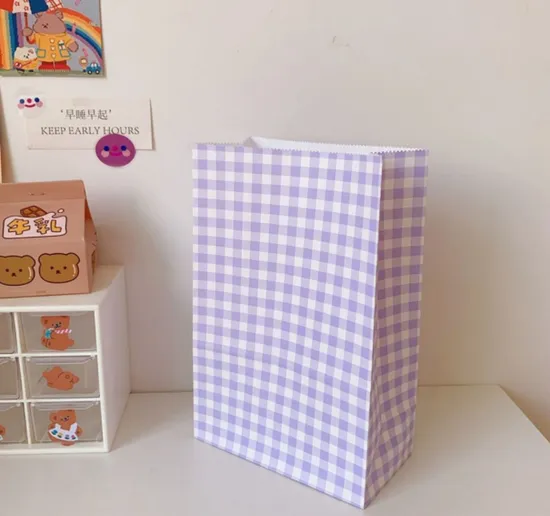
A paper-bag product photograph from a LUCKYSTAR public international sales channel. The visible format supports a discussion of construction; it does not establish paper grade, coating, recycled content, certification or acceptance by any recycling program.
What “reusable” needs to mean in a buying brief
Reusable should describe an intended and credible use model, not merely a thicker bag. The buyer needs to state the same-purpose carrying job, load profile, likely use frequency, care conditions and end point. The design and evidence can then be matched to that scenario.
ISO 18603:2013, confirmed in 2024, specifies requirements and assessment procedures for packaging classified as reusable, including associated systems. Even when a shopping bag is not legally classified as packaging in a particular jurisdiction, the underlying lesson is useful: reusability involves both a product and a working system.
Open-loop customer reuse and managed reuse are different
In an open-loop retail model, the brand gives or sells a bag and encourages the shopper to bring it back. The brand may not control where it travels, how it is stored or how often it is reused. Evidence may therefore combine construction qualification with carefully designed customer research or observational data.
In a managed model, the organization may retain ownership or operate deposits, returns, inspection, cleaning and redistribution. That creates more measurable rotations but also adds loss, reverse logistics and reconditioning variables. A “returnable” message is weak if the collection point, instructions or processing responsibility do not exist.
Design life and achieved use are not the same number
A laboratory or controlled-use test can demonstrate that a defined sample survives a protocol. It cannot by itself prove that customers will reuse every bag that many times. Keep three fields separate: the design target, the tested result and the observed use or rotation result. For methods and acceptance logic, see Reusable Shopping Bag Durability and Reuse Testing and Which Tests Should Reusable Shopping Bags Pass?.

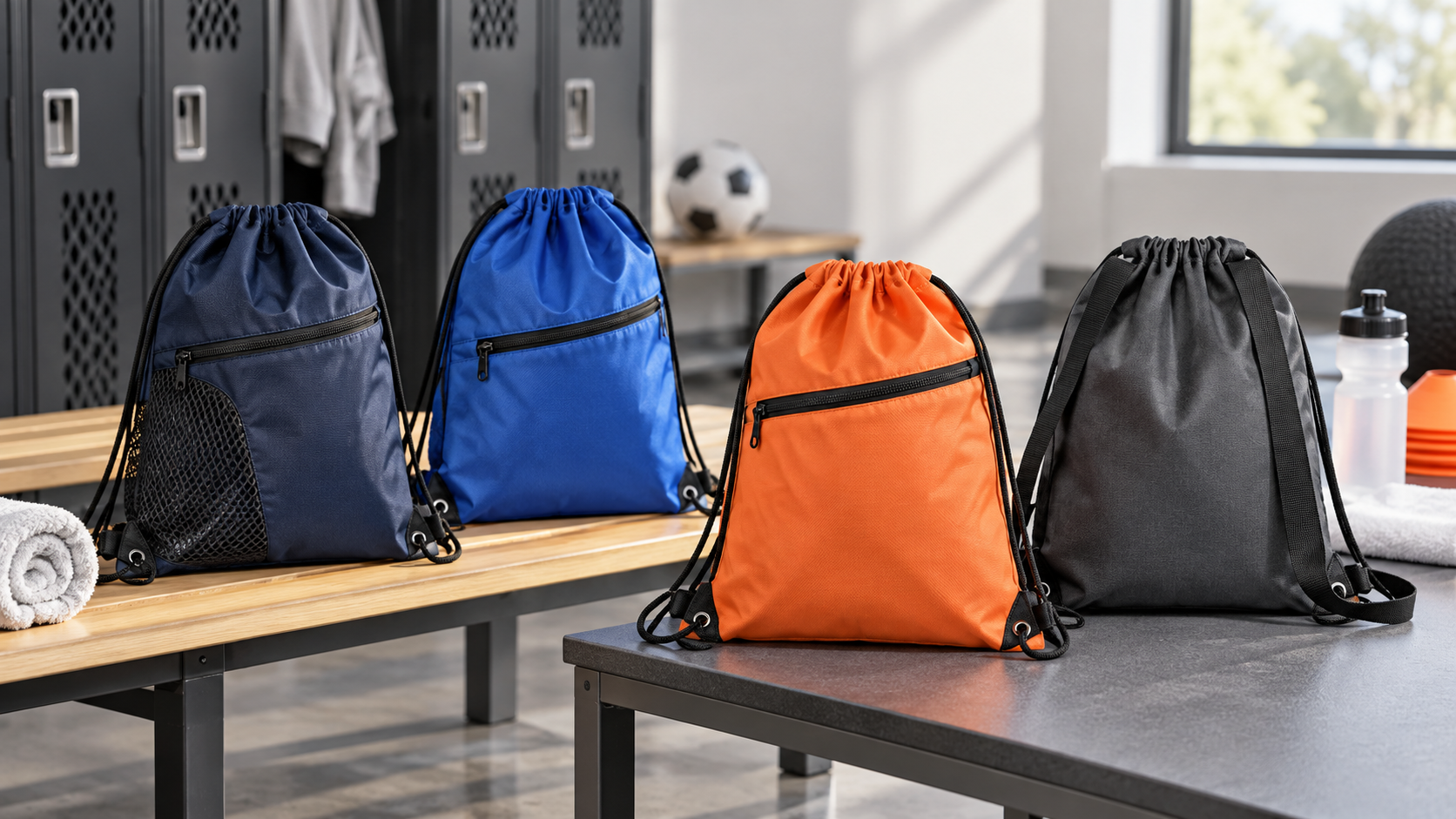
A reusable mesh-bag presentation from a LUCKYSTAR public international sales channel. It illustrates a repeated-use scenario and visible drawcord, label and mesh elements; it does not verify composition, food-contact suitability, cleaning performance, strength or number of uses.
Use four gates before approving either strategy
A useful brand decision can be made with four gates. The first two primarily test the recycling proposition; the third tests the reuse proposition; the fourth controls what can be communicated.
Gate 1: product truth
Freeze the exact product. Record dimensions, material identity by component, weight or basis weight where relevant, decoration, coatings, attachments and packing. A concept image or generic quotation is not enough. The approved sample and signed specification should refer to the same revision.
Gate 2: recovery-system truth
Identify what happens in each destination market when the bag is discarded. Is there an accessible collection route for this finished item? Will sorting equipment recognize and retain it? Are size, color, labels, residue or mixed construction likely to interfere? What should the user do, and is that instruction realistic?
Gate 3: reuse-system truth
Define the repeated-use pathway. Who keeps the bag? Who brings it back? What load and conditions represent successful use? Does the bag need cleaning, inspection or repair? What happens to lost or rejected units? The answers determine design, testing and program metrics.
Gate 4: communication truth
Write the claim only after the first three gates are documented. Name the product or component, the applicable market, user action and limitations. Keep qualification close to the claim. The marketing team should not turn a narrow construction fact into a broad environmental superiority statement.
Match the strategy to the retail program
The same bag is not right for every channel. A high-volume checkout bag, premium gift bag, grocery reuse program and event tote have different service patterns and waste routes. The following matrix is a starting point, not a material ranking.
| Program archetype | Main design question | Recycling evidence priority | Reuse evidence priority | Sensible next action |
|---|---|---|---|---|
| Paper checkout bag for a defined city or country | Can required print, handles and reinforcement be delivered without undermining the intended local paper route? | Finished construction, coating/adhesive details and current local acceptance guidance | Usually secondary unless repeated carrying is an explicit program goal | Prototype the finished bag, confirm market instructions and qualify the claim geographically |
| Mono-material-oriented PP take-back bag | Are body, handles, labels and decoration compatible with the specified recovery partner while meeting repeated-trip needs? | Written acceptance from the actual route and component compatibility | Load cycles, handle attachment, cleaning/inspection and return data | Pilot the take-back flow before scaling the claim or quantity |
| Long-life textile tote sold as a retail item | Will customers value, retain and repeatedly use the format for the intended load? | End-of-life route may be limited and must not be implied from fiber identity | Construction tests, care response and observed customer reuse | Prioritize fit-for-purpose durability and give honest end-of-life guidance |
| Multi-material promotional bag | Do appearance features create a difficult recovery structure or a short-lived novelty item? | Detailed component map and separability assessment | Likely retention, comfort, usefulness and field behavior | Simplify the design or narrow the communication; do not rely on a generic “eco” label |
The decision can also change by market. A finished item accepted through one retailer's take-back partner may not be accepted curbside in another country. A bag that performs well in a managed grocery loop may not achieve similar use when distributed once at an event.
Design a more credible recycling proposition
Design-for-recycling work begins before artwork approval. It is easier to remove a problematic component from a drawing than from a delivered order.
Reduce unnecessary material complexity
Challenge layers and attachments that do not serve the carrying or brand function. Lining, lamination, windows, metallic decoration, rigid inserts, mixed-material handles and permanent hardware may be valuable, but each should have a written purpose and recovery review. “Fewer materials” can simplify assessment; it does not automatically guarantee acceptance.
Make separation instructions practical
If a component must be removed, test whether a normal user can identify and remove it. Specify the instruction location and language. Do not place the only instruction on a removable pack that is discarded before the bag reaches end of life.
Validate decoration on the actual substrate
Print and finishing choices affect appearance and may affect the target route. Screen print, gravure, heat transfer, lamination, foil and other methods are not interchangeable. Use the Custom Shopping Bag Printing Methods guide to shortlist decoration, then obtain route-specific input rather than assuming one method is universally recyclable.
Recheck the bulk version
The recovery assessment should match the production BOM, not only a blank material or early prototype. A late label, coating or handle substitution can invalidate earlier reasoning. Link approved materials and artwork to change control and final inspection.
Design a more credible reuse proposition
Repeat use depends on whether the bag is convenient enough to keep and robust enough to perform. Extra strength that makes the product bulky or uncomfortable can reduce use; aggressive lightweighting that causes early failure can do the same.
Specify the carrying job
Define usable volume, representative contents, intended payload, handle style, carrying duration, closure needs and likely environment. Grocery produce, apparel, boxed cosmetics and books impose different demands. A buyer should not approve “reusable” against an undefined load.
Test the construction, not the material name
Handle attachments, seams, gussets, bottom reinforcement, closure areas and print zones can fail before the body material. Test the decorated, production-representative construction. Record conditioning, loads, cycles, inspection points, failure modes and acceptance criteria.
Make repeat behavior easy
Foldability, storage, handle comfort, cleanability and useful size influence whether a customer remembers and chooses the bag again. For a managed program, collection points, deposits, scanning, cleaning and redistribution are equally important. Product engineering cannot compensate for a missing operational loop.
Track achieved use without inventing a universal break-even point
There is no defensible generic statement that every reusable bag becomes “better” after a fixed number of uses. The result depends on the compared alternatives, materials, production, transport, washing, loss, function and end-of-life assumptions. Use a program-specific model and disclose the assumptions. The material-weight and environmental-performance guide explains why finished mass and service life must be modeled together.
Can one shopping bag be both recyclable and reusable?
Yes—if both propositions are supported independently. A durable bag can be designed for repeated use and later have a credible material-recycling route. However, designing for longer use may add reinforcements, coatings or mixed components that complicate recovery. Designing for a simplified material stream may constrain decoration, structure or repair. The development team has to manage those trade-offs rather than declare a dual benefit from one material label.
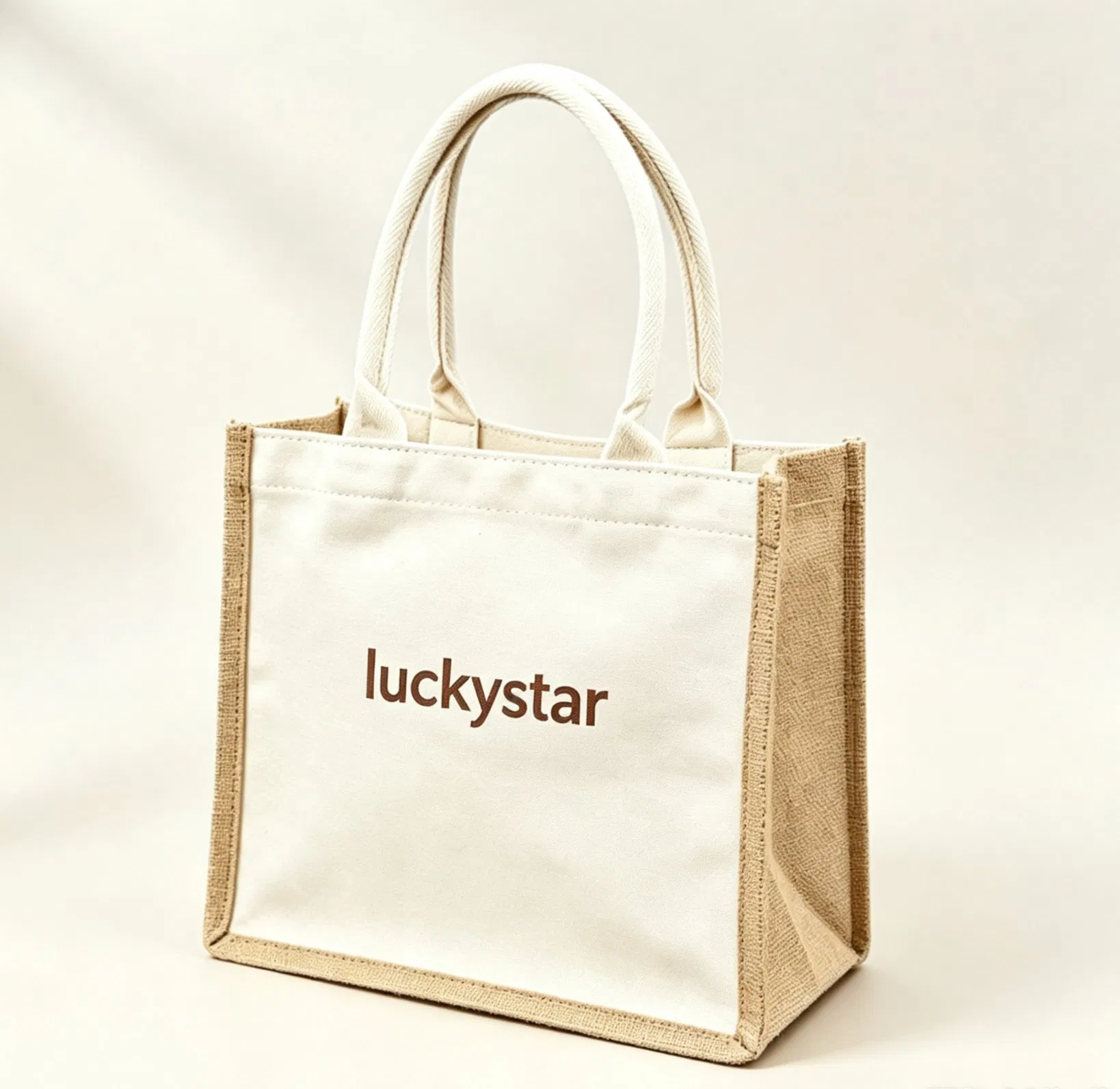
From a LUCKYSTAR international product page, this presentation displays contrasting body panels, side panels and handles. It is a visual prompt to inspect every component; appearance cannot establish material identity, recyclability, repeated-use performance or certification.
A dual-purpose specification should show which design choices support repeat use, which support the intended recovery route and where they conflict. If the recycling route accepts only the body after handle removal, say so. If reuse requires inspection or cleaning, define that process. “Reusable and recyclable” is two claims, not one shortcut.
| Design decision | Possible reuse benefit | Possible recycling complication | How to resolve the trade-off |
|---|---|---|---|
| Add a reinforced bottom | Better shape retention and resistance at a high-stress area | Insert or extra layer may be a different material or difficult to separate | Compare compatible reinforcement options and test the final structure with the intended recovery route |
| Add a surface coating | May improve cleanability or protect print in the intended use | Coating can change acceptance or processing for the base material | Specify chemistry and coverage, test actual performance and obtain route-specific guidance |
| Use a different handle material | Can improve comfort, strength or visual contrast | Creates a mixed construction and may require removal | Evaluate same-family options or design an obvious, practical separation step |
| Increase decoration coverage | Can improve campaign visibility and retention | Ink, transfer, foil or lamination may affect the target process | Approve the decorated sample—not a blank—and confirm limitations before writing the claim |
| Add a closure or hardware | Can protect contents and make the bag more useful | Metal, cord, zipper or snap can disrupt a single-material proposition | Keep only functionally necessary hardware and document removal or recovery instructions |
Material families do not predetermine the answer
LUCKYSTAR's shopping-bag category can involve cotton or canvas, nonwoven and woven polypropylene, polyester or nylon, jute, mesh, PVC, paper and constructions that combine several materials. Those category names help buyers begin a discussion; they do not establish composition, recycled content, certification, recyclability, durability or environmental superiority for a specific order.
For example, woven and nonwoven PP constructions differ in manufacturing, structure, decoration and performance considerations; see Woven PP vs Non-Woven PP Shopping Bags. RPET sourcing needs transaction-specific material and certification controls; see RPET Shopping Bags: Certification and Sourcing Checklist. Mesh formats require attention to size, strength and shrinkage; see Cotton Mesh Shopping Bags: Size, Strength and Shrinkage.
These resources help define products. None should be used to infer that an unverified order carries a particular certification or end-of-life result.
Use separate scorecards for recycling and reuse
Combining every signal into one “sustainability score” can hide weak evidence. Keep two operational scorecards and a separate impact assessment if the brand needs comparative environmental results.
For recycling, track whether the target finished item is accepted, the share of the relevant audience with access where a claim threshold matters, correct set-out or return behavior, sorting acceptance, reprocessing yield and destination. Do not report collection as recycling if downstream processing is unknown.
For reuse, track distribution, repeat-use participation, successful carrying uses, return rate in a managed system, loss, rejection, repair, cleaning and replacement. Define the denominator for every rate. “90% return” means little unless the period, eligible units and treatment of lost or damaged bags are stated.
Impact comparisons require an additional method, boundary and dataset. Recyclability and reusability are design or system attributes; neither alone proves lower climate, water or total environmental impact.
Market rules can change the product decision
Claims, labels and packaging rules vary. In the EU, Regulation (EU) 2025/40 on packaging and packaging waste began applying on a phased basis from August 12, 2026. Brands placing a shopping bag on the EU market as packaging should determine whether and how the Packaging and Packaging Waste Regulation applies to that exact format and role, then review its recyclability, reuse, labeling and documentation requirements with qualified counsel or a compliance specialist.
Do not copy an EU instruction to the United States, or a municipal acceptance message to an entire country. Record the authority, version and review date behind each instruction. This article provides procurement guidance, not legal advice.
Claims should follow the evidence, not lead it
Avoid broad phrases such as “100% eco-friendly,” “zero impact,” “fully recyclable everywhere” or “infinitely reusable.” They obscure the relevant conditions and can imply benefits that have not been measured.
A stronger workflow is to draft the intended sentence early, list the facts it would require, and withhold the sentence until the finished product and market evidence agree. Keep evidence at the SKU, order and destination-market level. The Defensible Sustainability Claims for Reusable Shopping Bags guide provides a deeper claim-review workflow.
Certification is another separate question. A supplier document or certified input does not automatically certify the company, every product or the finished bag. Confirm the certificate holder, standard, scope, product, transaction documents, validity period and trademark or label rules before publication.
What to put in the RFQ and approval pack
The supplier cannot resolve a system question that the brand leaves undefined. Include the target market and program model in the RFQ, then carry the same fields through sampling and bulk approval.
| Approval record | Minimum content | Why it matters | Release condition |
|---|---|---|---|
| Use-case brief | Contents, payload, channel, carrying duration, reuse model, cleaning or return conditions | Defines the service the bag must deliver | Brand owner signs the intended-use revision |
| Product and component map | Dimensions, material identity by component, weights where relevant, decoration, coatings, labels and attachments | Prevents a body-material fact from becoming a whole-bag claim | Matches the approved decorated sample |
| Recycling route note | Market, collection channel, acceptance source, separation steps, limitations and review date | Connects “recyclable” to an available pathway | Compliance/claim owner approves market-specific wording |
| Reuse qualification plan | Design target, loads, cycles, conditioning, inspections, failure rules and field metrics | Separates intended life, tested performance and achieved use | Quality and program owners approve criteria before testing |
| Artwork and instruction file | Claim text, qualifications, disposal/care/return instructions, placement, size and language | Keeps user action visible and tied to the evidence | Approved proof is linked to the correct product revision |
| Change and production record | Material approvals, sample ID, substitutions, in-process checks, final inspection and packing specification | Protects the evidence chain when bulk production changes | Deviations are reviewed before shipment or claim release |
The Custom Shopping Bag Tech Pack helps structure product data. The Custom Shopping Bag Sample Development Process shows where decorated samples and sign-off fit. Use both to keep marketing language attached to a controlled physical product.
Company-claim boundary: the following section is LUCKYSTAR publisher self-description. It does not prove that a finished bag is recyclable or reusable, environmentally superior, certified, compliant in a destination market, available in a stated material, or capable of a stated performance. Construction, materials, recovery/reuse route, tests, claims, documentation, MOQ, price, schedule and delivery are subject to the actual order, qualified review, final specification and written confirmation.
Why brands choose LUCKYSTAR for this work
The useful supplier is not the one that applies the strongest adjective first. It is the one that helps convert the program into verifiable product controls.
LUCKYSTAR can support that conversion by coordinating the material and component brief, decoration requirements, sample iterations, approval references, production checkpoints and order-level quality records for custom shopping bags. This is particularly important when a design must balance repeated-use performance, print appearance, component simplification and an identified recovery route.
Our working approach is evidence-led:
- define the target market, carrying service and recycling or reuse pathway;
- build an order-specific construction and artwork brief;
- develop and review the decorated sample against visible and functional criteria;
- confirm what evidence exists—and what does not—for each proposed statement;
- control approved details through production and inspection; and
- keep price, MOQ, lead time, performance and documentation subject to the final specification and written confirmation.
LUCKYSTAR does not need to turn a material category into a blanket environmental promise. The better outcome is a bag that fits the brand's actual program, accompanied by records that support precise communication.
Frequently asked questions
Is a reusable bag automatically recyclable?
No. Reuse performance concerns repeated function; recyclability concerns a viable collection, sorting and reprocessing route for the finished item. Reinforcements, coatings, decoration and mixed components that help use life may complicate recovery.
Is a recyclable bag automatically the more sustainable choice?
No. Recyclability is one attribute. A comparative environmental conclusion needs a defined function, boundary, scenarios and suitable data for production, transport, use and end of life. Actual collection and recycling outcomes also matter.
Can a brand call a paper shopping bag recyclable?
Only after checking the finished construction and the relevant market. Handles, film, lamination, coatings, adhesives, wet-strength treatment, decoration and contamination can affect acceptance. The claim may need a clear geographic or procedural qualification.
How many uses make a shopping bag reusable?
There is no universal number that works for every product, market or comparison. Set an intended-use target, test the representative construction and measure achieved behavior or rotations in the actual program. Do not confuse a passed laboratory cycle count with customer use.
Does a recycling symbol prove acceptance?
No. A symbol or resin code can identify material or communicate an instruction, but it does not by itself prove collection access, sorting retention or reprocessing for the finished bag in every location.
Should a brand choose a mono-material shopping bag?
A more compatible material architecture may simplify a target recovery assessment, but performance, decoration and local acceptance still need verification. “Mono-material” is a design description, not an automatic recyclability or impact claim.
What should we send LUCKYSTAR for an accurate proposal?
Send dimensions, quantity, target market, intended contents and payload, material preferences, artwork, decoration, packing, reuse or return model, target recovery route, required tests and the exact claims under consideration. LUCKYSTAR can then identify specification questions and sample checkpoints. Pricing, MOQ, timing and evidence availability are confirmed against the final brief.
Build the system before printing the claim
Brands do not need to choose between two fashionable words. They need to decide what job the bag will perform, what happens during repeated use, what happens when it becomes waste, and what proof follows the actual product into each market.
Use “recyclable” only when the finished item and local recovery route support it. Use “reusable” only when product design and user or program behavior make repeated service credible. If both are priorities, qualify both independently and manage the trade-offs in the specification.

Share your program brief with LUCKYSTAR through our inquiry page. Tell us the target market, use case, construction, artwork, intended recycling or reuse route and evidence requirements. We will help turn those inputs into a quote-ready custom shopping bag brief, subject to specification and written confirmation.
Request a recycling-and-reuse specification review
Send the exact destination market, finished construction and intended route or reuse model together so product design, evidence and claim wording refer to the same bag.
Review LUCKYSTAR custom shopping bag options, then send your program brief through the contact form or Email a project brief. The email link opens a draft for your review before sending.
Materials, construction, recycling or reuse outcomes, tests, certificates, claims, legal applicability, availability, price, MOQ, packing, schedule and delivery terms are subject to order-specific evidence review, final specification and written confirmation.