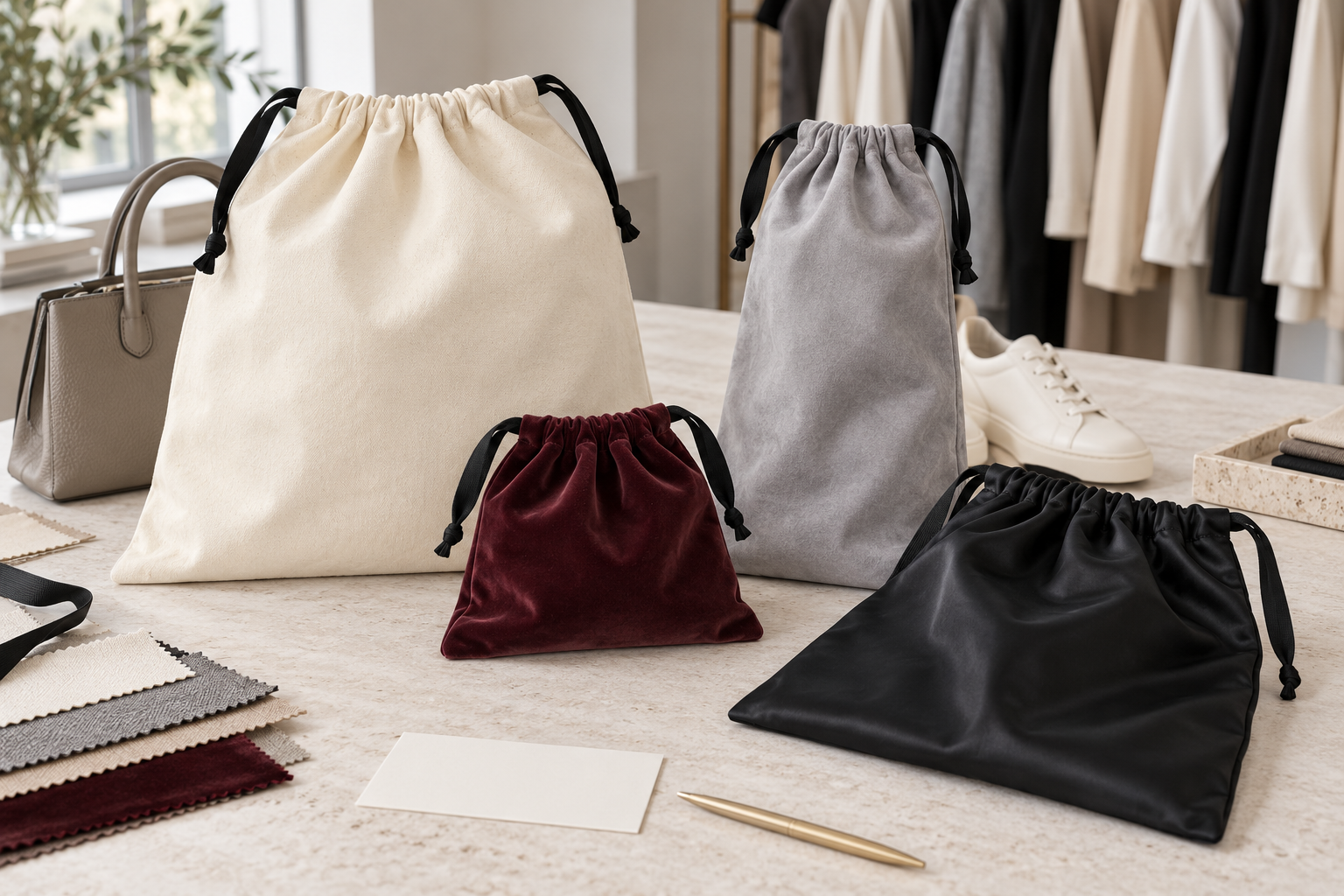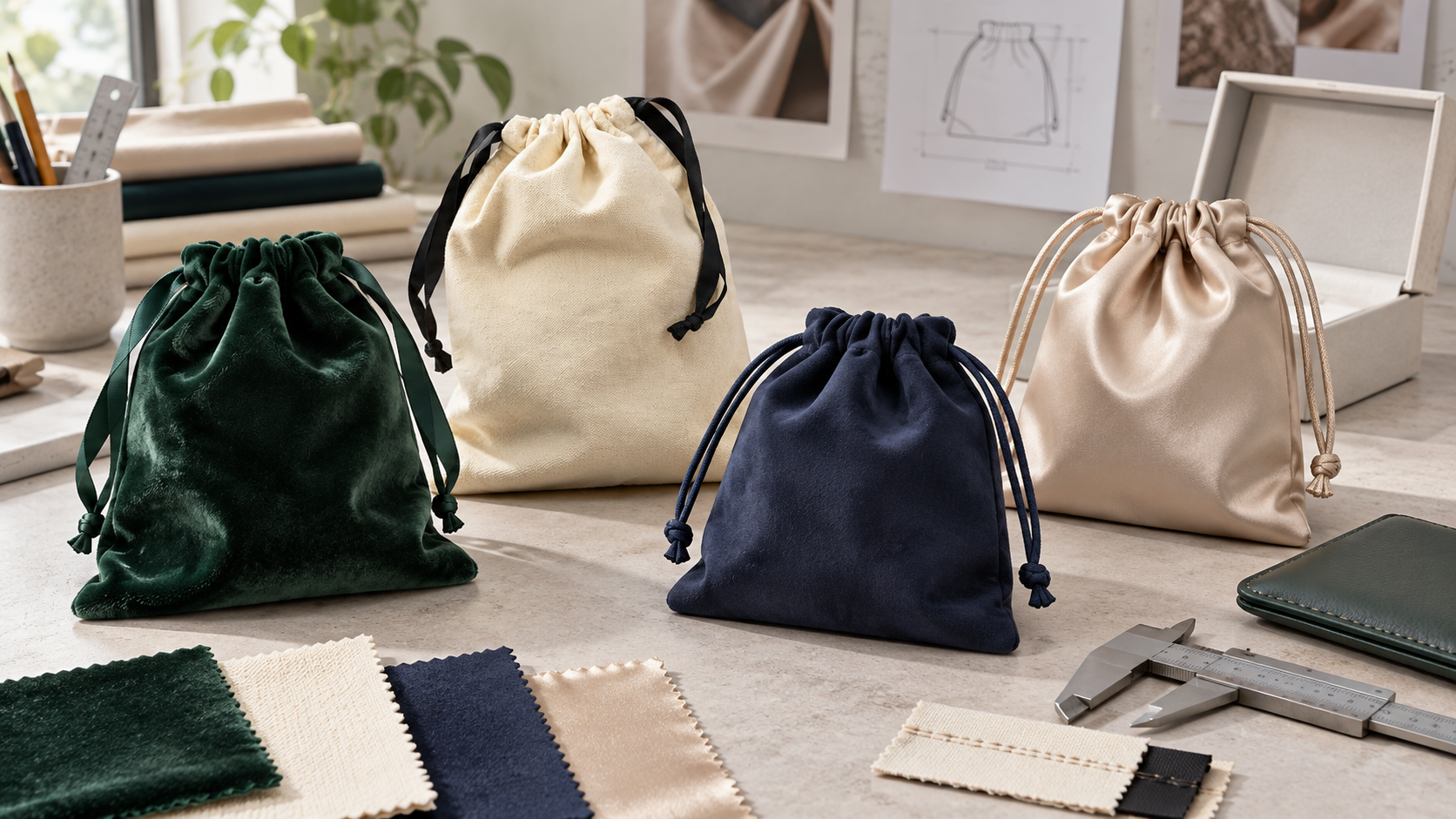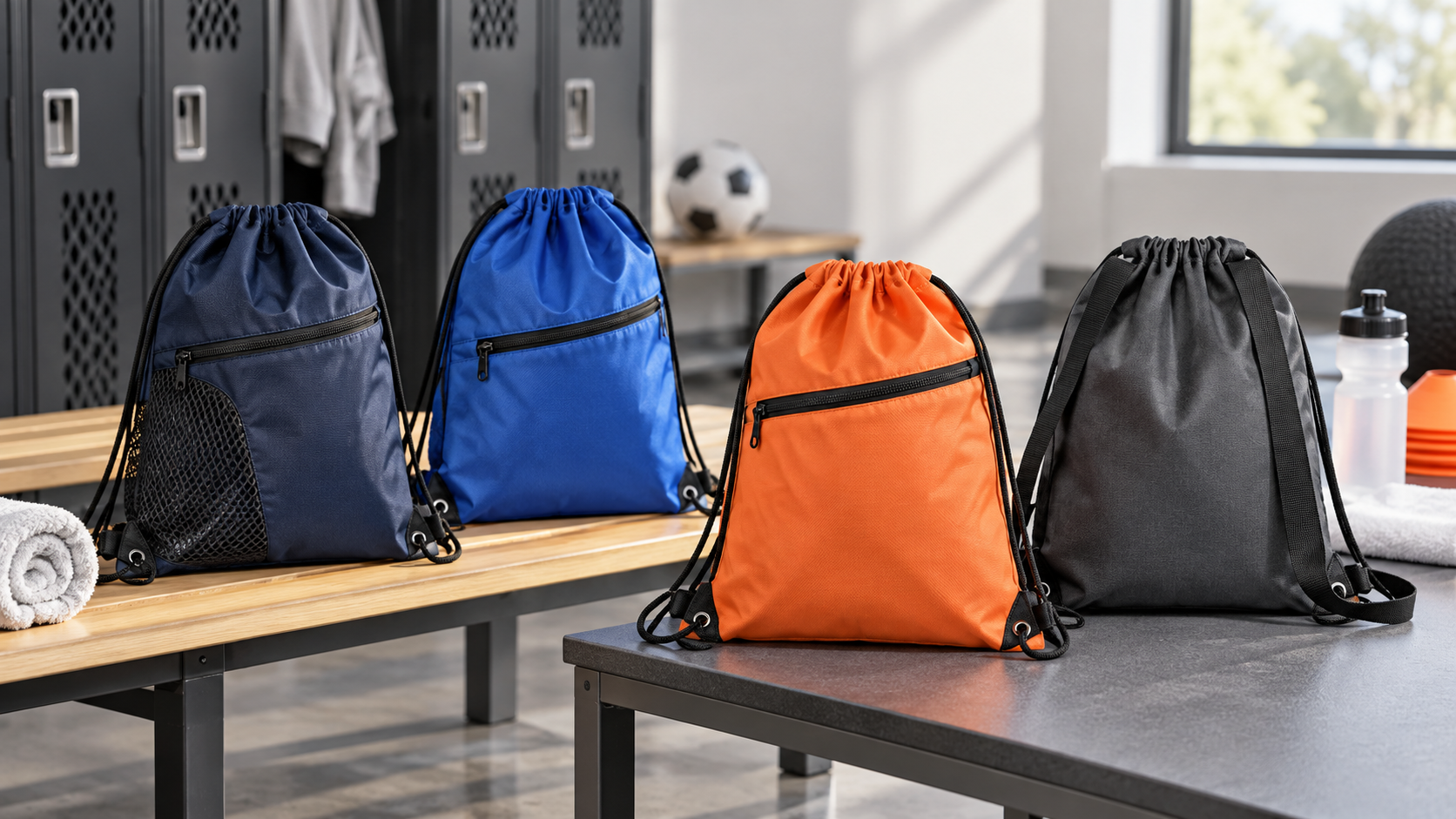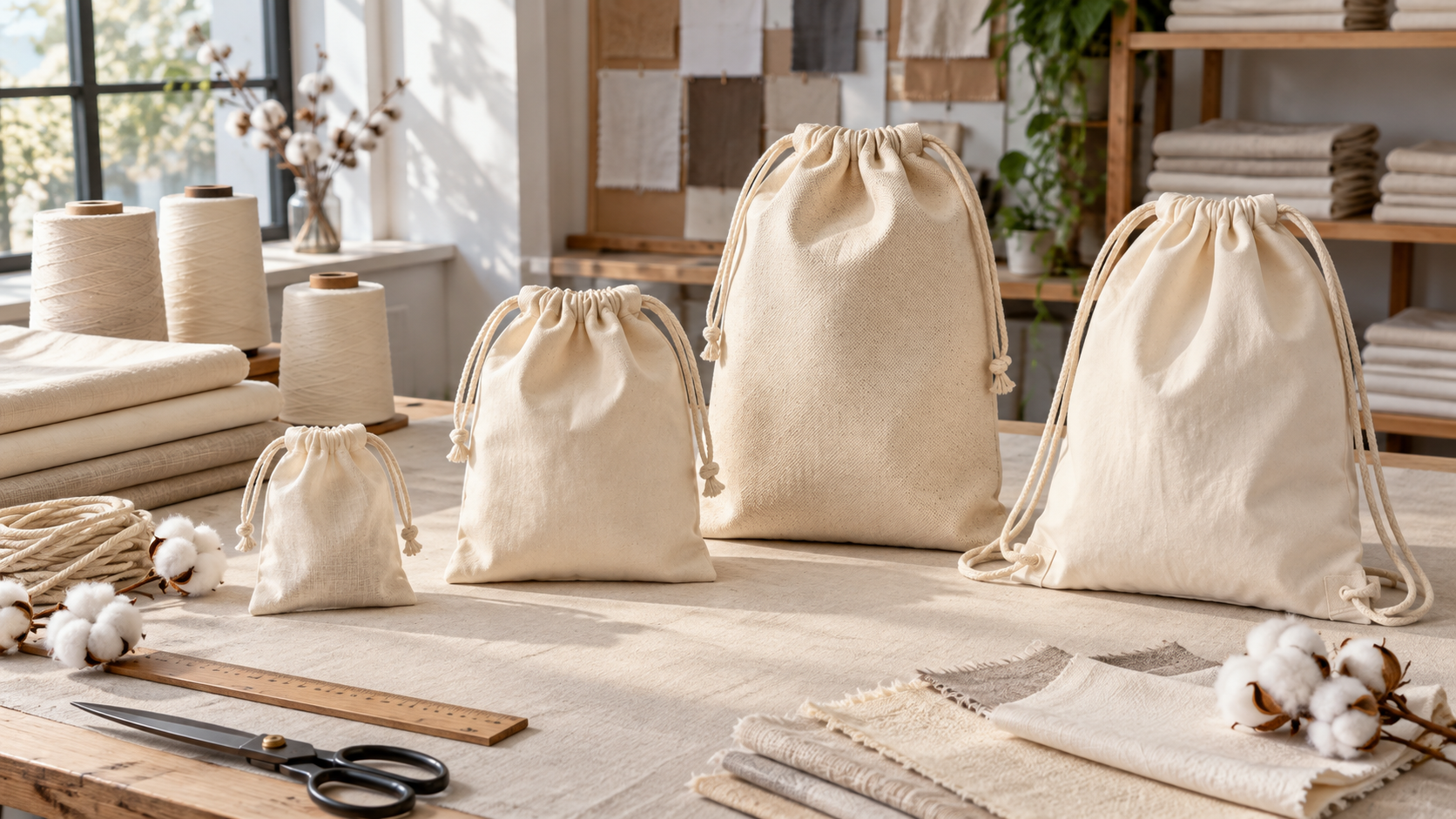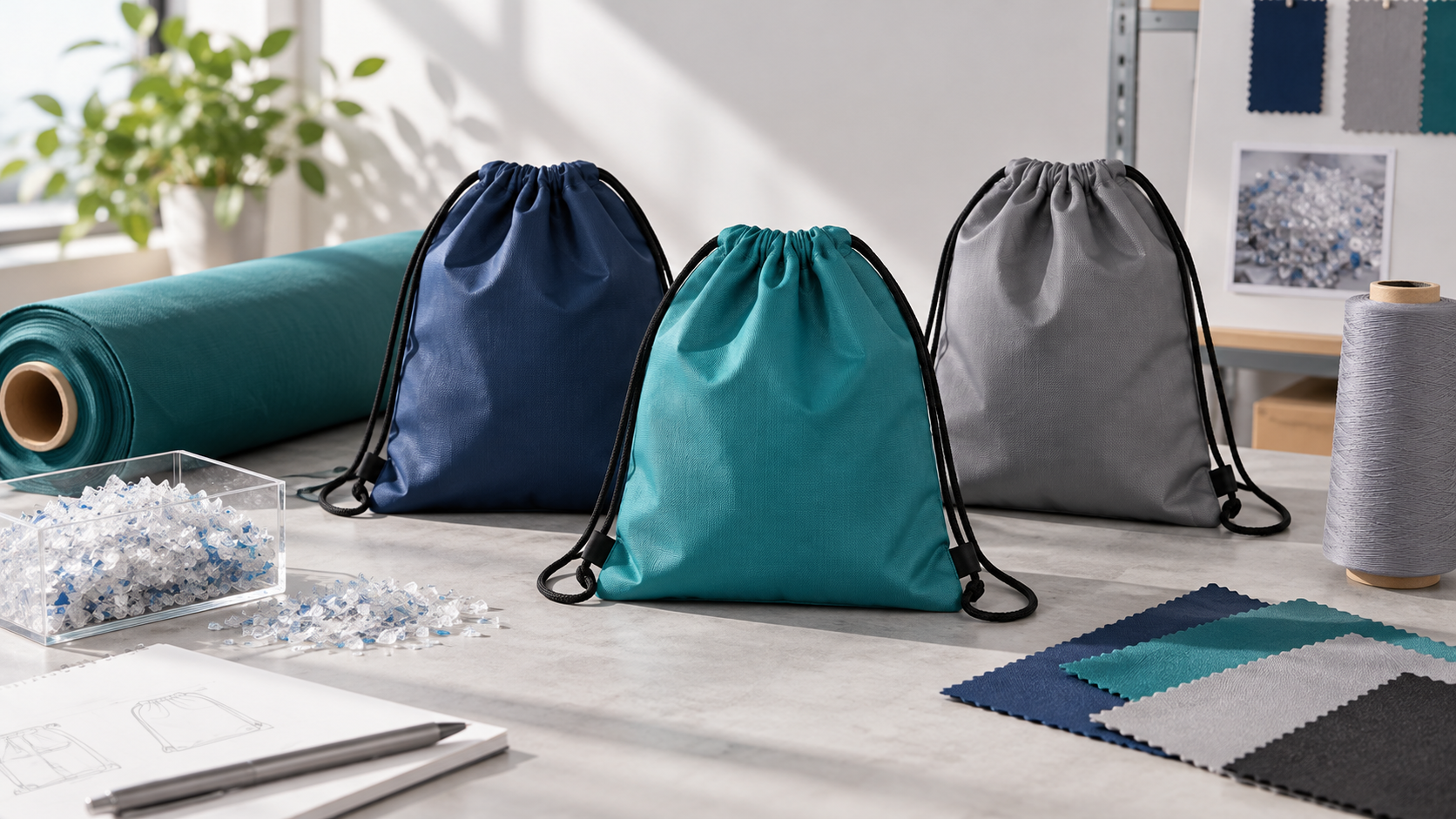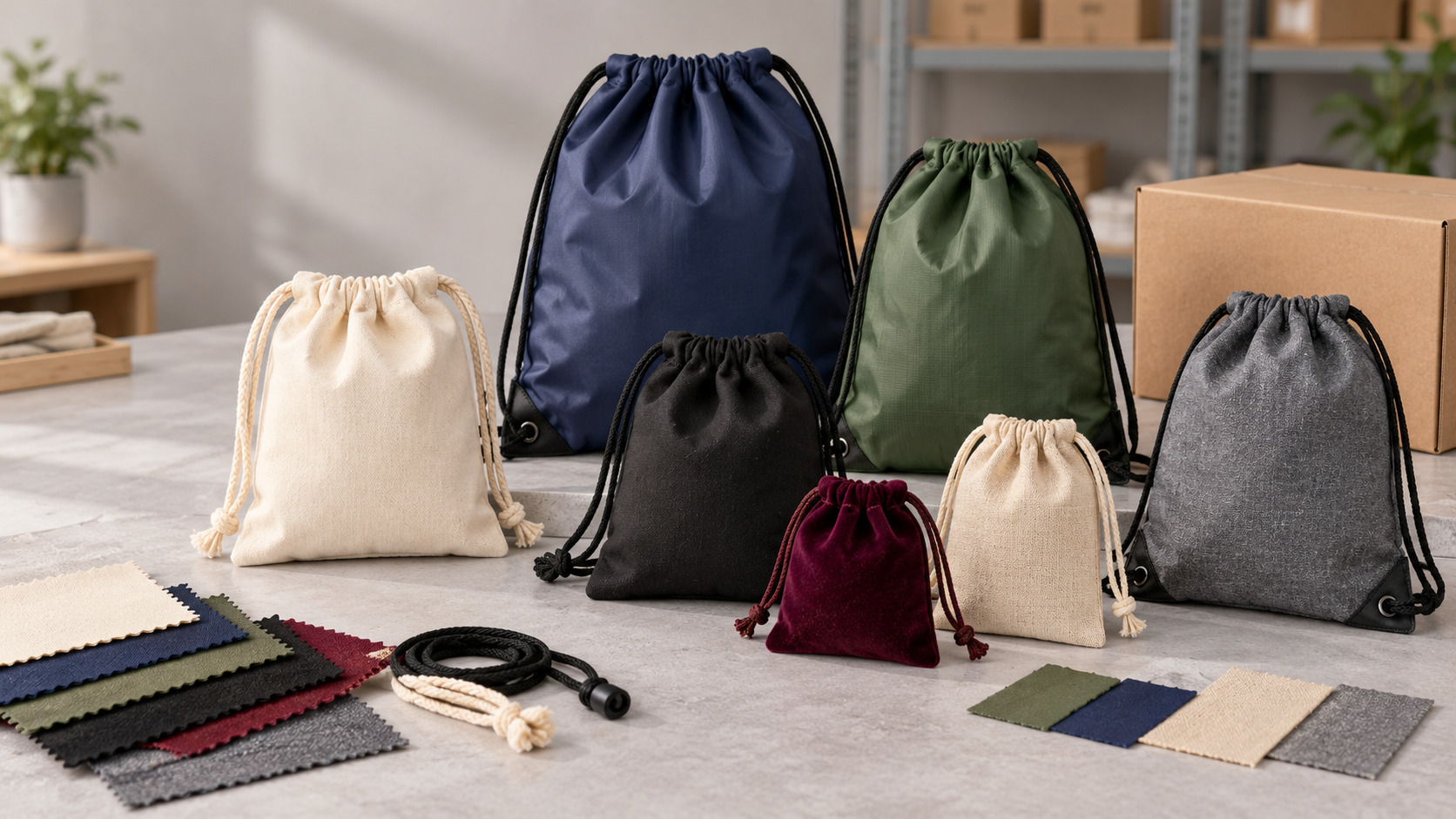
A shopping bag is manufactured twice: first as a retail system on paper, then as a physical product on a production line. If the first version leaves the checkout load, gusset, handle attachment or carton fold undefined, the factory will resolve those gaps during production—and each silent decision can change cost, appearance or performance.
This guide follows the Custom Shopping Bag Manufacturing Process from design to delivery. It does not repeat the broad sequence covered in our general custom bag manufacturing process guide. Here, every stage is examined through the realities of retail carriers: paper converting, non-woven bonding, woven-PP lamination, fabric or jute sewing, transparent-film joining, checkout trials, flat packing and multi-store delivery.
To explore possible constructions, start with LUCKYSTAR's custom shopping bag range. Buyers who are still selecting a partner should first read How to Choose a Custom Shopping Bag Manufacturer; the wider Custom Bag Manufacturer Guide covers supplier qualification across all bag categories.
Planning an order? Send one shopping bag production brief. Include the retail use, intended products and load, dimensions, material route, handles, printing, quantity by SKU, approval stage, packing, destination and required date.
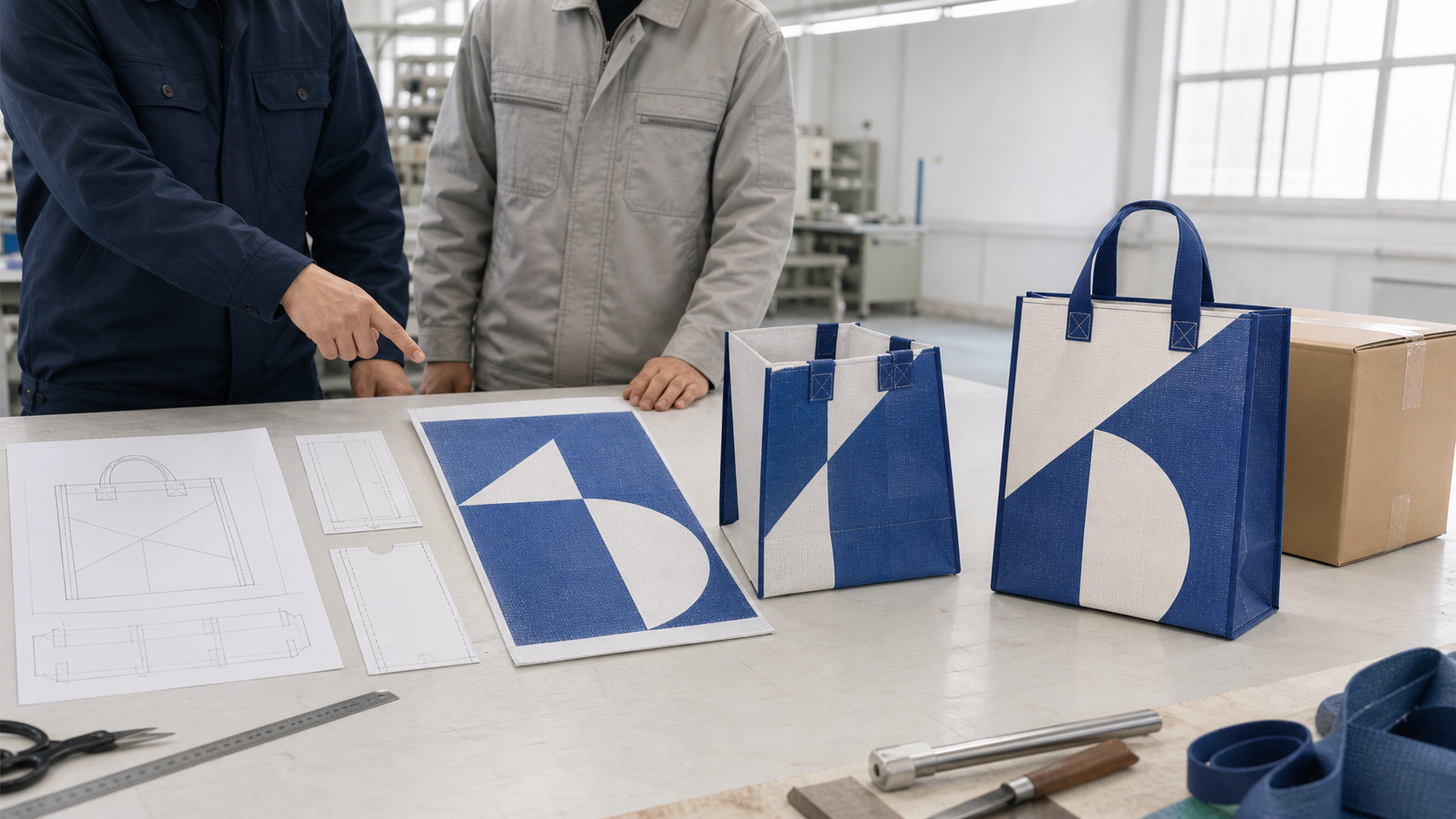
The production route becomes predictable when the drawing, printed panel, construction sample and packing method belong to the same approved specification.
Page role: This process guide owns the end-to-end shopping bag workflow from retail brief, specification and sampling through printing, conversion, quality control, packing and delivery. Use the worldwide shopping bag manufacturer guide for a supplier shortlist, and the custom shopping bag collection for specification and quotation planning.
Before production: convert a campaign idea into manufacturing inputs
A logo, reference photo and desired quantity are not yet a production brief. The bag must be described by what it will carry, how staff will pack it, how the customer will hold it and how the retailer will store it. A shoe-box carrier and a cosmetics checkout bag can have similar outside dimensions but very different base, opening and handle requirements.
Begin with physical examples of the largest, heaviest and most frequent product combinations. Define whether the bag is complimentary packaging, a paid reusable item or a promotional giveaway. Then record destination, quantity per design, store launch date and any claim that will appear on the bag. These decisions narrow the viable material and process routes before sampling money is spent.
| Input to freeze | Question it answers | Manufacturing consequence | Practical evidence |
|---|---|---|---|
| Product set and normal load | What must fit and remain comfortable? | Finished size, gusset, bottom support, seam and handle reinforcement | Filled checkout trial using real or dimensionally accurate products |
| Retail handling | How is the bag opened, packed, carried and stored? | Opening stiffness, handle behavior, folding direction and pack count | Short trial with store staff at counter speed |
| SKU architecture | Which sizes, colors and artworks share the order? | Material minimums, printing setup, assortment control and carton labels | Quantity matrix by size × color × artwork |
| Brand standard | What must look consistent in store? | Print route, substrate color, ink coverage, finish and approval lighting | Vector artwork, physical color reference and placement drawing |
| Delivery requirement | Where and when must usable stock arrive? | Critical path, packing, trade term, shipping mode and buffer | Named destination, required arrival date and launch allocation |
A complete specification can be organized with the custom bag tech pack guide. For shopping bags, add a filled-bag sketch, handle drop, side and bottom gusset sections, reinforcement locations, fold direction and master-carton orientation. State how finished dimensions will be measured; gussets and soft materials otherwise invite inconsistent readings.
Stage 1: select the production route
“Shopping bag factory” can describe several kinds of manufacturing. A paper carrier is printed and converted. A non-woven bag may be ultrasonically bonded or sewn. A woven-PP grocery bag often combines a woven substrate with reverse-printed film and lamination. Jute and canvas are cut-and-sew products. Clear PVC or TPU can be welded, sewn or combined with textile binding.
The route affects tooling, minimum order, sampling, tolerances, inspection and lead time. It should be chosen before a supplier presents a final price. LUCKYSTAR's shopping bag collection spans paper, jute, transparent, reusable, mesh and fabric directions, so a buyer can compare constructions around the retail job rather than forcing one material into every program.
| Route | Typical process chain | Critical early decision | Common bulk risk |
|---|---|---|---|
| Paper carrier | Paper → print → varnish/lamination → die cut → crease/fold → glue → handle | Paper grade, print/finish and handle anchoring system | Cracked folds, weak glue coverage, color shift or handle pull-out |
| Non-woven PP | Spunbond → print/laminate → cut → ultrasonic bond or sew → handle reinforcement | Fabric weight plus bonded/sewn construction | Inconsistent bond width, print rub or handle patch misalignment |
| Laminated woven PP | Woven substrate → film print → laminate → cut → bind/sew → attach webbing | Film structure, artwork wrap and laminate bond | Gusset registration drift, delamination or distorted top edge |
| Cotton, canvas, polyester or jute | Material grade/dye → relax → cut → decorate → sew → trim/press | Usable fabric width, shrinkage and seam construction | Panel skew, shade variation, fraying or seam puckering |
| Clear PVC or TPU | Film condition → cut → weld/sew → bind/trim → clean → protect | Film grade, joining method and trim compatibility | Scratching, blocking, odor, cloudy welds or surface migration |
Ask which operations occur at the assigned plant and which are subcontracted. Specialist printing or lamination is not inherently a problem; the important issue is ownership of the approved master, incoming checks and corrective action. The production map should name each handoff.
Stage 2: design for manufacture, not just for the screen
Design-for-manufacture reviews the relationship between artwork and construction. A centered logo can disappear into a side gusset. A full-bleed graphic may create an unavoidable unprinted area at a paper-bag glue lap. A webbing handle can cover typography. A heavy base insert can improve standing but increase folded thickness and carton volume.
The supplier should issue a dimensioned dieline or pattern for the chosen route. Place artwork on that manufacturing file, not on a generic rectangle. Mark safe areas, print direction, seam/fold lines, handle holes, reinforcement and barcodes. If color crosses a gusset, approve how panels meet when the bag is both flat and filled.
At this point the team also creates a preliminary bill of materials (BOM): body substrate, ink, film or coating, thread/binding, handles, patches, bottom board, labels and packing materials. Every component receives a supplier reference, specification and color. The BOM becomes the spine of purchasing, sampling and later traceability.
Stage 3: make development samples that answer different questions
One prototype rarely proves everything. A white dummy can answer size and product fit without incurring print setup. A material swatch or print strike-off can resolve color. A fully decorated sample checks assembly and appearance. The pre-production sample should be made with the intended material, decoration and construction and should match the frozen BOM.
| Approval item | Decision it should close | Do not approve if… | Record to retain |
|---|---|---|---|
| Size dummy | Opening, usable volume, gusset and handle drop | Representative products were never packed | Signed dimensions plus photos of the filled trial |
| Material/trim set | Body, handle, binding, board and finish | Source or weight/thickness is unidentified | Supplier-coded swatches and component list |
| Print strike-off | Color, opacity, detail, adhesion and placement intent | It is printed on a different substrate or viewed only on screen | Signed physical master with date and version |
| Construction sample | Seam/bond, handles, reinforcement and bottom behavior | The method differs from the planned line | Section photos, measurements and trial result |
| Pre-production sample | Complete bag, labeling, fold and packing standard | Open comments or substitute components remain | Sealed sample, frozen BOM and approval sheet |
Use numbered comments and close each one in a revision log. The Custom Bag Sample Development Process explains the broader sample sequence. For a retail carrier, always add checkout packing, carry comfort, standing behavior and fold recovery to the review.
Stage 4: freeze scope and launch material procurement
Bulk timing should start from a defined trigger: deposit received, artwork approved, BOM frozen and pre-production sample signed. If one element remains conditional, the schedule must show it as an open gate.
Paper, spunbond, woven substrate, fabric, film, webbing and handles can have different minimums and replenishment times. Color-matched body material usually adds more risk than decorating a stock color. A multi-SKU order may share base material while requiring separate printing or labels. The purchase plan should show what can be pooled and what must be ordered per color or artwork.
For responsibly sourced paper, FSC explains that chain-of-custody certification tracks eligible forest-based material through manufacturing and distribution. Verify the certificate holder, validity, product scope, claim and sales documentation for the order. For recycled textile or polymer claims, consult GRS 5.0 and its transition information, then verify the certified organizational scope and shipment-level transaction evidence. A logo in a presentation is not order-level traceability.
Stage 5: control incoming material before value is added
Incoming inspection is cheaper than discovering a material problem after printing. The line should identify supplier lot, composition or grade, color, weight/thickness, usable width, surface and relevant performance. Fabric may need relaxation before cutting; paper and film need appropriate conditioning and protection from moisture or distortion.
Do not mix lots casually in the same retail SKU. Natural jute and dyed textiles can vary; paper and polymer surfaces can influence ink or adhesive behavior. If several lots are unavoidable, define segregation and visual-matching rules before conversion.
Stage 6: print and convert by route
Printing is approved at setup, not after the run. The first acceptable sheet, panel or film becomes the press-side reference. Operators check color, registration, orientation, contamination and cure/adhesion. The test must suit the process: a laminated reverse print has different failure modes from direct screen print on spunbond.
After printing, each route diverges. Paper is coated or laminated if specified, then die-cut, creased, folded and glued before handles are fitted. Non-woven may be roll-fed into automatic cutting and ultrasonic bonding, or cut into panels for sewing. Woven PP film is laminated to the woven substrate before panels are cut, bound and sewn. Fabric and jute follow grain/warp-aware cutting, decoration and sewing. Transparent film is cut and then welded or sewn with surface protection kept in place.
| Production gate | What operators control | First-off evidence | Reaction when outside limit |
|---|---|---|---|
| Print setup | Color, opacity, position, cure/adhesion and registration | Signed sheet/panel/film under agreed lighting | Stop, adjust, recheck and segregate setup waste |
| Cut/die setup | Panel geometry, grain/direction, notches, holes and edge quality | Measured first stack or converted blank | Correct tooling or lay before releasing bundles |
| Bond/glue/seam setup | Width, temperature/energy, adhesive coverage, allowance and stitch/bond density | Section sample plus destructive check where appropriate | Reset machine, quarantine since last confirmed check |
| Handle attachment | Drop, spacing, patch position, overlap and symmetry | Measured first-off bag and attachment trial | Correct guide/jig and inspect affected bundle |
| Finished-bag assembly | Dimensions, gusset, base, top edge, appearance and function | Approved first-off against sealed sample | Pause line; document disposition and root cause |
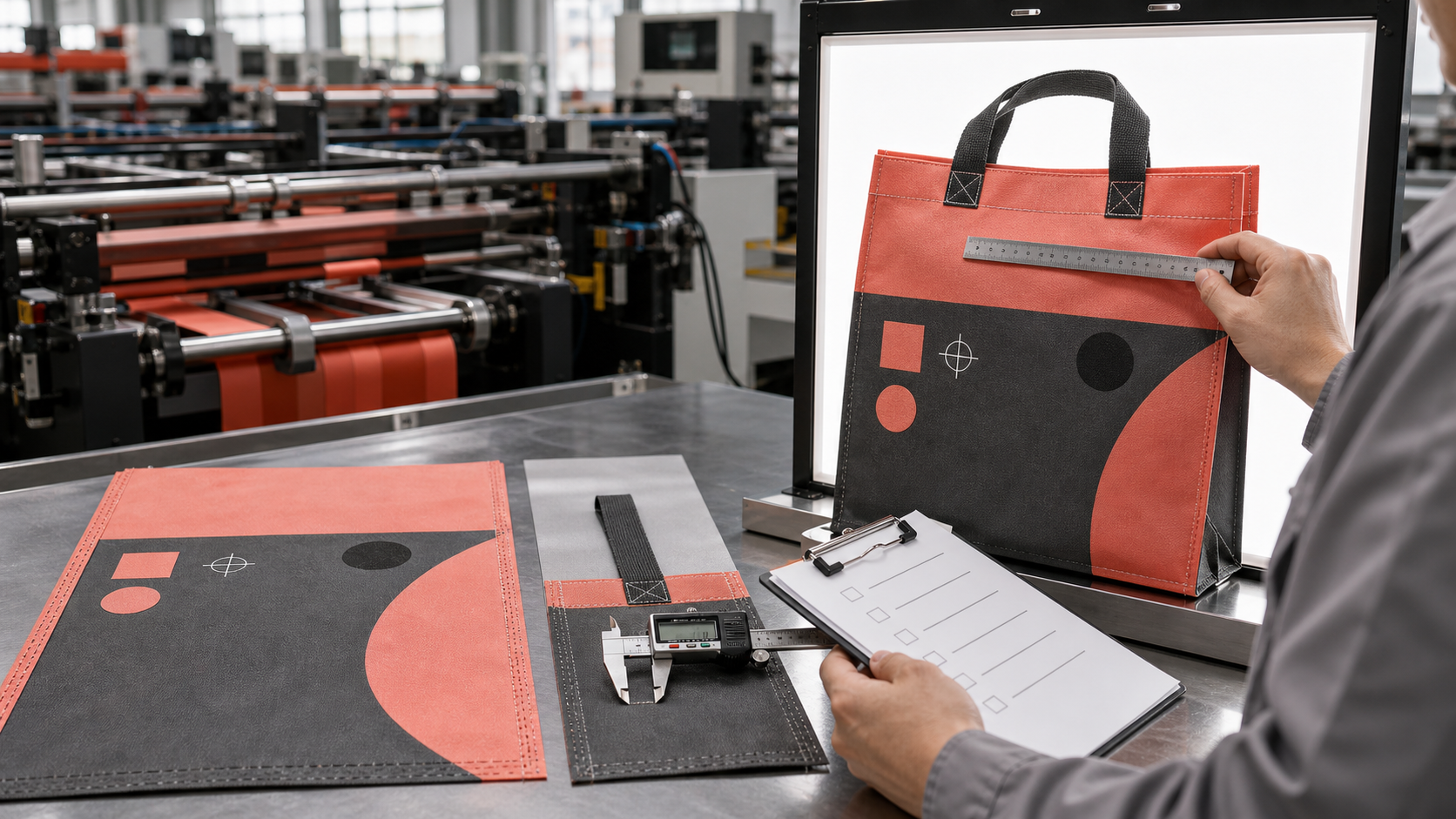
A first-off gate ties the printed panel, bond or seam, handle reinforcement and finished geometry to one approved production setup.
Stage 7: manage in-line quality, not only final inspection
In-line checks prevent a small drift from becoming a full-lot defect. Frequency should respond to the route and risk: after setup, after roll or lot changes, after machine adjustment, at defined intervals and after an abnormal stop. Measurements should be linked to an operator, machine, time and material lot.
Final inspection samples the completed order and verifies workmanship, measurements, appearance, function, assortment, labels and packing. The published third edition, ISO 2859-1:2026, defines AQL-indexed sampling schemes for lot-by-lot inspection by attributes. It can structure an agreed sampling plan; the purchase specification must still define defect categories, AQLs, inspection level, methods, acceptance or rejection rules and disposition of a rejected lot.
The Custom Bag Quality Inspection Checklist provides a wider framework. A shopping-bag plan should also test the load path—body, gussets, bottom and handles together—using a documented filler, mass, distribution, lift or cycle method, duration and failure rule.
Stage 8: fold, pack and protect the retail presentation
Packing is part of manufacture. An attractive bag can reach stores creased, blocked, scratched or mixed with the wrong size. The approved pack-out should state folding sequence, handle position, units per bundle, protective material, inner/master quantity, carton dimensions, gross/net weight, marks and pallet rule.
Run a physical carton trial after the final fold is approved. Do not calculate carton cube only from flat dimensions: rope handles, webbing, base boards and laminated surfaces change the stack. Paper folds may crush; printed films can rub; clear bags need interleaving or protective wrapping; natural fibers can absorb moisture. A short conditioning and unpacking trial reveals whether the bag recovers before a full shipment is sealed.
| Pack-out check | Why it matters | Approval method | Data sent to logistics |
|---|---|---|---|
| Fold and handle position | Controls crease recovery and store separation | Open bags after a representative packed hold | Fold diagram and units per bundle |
| SKU segregation | Prevents size/color/artwork mixing across stores | Scan or reconcile inner and master labels | Carton-level SKU and quantity list |
| Surface protection | Prevents print rub, blocking, dust and scratches | Inspect top, middle and bottom units after trial | Interleaf/bagging method and material |
| Master-carton fit | Balances protection, freight cube and safe handling | Weigh and measure the physically packed carton | External dimensions, gross weight and CBM |
| Pallet/container plan | Reduces crushing, unused cube and receiving delays | Review orientation, stack limit and route conditions | Cartons per layer/pallet and total shipment cube |
Stage 9: build a realistic production and delivery schedule
A useful schedule contains gates, not one optimistic number. Work backwards from the required arrival date through destination handling, main transport, origin handover, final inspection, packing, production, material preparation and sample approval. The critical path differs: printed paper may wait on press and converting capacity; woven-PP may wait on film and lamination; custom-dyed fabric may wait on color approval.
| Phase | Planning range* | What moves the date | Gate before proceeding |
|---|---|---|---|
| Brief and DFM | 2–5 working days | Open size/material decisions and artwork quality | Approved specification for sampling |
| Sample development | 7–20 working days per round | Custom material, tooling, print route and courier time | Signed pre-production sample and BOM |
| Material and printing preparation | 10–30 working days | Custom color, paper/film/fabric availability and component MOQ | Incoming lots accepted; print first-off approved |
| Bulk converting/assembly | 10–30 working days | Route, quantity, SKU count, line capacity and rework | Completed lot and in-line records |
| Final inspection and packing | 2–7 working days | Lot result, assortment complexity and carton approval | Release report and final packing list |
| Freight and destination | Route-specific | Mode, cut-off, customs, congestion and inland delivery | Agreed shipping documents and receiving plan |
*Editorial planning scenarios for sequencing only; they are not market norms, observed LUCKYSTAR delivery data, a quotation or a delivery promise. The assigned site, live capacity, approvals, route, quantity, shipment plan and project scope determine the actual schedule.
Define the trade term and named place in the purchase order. The ICC Incoterms® 2020 rules allocate cost, risk and obligations between seller and buyer, but they do not replace a product specification, payment terms or a detailed shipping plan. Clarify who books freight, completes export/import formalities, provides insurance where applicable and controls document cut-offs.
Stage 10: hand over data for delivery and repeat orders
Before shipment, reconcile the purchase order, inspection release, packing list and carton count. Keep artwork versions, BOM, approved samples, material and print references, quality records and shipment identity under the same order code. Retail allocation should state which SKU and quantity belongs to each warehouse or store program.
After receipt, inspect cartons before stock disperses. Record transit damage, fold recovery, quantity variance and store feedback. For repeat orders, do not say “same as last time” alone. Reference the retained sample and BOM, then confirm which material, component, print master and packaging versions are still valid.
| Handover record | Purpose at delivery | Purpose at reorder |
|---|---|---|
| Frozen BOM and component references | Confirms what the received bags were meant to contain | Prevents an unapproved material, handle or trim substitution |
| Artwork and physical print master | Resolves questions about color, placement and version | Provides a stable target if files or press conditions change |
| Inspection and corrective-action records | Documents lot release and any repaired or segregated units | Feeds known risks into the next control plan |
| Packing list and carton map | Supports receiving, allocation and shortage investigation | Preserves a proven fold, count and cube baseline |
| Store and customer feedback | Captures real checkout, carry and presentation issues | Separates controlled improvements from accidental change |
Company-claim boundary: LUCKYSTAR statements in this section are publisher self-description, not third-party verification or a claim that every production step occurs at one self-owned factory. Confirm the contracting entity, assigned production site, subcontracting, process responsibility, materials, samples, inspection, packing, quantities, timing and commercial terms for each order.
How LUCKYSTAR describes its shopping bag production coordination
LUCKYSTAR describes a coordination route intended to keep the production route aligned with the retail brief. Its public custom shopping bag product page presents paper, reusable, jute, mesh, canvas and transparent directions. Buyers can use these as starting directions, while the assigned factory, process, material and capability must be confirmed for the actual order.
LUCKYSTAR states that its project team can coordinate the handoffs described above: specification, material options, artwork, samples, bulk production, inspection, packing and export. The assigned site, responsibilities and project route are subject to specification and written confirmation; the approved sample and purchase specification govern production. Buyers building coordinated launches can also review the wider public Product Range; cross-category color, timing, site and commercial feasibility require order-specific confirmation.
Send LUCKYSTAR the store format, products to be packed, desired sizes, quantity matrix, artwork, destination and required arrival date. Request a custom shopping bag quotation and ask for the material route, sample plan, production gates and packing assumptions to be shown separately.
Frequently asked questions
How Custom Shopping Bags Are Made
The brief is converted into a specification and material route; patterns, artwork and samples are approved; the BOM is frozen; materials are inspected; printing and route-specific conversion follow; bags are assembled and checked in line; the completed lot is inspected, folded, packed and shipped with traceable documents.
What is the biggest difference between paper and reusable bag production?
Paper bags depend on printing, coating/lamination, die cutting, creasing, gluing and handle fitting. Reusable woven, non-woven or fabric bags depend more on lamination, bonding or sewing and reinforcement. Their tolerances, tooling, first-off controls and packing behavior are therefore different.
When should artwork be approved?
Approve layout on the final dieline or pattern, then approve color and adhesion on the intended substrate. The decisive visual approval should be a converted or assembled sample because gussets, seams, handles and folds can change the result seen on a flat proof.
What is a pre-production sample?
It is the complete reference made with the intended material, printing, components, construction and packing method after development comments are closed. It should match the frozen BOM and be retained by both buyer and production team.
How is shopping bag strength checked?
Use a documented method that specifies the filler shape, mass and distribution; conditioning; lifting or cycling procedure; duration; and failure rule. Inspect the entire load path—bottom, gussets, seams or bonds, handle attachments and body—not only the material weight.
What causes sample-to-bulk color differences?
Substrate lot, surface finish, ink mixture, underbase, machine settings, lamination and lighting can all alter color. Reduce variation by identifying the material, approving a physical master on the actual substrate, defining viewing conditions and checking the first production output.
How long does custom shopping bag manufacturing take?
It depends on the route, custom materials, sample rounds, quantity, SKU complexity and live capacity. Build a dated schedule from approval, procurement, printing, conversion, assembly, inspection and packing, then add the selected freight route. For broader planning, see How Long Does Custom Bag Production Take?
What should be checked before shipment?
Verify finished dimensions, appearance, print, handles and reinforcement, functional/load results, SKU assortment, labels, folding, bundle quantity, carton count, carton dimensions/weight and shipping documents. Confirm that any rejected or reworked units were reinspected before release.
Make every handoff visible
A reliable Shopping Bag Manufacturing Process is not defined by the number of factory photos. It is defined by controlled handoffs: retail need to specification, specification to sample, sample to BOM, material to first-off, first-off to bulk, bulk to inspection and approved product to a protected carton.
Review the shopping bag manufacturer selection guide, compare options on the custom shopping bags page and consult the core Custom Bag Manufacturer Guide. If the project is ready, explore the full Product Range and ask LUCKYSTAR for a quote based on your actual checkout program.

Send one shopping bag production brief
Define the retail job, intended products and load, dimensions, material and production route, handles, printing, quantity by SKU, approval stage, inspection, packing, destination and required date.
Review LUCKYSTAR custom shopping bag options, then send your project details through the contact form or Email a project brief. The email link opens a draft for your review before sending.
Factory and subcontracting, material and process route, claims, certification scope, samples, testing, inspection, MOQ, price, schedule, packing and delivery terms are subject to due diligence, specification and written confirmation.