
For suppliers beyond the U.S. promotional route, compare global custom tote bag manufacturing models before preparing the campaign brief.
Promotional Tote Bags for US Buyers: Check the Actual Production Route
Buyer quick answer
A search for a “promotional tote bag factory USA” may mean US manufacture, a US stock/printing service, or an overseas supplier serving US buyers. Ask where the bag body is made, where any logo is applied, who is the seller, and what the quote includes. Then approve the fabric, handles, print and filled sample for the campaign.
Scope: This is a route and production-location checklist for US promotional buyers. Luckystar's public site identifies Ningbo Luckystar Commodities Co., Ltd.; it is not evidence of a US-owned or US-based factory. For shipment-specific US import questions, see the US tote export checklist.
Comparing US and overseas routes? Send the intended use, dimensions, fabric, logo, quantity by version, pack-out, US destination and in-hand date. Ask for the actual production and decoration locations, sample approval, freight term and landed-cost assumptions in writing.
Three sourcing routes behind a USA factory search
| Route | Verify before calling it US-made or ordering |
|---|---|
| US manufacture | Request the actual manufacturing site and written origin support for the finished bag, material and significant processing. A sales address alone is insufficient. |
| US stock and decoration | Ask where the blank bag was made, where the logo is applied, what is in stock, and which steps the quote covers. Warehousing or printing in the US does not by itself establish US manufacture. |
| Overseas production for US delivery | Confirm the contracting seller, actual production and inspection sites, sample route, shipping term, destination and in-hand date. Keep product origin and delivery promises order-specific. |
The US Federal Trade Commission's Made in USA guidance explains the evidence needed for an unqualified US-origin marketing claim. Do not use “Made in USA” for a proposed bag without reviewing the actual manufacturing and components against the applicable claim standard. This article does not decide a particular bag's legal origin.
Most tote bag projects look easy — until you actually have to order them
When a company first starts looking for a promotional tote bag supplier, the request usually sounds simple:
“We need logo totes delivered to a US event by a specific date.”
The first decision is whether the brief requires domestic production, stocked blanks with local decoration, or a custom overseas order.
But anyone who has managed promotional products knows the logo is rarely the difficult part.
The real questions come after the first quotation:
Will the fabric feel cheap when customers touch it?
Will the handles hold up after people fill the bag?
Will the colors match the approved sample?
Who will retain the approved specification and sample for a repeat order?
Test the filled sample and agree workmanship criteria; continued use depends on construction and the recipient.
A US point of contact can be useful, but it does not establish where the bag is made. Ask for the production route before comparing delivered price and timing.
A tote bag is simple. Getting the details right is not.
From a distance, most promotional tote bags look almost identical.
They usually have:
- A simple rectangular body
- Two handles
- An open top
- A printable front area
But during sourcing, small differences become obvious.
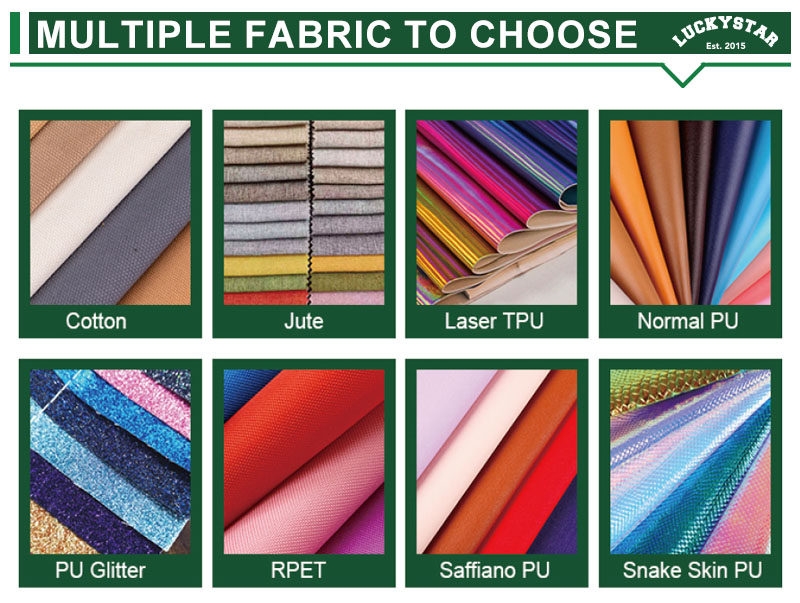
Fabric composition, weave and weight affect feel and should be named in the approved specification.
Test the handle attachment under the intended load; it cannot guarantee how long customers will use the bag.
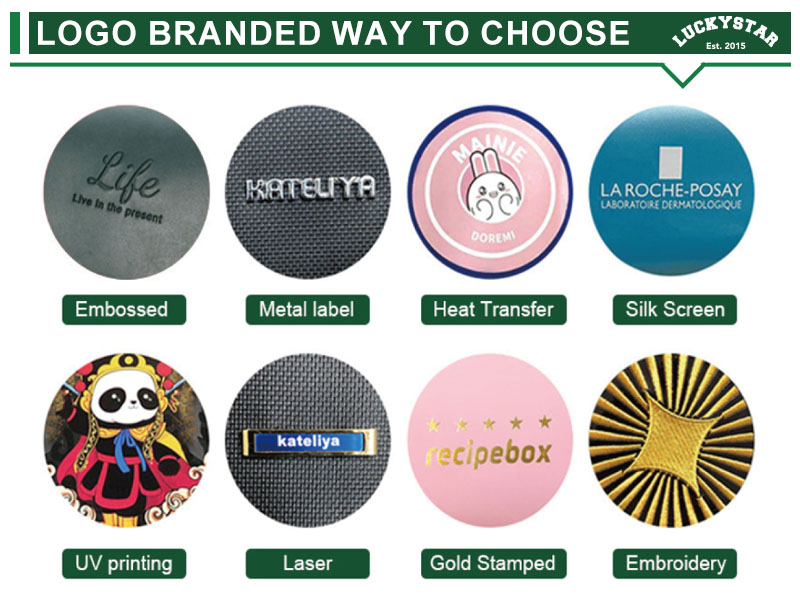
Approve the print method, artwork position and acceptable variation on the actual material.
For buyers, the bag is not just a container.
It represents the company that puts its name on it.
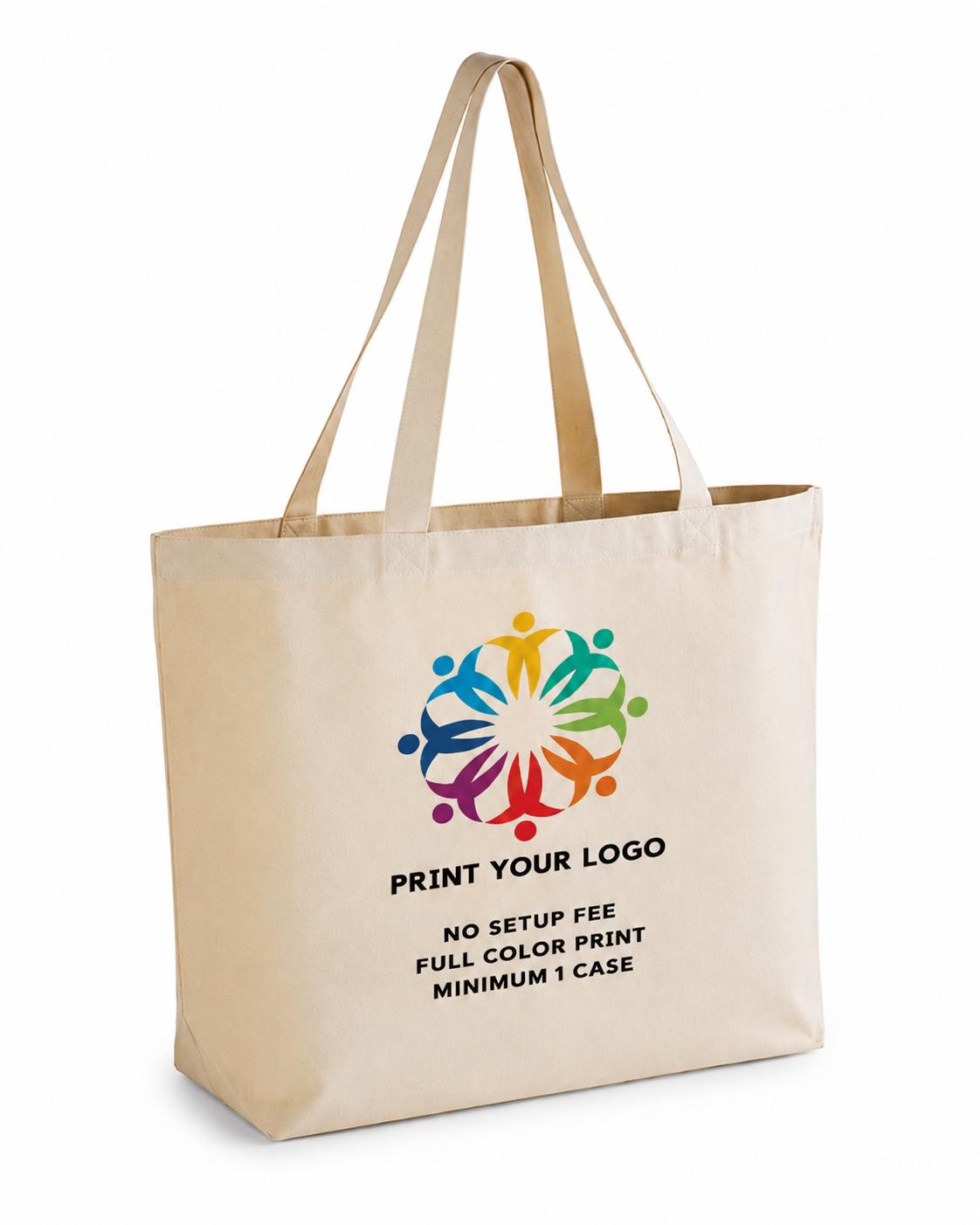
What experienced buyers check before placing a tote bag order
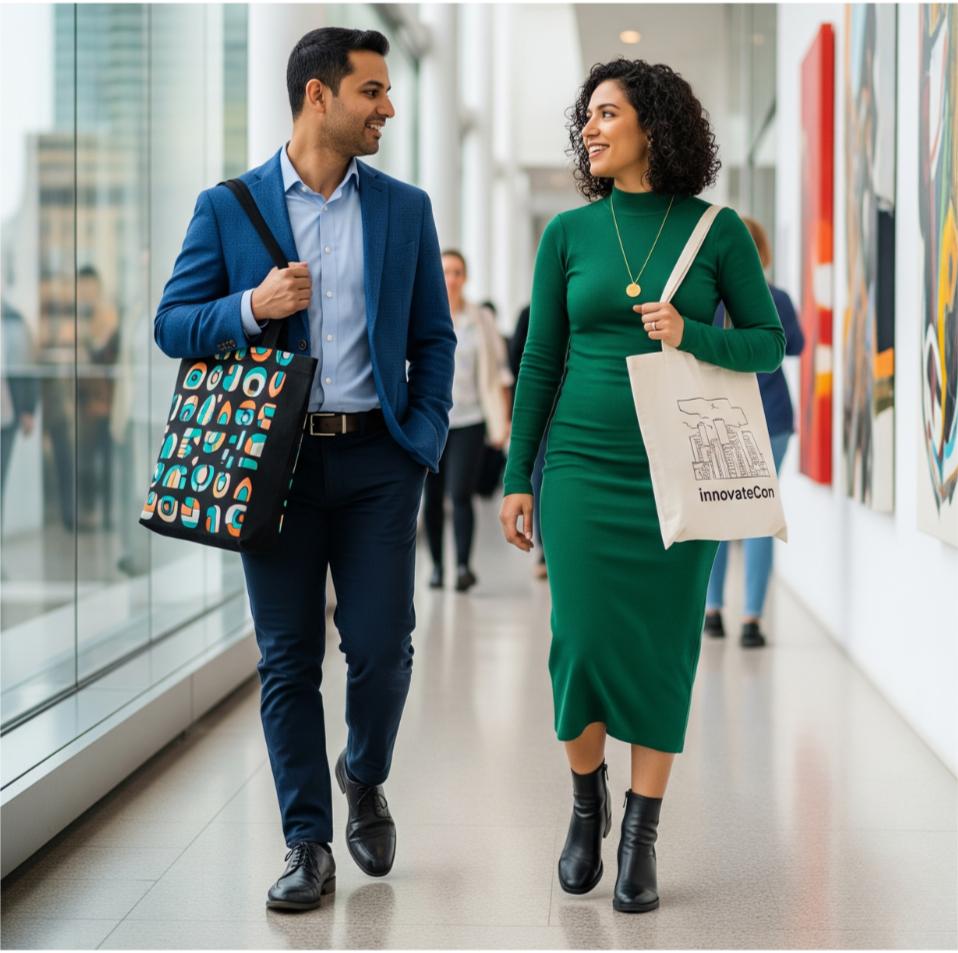
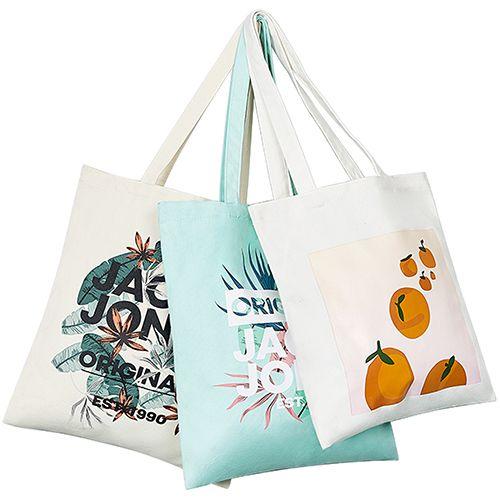
An image cannot establish fabric weight, handle strength or a production location:
A sample tells you more than a product photo.
Photos can show color and shape, but they cannot show:
- Fabric thickness
- Handle comfort
- Stitch quality
- Printing texture
- Overall durability
Before approving production, most buyers review a few basic areas.
| What to Check | Why Buyers Care |
|---|---|
| Fabric material | Determines how the bag feels and performs |
| Handle length | Affects comfort when carrying |
| Stitching | Influences durability |
| Printing method | Protects brand appearance |
| Bag size | Ensures the product fits its purpose |
| Production consistency | Matters for repeat orders |
Ask the seller to identify the actual maker and inspection party, then attach the approved sample and acceptance criteria to the order.
Choosing the right material depends on how people will use the bag
One mistake buyers often make is selecting materials based only on price.
The better question is:
What will people actually do with this bag?
A trade show giveaway has different requirements from a retail shopping bag.
| Material | Common Buyer Choice | Typical Use |
|---|---|---|
| Canvas | Premium feel and durability | Retail brands, corporate gifts |
| Nonwoven | Cost-effective for volume orders | Events and promotions |
| Polyester | Lightweight and flexible | Campaign giveaways |
| Jute | Natural appearance | Eco-focused brands |
If reuse is part of the campaign brief, specify the intended load and handling and test a representative bag. Do not infer environmental benefit or repeat use from the word “reusable.”
Confirm the maker before approving artwork
Before finalizing artwork, determine the chosen material, print process, actual maker and party responsible for sample approval.
In reality, production limitations can affect the design.
Ask the proposed production or decoration partner:
- Is this logo suitable for screen printing?
- Will this color work on this fabric?
- Should the handle be reinforced?
- Does the size match the intended use?
- Is there a more cost-effective construction?
The actual production route determines who can approve construction changes and who can confirm timing.
Request a documented feasibility review rather than an unqualified “yes.”
Freeze the artwork and sample only after the chosen production and decoration sites are identified.
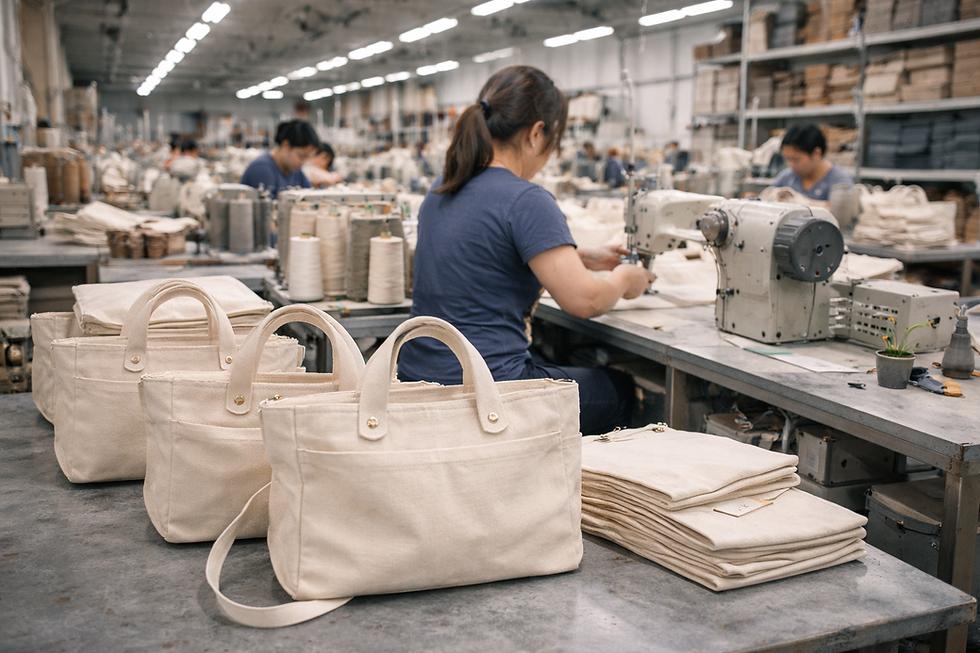
The mistakes that create the biggest problems in tote bag sourcing
Buying only based on price
Price matters. Every purchasing manager knows that.
But the lowest quotation does not always create the lowest final cost.
A cheaper bag may lead to:
- Customer complaints
- Replacements
- Missed campaign deadlines
- Brand image problems
Compare the complete delivered scope, including setup, packing, inspection, freight and the required date, before selecting a quote.
Assuming every supplier makes the same product
Two sources may quote different fabrics or production routes against the same phrase “canvas tote bag.”
The differences usually appear in:
- Fabric selection
- Sewing standards
- Printing control
- Packaging methods
- Quality inspection
That is why experienced buyers compare samples, not just quotations.
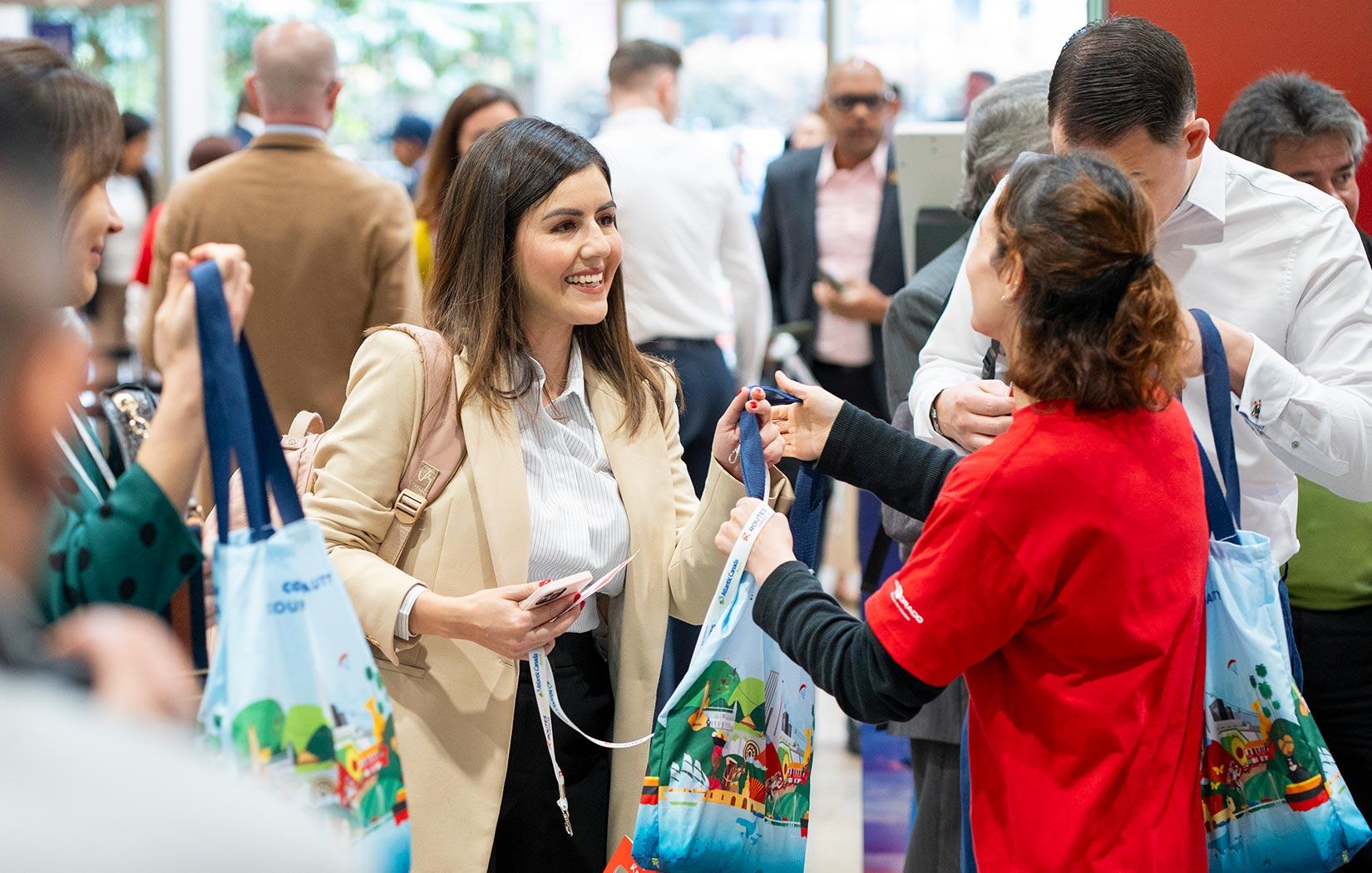
Skipping production approval
A pre-production sample may feel like an extra step.
A pre-production sample is a practical approval gate when its material, print and workmanship match the proposed bulk route.
A sample allows you to confirm:
✓ Size
✓ Color
✓ Logo placement
✓ Handle strength
✓ Overall appearance
Record the approved sample and inspection tolerances before the bulk run.
Compare US-facing tote suppliers against the same brief
Compare each source using evidence for location, sample control and the full commercial scope.
1. Communication
Nobody expects every production issue to disappear.
What matters is how quickly problems are identified and solved.
Ask the seller to explain in writing:
- Material options
- Production timelines
- Quality standards
- Shipping arrangements
2. Manufacturing flexibility
Different buyers need different solutions.
Some need:
- Small custom runs
- Large promotional campaigns
- Multiple colors
- Special packaging
- Repeat seasonal orders
Any variant or production-site change requires revised feasibility, cost and timing before approval.
3. Consistency
The first order matters.
The second order matters even more.
For repeat orders, retain the approved material, artwork, sample and inspection criteria and agree how substitutions are approved.
How to evaluate a Ningbo-based supplier for US delivery
Overseas production can be a valid route for a US campaign when the buyer can meet the sampling, quality, documentation and delivery requirements.
The seller’s Ningbo address does not prove ownership of a factory or the origin of a particular finished bag.
Luckystar's public custom tote-bag category provides style references. Confirm the legal seller, actual maker, production site and inspection route for any proposed order.
Compare a written sample and quotation with your US destination and date. The US export checklist covers separate shipment details.
Location and production-route checklist before ordering
| Question | Good Supplier Response |
|---|---|
| Can you provide samples? | Yes, before bulk production |
| Can you recommend materials? | Based on actual usage |
| Can you handle custom designs? | With production suggestions |
| Can you repeat the same quality? | With controlled production standards |
| Can you meet delivery deadlines? | With clear production planning |
A comparable RFQ for a US promotional-tote campaign
Send every source the same intended contents and load, finished size, fabric composition and weight, handle construction, logo artwork, quantity by version, packing, US destination and in-hand date. State explicitly whether US manufacture is mandatory or whether an overseas-made bag can be considered.
Request the contracting seller, actual bag-production and decoration locations, production-representative sample, inspection responsibility, itemized setup and unit costs, freight term, any origin support, exclusions, quotation validity and delivery assumptions. Do not infer a US factory from a US-facing website or phone number.
Send your campaign brief, browse tote-bag formats, and check US-bound shipment considerations separately. MOQ, price, origin, schedule and claims are subject to order-specific evidence and written confirmation.
FAQ
Does a US sales office mean the tote is made in the USA?
No. A US sales office, warehouse or decorator does not establish where the bag body was manufactured. Ask for the actual production route and written support for any US-origin claim; see the FTC guidance.
What material is best for promotional tote bags?
There is no universal best material. Specify composition, fabric weight, handle and load for the campaign, then approve a sample and any claim evidence.
How should buyers compare tote bag suppliers?
Compare the actual maker and decoration site, approved sample, itemized quote, inspection scope, delivery assumptions and written production location.
Can tote bags be customized with logos?
Possible customization depends on the proposed site, material, artwork and quantity. Approve the method and rights on a production-representative sample.
What should buyers request before placing a bulk order?
Request the seller and production-site names, material and sample records, logo approval, inspection plan, price scope, packing, shipping term and target arrival date.
Final Thoughts: The bag is simple. The sourcing decision is not.
A promotional tote bag may look like an easy product to buy.
But once thousands of pieces are involved, small details become important.
A documented production and approval route helps buyers manage:
- Unexpected quality changes
- Production delays
- Weak construction
- Poor printing results
If the requirement is US manufacture, verify the actual finished-product origin before choosing a source. If the requirement is reliable delivery to a US buyer, compare the US stock, local-decoration and overseas-production routes on the same brief.
Choose the route supported by the written production details, sample, inspection scope and realistic in-hand schedule.
Source and scope check: Luckystar tote-bag category and the US Made in USA business guidance, reviewed September 21, 2026. Luckystar's Ningbo site identity is public, but this article does not claim a US manufacturing facility, ownership of a named factory, or origin/performance of a particular pictured bag. Confirm image rights and any order-level origin claim separately.
Send a US promotional-tote brief
State whether US manufacture is required, then include intended load, size, material, handle, logo, quantity by version, packing, US destination and date. Request the actual production and decoration sites, a sample, inspection scope and a comparable written quotation.
Use the website contact form or email a project brief. The email link opens a prefilled draft for your review before sending.
Seller, factory location, origin claim, material, logo rights, MOQ, price, inspection and delivery require order-specific evidence and written confirmation.

Related sourcing guides






