For supplier shortlisting beyond workmanship, see our worldwide custom tote bag manufacturer comparison and then match the construction requirements to the available custom tote bag options.
Buyer quick answer
Canvas tote workmanship should be specified as a load path, not judged only by neat stitching. Control the panel layout, fabric orientation, seam type and allowance, internal edge finish, handle anchoring, reinforcement, pocket and closure assembly, decoration sequence and measurable inspection criteria.
Page focus: this guide covers seam architecture and construction acceptance. Use the linked quality guide for a broader inspection plan.
Reviewing a canvas tote construction? Send the drawing, load, material and seam brief for a scope review.
Create a workmanship control file
- Intended contents, target load and foreseeable carrying conditions.
- Finished dimensions, panel and gusset layout, fabric orientation and tolerances.
- Seam map, seam allowance, stitch and internal edge finish by location.
- Handle load path, reinforcement, pocket, closure, decoration and labels.
- Approved sample, test methods, inspection points, packing and revision.
Start with a construction drawing
Show every body panel, base or side gusset, facing, pocket, handle, reinforcement, closure and label. Name finished dimensions and identify the seam lines used for measurement. A front-view rendering cannot define hidden joins or usable internal space.
Add a seam map that assigns a construction and finish to each join. Record which parts are structural and which are decorative so inspection effort follows actual risk.
Control cutting and fabric orientation
Define the canvas by composition, construction, weight basis, finish, color and evidence required for the order. State whether panels, pockets and handles must follow the same warp or visual direction, especially with stripes, prints or directional texture.
Allow for shrinkage or relaxation only when supported by the chosen material and process. Approve the finished result after any washing or finishing step rather than assuming cut dimensions will remain unchanged.
Specify seams and allowances by function
For each join, identify seam type, finished allowance, stitch type, thread, stitch density range, back-tacking or securing method and appearance limits. Wider or more complex is not automatically stronger; the entire construction must suit the material and load.
Define whether internal raw edges are bound, overlocked, enclosed or handled by another approved method. Inspect skipped stitches, seam grin, puckering, needle damage, caught layers and inconsistent allowances.
Trace the handle load path
State handle material, width, thickness, finished length or drop, placement and orientation. Show how the handle transfers load into the body: attachment depth, reinforcement patch, box stitch, bar tack or another approved construction.
Approve the actual stack of canvas, facing, pocket and decoration around the attachment. A strong stitch pattern can still fail if it sits too close to an edge or damages the base material. See the printed tote strap guide for strap-specific controls.
Resolve base, gusset and panel transitions
Load concentrates where side seams meet the base, at gusset corners and where contrast panels end. The drawing should show layer transitions, corner shape, alignment and how allowances are turned or bound.
Fill the sample with representative contents and observe whether the base twists, corners pull unevenly or seam allowances create pressure points. Define acceptable symmetry and standing behavior only if they matter to the intended presentation.
Integrate pockets and closures
Pockets need usable opening, depth, placement, corner reinforcement and clearance from main seams. Closures need position, mating alignment, attachment support and operation with the bag filled.
Test zippers, snaps, magnets or drawcords under the intended access pattern. Do not assume a component specification proves the finished assembly will work.
Plan decoration before sewing
Decoration can stiffen, heat, perforate or distort a panel. Set artwork version, method, size, colors, position, tolerance and production sequence on the proposed canvas. Check whether embroidery backing, print coverage or patches interfere with seams, pockets or folds.
Approve appearance both flat and assembled. Confirm artwork authorization separately from any permission to publish customer names, logos or finished-product images.
Approve the inside as well as the outside
Turn the sample inside out where practical. Check continuous seam capture, enclosed or finished edges, thread ends, corners, lining or facing, pocket backs and hardware support. Interior finishing should match the intended use and agreed standard rather than a generic “premium” label.
Record acceptable visual variation with photographs and measurements. Keep the approved reference tied to the current drawing and bill of materials.
Validate the finished assembly
Define a representative load, loading method, hold or cycle duration, sample quantity and pass condition. Add closure, handle, pocket and decoration checks where relevant. Testing must reflect the product and does not establish a universal safe load.
During production and final inspection, sample across lines, time periods, SKUs and cartons. Trace repeated defects to the affected operation and production window instead of correcting only the inspected units.
Canvas tote workmanship matrix
| Area | Specify | Approve |
|---|---|---|
| Panels | Layout, orientation and finished dimensions | Measured construction sample |
| Seams | Type, allowance, stitches and edge finish | Inside/outside seam reference |
| Handles | Placement, load path and reinforcement | Fit and defined load test |
| Features | Pocket, closure and decoration sequence | Filled functional sample |
| Production | Limits, sampling and corrective action | Inspection and revision records |
Public sample reference: visible canvas construction
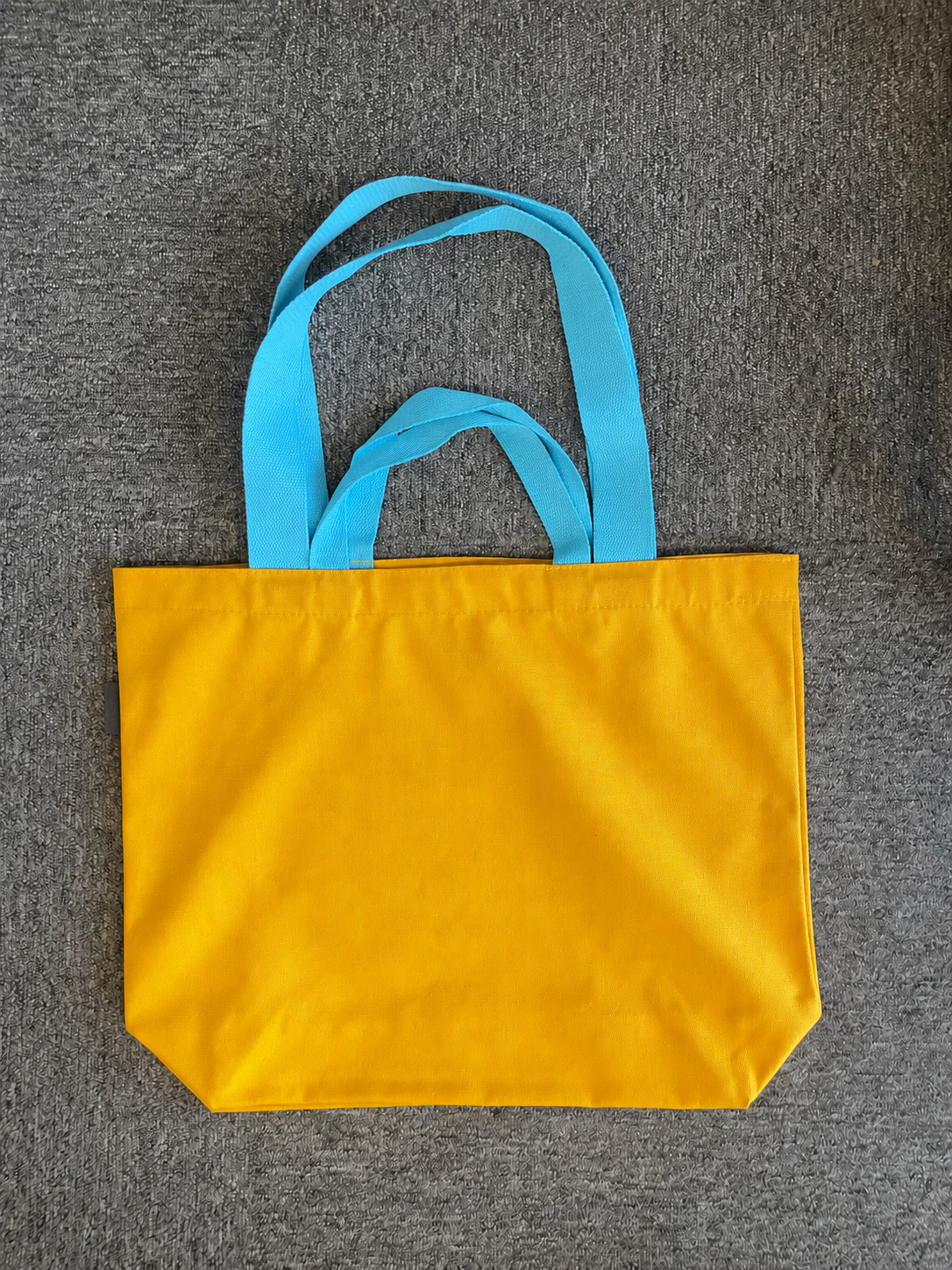
The anonymized USA-bound tote example shows a real gusseted canvas tote sample with dual carry handles, visible seams and folds. It gives buyers concrete locations to specify handle attachment, panel transitions and internal finishing. The public record does not include stitch measurements, a load test or an independent inspection result; those remain order-specific approval requirements.
Send your drawing, handle-load and seam brief for a construction review. Scope, materials, tests, MOQ, price and delivery are subject to the current specification and written confirmation.
Frequently asked questions
Is bound internal finishing always better than overlocking?
No. Choose the finish according to material, seam bulk, intended use, appearance, cost and approved performance.
Does a heavier canvas guarantee a stronger tote?
No. Fabric construction, seams, handle load path, reinforcement and finished assembly all affect performance.
Can one approved sample cover every size?
Only shared details can carry over. Different dimensions or load paths may require representative construction and fit approval.
What should be frozen before bulk production?
Freeze the drawing, bill of materials, seam map, artwork, labels, packing, approved sample, tests and inspection criteria.
Related sourcing guides
Source and scope: Luckystar custom tote-bag category and linked sourcing guides, checked September 22, 2026. They are format and process references, not proof of fabric identity, performance, certification, factory ownership, equipment, quality system, capacity, MOQ, price, payment, logistics or delivery. A purported product/factory case, unsupported certification and commercial claims, personal contact details, an unrelated product link and three legacy body images were removed pending current evidence and publication-rights verification.
Request a canvas tote workmanship review
Send the intended use, contents/load, drawing, material, seam map, handles, reinforcement, features, artwork, quantities, tests, inspection, packing, destination and required date.
Use the website contact form or email a prefilled workmanship brief. Review the draft before sending.
Materials, construction, claims, tests, artwork/publication rights, legal seller and sites, MOQ, price, capacity, payment, logistics and delivery are subject to current evidence, specification, quotation, contract and written confirmation.