Buyer quick answer
For a wholesale canvas tote order from China, compare suppliers against one versioned RFQ. Define the fabric, finished construction, decoration, quantities, inspection, packing, commercial scope and delivery destination before treating prices as comparable.
Source boundary: a China address, sales office or marketplace profile does not by itself establish factory ownership, the legal seller, subcontracting route, production location or current capacity. Confirm each role for the order in writing.
Preparing a canvas tote wholesale RFQ? Send the fabric, construction, artwork, SKU, inspection and delivery table for a scope review.
Build one quote-ready canvas tote specification
- Use: intended contents, target load, handling cycle, channel and destination market.
- Fabric: fiber/composition, fabric weight and basis, weave, color, finish and care expectation.
- Construction: finished dimensions, gusset, handle size/drop, seam, reinforcement, closure and pockets.
- Decoration: authorized artwork/version, process, colors, size, placement and market allocation.
- Delivery: SKU quantities, allowed variance, unit protection, carton/labels, inspection, Incoterm and destination.
Define fabric in measurable terms
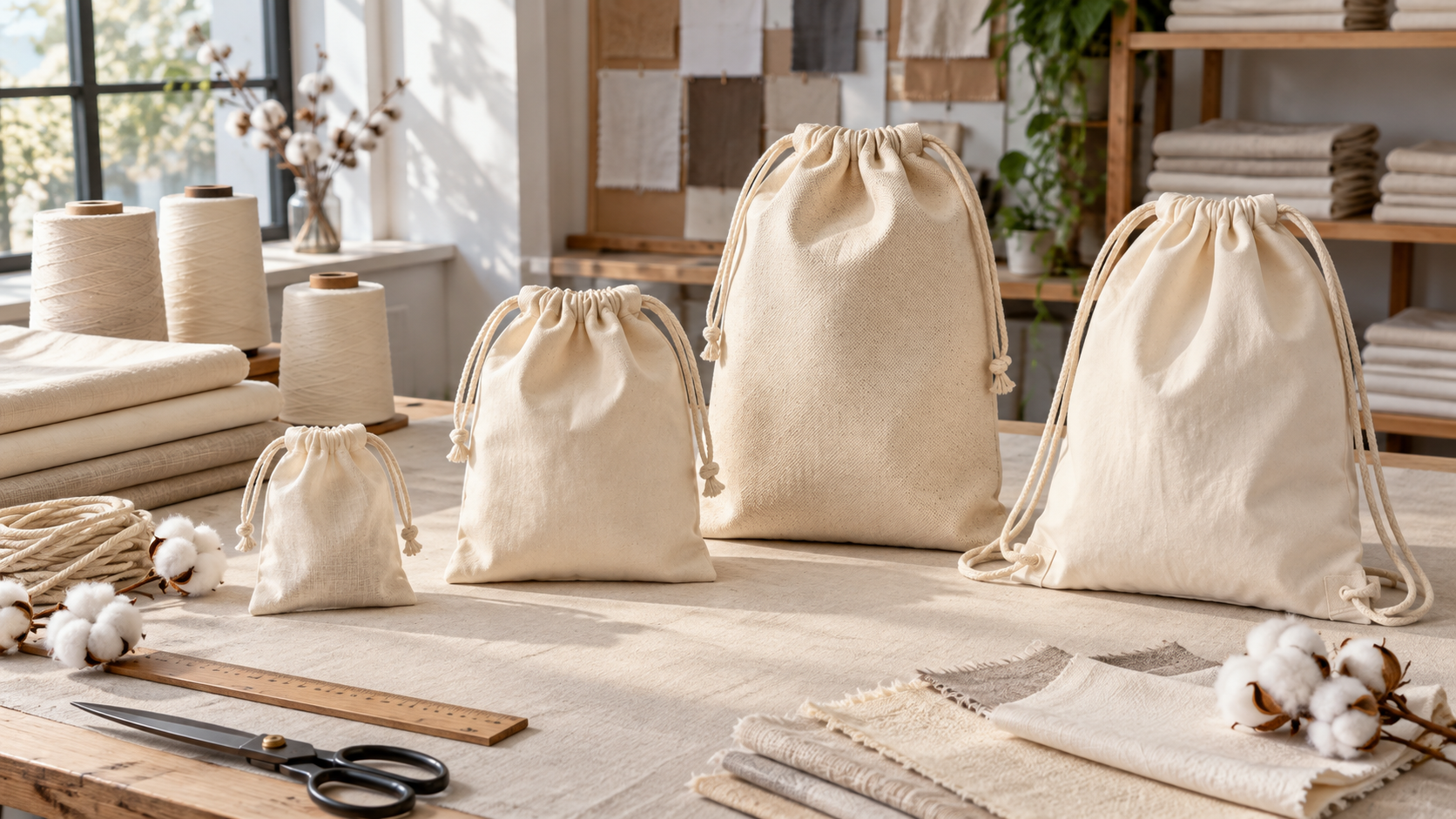
“Canvas” is a construction description, not a complete material specification. State fiber and composition, fabric weight with the measurement basis, weave, color reference and any washing, coating or finishing requirement. Ask how bulk lots will be identified and checked against the approved sample.
Evaluate hand feel, opacity, shade, weave variation, shrink or distortion where relevant, print compatibility and seam behavior. Environmental, organic, recycled or chemical claims need order-specific documents tied to the actual material and scope.
Specify the finished tote
Use a drawing with named measurement points and tolerances. Include bag width and height, base or side gusset, handle width/length/drop, seam allowance, top finish, reinforcement, closure, pockets and label position.
Load the proposed contents and observe seam strain, handle attachment, base shape, access and deformation. Define the load method, duration and acceptance before calling a sample “load tested.”
Approve decoration on the actual fabric
Canvas texture, dye and finish influence print edge, opacity and color. Approve a strike-off or decorated sample on the proposed production fabric. Record artwork file/version, orientation, size, position, color reference, underbase and method.
Check adhesion, rub, flex or stitch quality under an agreed method. Separate authorization to manufacture branded goods from authorization to publish a customer name, logo or product image.
Map the China order roles
Record the legal seller, payment recipient, production site, material and decoration sources, inspection location, exporter and shipping party. If work is subcontracted, define who controls specifications, nonconformities, rework and records.
Compare documentary names across quotation, purchase order, invoice, packing list and shipping documents. Resolve differences before payment or release rather than assuming every party is the same entity.
Use samples as controlled gates
A swatch or color approval narrows material choices; a construction sample checks dimensions and function; a decorated pre-production sample verifies the combined result. Name each stage, date it and record differences from the final specification.
Bulk release should reference the approved sample identity, specification revision, bill of materials, artwork, packing file and inspection rule. A sample without those links is difficult to reproduce or audit.
Compare price and MOQ on the same basis
Quantity by color, size and artwork version affects material minimums, print setup, cutting, sewing, packing and carton allocation. Ask suppliers to state whether quantities apply per SKU, per color, per artwork or per order.
Compare fabric and construction, setup charges, samples, unit packaging, labels, cartons, inspection, documentation, freight basis, Incoterm and destination. A lower unit price can reflect a different scope.
Set production and inspection gates
Agree checks for incoming fabric and trim, first cut, first decoration, first assembled unit, in-line production and final packed goods. Measure dimensions, fabric identity, shade, construction, handle attachment, decoration, cleanliness, packing and carton data.
Final inspection should represent cartons, SKUs and production periods. Record findings, quantity affected, disposition, corrective action and reinspection before shipment release.
Plan packing, freight and receiving
Approve folding, handle position, surface protection, unit pack, labels, inner quantity, carton size/weight and marks. Test representative packed samples for creasing, print transfer, moisture exposure and shape recovery where these risks matter.
At receipt, reconcile cartons and SKUs, inspect representative units and link issues to the lot and shipment. Retain a sample, specification, inspection and receiving record for reorders.
Canvas tote wholesale decision table
| Gate | Buyer control | Evidence |
|---|---|---|
| RFQ | Fabric, construction, artwork, SKU and delivery scope | Versioned comparison sheet |
| Roles | Seller, production, inspection, export and payment | Named-party confirmation |
| Sample | Materials, dimensions, function and decoration | Identified approval sample |
| Production | Incoming, first-piece, in-line and final checks | Inspection and disposition records |
| Shipment | Pack-out, carton, document and receiving checks | Release and receiving record |
Frequently asked questions
Is every heavy woven cotton bag “canvas”?
Terminology varies. Use fiber, composition, weight basis, weave, finish and approved sample rather than relying on the category name.
Does sourcing from China guarantee a lower price?
No. Compare like-for-like scope, order quantity, setup, packing, Incoterm, freight and quality controls.
Can one approved sample control every reorder?
It remains a reference, but new material, dye, print or production lots may require renewed approval and checks.
What should a reorder retain?
Keep the approved specification, artwork, material and production lot records, inspection, packing, shipment and receiving results.
Related sourcing guides
Source and scope: Luckystar custom tote-bag category and linked sourcing guides, checked September 21, 2026. They are format and process references, not proof of factory ownership, current capacity, material or environmental claims, fixed MOQ, price, availability or delivery. The nine legacy body images in the prior version were removed because topic, trademark/customer-publication and image rights were not confirmed.
Request a China canvas tote wholesale review
Send the fabric, construction, artwork, SKU quantities, inspection, pack-out, quote scope, destination and required date.
Use the website contact form or email a prefilled canvas tote RFQ. Review the draft before sending.
Material and claim evidence, roles, MOQ, price, capacity, availability and delivery are subject to specification and written confirmation.