
Buyer quick answer
Qualify a baseball-cap supplier against a complete headwear specification: wearer and fit range, structured or unstructured crown, panel count and crown depth, brim dimensions and curve, materials by component, sweatband and closure, decoration, tolerances, shape protection and inspection.
Capability boundary: A catalogue, “OEM/ODM,” “factory” or scalable-production statement does not prove ownership, fit consistency, capacity or process control for the proposed cap. Verify roles, representative samples and written controls.
Qualifying a baseball-cap supply route? Send the cap construction, fit range, closure, decoration, quantities and packing requirements for a manufacturability review.
Build a cap-specific tech pack
- Baseball/golf/soft/mesh/flat-brim family and structured or unstructured crown.
- Panel count, crown depth, head-circumference range and size tolerances.
- Brim length, width, curve, insert and stitching rows.
- Crown, mesh, support, sweatband, lining, top button, eyelets and seam tape materials.
- Closure type/material/color, adjustment range, tail treatment and logo position.
- Decoration, labels, packing support, cartons and destination requirements.
Approve fit across the intended wearer range
State the target head-circumference range and whether the cap is adult, youth or child. Measure internal circumference at defined closure settings, crown depth, opening and brim geometry. Use fit trials across the target range instead of approving one person's impression.
Record structured front-panel support, seam shape and crown profile. The same circumference can feel different when crown depth, sweatband, opening and closure placement change.
Specify every material component
List crown and brim fabric composition/construction/weight, mesh type, support or foam, brim insert, sweatband, lining, seam tape, top button, eyelets and closure. Approve colors and finishes using physical references.
Terms such as eco fabric, quick-dry, waterproof or breathable require exact material scope and applicable evidence. Do not infer performance from fiber name, perforations or mesh appearance.

Control brim, closure and small parts
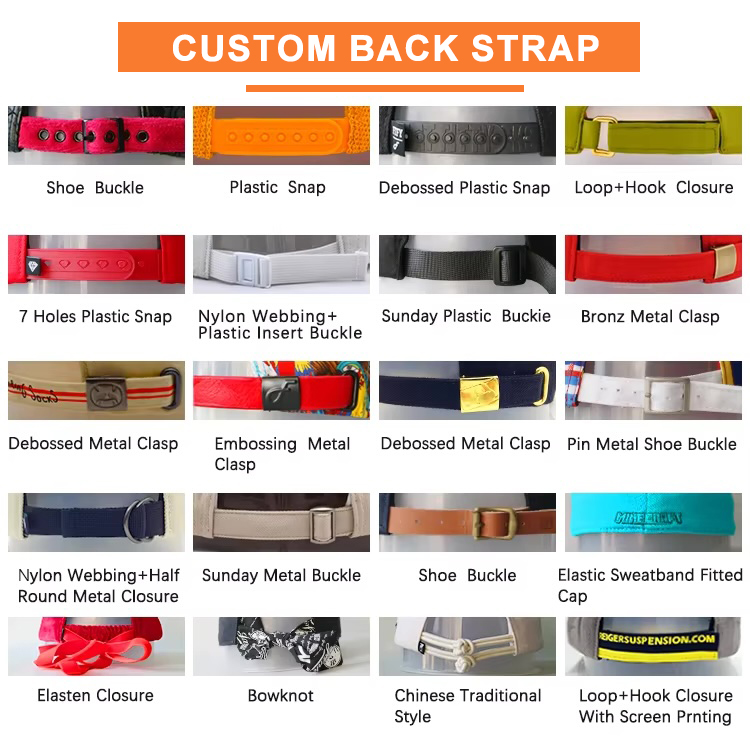
Define brim dimensions, curve or flatness, stiffness, symmetry and recovery after representative packing. Specify the closure—metal buckle, plastic snap, hook-and-loop, elastic, clip or other system—with material, adjustment range and pull/edge checks.
For children's headwear, confirm age grading and destination safety requirements for cords, small parts, sharp edges and labels. Do not treat an adjustable adult construction as automatically suitable for children.
Convert artwork into decoration specifications
For embroidery, provide artwork, position, finished dimensions, thread colors, stitch type/density, raised height where relevant and backing/inside-finish requirement. For print, transfer or patches, define material, colors, edge, attachment and performance checks.
Approve decoration on the production-representative crown because support, seams and curve can affect puckering, distortion and placement. Review front, side, back and interior cleanliness.

Audit supplier roles and bulk controls
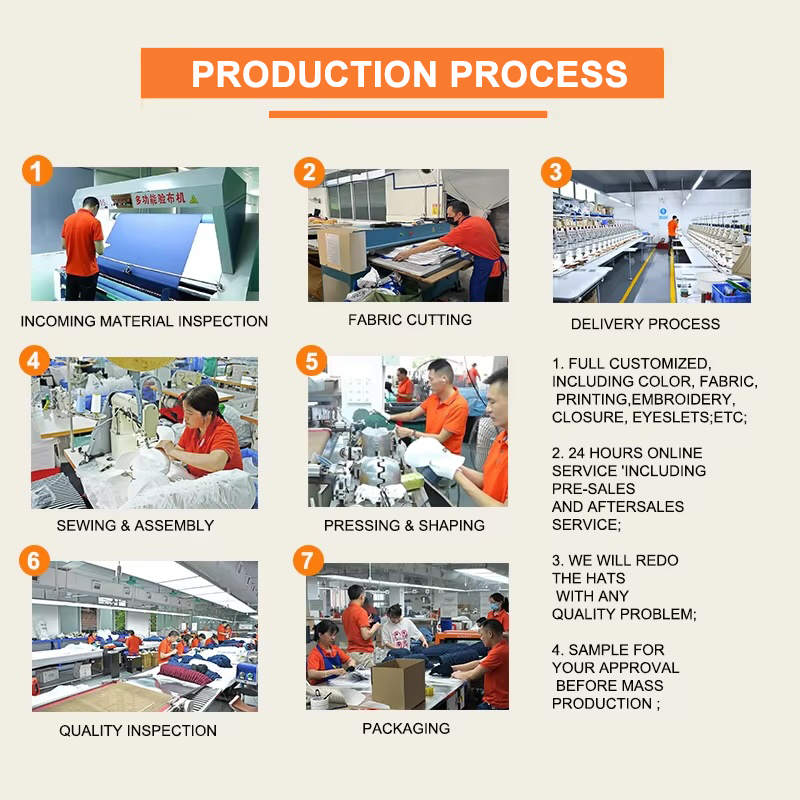
Identify the legal seller and parties responsible for fabric/components, cutting/sewing, brim shaping, decoration, washing or special finishing, inspection and packing. Factory wording does not prove every process is owned or performed at one site.
Define material and component checks, first-output fit/shape approval, in-line checks, final inspection and packing verification. Require written approval before changes to crown material, support, brim insert, sweatband, closure, decorator or pack method.
Baseball-cap supplier release table
| Gate | Approve | Evidence |
|---|---|---|
| Fit/shape | Range, crown, brim and symmetry | Measured fit samples |
| Materials | All crown, brim, sweatband and support components | BOM/declarations/references |
| Closure | Type, range, function, edges and tail | Function/pull checks |
| Decoration | Position, dimensions, color, stitches or attachment | Approved physical sample |
| Bulk/pack | Versions, tolerances, shape protection and cartons | Inspection/release record |
Frequently asked questions
What does “adjustable” need to specify?
Specify closure type, material, color, usable adjustment range, tail treatment, logo placement and function criteria.
Is one cap sample enough for fit approval?
Use measured samples and fit trials across the intended head-circumference range.
Does mesh prove breathability?
No. Describe construction and define any performance method needed for the intended claim.
What should final inspection cover?
Check product/artwork version, fit measurements, crown and brim shape, materials, seams, sweatband, eyelets, closure, decoration, cleanliness, quantity and packing.
Related headwear guides
Source and scope: Luckystar custom caps and hats category and internal product-knowledge guidance, checked September 21, 2026. They are format and process references, not proof of current stock, factory ownership, capacity, fit, quick-dry/waterproof/breathable performance, environmental attributes, fixed MOQ, price or delivery. Existing article images are illustrative and still require topic-relevance, trademark/customer-publication and image-rights review.
Request a baseball-cap supplier review
Send the wearer/fit range, cap family and structure, component materials, brim, closure, decoration, SKU quantities, sample/QC, packing, destination and required date.
Use the website contact form or email a prefilled baseball-cap RFQ. Review the draft before sending.
Fit, materials, performance, roles, MOQ, price, availability, capacity and delivery are subject to specification and written confirmation.






