Last reviewed: September 28, 2026
Buyer Quick Answer: A good wholesale tote bag order starts with demand and channel allocation, not a supplier catalog. Decide whether each SKU should use a stock blank, a semi-custom platform, or full OEM construction. Then plan quantity by SKU, destination and release date; compare landed cost rather than unit price; approve one controlled sample; and define a reorder trigger before the first shipment arrives. This prevents an attractive volume discount from becoming slow inventory.
Wholesale buying is a portfolio decision. A retailer may need a dependable core tote, a seasonal color and a premium gift version. A promotional distributor may need one construction with several campaign artworks. A multi-location buyer may need the same order split across stores, events and an ecommerce warehouse. The bag specification matters, but the way the order is structured often determines whether the program is easy to sell, store and replenish.
This guide owns that planning problem. It does not repeat a general manufacturer checklist, a fabric encyclopedia, a printing tutorial or a list of market price claims. Use the custom bag manufacturer guide for the complete OEM and ODM sourcing framework, and the custom tote bag supplier program guide for specification control, golden samples, production approvals and repeat-order governance. Here, the focus is wholesale route selection, assortment economics, allocation and replenishment.
What Wholesale Tote Bags Means for a Business Buyer
Wholesale tote bags are purchased as a planned business quantity for resale, distribution, packaging or campaigns. The term can describe ready-made blanks, decorated stock bags, semi-custom platforms and fully customized production. These offers should not be treated as interchangeable simply because each quotation contains a price per bag.
The buyer is purchasing a commercial result as well as a product. That result may be margin, campaign reach, reliable store supply, consistent packaging or a repeatable merchandise line. Write the result into the brief. It gives the team a reason to reject features that add complexity without improving the intended outcome.
Choose the Right Wholesale Route First
The most important early decision is how much of the product needs to be unique. A stock route protects speed and flexibility. A full OEM route protects differentiation and construction control. A semi-custom route can preserve a tested body while allowing meaningful brand changes. Compare routes before you compare suppliers.
| Wholesale route | Best use | Buyer can control | Planning advantage | Main limitation |
|---|---|---|---|---|
| Stock blank | Unbranded resale, local decoration or urgent use | Available style, color and quantity | Fast commitment and easier small releases | Limited differentiation and stock continuity |
| Decorated stock | Events, staff kits and straightforward promotions | Artwork, placement and decoration process | Separates blank availability from branding | Decoration may be constrained by the blank |
| Semi-custom platform | Retail or campaign programs needing controlled variation | Selected fabric, color, handles, decoration and labels | Balances differentiation with a stable construction | Platform rules still limit some changes |
| Full OEM construction | Distinctive retail products and planned repeat programs | Size, construction, materials, components and packing | Strongest product and brand differentiation | More decisions, validation and inventory commitment |
If the route requires a new factory relationship, use our guide to choosing a tote bag manufacturer. Do not ask a supplier to quote all four routes as one vague request. Name the route for each SKU so that price, timing and approval scope remain comparable.
Start With the Sales or Distribution Channel
Describe where the bag will go before deciding what it should be. Retail merchandise needs a target selling position, presentation standard and replenishment logic. Checkout packaging needs reliable store supply and efficient storage. An event giveaway needs a fixed in-hand date and simple distribution. An ecommerce insert needs predictable folded dimensions and pack-out.
One company can have several channels, but that does not automatically require several constructions. A shared body with different artwork or packaging may protect purchasing leverage. Conversely, forcing a premium retail product and a mass giveaway into one specification can make both less effective.
Translate Demand Into Units, Locations and Dates
A total quantity is not a buying plan. Break expected demand into SKU, location and use date. Separate confirmed commitments from forecasts. Record the first required receipt, the quantity needed at launch, reserve stock and any later release. This reveals whether one production order can support several delivery waves.
For retail, start with the number of selling locations, planned presentation quantity and expected replenishment rhythm. For events, start with attendance, distribution rules and a controlled reserve. For corporate kits, use confirmed recipients plus a defined buffer. The method should be visible so someone else can challenge the assumptions.
Build an Assortment Instead of a Collection of Ideas
An assortment gives every SKU a commercial role. Core products serve repeat demand. Seasonal products create freshness for a defined window. Campaign versions support a specific message or event. Premium variants raise perceived value for selected channels. If two SKUs have the same role, ask whether one can be removed.
Use the planning sheet below before sampling. It encourages the team to connect each product decision with demand, allocation and a reorder rule rather than approving designs in isolation.
| Assortment field | Core SKU | Seasonal SKU | Campaign SKU | Planning decision |
|---|---|---|---|---|
| Primary role | Continuous seller or packaging standard | Limited sales window | Named event or promotion | Keep one clear job per SKU |
| Demand basis | Sales or usage history | Planned window and analog | Confirmed audience and distribution rate | Label facts, estimates and assumptions |
| Shared components | Master construction and packing | Body or handle shared where useful | Shared blank with artwork change | Consolidate without confusing identity |
| Initial allocation | Stores plus reserve | Selected locations or online | Event, team or distributor | Assign units before carton packing |
| Exit or reorder rule | Reorder at defined inventory position | Stop order by calendar deadline | No automatic reorder unless campaign repeats | Decide before inventory arrives |
Separate Core, Seasonal and Campaign Inventory
Core inventory can justify repeatable specifications and planned replenishment. Seasonal and campaign inventory has a shorter economic life. Mixing the three in one demand figure can create false confidence because unsold event bags cannot always replace a core product.
Give time-limited SKUs a stop-order date and an exit plan. If leftover bags can be redirected to another channel, confirm that the artwork, labels and packaging allow it. Flexibility should be designed into the product rather than assumed after demand changes.
Consolidate Components Without Creating Hidden Variants
Wholesale leverage improves when SKUs share a body fabric, handle, thread, base color or packaging format. Component sharing can simplify material purchasing and quality review. It should not erase distinctions that customers can see or that operations need to track.
Use one master SKU for the shared construction and separate variant codes for artwork, color or pack-out. The supplier program guide explains how to control those revisions once the wholesale architecture is approved.
Choose Size From Contents, Storage and Case Pack
A bag should fit its expected contents, but wholesale planning adds more questions. How much shelf or back-room space does the folded bag use? Can the case pack be handled safely? Will ecommerce packers add it without changing the parcel? Can stores display enough units without overfilling the fixture?
Define contents, finished dimensions, fold method and carton orientation together. Use the tote bag size guide for retail brands for detailed dimensional planning.
Treat Material as a Commercial Choice
Material affects appearance and durability, but it also affects folded volume, color continuity, decoration compatibility, care, testing and reorder availability. Choose the material that fits the channel and expected use rather than selecting the heaviest option by default.
Compare specific constructions, not broad labels. The fabric weight guide and canvas versus cotton tote bag comparison cover those decisions in depth. This wholesale plan records the approved choice and its inventory implications.
Plan Decoration Around Variant Count
Artwork can multiply SKUs even when the bag body stays the same. Count each color, placement, language, event or customer-specific version before confirming quantity. A total order may look efficient while each artwork version remains operationally small.
Where possible, keep the physical bag common and delay decoration until demand is clearer. This approach is not suitable for every process, but it can protect flexibility for campaigns and regional versions. Compare methods in the custom tote bag printing guide and screen printing versus heat transfer.
Calculate Quantity by SKU, Not by Headline Volume
Factories and wholesalers may discuss a total quantity, but materials, colors and decoration versions can have separate production constraints. Build quantity from the bottom up: units per SKU, units per location, reserve, test or approval samples, and expected loss or replacement needs. Then reconcile the sum with the supplier's production structure.
Do not increase every SKU merely to reach a lower price tier. Consolidate components where the demand supports it, reduce weak variants, or phase releases. The dedicated custom tote bag MOQ guide explains why minimums change with specification and process.
Compare Landed Cost Instead of Unit Price
Unit price is only one layer of the inventory investment. A useful comparison also identifies sampling and setup, decoration, labels, individual packing, cartons, inspection, origin handling, international freight, duties or taxes where applicable, brokerage, destination delivery and warehouse preparation. Assign each cost to the correct SKU or order.
Keep facts separate from estimates. State the trade term, currency, validity period, included services and destination assumption. The article on how much custom tote bags cost provides the deeper quotation framework. Do not copy an online price into a wholesale budget without matching its material, quantity, decoration, delivery scope and date.
Plan Allocation Before Packing Starts
Allocation converts the purchase order into usable inventory. Define which cartons go to the central warehouse, individual stores, distributors, events or ecommerce operations. If cartons are mixed, specify the exact inner pack. If they are single-SKU, decide the case quantity based on handling and replenishment needs.
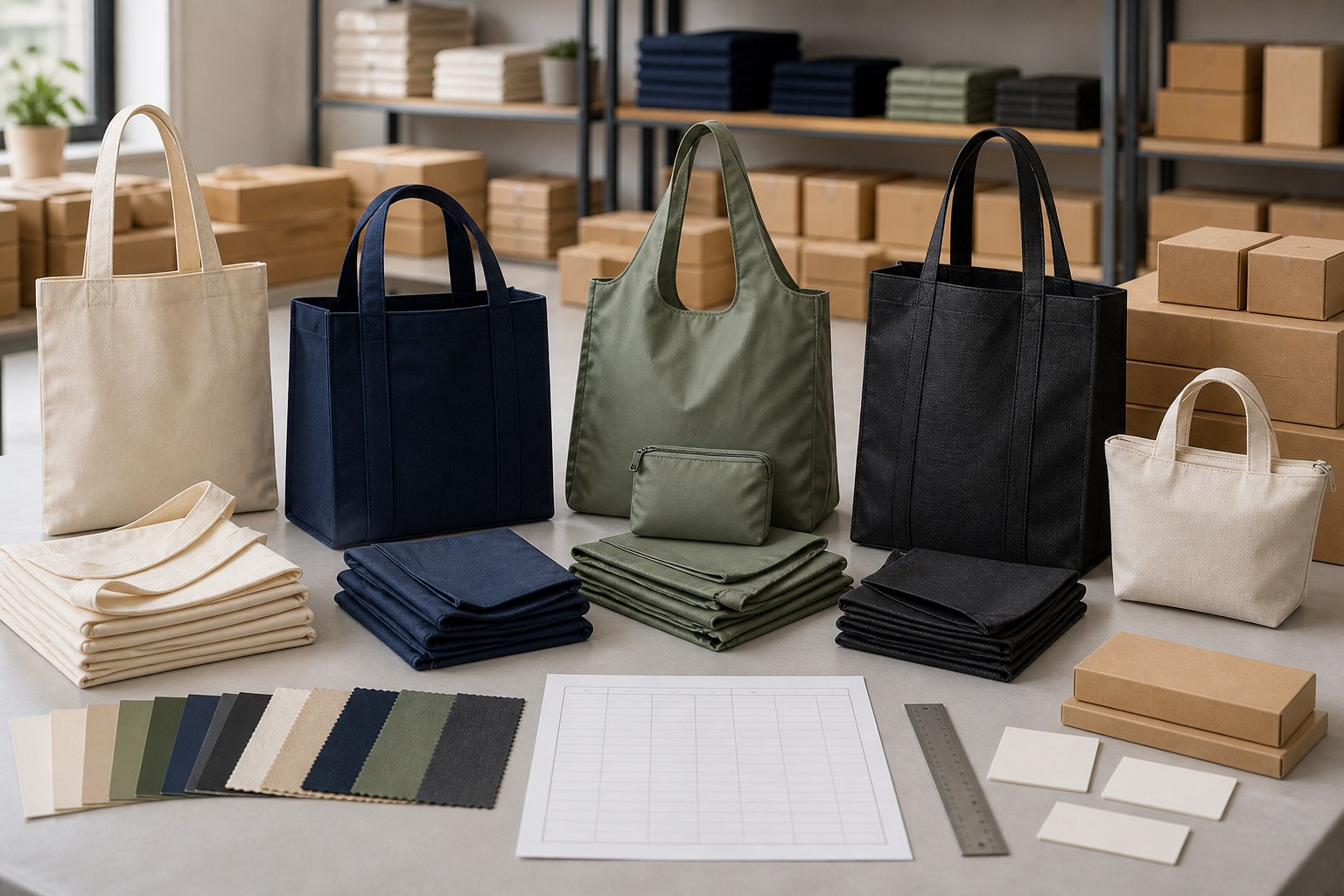
Share the allocation file before production packing so carton marks and counts can be checked. Late allocation changes create rework, counting errors and extra destination handling. The supporting image below shows the intended idea: one approved assortment organized into channel-ready case packs and reserve stock.

Design Packaging for the Receiving Team
Packaging should protect the bag and help the next operation. Define fold direction, individual protection, grouping, labels, carton quantity and carton sequence. Ask whether store teams can identify and replenish the product without opening several cartons.
A premium individual pack may support retail presentation but increase material, labor and unpacking. A simple bulk pack may work for events but provide less surface protection. Evaluate the complete route from supplier to recipient, not packaging appearance in isolation.
Use Delivery Releases to Match Cash and Demand
One production order does not always require one final delivery. If the supplier and commercial terms allow it, planned releases can align inventory arrival with storage capacity and channel demand. The agreement must state ownership, storage conditions, release dates, notice requirements and treatment of remaining goods.
Do not assume the supplier can hold completed inventory indefinitely. Compare staged production, staged shipment and destination warehousing as separate options. Each moves cost and risk differently. For schedule preparation, review how to reduce custom bag lead time and cost.
Set a Buffer From Risk, Not Habit
A buffer protects against forecast error, damage, late replenishment or unexpected demand. It also ties up cash and storage. Define what risk the buffer covers and whether the stock can serve more than one channel. A shared unbranded or core version may be more flexible than several campaign-specific reserves.
Review the buffer after the first selling or distribution period. If actual demand and replenishment performance are stable, adjust the next order. A percentage copied from another product is not a substitute for understanding this tote program.
Create a Reorder Trigger Before Launch
A reorder trigger should allow enough time for decision, approval, production, quality review and delivery. Monitor available stock, committed stock, open purchase orders, expected demand and the time required to receive usable inventory. The trigger is an action rule, not merely a low-stock alert.
| Reorder signal | What to review | Decision | Record to update |
|---|---|---|---|
| Inventory position reaches trigger | Available, committed and inbound units | Release reorder, wait or reallocate | SKU demand and PO plan |
| Demand mix changes | Channel, color and artwork performance | Change allocation or assortment | Assortment matrix |
| Component or process changes | Material availability and supplier disclosure | Approve, validate or keep prior source | Specification and change log |
| Quality trend changes | Returns, inspection and corrective actions | Correct before repeating volume | Quality plan and scorecard |
| Seasonal deadline approaches | Remaining sales window and residual stock risk | Reorder, reduce or stop | Exit plan |
Protect Bulk Quality Without Rewriting the Inspection Guide
Wholesale volume magnifies small specification and process differences. Link every order to an approved sample, current specification and quality plan. Check features that affect use and brand presentation, including dimensions, handles, seams, decoration, color, labels and pack-out.
The custom bag quality inspection checklist explains inspection detail. For this buying plan, the key is to reserve time for approval and inspection in the inventory schedule rather than treating quality review as an optional final step.
Use Samples to Validate the Commercial Plan
A sample confirms more than appearance. Test the expected contents, carrying comfort, folded size, shelf presentation, pack-out and decoration. Ask warehouse or store teams to review relevant handling. A sample that photographs well can still create operational problems.
Keep prototype comments separate from final approval and identify the current golden sample. See the custom bag sample development process for the complete sequence.
Connect Sustainability Claims to the Order System
A material claim should have defined evidence and should not distract from product function, durability, packaging and realistic repeat use. Confirm which entity or document supports the claim, which material or component it covers, and whether the approved production matches the reviewed evidence.
Inventory waste is also part of the decision. Excess campaign-specific stock cannot be repaired by a broad environmental label. Use the shopping bag sustainability life-cycle guide to examine function, material efficiency, reuse, logistics, end of life and claim support.
Match the Plan to Retail and Promotional Use
Retail buyers should connect the tote to assortment role, target margin, presentation, allocation and replenishment. The retail wholesale tote bag guide covers product options for that channel.
Promotional buyers should connect quantity to audience, distribution, campaign date and artwork versions. Use the bulk cotton tote bag campaign guide and promotional tote bag design guide for those specific decisions.
Prepare the Import and Receiving Handoff
Before shipment, reconcile final quantities, carton counts, dimensions, weights, allocation, documents and destination contacts. Make sure the receiving team knows which SKU and revision is arriving and how shortages or visible damage should be reported.
Import responsibilities depend on the agreed commercial structure and destination. The guide to importing custom bags from China provides a dedicated planning framework. The reusable tote bag manufacturing process explains the factory-side sequence.
How Luckystar Supports Wholesale Tote Bag Programs
Luckystar can support wholesale tote bag inquiries across stock-informed, semi-custom and OEM development routes, depending on the required construction and program. A useful request identifies the channel, bag role, dimensions, material direction, decoration, quantity by SKU, packaging, allocation, destination and required timing.
For supplier evaluation and full OEM or ODM context, return to the core custom bag manufacturer guide. For the broader brand role of the product, see custom bags as a personalization and branding system.
Information to Send for a Wholesale Tote Bag Quote
- Channel and purpose for every planned SKU.
- Stock, semi-custom or full OEM route preference.
- Finished dimensions, gusset, handles and expected contents.
- Material, color and construction direction.
- Artwork versions, decoration method if known, size and placement.
- Quantity by SKU, location and planned release.
- Individual packing, case pack, carton marks and allocation.
- Destination, required timing and any fixed campaign date.
- Sample, testing, inspection and documentation requirements.
Send Luckystar your wholesale tote bag plan for a project-specific quotation. Mark confirmed requirements separately from open choices so the team can propose a practical route without treating estimates as final approval.
Email a prefilled wholesale tote bag plan

Frequently Asked Questions
Should I buy stock, semi-custom or fully custom tote bags wholesale?
Choose stock when availability and flexibility matter most, semi-custom when a proven platform can support meaningful brand changes, and full OEM when construction and differentiation justify deeper development. Compare the route against the channel, required date, variant count and likely reorder pattern.
How should I divide a wholesale quantity across SKUs?
Start with demand by SKU and destination, then add a defined reserve for a named risk. Separate core, seasonal and campaign demand. Remove weak variants before increasing every SKU to reach a volume tier.
What costs should I compare beyond the quoted unit price?
Review sampling, setup, decoration, labels, packaging, cartons, inspection, origin handling, freight, applicable duties or taxes, brokerage, destination delivery and warehouse preparation. Confirm currency, trade term, validity and included services.
When should I reorder wholesale tote bags?
Use an inventory trigger that considers available and committed stock, inbound orders, expected demand and the full time needed for approval, production, inspection and delivery. Recheck material, artwork, quality findings and allocation before repeating the prior order.
Can one wholesale order be delivered in stages?
It may be possible, but production, storage and shipment releases must be agreed explicitly. Confirm ownership, storage conditions, notice, dates, costs and treatment of remaining goods. Compare staged production, staged shipment and destination warehousing as separate solutions.
Plan the Inventory Before You Approve the Volume
Review the current custom tote bag range to shortlist the construction before assigning wholesale quantities. The best wholesale tote bag order is not automatically the largest. It is the order whose route, assortment, quantity, landed cost, allocation and reorder logic match real business demand. Build from channel needs, consolidate components carefully, protect approval and quality time, and give every SKU a commercial role and an exit or reorder rule.
Ready to turn demand into a quote-ready wholesale plan? Request a wholesale tote bag quotation from Luckystar and include your SKU quantities, allocation, artwork, packaging, destination and required timing.