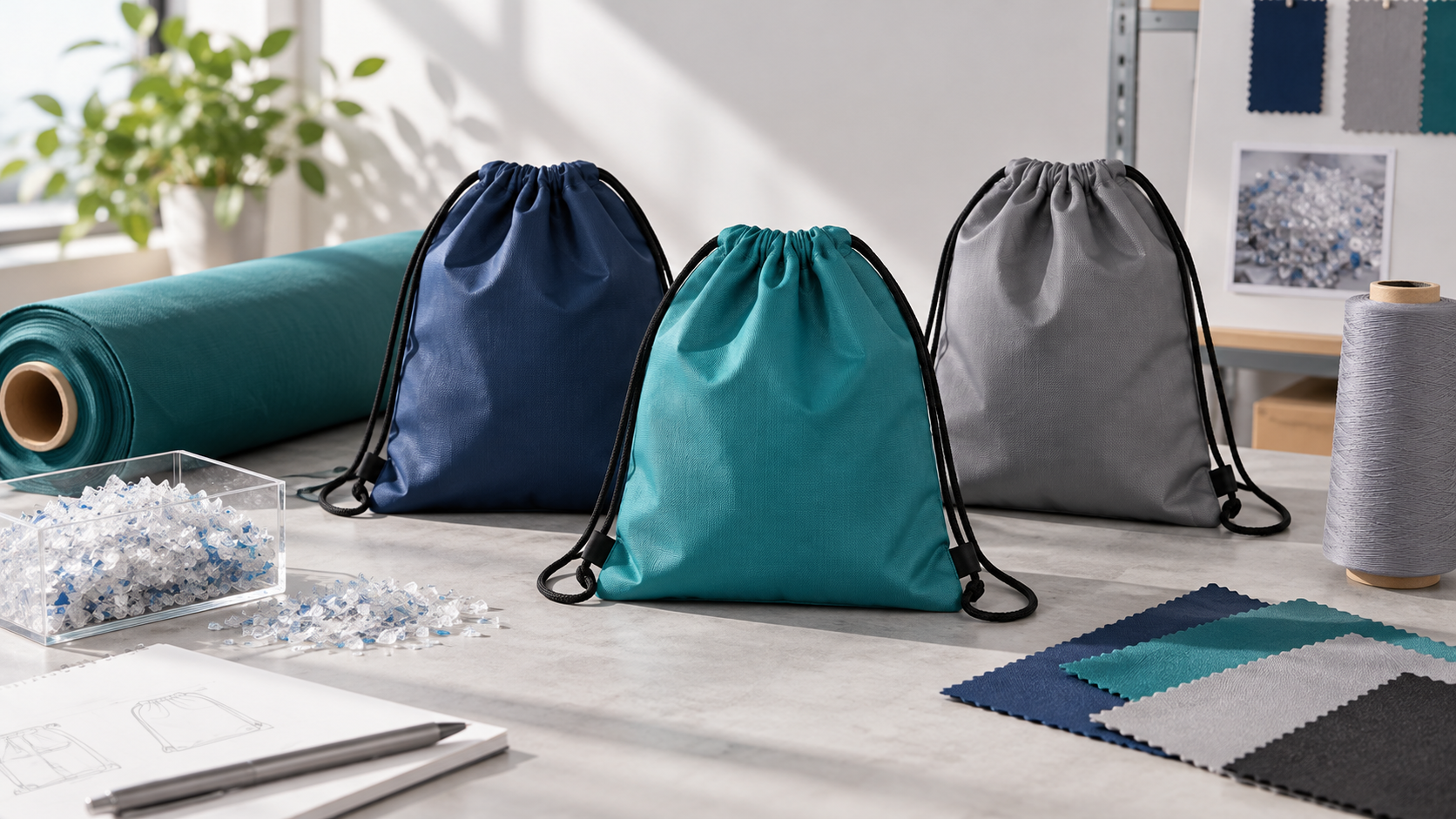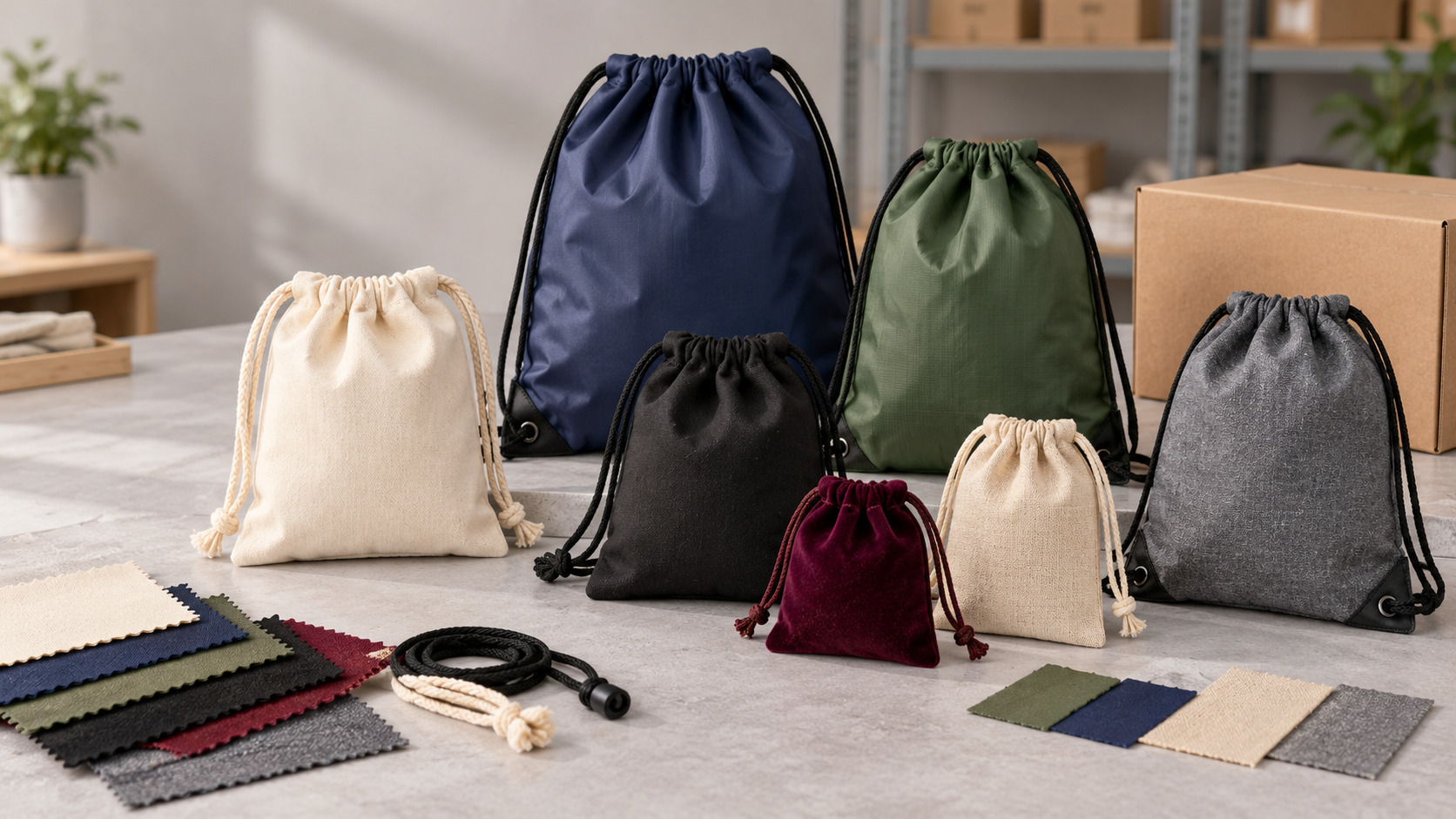
Buyer quick answer
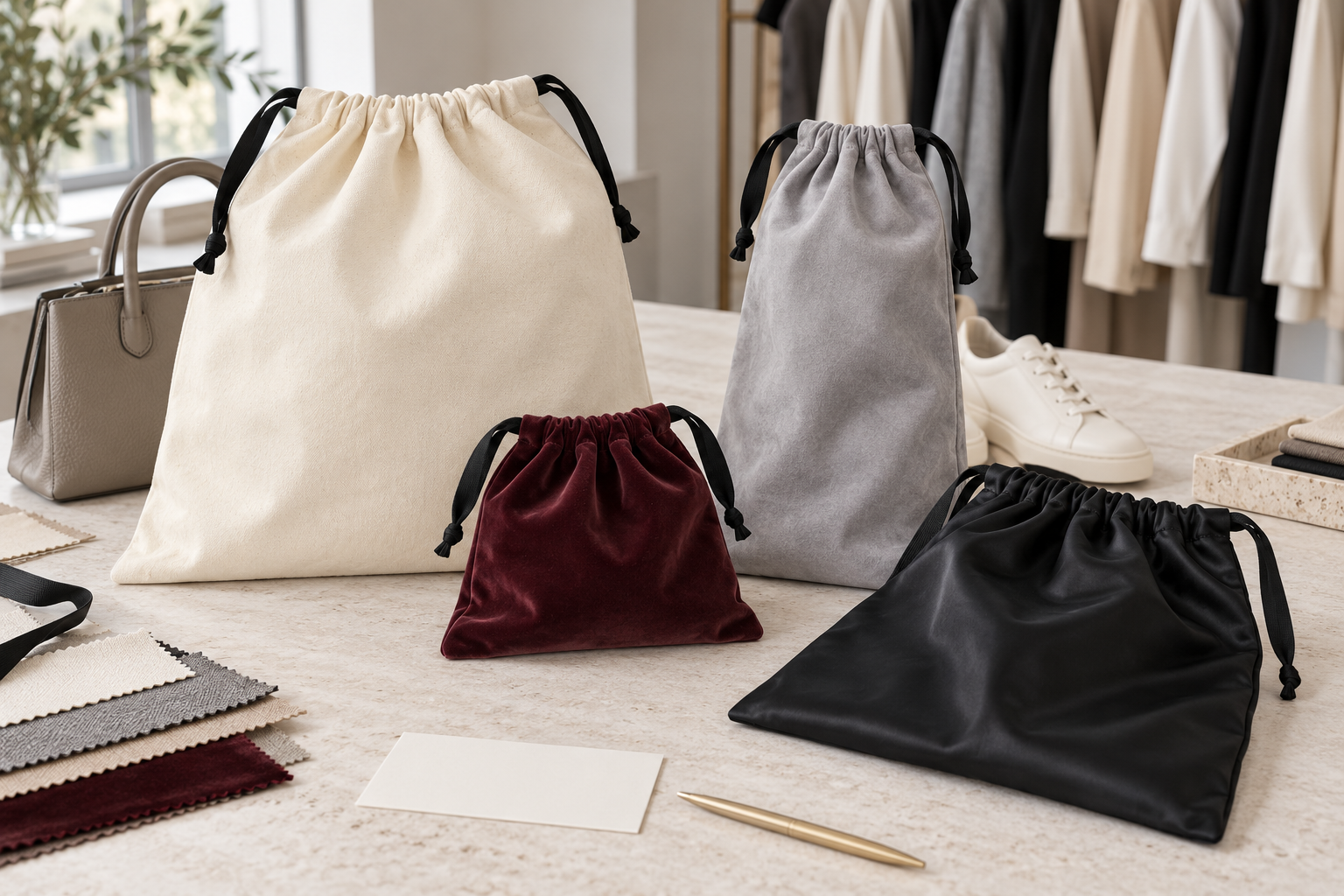
A low-cost canvas drawstring bag vendor should make trade-offs visible. Give every vendor the same contents, usable size, canvas composition/construction, cord system, artwork, quantities, packing and acceptance criteria, then compare the complete pilot or program cost.
Scope: “Cheap,” “canvas,” “factory” and “low MOQ” do not establish a price, fiber, ownership or current term. Each must be verified for the quoted project.
Comparing drawstring bag vendors? Send one specification and quantity matrix, then request baseline and cost-reduction options on separate lines.
Define the usable pouch, not a generic size
List the intended contents and their dimensions, orientation and mass. Specify finished width and height, plus usable height below the cord channel and usable opening. If the item must be inserted quickly or presented upright, test that workflow with the real contents.
The cord channel, seams and bottom fold reduce internal space. A smaller nominal pouch is not a saving if the kit does not fit or staff must repack it.
Build one vendor comparison baseline
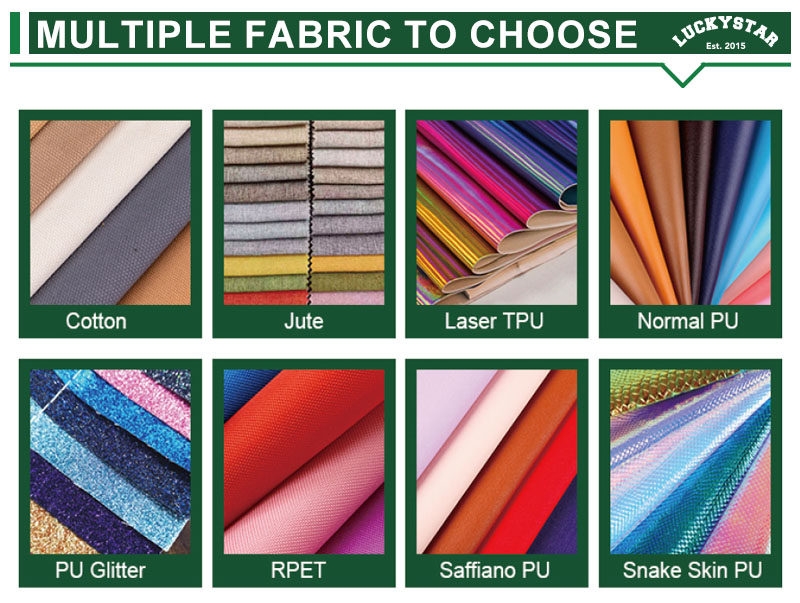
- Material: required fiber composition, canvas construction, weight method, color and finish.
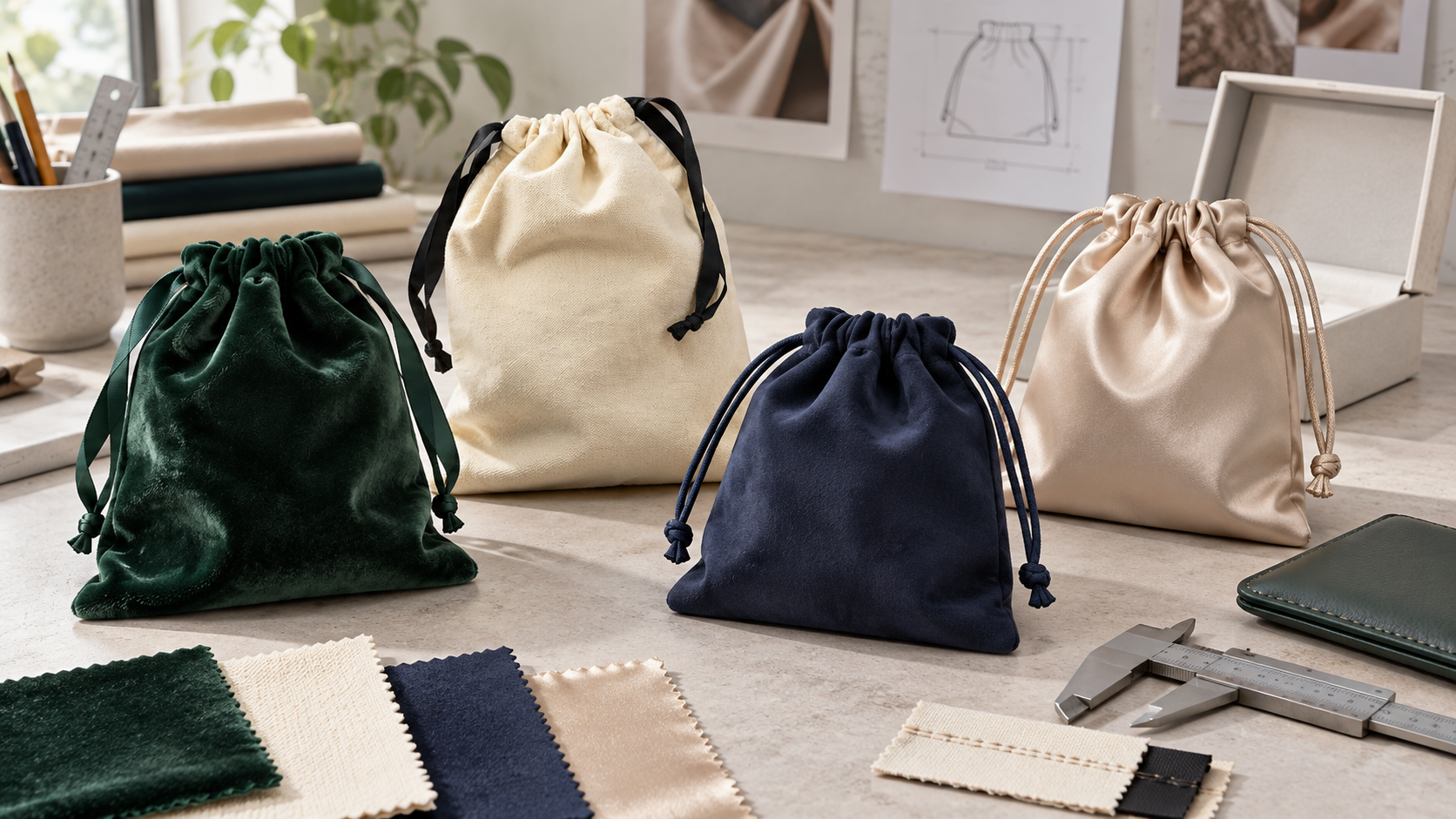
- Construction: seams, cord channel, cord material/diameter, ends, closure direction and reinforcement.
- Decoration: method, artwork size, position, colors and setup.
- Versions: quantity per size, body color, cord, artwork and pack.
- Terms: sample/setup, inspection, packing, currency, delivery basis, validity and schedule.
Do not use canvas as a fiber claim
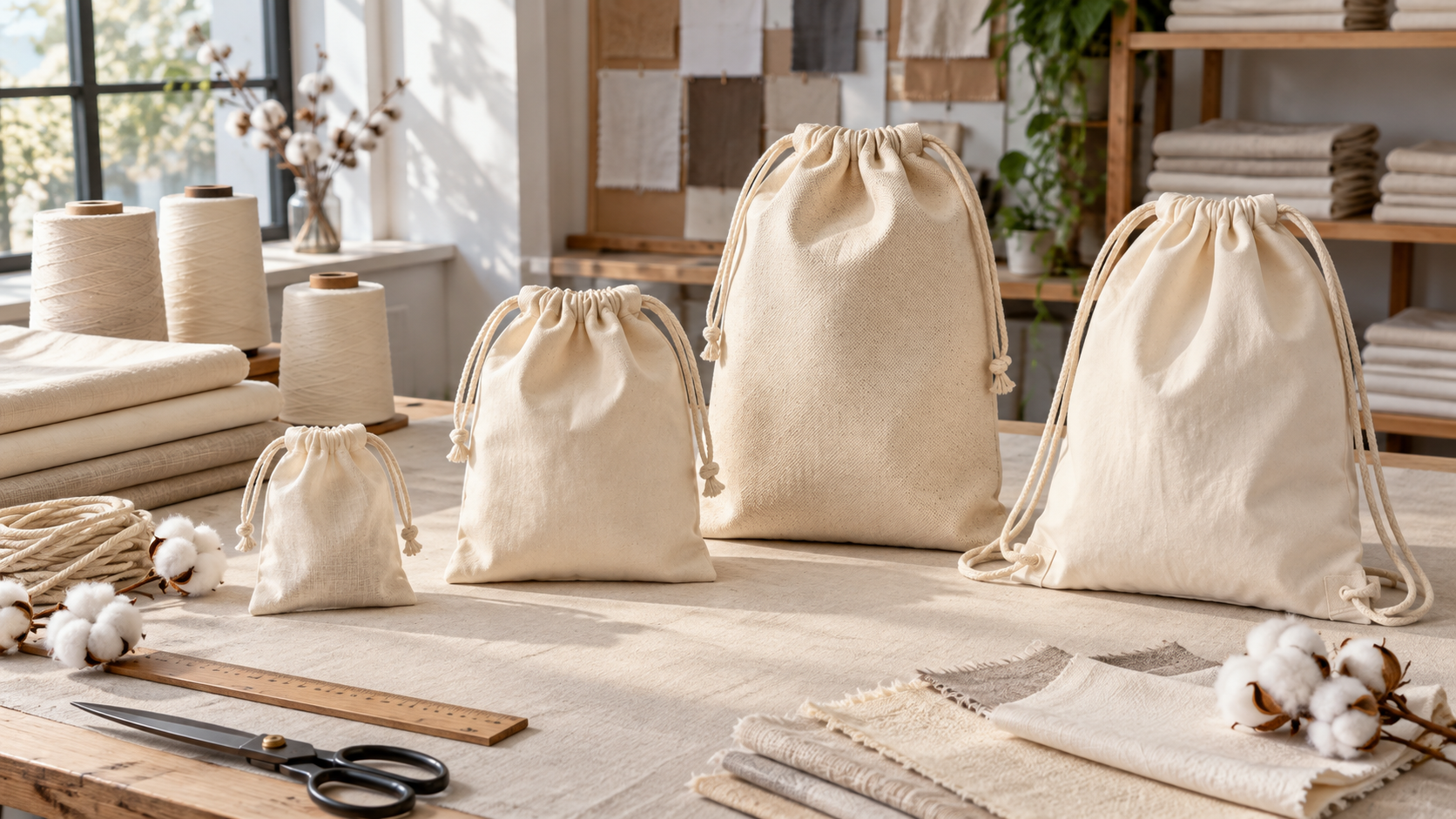
Canvas describes a fabric construction and may use cotton, blends or other fibers. State the required composition and evidence. Record fabric weight with its unit and basis, and approve texture, color, hand feel and tolerances against a physical sample.
If organic, recycled, washable or other material/performance claims are needed, specify the exact claim, test or documentation and applicable scope. Do not infer those attributes from a natural-looking fabric.
Check the cord system as part of the bag
Define single or double draw, cord material, diameter, color, ends, channel size and closure direction. Operate it when empty and filled. Check friction, bunching, accessibility and whether the cord or channel distorts the artwork area.
Review seam ends and reinforcement around the channel and side openings. Record the approved construction; small changes can affect both cost and daily use.
Price cost levers as separate alternatives
Stock fabric colors, standard cords, fewer artwork colors, simpler packing or consolidated versions may reduce cost. Ask the vendor to show each alternative and its effect on appearance, function, MOQ, setup and timing. Keep mandatory fit and acceptance points unchanged.
Reject silent substitutions. A lower material weight, reduced usable height, simpler seam or changed cord should appear as a named version and, when relevant, a revised sample.
Verify the vendor's role and controls
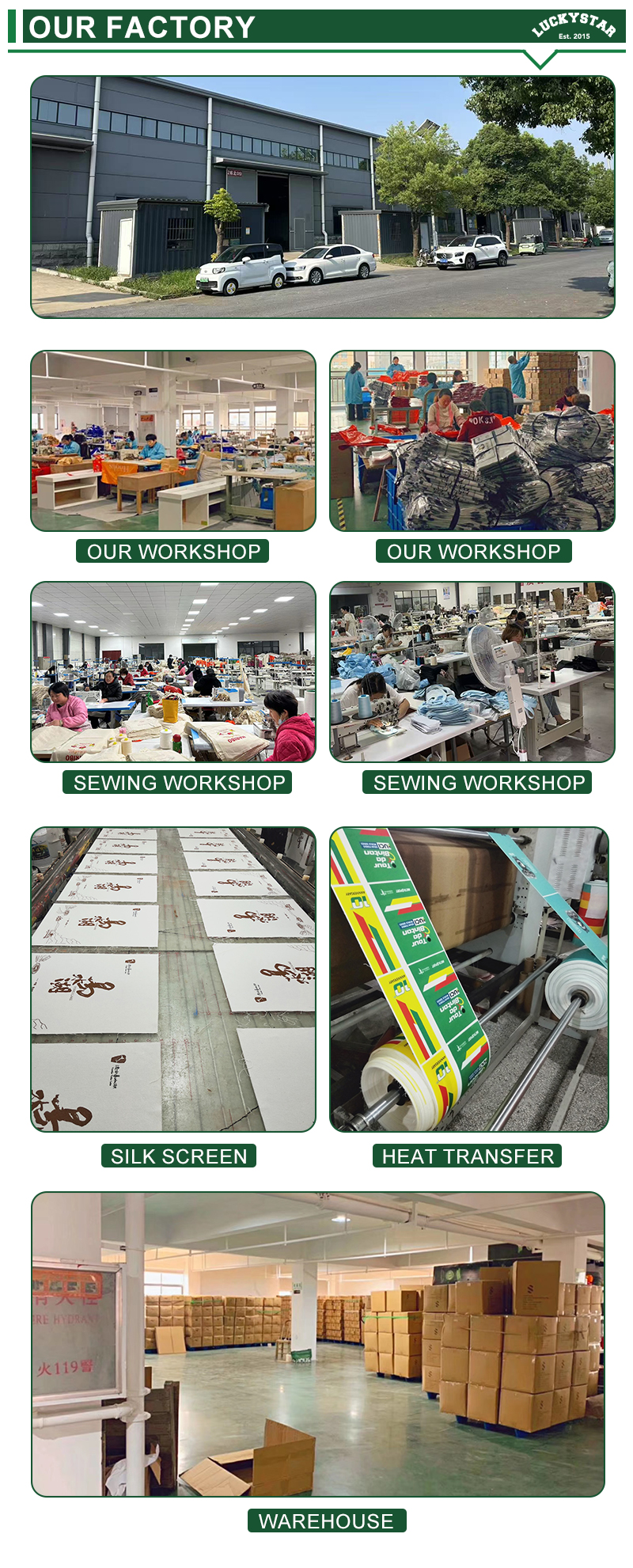
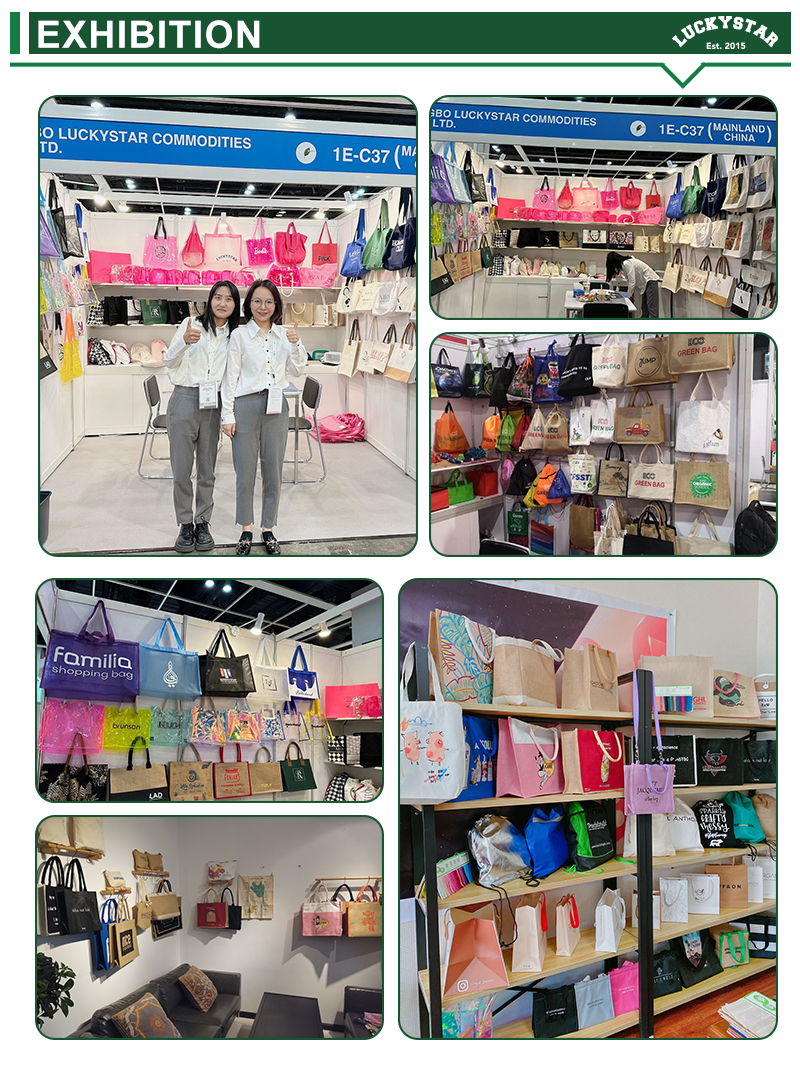
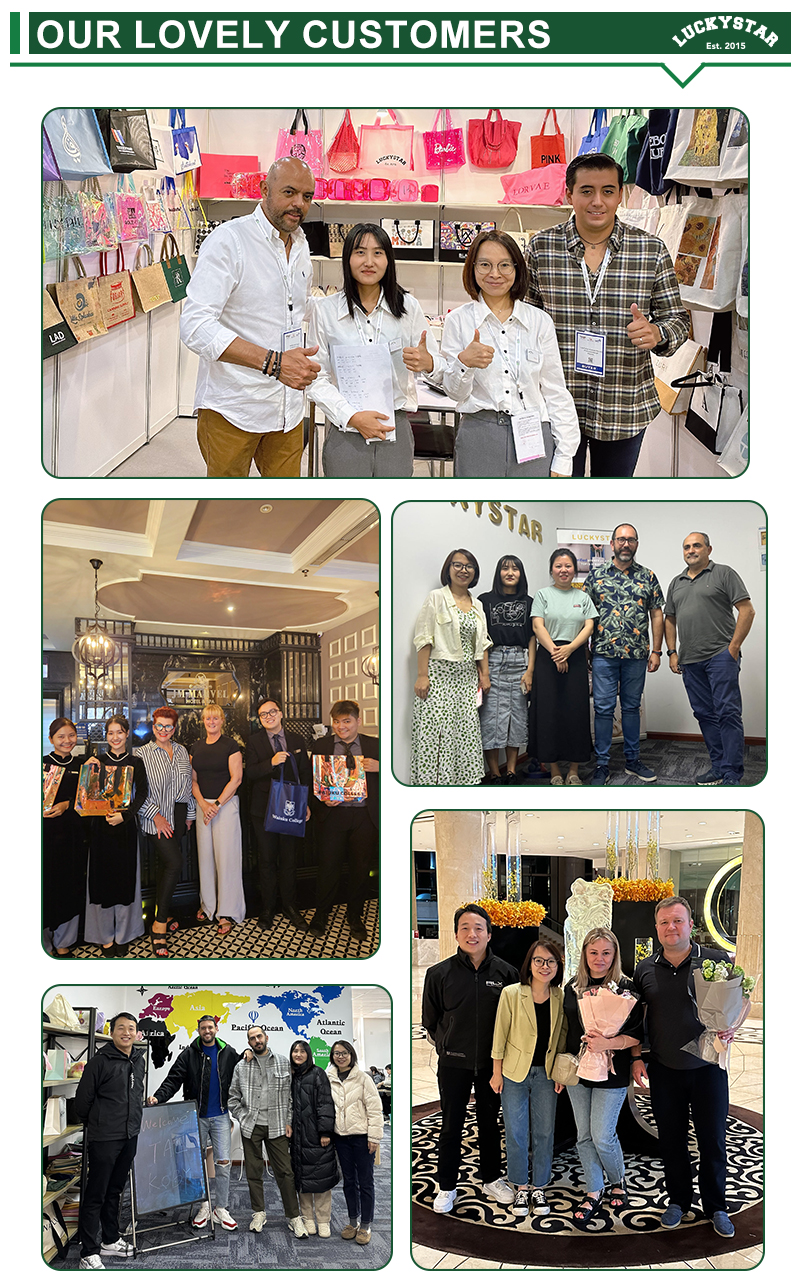
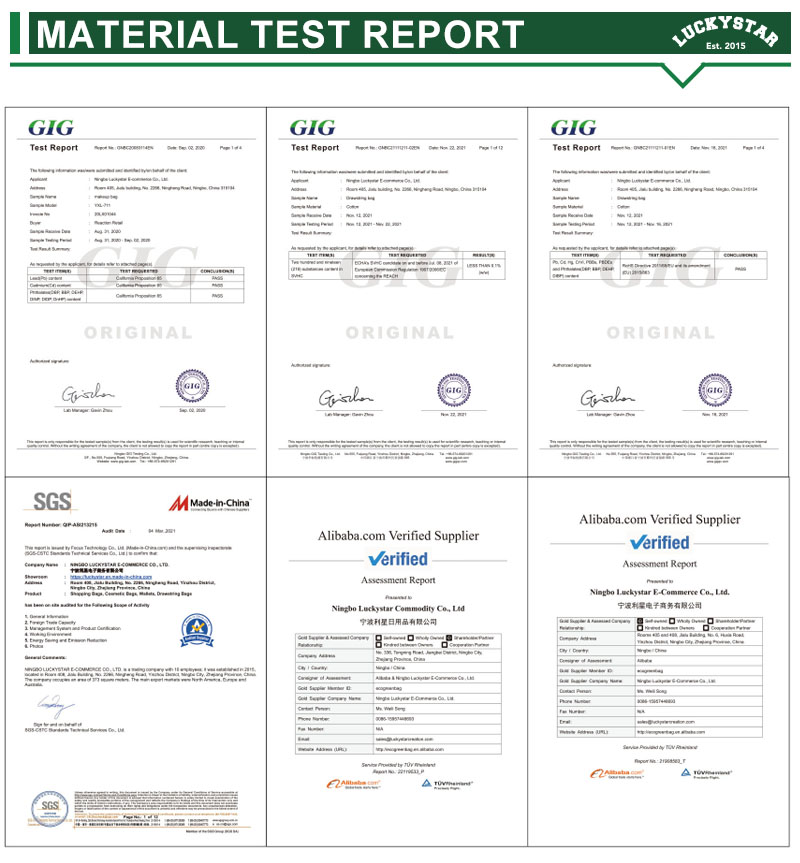
Ask for the legal seller, invoice issuer and actual roles for material sourcing, cutting/sewing, decoration, inspection and packing. “Vendor” may describe several supply arrangements. What matters is that the quoted route, responsibilities and change controls are disclosed.
Review a representative sample, first-output approval, inspection plan and remedy. A factory label on a page does not prove ownership of every process or predict the quality of the actual order.
Approve decoration on production material
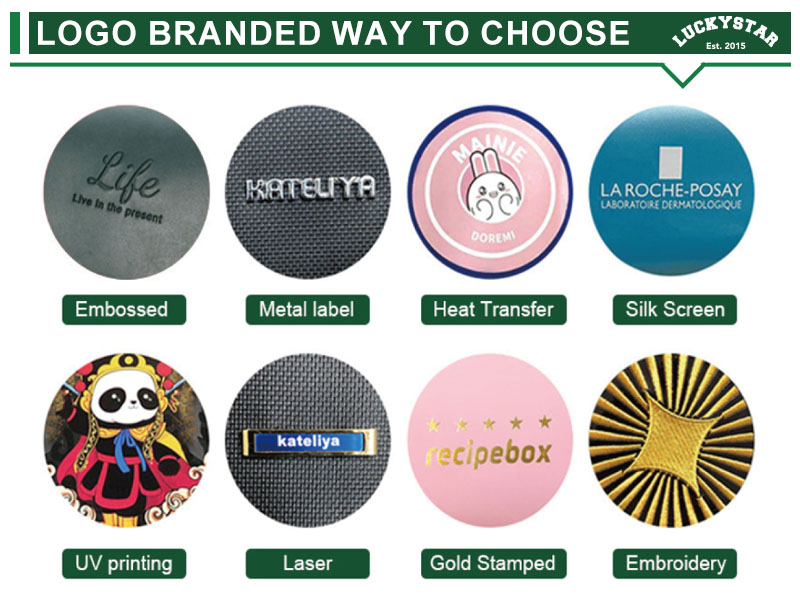
Provide vector artwork, actual dimensions, placement from seams and the cord channel, color references and critical small details. Ask the vendor to propose the method for the selected material and quantity.
Review coverage, registration, edge quality, show-through, hand feel and puckering. Keep the approved artwork and sample linked to the exact fabric and construction version.
Vendor comparison scorecard
| Area | Compare | Evidence |
|---|---|---|
| Fit | Usable size, opening and contents | Measured filled sample |
| Material | Composition, construction, weight and color | Declaration/test and approved reference |
| Route | Seller, maker, decorator, inspector and packer | Written role map |
| Cost | Unit, setup, sample, inspection and pack | Itemized dated quote |
| Control | Sample, tolerances, changes and remedy | Approval/inspection plan |
Frequently asked questions
What makes a canvas drawstring bag low cost?
Material, construction, cord, decoration, version count and packing all contribute. Compare explicit options against the same use case.
Is the lowest unit price the cheapest program?
Not necessarily. Include setup, sampling, inspection, freight, unusable stock and excess volume in the decision.
Can several artworks share one MOQ?
Shared material may be possible while separate decoration setup or minimums still apply. Request a line-by-line matrix.
What should be approved before bulk?
Approve the specification, filled and decorated sample, quantity split, packing, inspection and current commercial terms.
Related sourcing guides
Source and scope: Luckystar custom drawstring-bag category and linked sourcing guides, checked September 21, 2026. They are format and process references, not proof of composition, factory ownership, fixed low price, MOQ, stock, capacity or delivery. Existing article images are illustrative and still require topic-relevance and publication-rights review.
Request a canvas drawstring vendor comparison
Send the contents, usable size, material, cord system, artwork, quantities, packing, inspection, delivery basis, destination and date.
Use the website contact form or email a prefilled vendor brief. Review the draft before sending.
Composition, claims, MOQ, price, availability, capacity and delivery are subject to specification and written confirmation.