
The broader worldwide tote bag manufacturer comparison helps shortlist production routes before you compare cotton specifications and origin claims.
Buyer quick answer
A search for a “cotton tote bag factory USA” should lead to a route comparison, not an assumed factory location. Ask each candidate to identify the legal seller, actual making site, material origin, U.S. inventory or finishing roles, sample, inspection, delivery basis and origin-claim evidence.
Scope: Luckystar is presented on its website as a Ningbo company; this page does not claim that it owns a U.S. factory. It explains how U.S.-market buyers can compare domestic, imported and mixed production routes on the same specification.
Comparing tote supply routes for the U.S.? Send the product specification, origin requirement, quantity, destination and arrival date. Request a route map and delivered quote.
Define what “USA factory” must mean for the project
The buyer may require U.S. cutting and sewing, domestic printing on imported blanks, U.S.-held inventory, local sampling, or simply delivery to a U.S. warehouse. These are not interchangeable. Write the required production and service steps in the RFQ and ask where each will occur.
A U.S. address, warehouse, sales office or decorator does not establish U.S. manufacture. Likewise, an overseas seller can coordinate an order for the U.S. market without becoming a U.S. factory. Record the legal entity, facility and responsibility at each stage.
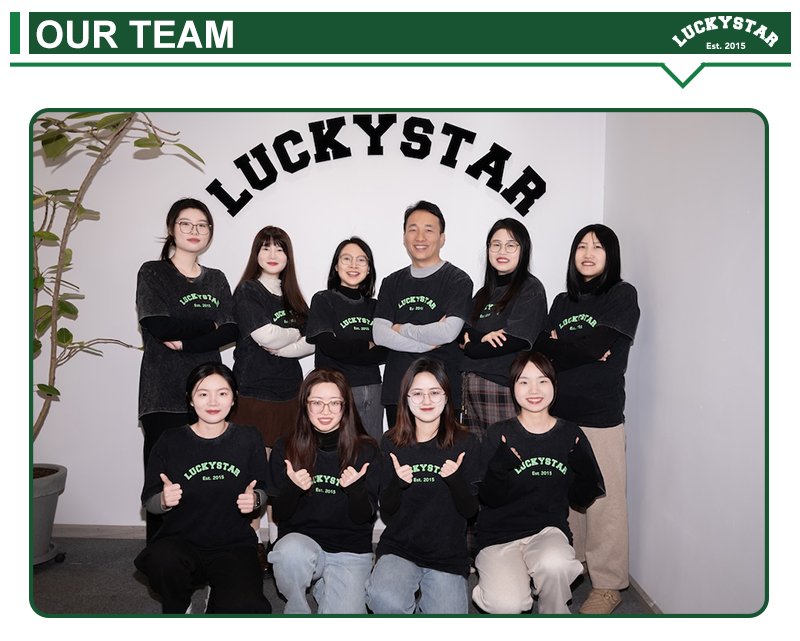
Compare three supply routes
- U.S. manufacturing: identify material origin, cutting/sewing, decoration and packing sites plus substantiation for any origin claim.
- Imported finished totes: identify overseas maker, inspection, shipment basis, destination records and U.S. receiving plan.
- Mixed route: identify imported blank or component stages and the exact U.S. finishing, decoration or fulfillment work.
Compare the same tote specification and arrival requirement across all routes.
Handle U.S.-origin marketing as a separate evidence decision
If the product or marketing will make an unqualified “Made in USA” claim, the FTC's current business guidance says marketers should be able to substantiate that the product is “all or virtually all” made in the United States. Qualified claims require accurate limits and supporting records. Review the FTC Made in USA business guidance and obtain appropriate legal review for the actual claim and label.
Do not infer U.S. origin from a brand name, seller address, domestic decoration or final warehouse location. Request the bill of materials, processing locations and claim substantiation before approving packaging or campaign text.
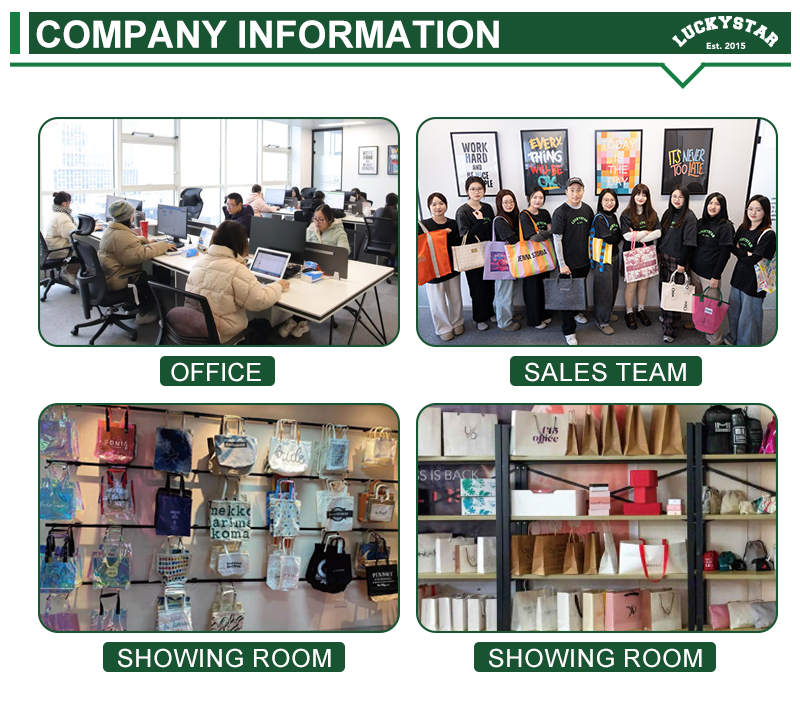
Freeze one cotton tote specification
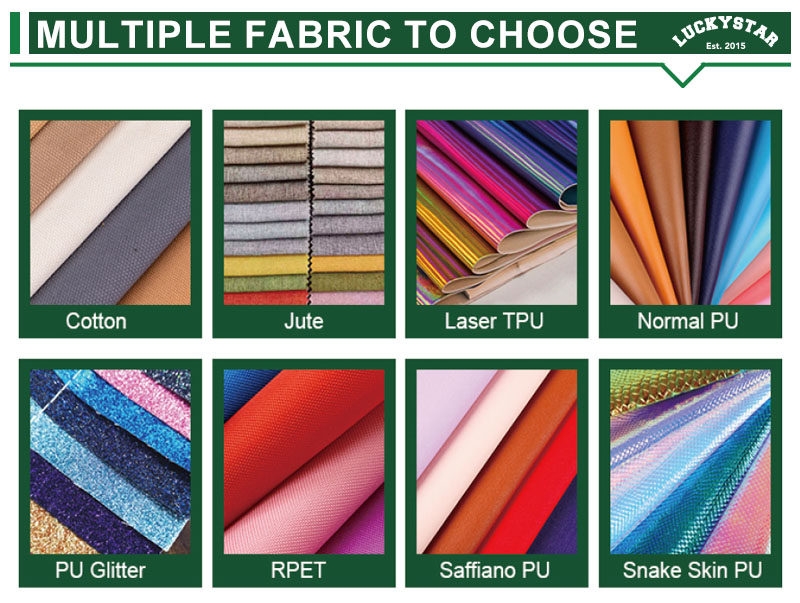
Give intended contents and load, finished dimensions, gusset, handle drop, fabric composition and weight, weave, color, seams, reinforcement, print and packing. “Cotton tote” covers multiple weights and constructions; country alone does not determine quality.
Approve a production-intent swatch and filled decorated sample. Measure dimensions, test handles and seams at the agreed load, and inspect print, shrinkage or care behavior when relevant. Use identical acceptance criteria for domestic and overseas candidates.

Compare schedule milestones instead of geography assumptions
Ask for dates for material availability, sampling, approvals, production, decoration, inspection, dispatch and arrival. A domestic route is not automatically faster if material, capacity or decoration is unavailable; an imported route is not automatically slower without a defined shipment plan.
Record which approval starts production and how revisions affect the critical path. For urgent work, compare a smaller verified-stock route with a new custom run as separate options.
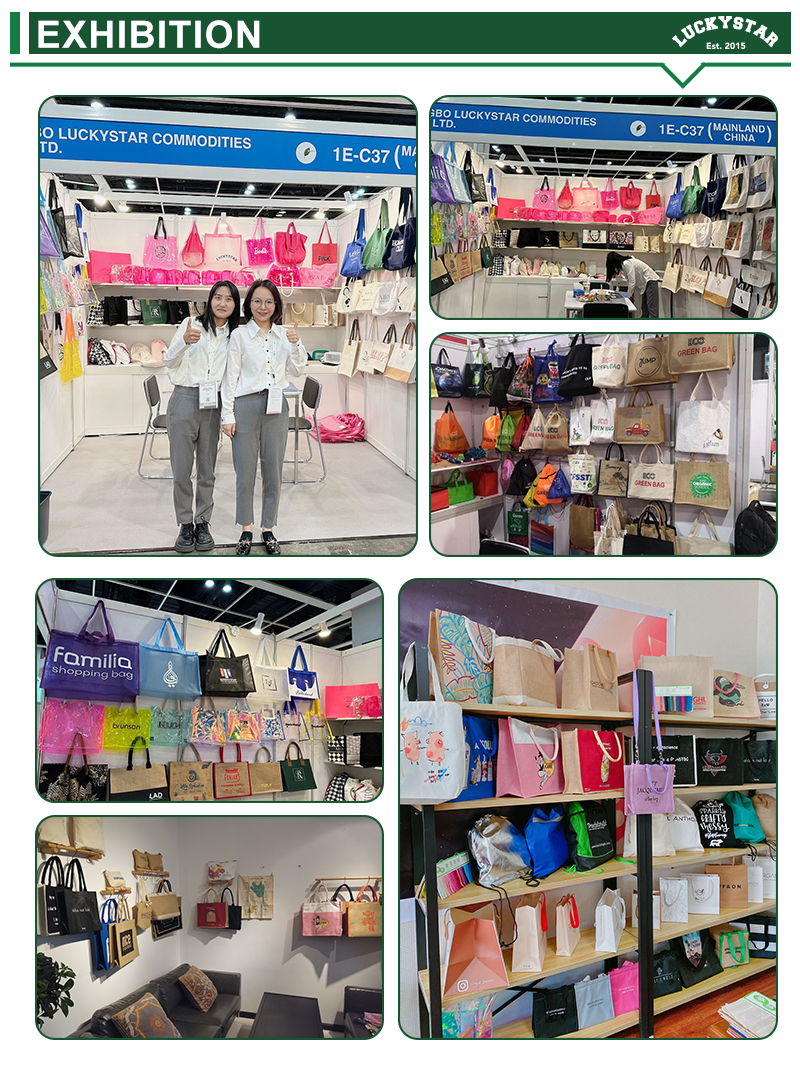
Normalize landed and delivered costs
Compare unit bag, sample, setup, printing, labels, testing, inspection, packing, domestic/international transport, duties or taxes assigned under the quote, and receiving costs on the same basis. Name the delivery point and currency. Avoid comparing a factory-gate offer with a delivered U.S. offer.
List quantities by fabric color, size, artwork and pack SKU. Ask whether MOQ applies per configuration and which setups can be shared. Price, MOQ and freight are dated, route-specific terms.
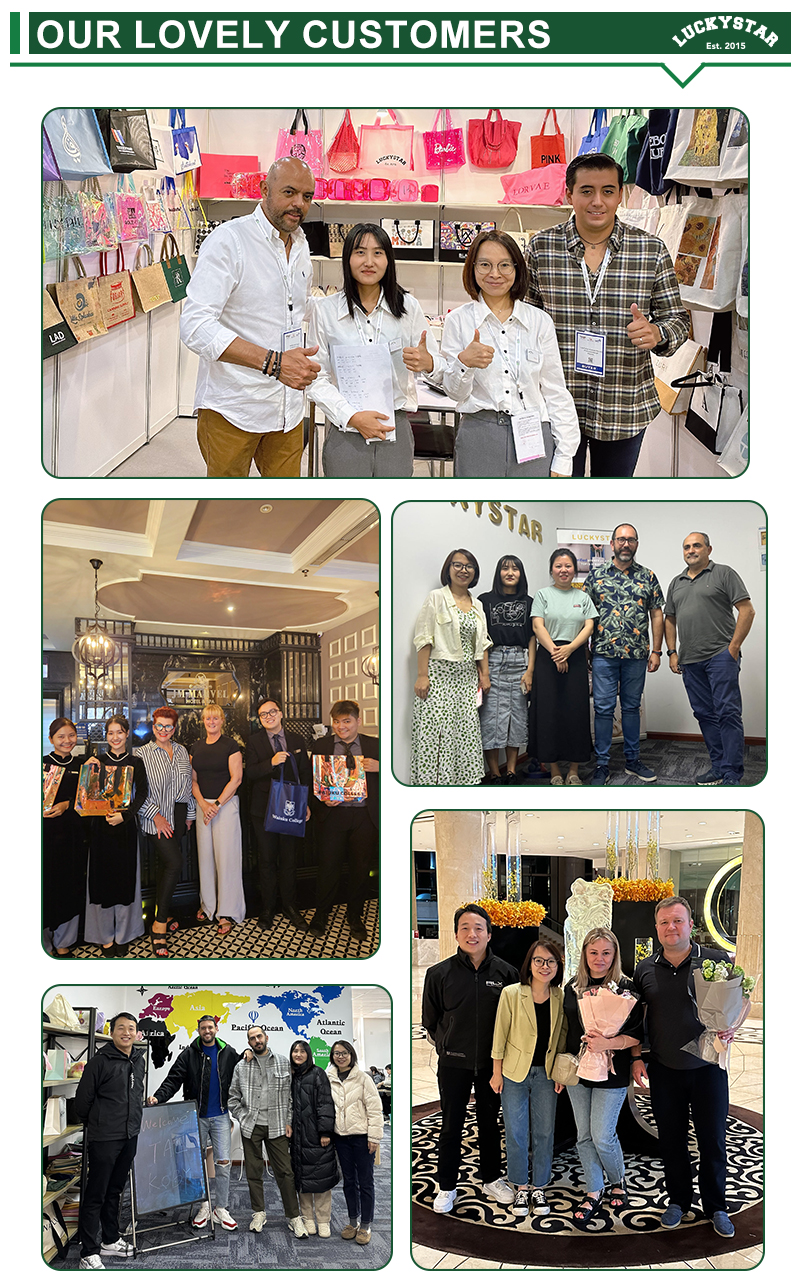
Verify repeat-order records and change control
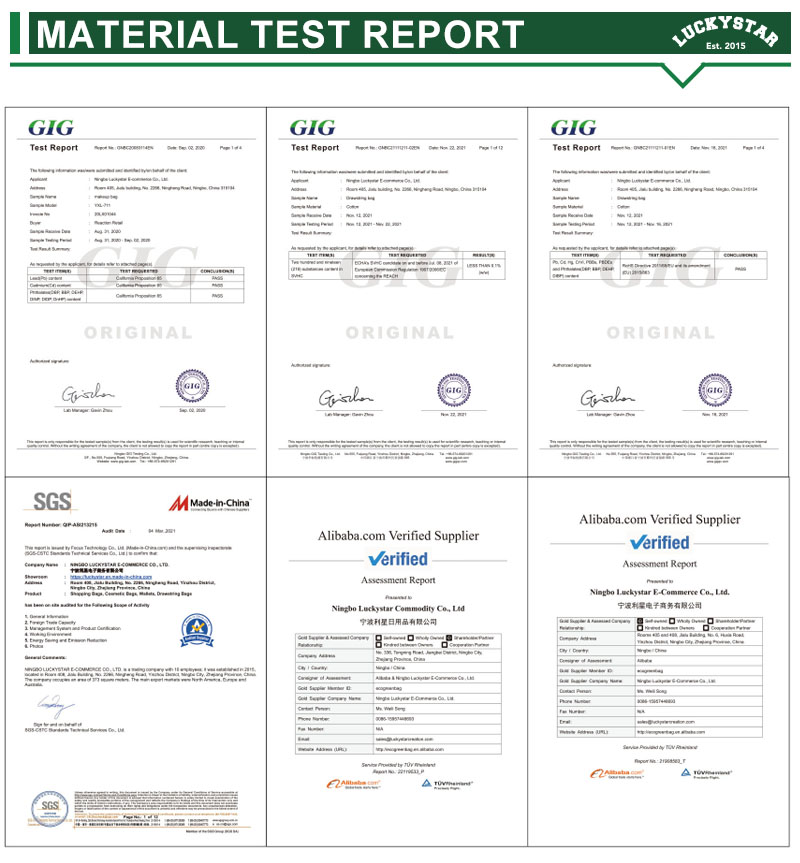
Keep the specification, artwork, material/color references, approved sample, inspection results and pack plan. Ask who will notify the buyer if the mill, sewing site, decorator or material changes. The same company name does not guarantee an unchanged route.
Review tote formats on the Luckystar custom tote-bag category. It provides product references and an inquiry route, not evidence of a U.S. factory or U.S.-origin claim.
U.S. versus global tote route matrix
| Decision | Align | Verify |
|---|---|---|
| Product | Fabric, construction, load, artwork and pack | Same filled sample criteria |
| Route | Seller, material, maker, decorator and warehouse | Named locations and roles |
| Origin claim | Exact qualified/unqualified wording | Applicable records and review |
| Schedule | All milestones through required arrival | Written critical path |
| Cost | Same currency, destination and included scope | Dated delivered-cost comparison |
Frequently asked questions
Does this page state that Luckystar has a U.S. factory?
No. The company website identifies a Ningbo business. Any proposed factory and order route must be confirmed in writing.
Is U.S. production always faster?
No. Compare actual material, capacity, approval, decoration and delivery milestones for each candidate.
Can a U.S.-printed imported tote be labeled Made in USA?
Do not assume so. Review the exact processing and the current FTC guidance, then substantiate and qualify any claim appropriately.
What should buyers compare?
Compare the same specification, origin requirement, sample, route, inspection, quantity matrix, delivered scope and arrival date.
Related sourcing guides
Source and scope: Luckystar custom tote-bag category and official FTC Made in USA guidance, checked September 21, 2026. Luckystar's category page does not prove a U.S. factory, U.S. content, a particular production route, current terms or image rights. Existing article images are illustrative.
Request a U.S.-market tote route quote
Send use/load, fabric and construction, artwork, versions, origin requirement, packing, inspection, delivery basis, U.S. destination and arrival date. Request legal seller, actual maker and processing locations, sample and complete route quote.
Use the website contact form or email a prefilled route-comparison brief. Review the draft before sending.
Origin claims, compliance, MOQ, prices, capacity and delivery require current evidence and written confirmation.






