Last reviewed: September 28, 2026
Buyer Quick Answer
Plan bulk promotional T-shirts as a distribution program, not a single product quantity. Define the campaign objective, recipient groups, delivery locations, size-selection method, artwork versions, in-hand date, allocation rules, packing format, handout process, leftover plan and post-campaign measures before requesting a quote.
Best first request: send one campaign allocation sheet showing every audience, location, wave, color, size range, decoration version, pack configuration and required arrival date. Ask the supplier to quote the complete deployed scope and identify assumptions.
A promotional T-shirt creates value only after the right recipient receives a wearable size and chooses to keep using it. A beautiful garment trapped in a warehouse, the wrong size at an event table or a carton delivered after the activation has little campaign value. The operational plan therefore matters as much as the shirt.
This guide focuses on quantity, size, timing, destination and handout decisions. It does not repeat the technical sample-to-bulk controls in the reliable custom T-shirt manufacturer guide, rank printing methods or replace the broader Custom Bag Manufacturer Guide. Its job is to connect a marketing brief to an order that can actually be distributed and measured.
Scope: Campaign Allocation, Not Generic Manufacturing
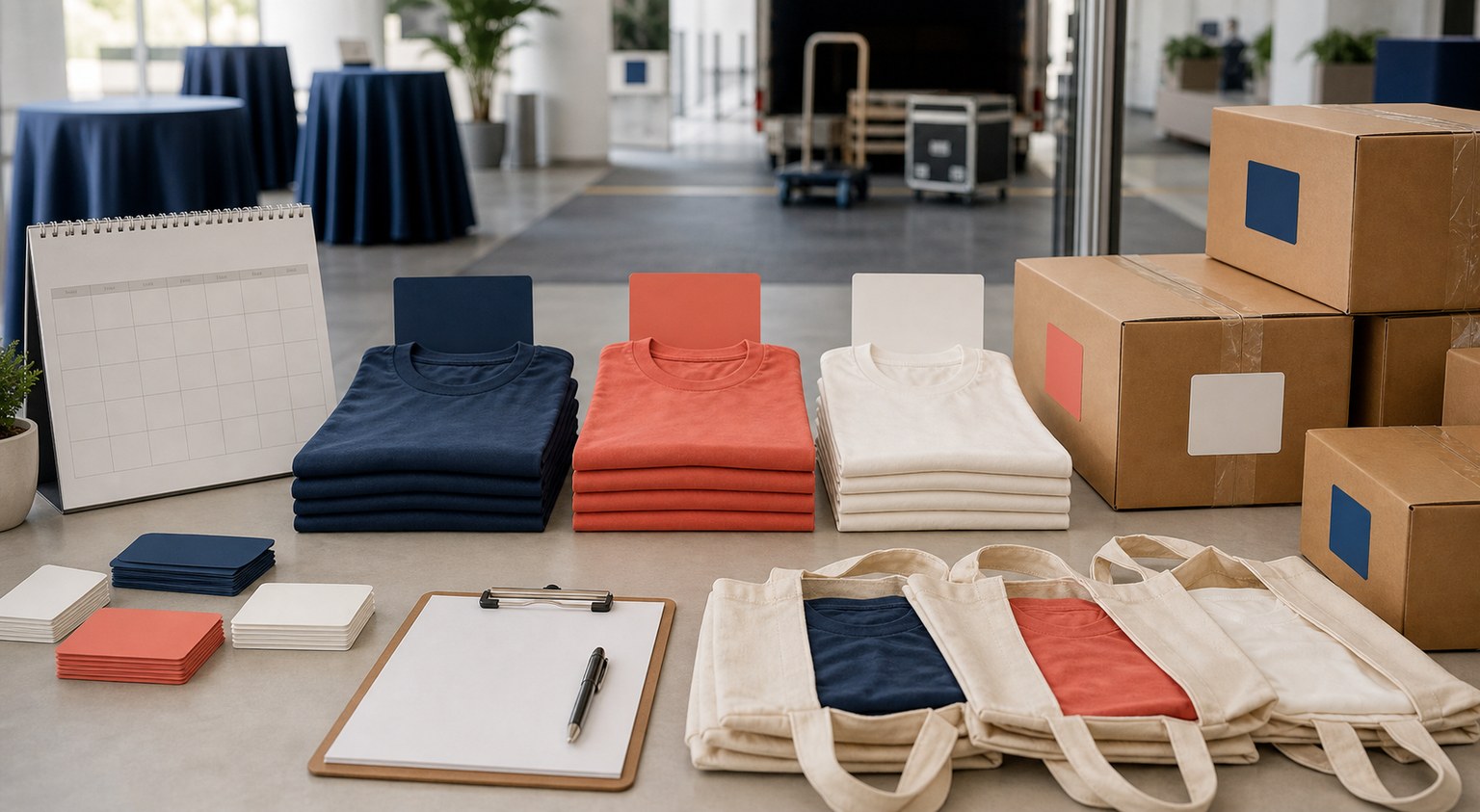
A corporate conference, retail gift-with-purchase, charity run, campus event, distributor incentive and employee launch can all use promotional shirts, but they should not share the same quantity logic. This article starts with who receives the garment and how it moves from order to wearer.
Manufacturing still matters, but it is handled through linked product guides. Here the procurement team treats the shirt as campaign inventory with sizes, locations, deadlines and evidence of use.
Define a Campaign Outcome Before Choosing the Shirt
Choose one primary outcome: identify staff, reward attendance, encourage a purchase, support a cause, equip a field team, create community or launch a branded collection. Then define the action the recipient must take to receive the item and the behavior the organization wants afterward.
A campaign does not become measurable by assigning an impressive-sounding exposure number to every shirt. Use observable signals such as claimed quantity, eligible recipients served, missing-size requests, return or exchange rate, leftover inventory, redemption, repeat wear survey, QR or landing-page visits and relevant downstream action. Select only measures the team can actually collect.
Build the Campaign Brief as an Allocation Document
| Brief field | Decision to record | Why it changes the order | Owner |
|---|---|---|---|
| Objective | Campaign action and measurable outcome | Determines recipient and distribution model | Marketing lead |
| Audience | Recipient tiers, eligibility and size data | Changes garment, quantity and size curve | Program owner |
| Distribution | Locations, waves, claim path and handout method | Creates allocations and pack formats | Operations lead |
| Timing | In-hand, count, sorting and activation dates | Defines approval and shipping gates | Project manager |
| Measurement | Data collected before, during and after | Makes the campaign reviewable | Marketing analytics |
Map Recipient Groups Instead of Using One Headcount
Separate attendees, speakers, sponsors, staff, volunteers, VIPs, partners, press, customers and reserve stock. Each group may have different eligibility, artwork, size certainty, delivery point and pack format. A sponsor shirt should not be taken from attendee inventory because both happen to use the same color.
For each group, record expected, confirmed and maximum counts. State whether a shirt is guaranteed, earned, purchased, randomly distributed or available while stock lasts. This prevents marketing language from becoming an accidental promise that quantity cannot support.
Choose the Distribution Model Early
Pre-registration collection allows exact sizes and named packs. Open event handout needs a forecasted size curve and visible stock control. Gift-with-purchase requires eligibility verification and store-level allocation. Employee or member programs may use a form, internal portal or manager distribution. Direct mail needs individual addresses and parcel-ready packing.
Distribution changes unit economics and timing. A single bulk carton is not equivalent to individually labeled kits across many destinations. Ask the supplier to separate garment production, sorting, kit assembly, labeling, cartons and freight in the quote.
Collect Exact Sizes Whenever the Audience Is Known
Use a form tied to an actual garment size chart, not only S/M/L labels. Show whether the fit is unisex, gendered, youth, relaxed or oversized. Give a response deadline and decide how non-responders are handled. Remove duplicate registrations and confirm whether staff or sponsors have already submitted elsewhere.
Close the size list before order release. Late additions should enter a visible change log instead of being absorbed informally into buffer stock. If privacy or system limits prevent named collection, retain aggregate counts by group and location.
Build a Size Curve From Evidence, Not a Universal Ratio
When exact data is unavailable, start with the closest source: prior event claims, employee records, member orders, regional sales, registration demographics or a comparable program. Adjust for garment fit and audience, then document the reasoning. A generic online ratio may be a fallback, but it should not be presented as a universal population fact.
Track stockouts and leftovers by size during distribution. Those observations improve the next curve. If one location runs out of XL while another retains many, the lesson may be allocation rather than total quantity.
Include Extended, Youth and Fit-Specific Sizes Deliberately
Ask whether the garment platform covers the required range and whether extended sizes differ in cost, panel width, decoration area or availability. Do not remove a needed size from the form simply because it complicates the quote. If youth and adult sizes share artwork, confirm placement and scale on both.
Communicate fit neutrally. A person who cannot use the available shirt is not a successful campaign impression. The allocation plan should identify exceptions early enough to choose a suitable garment or separate production route.
Calculate Quantity as a Set of Named Components
Start with confirmed recipients, forecast recipients, staff, presenters, partners, replacements and approved contingency. Subtract usable stock already owned. Add only buffers tied to a named uncertainty: late registration, size exchanges, damage, carrier split or future onboarding.
Do not hide every risk inside one percentage. A destination buffer belongs at that destination; a size-exchange reserve needs an intentional size mix; replacement stock may stay centrally controlled. Named components can be reviewed after the campaign, while one unexplained overage cannot.
Allocate by Location, Wave and Claim Channel
Create a matrix with location down one side and SKU across the other. Split launch stock, reserve stock and replenishment stock. For multi-day events, decide whether all inventory opens on day one or whether later waves remain protected. For stores, identify which locations can exchange stock and who authorizes transfers.
Cartons should match the operational handoff. A venue may need cartons by booth, day or staff team; a retail program may need one assortment per store; a mail campaign may require person-level packs. The physical pack should make the allocation plan easy to execute without reopening every box.
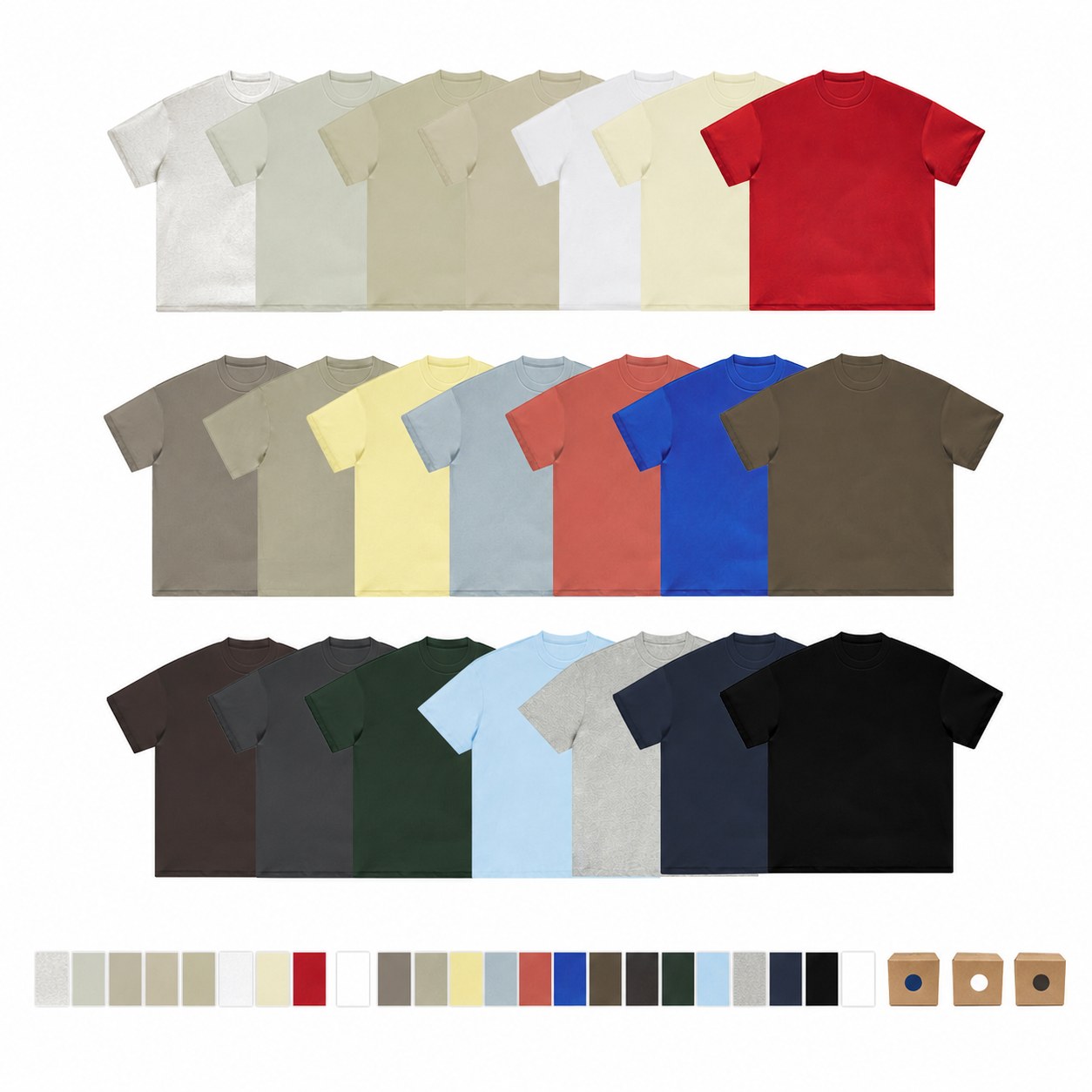
Use Color and Artwork Versions to Support the Campaign
Color can identify staff, audience tier, day, region or sponsor package, but every additional version creates separate quantities, approvals and packing risks. Use multiple versions only when they serve an operational or creative purpose. Record the exact recipient and destination for each version.
Keep sponsor logos and legal marks under one controlled artwork revision. Confirm whether partners approve only appearance or also placement, color and minimum size. A late sponsor change can affect screens, transfers, packing and delivery; make the change impact visible before accepting it.
Choose Decoration by Message, Quantity and Use
Decoration should support the campaign brief and garment. Large event graphics, detailed short-run artwork, names, sponsor lists and premium staff pieces can require different routes. Request the finished decoration size and placement on the actual selected shirt.
Use the custom embroidery T-shirt guide and sublimation apparel guide when method selection is the main question. This article keeps decoration in scope only where it changes version count, timing, packing or campaign use.
Make Wearability a Campaign Requirement
PPAI Research reports that usefulness, quality and relevance influence whether recipients keep and use branded merchandise. Its 2026 consumer research on what people do not throw away and what consumers want next supports a practical conclusion: campaign planning should begin with recipient value, not maximum logo area.
Review fabric hand, opacity, fit, collar, care, decoration hand and expected setting with a real sample. A recipient must be willing and able to wear the shirt for the campaign to continue after handout.
Work Backward From an In-Hand Date
The event date is not the delivery target. Set an earlier in-hand date for receipt, count, inspection, sorting, venue transfer and correction. Then work backward through international or domestic freight, packing, production, material availability, sample or mockup approval, artwork approval, size collection and internal sign-off.
Ask for a written schedule tied to complete inputs. Separate supplier processing time from buyer decision time. A date promised before sizes, artwork, destinations and packing are final is an estimate, not a controlled plan.
Choose Packing for the Next Human Handoff
Pack by the person who opens the carton. Event staff may need clearly separated size bundles. Store teams may need a ready assortment. Speakers may need named kits. Remote employees may need address labels and individual parcels. Add a packing list that allows counting without unfolding every shirt.
When shirts join bags, caps or other items, define kit assembly and substitution rules. The cross-category merchandise supplier guide and wholesale tote program guide provide related planning for coordinated kits.
Design the Handout Process Before the Event
Decide who is eligible, how eligibility is checked, whether recipients choose a size, whether exchanges are allowed and how stock is decremented. Separate staff and participant inventory. Give the distribution team a simple escalation path for missing names, damaged units and stockouts.
At high-volume tables, organize by size and version, keep reserve cartons closed and record replenishment. A fast handout that loses allocation control can make the last audience segment pay for the first segment's choices.
Compare Distribution Models
| Model | Strongest input | Main risk | Packing priority |
|---|---|---|---|
| Named pre-order | Confirmed person and size | Late changes and no-shows | Named or team-sorted packs |
| Open event table | Past claims and audience forecast | Early size depletion | Fast size access and reserves |
| Gift with purchase | Sales forecast and store profile | Uneven store demand | Store-ready assortments |
| Employee or member | Roster and size form | Duplicate and missing records | Department or person sorting |
| Direct mail | Clean addresses and consent | Undeliverable parcels | Individual parcel accuracy |
Protect the Reserve and Replenishment Logic
Define who owns reserve stock and when it can be opened. Use a simple replenishment trigger rather than moving cartons whenever one table looks low. Record transfers between locations. This protects later sessions, remote teams and high-priority recipients.
Do not spread every size equally across every location if audience profiles differ. Allocation can follow known registrations, prior demand or store history while a central reserve absorbs uncertainty.
Plan the Leftover Route Before Ordering
Choose acceptable uses for remaining stock: future onboarding, another event, partner distribution, staff replacement, donation or controlled sale. Confirm whether dated artwork, sponsor commitments or regional marks make reuse impossible. A shirt designed for one day can become waste the next morning.
Record remaining units by SKU and location. Decide when inventory returns to a central owner and who can approve reuse. The next campaign should begin with this usable stock record, not a new order made from memory.
Measure Distribution Before Claiming ROI
At minimum, reconcile produced, delivered, damaged, distributed, returned and remaining quantity. Add size stockouts, location transfers and recipient category when available. For a claim-based program, compare eligible people with claimed shirts. For a sales promotion, compare redemption and relevant purchase behavior using an agreed method.
Brand recall, sentiment and repeat wear require surveys or other direct evidence. Treat modeled impressions as a planning estimate, not a shipment fact. The campaign review should state data limits as clearly as results.
Use Reorder Triggers, Not Panic Orders
Set a threshold by size, location or program wave. Preserve approved garment, artwork, color and pack records so the supplier can evaluate repeatability. Confirm whether the original blank or fabric, dye lot and decoration route remain available before promising an exact match.
Reorders can cost more or arrive differently if quantities, setup or freight change. The lead-time and cost reduction guide provides a related cross-category framework for approvals, material booking and change control.
Compare Quotes by Deployed Cost
Compare garment, decoration, setup, size or version differences, sample, sorting, individual packing, carton labeling, multi-address freight, duties where applicable, venue delivery, reserve movement and leftover handling. A lower garment price can be offset by manual resorting or emergency transfers after delivery.
Require each quote to state inclusions, assumptions and open variables. If one supplier quotes bulk cartons and another quotes store-ready assortments, the totals are not comparable. Use the custom product cost guide for the wider principle that unit price alone does not describe the delivered program.
Use a Campaign Risk and Ownership Table
| Risk | Early signal | Preventive action | Decision owner |
|---|---|---|---|
| Wrong size curve | Low form response or weak history | Segment data and protect exchange reserve | Program owner |
| Artwork delay | Sponsor list remains open | Freeze date and change-impact approval | Marketing lead |
| Late arrival | Inputs miss backward-plan gates | Earlier in-hand date and written schedule | Project manager |
| Misallocation | No location-level matrix | Carton plan, reserves and transfer log | Operations lead |
| Excess leftovers | Quantity built from headline attendance | Named quantity components and reuse route | Budget owner |
Keep Related Apparel Programs in Their Own Scope
Use the corporate uniform supplier guide for recurring workforce issue and replacement, the custom polo manufacturer guide for professional collar and fit requirements, and the basic wear guide for a broader apparel capsule.
When a campaign uses bags as the primary giveaway or kit container, see the promotional cotton tote buying guide and the custom bag branding guide. These pages handle their own product decisions; this article remains focused on T-shirt campaign allocation.
What to Send for a Useful Quote
Send the campaign objective, recipient groups, confirmed and forecast counts, size data, garment and fit direction, colors, artwork versions, decoration locations, destinations, pack formats, in-hand dates, distribution waves, reserve plan and required quality or compliance checks. Mark approved items and open choices.
Ask the supplier to return a SKU matrix, assumptions, MOQ by version, sample or mockup plan, approval gates, production scope, packing scope, freight scope and written schedule. Comparable scope produces a useful comparison.
How LUCKYSTAR Can Support Campaign Planning
LUCKYSTAR can review a promotional apparel brief, help organize shirt, decoration, size, allocation and packing inputs, and coordinate apparel with bags, caps or other branded items. Available products, minimums, processes, testing and schedules depend on the actual campaign specification and destinations.
The objective is a reviewable order that reaches recipients as intended. The core manufacturer guide links this campaign workflow to broader supplier selection, development and quality planning.
Frequently Asked Questions
How many promotional T-shirts should an event order?
Add named components: confirmed recipients, forecast attendance by eligible group, staff, partners, replacements and a justified contingency. Subtract usable existing stock. Do not base quantity on venue capacity alone.
What size ratio should I use for a bulk giveaway?
Use exact registrations when possible. Otherwise use the closest historical or audience-specific data, adjust for the actual garment fit and document the assumption. There is no universal ratio for every region and event.
When should promotional shirts arrive?
Set an in-hand date before the activation with enough time to count, inspect, sort, transfer and correct. The necessary buffer depends on order complexity, destinations and the operational plan.
Should all shirts go to the venue at once?
Not automatically. Multi-day, multi-location or tiered programs may need protected reserves and replenishment waves. Allocate stock according to recipient and handout risk.
How can a team reduce leftover shirts?
Collect sizes, separate confirmed from forecast demand, use named buffers, monitor claims during distribution and plan a legitimate reuse route before artwork is finalized.
How should promotional T-shirt campaign ROI be measured?
Start with produced, delivered, distributed and remaining units, then add campaign-specific outcomes such as redemption, qualified visits, repeat wear surveys or incremental actions. State assumptions and do not treat modeled impressions as observed results.
Turn Bulk Shirts Into a Controlled Campaign Asset
Review the current custom T-shirt range to choose the garment platform before allocation is frozen. Promotional T-shirts perform best when product and distribution decisions support one another. A clear audience map, evidence-based size curve, named quantity components, backward timeline, destination allocation, practical handout process and honest measurement plan turn a bulk order into an accountable campaign.
Send LUCKYSTAR your recipient groups, quantities, sizes, artwork, destinations, pack plan and in-hand dates for a campaign allocation review and quotation.
Email a prefilled campaign allocation brief