
Last reviewed: September 24, 2026
Buyer Quick Answer
A successful sports team hoodie wholesale order is controlled as a roster project, not only as a garment purchase. Freeze the hoodie model, adult and youth size references, team artwork, individual names or numbers, quantity by size, approval version, packing method and required delivery date before bulk production.
This guide owns the team-order workflow: roster control, mixed sizes, personalization, sample gates, player-level checking, pack-out and reorders. For fabric, fit and construction engineering, use our separate hoodie supplier approval guide.
Define the Team Program Before Choosing a Hoodie
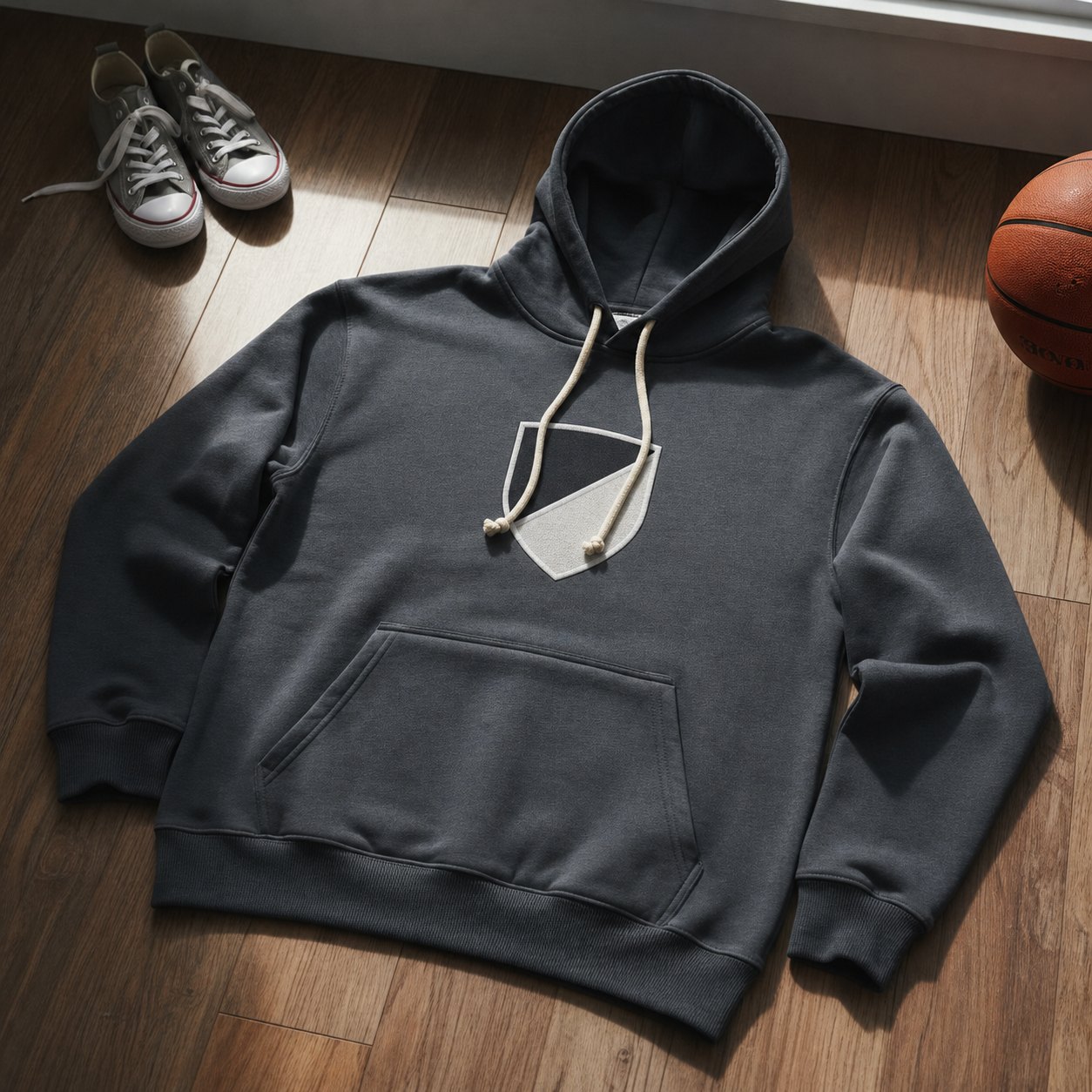
Begin with the wearing job. A sideline warm-up hoodie, school spirit-wear item, supporter product and coach travel layer may share a logo but do not necessarily need the same garment. Record who will wear it, when it will be used, whether it is sold or issued, how often it will be washed and whether youth sizes are required. These decisions shape fabric, fit, decoration and packing.
Keep the scope distinct from a private-label collection. A private label hoodie factory project may require custom labels, packaging and a long-term brand BOM. A team order can instead prioritize roster accuracy, inclusive sizing, one delivery deadline and simple reorders. The supplier should know which problem it is solving.
Choose the Right Supply Route
| Route | Best fit | Main control point | Typical limitation |
|---|---|---|---|
| Approved blank plus decoration | Straightforward club or event order | Blank stock, size availability and decoration compatibility | Less control over garment color, fit and future stock |
| Factory-custom hoodie | Repeat team program or distinctive color/fit | Fabric, measurement chart, trims and approved sample | More decisions must be frozen before production |
| Cut-and-sew sublimation route | All-over graphics or coordinated performance teamwear | Panel artwork, color, seam continuity and size grading | Artwork and panel control are more complex |
If the project uses all-over polyester graphics, review the separate sublimation artwork and QC guide. Do not force one approval method onto every garment route.
Build One Master Roster
Personalized orders often fail because sizes, spellings and numbers are split across email, messaging apps and several spreadsheets. Use one controlled file with a version number and one row per wearer. The buyer should appoint one roster owner who can approve corrections and declare the file final.
| Roster field | Why it matters | Control rule |
|---|---|---|
| Unique wearer or pack ID | Connects the garment to the correct person or kit | Never identify two rows only by the same first name |
| Adult/youth range and size | Prevents the same size label from being treated as one fit block | Use the approved supplier size chart and range name |
| Exact display name and number | Becomes the decoration instruction | Preserve capitalization, punctuation and leading zero decisions |
| Role or subgroup | Separates players, coaches, staff and supporters | Define any different color, placement or pack rule |
| Approval status | Shows whether a row can enter production | Lock the final file; do not accept parallel edits |
Run duplicate-number, missing-size and blank-personalization checks before approval. If the team expects late registrations, decide in advance whether they join a second batch or receive an unpersonalized spare.
Approve Adult and Youth Sizing Physically
Size labels are not measurements. Ask for the supplier chart, confirm whether it describes the finished garment and identify the points of measure. For mixed adult and youth orders, compare actual sample garments where the ranges meet. An adult small and youth large may not grade from the same block even when one chest measurement looks close.
A fitting or sample-size review is more reliable than asking members to guess. Record the selected size against the final roster rather than collecting sizes again later. For deeper fit, hood, rib and shrinkage controls, follow the fabric, fit and finish approval framework.
Match Decoration to Shared and Individual Artwork
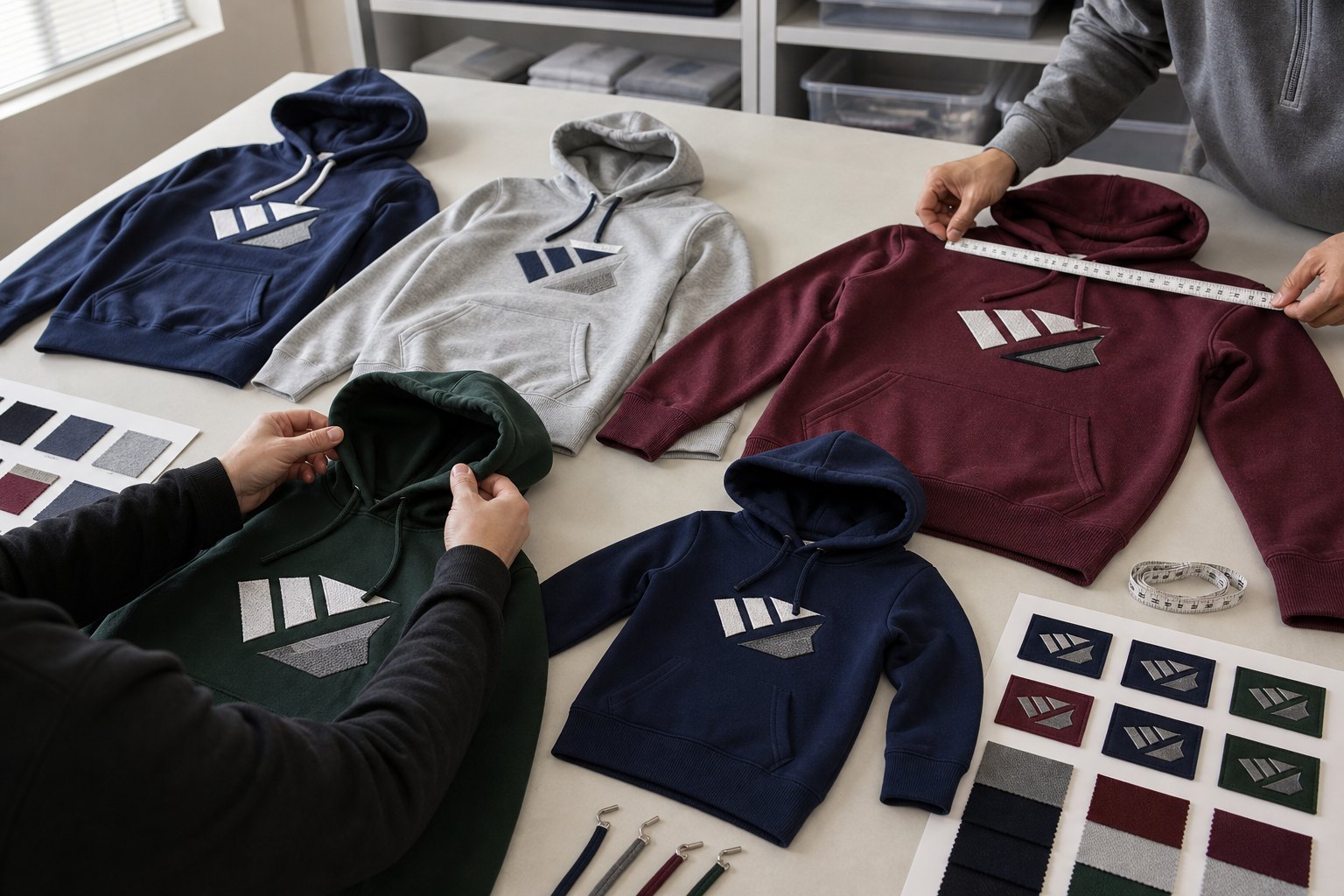
Separate the shared team identity from variable personalization. The badge, sponsor mark and team name can use one repeatable method; player names and numbers may need a method suited to piece-by-piece changes. Every decorated zone should have an approved finished size, position reference and color reference on the actual hoodie.
| Method | Strong use | Approval focus | Team-order risk |
|---|---|---|---|
| Embroidery | Shared crest or premium staff mark | Sew-out, density, backing, puckering and placement | Small details may not sew cleanly; heavy designs change hand |
| Screen print | Repeated team graphic across the full order | Color, opacity, placement and cure on the chosen fabric | Not naturally efficient for many unique names |
| Transfer or DTF | Variable names, numbers or multicolor detail | Edge, adhesion, stretch response, color and wash behavior | The wrong film or application settings can affect durability and feel |
| Patch or applique | Varsity-style identity and tactile badges | Edge finish, attachment, placement and care | Extra components add approval and inventory steps |
For logo systems used across shirts, polos and hoodies, see the custom embroidery brand-program guide. For embroidery engineering on knit garments, use the more technical digitizing and QC guide.
Need a Sample and Decoration Review?
Send the hoodie route, size ranges, quantity by size, shared logo files, personalization plan and required date. LUCKYSTAR can identify which physical approvals are needed before bulk.
Use Approval Gates That Close Different Risks
| Gate | Decision closed | Evidence retained |
|---|---|---|
| Garment sample | Fabric, fit, hood, pocket, rib and general construction | Approved sample, measurements and comments |
| Decoration trial | Actual logo method, color, size, hand and placement | Sew-out, strike-off or transfer trial |
| Personalization proof | Name/number font, scale, spacing and mapping rules | Approved template plus final roster version |
| Pre-production sample | All approved elements combined on one finished hoodie | Golden sample and signed specification |
| First production check | Bulk setup repeats the approved garment and decoration | Photos, measurements and exception record |
A digital mockup is useful for orientation, but it cannot prove fabric hand, fit, embroidery behavior, print opacity or transfer adhesion. Ask which approval is digital and which is physical.
Understand MOQ, Cost and Lead-Time Drivers
There is no responsible universal price or delivery promise for every team hoodie. The quotation changes with the supply route, fabric, color development, size range, total quantity, youth/adult split, number of shared decoration positions, count of unique names and numbers, packaging, testing and delivery destination.
Ask the supplier to show where the MOQ applies: per order, hoodie color, garment model, fabric dye lot, shared design or personalization method. A headline MOQ can be misleading when the order contains several colorways and many one-piece name variants. Lead time should be counted from the correct release point, normally after the required sample, artwork and final roster approvals are complete.
Ask for a Scope-Matched Quotation
Inspect the Mapping, Not Only the Hoodie
General garment inspection covers measurements, seams, shade, cleanliness and decoration. A personalized team order adds a second layer: every finished piece must match the correct roster row. Check the hoodie range and size, name spelling, number, shared logo, special role mark and packing ID as one record.
In-Line Checks
Confirm the first pieces from each decoration route before the full run continues. Watch for placement drift, film lifting, embroidery puckering, wrong thread or print color, garment shade mixing and swapped personalization files.
Final Roster Reconciliation
Reconcile finished quantity to the locked roster and approved spares. A total-piece count can pass even when one player is missing and another design was produced twice. Record exceptions before packing rather than discovering them at team distribution.
Request the Bulk-QC and Pack-Out Plan
Tell us whether the order should be packed by player, team, location, size or retail SKU. Include the final roster owner and exception-handling rule.
Design Pack-Out for the Distribution Day
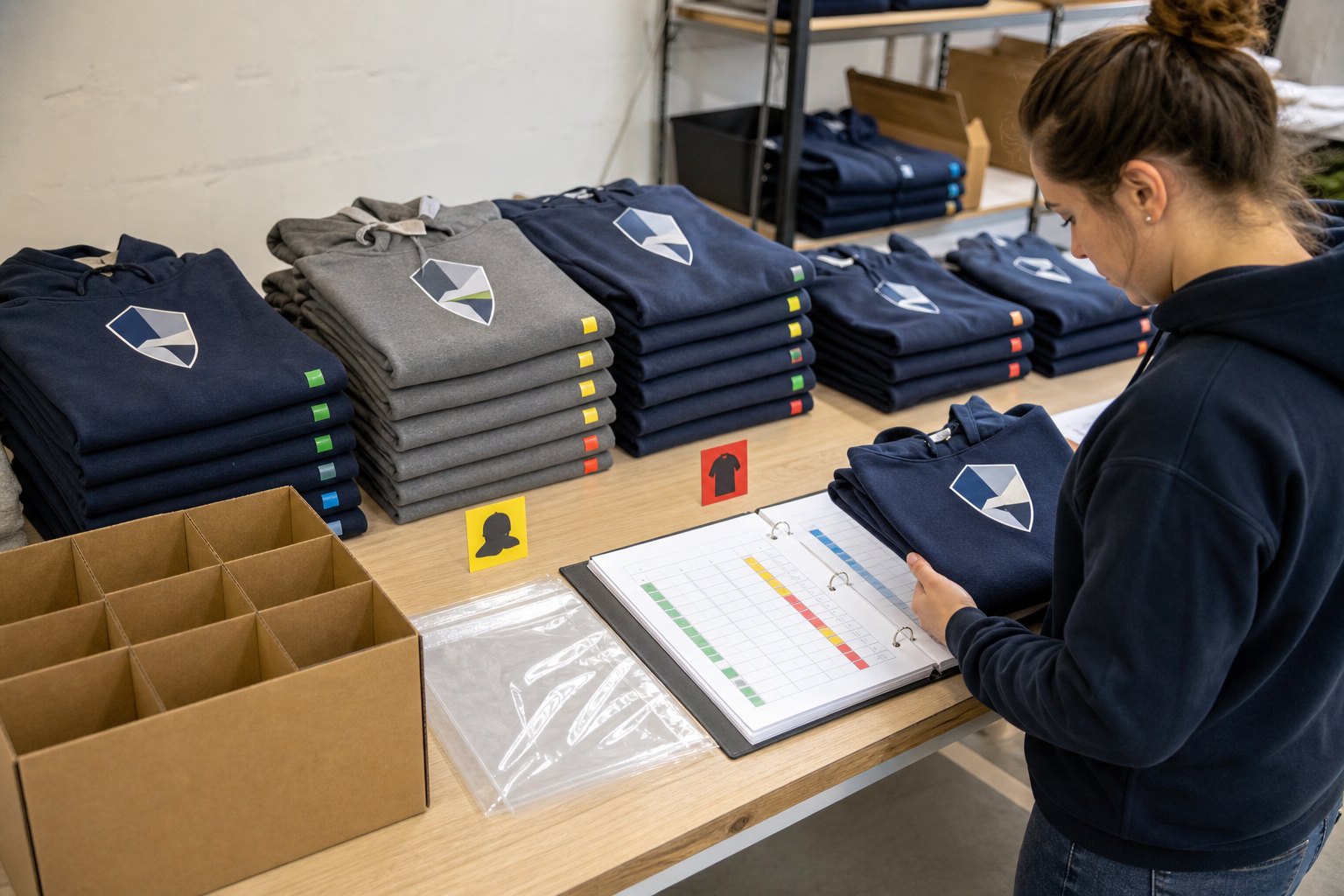
Bulk cartons organized only by size may create unnecessary sorting at the club or school. Decide whether the receiving team needs one bag per player, one carton per squad, coach kits separated from player kits, store-ready SKU packing or size-bulk packing. Labels should use approved identifiers without exposing personal data more widely than necessary.
If the program operates like an ongoing issue-and-replacement service, the corporate uniform program guide explains size capture, allocation and replacement controls. The sports team page remains focused on a defined roster and season-based order.
Plan Spares and Reorders Before the First Shipment
Agree which parts can be repeated later: blank model, fabric or color reference, shared artwork, decoration files, placements, size chart and packaging. Keep a controlled reorder pack rather than relying on photos of the first delivery. Ask whether the supply route supports small top-ups and what may change if the original blank or fabric lot is no longer available.
Separate named items from flexible spares. Unpersonalized hoodies in common sizes can solve a different problem from exact player replacements. The buyer should decide who may authorize a name, number or size change after the roster is locked.
Supplier Comparison Questions
- Can you handle adult and youth ranges under one controlled order?
- Which supply route do you recommend, and what decisions must be approved first?
- How do you prevent several roster versions from entering production?
- Which decoration methods suit the shared crest and the variable names or numbers?
- How is each finished hoodie reconciled to its roster row?
- Can you pack by player, squad, location or retail SKU?
- What records will be retained for reorders?
- What changes the quotation, MOQ and production schedule for this exact scope?
Use these project-specific questions together with the broader manufacturer evaluation framework, which covers capability evidence, sampling, quality systems and commercial comparison.
Sports Team Hoodie RFQ Checklist
- Team, school, club or event use case
- Hoodie route: approved blank, factory custom or sublimation
- Adult and youth size ranges plus quantity by size
- Fabric, color, fit and care requirements
- Vector files for shared logos and sponsor marks
- Name/number method, position and roster status
- Label, packaging and team-distribution method
- Sample approvals, quality checks and required delivery date
- Destination, shipment split and reorder expectation
Send Your RFQ to LUCKYSTAR
Email a prefilled team-hoodie brief
Related Apparel and Team Merchandise Guides
- Hoodie supplier: fabric, fit and finish approval
- Private label hoodie factory: brand development and QC
- Wholesale crewneck sweatshirt sourcing
- Bulk sports caps for coordinated team programs
- Bags, caps and hoodies as a merchandise collection
- Reliable custom T-shirt production
- Custom manufacturer capability and sourcing guide
Frequently Asked Questions
What should be finalized before ordering team hoodies?
Finalize the hoodie route, size references, quantity by size, shared artwork, individual personalization rules, approved roster version, packing method and required delivery date. The supplier should identify any physical samples needed before production.
Should names and numbers be approved in a mockup?
Approve the template digitally, but also verify the selected method, scale, placement and behavior on the actual hoodie. The final roster must then map each unique design to the correct size and wearer ID.
How can a team reduce size mistakes?
Use the supplier's finished-garment chart, review physical samples where possible, distinguish youth from adult ranges and record the chosen size once in the master roster.
Is embroidery always best for a team badge?
No. Embroidery can provide a premium tactile result, but the artwork, fleece surface, design size, backing and wearer comfort must work together. Screen print, transfer or patches may better suit other graphics or order structures.
How should personalized hoodies be packed?
Choose the pack-out around distribution: by player, squad, location, size or retail SKU. Reconcile each finished item to the locked roster before it enters the final pack.
Company and project contact
Ningbo Luckystar Commodities Co., Ltd. reviews team hoodie programs against the submitted garment, size, roster, artwork, inspection and pack-out requirements. Capability and commercial terms are confirmed for the specific order.
Learn more about LUCKYSTAR, review product capabilities, explore custom hoodies, or contact the project team.






