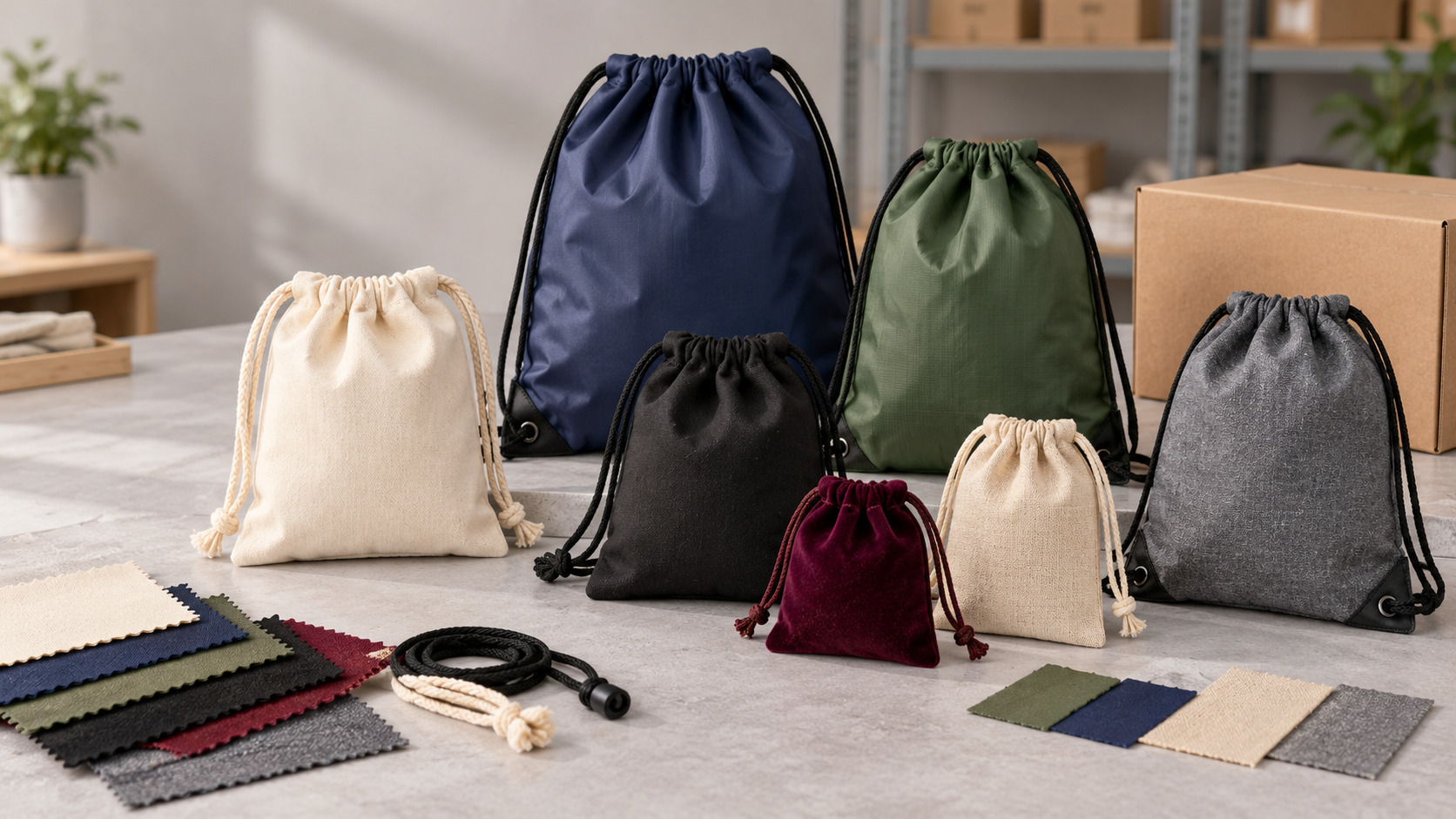
Buyer quick answer
Choose a makeup-bag material by the intended contents, usable structure, exposure, care, decoration, claims, pack-out and program cost. Names such as PU, canvas, polyester, nylon, velvet or PVC are material families, not complete specifications. Compare production-equivalent swatches and samples using the same construction and acceptance criteria.
Comparing makeup-bag materials? Send the use case and construction brief for a material-gap review.
Minimum material comparison brief
- Program role, representative contents, usable dimensions, filled profile and care.
- Outer composition, construction, weight/thickness, backing/coating/finish and color.
- Lining, reinforcement, pockets, binding, closure, hardware, thread and labels.
- Decoration method, artwork, performance/environmental claims and required evidence.
- Quantity by SKU, pack-out, destination, sample/test/inspection scope and required date.
Material-family comparison matrix
| Family | Data to request | Sample focus |
|---|---|---|
| Coated/PU-style | Face, backing, coating, thickness/weight and finish | Flex, surface, edge, odor, care and decoration |
| Cotton/canvas textile | Fiber, weave/construction, finished weight, finish and shrinkage | Hand, shape, color, care and print/embroidery |
| Polyester/nylon textile | Polymer, yarn/fabric construction, weight, coating and finish | Abrasion, seam, color, care and coating behavior |
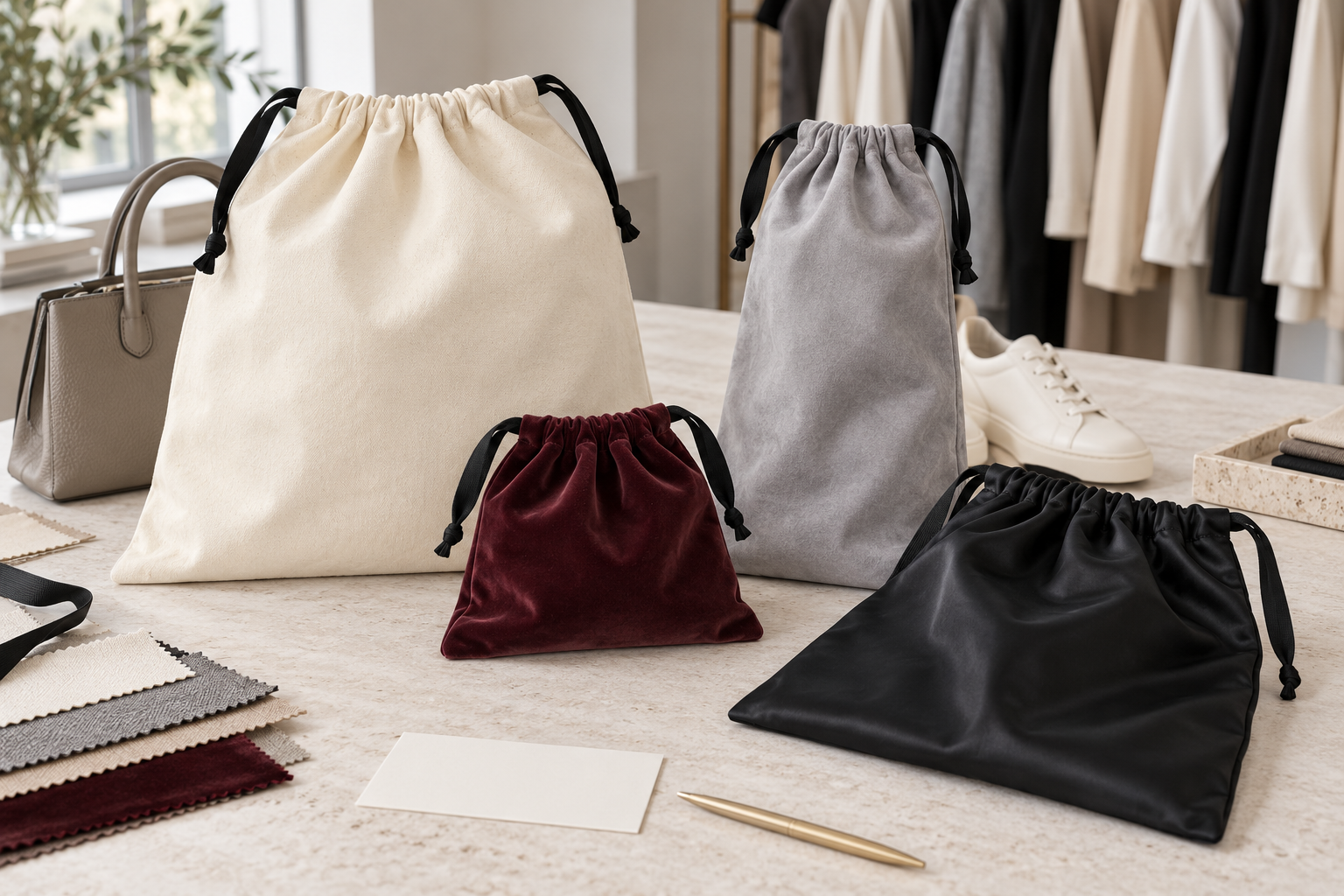
| Pile/specialty textile | Fiber, base, pile/nap, backing, finish and direction | Shade, crushing, shedding, seam and transit protection |
| Clear film/panel | Polymer/grade, thickness, tint, joining and trim | Flex, clarity, odor, joins, print and exposure |
Start with the complete construction
The outer is only one part of a makeup bag. Lining, interfacing or padding, pockets, binding, zipper tape and element, slider, thread, labels, decoration and packaging can change hand, shape, weight, care and claim scope.
Create a component-level BOM before comparing quotes. A sample made with a different lining, reinforcement or zipper cannot isolate the effect of the outer material.
Coated and PU-style materials
Record face and backing composition, coating or lamination, thickness/weight, surface texture, finish, color and care. “PU leather” alone does not state substrate, coating construction or expected service behavior.
Depending on use, review surface consistency, flexing, abrasion, color transfer, odor, edge treatment, hydrolysis risk and decoration compatibility. Define the method and acceptance criteria; do not infer “premium,” easy cleaning or durability from appearance.
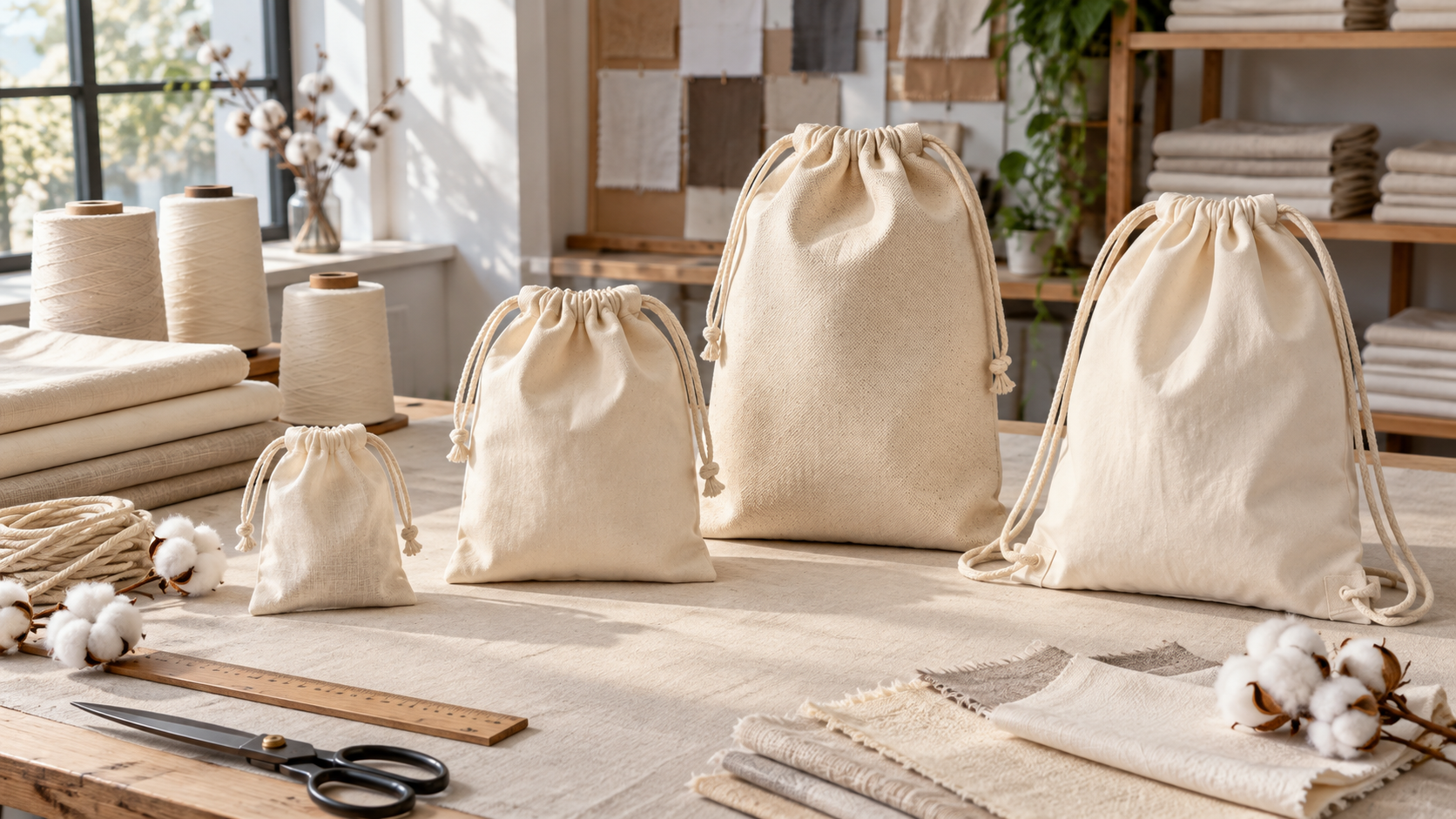
Cotton and canvas textiles
Specify fiber composition, weave or fabric construction, finished weight, yarn/color route, finish and dimensional-change requirement. Ounces or GSM should be tied to the finished fabric and measurement convention.
Review hand, stiffness, shape, color variation, seam behavior, shrinkage/care and the intended printing or embroidery. A natural appearance does not establish organic, recycled, biodegradable or lower-impact status.
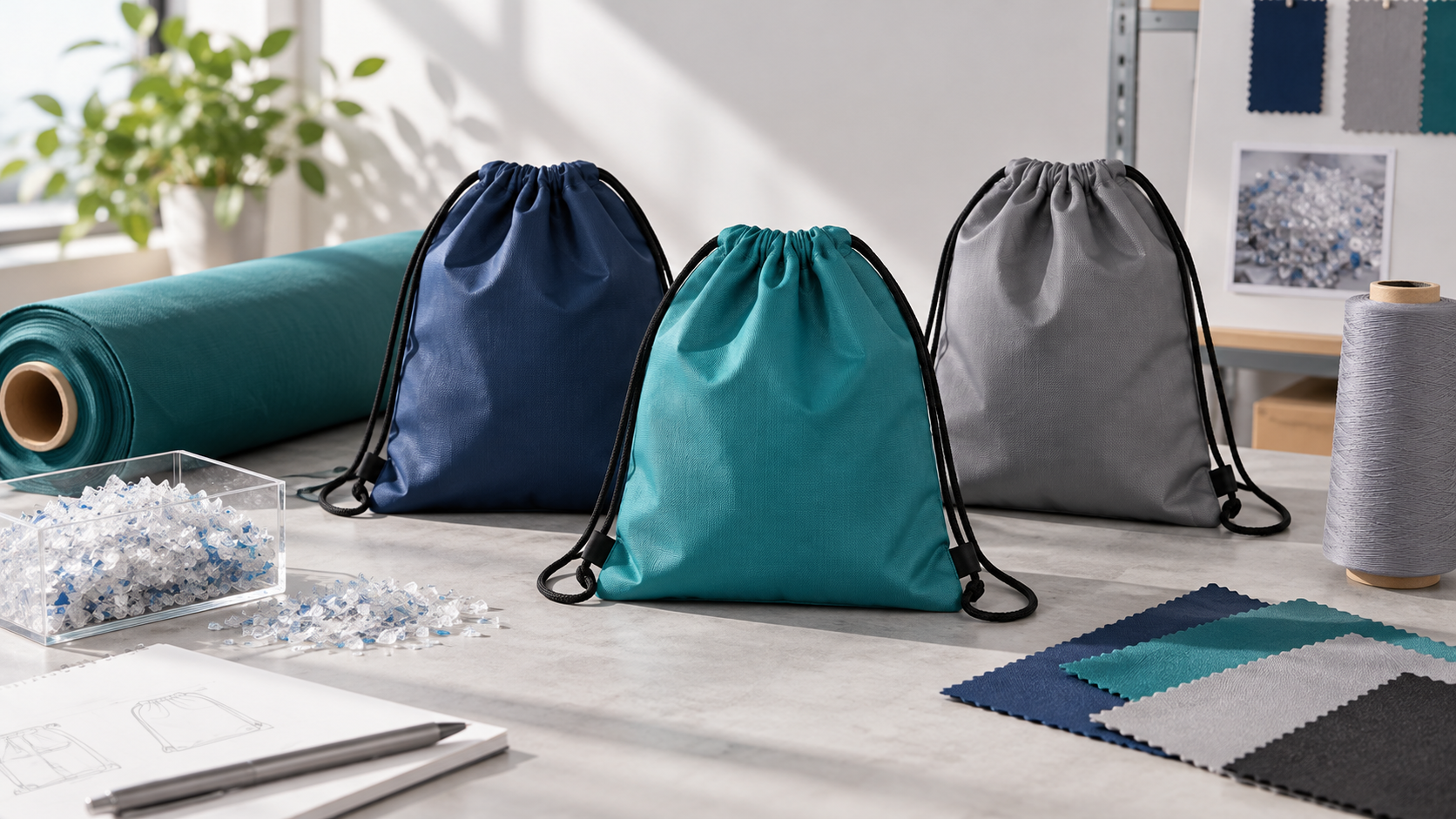
Polyester and nylon textiles
Specify polymer, yarn/fabric construction, weight, density, backing, coating/lamination, finish and color. Polyester and nylon are not interchangeable, and two fabrics with the same fiber name can perform differently.
Match testing to the program: abrasion, seam/tear behavior, dimensional stability, colorfastness, coating adhesion, water exposure or cleaning may be relevant. A coating or treated face does not by itself make the finished bag waterproof.
Velvet, corduroy and specialty textiles
Record fiber, base construction, pile or nap, backing, finish, direction and care. Directional surfaces can show shade differences when panels are cut or brushed in different orientations.
Review crushing, shedding, seam appearance, color transfer, decoration, dust pickup and protective packing as relevant. Approve a completely packed sample because transit can change the surface.
Clear films and panels
Specify the actual polymer or proposed grade, thickness, tint, finish, joining method, zipper/trim construction and care. PVC, TPU and EVA labels do not define a finished bag.
Assess clarity, flexibility, odor, printed decoration, seam or weld integrity and representative exposure. Transparency does not prove airline/venue compliance, and film properties do not automatically prove leakproof or waterproof finished performance.
Match material to decoration
Define method, artwork revision, size, position, color, orientation and tolerance. Smooth coatings, textured textiles, pile fabrics and films interact differently with printing, heat transfer, embroidery, debossing, labels or applied hardware.
Approve a strike-off on production-equivalent material, then inspect the decorated sample after relevant handling or care. Check whether reinforcement or backing changes hand and shape.
Control performance and environmental claims
Write the exact claim and component scope. Identify destination, standard or test method, current evidence and validity. A material certificate or report may cover a supplier, site, input, batch or process; it should not be generalized beyond its scope.
Separate composition, product performance and environmental impact. These require different evidence. The sustainable zipper cosmetic-bag guide provides a component-level claim workflow.
Use samples to compare like with like
Start with swatches or color references, then use construction prototypes with identical dimensions, lining, reinforcement, closure and decoration where the goal is to compare outer materials. Record any unavoidable differences.
Review loaded fit, opening, shape, seams, closure, surface, care and pack-out. Freeze the selected BOM, tolerances, artwork, claims and test criteria in the pre-production approval.
Normalize cost and availability
Compare unit quotes only when material grade/construction, width/yield, color route, lining, reinforcement, components, decoration, labels, pack-out, sample/test/inspection scope, quantity and delivery basis align.
Material minimums, color lots, setup, yield and availability can affect MOQ, price and schedule. Treat every commercial term as configuration-specific and subject to written confirmation.
Frequently asked questions
What is the best material for a makeup bag?
No universal material is best. Select it against contents, usable structure, exposure, care, decoration, claims, pack-out and budget.
Is canvas always more sustainable?
No. A fiber or fabric name does not establish impact. Define the claim and verify composition, processing, evidence and scope.
Does coated fabric make a bag waterproof?
No. Finished performance also depends on seams, zipper, joins, lining and decoration and must be assessed against defined exposure.
What should a material RFQ include?
Send program role, contents, usable dimensions, component-level material data, closure/hardware, decoration, labels/claims, care, pack-out, samples/tests/inspection, quantity, destination and date.
Related sourcing guides
Source and scope: Luckystar custom cosmetic-bag category and linked sourcing guides, checked September 23, 2026, support product and process context. This page does not provide a universal material ranking, product-level certification, guaranteed durability/waterproofing, MOQ, price, lead-time, capacity or supplier-performance data. One unverified legacy product image, three specific-product links and legacy personal contact details were removed; the existing standard GET QUOTE image was retained.
Request a makeup bag material review
Send the program role, contents, usable size, quantities, material routes and component data, lining/reinforcement/closure/hardware, decoration, labels/claims, care, pack-out, samples/tests/inspection, destination and required date.
Use the website contact form or email a prefilled material brief. Review the draft before sending.
Materials, construction, appearance, care/performance, compliance and environmental claims, artwork/publication rights, samples, tests, inspection, MOQ, price, capacity, availability, delivery and commercial results are subject to qualified review, specification, sample approval and written confirmation.