Buyer quick answer
A branded jewelry pouch should be approved with the actual item, insert or card and final unit pack. Define usable size, material layers, contact sensitivity, cord, closure, logo, SKU matching, inspection and carton counts before bulk.
Protection boundary: A fabric pouch does not automatically prevent scratches, tarnish, moisture, corrosion, dye transfer or loss. Required protection needs a defined packaging system and evidence.
Developing jewelry or small-item packaging? Send the actual item, insert, contact sensitivity, material, artwork and SKU matrix for a filled-pack review.
Choose the pouch's role in the packaging system
| Role | Check | Evidence |
|---|---|---|
| Direct-contact pouch | Material, lint, transfer, abrasion and finish sensitivity | Actual-item contact trial |
| Pouch around card/insert | Fit, edges, movement and presentation | Complete assembled sample |
| Pouch inside box | Box clearance and unboxing sequence | Final box pack-out |
| Retail handover pouch | SKU match, labels and counter workflow | Timed fulfillment trial |
Fit the real item and insert
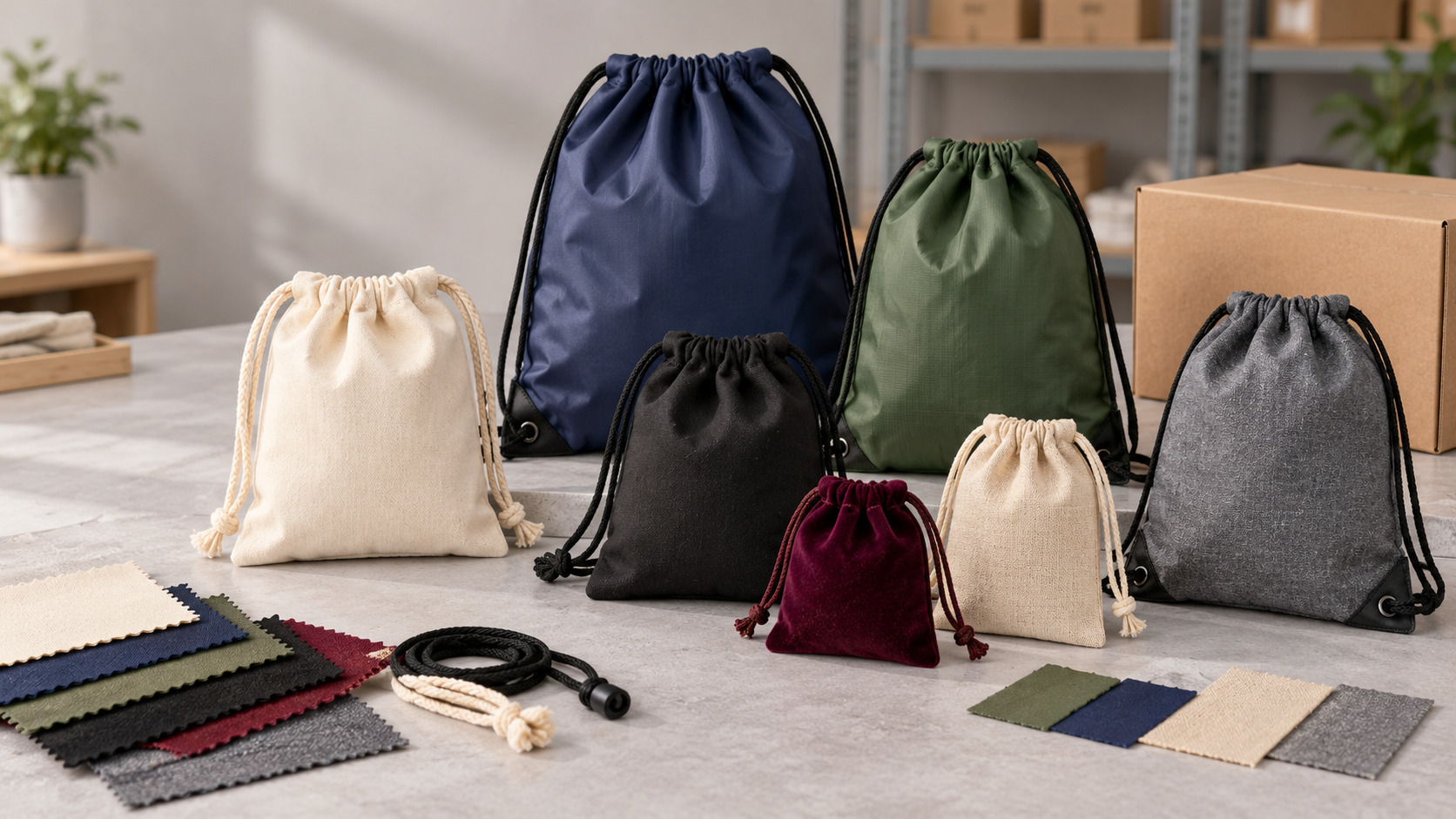
Record item dimensions, shape, protrusions, finish and sensitivity. Specify finished and usable pouch width, height below the cord channel and opening. Include cards, inserts, tissue, care text and certificates in the trial.
A flat measurement can hide pressure points or excess movement. Approve the closed, carried and opened presentation with the full contents.
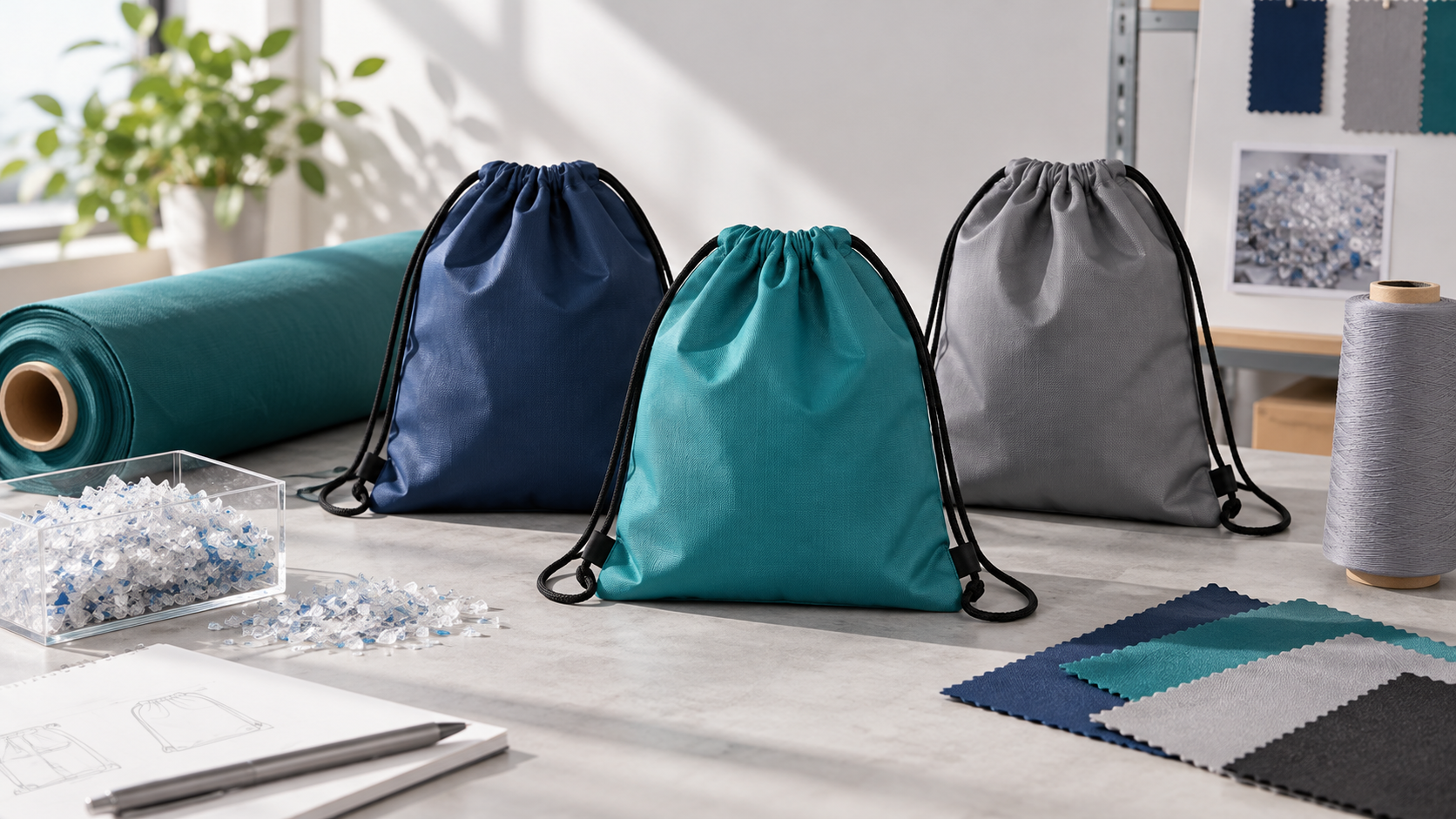
Define face, backing and lining
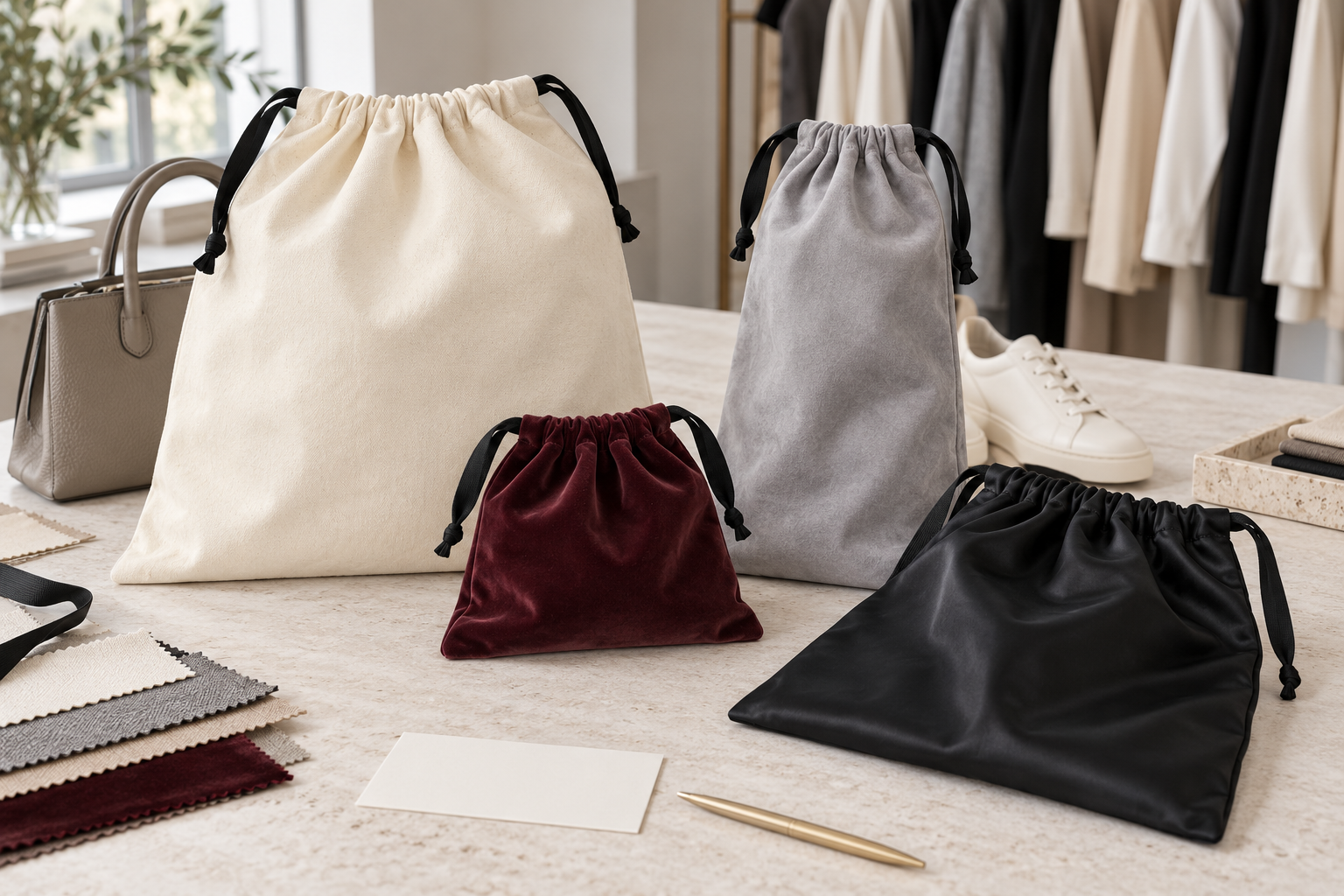
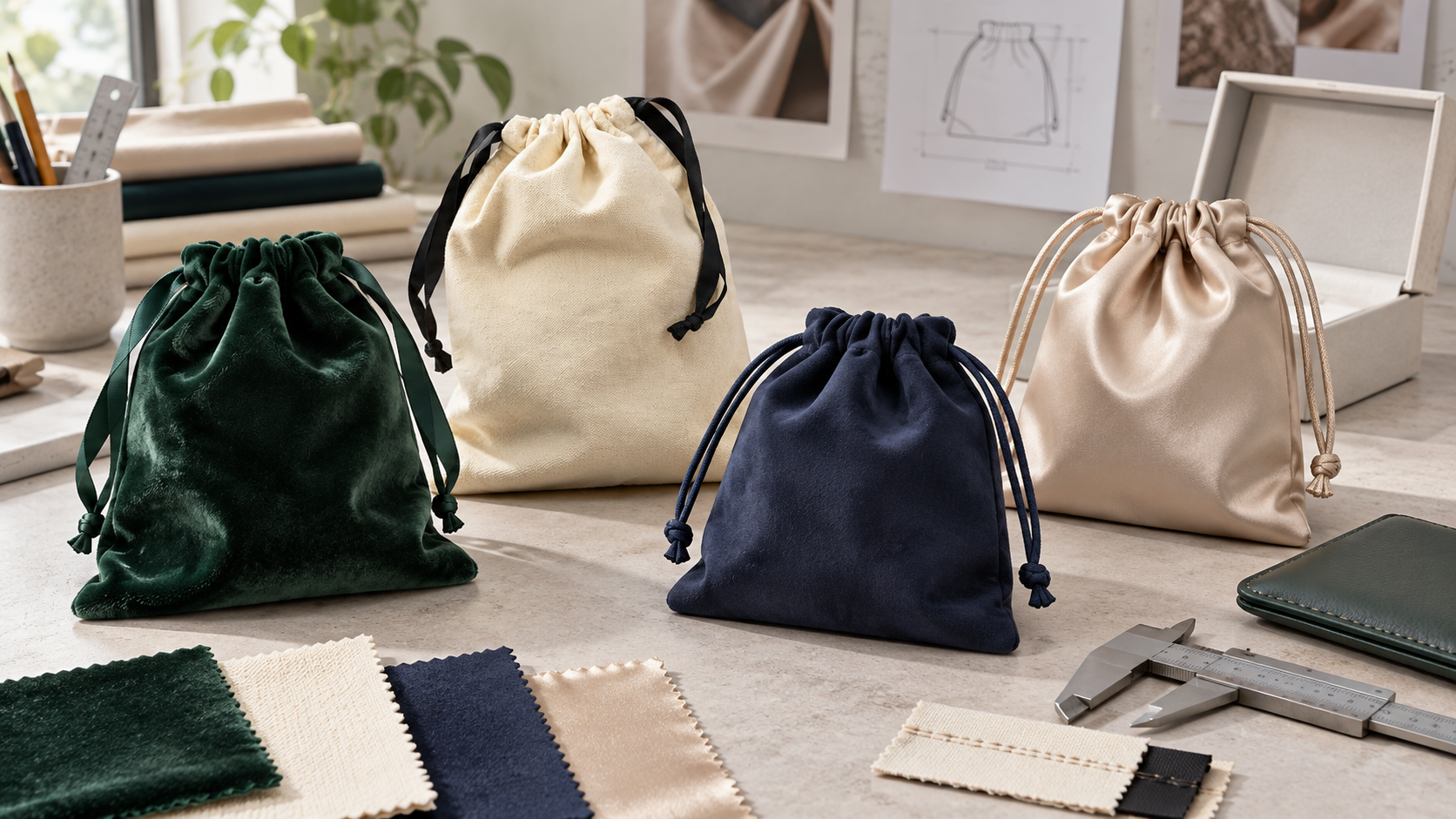
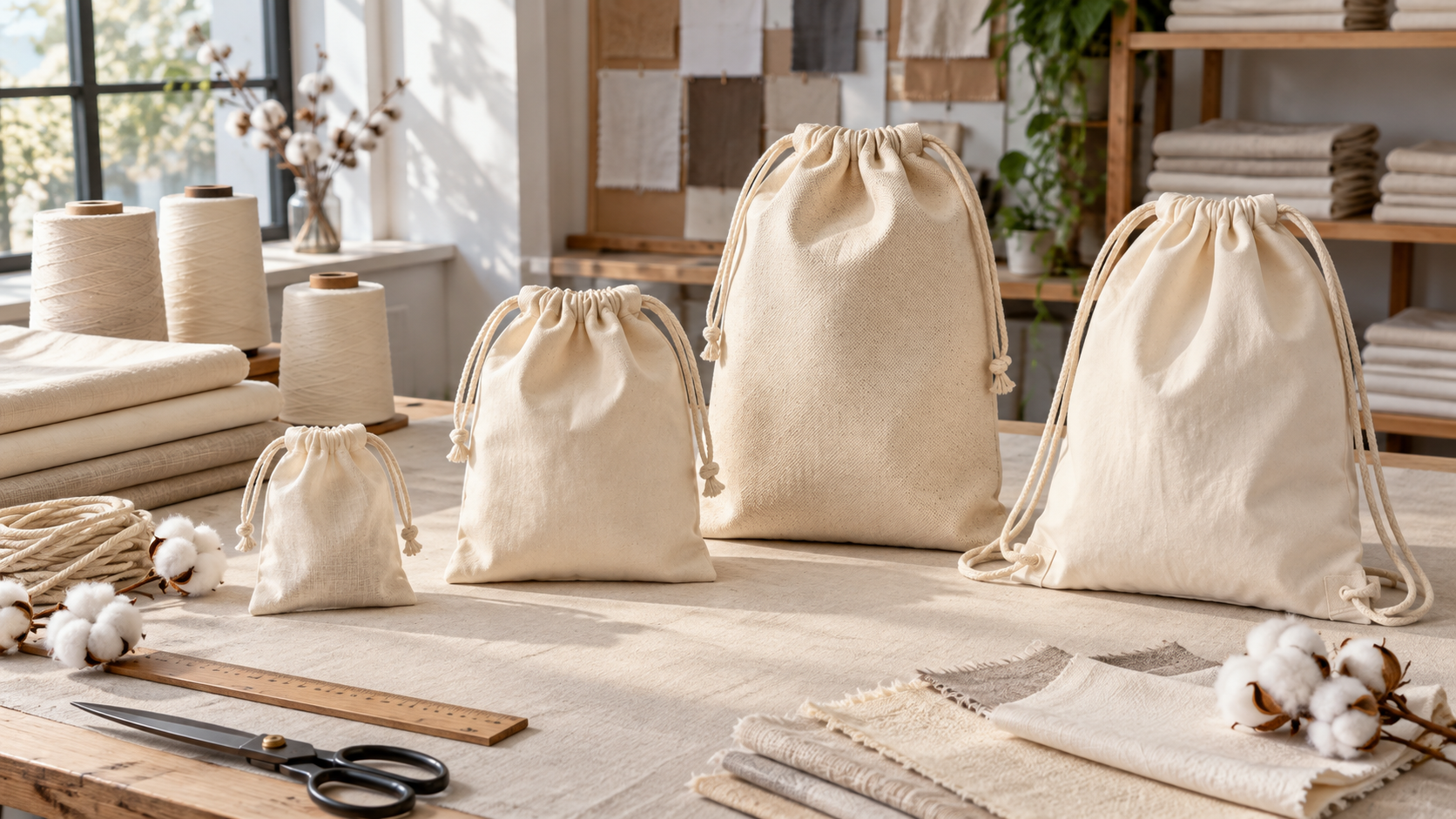
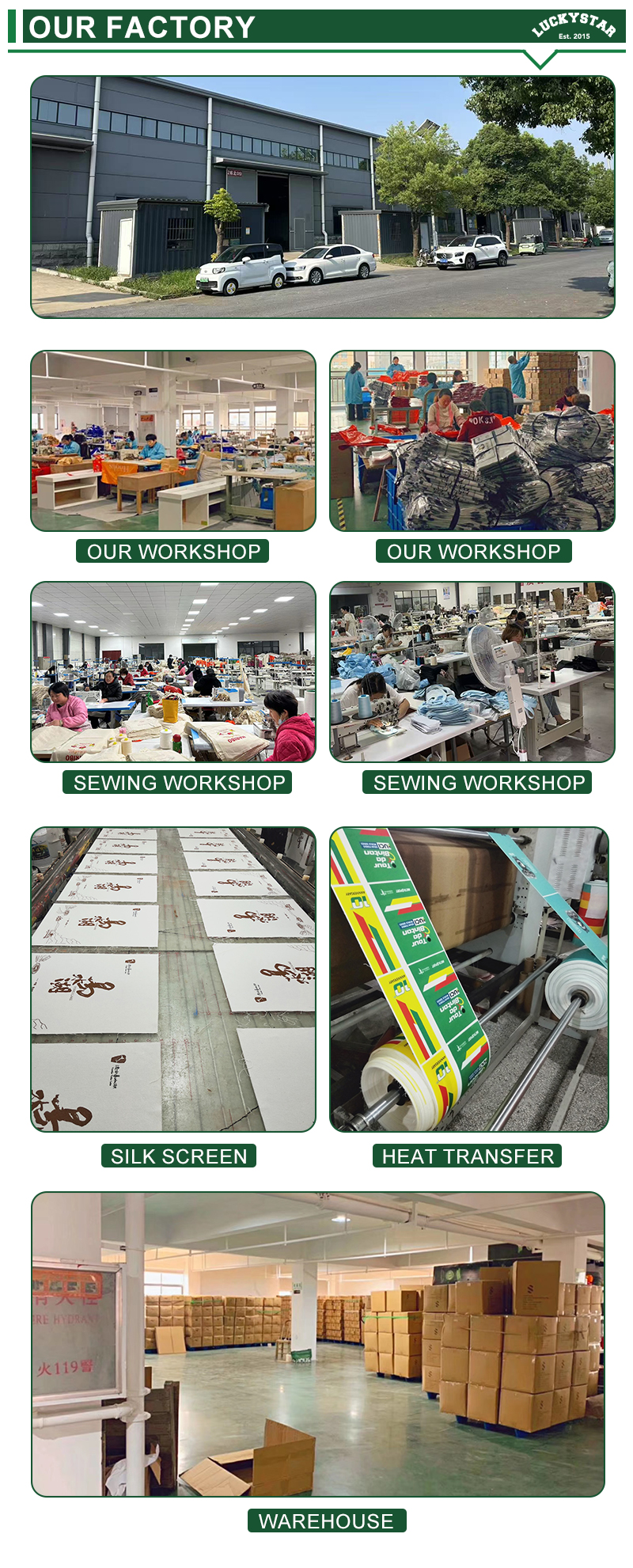
Require the exact fiber/polymer and layer declaration, construction, weight or thickness basis, color and finish. If velvet-look, satin-look, cotton or microfiber terms are used, confirm what they mean for the quoted material.
Use appropriate checks for lint, dye transfer, abrasion, odor and direct contact. Softness alone does not establish scratch protection or chemical compatibility.
Do not assume anti-tarnish or moisture protection
Tarnish and corrosion depend on the item, alloy/plating, environment, chemicals and packaging system. If protection is required, define the target, duration, storage conditions and validated materials or inserts. A standard textile pouch should not carry an anti-tarnish claim without evidence.
Likewise, a drawstring closure is not sealed moisture protection. Specify barrier layers or outer packaging when the program requires them.
Coordinate cord, closure and small parts
Define single or double draw, cord material, diameter, ends and closure direction. Check whether the cord or channel contacts delicate surfaces, catches chains or allows small items to escape. Use an insert, inner sleeve or smaller pouch where necessary.
Cycle the closure with the complete set and inspect seams, channel, cord ends and shape after use.

Approve logo and SKU identity together
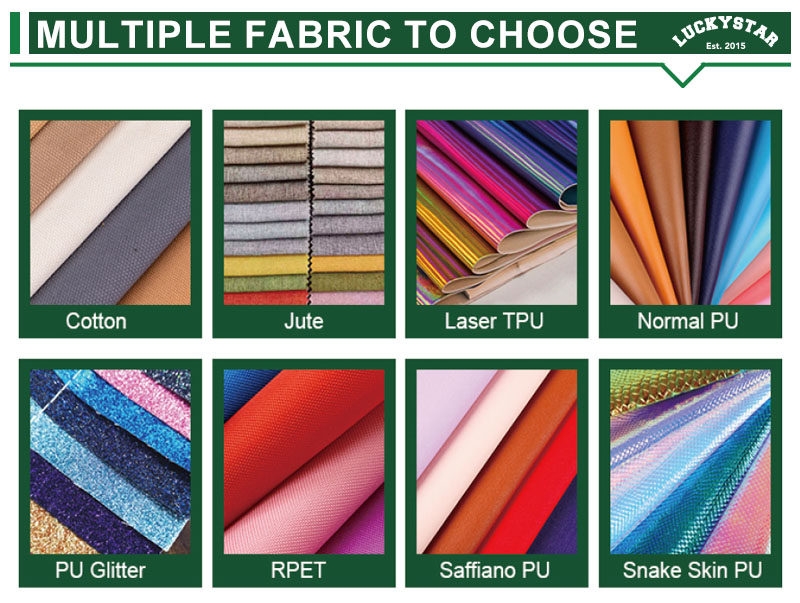
Provide vector artwork, actual dimensions, placement and color references. Select a decoration method compatible with the face and backing, then inspect legibility, adhesion/stitch condition, puckering and placement on the filled pouch.
Where sizes or colors map to different products, define SKU labels, barcodes or carton marks and run a pick/pack accuracy check. Brand presentation is not useful if the wrong pouch ships with the item.
Jewelry pouch release matrix
| Gate | Approve | Record |
|---|---|---|
| Fit | Item, insert, card and closure | Filled sample and usable dimensions |
| Contact | Layer declaration and sensitivity checks | Method, result and scope |
| Brand | Logo, color, cord and filled appearance | Decorated sample/artwork version |
| SKU | Item-pouch mapping, labels and counts | Matrix and pack-out record |
| Order | MOQ/setup, inspection and cartons | Quote, release and allocation |
Frequently asked questions
Does a soft pouch protect jewelry from scratches?
Not automatically. Test the exact material, seams, cleanliness, fit and contact with the actual item.
Is a fabric pouch anti-tarnish?
No unless the defined packaging system is supported for the stated item, conditions and duration.
Should each jewelry type use the same pouch?
Only if dimensions, contact sensitivity, inserts, closure and presentation align. Control separate SKUs where needed.
What should bulk inspection cover?
Material/version, dimensions, seams, cord, cleanliness, logo, SKU labels, unit counts, packing and carton allocation.
Related sourcing guides
Source and scope: Luckystar custom drawstring-bag category and linked sourcing guides, checked September 21, 2026. They are format and process references, not proof of scratch, tarnish, moisture, corrosion or direct-contact protection; nor fixed MOQ, price or delivery. Existing article images are illustrative and still require topic-relevance and publication-rights review.
Request a branded jewelry pouch pack-out review
Send the item and finish, contact sensitivity, insert/card/box, usable size, material layers, cord, artwork, SKU quantities, inspection, unit/carton packing and date.
Use the website contact form or email a prefilled jewelry-pouch RFQ. Review the draft before sending.
Material, contact suitability, protection, MOQ, price, availability, capacity and delivery are subject to specification and written confirmation.