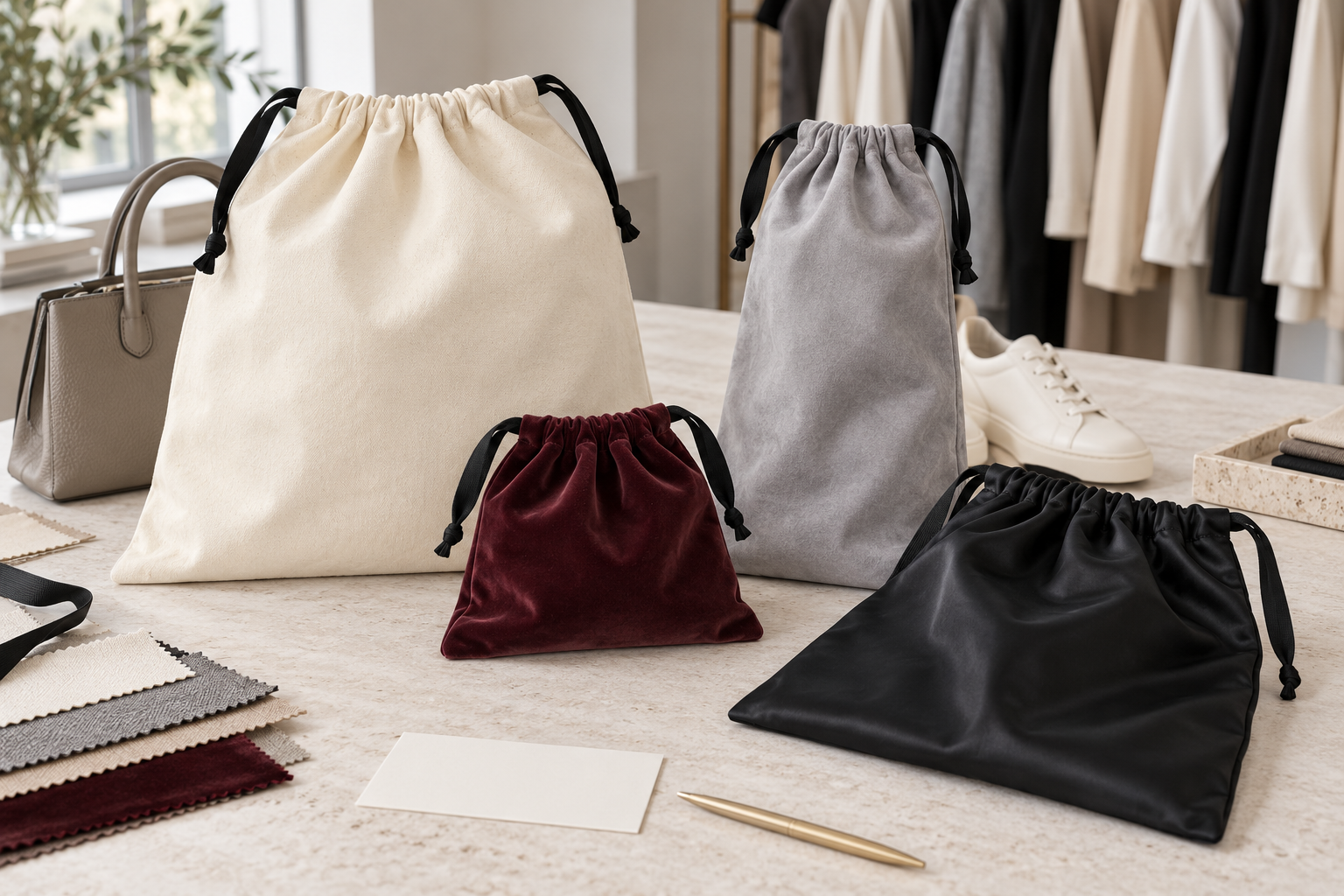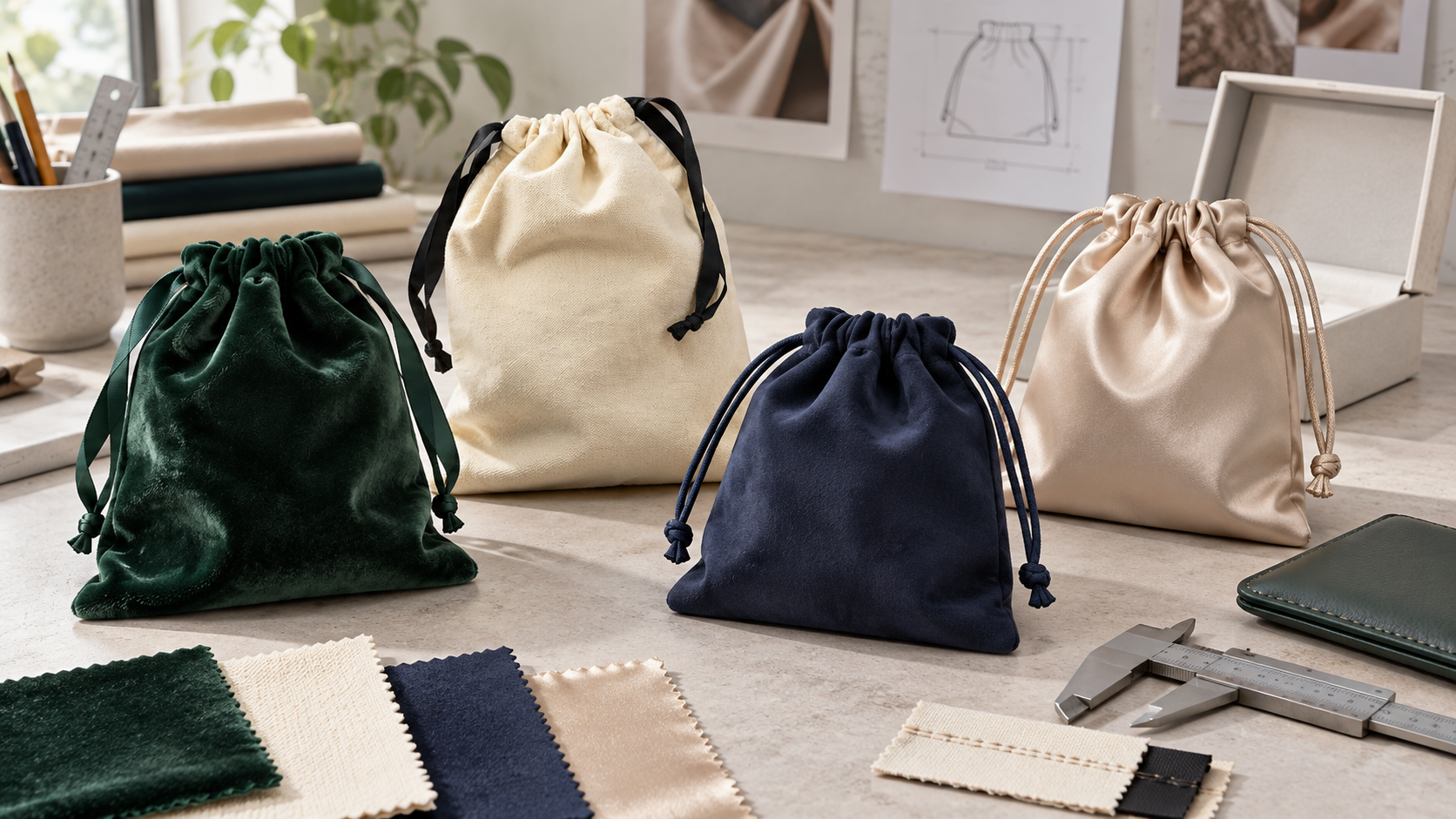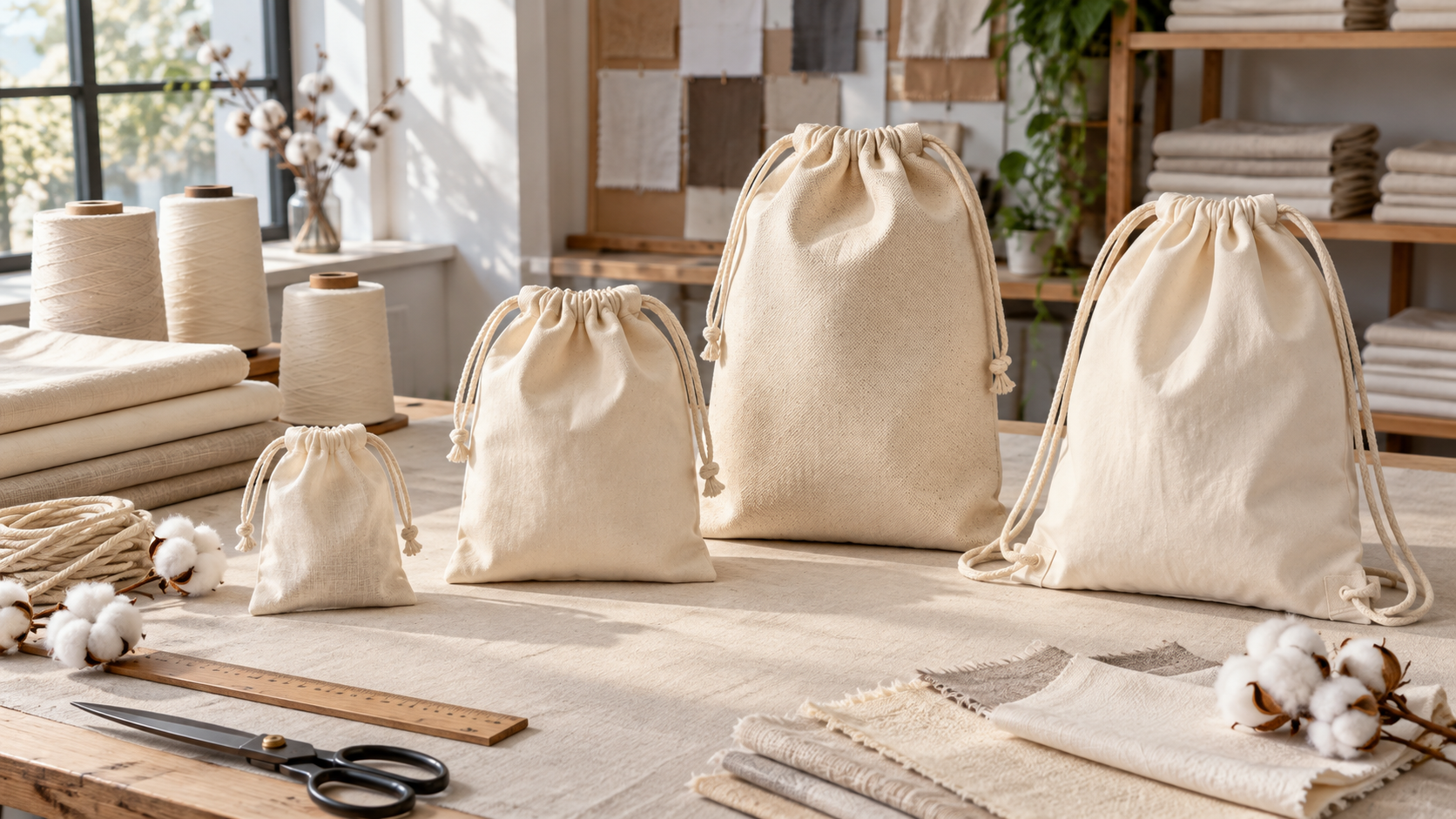
Buyer quick answer
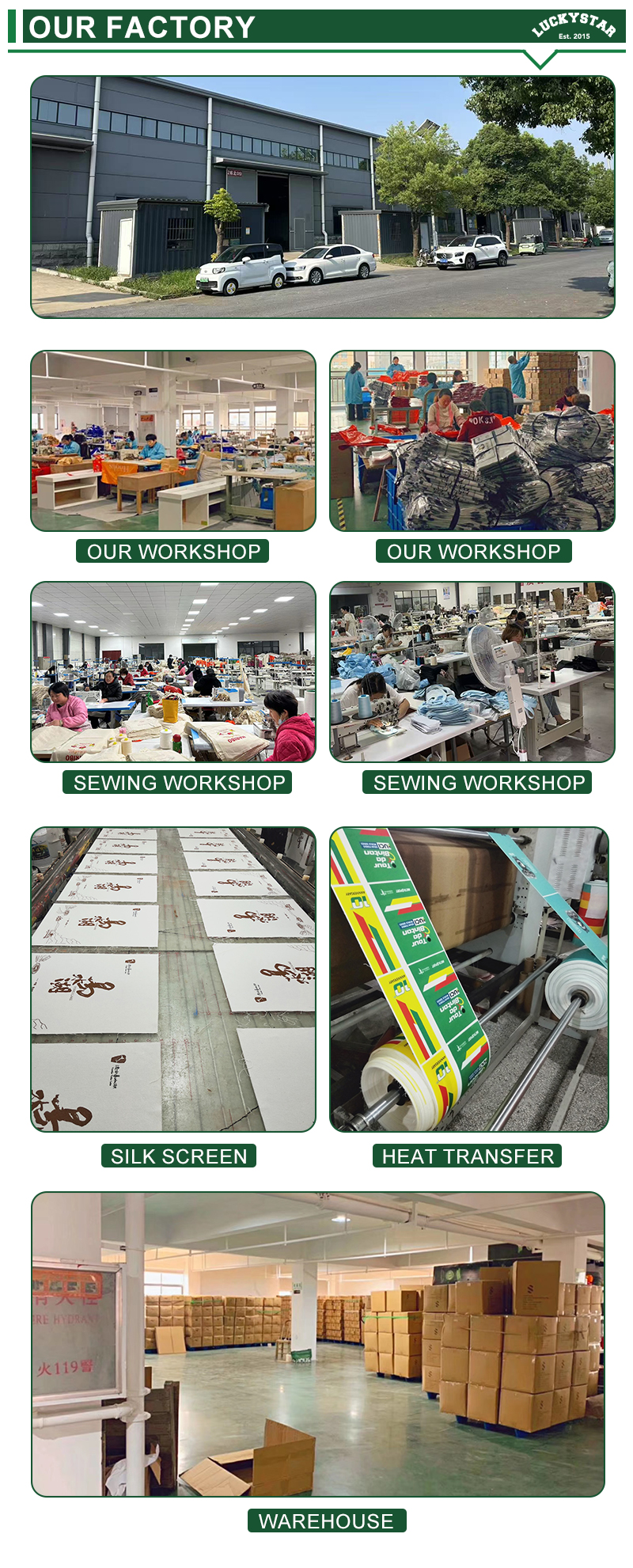
A qualified blank drawstring-pouch vendor should respond to a controlled specification, disclose seller and production roles, supply a representative sample, document material and construction, prove downstream-decoration compatibility, define bulk inspection and manage substitutions and corrective action.
Vendor boundary: “OEM,” “ODM,” “manufacturer” or “factory” wording does not establish ownership, design rights, origin or capability for the proposed order. Verify roles, evidence and responsibilities.
Qualifying blank-pouch vendors? Send one pouch specification, downstream logo process, quantities and inspection needs for a comparable vendor response.
Request a role-and-evidence file
- Legal seller, maker, material supplier, decorator, inspector and packer.
- Production country, ship-from point and responsible contact by stage.
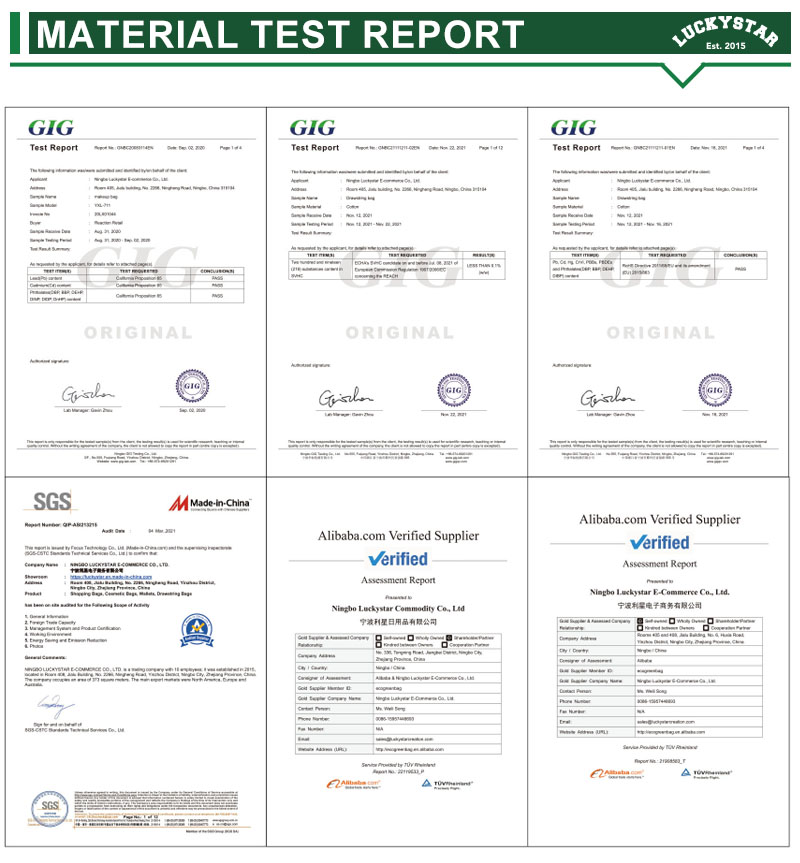
- Material declaration/test scope and approved reference sample.
- Inspection records, lot/SKU traceability and document retention.
- Substitution, nonconformance and corrective-action process.
Issue a controlled pouch specification
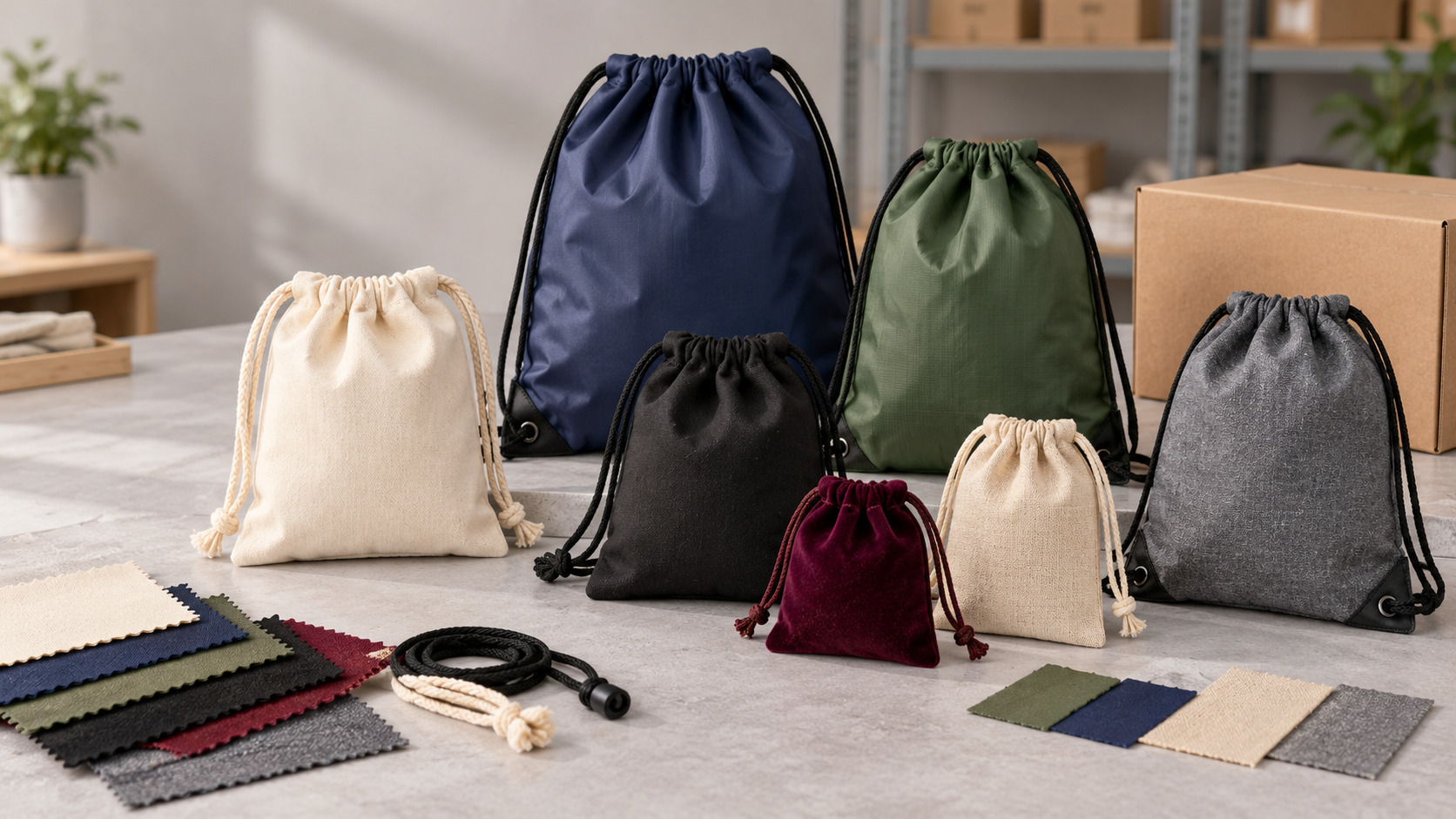
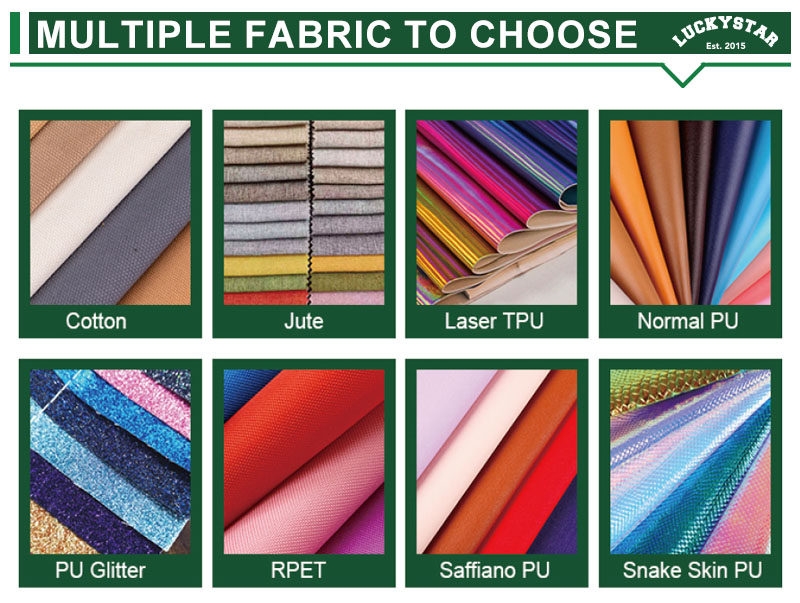
Define use and packed item, finished and usable dimensions, opening, material composition/construction/weight, color/finish, cord and channel, seams and reinforcement, allowed marks, tolerances, unit packing and cartons. Give the RFQ a revision and date.
State whether “blank” means no front decoration, no supplier brand or no visible marks. List permitted origin, care, size or traceability labels.
Approve a representative sample
The sample should use proposed production material, cord, seams, labels and packing. Measure it against the specification and run a filled closure/handling trial. List every variance if a stock or development sample differs.
Keep physical or measured references for material, color, size and construction. A photo cannot control hand feel, fabric weight, opening, cord action or seam quality.
Prove downstream-decoration compatibility
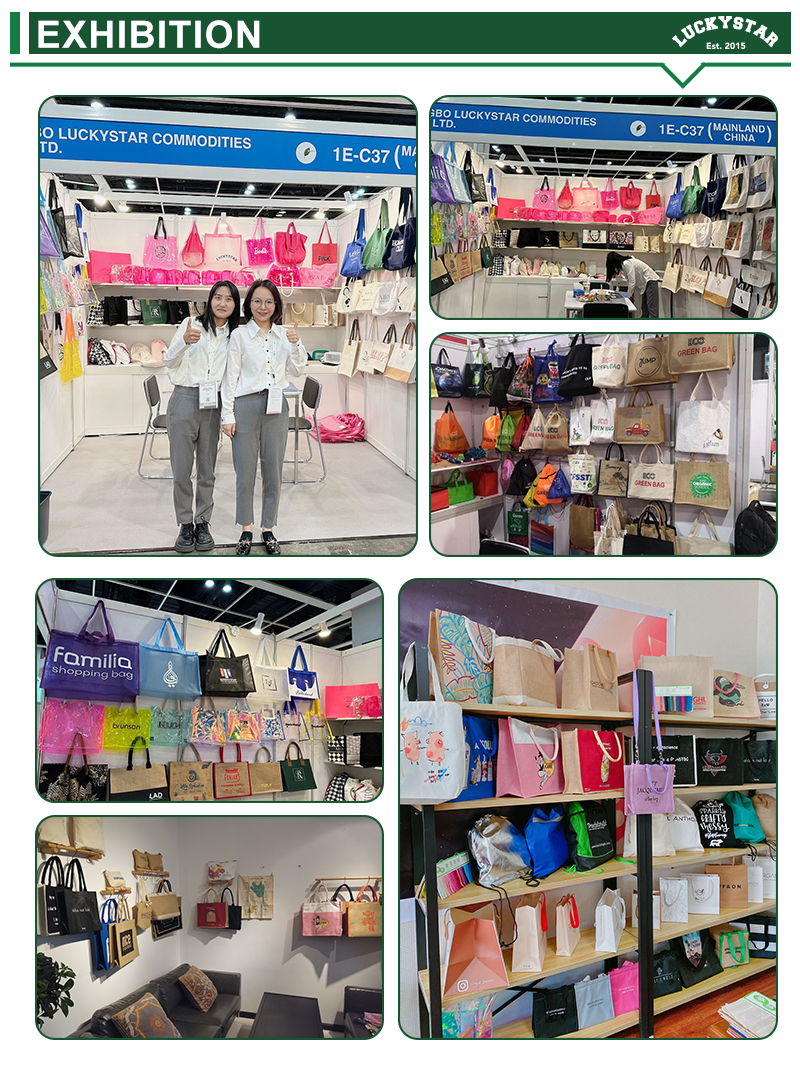
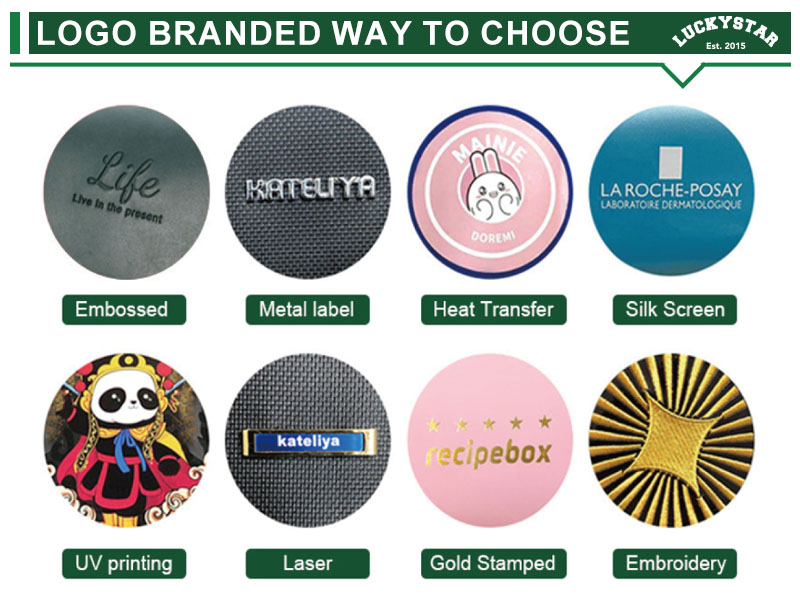
Give the vendor or local decorator the actual material lot and process conditions. Test print, transfer, embroidery, stamp, patch or label for placement, color, adhesion or stitch quality, heat effects, show-through and distortion.
Link the approved blank version and decoration settings. If material, finish or backing changes, repeat the relevant conversion check before release.
Audit the bulk control plan
Define incoming material, first-output, in-line and final checks for dimensions, construction, cord function, blank markings, cleanliness, SKU quantity, unit packing and cartons. Agree sampling or inspection level, defects and tolerances before production.
Ask who can stop or release the lot, how nonconforming goods are segregated and when re-inspection occurs. Keep records tied to the product version and batch.
Test change control and reorders
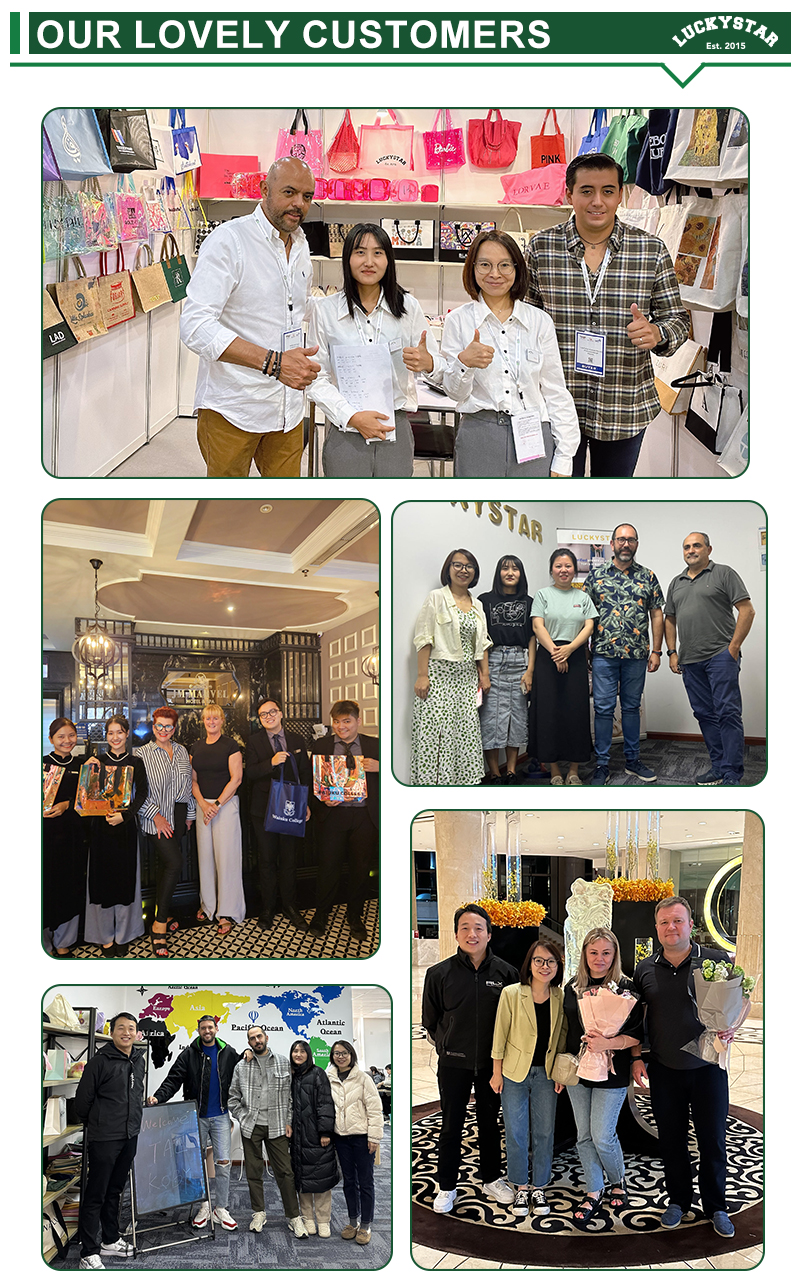
Require written approval before a material, shade, cord, thread, seam, label, maker, decoration or pack change. For stock, capture SKU/lot and replenishment basis. For new production, capture input minimums, sample stages and first-output approval.
Compare pilot and reorder versions using the same specification. Vendor reliability is demonstrated by repeatability and transparent corrections, not by an unsupported claim of stable quality.
Blank pouch vendor qualification scorecard
| Gate | Required response | Evidence |
|---|---|---|
| Roles | Seller through packing responsibilities | Written role map |
| Product | Controlled blank specification | Measured representative sample |
| Conversion | Later logo-process compatibility | Production-lot trial |
| Bulk | Inspection and release responsibility | Lot-linked report |
| Change | Substitution and corrective action | Approval/closure record |
Frequently asked questions
Does OEM or ODM prove a vendor owns a factory?
No. Verify the legal seller, maker and every relevant production role.
Is a stock sample enough?
Only when all differences from the proposed bulk product are recorded and resolved through a representative approval.
Can blanks be decorated after delivery?
Yes when the intended process is proven on the approved production material and lot.
What matters most on reorders?
Product-version control, lot comparison, approved substitutions, inspection and traceable corrective action.
Related sourcing guides
Source and scope: Luckystar custom drawstring-bag category and linked sourcing guides, checked September 21, 2026. They are format and process references, not proof of factory ownership, origin, design rights, material composition, decoration compatibility, stock, fixed MOQ, price, capacity or delivery. Existing article images are illustrative and still require topic-relevance and publication-rights review.
Request a blank drawstring-pouch vendor review
Send the use/item, controlled pouch and blank definition, later-decoration method, SKU quantities, stock/new-run preference, inspection, packing, reorder and destination needs.
Use the website contact form or email a prefilled vendor-qualification RFQ. Review the draft before sending.
Roles, evidence, material, stock, MOQ, price, availability, capacity and delivery are subject to specification and written confirmation.