Last reviewed: September 28, 2026
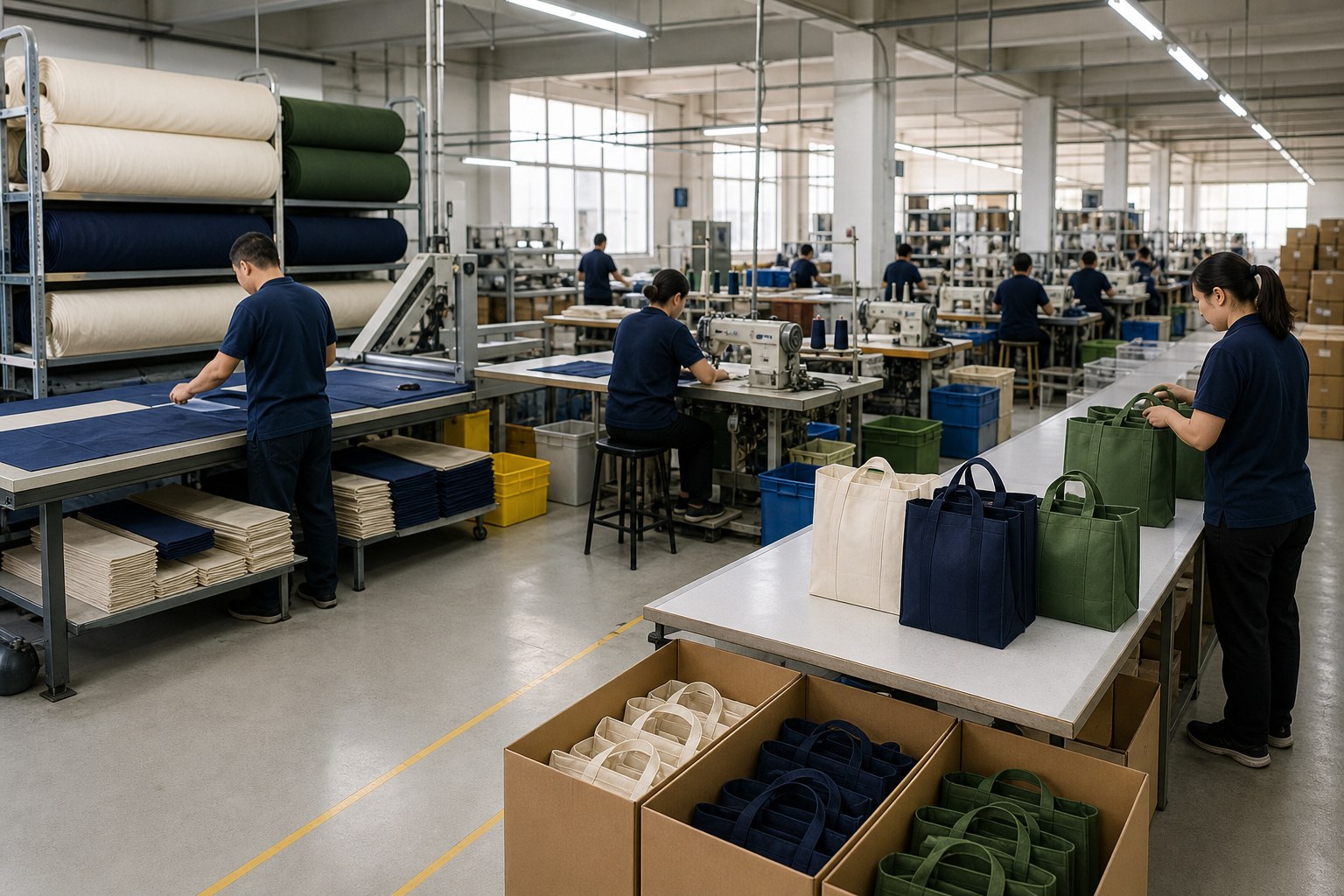
Buyer Quick Answer: A custom shopping bag factory is production-ready when it can show how your approved specification moves through real material control, cutting, decoration, sewing, inline inspection, finishing and packing. Buyers should verify the factory's actual make-or-buy boundary, current capacity for the order window, first-off approval, critical quality points, batch traceability, changeover controls and response to a failed check. A showroom, certificate or monthly capacity claim is not enough by itself.
A factory audit is most useful after basic supplier screening and before bulk material or production commitment. At that point, the question is no longer only "Can this company make shopping bags?" The question is "Can this production system reproduce our approved shopping bag, at the required quantity and time, while making problems visible early?"
This page is intentionally narrower than a general selection guide. Use how to choose a custom shopping bag manufacturer for shortlisting and commercial fit. Use the custom bag manufacturer guide for the complete OEM and ODM framework. Here, the focus is production-readiness evidence inside the factory.
What Production Readiness Means in a Shopping Bag Factory
Production readiness means the required inputs, instructions, people, equipment, controls and release decisions are aligned for a specific order. It is product-specific and time-specific. A factory may be capable of making a simple flat cotton bag but not ready for a structured shopping bag with laminated panels, multiple decorations, zipper closure and destination-specific packing.
Readiness should be demonstrated through evidence that connects the approved product with the proposed line. Useful evidence includes the current specification, bill of materials, material approval, process map, machine and skill requirements, line plan, first-off review, quality records, packing trial and escalation path.
Separate Supplier Selection From Factory Readiness
Supplier selection asks whether the company is a suitable long-term partner. It includes ownership, communication, commercial terms, experience, compliance scope and overall quality management. Factory readiness asks whether a particular site and production route are prepared for a particular shopping bag order now.
Keeping those decisions separate prevents two mistakes. A polished supplier profile does not prove that the assigned line is ready. Conversely, one strong pilot run does not answer every long-term partnership question. The custom bag manufacturer checklist covers the broader selection decision.
Use an Evidence Ladder, Not a Yes-or-No Checklist
A "yes" answer has little value without context. Ask the factory to explain the method, show a current example, identify the responsible person and connect the control to your product. Evidence should become more specific as the order moves closer to production.
| Review method | Useful evidence | What it can confirm | What it cannot confirm alone |
|---|---|---|---|
| Document review | Process map, quality plan, equipment list, sample records and schedule | The proposed control system and open questions | Whether routine behavior matches the documents |
| Live remote walkthrough | Real-time view of materials, work areas, current lines, QC and packing | Site layout and selected operating practices | Every shift, subcontractor or hidden record |
| On-site assessment | Floor observation, interviews, records and order-specific trace | How controls work together under normal conditions | Future performance without order-specific validation |
| First-off or pilot verification | Actual inputs, assigned machines, operators, measurements and defect response | Whether the proposed process reproduces the approval | Full-run consistency unless controls continue |
Map the Actual Make-or-Buy Boundary
Many shopping bag programs combine in-house work with external material, printing, lamination, embroidery, washing, testing or specialist finishing. Outsourcing is not automatically a problem. Hidden or uncontrolled outsourcing is. Ask which legal site performs each process, who approves the external source and how the factory protects the current specification.
Trace one representative SKU from material purchase through packed carton. Record every handoff, transport step, waiting point and inspection. A simple process map often exposes lead-time assumptions and ownership gaps that a capability presentation does not show.
Confirm the Assigned Site and Production Route
A supplier may work with several factories or lines. The evidence must match the site proposed for your order. Confirm the address, major processes, responsible production team and any planned transfer between locations. If the route changes after approval, treat that as a controlled change.
Do not rely on a general factory video recorded for another product. Ask to see the processes relevant to the shopping bag construction you are buying. The route for a sewn canvas tote is different from a heat-sealed non-woven bag or laminated retail shopper.
Verify Incoming Material Control
Production cannot reproduce the approved sample if the material identity is unclear. Review how the factory receives fabric, webbing, thread, trims, labels and packaging. Useful controls may include purchase references, lot identity, color approval, incoming checks, segregation and status marking.
Select one material and follow it from receiving to the proposed production area. Ask what happens when a roll has shade variation, incorrect width, visible damage or missing documentation. The answer should include containment and disposition, not only a promise to replace it.
Check Fabric Relaxation, Spreading and Cutting
Cutting sets the geometry for later sewing. Review pattern revision control, spreading method, grain or direction requirements, layer count where relevant, cut-piece identification and bundle separation. Confirm how the factory prevents two sizes, colors or artwork versions from mixing.
For materials that change after handling or processing, ask how the factory validates finished dimensions. A final measurement problem may begin at fabric preparation, not at the sewing station. The custom tote bag fabric weight guide helps buyers define the material choice; the factory audit verifies how that choice is controlled.
Review Decoration as Its Own Production Process
Printing and embroidery have their own inputs, setup, approval and quality risks. Confirm artwork revision, color reference, placement template, test method, first-piece approval and handling after decoration. If decoration is subcontracted, include that supplier in the process map.
Ask how the factory keeps decorated panels with the correct cut bundles and how it contains a setup error. For process selection, use the custom tote bag printing methods guide. This page checks whether the chosen method is ready for stable production.
Observe Sewing Method and Workmanship Standards
Shopping bags often concentrate risk at handles, top edges, side seams, gusset corners, pockets and closures. Review the actual operation sequence, machine type, guides or folders, reinforcement method, thread control and visual standard available to operators.
Ask the line leader to explain the points that must not drift. Compare the answer with the approved specification and quality plan. If the critical features are known only to the sample room, the bulk line may interpret the product differently.
Evaluate Line Balance and Changeover Risk
A line can have enough machines but still miss output because one difficult operation becomes a bottleneck. Ask how the factory estimated cycle balance for the proposed bag, which operations need special skill and what backup exists if the bottleneck falls behind.
Changeovers also create risk. New fabric, thread, artwork, guides or operator instructions may be required between SKUs. Review how the factory clears prior materials, verifies the new setup and releases the first piece after a change.
Test Capacity Claims Against the Order Window
A monthly capacity number is not an order plan. Ask for the proposed line, available working window, competing commitments, assumed efficiency, shift pattern, material readiness and bottleneck operation. Capacity should be expressed for the actual shopping bag construction, not for the easiest product in the factory.
Request a milestone plan that connects buyer approvals with material, line setup, production, inspection, packing and shipment. The article on how long custom bag production takes explains schedule structure. A factory readiness review tests the assumptions behind that structure.
Review Equipment Condition and Continuity
Buyers do not need to become maintenance engineers, but they should understand whether critical operations depend on one machine with no practical alternative. Ask how preventive maintenance, breakdown response and backup routing work for cutting, decoration, sewing, finishing and packing equipment.
Check whether measurement and test tools are identified and suitable for the required checks. If calibration or verification is part of the agreed quality system, request evidence appropriate to the tool and use.
Require a First-Off and Pilot Quality Gate
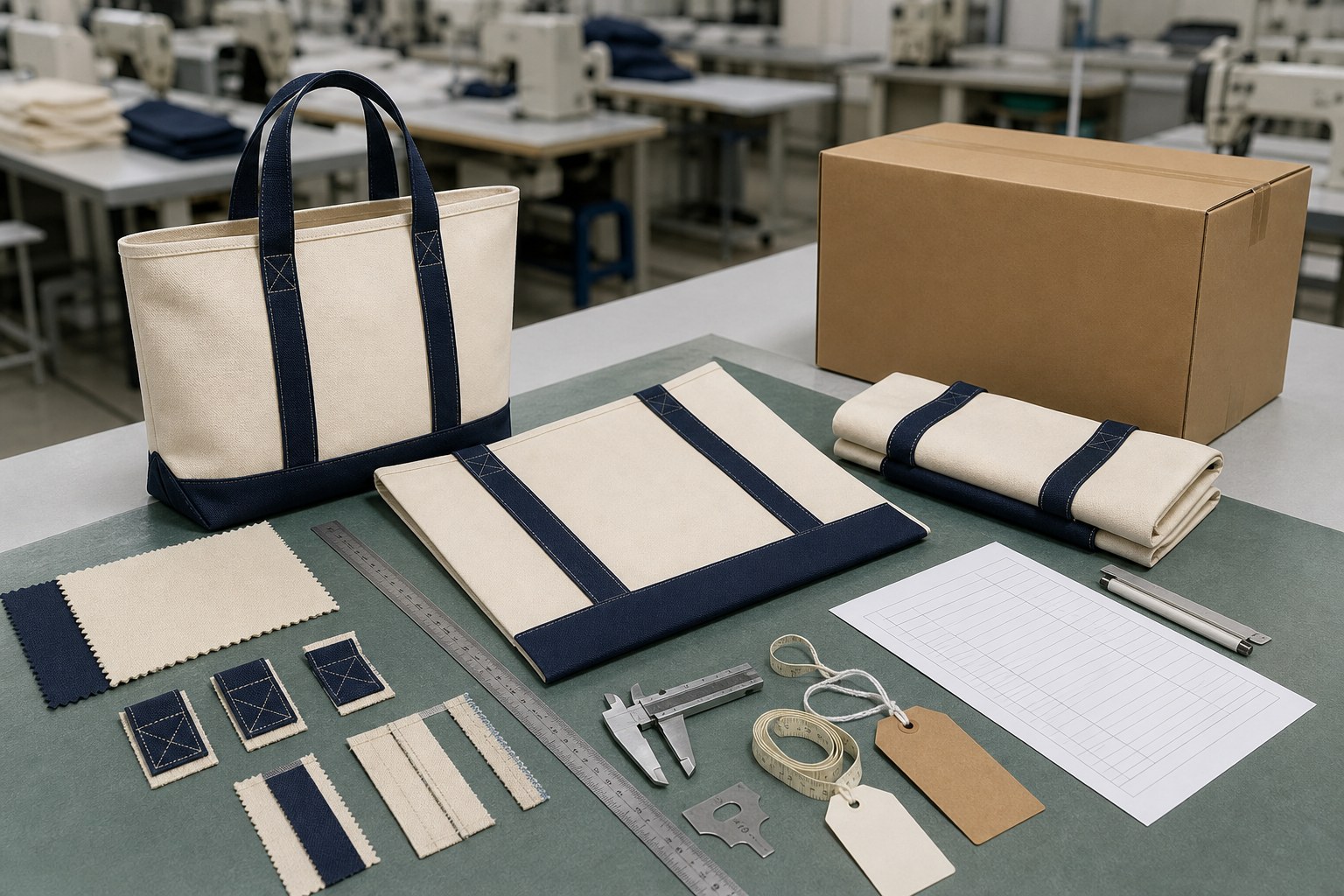
The pre-production sample proves the approved product reference. The first-off piece proves that the assigned production setup can reproduce it. A pilot or controlled early output gives additional evidence that the line can hold key requirements across more than one piece.
Define who compares the first-off piece with the golden sample, which measurements and appearance points are checked, and who can release the line. If the result fails, the factory should stop, contain affected output, correct the setup and repeat the approval. The custom bag sample development process covers sample stages in depth.
Define Critical-to-Quality Points at the Station
Critical-to-quality points are the product and process characteristics that most strongly affect function, safety where relevant, brand presentation and saleability. They should be visible at the operation that creates or verifies them, not discovered only during final inspection.
For a shopping bag, these may include material and shade, finished dimensions, handle attachment, seam construction, decoration accuracy, closure function, label placement and pack-out. The exact list depends on the approved product and market requirements.
Create an Order-Specific Readiness Matrix
A concise readiness matrix keeps evidence, ownership and release decisions connected. It should be updated when the site, material, process, artwork, equipment or schedule changes.
| Factory area | Order-specific evidence | Release question | Owner |
|---|---|---|---|
| Materials | Approved references, available lots and incoming status | Are all inputs identified and acceptable? | Purchasing and incoming quality |
| Cutting and decoration | Current pattern, artwork, setup and first-piece results | Can panels enter sewing without mixed revisions? | Department leaders |
| Sewing line | Operation flow, assigned skills, machine setup and first-off | Does the line reproduce construction and dimensions? | Production and inline quality |
| Capacity and schedule | Line window, bottleneck estimate and competing work | Is the commitment supported by a realistic plan? | Planning manager |
| Quality control | Critical points, defect examples, frequency and reaction plan | Will failures be detected and contained early? | Quality manager |
| Packing and shipment | Approved pack, carton trial, marks and allocation | Can correct goods reach the correct destination? | Packing and logistics |
Check Batch and Revision Traceability
Traceability should help the team answer practical questions: which material lot entered which output, which artwork and specification revision were used, which line and period produced the goods, and which cartons contain them. The required detail depends on product risk and commercial needs.
Test the system with one current or completed order. Begin at a finished carton and trace backward, then begin at a material or production record and trace forward. A theoretical explanation is less useful than a real trace performed during the review.
Verify the Reaction to a Failed Check
Inspection is valuable only when a failure changes behavior. Ask the factory to describe a recent non-sensitive example: how the problem was detected, how output was contained, how the cause was investigated, what was corrected and how the team confirmed effectiveness.
For your order, define who can stop production, who decides disposition and who informs the buyer. Sorting may contain affected goods, but it does not automatically prevent recurrence.
Review Inline, Final and Packing Records Together
Inline checks identify process drift while correction is still possible. Final inspection evaluates finished output against the agreed plan. Packing review confirms quantity, SKU separation, protection, labels and carton requirements. The three records should tell one consistent story.
Use the custom bag quality inspection checklist for detailed product checks. The factory readiness audit confirms that those checks have owners, timing, tools and reaction rules.
Run a Packing Trial Before Full Pack-Out
A packing trial validates fold method, individual protection, unit grouping, carton quantity, carton dimensions, marks and physical presentation. It can also reveal whether the proposed pack damages handles, decoration or finished shape.
If the order serves several destinations or SKUs, review allocation and mix rules before packing starts. The wholesale tote bag buying and inventory guide explains channel allocation, case packs and replenishment planning.
Connect Safety, Social and Compliance Scope to the Site
Certificates and audit reports have a defined entity, site, scope and validity. Confirm that the document applies to the proposed production location and relevant process. Do not treat one certificate as proof of product quality, capacity, material claims and every market requirement.
Review basic workplace conditions visible during the assessment and route specialist social, safety, environmental or product compliance questions to qualified reviewers where required. Claims should be supported by appropriate evidence, not marketing language.
Conduct a Useful Remote Factory Walkthrough
A remote review can be effective when it is live, order-specific and structured. Send the route in advance: receiving, material storage, cutting, decoration, sewing, inline quality, finishing, packing, finished-goods storage and relevant records. Ask the presenter to follow one product or bundle rather than showing only selected rooms.
Request close views of the critical operations and current status controls. Record open questions and required evidence. A remote walkthrough does not replace every audit need, but it is far more useful than a polished prerecorded tour.
Plan an On-Site Visit Around the Product Flow
Begin with a short meeting to confirm the order, site and proposed process. Walk the material-to-carton route while production is operating normally. Interview the people who own planning, line setup, quality and packing. Finish by comparing observations with the submitted readiness matrix.
Do not spend most of the visit in the showroom. Samples demonstrate range; the floor and records demonstrate control. Photograph or record only where permission and confidentiality rules allow.
Use Release Gates Instead of One Final Approval
Production readiness develops in stages. Each gate should have evidence, an owner and a decision. An unresolved issue should stay visible rather than being converted into an optimistic schedule assumption.
| Release gate | Evidence | Decision | If not ready |
|---|---|---|---|
| Feasibility | Process boundary, equipment, skills and open risks | Proceed to order-specific setup | Revise route, product or supplier plan |
| Pre-production | Approved inputs, documents, sample and quality plan | Authorize line setup | Close missing approvals |
| First-off | Actual setup and first production comparison | Release controlled output | Stop, correct and repeat |
| Pilot or early production | Process stability, line balance and early quality data | Release planned volume | Contain output and remove cause |
| Packing and shipment | Accepted goods, pack trial, allocation and final records | Pack or ship as authorized | Hold affected goods and agree disposition |
Warning Signs During a Factory Readiness Review
- The proposed site or production route changes without clear disclosure.
- Capacity is presented as a large monthly number with no product or line assumptions.
- The factory cannot identify the current specification, artwork or sample revision.
- Material, decorated panels or finished SKUs have no visible separation method.
- Bulk production begins before first-off issues are closed.
- Quality records show inspection but no containment or release decision.
- Packing is designed only after finished goods are waiting.
- The sample room understands the product, but the bulk line does not.
A warning sign should lead to a specific evidence request and action. Repeated opacity or uncontrolled changes are more important than a polished sales response.
Connect Factory Readiness to the Purchase Order
The PO should reference the current specification, approved sample and packing plan. It should also identify required approvals, inspection or release evidence and the treatment of changes. If the readiness review exposes a condition, convert it into a tracked requirement rather than leaving it in meeting notes.
The custom bag tech pack guide explains how to document the product. The lead-time and cost reduction guide explains how early decisions protect the schedule.
How Luckystar Supports Shopping Bag Production Readiness
Luckystar can support custom shopping bag projects from structured inquiry and sampling through production coordination, quality review, packing and shipment handoff. A productive readiness discussion identifies the bag construction, material, decoration, quantity by SKU, approved reference, destination, packaging and required timing.
For the complete manufacturing relationship, return to the core custom bag manufacturer guide. For specification, golden sample and change control after supplier onboarding, use the custom tote bag supplier program guide. For the complete step sequence, see custom bag manufacturing from design to delivery.
Information to Send for a Factory Readiness Review
- Shopping bag use, destination market and fixed in-hand date.
- Current specification, tech pack, artwork and approved sample status.
- Material, color, handles, construction and decoration requirements.
- Quantity by SKU and expected future order pattern.
- Packaging, carton marks, allocation and shipment assumptions.
- Required tests, inspections, documents and buyer release points.
- Known risks, prior failures and critical-to-quality features.
- Preferred review method: documents, live remote walk, visit or pilot.
Send Luckystar your shopping bag requirements for an order-specific feasibility and production-readiness discussion. Clearly separate approved requirements from open options so the team can identify evidence and dependencies.
Email a prefilled production-readiness brief

Frequently Asked Questions
When should I audit a custom shopping bag factory?
Review basic supplier fit before sampling, then conduct an order-specific readiness review before bulk commitment. Repeat relevant checks when the site, critical material, production process, assigned line or product complexity changes.
Can a remote factory walkthrough replace an on-site visit?
A structured live remote walkthrough can confirm many layout, process and evidence points, but it cannot replace every audit need. Choose the method according to product risk, order value, compliance needs, available evidence and the importance of direct observation.
How can buyers verify production capacity?
Ask for the assigned line, available window, competing work, bottleneck operation, material readiness, shift assumptions and milestone plan for the actual bag. Validate the assumptions with a first-off or pilot where appropriate.
What is the difference between a pre-production sample and first-off piece?
The pre-production sample is the approved product reference. The first-off piece is made using the assigned bulk production setup and shows whether that setup can reproduce the approval before planned volume continues.
What should happen if the first-off piece fails?
The factory should stop or hold affected output, identify the difference, correct the setup or input, document the action and repeat the approval. The buyer and factory should agree who can release production after correction.
Audit the Production System, Not the Sales Story
Review the current custom shopping bag range to identify the construction that the readiness review must follow. A reliable custom shopping bag factory should make its production logic visible. Map the actual process, verify the assigned site and inputs, test capacity assumptions, release the first-off and pilot through defined gates, and confirm that failed checks trigger containment and correction. That evidence is more useful than a broad claim that the factory can make any bag.
Ready to review factory fit for a specific project? Request a custom shopping bag production-readiness discussion with Luckystar and include your specification, quantities, packaging, destination and required timing.